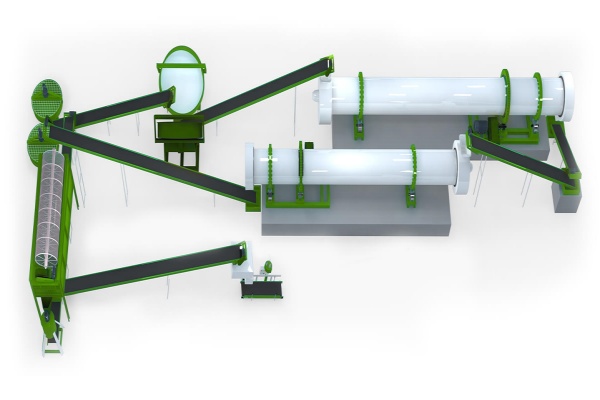
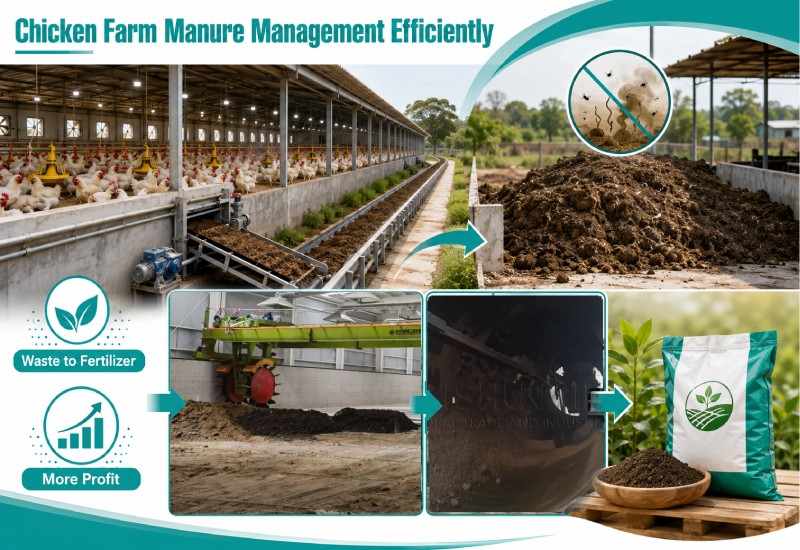
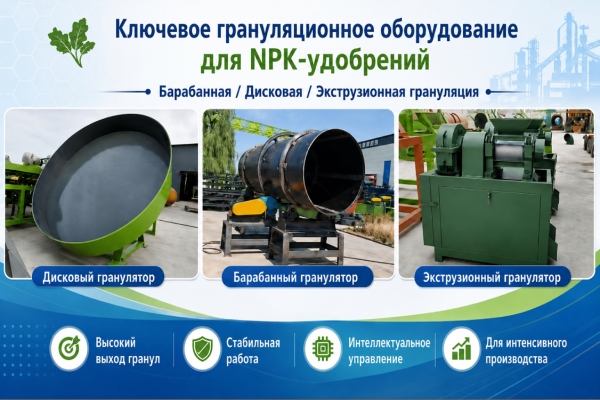
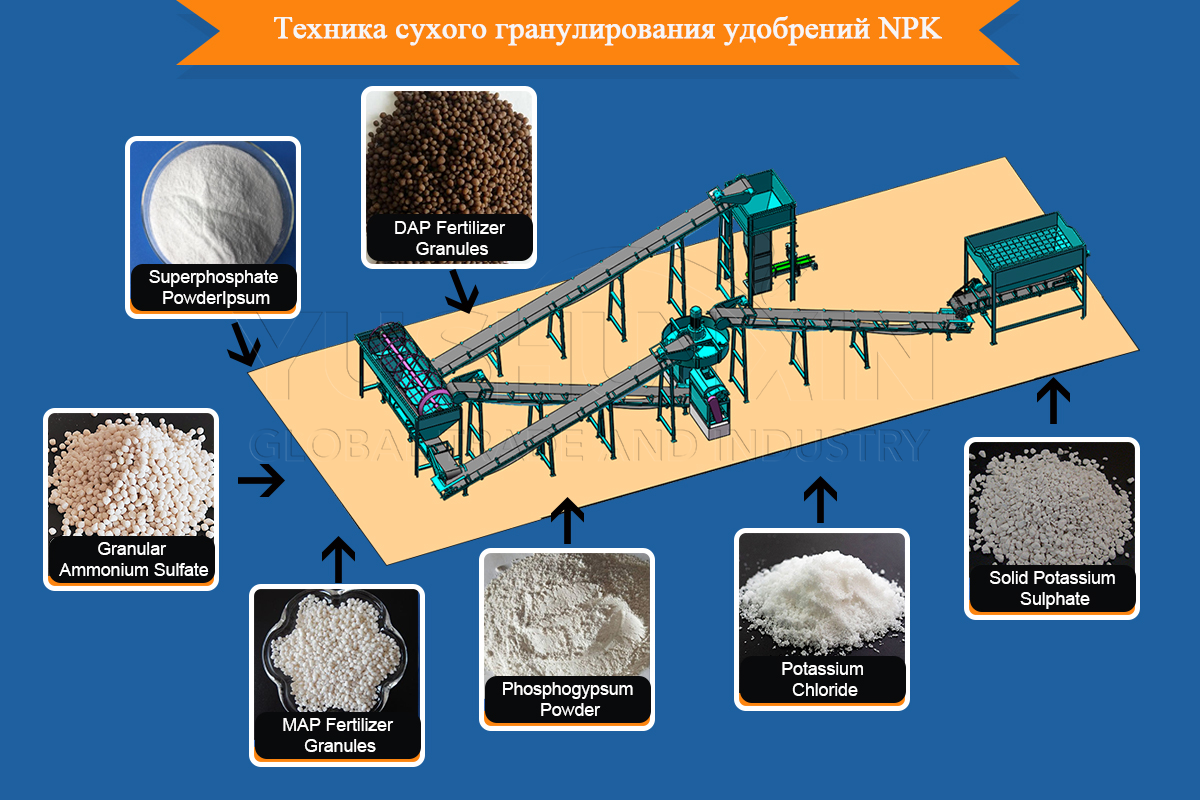
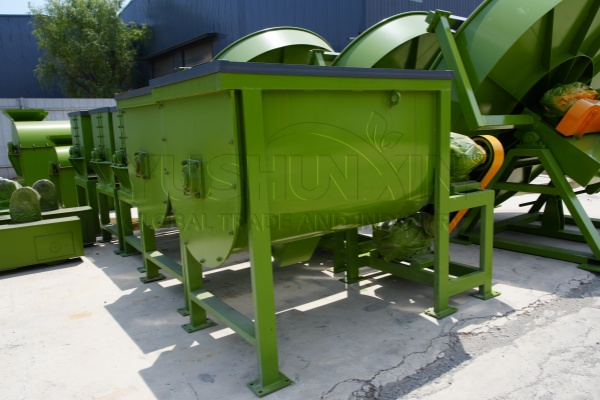
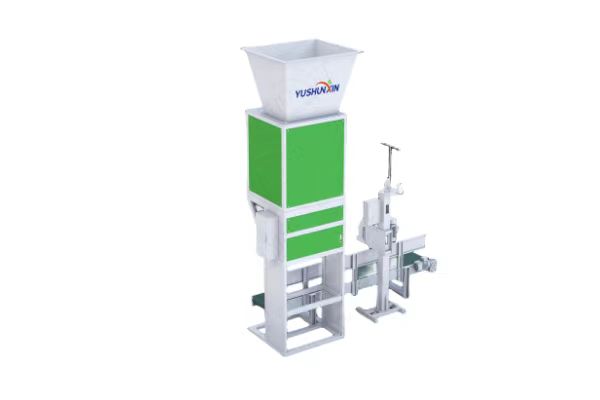
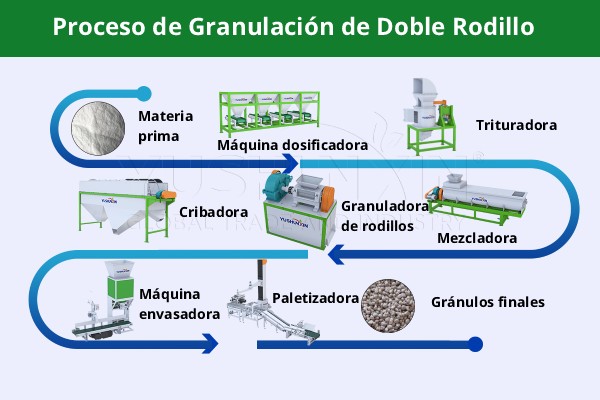
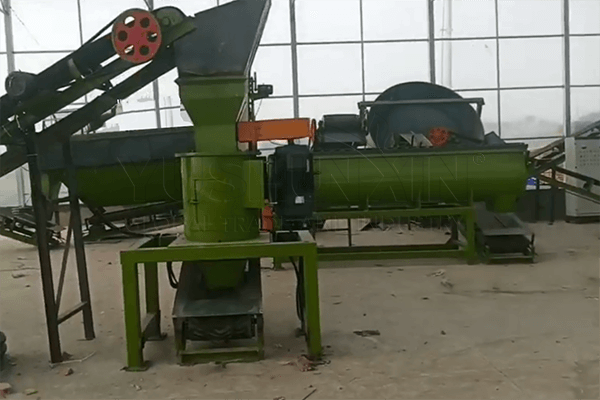
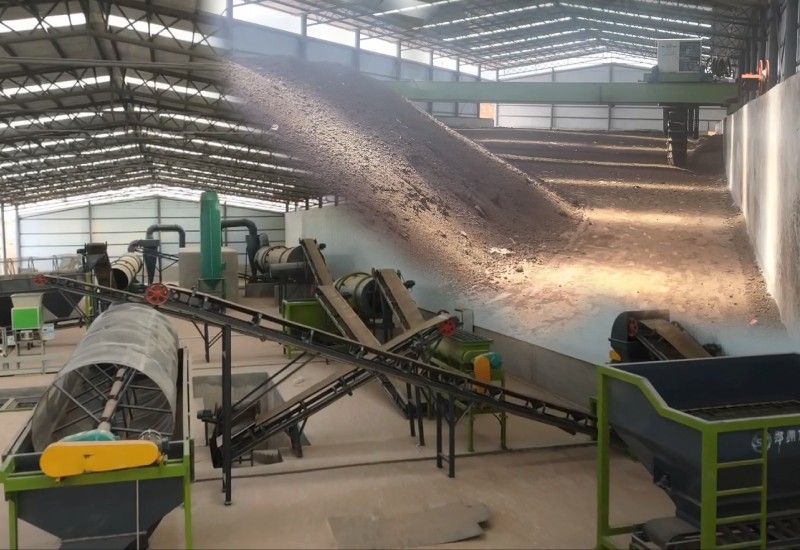
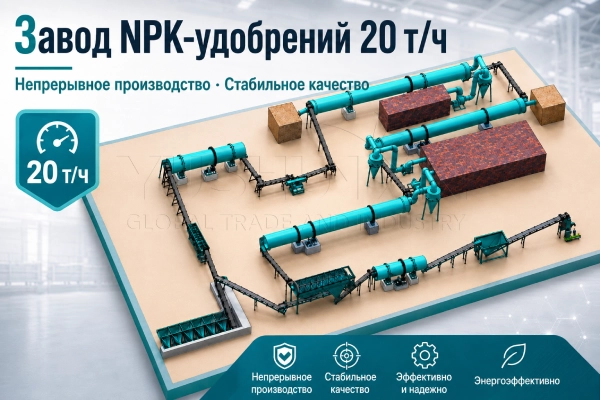
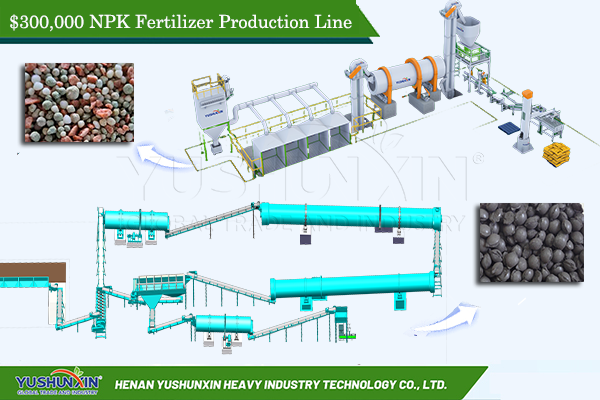
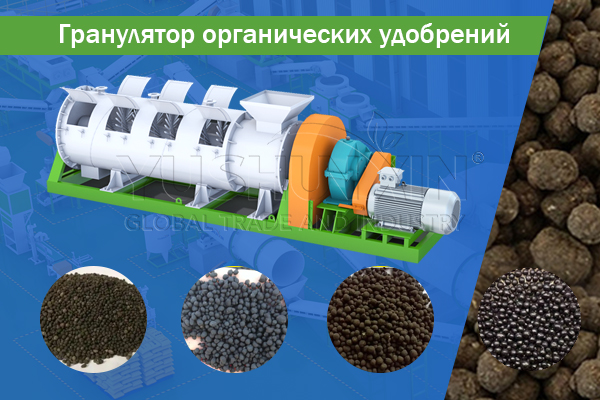
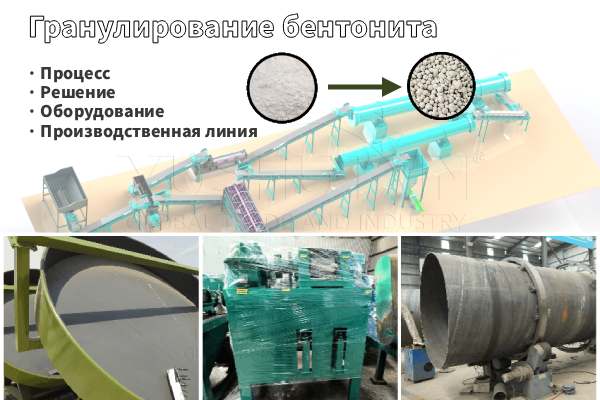
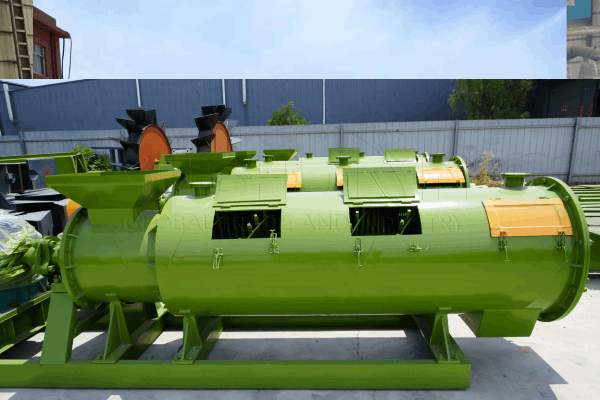
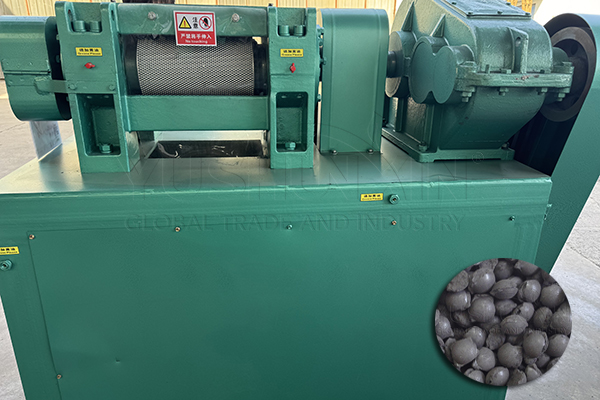
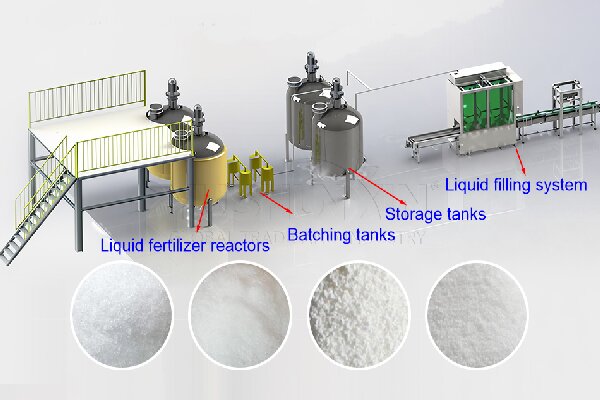
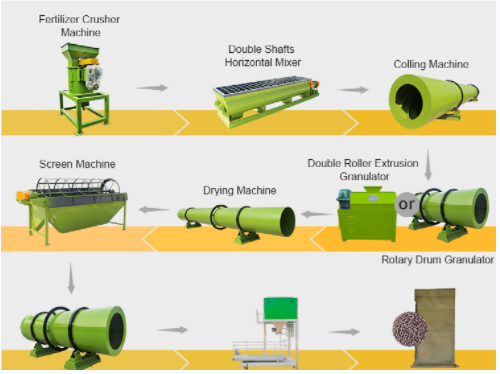
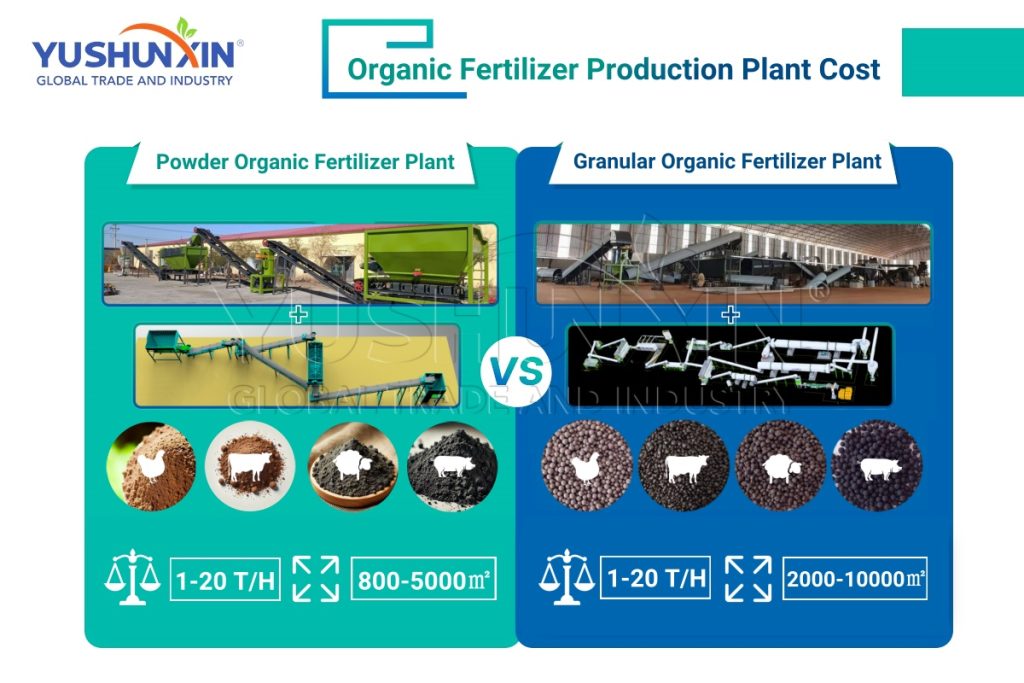
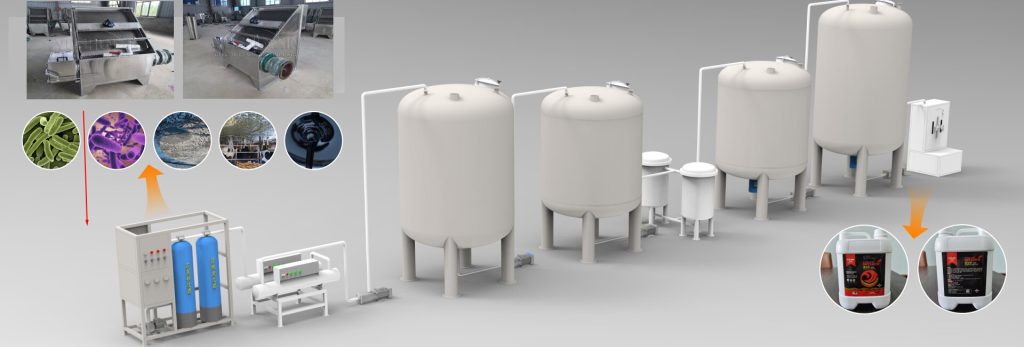
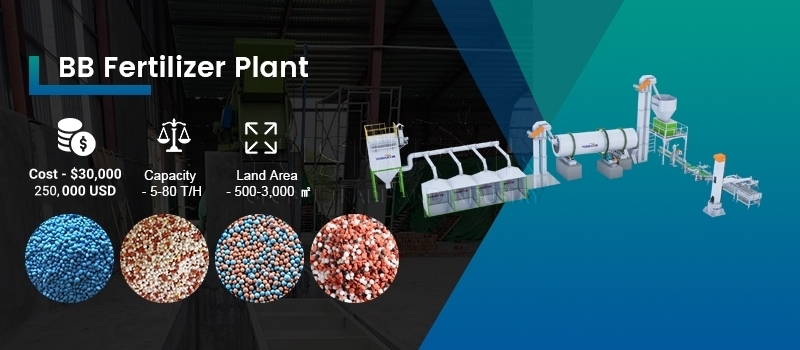
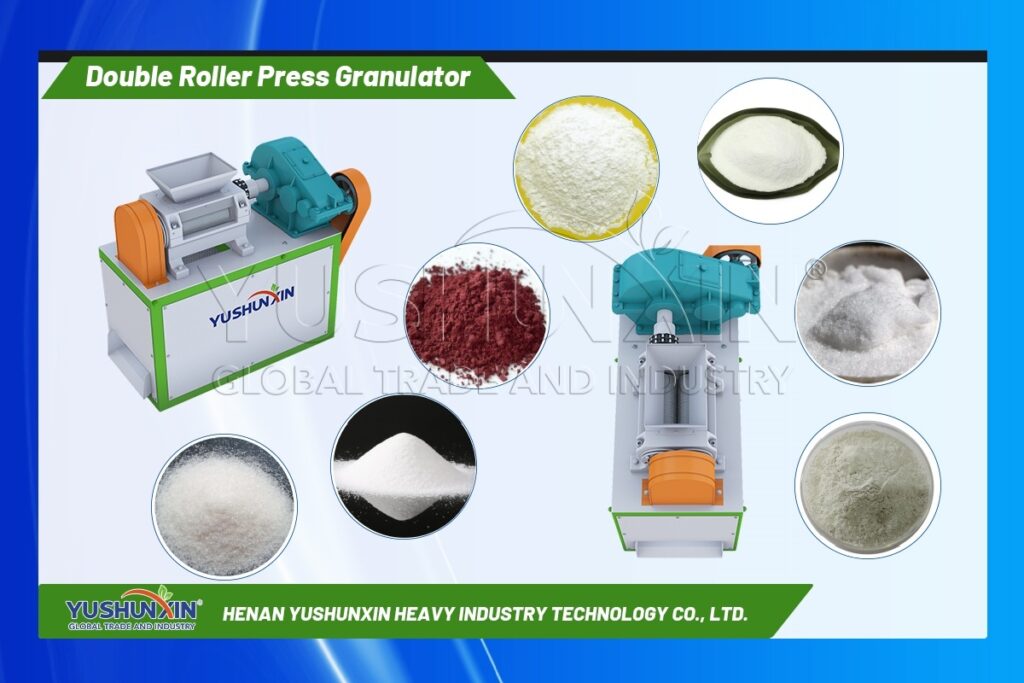
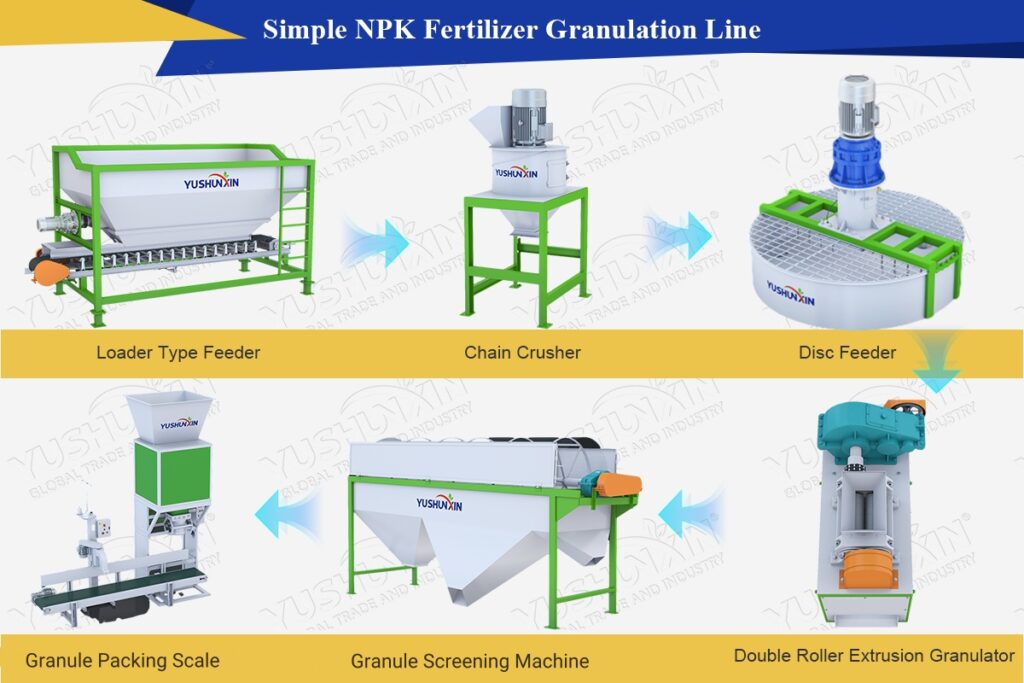
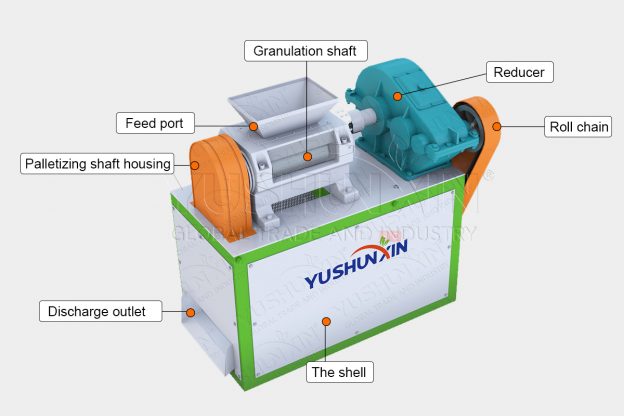
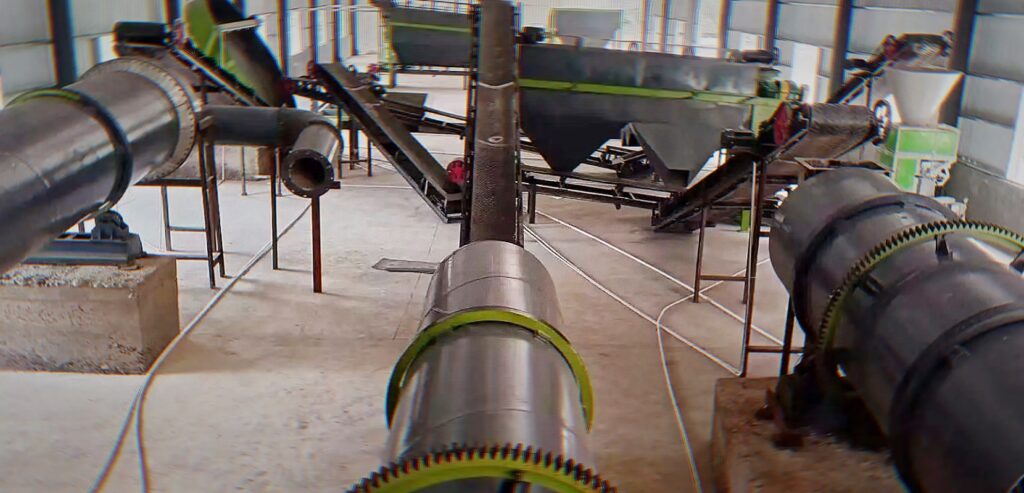
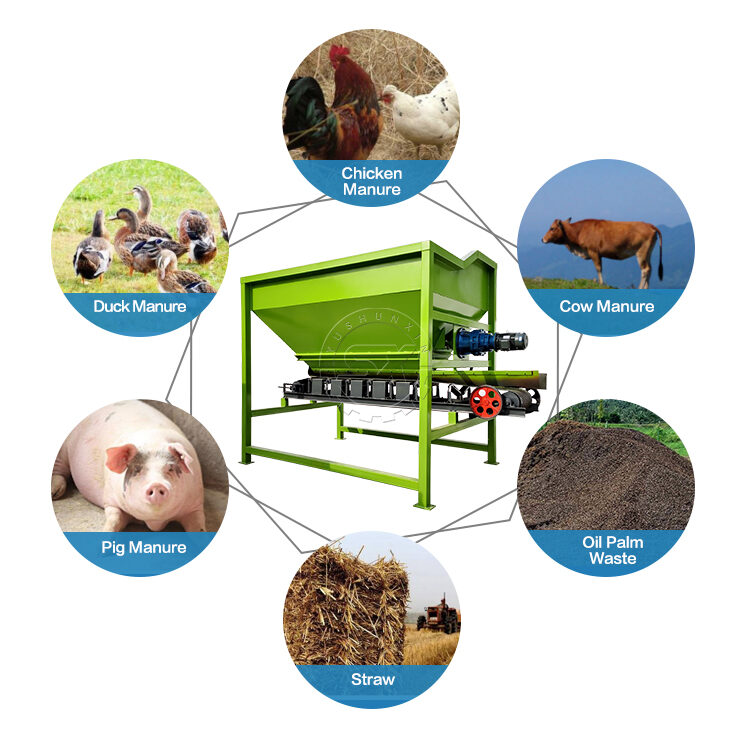
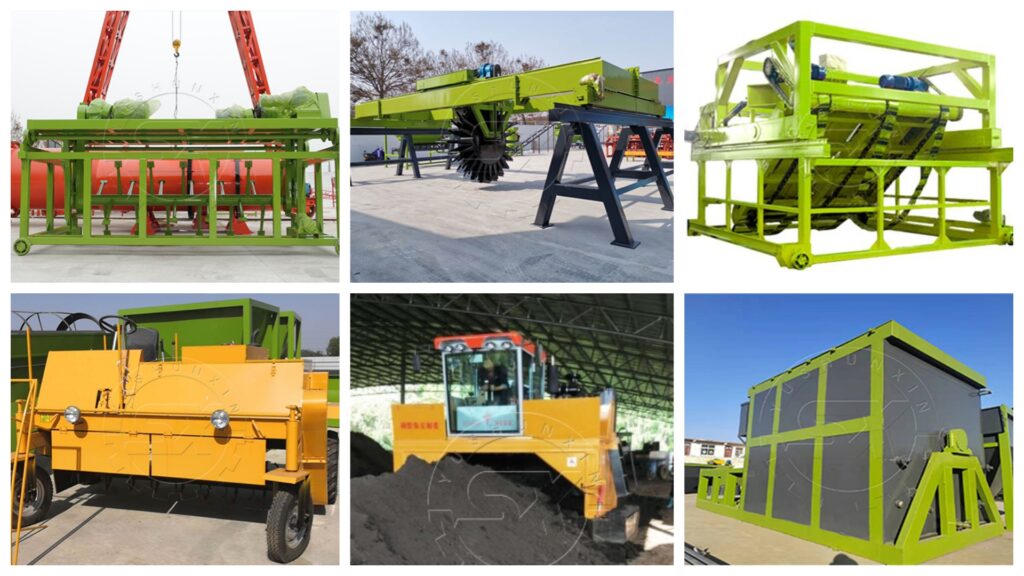
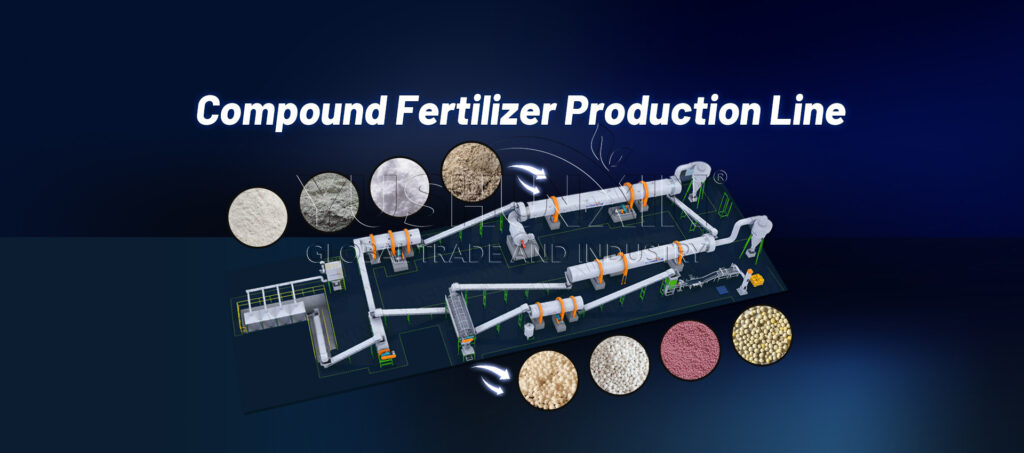
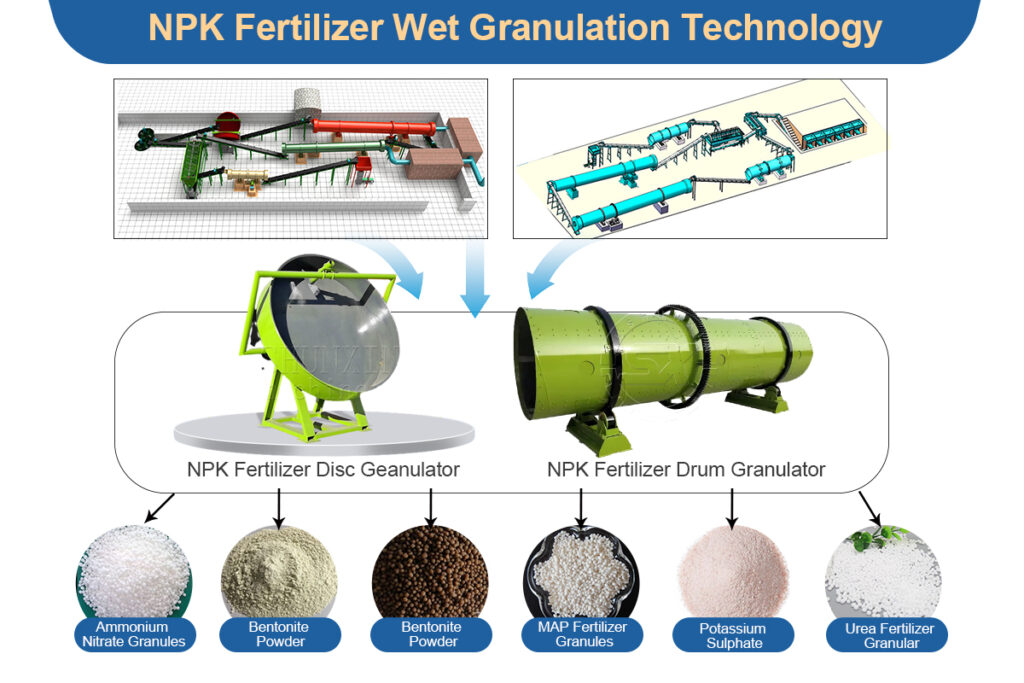
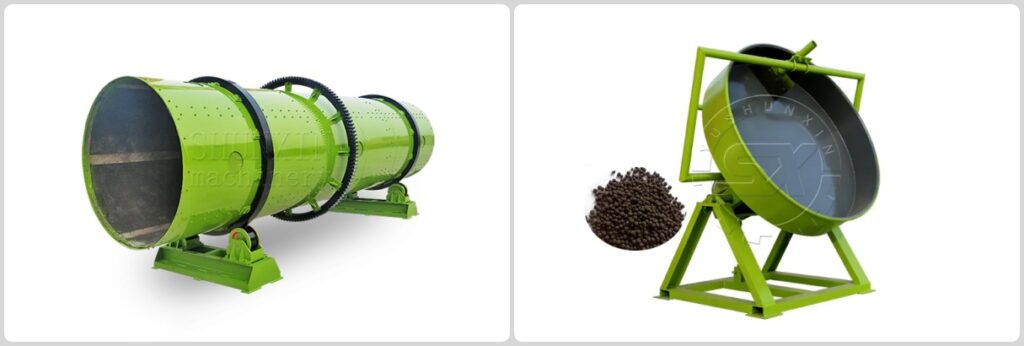
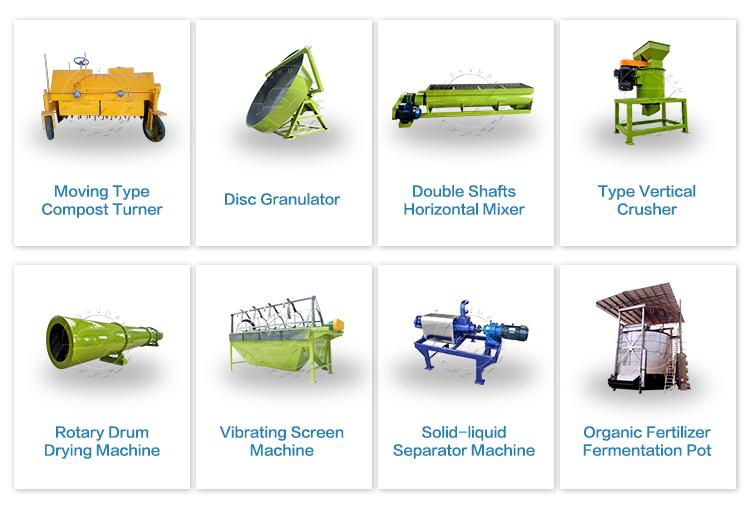
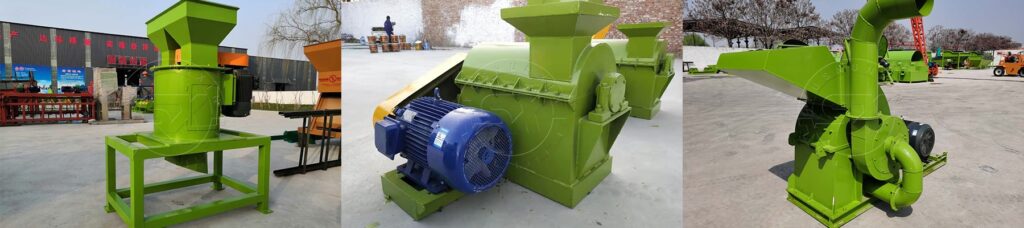
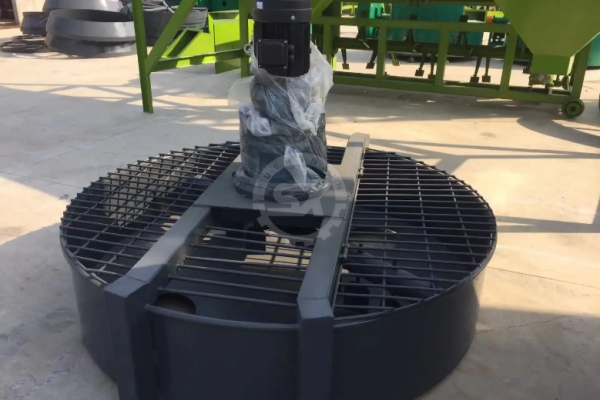
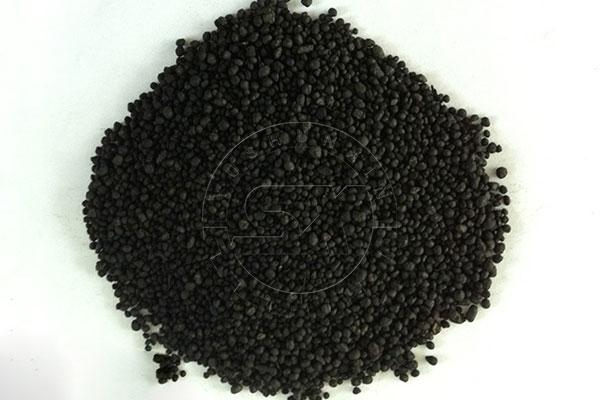
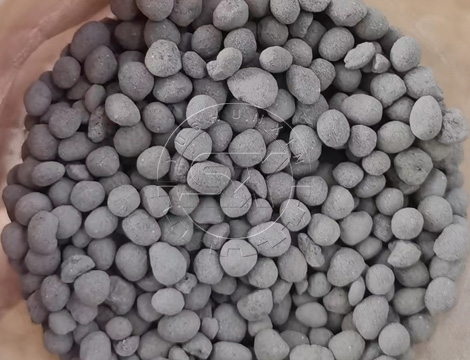
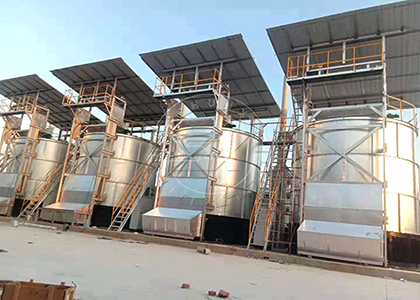
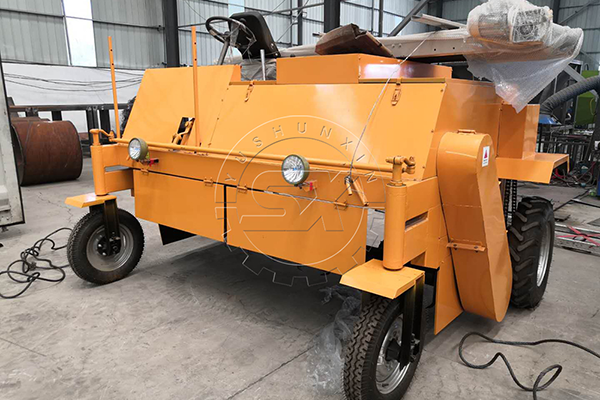
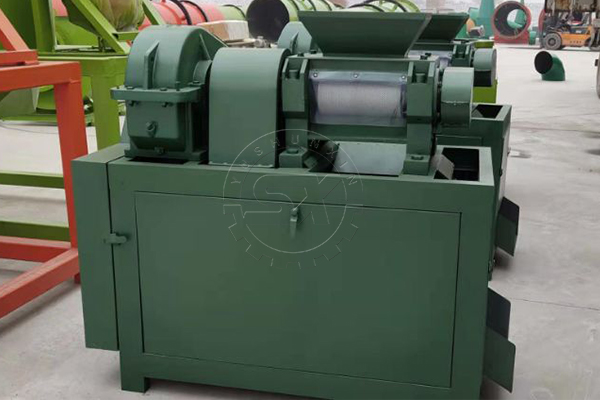
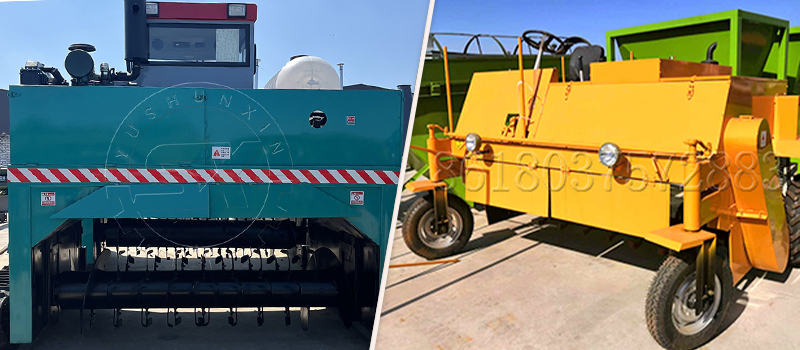
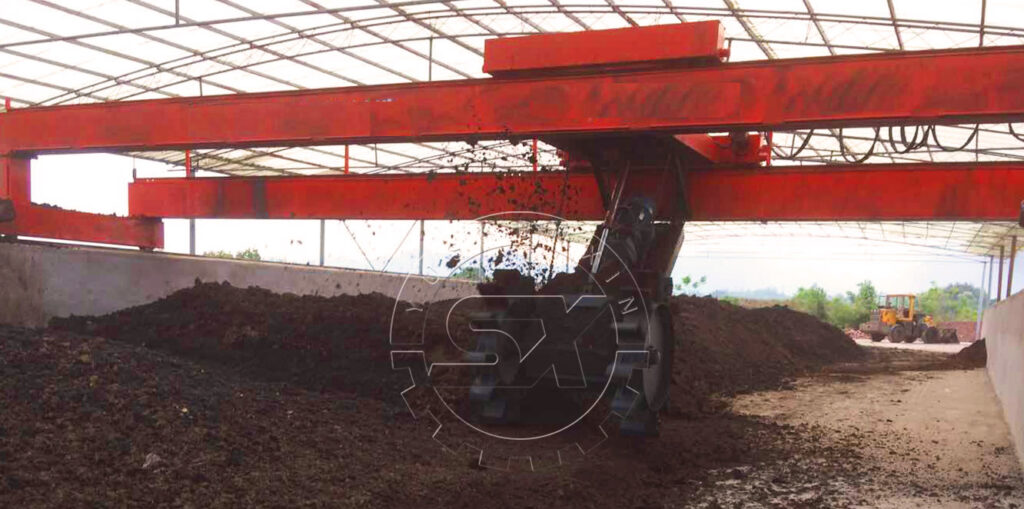
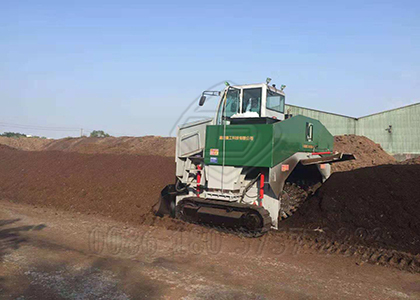
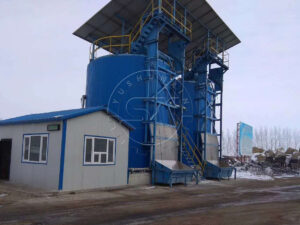
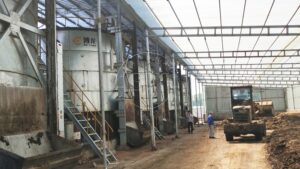
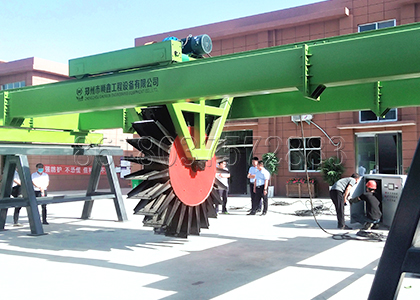
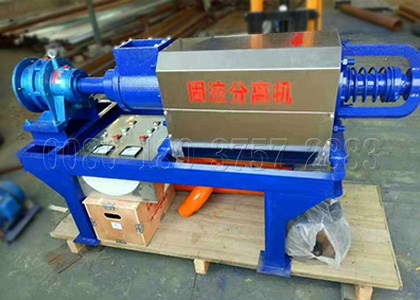
Plant owners and project investors often evaluate 3 t/h extrusion granulation process equipment before they plan a fertilizer processing plant. chicken manure, crop straw, humic acid, sewage sludge move through double-roll extruder, crusher, rotary dryer in a complete fertilizer extrusion line. When you select this equipment, you review capacity, material condition, and plant layout. This evaluation helps you control investment and keep production stable.
3 t/h extrusion granulation process equipment
How does a 3 t/h extrusion granulation process equipment system support chicken manure processing?
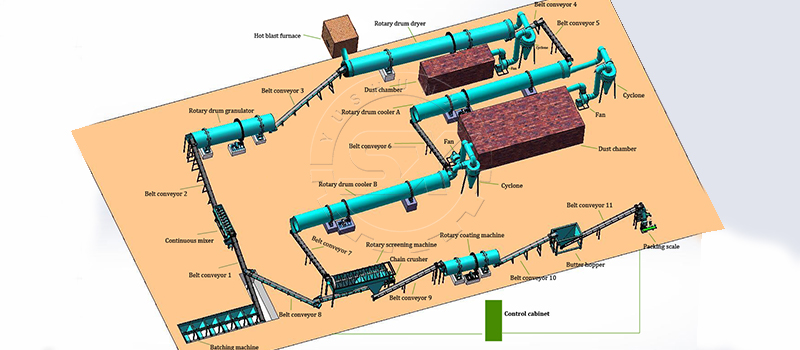
A 3 t/h extrusion granulation process equipment system supports chicken manure processing by connecting the main machine with feeding, mixing, and screening. You can prepare chicken manure, crop straw, humic acid, sewage sludge before the machine starts. A double-roll extruder and a crusher help control material flow, while a rotary dryer protects product quality. This layout keeps the fertilizer processing plant stable and reduces manual transfer. You can also compare this process with standard fertilizer manufacturing system principles when you design the line. This preparation improves the fertilizer machinery and keeps the fertilizer equipment balanced. This setup also simplifies maintenance and reduces unexpected stops.
Why does a 3 t/h extrusion granulation process equipment line suit continuous fertilizer production?
A 3 t/h extrusion granulation process equipment line suits continuous fertilizer production because it handles chicken manure, crop straw, humic acid, sewage sludge in a steady flow. You can arrange the equipment so the material moves from intake to packing without long stops. The double-roll extruder feeds the next stage at a stable rate, and the crusher forms the product into a uniform shape. This coordination reduces bottlenecks and keeps the fertilizer extrusion line efficient. You can also add a rotary dryer to return off-size material for rework, which lowers waste and improves product consistency. The steady output supports daily packing and dispatch targets.
Which organic fertilizer extrusion technology factors should you review before selection?
organic fertilizer extrusion technology helps you choose the right equipment for chicken manure, crop straw, humic acid, sewage sludge. You can review moisture, particle size, capacity, and plant space before you order. A clear process flow reduces transfer points and protects the fertilizer equipment. This comparison also helps you balance fertilizer machinery with long-term operating cost. You can then match the selected machine to the fertilizer manufacturing system and keep the fertilizer processing plant running smoothly. This review helps you avoid buying oversized or undersized fertilizer machinery.
How can producers compare organic fertilizer standards for this fertilizer manufacturing process?
You can compare the general process described under organic fertilizer when you set the product standard and material specification. This reference helps you understand why moisture and particle size matter for chicken manure, crop straw, humic acid, sewage sludge. You can also adjust the double-roll extruder and the crusher according to the target output. This control supports the fertilizer extrusion line and keeps the fertilizer processing plant consistent during peak production. This preparation also supports repeat product quality across production batches.
To summarize, how do you optimize power use in a 3 t/h extrusion granulation process depends on material condition, equipment scope, and production capacity. You can match each machine to the required output and product form. A reliable fertilizer machinery manufacturer can supply the complete fertilizer manufacturing system. Yushunxin provides this fertilizer production equipment. If you have interests, you can learn more about https://www.extruder-granulator.com/3-t-h-extrusion-granulation-process
How freeze-dried seafood is produced at industrial scale — the process, the equipment, quality control, and the market advantages of shrimp, fish, and scallops.
Freeze-Dried Seafood: Preserving Shrimp, Fish and Scallops at Scale
Seafood is one of the most perishable food categories in the world. Shrimp, fish, and scallops lose quality quickly, and their high value makes every day of shelf life count. Freeze drying solves that problem by removing water at low temperature, so the seafood keeps its shape, protein, and flavor while becoming light, shelf-stable, and easy to ship. For processors, a dedicated freeze-dried seafood line turns a perishable raw material into a premium product for soups, ready meals, pet food, and export markets.
Why Freeze-Dry Seafood
Freeze-dried seafood keeps its original structure instead of shrinking or hardening. Because the process runs at low temperature, heat-sensitive proteins and flavors are preserved, and the product rehydrates quickly when water is added back. It is also extremely light, which cuts shipping and storage costs, and it stores for years without refrigeration. For shrimp, fish, and scallops, that combination of quality and convenience supports premium pricing in both retail and foodservice.
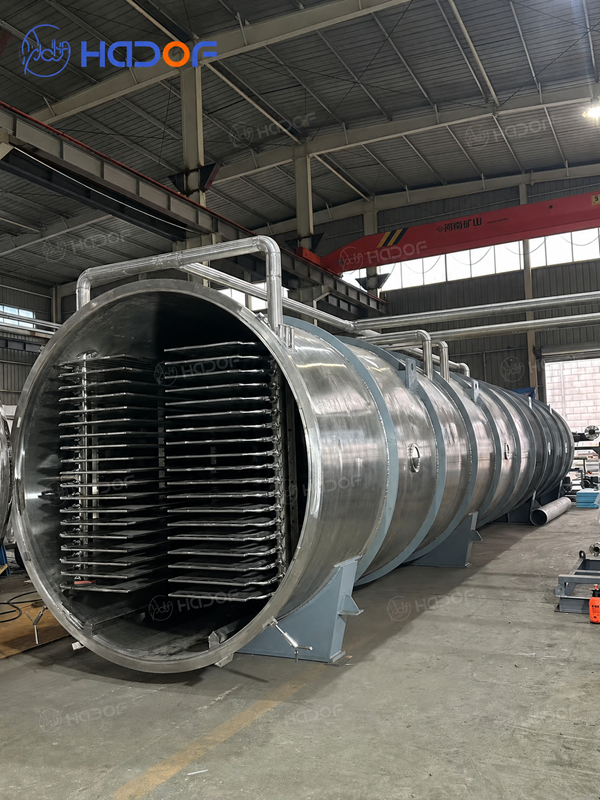
Industrial Seafood Freeze Dryer for Shrimp, Fish and Scallops
The Production Process
A commercial seafood line follows a clear sequence:
Receiving and inspection — fresh seafood is checked for freshness, size, and defects.
Cleaning and preparation — product is washed, peeled, deveined, or portioned as required.
Blanching or pretreatment — a controlled heat step can improve color and stability before freezing.
Freezing — the product is frozen quickly so small ice crystals form and texture is protected.
Vacuum freeze drying — ice sublimates directly to vapor at low pressure, preserving structure and nutrients.
Sorting and packaging — dried product is inspected and packed in moisture- and oxygen-barrier packaging.
Each step matters. Poor preparation or slow freezing shows up later as tough texture or uneven drying, so the line must be designed as a system rather than a collection of machines.
Equipment for a Freeze-Dried Seafood Line
The core of the line is the freeze dryer itself. An industrial seafood freeze dryer is designed around the product’s freezing behavior, batch weight, and target moisture. Around it, the line needs washing and preparation equipment, a pre-freezer or tunnel freezer, and a packing machine. If you process several seafood types, the dryer and trays should be flexible enough to handle different piece sizes and cycles.
Capacity is usually specified by batch weight or shelf area. Small and medium producers often start with a batch size in the tens to low hundreds of kilograms, while larger plants use multiple dryers or a continuous configuration. The right choice depends on your raw-material supply, your target output, and how long each product needs in the chamber.
Freeze Drying vs. IQF Freezing
IQF freezing is excellent for keeping seafood frozen, but it still requires a cold chain from plant to customer. Freeze drying goes further: it removes the water, so the product can be stored and shipped at ambient temperature. For premium ingredients and long-distance export, that difference is significant. Our guide to freeze drying vs. IQF freezing explains the trade-offs in more detail.
Sizing a Freeze-Dried Seafood Line
Sizing starts with your raw-material supply. How much fresh shrimp, fish, or scallops can you bring in each day, and how consistent is that supply across the season? The dryer’s batch weight and shelf area should match that supply, not the other way around. A line that is too small leaves product waiting and hurts freshness; a line that is too large runs at low load and wastes energy. Many processors start with one dryer sized to a comfortable daily batch and plan the building, pre-freezing, and packing areas so a second dryer can be added later. That approach keeps the initial investment manageable while leaving room to grow.
Quality Control
Quality control starts with the raw material. Seafood should be fresh, properly chilled, and consistent in size. Blanching times and temperatures must be controlled so the product keeps its color without overcooking. Freezing must be fast enough to protect texture, and the freeze-drying process must be monitored for pressure, shelf temperature, and moisture. Finished product is tested for moisture content, rehydration, color, and microbial safety before packing.
Packaging and Shelf Life
Freeze-dried seafood is hygroscopic, so packaging is critical. Moisture- and oxygen-barrier bags, cans, or pouches protect the product from humidity and oxidation. Nitrogen flushing can further extend shelf life. Correct packaging keeps the product crisp and stable for years, while poor packaging quickly leads to softening and flavor loss.
Market Applications
Freeze-dried shrimp, fish, and scallops appear in instant soups, ready meals, seasoning blends, pet food, and premium snack products. Exporters value the light weight and ambient storage, while foodservice buyers value the fast rehydration and consistent quality. Because the product keeps its original shape, it also works well in premium retail packs where appearance matters.
Common Mistakes to Avoid
The most common mistake is using seafood that is already losing freshness; freeze drying preserves quality but cannot improve it. The second is freezing too slowly, which produces large ice crystals and damages texture. The third is overloading trays, which blocks vapor flow and creates uneven batches. The fourth is under-sizing the condenser, so the cycle slows down and energy use rises. Finally, skipping a proper packaging barrier undoes the benefit of freeze drying within weeks.
Conclusion
Freeze-dried seafood is a high-value product for processors who want to turn perishable shrimp, fish, and scallops into stable, export-ready ingredients. The process is straightforward, but the equipment and process control must be matched to the product. HADOF Food Processing Manufacture designs complete production lines for freeze-dried seafood, from preparation and freezing to the freeze dryer and packaging. Tell us your product and target output, and we will help you plan the right system.
A garlic powder maker, a dehydrated garlic producer, or a medium-scale plant that imports machinery from China needs a choice that matches the export market and the product. The china fd garlic export for a medium-scale plant covers peeling, slicing, drying, and packing equipment, and the choice follows the market demand. This article explains how a buyer selects the food machinery for a garlic export plant.
china fd garlic export
Which Export Markets Drive Garlic Equipment Demand?
Demand spreads across Southeast Asia, South America, Europe, Africa, and North America, and each region buys for a different product and standard. The china garlic processing machinery export for food buyers grows as Indonesia, Thailand, Vietnam, India, and Egypt expand garlic processing. A buyer who knows its target market matches the equipment to the local labor and the compliance rule.
How Does Dehydrated Garlic Demand Shape the Choice?
The dehydrated garlic market grows strongly, so a medium plant often needs peeling, slicing, and drying equipment that feeds a powder or flake line. The china garlic equipment suppliers for dehydrated garlic offer the washing and drying stages that support this product. A buyer who follows this demand picks food machinery that serves a growing category.
How Does the Choice Connect With a Garlic Line?
The export equipment should join into a complete line that peels, washes, dries, and packs the garlic, because a piecemeal purchase leaves gaps. The choice connects with a fresh garlic processing line for a chinese export plant, and each stage feeds the next. A smooth connection keeps the food processing system efficient.
How Should a Buyer Check Compliance?
European and North American markets require CE certification and food-grade stainless steel, so a buyer verifies the documents and the material before the order. A missing certificate can block the export clearance. This compliance check is the food safety step that the equipment must pass.
How Should a Buyer Verify the Supplier?
Dehydrated garlic export rewards a supplier that offers service and spare parts, because the line runs through the harvest season. You can review the china garlic machinery exporter before a purchase, and that review shows the export experience. A measured trial turns the food machinery decision into a dependable choice.
How Does Automation Improve the Export Line?
The export equipment increasingly adds automation and integrated line control, so a medium plant gets a complete peeling, slicing, and drying flow instead of separate machines. This automation reduces the operator count and makes the output repeatable for a strict export buyer. A plant that asks for an integrated quotation gains a food manufacturing system. This control is the reason the china garlic machinery export shifts toward automated lines.
Conclusion
A medium-scale plant chooses the right China FD garlic export by matching the equipment to the export market, the dehydrated garlic demand, and the compliance rule, then joining it into a complete line. These choices keep the food production investment aligned. A well planned line therefore stays productive across the full shift. If you have interests, you can learn more about https://www.hadofps.com/news/china-garlic-processing-machinery-export-trends-in-2026/
A USD 300,000 budget gives you a starting point, but its scope matters before you compare equipment. Your 300000 dollar powder granulating project automation plan can begin with the tasks operators repeat each shift. Then compare controls, material handling, and packing against your actual production requirements.
Define what the budget covers
Start your powder granulation project equipment budget allocation with a written supply boundary. Separate process equipment from buildings, foundations, freight, taxes, electrical installation, commissioning, and working capital.
Ask suppliers to identify inclusions and exclusions beside each quotation item. Treat USD 300,000 as your planning scenario, not a universal installed price. Also keep a contingency allowance visible instead of assigning every dollar to machinery.
$30000 powder pellet making solution
Prioritise repeatable feeding and batching
Review your powder pelletizing line automation priorities around weighing, recipe selection, and steady material transfer. These steps give you specific functions to discuss beyond a general “fully automatic” description.
For each ingredient, provide bulk density, moisture, particle size, and handling observations. Ask how operators verify dosing, calibrate weighing devices, and respond when a feeder stops. Include manual recovery and safe access in the controls discussion.
Match packing to your dispatch routine
Consider automatic granule packing options alongside bag weight, bag material, and daily dispatch targets. Ask which tasks still involve an operator, including bag placement, closing, and pallet handling.
Compare proposals at the same bag format. A demonstration with your granules can help assess feeding, weighing, and closure. Discuss automation as a defined sequence of tasks, with clear operator responsibilities.
Before choosing additional controls, ask your team which manual tasks cause interruptions or recording errors. Compare the proposed upgrade with training, maintenance, and spare-part requirements. This keeps the discussion tied to a measurable operating problem instead of an automation label.
Leave practical room for later upgrades
Your dry powder granulating project phased investment can separate initial equipment from optional future additions. Discuss reserved floor space, conveyor interfaces, control connections, and electrical capacity before finalising the layout.
First confirm whether dry compaction suits representative raw materials through trials. A low purchase price does not establish material suitability. Ask which later changes require downtime, new foundations, or replacement controls, then include those constraints in your expansion plan.
Compare quotations using one operating brief
Bring your decisions together in a powder granulation plant quotation scope review. State your formulation, accepted granule specification, saleable hourly output, operating schedule, and available utilities.
Request an equipment list and a controls description showing operator tasks at each stage. Agree how a commissioning trial will assess output and product quality. Compare annual production estimates using explicit operating hours and downtime assumptions.
YUSHUNXIN outlines a dry powder processing route covering preparation, batching, mixing, granulation, screening, and packing. Click here for more details.
Freeze-dried fruit chips sell on crunch, color, and clean labels, so the drying method decides the premium. However, shelf area decides how much of that premium one plant can ship each month. A 50㎡ food freeze drying machine and a 100㎡ unit share one recipe. Yet each size serves a different output target. Therefore, this choice usually comes down to volume, floor space, and cash flow.
50m2 vs 100m2 freeze dried fruit chips shelf area
What Sets Freeze-Dried Fruit Chips Apart?
Strawberry, banana, mango, and apple chips keep their color, because drying runs cold. Because ice turns straight into vapor, cells keep their shape and crunch. Sugar stays inside the fruit, so no syrup coat hides the natural taste. Freeze-dried fruit chips also rehydrate fast in yogurt, cereal, and drinks. In practice, that versatility supports premium pricing across several markets.
How Does Shelf Area Change Daily Output?
Water catch capacity sets the ceiling on wet fruit per cycle. A 50㎡ chamber removes at least 1000 kg of water per batch, so mid-size orders fit one cycle. Meanwhile, a 100㎡ chamber removes at least 2000 kg, which doubles that ceiling. Fresh fruit carries 80% water or more, so water capacity matters more than tray count. Then a plant matches batch size to the largest order it receives each week.
Which Size Fits a Growing Fruit Chip Line?
A 50㎡ food freeze drying machine for fruit chips suits a plant that ships smaller orders. Because the frame measures about 8500 × 2200 × 2800 mm, it fits a modest building without major civil work. Then one conveyor line feeds washing, cutting, freezing, drying, and packing in sequence. Also, installed power of 160 kW keeps the electrical room modest. Therefore, a smaller plant reaches full output with less upfront spending.
When Does a 100㎡ Machine Make More Sense?
Higher order volume pushes the same recipe toward a 100㎡ chamber. That unit removes at least 2000 kg of water per batch, so daily output nearly doubles. Its frame runs about 13500 × 2500 × 3200 mm, so plan clear height and truck access early. Installed power reaches 260 kW, so the electrical supply needs an upgrade. Meanwhile, labor stays similar, so cost per kilogram falls as batches grow. As a result, one 100㎡ line often beats two smaller chambers on running cost.
What Parameters Differ Between the Two Sizes?
Parameter
50㎡ machine
100㎡ machine
Shelf area
50 m² (17+1 layers, 70 mm spacing)
100 m² (17+1 layers, 70 mm spacing)
Water catch capacity
≥1000 kg/batch
≥2000 kg/batch
Ultimate vacuum
≤5 Pa
≤5 Pa
Shelf temperature uniformity
±1 °C
±1 °C
Condenser temperature
-40 °C or -60 °C
-40 °C or -60 °C
Installed power
160 kW
260 kW
Machine dimensions
8500 × 2200 × 2800 mm
13500 × 2500 × 3200 mm
Chamber material
SUS304 stainless steel
SUS304 stainless steel
Power supply
380 V, 3 phase, 50 Hz
380 V, 3 phase, 50 Hz
Both sizes share the same shelf spacing, so recipes transfer between them without new trials. Higher shelf area also spreads fruit thinner, so pieces dry at a similar rate. Also, spray defrost keeps cleaning time short on busy days. And the same 5 Pa ultimate vacuum protects aroma in both chambers.
How Do Sorting and Packing Protect Fruit Chips?
Fruit chips bruise easily, so sorting happens before packing. A fruit freeze dryer machine line usually adds manual sorting platforms right after drying. Then operators remove broken pieces and any fruit with uneven color. Next, a food packing machine fills and seals each pouch under nitrogen. Because moisture returns fast through a weak seal, barrier checks matter at this stage. Therefore, sorting and packing protect the premium that drying created.
Build the Freeze-Dried Fruit Chip Line as One System
Shelf area, sorting, and packing decide the final margin, so plan all three together. Hadof builds fruit chip lines around your raw material, output, and plant area. For a customized solution, visit the Hadof freeze dryer homepage at https://www.freezehadof.com/.
Производство удобрений объединяет выбор сырья, технологического оборудования и организации линии гранулирования. Производитель удобрений оценивает производственную задачу, сравнивает оборудование для производства удобрений и определяет состав технологической линии. Материалы страницы «Линия гранулирования сульфата аммония | автоматизация» помогают рассмотреть тему «Сульфат аммония как удобрение: преимущества и нормы внесения» с точки зрения завода, который планирует стабильный выпуск продукции. Сульфат аммония как удобрение: преимущества и нормы внесения позволяет заказчику производственной линии сопоставить комплектацию, мощность и технологические решения до начала проекта.
Оборудование для производства удобрений в составе технологической линии
Как выбрать оборудование для сульфат аммония как удобрение: преимущества и нормы внесения?
Предприятие сравнивает оборудование для производства удобрений, потому что гранулятор, смеситель, сушилка и дробилка должны работать в одной технологической линии. Производитель NPK учитывает производительность, влажность сырья и требуемый размер гранул. Инвестор оценивает затраты на производство удобрений и срок запуска завода по производству удобрений. Технологическая линия для производства удобрений подбирается по мощности, составу сырья и конечной формуле продукции. Материал страницы «Линия гранулирования сульфата аммония | автоматизация» показывает, какие параметры важны при выборе основного оборудования. оборудование для сульфат аммония как удобрение: преимущества и нормы внесения позволяет сопоставить модель с технологической задачей. Связанная страница «Решения по сырью Archives – Решения по производству удобрений!» уточняет, как отдельные машины интегрируются в общую систему переработки удобрений. Заказчик производственной линии сравнивает барабанную, дисковую и валковую грануляцию для конкретного сырья.
Завод анализирует технологический процесс производства удобрений, поэтому учитывает производительность, потребляемую мощность, влажность и размер частиц. Производитель удобрений проверяет, какие параметры подтверждены для линии производства удобрений, и не переносит характеристики одной модели на другую. Инвестор проекта удобрений оценивает капитальные расходы, бюджет проекта и стоимость запуска. Производственная компания определяет, как оборудование для обработки удобрений влияет на качество готового продукта. Данные страницы «Линия гранулирования сульфата аммония | автоматизация» используются как основа для сравнения комплектации. подробная информация о производственной линии даёт дополнительные сведения о возможных вариантах конфигурации. Управление производством удобрений становится точнее, когда каждый технологический узел соответствует характеристикам сырья и целевой мощности.
Как связанное оборудование влияет на технологическую линию?
Связанное оборудование для производства удобрений дополняет основную линию гранулирования. Производитель удобрений добавляет дробилку, смеситель, сушилку или грохот в зависимости от сырья и конечной формулы. Технология производства удобрений требует согласованной работы нескольких машин, поэтому завод проверяет производительность каждого узла. связанное оборудование для производства удобрений рассматривается в контексте линии гранулирования. Страница «Решения по сырью Archives – Решения по производству удобрений!» помогает понять, как связанное оборудование включается в производственную линию. Предприятие сравнивает варианты конфигурации линии и рассчитывает резерв мощности. Инвестор проекта учитывает, что правильный подбор вспомогательного оборудования снижает простои и повышает стабильность производства комплексных удобрений.
Как производитель линий формирует комплектацию завода?
Производитель линий для производства удобрений формирует комплектацию завода на основе производственной задачи. Завод по переработке удобрений оценивает сырьё, мощность и доступную площадь. производитель линий для производства удобрений представляет направления оборудования и технологических решений. Страница «Оборудование для производства удобрений Shunxin» даёт общее представление о направлениях оборудования и технологических решениях. Производственная компания сравнивает линии для органических и минеральных удобрений, а также системы гранулирования NPK. Инвестор учитывает, что комплекс оборудования должен быть согласован по производительности, управлению и обслуживанию. Такой подход помогает заказчику производственной линии перейти от отдельного станка к полноценному заводу по производству удобрений.
Какие сведения подтверждают выбор технологии?
Дополнительные справочные сведения о сырье и процессе помогают производителю удобрений проверить технологию гранулирования. Завод анализирует физические свойства материала, условия сушки и требования к конечному продукту. Инвестор проекта сравнивает разные технологии производства удобрений и учитывает особенности исходного сырья. сульфат аммония — в производстве удобрений даёт справочное описание материала или процесса. Производственная компания использует справочные данные для подготовки технического задания на линию. Такие сведения дополняют описание оборудования и позволяют точнее определить параметры производства удобрений, управления линией и контроля качества готовой продукции.
A frozen snack factory, a fried food plant, or an IQF processor that seasons product before freezing needs a system that coats evenly and stays hygienic. The seasoning systems for iqf frozen food apply oil spray and powder dosing in one controlled step, and that control supports both safety and quality. This article explains how the seasoning system protects the food processing result.
seasoning systems for iqf frozen food
How Does Seasoning Protect IQF Product Quality?
An even seasoning keeps the flavor consistent and the frozen pieces separate, because a wet or clumped coating freezes into blocks. The octagonal and drum seasoning machine for frozen snacks tumbles the product while it applies the powder or oil, so each piece gets the same coat. This uniformity is the food manufacturing quality that a manual mix cannot repeat.
How Do Oil Spray and Powder Dosing Keep Coating Even?
The oil spray prepares the surface, and the powder dosing applies the seasoning in a controlled amount, so the coating stays thin and even. The automatic seasoning system with oil spray and powder dosing adjusts the drum speed and the dose to the product, which reduces the over-seasoning and the waste. This control keeps the food preparation consistent across the shift.
How Does the Seasoning Machine Connect With Freezing?
A seasoning machine works best when the seasoned product moves directly to freezing, because a warm hold lets the coating settle and clump. The machine connects with an IQF quick freezer for a seasoned frozen food line, a cooling conveyor, and a packing station. A smooth handoff keeps the food processing system moving and the pieces separate.
How Does the System Support Food Safety?
The seasoning machine uses a hygienic stainless structure and a washable drum, so residue does not build up on the contact surface. A clean machine keeps the oil and powder from carrying contamination into the next batch. This hygiene is the food safety step that the seasoning stage must provide. A plant that cleans on schedule protects the product and the brand.
How Should a Buyer Verify the System?
Food seasoning rewards a trial with the plant’s own product, because the powder and oil ratio changes the coat. You can review the seasoning equipment manufacturer before a purchase, and that review shows the dosing and service support. A measured run turns the food machinery decision into a dependable quality result.
How Does the Seasoning System Reduce Waste?
The controlled oil spray and powder dosing apply only the amount the recipe needs, so the system reduces the over-seasoning and the dust that a manual mix spreads. The drum also tumbles the product gently, which lowers the breakage that lowers the yield. This waste reduction is a food manufacturing saving that a plant can measure. A buyer who checks the dosing accuracy sees the seasoning system as a quality and cost control together.
Conclusion
A seasoning system for IQF frozen food supports safety and quality by applying oil spray and powder dosing evenly and by connecting directly to freezing. These controls keep the food production line consistent and hygienic. If you have interests, you can learn more about https://www.friedfoodsolutions.com/seasoning-equipment/
Plant owners and project investors often evaluate liquid organic fertilizer plant cost before they plan a fertilizer processing plant. urea, diammonium phosphate, potassium chloride, ammonium sulfate move through batching system, rotary drum granulator, screening machine in a complete fertilizer production line. When you select this equipment, you review capacity, material condition, and plant layout. This evaluation helps you control investment and keep production stable.
liquid organic fertilizer plant cost
How does a liquid organic fertilizer plant cost system support urea processing?
A liquid organic fertilizer plant cost system supports urea processing by connecting the main machine with feeding, mixing, and screening. You can prepare urea, diammonium phosphate, potassium chloride, ammonium sulfate before the machine starts. A batching system and a rotary drum granulator help control material flow, while a screening machine protects product quality. This layout keeps the fertilizer processing plant stable and reduces manual transfer. You can also compare this process with standard fertilizer manufacturing system principles when you design the line. This preparation improves the fertilizer equipment and keeps the fertilizer machinery balanced. This setup also simplifies maintenance and reduces unexpected stops.
Why does a liquid organic fertilizer plant cost line suit continuous fertilizer production?
A liquid organic fertilizer plant cost line suits continuous fertilizer production because it handles urea, diammonium phosphate, potassium chloride, ammonium sulfate in a steady flow. You can arrange the equipment so the material moves from intake to packing without long stops. The batching system feeds the next stage at a stable rate, and the rotary drum granulator forms the product into a uniform shape. This coordination reduces bottlenecks and keeps the fertilizer production line efficient. You can also add a screening machine to return off-size material for rework, which lowers waste and improves product consistency. The steady output supports daily packing and dispatch targets.
Which compound fertilizer processing technology factors should you review before selection?
compound fertilizer processing technology helps you choose the right equipment for urea, diammonium phosphate, potassium chloride, ammonium sulfate. You can review moisture, particle size, capacity, and plant space before you order. A clear process flow reduces transfer points and protects the fertilizer machinery. This comparison also helps you balance fertilizer equipment with long-term operating cost. You can then match the selected machine to the fertilizer manufacturing system and keep the fertilizer processing plant running smoothly. This review helps you avoid buying oversized or undersized fertilizer machinery.
How can producers compare fertilizer standards for this fertilizer manufacturing process?
You can compare the general process described under fertilizer when you set the product standard and material specification. This reference helps you understand why moisture and particle size matter for urea, diammonium phosphate, potassium chloride, ammonium sulfate. You can also adjust the batching system and the rotary drum granulator according to the target output. This control supports the fertilizer production line and keeps the fertilizer processing plant consistent during peak production. This preparation also supports repeat product quality across production batches.
To summarize, how much does a liquid organic fertilizer production line cost for commercial scale depends on material condition, equipment scope, and production capacity. You can match each machine to the required output and product form. A reliable fertilizer equipment manufacturer can supply the complete fertilizer manufacturing system. Yushunxin provides this fertilizer production equipment. If you have interests, you can learn more about https://www.fertilizerproductequipment.com/liquid-organic-fertilizer-manufacturing-process
Plant owners and project investors often evaluate disc granulator machine manufacturer before they plan a fertilizer processing plant. phosphate rock, limestone, dolomite, potassium feldspar move through ball mill, pan granulator, rotary dryer in a complete fertilizer granulation line. When you select this equipment, you review capacity, material condition, and plant layout. This evaluation helps you control investment and keep production stable.
disc granulator machine manufacturer
How does a disc granulator machine manufacturer system support phosphate rock processing?
A disc granulator machine manufacturer system supports phosphate rock processing by connecting the main machine with feeding, mixing, and screening. You can prepare phosphate rock, limestone, dolomite, potassium feldspar before the machine starts. A ball mill and a pan granulator help control material flow, while a rotary dryer protects product quality. This layout keeps the fertilizer processing plant stable and reduces manual transfer. You can also compare this process with standard fertilizer manufacturing system principles when you design the line. This preparation improves the fertilizer equipment and keeps the fertilizer machinery balanced. This setup also simplifies maintenance and reduces unexpected stops.
Why does a disc granulator machine manufacturer line suit continuous fertilizer production?
A disc granulator machine manufacturer line suits continuous fertilizer production because it handles phosphate rock, limestone, dolomite, potassium feldspar in a steady flow. You can arrange the equipment so the material moves from intake to packing without long stops. The ball mill feeds the next stage at a stable rate, and the pan granulator forms the product into a uniform shape. This coordination reduces bottlenecks and keeps the fertilizer granulation line efficient. You can also add a rotary dryer to return off-size material for rework, which lowers waste and improves product consistency. The steady output supports daily packing and dispatch targets.
Which mineral fertilizer granulation technology factors should you review before selection?
mineral fertilizer granulation technology helps you choose the right equipment for phosphate rock, limestone, dolomite, potassium feldspar. You can review moisture, particle size, capacity, and plant space before you order. A clear process flow reduces transfer points and protects the fertilizer machinery. This comparison also helps you balance fertilizer equipment with long-term operating cost. You can then match the selected machine to the fertilizer manufacturing system and keep the fertilizer processing plant running smoothly. This review helps you avoid buying oversized or undersized fertilizer machinery.
How can producers compare mineral fertilizer standards for this fertilizer manufacturing process?
You can compare the general process described under mineral fertilizer when you set the product standard and material specification. This reference helps you understand why moisture and particle size matter for phosphate rock, limestone, dolomite, potassium feldspar. You can also adjust the ball mill and the pan granulator according to the target output. This control supports the fertilizer granulation line and keeps the fertilizer processing plant consistent during peak production. This preparation also supports repeat product quality across production batches.
To summarize, how much does a disc granulator machine manufacturer charge for a custom line depends on material condition, equipment scope, and production capacity. You can match each machine to the required output and product form. A reliable mineral fertilizer equipment manufacturer can supply the complete fertilizer manufacturing system. Yushunxin provides this fertilizer production equipment. If you have interests, you can learn more about https://www.mineralfertilizerproductionsolutions.com/product/disc-granulator-machine
Производство удобрений объединяет выбор сырья, технологического оборудования и организации линии гранулирования. Производитель удобрений оценивает производственную задачу, сравнивает оборудование для производства удобрений и определяет состав технологической линии. Материалы страницы «ББ смеситель удобрений | производительность 1-20 т/ч» помогают рассмотреть тему «Как выбрать производительность линии смешивания BB удобрений» с точки зрения завода, который планирует стабильный выпуск продукции. Как выбрать производительность линии смешивания BB удобрений позволяет заказчику производственной линии сопоставить комплектацию, мощность и технологические решения до начала проекта.
Оборудование для производства удобрений в составе технологической линии
Как выбрать оборудование для как выбрать производительность линии смешивания BB удобрений?
Предприятие сравнивает оборудование для производства удобрений, потому что гранулятор, смеситель, сушилка и дробилка должны работать в одной технологической линии. Производитель NPK учитывает производительность, влажность сырья и требуемый размер гранул. Инвестор оценивает затраты на производство удобрений и срок запуска завода по производству удобрений. Технологическая линия для производства удобрений подбирается по мощности, составу сырья и конечной формуле продукции. Материал страницы «ББ смеситель удобрений | производительность 1-20 т/ч» показывает, какие параметры важны при выборе основного оборудования. оборудование для как выбрать производительность линии смешивания bb удобрений позволяет сопоставить модель с технологической задачей. Связанная страница «Производственная линия SHUNXIN | сделанный на заказ» уточняет, как отдельные машины интегрируются в общую систему переработки удобрений. Заказчик производственной линии сравнивает барабанную, дисковую и валковую грануляцию для конкретного сырья.
Завод анализирует технологический процесс производства удобрений, поэтому учитывает производительность, потребляемую мощность, влажность и размер частиц. Производитель удобрений проверяет, какие параметры подтверждены для линии производства удобрений, и не переносит характеристики одной модели на другую. Инвестор проекта удобрений оценивает капитальные расходы, бюджет проекта и стоимость запуска. Производственная компания определяет, как оборудование для обработки удобрений влияет на качество готового продукта. Данные страницы «ББ смеситель удобрений | производительность 1-20 т/ч» используются как основа для сравнения комплектации. подробная информация о производственной линии даёт дополнительные сведения о возможных вариантах конфигурации. Управление производством удобрений становится точнее, когда каждый технологический узел соответствует характеристикам сырья и целевой мощности.
Как связанное оборудование влияет на технологическую линию?
Связанное оборудование для производства удобрений дополняет основную линию гранулирования. Производитель удобрений добавляет дробилку, смеситель, сушилку или грохот в зависимости от сырья и конечной формулы. Технология производства удобрений требует согласованной работы нескольких машин, поэтому завод проверяет производительность каждого узла. связанное оборудование для производства удобрений рассматривается в контексте линии гранулирования. Страница «Производственная линия SHUNXIN | сделанный на заказ» помогает понять, как связанное оборудование включается в производственную линию. Предприятие сравнивает варианты конфигурации линии и рассчитывает резерв мощности. Инвестор проекта учитывает, что правильный подбор вспомогательного оборудования снижает простои и повышает стабильность производства комплексных удобрений.
Как производитель линий формирует комплектацию завода?
Производитель линий для производства удобрений формирует комплектацию завода на основе производственной задачи. Завод по переработке удобрений оценивает сырьё, мощность и доступную площадь. производитель линий для производства удобрений представляет направления оборудования и технологических решений. Страница «Shunxin | Производитель оборудования для удобрений | 20+лет» даёт общее представление о направлениях оборудования и технологических решениях. Производственная компания сравнивает линии для органических и минеральных удобрений, а также системы гранулирования NPK. Инвестор учитывает, что комплекс оборудования должен быть согласован по производительности, управлению и обслуживанию. Такой подход помогает заказчику производственной линии перейти от отдельного станка к полноценному заводу по производству удобрений.
Какие сведения подтверждают выбор технологии?
Дополнительные справочные сведения о сырье и процессе помогают производителю удобрений проверить технологию гранулирования. Завод анализирует физические свойства материала, условия сушки и требования к конечному продукту. Инвестор проекта сравнивает разные технологии производства удобрений и учитывает особенности исходного сырья. удобрения даёт справочное описание материала или процесса. Производственная компания использует справочные данные для подготовки технического задания на линию. Такие сведения дополняют описание оборудования и позволяют точнее определить параметры производства удобрений, управления линией и контроля качества готовой продукции.
Если тема актуальна для производственного проекта, производитель удобрений может уточнить комплектацию линии у Yushunxin, а дополнительная информация доступна здесь: https://www.sxmashina.com/bb-smesitel-udobreniy/
Plant owners and project investors often evaluate iron ore crusher machine before they plan a fertilizer processing plant. phosphate rock, limestone, dolomite, potassium feldspar move through ball mill, pan granulator, rotary dryer in a complete fertilizer granulation line. When you select this equipment, you review capacity, material condition, and plant layout. This evaluation helps you control investment and keep production stable.
iron ore crusher machine
How does a iron ore crusher machine system support phosphate rock processing?
A iron ore crusher machine system supports phosphate rock processing by connecting the main machine with feeding, mixing, and screening. You can prepare phosphate rock, limestone, dolomite, potassium feldspar before the machine starts. A ball mill and a pan granulator help control material flow, while a rotary dryer protects product quality. This layout keeps the fertilizer processing plant stable and reduces manual transfer. You can also compare this process with standard fertilizer manufacturing system principles when you design the line. This preparation improves the fertilizer equipment and keeps the fertilizer machinery balanced. This setup also simplifies maintenance and reduces unexpected stops.
Why does a iron ore crusher machine line suit continuous fertilizer production?
A iron ore crusher machine line suits continuous fertilizer production because it handles phosphate rock, limestone, dolomite, potassium feldspar in a steady flow. You can arrange the equipment so the material moves from intake to packing without long stops. The ball mill feeds the next stage at a stable rate, and the pan granulator forms the product into a uniform shape. This coordination reduces bottlenecks and keeps the fertilizer granulation line efficient. You can also add a rotary dryer to return off-size material for rework, which lowers waste and improves product consistency. The steady output supports daily packing and dispatch targets.
Which mineral fertilizer granulation technology factors should you review before selection?
mineral fertilizer granulation technology helps you choose the right equipment for phosphate rock, limestone, dolomite, potassium feldspar. You can review moisture, particle size, capacity, and plant space before you order. A clear process flow reduces transfer points and protects the fertilizer machinery. This comparison also helps you balance fertilizer equipment with long-term operating cost. You can then match the selected machine to the fertilizer manufacturing system and keep the fertilizer processing plant running smoothly. This review helps you avoid buying oversized or undersized fertilizer machinery.
How can producers compare mineral fertilizer standards for this fertilizer manufacturing process?
You can compare the general process described under mineral fertilizer when you set the product standard and material specification. This reference helps you understand why moisture and particle size matter for phosphate rock, limestone, dolomite, potassium feldspar. You can also adjust the ball mill and the pan granulator according to the target output. This control supports the fertilizer granulation line and keeps the fertilizer processing plant consistent during peak production. This preparation also supports repeat product quality across production batches.
Plant owners and project investors often evaluate rotary drum dryer machine system before they plan a fertilizer processing plant. biochar, biomass ash, charcoal powder, lignite move through carbonization furnace, biochar crusher, rotary dryer in a complete fertilizer granulation line. When you select this equipment, you review capacity, material condition, and plant layout. This evaluation helps you control investment and keep production stable.
rotary drum dryer machine
How does a rotary drum dryer machine line support biochar processing?
A rotary drum dryer machine line supports biochar processing by connecting the main machine with feeding, mixing, and screening. You can prepare biochar, biomass ash, charcoal powder, lignite before the machine starts. A carbonization furnace and a biochar crusher help control material flow, while a rotary dryer protects product quality. This layout keeps the fertilizer processing plant stable and reduces manual transfer. You can also compare this process with standard fertilizer manufacturing system principles when you design the line. This preparation improves the fertilizer equipment and keeps the fertilizer machinery balanced. This setup also simplifies maintenance and reduces unexpected stops.
Why does a carbon-based fertilizer production solution 1 suit continuous fertilizer production?
A carbon-based fertilizer production solution 1 suits continuous fertilizer production because it handles biochar, biomass ash, charcoal powder, lignite in a steady flow. You can arrange the equipment so the material moves from intake to packing without long stops. The carbonization furnace feeds the next stage at a stable rate, and the biochar crusher forms the product into a uniform shape. This coordination reduces bottlenecks and keeps the fertilizer granulation line efficient. You can also add a rotary dryer to return off-size material for rework, which lowers waste and improves product consistency. The steady output supports daily packing and dispatch targets.
Which carbon-based fertilizer processing technology factors should you review before selection?
carbon-based fertilizer processing technology helps you choose the right equipment for biochar, biomass ash, charcoal powder, lignite. You can review moisture, particle size, capacity, and plant space before you order. A clear process flow reduces transfer points and protects the fertilizer machinery. This comparison also helps you balance fertilizer equipment with long-term operating cost. You can then match the selected machine to the fertilizer manufacturing system and keep the fertilizer processing plant running smoothly. This review helps you avoid buying oversized or undersized fertilizer machinery.
How can producers compare biochar standards for this fertilizer manufacturing process?
You can compare the general process described under biochar when you set the product standard and material specification. This reference helps you understand why moisture and particle size matter for biochar, biomass ash, charcoal powder, lignite. You can also adjust the carbonization furnace and the biochar crusher according to the target output. This control supports the fertilizer granulation line and keeps the fertilizer processing plant consistent during peak production. This preparation also supports repeat product quality across production batches.
To summarize, how do you size a rotary drum dryer machine for biochar fertilizer depends on material condition, equipment scope, and production capacity. You can match each machine to the required output and product form. A reliable biochar fertilizer equipment manufacturer can supply the complete fertilizer manufacturing system. Yushunxin provides this fertilizer production equipment. If you have interests, you can learn more about https://www.charbasedfertilizermachine.com/product/rotary-drum-dryer-machine
Plant owners and project investors often evaluate limestone powder granulation machine cost before they plan a fertilizer processing plant. chicken manure, crop straw, humic acid, sewage sludge move through double-roll extruder, crusher, rotary dryer in a complete fertilizer extrusion line. When you select this equipment, you review capacity, material condition, and plant layout. This evaluation helps you control investment and keep production stable.
limestone powder granulation machine cost
How does a limestone powder granulation machine cost system support chicken manure processing?
A limestone powder granulation machine cost system supports chicken manure processing by connecting the main machine with feeding, mixing, and screening. You can prepare chicken manure, crop straw, humic acid, sewage sludge before the machine starts. A double-roll extruder and a crusher help control material flow, while a rotary dryer protects product quality. This layout keeps the fertilizer processing plant stable and reduces manual transfer. You can also compare this process with standard fertilizer manufacturing system principles when you design the line. This preparation improves the fertilizer machinery and keeps the fertilizer equipment balanced. This setup also simplifies maintenance and reduces unexpected stops.
Why does a limestone powder granulation machine cost line suit continuous fertilizer production?
A limestone powder granulation machine cost line suits continuous fertilizer production because it handles chicken manure, crop straw, humic acid, sewage sludge in a steady flow. You can arrange the equipment so the material moves from intake to packing without long stops. The double-roll extruder feeds the next stage at a stable rate, and the crusher forms the product into a uniform shape. This coordination reduces bottlenecks and keeps the fertilizer extrusion line efficient. You can also add a rotary dryer to return off-size material for rework, which lowers waste and improves product consistency. The steady output supports daily packing and dispatch targets.
Which organic fertilizer extrusion technology factors should you review before selection?
organic fertilizer extrusion technology helps you choose the right equipment for chicken manure, crop straw, humic acid, sewage sludge. You can review moisture, particle size, capacity, and plant space before you order. A clear process flow reduces transfer points and protects the fertilizer equipment. This comparison also helps you balance fertilizer machinery with long-term operating cost. You can then match the selected machine to the fertilizer manufacturing system and keep the fertilizer processing plant running smoothly. This review helps you avoid buying oversized or undersized fertilizer machinery.
How can producers compare organic fertilizer standards for this fertilizer manufacturing process?
You can compare the general process described under organic fertilizer when you set the product standard and material specification. This reference helps you understand why moisture and particle size matter for chicken manure, crop straw, humic acid, sewage sludge. You can also adjust the double-roll extruder and the crusher according to the target output. This control supports the fertilizer extrusion line and keeps the fertilizer processing plant consistent during peak production. This preparation also supports repeat product quality across production batches.
To summarize, how much does a limestone powder granulation machine setup cost depends on material condition, equipment scope, and production capacity. You can match each machine to the required output and product form. A reliable fertilizer machinery manufacturer can supply the complete fertilizer manufacturing system. Yushunxin provides this fertilizer production equipment. If you have interests, you can learn more about https://www.extruder-granulator.com/product/limestone-powder-granulation-machine
Производство удобрений объединяет выбор сырья, технологического оборудования и организации линии гранулирования. Производитель удобрений оценивает производственную задачу, сравнивает оборудование для производства удобрений и определяет состав технологической линии. Материалы страницы «Гусеничный ворошитель компоста — для больших буртов» помогают рассмотреть тему «Гусеничный или самоходный ворошитель: какой вариант выбрать» с точки зрения завода, который планирует стабильный выпуск продукции. Гусеничный или самоходный ворошитель: какой вариант выбрать позволяет заказчику производственной линии сопоставить комплектацию, мощность и технологические решения до начала проекта.
Оборудование для производства удобрений в составе технологической линии
Как выбрать оборудование для гусеничный или самоходный ворошитель: какой вариант выбрать?
Предприятие сравнивает оборудование для производства удобрений, потому что гранулятор, смеситель, сушилка и дробилка должны работать в одной технологической линии. Производитель NPK учитывает производительность, влажность сырья и требуемый размер гранул. Инвестор оценивает затраты на производство удобрений и срок запуска завода по производству удобрений. Технологическая линия для производства удобрений подбирается по мощности, составу сырья и конечной формуле продукции. Материал страницы «Гусеничный ворошитель компоста — для больших буртов» показывает, какие параметры важны при выборе основного оборудования. оборудование для гусеничный или самоходный ворошитель: какой вариант выбрать позволяет сопоставить модель с технологической задачей. Связанная страница «Оборудование для производства удобрений — подбор и поставка» уточняет, как отдельные машины интегрируются в общую систему переработки удобрений. Заказчик производственной линии сравнивает барабанную, дисковую и валковую грануляцию для конкретного сырья.
Завод анализирует технологический процесс производства удобрений, поэтому учитывает производительность, потребляемую мощность, влажность и размер частиц. Производитель удобрений проверяет, какие параметры подтверждены для линии производства удобрений, и не переносит характеристики одной модели на другую. Инвестор проекта удобрений оценивает капитальные расходы, бюджет проекта и стоимость запуска. Производственная компания определяет, как оборудование для обработки удобрений влияет на качество готового продукта. Данные страницы «Гусеничный ворошитель компоста — для больших буртов» используются как основа для сравнения комплектации. подробная информация о производственной линии даёт дополнительные сведения о возможных вариантах конфигурации. Управление производством удобрений становится точнее, когда каждый технологический узел соответствует характеристикам сырья и целевой мощности.
Как связанное оборудование влияет на технологическую линию?
Связанное оборудование для производства удобрений дополняет основную линию гранулирования. Производитель удобрений добавляет дробилку, смеситель, сушилку или грохот в зависимости от сырья и конечной формулы. Технология производства удобрений требует согласованной работы нескольких машин, поэтому завод проверяет производительность каждого узла. связанное оборудование для производства удобрений рассматривается в контексте линии гранулирования. Страница «Оборудование для производства удобрений — подбор и поставка» помогает понять, как связанное оборудование включается в производственную линию. Предприятие сравнивает варианты конфигурации линии и рассчитывает резерв мощности. Инвестор проекта учитывает, что правильный подбор вспомогательного оборудования снижает простои и повышает стабильность производства комплексных удобрений.
Как производитель линий формирует комплектацию завода?
Производитель линий для производства удобрений формирует комплектацию завода на основе производственной задачи. Завод по переработке удобрений оценивает сырьё, мощность и доступную площадь. производитель линий для производства удобрений представляет направления оборудования и технологических решений. Страница «Линии и оборудование для производства удобрений — Shunxin» даёт общее представление о направлениях оборудования и технологических решениях. Производственная компания сравнивает линии для органических и минеральных удобрений, а также системы гранулирования NPK. Инвестор учитывает, что комплекс оборудования должен быть согласован по производительности, управлению и обслуживанию. Такой подход помогает заказчику производственной линии перейти от отдельного станка к полноценному заводу по производству удобрений.
Какие сведения подтверждают выбор технологии?
Дополнительные справочные сведения о сырье и процессе помогают производителю удобрений проверить технологию гранулирования. Завод анализирует физические свойства материала, условия сушки и требования к конечному продукту. Инвестор проекта сравнивает разные технологии производства удобрений и учитывает особенности исходного сырья. удобрения даёт справочное описание материала или процесса. Производственная компания использует справочные данные для подготовки технического задания на линию. Такие сведения дополняют описание оборудования и позволяют точнее определить параметры производства удобрений, управления линией и контроля качества готовой продукции.
Производство удобрений объединяет выбор сырья, технологического оборудования и организации линии гранулирования. Производитель удобрений оценивает производственную задачу, сравнивает оборудование для производства удобрений и определяет состав технологической линии. Материалы страницы «Гусеничный ворошитель компоста — для больших буртов» помогают рассмотреть тему «Как выбрать гусеничный ворошитель компоста для переработки навоза» с точки зрения завода, который планирует стабильный выпуск продукции. Как выбрать гусеничный ворошитель компоста для переработки навоза позволяет заказчику производственной линии сопоставить комплектацию, мощность и технологические решения до начала проекта.
Оборудование для производства удобрений в составе технологической линии
Как выбрать оборудование для как выбрать гусеничный ворошитель компоста для переработки навоза?
Предприятие сравнивает оборудование для производства удобрений, потому что гранулятор, смеситель, сушилка и дробилка должны работать в одной технологической линии. Производитель NPK учитывает производительность, влажность сырья и требуемый размер гранул. Инвестор оценивает затраты на производство удобрений и срок запуска завода по производству удобрений. Технологическая линия для производства удобрений подбирается по мощности, составу сырья и конечной формуле продукции. Материал страницы «Гусеничный ворошитель компоста — для больших буртов» показывает, какие параметры важны при выборе основного оборудования. оборудование для как выбрать гусеничный ворошитель компоста для переработки навоза позволяет сопоставить модель с технологической задачей. Связанная страница «Оборудование для производства удобрений — подбор и поставка» уточняет, как отдельные машины интегрируются в общую систему переработки удобрений. Заказчик производственной линии сравнивает барабанную, дисковую и валковую грануляцию для конкретного сырья.
Завод анализирует технологический процесс производства удобрений, поэтому учитывает производительность, потребляемую мощность, влажность и размер частиц. Производитель удобрений проверяет, какие параметры подтверждены для линии производства удобрений, и не переносит характеристики одной модели на другую. Инвестор проекта удобрений оценивает капитальные расходы, бюджет проекта и стоимость запуска. Производственная компания определяет, как оборудование для обработки удобрений влияет на качество готового продукта. Данные страницы «Гусеничный ворошитель компоста — для больших буртов» используются как основа для сравнения комплектации. подробная информация о производственной линии даёт дополнительные сведения о возможных вариантах конфигурации. Управление производством удобрений становится точнее, когда каждый технологический узел соответствует характеристикам сырья и целевой мощности.
Как связанное оборудование влияет на технологическую линию?
Связанное оборудование для производства удобрений дополняет основную линию гранулирования. Производитель удобрений добавляет дробилку, смеситель, сушилку или грохот в зависимости от сырья и конечной формулы. Технология производства удобрений требует согласованной работы нескольких машин, поэтому завод проверяет производительность каждого узла. связанное оборудование для производства удобрений рассматривается в контексте линии гранулирования. Страница «Оборудование для производства удобрений — подбор и поставка» помогает понять, как связанное оборудование включается в производственную линию. Предприятие сравнивает варианты конфигурации линии и рассчитывает резерв мощности. Инвестор проекта учитывает, что правильный подбор вспомогательного оборудования снижает простои и повышает стабильность производства комплексных удобрений.
Как производитель линий формирует комплектацию завода?
Производитель линий для производства удобрений формирует комплектацию завода на основе производственной задачи. Завод по переработке удобрений оценивает сырьё, мощность и доступную площадь. производитель линий для производства удобрений представляет направления оборудования и технологических решений. Страница «Линии и оборудование для производства удобрений — Shunxin» даёт общее представление о направлениях оборудования и технологических решениях. Производственная компания сравнивает линии для органических и минеральных удобрений, а также системы гранулирования NPK. Инвестор учитывает, что комплекс оборудования должен быть согласован по производительности, управлению и обслуживанию. Такой подход помогает заказчику производственной линии перейти от отдельного станка к полноценному заводу по производству удобрений.
Какие сведения подтверждают выбор технологии?
Дополнительные справочные сведения о сырье и процессе помогают производителю удобрений проверить технологию гранулирования. Завод анализирует физические свойства материала, условия сушки и требования к конечному продукту. Инвестор проекта сравнивает разные технологии производства удобрений и учитывает особенности исходного сырья. органические удобрения даёт справочное описание материала или процесса. Производственная компания использует справочные данные для подготовки технического задания на линию. Такие сведения дополняют описание оборудования и позволяют точнее определить параметры производства удобрений, управления линией и контроля качества готовой продукции.
Plant owners and project investors often evaluate bulk blending npk fertilizer before they plan a fertilizer processing plant. phosphate rock, limestone, dolomite, potassium feldspar move through ball mill, pan granulator, rotary dryer in a complete fertilizer granulation line. When you select this equipment, you review capacity, material condition, and plant layout. This evaluation helps you control investment and keep production stable.
bulk blending npk fertilizer
How does a bulk blending npk fertilizer system support phosphate rock processing?
A bulk blending npk fertilizer system supports phosphate rock processing by connecting the main machine with feeding, mixing, and screening. You can prepare phosphate rock, limestone, dolomite, potassium feldspar before the machine starts. A ball mill and a pan granulator help control material flow, while a rotary dryer protects product quality. This layout keeps the fertilizer processing plant stable and reduces manual transfer. You can also compare this process with standard fertilizer manufacturing system principles when you design the line. This preparation improves the fertilizer equipment and keeps the fertilizer machinery balanced. This setup also simplifies maintenance and reduces unexpected stops.
Why does a bulk blending npk fertilizer line suit continuous fertilizer production?
A bulk blending npk fertilizer line suits continuous fertilizer production because it handles phosphate rock, limestone, dolomite, potassium feldspar in a steady flow. You can arrange the equipment so the material moves from intake to packing without long stops. The ball mill feeds the next stage at a stable rate, and the pan granulator forms the product into a uniform shape. This coordination reduces bottlenecks and keeps the fertilizer granulation line efficient. You can also add a rotary dryer to return off-size material for rework, which lowers waste and improves product consistency. The steady output supports daily packing and dispatch targets.
Which mineral fertilizer granulation technology factors should you review before selection?
mineral fertilizer granulation technology helps you choose the right equipment for phosphate rock, limestone, dolomite, potassium feldspar. You can review moisture, particle size, capacity, and plant space before you order. A clear process flow reduces transfer points and protects the fertilizer machinery. This comparison also helps you balance fertilizer equipment with long-term operating cost. You can then match the selected machine to the fertilizer manufacturing system and keep the fertilizer processing plant running smoothly. This review helps you avoid buying oversized or undersized fertilizer machinery.
How can producers compare mineral fertilizer standards for this fertilizer manufacturing process?
You can compare the general process described under mineral fertilizer when you set the product standard and material specification. This reference helps you understand why moisture and particle size matter for phosphate rock, limestone, dolomite, potassium feldspar. You can also adjust the ball mill and the pan granulator according to the target output. This control supports the fertilizer granulation line and keeps the fertilizer processing plant consistent during peak production. This preparation also supports repeat product quality across production batches.
Производство удобрений объединяет выбор сырья, технологического оборудования и организации линии гранулирования. Производитель удобрений оценивает производственную задачу, сравнивает оборудование для производства удобрений и определяет состав технологической линии. Материалы страницы «Коровий навоз как удобрение — оборудование и линия» помогают рассмотреть тему «Нужно ли дробить компостированный коровий навоз перед грануляцией» с точки зрения завода, который планирует стабильный выпуск продукции. Нужно ли дробить компостированный коровий навоз перед грануляцией позволяет заказчику производственной линии сопоставить комплектацию, мощность и технологические решения до начала проекта.
Оборудование для производства удобрений в составе технологической линии
Как выбрать оборудование для нужно ли дробить компостированный коровий навоз перед грануляцией?
Предприятие сравнивает оборудование для производства удобрений, потому что гранулятор, смеситель, сушилка и дробилка должны работать в одной технологической линии. Производитель NPK учитывает производительность, влажность сырья и требуемый размер гранул. Инвестор оценивает затраты на производство удобрений и срок запуска завода по производству удобрений. Технологическая линия для производства удобрений подбирается по мощности, составу сырья и конечной формуле продукции. Материал страницы «Коровий навоз как удобрение — оборудование и линия» показывает, какие параметры важны при выборе основного оборудования. оборудование для нужно ли дробить компостированный коровий навоз перед грануляцией позволяет сопоставить модель с технологической задачей. Связанная страница «Оборудование для производства удобрений — подбор и поставка» уточняет, как отдельные машины интегрируются в общую систему переработки удобрений. Заказчик производственной линии сравнивает барабанную, дисковую и валковую грануляцию для конкретного сырья.
Завод анализирует технологический процесс производства удобрений, поэтому учитывает производительность, потребляемую мощность, влажность и размер частиц. Производитель удобрений проверяет, какие параметры подтверждены для линии производства удобрений, и не переносит характеристики одной модели на другую. Инвестор проекта удобрений оценивает капитальные расходы, бюджет проекта и стоимость запуска. Производственная компания определяет, как оборудование для обработки удобрений влияет на качество готового продукта. Данные страницы «Коровий навоз как удобрение — оборудование и линия» используются как основа для сравнения комплектации. подробная информация о производственной линии даёт дополнительные сведения о возможных вариантах конфигурации. Управление производством удобрений становится точнее, когда каждый технологический узел соответствует характеристикам сырья и целевой мощности.
Как связанное оборудование влияет на технологическую линию?
Связанное оборудование для производства удобрений дополняет основную линию гранулирования. Производитель удобрений добавляет дробилку, смеситель, сушилку или грохот в зависимости от сырья и конечной формулы. Технология производства удобрений требует согласованной работы нескольких машин, поэтому завод проверяет производительность каждого узла. связанное оборудование для производства удобрений рассматривается в контексте линии гранулирования. Страница «Оборудование для производства удобрений — подбор и поставка» помогает понять, как связанное оборудование включается в производственную линию. Предприятие сравнивает варианты конфигурации линии и рассчитывает резерв мощности. Инвестор проекта учитывает, что правильный подбор вспомогательного оборудования снижает простои и повышает стабильность производства комплексных удобрений.
Как производитель линий формирует комплектацию завода?
Производитель линий для производства удобрений формирует комплектацию завода на основе производственной задачи. Завод по переработке удобрений оценивает сырьё, мощность и доступную площадь. производитель линий для производства удобрений представляет направления оборудования и технологических решений. Страница «Линии и оборудование для производства удобрений — Shunxin» даёт общее представление о направлениях оборудования и технологических решениях. Производственная компания сравнивает линии для органических и минеральных удобрений, а также системы гранулирования NPK. Инвестор учитывает, что комплекс оборудования должен быть согласован по производительности, управлению и обслуживанию. Такой подход помогает заказчику производственной линии перейти от отдельного станка к полноценному заводу по производству удобрений.
Какие сведения подтверждают выбор технологии?
Дополнительные справочные сведения о сырье и процессе помогают производителю удобрений проверить технологию гранулирования. Завод анализирует физические свойства материала, условия сушки и требования к конечному продукту. Инвестор проекта сравнивает разные технологии производства удобрений и учитывает особенности исходного сырья. органические удобрения даёт справочное описание материала или процесса. Производственная компания использует справочные данные для подготовки технического задания на линию. Такие сведения дополняют описание оборудования и позволяют точнее определить параметры производства удобрений, управления линией и контроля качества готовой продукции.
Plant owners and project investors often evaluate biochar machine price in india before they plan a fertilizer processing plant. biochar, biomass ash, charcoal powder, lignite move through carbonization furnace, biochar crusher, rotary dryer in a complete fertilizer granulation line. When you select this equipment, you review capacity, material condition, and plant layout. This evaluation helps you control investment and keep production stable.
biochar machine price in india
How does a biochar machine price in india system support biochar processing?
A biochar machine price in india system supports biochar processing by connecting the main machine with feeding, mixing, and screening. You can prepare biochar, biomass ash, charcoal powder, lignite before the machine starts. A carbonization furnace and a biochar crusher help control material flow, while a rotary dryer protects product quality. This layout keeps the fertilizer processing plant stable and reduces manual transfer. You can also compare this process with standard fertilizer manufacturing system principles when you design the line. This preparation improves the fertilizer equipment and keeps the fertilizer machinery balanced. This setup also simplifies maintenance and reduces unexpected stops.
Why does a biochar machine price in india line suit continuous fertilizer production?
A biochar machine price in india line suits continuous fertilizer production because it handles biochar, biomass ash, charcoal powder, lignite in a steady flow. You can arrange the equipment so the material moves from intake to packing without long stops. The carbonization furnace feeds the next stage at a stable rate, and the biochar crusher forms the product into a uniform shape. This coordination reduces bottlenecks and keeps the fertilizer granulation line efficient. You can also add a rotary dryer to return off-size material for rework, which lowers waste and improves product consistency. The steady output supports daily packing and dispatch targets.
Which carbon-based fertilizer processing technology factors should you review before selection?
carbon-based fertilizer processing technology helps you choose the right equipment for biochar, biomass ash, charcoal powder, lignite. You can review moisture, particle size, capacity, and plant space before you order. A clear process flow reduces transfer points and protects the fertilizer machinery. This comparison also helps you balance fertilizer equipment with long-term operating cost. You can then match the selected machine to the fertilizer manufacturing system and keep the fertilizer processing plant running smoothly. This review helps you avoid buying oversized or undersized fertilizer machinery.
How can producers compare biochar standards for this fertilizer manufacturing process?
You can compare the general process described under biochar when you set the product standard and material specification. This reference helps you understand why moisture and particle size matter for biochar, biomass ash, charcoal powder, lignite. You can also adjust the carbonization furnace and the biochar crusher according to the target output. This control supports the fertilizer granulation line and keeps the fertilizer processing plant consistent during peak production. This preparation also supports repeat product quality across production batches.
A small fruit processor, a snack maker, or a fresh-cut supplier that adds washing equipment usually wants the simplest configuration that still cleans the product. The industrial cleaning fruit machine for a small-scale line offers bubble, vortex, brush, and spray washing, and the best choice follows the raw material. This article explains the configurations and the checks that fit a small food processing plant.
industrial cleaning fruit machine
Which Washing Configuration Fits a Small-Scale Line?
A small line usually starts with one washing method, and the choice follows the product’s delicacy and soil level. The fruit and vegetable cleaning machine with bubble and vortex options covers gentle leaf washing and deeper cut vegetable cleaning, while a brush roller handles roots and a spray washer handles stubborn soil. A small plant picks the method that matches its menu instead of buying every option. This match keeps the food machinery footprint and the budget small.
How Do Bubble, Vortex, and Brush Washers Compare?
The four washing machines split the work, and a buyer compares them by the product. A bubble washer suits strawberries, peppers, leafy greens, shrimp, and fish fillets; a vortex washer suits diced potatoes, sliced vegetables, shredded carrots, and French fries; and a roller brush washer suits potatoes, sweet potatoes, taro, carrots, ginger, and yam. The commercial produce washing machine for a small factory lets a plant choose one machine for one product family. This classification prevents over-washing soft produce and under-cleaning roots.
How Does the Configuration Reduce Water and Labor?
A good configuration includes the auxiliary parts that cut water and labor, not only the washer itself. Mesh belt conveyors move the product, bucket elevators connect the washer to the blancher and fryer, and a circulating water tank keeps water pressure stable. Sedimentation zones collect sand and heavy particles, which reduces water replacement frequency. A small plant that adds these parts turns the food preparation into a low-touch, low-water process.
How Does the Washer Connect With Draining Equipment?
A washing machine works best when the washed product drains before frying or packing, because wet product spatters in oil and clumps in freezing. The washer connects with a vibrating drainer for a washed produce line, a blancher, and a fryer, and each handoff keeps the product moving. A smooth connection removes the surface moisture that harms the next stage. This layout protects the food processing system from a wet-product problem.
How Should a Buyer Choose the Configuration?
Vegetable cleaning rewards a trial with the plant’s own produce, because wetness, skin, and soil change the wash. You can review the fruit cleaning equipment manufacturer before a purchase, and that review shows the washing options and after-sales support. A careful buyer picks one washer and the matching conveyors and drainers. These steps turn the food machinery decision into a small but complete line.
Conclusion
A small-scale production line chooses the industrial cleaning fruit machine that matches its raw material, then adds the conveyors, water tank, and drainer that keep the wash efficient. These choices keep the food production line lean and clean. If you have interests, you can learn more about https://www.friedfoodsolutions.com/fruit-vegetable-cleaning-machine/
Biochar fertilizer producers often combine chicken manure with carbon material to make a stable soil amendment. A chicken manure biochar line requires dewatering, carbon mixing, aerobic fermentation, crushing, granulation, drying, and packing. You can use biochar, biomass ash, charcoal powder, and lignite as the carbon source. When you plan a chicken manure biochar fertilizer line, you match the fermentation capacity to the granulator and the packing unit.
chicken manure biochar
Which chicken manure biochar system supports stable composting?
A chicken manure biochar system supports stable composting with a compost turner or a fermentation tank. You can mix chicken manure with biochar to reduce odor and improve aeration, then turn the pile regularly to add oxygen. This step stabilizes the organic matter before the material enters the crusher. It keeps the fertilizer manufacturing process clean and prepares a uniform feedstock for granulation.
How does a chicken manure biochar line move from compost to granules?
A chicken manure biochar line moves compost through a biochar crusher, a mixer, a granulator, and a screening machine. Carbon-based fertilizer processing technology then connects the granulation stage with a rotary dryer and a packing scale. This sequence turns the fermented material into uniform carbon-based fertilizer granules that are easy to store and transport.
Which carbon sources and equipment improve chicken manure biochar quality?
Biochar, biomass ash, charcoal powder, and lignite improve chicken manure biochar quality by adding stable carbon and improving aeration. You can use a carbonization furnace to produce biochar from dry biomass, then grind it in a biochar crusher before mixing with chicken manure. A rotary dryer removes excess moisture from the finished granules. You can compare the general process described under biochar when you set the pyrolysis and mixing conditions.
Which screening and packing units complete the chicken manure biochar fertilizer line?
A screening machine and an automatic packing scale complete the chicken manure biochar fertilizer line. You can remove oversized granules and return them for re-crushing, then fill bags with consistent weight. This equipment combination protects the fertilizer equipment and keeps the fertilizer processing plant ready for distribution.
Which chicken manure biochar line design reduces odor and improves granulation?
A sealed fermentation tank and a closed conveyor reduce odor and improve granulation in a chicken manure biochar line. You can mix chicken manure with biochar before fermentation and keep the material covered during turning. A crusher then prepares uniform particles for the granulator, and a rotary dryer stabilizes the pellets. This design makes the fertilizer manufacturing system cleaner and helps the carbon-based fertilizer equipment run consistently.
To summarize, chicken manure biochar fertilizer production requires carbon mixing, fermentation, crushing, granulation, drying, and packing equipment. These measures also make the line easier to operate and maintain. A steady carbon blend supports repeat export orders. You can match each machine to the manure volume and the desired granule size. A biochar fertilizer equipment manufacturer can help you configure the complete carbon-based fertilizer line. Yushunxin provides this chicken manure and biochar fertilizer equipment. If you have interests, you can learn more about https://www.charbasedfertilizermachine.com/product/chicken-dung-and-biochar-as-fertilizer
Fertilizer producers often design a fertilizer bagging plant around the bag size and the hourly packing rate. Urea, diammonium phosphate, potassium chloride, and ammonium sulfate flow from storage to weighing, filling, sewing, and palletizing. A layout that handles 20 kg to 50 kg bags needs enough headroom, conveyor width, and floor space for operators and pallets. When you choose a fertilizer bagging plant layout, you balance automatic packing speed, bag change time, and material flow.
fertilizer bagging plant
Which fertilizer bagging plant system handles 20-50 kg bags efficiently?
A fertilizer bagging plant system handles 20-50 kg bags efficiently when the packing scale, bag clamp, and sewing machine work in sequence. You can place a buffer bin above the scale so the fertilizer drops by gravity into each bag. A belt conveyor then moves the filled bag to the sewing station and the palletizing area. This layout reduces manual lifting and keeps the fertilizer manufacturing process steady.
How does a fertilizer bagging plant line connect screening and packing?
A fertilizer bagging plant line connects screening and packing by sending the on-size granules from the screening machine to the packing scale. You can compare these stages with the general definitions for fertilizer when you set the product specification. Compound fertilizer processing technology helps you place the packing scale close to the finished product bin, so the fertilizer production line avoids long transfer paths.
Which floor plan supports safe handling of 20-50 kg fertilizer bags?
A floor plan with separate weighing, sewing, and palletizing zones supports safe handling of 20-50 kg fertilizer bags. You can leave space for pallet movement and place the control panel away from dust and moisture. A conveyor with adjustable height helps workers load bags without heavy lifting. This arrangement improves the fertilizer processing plant and protects the fertilizer machinery from accidental impact.
Which automation features improve bag weight accuracy and speed?
Automatic tare, digital weighing, and a bag clamp improve bag weight accuracy and speed. You can set the scale to fill different bag weights and record each batch. A sewing machine with automatic cut-off reduces thread waste and keeps the line moving. This control lowers fertilizer production cost and keeps the fertilizer manufacturing system consistent.
Which fertilizer bagging plant layout comparison helps producers reduce bag damage?
You can compare a straight-line layout with a compact L-shaped layout by pallet flow, worker access, and conveyor turns. A straight-line bagging plant reduces sharp direction changes, so filled 20-50 kg bags move smoothly from the scale to the sewing station. A compact layout saves floor space but needs more careful conveyor placement. This comparison helps you protect the fertilizer packaging machine and lower fertilizer production cost.
To summarize, a fertilizer bagging plant for 20-50 kg bags requires a compact flow from the storage bin to weighing, sewing, and palletizing. You can match the packing scale and conveyor to the target bag range and output. A reliable fertilizer equipment manufacturer can supply the complete bagging line. Yushunxin provides this fertilizer bagging equipment. If you have interests, you can learn more about https://www.fertilizerproductequipment.com/fertilizer-bagging-machine
Biochar fertilizer producers often install a biochar crusher that reduces charcoal powder, biomass ash, and lignite to a uniform size. Crushing dry carbon material creates dust, so the machine needs a sealed chamber and a discharge point that controls particle spread. When you control dust from a biochar crusher, you protect workers and keep the fertilizer processing plant clean.
biochar crusher
Which biochar crusher system controls dust during size reduction?
A biochar crusher system controls dust during size reduction with a sealed crushing chamber and a controlled outlet. You can feed biochar or charcoal powder through a hopper that limits air escape and discharge the crushed material directly into a conveyor or bin. This arrangement reduces airborne particles and keeps the fertilizer manufacturing process safe. It also protects the downstream fertilizer equipment from dust buildup.
How does a biochar crusher line prepare carbon material for granulation without excess dust?
A biochar crusher line prepares carbon material for granulation without excess dust when the crusher connects to a closed conveying system. You can move the crushed biochar to a mixer and granulator through a sealed conveyor. Carbon-based fertilizer processing technology helps you place the crusher between the carbonization furnace and the mixer, so the material path stays short and clean.
Which moisture and feed conditions reduce biochar crusher dust?
Correct moisture and steady feed conditions reduce biochar crusher dust. Very dry biochar becomes dusty, while a small amount of moisture can help particles settle. You can compare the general process described under biochar when you set the crushing conditions. A rotary dryer can adjust the material moisture before crushing, and a buffer hopper keeps the feed rate stable.
Which auxiliary equipment helps keep a biochar crushing area clean?
A dust collector, a sealed conveyor, and a discharge hood help keep a biochar crushing area clean. You can place the collector near the crusher outlet and connect the conveyor to the next processing stage. This equipment combination reduces manual sweeping and protects the fertilizer manufacturing system from dust accumulation. It also makes the carbon-based fertilizer production area safer for workers.
Which biochar crusher design features reduce dust and maintenance?
A sealed housing, a controlled discharge, and replaceable wear parts reduce dust and maintenance in a biochar crusher. You can choose a machine with a top feed and bottom discharge so material flows by gravity and leaves less residue. A dust collection port on the outlet captures fine particles before they spread. These features help your team clean the fertilizer equipment quickly and keep the carbon-based fertilizer production area safe.
To summarize, a biochar crusher controls dust with a sealed chamber, closed conveying, proper moisture, and a dust collector. These measures also make the crushing stage easier to operate and maintain. You can combine the crusher with a carbonization furnace, mixer, and granulator in one fertilizer manufacturing system. A biochar fertilizer equipment manufacturer can help you configure the crushing and dust control line. Yushunxin provides this biochar crushing equipment. If you have interests, you can learn more about https://www.charbasedfertilizermachine.com/product/carbon-fertilizer-grinder-machine-for-sale
When you plan to convert livestock manure into commercial organic fertilizer, understanding the factors behind the investment can help you make a more suitable project decision. The total cost is influenced by your raw materials, production capacity, fertilizer type, equipment selection, and automation requirements.
A manure-based fertilizer project is not only a waste treatment solution but also an opportunity to transform agricultural waste into valuable fertilizer products. By evaluating your production goals first, you can develop a system that matches your business needs.
How Do Raw Materials Affect Your Fertilizer Plant Cost?
Different livestock manure materials have different characteristics. Cow manure, pig manure, and poultry waste may vary in moisture content, fiber structure, and processing requirements.
These differences influence the fermentation process, crushing equipment, granulation method, and final product configuration. For example, the chicken manure organic fertilizer production line cost can vary depending on whether you produce powder fertilizer or granular fertilizer products.
Understanding your raw material supply and daily processing volume helps you evaluate a more suitable production solution.
chicken farm manure management efficiently
How Does Production Capacity Change Investment Requirements?
Production capacity directly affects equipment size and production system configuration. A small farm-based project may focus on simple processing, while a commercial fertilizer factory may require a more complete production system.
When evaluating the 20 tph organic fertilizer production plant cost, you can consider not only the main machines but also supporting systems, including fermentation, material handling, granulation, drying, screening, and packaging.
A larger capacity project may involve more equipment and infrastructure, while a smaller system can provide a more flexible starting point.
How Does Plant Layout Influence Project Cost?
The arrangement of equipment affects material movement, installation requirements, and future operation convenience.
A well-planned organic fertilizer production plant layout considers the connection between fermentation areas, processing equipment, storage sections, and packaging zones.
A reasonable layout can help you improve workflow efficiency and create better conditions for maintenance and future expansion.
How Does Equipment Selection Influence the Final Budget?
Different production goals require different equipment configurations. A powder fertilizer project may need fewer processing steps, while granular fertilizer production can include additional granulation, drying, cooling, and screening equipment.
Working with an experienced organic fertilizer production plant manufacturer allows you to discuss raw materials, capacity targets, and product requirements before confirming the final configuration.
The investment for a livestock manure organic fertilizer production plant depends on many connected factors. Raw material conditions, production capacity, plant design, and equipment selection all influence the final project solution.
By reviewing these factors together, you can create a fertilizer production system that supports your current needs and future business development.
Biochar fertilizer producers add a new type vertical crusher when carbon-based raw materials contain lumps or coarse particles before granulation. Biochar, biomass ash, charcoal powder, and lignite must reach a uniform size for stable mixing and pressing. In a carbon-based fertilizer manufacturing system, this vertical machine breaks oversized pieces without a screening bar. When you select a new type vertical crusher, you evaluate capacity, material moisture, and maintenance access.
new type vertical crusher
When does a biochar fertilizer line need a new type vertical crusher system?
Your biochar fertilizer line needs a new type vertical crusher system when raw biochar or charcoal powder arrives with hard lumps and uneven particle size. You can place the crusher after carbonization and before the mixer or granulator, so the downstream fertilizer manufacturing process stays stable. The vertical design allows material to enter from the top and discharge from the bottom, which reduces dust spread. This layout helps your fertilizer processing plant maintain clean air and protects workers during carbon-based fertilizer handling.
How does a new type vertical crusher line prepare biochar and biomass ash for granulation?
A new type vertical crusher line prepares biochar and biomass ash by reducing particle size before batching and granulation. You can set the machine to handle wet carbon-based materials and adjust the crushing chamber for lignite or charcoal powder. The crushed material then moves to a mixer and a granulator in the fertilizer granulation line. Carbon-based fertilizer processing technology links this crushing step with fermentation, drying, and packaging, so the whole fertilizer manufacturing system runs with fewer blockages.
Which carbon-based fertilizer production technology factors should you review before crusher selection?
Before you choose a crusher, review capacity, power, feed moisture, and particle output as carbon-based fertilizer production technology factors. Biochar production creates porous material, and the general process described under biochar helps you understand why stable sizing matters. You may also compare a carbonization furnace, a biochar crusher, and a rotary dryer in the same fertilizer processing plant. This equipment combination supports a continuous fertilizer production quotation and reduces the number of manual transfer points.
Which new type vertical crusher capacity fits a carbon-based fertilizer manufacturing system?
You can match a new type vertical crusher capacity to the hourly output of your carbon-based fertilizer manufacturing system. A small model suits a pilot line that handles biochar and biomass ash in limited batches, while a larger model supports continuous crushing for charcoal powder and lignite. The machine should sit between the carbonization furnace and the mixer so the downstream granulation step receives evenly sized material. This placement reduces bridging in bins and protects the granulator from oversized lumps. When you align the crusher capacity with the rest of the fertilizer equipment, you keep the whole carbon-based fertilizer processing flow balanced.
To summarize, a new type vertical crusher improves carbon-based fertilizer manufacturing when raw lumps threaten granule quality. You can place the machine before mixing and granulation to keep the fertilizer production line stable. A biochar fertilizer equipment manufacturer can help you configure the crusher with a carbonization furnace and dryer. Yushunxin provides such crushing systems for biochar fertilizer plants. If you have interests, you can learn more about https://www.charbasedfertilizermachine.com/product/new-type-vertical-crusher
Производство удобрений объединяет выбор сырья, технологического оборудования и организации линии гранулирования. Производитель удобрений оценивает производственную задачу, сравнивает оборудование для производства удобрений и определяет состав технологической линии. Материалы страницы «Производства удобрение азофоска | под ключ | Shunxin завод Линии производства NPK и комплексных удобрений под ключ» помогают рассмотреть тему «Как быстро переключать рецептуру NPK на линии 5–8 т/ч» с точки зрения завода, который планирует стабильный выпуск продукции. Как быстро переключать рецептуру NPK на линии 5–8 т/ч позволяет заказчику производственной линии сопоставить комплектацию, мощность и технологические решения до начала проекта.
Оборудование для производства удобрений в составе технологической линии
Как выбрать оборудование для как быстро переключать рецептуру NPK на линии 5–8 т/ч?
Предприятие сравнивает оборудование для производства удобрений, потому что гранулятор, смеситель, сушилка и дробилка должны работать в одной технологической линии. Производитель NPK учитывает производительность, влажность сырья и требуемый размер гранул. Инвестор оценивает затраты на производство удобрений и срок запуска завода по производству удобрений. Технологическая линия для производства удобрений подбирается по мощности, составу сырья и конечной формуле продукции. Материал страницы «Производства удобрение азофоска | под ключ | Shunxin завод Линии производства NPK и комплексных удобрений под ключ» показывает, какие параметры важны при выборе основного оборудования. оборудование для как быстро переключать рецептуру npk на линии 5–8 т/ч позволяет сопоставить модель с технологической задачей. Связанная страница «Products Archive – Линии производства NPK и комплексных удобрений под ключ Линии производства NPK и комплексных удобрений под ключ» уточняет, как отдельные машины интегрируются в общую систему переработки удобрений. Заказчик производственной линии сравнивает барабанную, дисковую и валковую грануляцию для конкретного сырья.
Завод анализирует технологический процесс производства удобрений, поэтому учитывает производительность, потребляемую мощность, влажность и размер частиц. Производитель удобрений проверяет, какие параметры подтверждены для линии производства удобрений, и не переносит характеристики одной модели на другую. Инвестор проекта удобрений оценивает капитальные расходы, бюджет проекта и стоимость запуска. Производственная компания определяет, как оборудование для обработки удобрений влияет на качество готового продукта. Данные страницы «Производства удобрение азофоска | под ключ | Shunxin завод Линии производства NPK и комплексных удобрений под ключ» используются как основа для сравнения комплектации. подробная информация о производственной линии — для органических удобрений даёт дополнительные сведения о возможных вариантах конфигурации. Управление производством удобрений становится точнее, когда каждый технологический узел соответствует характеристикам сырья и целевой мощности.
Как связанное оборудование влияет на технологическую линию?
Связанное оборудование для производства удобрений дополняет основную линию гранулирования. Производитель удобрений добавляет дробилку, смеситель, сушилку или грохот в зависимости от сырья и конечной формулы. Технология производства удобрений требует согласованной работы нескольких машин, поэтому завод проверяет производительность каждого узла. связанное оборудование для производства удобрений — для переработки сырья рассматривается в контексте линии гранулирования. Страница «Products Archive – Линии производства NPK и комплексных удобрений под ключ Линии производства NPK и комплексных удобрений под ключ» помогает понять, как связанное оборудование включается в производственную линию. Предприятие сравнивает варианты конфигурации линии и рассчитывает резерв мощности. Инвестор проекта учитывает, что правильный подбор вспомогательного оборудования снижает простои и повышает стабильность производства комплексных удобрений.
Как производитель линий формирует комплектацию завода?
Производитель линий для производства удобрений формирует комплектацию завода на основе производственной задачи. Завод по переработке удобрений оценивает сырьё, мощность и доступную площадь. производитель линий для производства удобрений — для органических удобрений представляет направления оборудования и технологических решений. Страница «Линии производства NPK и комплексных удобрений под ключ – Предоставим Вам качественное оборудование для производства NPK удобрений! Линии производства NPK и комплексных удобрений под ключ» даёт общее представление о направлениях оборудования и технологических решениях. Производственная компания сравнивает линии для органических и минеральных удобрений, а также системы гранулирования NPK. Инвестор учитывает, что комплекс оборудования должен быть согласован по производительности, управлению и обслуживанию. Такой подход помогает заказчику производственной линии перейти от отдельного станка к полноценному заводу по производству удобрений.
Какие сведения подтверждают выбор технологии?
Дополнительные справочные сведения о сырье и процессе помогают производителю удобрений проверить технологию гранулирования. Завод анализирует физические свойства материала, условия сушки и требования к конечному продукту. Инвестор проекта сравнивает разные технологии производства удобрений и учитывает особенности исходного сырья. минеральные удобрения — для переработки сырья даёт справочное описание материала или процесса. Производственная компания использует справочные данные для подготовки технического задания на линию. Такие сведения дополняют описание оборудования и позволяют точнее определить параметры производства удобрений, управления линией и контроля качества готовой продукции.
A fertilizer bagging machine gives your plant an automatic way to weigh and pack 25 kg, 40 kg, and 50 kg fertilizer bags. The machine uses a hopper, feeder, weighing mechanism, discharge hopper, belt conveyor, and sealing unit to fill each bag accurately. Your operators can change the target weight and packaging speed on the digital display. This final stage of a fertilizer production line reduces manual labor and keeps the product ready for storage and delivery.
fertilizer bagging machine
How does a fertilizer bagging machine fill 25 kg, 40 kg, and 50 kg bags accurately?
The machine first opens a large feeding gate so material moves quickly into the weighing bucket. When the weight approaches the target, the large gate closes and a fine vibration feeder adds the remaining amount. The system then opens the discharge door after the bag sits in place, and the material drops into the bag. This two-stage feeding method keeps the weight consistent across 25 kg, 40 kg, and 50 kg packaging. The fertilizer bagging machine system works for both granules and powder, so your plant can use one line for different fertilizer shapes.
Which bagging machine features support a continuous fertilizer packaging line?
A stainless steel body protects the machine from corrosion, and a dust-proof weighing control system keeps the work area cleaner. The infrared sensor controls the discharge gate and reduces energy use. A digital display lets your workers adjust weight, speed, and packaging specifications without stopping the line. These features help the fertilizer bagging machine line keep up with a steady flow from the granulator or screening machine. You can also add an automatic palletizer after the sealing station to arrange finished bags for storage.
How does automatic packaging improve fertilizer manufacturing cost?
An automatic packing scale needs fewer workers than manual bagging and reduces the chance of weight error. The machine can handle frequent changes in bag size, which helps your plant serve different customers without buying separate equipment. A conveyor and sealing unit complete the process, so bags move directly to the warehouse. You can apply compound fertilizer processing technology when the packaging line handles blended NPK products. A fertilizer equipment manufacturer can provide machine sizes and layout guidance for your capacity.
How can plant owners keep fertilizer production cost stable at the packaging stage?
Regular checks of the weighing system and sealing unit help the machine keep each bag within tolerance. The conveyor and palletizer reduce manual handling and protect the bags from damage. These steps support a stable fertilizer manufacturing process from granulation to final delivery. For background on the nutrients in packaged fertilizer, you can read the fertilizer reference before choosing a bag size.
Производство удобрений объединяет выбор сырья, технологического оборудования и организации линии гранулирования. Производитель удобрений оценивает производственную задачу, сравнивает оборудование для производства удобрений и определяет состав технологической линии. Материалы страницы «Линия по производство удобрений НПК | грануляция | дизайн» помогают рассмотреть тему «Какие требования к сырью нужно учесть для линии NPK 5–8 т/ч» с точки зрения завода, который планирует стабильный выпуск продукции. Какие требования к сырью нужно учесть для линии NPK 5–8 т/ч позволяет заказчику производственной линии сопоставить комплектацию, мощность и технологические решения до начала проекта.
Оборудование для производства удобрений в составе технологической линии
Как выбрать оборудование для какие требования к сырью нужно учесть для линии NPK 5–8 т/ч?
Предприятие сравнивает оборудование для производства удобрений, потому что гранулятор, смеситель, сушилка и дробилка должны работать в одной технологической линии. Производитель NPK учитывает производительность, влажность сырья и требуемый размер гранул. Инвестор оценивает затраты на производство удобрений и срок запуска завода по производству удобрений. Технологическая линия для производства удобрений подбирается по мощности, составу сырья и конечной формуле продукции. Материал страницы «Линия по производство удобрений НПК | грануляция | дизайн» показывает, какие параметры важны при выборе основного оборудования. оборудование для какие требования к сырью нужно учесть для линии npk 5–8 т/ч позволяет сопоставить модель с технологической задачей. Связанная страница «Производственная линия SHUNXIN | сделанный на заказ» уточняет, как отдельные машины интегрируются в общую систему переработки удобрений. Заказчик производственной линии сравнивает барабанную, дисковую и валковую грануляцию для конкретного сырья.
Завод анализирует технологический процесс производства удобрений, поэтому учитывает производительность, потребляемую мощность, влажность и размер частиц. Производитель удобрений проверяет, какие параметры подтверждены для линии производства удобрений, и не переносит характеристики одной модели на другую. Инвестор проекта удобрений оценивает капитальные расходы, бюджет проекта и стоимость запуска. Производственная компания определяет, как оборудование для обработки удобрений влияет на качество готового продукта. Данные страницы «Линия по производство удобрений НПК | грануляция | дизайн» используются как основа для сравнения комплектации. подробная информация о производственной линии — для удобрений даёт дополнительные сведения о возможных вариантах конфигурации. Управление производством удобрений становится точнее, когда каждый технологический узел соответствует характеристикам сырья и целевой мощности.
Как связанное оборудование влияет на технологическую линию?
Связанное оборудование для производства удобрений дополняет основную линию гранулирования. Производитель удобрений добавляет дробилку, смеситель, сушилку или грохот в зависимости от сырья и конечной формулы. Технология производства удобрений требует согласованной работы нескольких машин, поэтому завод проверяет производительность каждого узла. связанное оборудование для производства удобрений — для технологической линии рассматривается в контексте линии гранулирования. Страница «Производственная линия SHUNXIN | сделанный на заказ» помогает понять, как связанное оборудование включается в производственную линию. Предприятие сравнивает варианты конфигурации линии и рассчитывает резерв мощности. Инвестор проекта учитывает, что правильный подбор вспомогательного оборудования снижает простои и повышает стабильность производства комплексных удобрений.
Как производитель линий формирует комплектацию завода?
Производитель линий для производства удобрений формирует комплектацию завода на основе производственной задачи. Завод по переработке удобрений оценивает сырьё, мощность и доступную площадь. производитель линий для производства удобрений — для комплексных удобрений представляет направления оборудования и технологических решений. Страница «Shunxin | Производитель оборудования для удобрений | 20+лет» даёт общее представление о направлениях оборудования и технологических решениях. Производственная компания сравнивает линии для органических и минеральных удобрений, а также системы гранулирования NPK. Инвестор учитывает, что комплекс оборудования должен быть согласован по производительности, управлению и обслуживанию. Такой подход помогает заказчику производственной линии перейти от отдельного станка к полноценному заводу по производству удобрений.
Какие сведения подтверждают выбор технологии?
Дополнительные справочные сведения о сырье и процессе помогают производителю удобрений проверить технологию гранулирования. Завод анализирует физические свойства материала, условия сушки и требования к конечному продукту. Инвестор проекта сравнивает разные технологии производства удобрений и учитывает особенности исходного сырья. минеральные удобрения — для гранулирования даёт справочное описание материала или процесса. Производственная компания использует справочные данные для подготовки технического задания на линию. Такие сведения дополняют описание оборудования и позволяют точнее определить параметры производства удобрений, управления линией и контроля качества готовой продукции.
A snack factory, a coated food producer, or a frozen food plant that runs a frying line depends on the fryer to keep every batch safe and consistent. The continuous fryer for sale for a commercial frying line combines oil filtration, temperature control, and a double-layer belt, and those structures protect both food safety and quality control. This article explains how each system supports safe, repeatable food production and what a buyer should verify before purchase.
continuous fryer for sale
How Does Oil Filtration Protect Food Safety in a Continuous Fryer?
The oil circulation and filtration system removes food residues while the fryer runs, and that keeps burnt particles from building up in the oil tank. The industrial continuous fryer with oil filtration and PID temperature control reduces oil acid value growth, restores oil color, and can lower edible oil consumption by about 20 to 40 percent in suitable applications. Cleaner oil produces fewer off flavors and fewer burned specks, which a quality team reads as a safer, more consistent product. This filtration step therefore supports the food safety record of a fried snack or coated food line.
How Does PID Temperature Control Keep Frying Quality Consistent?
Stable oil temperature prevents undercooked centers and overbrowned surfaces, and a PID controller holds the set point far better than a manual burner. The continuous frying machine with a double-layer mesh belt system keeps products two to three centimeters below the oil surface while a sensor monitors temperature in real time, and the operator can set temperatures from 80 to 300 degrees Celsius. A frequency inverter adjusts belt speed to control frying time from one to five minutes. This control gives every batch the same heat, which is the core of quality control in food manufacturing.
How Does the Double-Layer Belt System Ensure Even Cooking?
The upper and lower mesh belts hold food inside the hot oil, so floating snacks, coated products, and irregular pieces stay submerged instead of riding the surface. The belt distance reaches about 80 to 90 millimeters and adjusts to product thickness, while the belt width can be 600, 800, 1,000, or 1,200 millimeters. A steady, submerged pass exposes every surface to the same oil temperature, which removes the cold spots that manual batch frying creates. This design therefore turns a continuous food production line into a repeatable quality process.
How Does Cleaning Design Support Hygiene and HACCP Compliance?
A fryer that is hard to clean becomes a food safety risk, so the machine includes a four-position lifting system that raises the hood and frame for access to the tank and belts. Operators can remove residues and reach the surfaces that touch the product, which supports the HACCP routine a plant already follows. After frying, product moves to a quick freezer for fried food products after frying or a cooling and packing stage. A cleanable fryer plus a controlled post-frying step keeps the whole food handling flow safer.
How Should a Plant Verify Quality Control Before a Food Machinery Purchase?
A buyer verifies the filtration, temperature control, and cleaning design before the order, because those features decide both safety and consistency. You can review the continuous frying equipment manufacturer before a purchase, and that review shows the service, spare parts, and engineering support behind the machine. A careful food investment separates a fryer that documents its controls from one that only lists capacity. That verification protects the food machinery budget across many seasons.
Conclusion
A continuous fryer supports food safety and quality control through oil filtration, PID temperature control, a double-layer belt, and a cleanable lifting design, and a buyer should verify each system before purchase. These structures keep fried products safe, even, and repeatable. If you have interests, you can learn more about https://www.friedfoodsolutions.com/continuous-fryer-for-sale/
A food factory that outgrows its mid-size drying system faces a decision that goes far beyond doubling shelf area. Moving from a 100㎡ platform to a 200㎡ industrial freeze dry machine changes the footprint, the utility setup, the way batches move through the plant, and how every surrounding machine keeps pace. Understanding these differences helps you plan an expansion that runs smoothly from day one.
200㎡ Industrial Freeze Drying Machine
Footprint Demands a New Layout Plan
The most visible change appears on the floor plan. A 200㎡ drying chamber, its trolley parking zones, and its loading aisles occupy roughly twice the area of a 100㎡ system — and the surrounding space matters as much as the chamber itself. Trolleys need straight travel paths between the pre-freezing zone and the chamber door. Operators need clearance for tray loading on both sides. Utility lines for power, cooling water, and vacuum piping grow longer and heavier.
Factories that plan the 200㎡ layout around material flow avoid the costly retrofits that come from squeezing a large chamber into an existing corner. Aisle width, door orientation, and ceiling height all deserve attention during the design stage, not after installation.
System Configuration Scales Up in Steps
Larger shelf area means more sublimation load per cycle. The refrigeration system carries additional compressors, the condenser handles a bigger ice load, and the vacuum group stages its pumps to pull the chamber down quickly across a wider volume. Electrical infrastructure follows: a 200㎡ system draws substantially more power at peak, so the factory switchgear and transformer capacity need review before the equipment arrives.
Control systems also mature at this scale. Instead of one operator watching gauges, a 200㎡ line typically runs under a central control panel that logs cycle data, manages alarm zones, and lets supervisors review batch records across shifts. That visibility protects product quality when multiple teams share the same equipment. Buyers who study the 200㎡ industrial freeze dryer configuration therefore gain a clear picture of how refrigeration, vacuum, and power infrastructure work as one connected system.
Batch Organization Decides Real Output
Shelf area sets the ceiling, but batch organization decides how close production gets to that ceiling. A 100㎡ system usually serves one large order per cycle, or splits the load between two compatible product groups. A 200㎡ system opens wider options:
Zoned loading.One section runs a high-volume SKU while another handles a specialty product with a similar recipe.
Staggered turnaround.Coordinated unloading and reloading keeps the chamber idle for minutes, not hours.
Seasonal flexibility.The same platform absorbs peak-season fruit volumes and off-season vegetable contracts without idle capacity.
These patterns only work when the pre-freezing stage keeps pace. A 100kg/batch industrial freeze drying plant demonstrates the principle at mid scale: the freezing step releases trays on schedule, and the dryer never waits. At 200㎡, that handover rhythm becomes the backbone of daily output.
The Whole Line Must Move Together
A large drying chamber amplifies every upstream and downstream weakness. If washing and cutting equipment feeds trays slower than the chamber consumes them, the 200㎡ investment idles. If packing capacity falls behind unloading, finished product sits exposed to humid air and loses crispness. Successful large-scale plants therefore match three elements: upstream preparation equipment sized to the tray flow, a tunnel freezer that bridges pre-freezing and drying, and packing machines that clear each unload before the next batch arrives.
Factories comparing the two size classes can review the 100㎡ freeze dry equipment as a reference point. The 100㎡ class fits plants with steady but moderate demand; the 200㎡ class fits exporters, co-manufacturers, and multi-SKU producers whose order books justify continuous large batches. The full range of industrial freeze dryer machine configurations sits between and beyond these two points, so the right choice depends on your product mix rather than a fixed rule.
A Configuration Matched to Your Factory
Hadof designs each project around your raw material, target output, and available factory area. The team sizes the drying chamber, pre-freezing equipment, conveying, and packing units as one coordinated line, so the 200㎡ system delivers its full capacity instead of waiting on the slowest machine.
If you want a customized solution for your factory, visit the Hadof freeze dryer homepage: https://www.freezehadof.com/
horizontal fertilizer mixer, horizontal mixing plants, horizontal fertilizer mixer capacity, fertilizer production line
Powder fertilizer and NPK blending both depend on a uniform mix, and the right horizontal fertilizer mixer turns separate raw materials into one consistent batch. The machine choice changes with material form, moisture content, viscosity, and daily output. You can use the following sections to compare the main mixer types and to place the selected unit inside a complete fertilizer production line.
horizontal fertilizer mixer
What factors change the choice of a horizontal fertilizer mixer for powder fertilizer?
A single-shaft mixer handles dry powder, while a double-shaft mixer works with high-moisture and sticky material. The general-purpose horizontal model covers a wide range of organic and compound formulas. You should also check the horizontal fertilizer mixer capacity against the hourly throughput of the plant, because a small model suits a compact workshop and a larger model supports a full factory. The blade layout, motor power, and lining material all affect mixing quality and cleaning time.
How do horizontal mixing plants support NPK blending with several raw materials?
An NPK formula brings urea, phosphate, potassium chloride, and trace elements into one dry blend. Horizontal mixing plants rotate the shafts so these powders distribute evenly before granulation. A double-shaft design adds stronger agitation when the recipe includes water, molasses, or starch as a binder. This even distribution prevents nutrient segregation and keeps each finished bag close to the target formula. The mixer therefore forms the first quality checkpoint in the fertilizer manufacturing process.
Which mixer type suits sticky or high-moisture fertilizer materials?
Wet compost, slurry, sludge, and distillers’ grains tend to stick to a single shaft. A double-shaft horizontal blender applies opposing blades and prevents material from adhering to the mixer wall. This action suits bio fertilizer production where microorganisms must spread through the batch. The lining of the machine also reduces buildup and shortens the cleaning cycle. You can select the double-shaft option when the feed holds moisture or when the formula includes viscous additives.
What supporting fertilizer equipment works with a horizontal mixer in a fertilizer processing plant?
The mixer sits between a batching system and a granulator in a fertilizer processing plant. A crusher prepares uniform particles before mixing, and a screening machine removes oversized pieces after granulation. You can combine the mixer with NPK fertilizer production technology to build a continuous line from raw powder to finished granules. This mixing principle follows the general process described for fertilizer manufacturing. A fertilizer equipment manufacturer can recommend the model that matches the formula and the line layout.
When a production team selects a mixer, the material form and the line capacity determine the best model. For an equipment reference, Yushunxin offers several horizontal mixer configurations for organic and compound fertilizer plants. If you have interests, you can learn more about https://www.fertilizerproductequipment.com/3-types-of-horizontal-mixers
Accurate weighing and stable bag closure keep a carbon-based fertilizer line efficient and presentable. The biochar fertilizer packaging equipment for sale handles the final stage of the fertilizer manufacturing process, where granules or powder move into 25 kg and 50 kg bags. You can evaluate hopper type, weighing method, capacity, and supporting machines to select equipment that matches the daily bagging volume.
Caption: biochar fertilizer packaging equipment for sale – carbon-based fertilizer production
Which biochar fertilizer packaging equipment for sale fits 25 kg and 50 kg bagging lines?
A single-hopper packaging scale suits powder fertilizer and a moderate output. A double-hopper packaging scale suits granular fertilizer and provides a larger output because two hoppers operate in sequence. A tonnage scale serves bulk loading when the plant fills large bags or containers. You should choose the hopper type by the material form, the bag weight, and the required hourly output. This selection keeps the packaging stage aligned with the rest of the fertilizer production line.
How does the packaging machine work in a carbon-based fertilizer manufacturing system?
The operator starts the machine, and the conveyor moves the charcoal-based fertilizer to the weighing position. The weighing mechanism fills the bag, the sealing device closes the bag mouth, and the conveyor moves the finished bag forward. This automatic cycle repeats without manual lifting. In a carbon-based fertilizer manufacturing system, the packaging unit therefore reduces labor, improves weighing accuracy, and keeps bag weight consistent across a full production shift.
What biochar fertilizer packaging equipment capacity should a fertilizer processing plant plan?
Capacity should match the output of the granulator and the drying line rather than the packaging unit alone. A single-hopper scale provides steady weighing for powder, while a double-hopper scale covers a higher granular output. You should also leave room for peak production periods and for future line expansion. When the biochar fertilizer packaging equipment capacity matches upstream output, the fertilizer processing plant avoids piling material before the bagging station.
Which fertilizer machinery supports accurate weighing before bagging?
A crusher prepares uniform particle size after composting, and a screening machine removes oversized material before the bagging step. A carbon fertilizer grinder machine reduces lumps in biochar and charcoal powder so the packaging scale weighs a consistent product. Conveyors connect the screening, weighing, and sealing stations into one flow. Together these fertilizer machinery units keep the fertilizer production technology stable from granulation to the sealed bag.
How should a production team compare biochar fertilizer packaging equipment price?
The price depends on hopper count, automation, weighing range, and sealing method. A single-hopper unit costs less and suits powder, while a double-hopper unit costs more and delivers higher granular output. A tonnage scale adds cost but supports bulk packing. You should compare the biochar fertilizer packaging equipment price against accuracy, labor saving, and daily throughput instead of the purchase amount alone. You can review the About Us page for the manufacturer background.
Biochar retains its soil value when the final bag is filled accurately and sealed tightly. This packaging principle follows the material characteristics described for biochar. For a reference in bagging equipment, Yushunxin provides a range of packaging scales for different production volumes. If you have interests, you can learn more about https://www.charbasedfertilizermachine.com/product/biochar-fertilizer-packaging-equipment-for-sale
Рыхлые гранулы органических удобрений обычно появляются из-за сочетания нескольких факторов: нестабильной влажности, неоднородного размера частиц, недостаточной подготовки компоста и неподходящего режима грануляции. Гранулятор органических удобрений для получения прочных гранул должен получать сырьё с предсказуемыми свойствами, иначе даже правильная механическая настройка не удерживает одинаковую плотность продукта. Для fertilizer granulation process важны пластичность смеси, сцепление частиц и стабильное время воздействия внутри рабочей зоны.
Почему слишком сухой или слишком влажный компост формирует рыхлые гранулы?
Влажность определяет способность частиц сцепляться во время влажной грануляции. Слишком сухой материал не получает достаточной пластичности, поэтому мелкие частицы образуют слабые ядра и легко разрушаются после выхода из машины. Слишком влажный материал создаёт другую проблему: масса налипает, образует крупные мягкие агломераты и хуже удерживает заданную форму.
Для нового гранулятора органических удобрений производитель указывает ориентировочный диапазон влажности подачи 20–40%. Это рабочая рамка, а не универсальное число для любого компоста. Навоз птицы, коровий компост, остатки биогаза, солома и органоминеральные смеси по-разному удерживают воду. Fertilizer moisture control должен учитывать структуру конкретного сырья и изменение влажности по партиям.
Гранулятор влажного перемешивания 1–8 т/ч использует высокоскоростные перемешивающие зубья и работает с подготовленным органическим материалом. Страница оборудования также указывает размер сырья около 50 mesh. Такой ориентир показывает, почему крупные комки и длинные волокна ухудшают формирование однородных частиц.
Как размер частиц и качество компостирования влияют на прочность органических гранул?
Зрелый компост должен иметь относительно однородную структуру. Недостаточно разложившиеся волокна, крупные комки и участки с разной влажностью создают нестабильную нагрузку. В одной зоне гранулятор формирует плотную частицу, а в другой — рыхлый агломерат. Поэтому fertilizer raw material preparation начинается до грануляционного участка.
Дробилка уменьшает крупные включения и делает подачу более равномерной. Смеситель выравнивает состав и распределение влаги. Эти две машины особенно важны для многокомпонентной рецептуры, где органическая база соединяется с минеральными добавками или другими органическими компонентами. Их задача состоит не в максимальном измельчении, а в создании стабильного потока для гранулятора.
Оборудование для устранения рыхлости гранул органических удобрений следует выбирать после анализа сырья. Дисковый гранулятор лучше работает с одной структурой материала, барабанный — с другой, а перемешивающий тип сильнее воздействует на влажный органический поток. Выбор одной технологии для всех видов компоста повышает риск нестабильного результата.
Почему настройки гранулятора не компенсируют плохую подготовку сырья?
Скорость, угол, подача жидкости и интенсивность механического воздействия влияют на процесс, но эти параметры не могут полностью исправить переменную рецептуру. Если материал каждые несколько минут меняет влажность или размер частиц, оператору приходится постоянно менять режим. Такой fertilizer process control увеличивает разброс гранул и долю возврата.
Стабильная линия сначала выравнивает сырьё, затем настраивает гранулятор. После этого предприятие фиксирует рабочие параметры для конкретной рецептуры. Такой порядок помогает повторять результат в следующих партиях и снижает зависимость от постоянной ручной корректировки.
Общий Органические удобрения и их свойства охватывают широкий набор сырья, поэтому физические свойства компоста могут сильно отличаться. Fertilizer production line должна учитывать эту разницу до выбора модели гранулятора. Такой fertilizer plant layout также должен оставлять достаточно места для подготовки и сушки продукта.
Как сушка влияет на рыхлость гранул после влажной грануляции?
Рыхлая гранула может разрушаться не только внутри гранулятора. После формирования продукт проходит транспорт и последующие операции. Если поверхность остаётся слишком влажной, гранула деформируется и слипается. Если тепловой режим слишком жёсткий для слабой частицы, механическая устойчивость тоже может снизиться.
Сушилка должна работать с уже правильно сформированной гранулой и снижать остаточную влагу до уровня, который подходит для хранения и упаковки. Она не должна заменять правильное гранулообразование. Поэтому fertilizer quality control связывает три точки: состояние материала перед гранулятором, прочность свежей гранулы и состояние продукта после сушки.
Для хозяйства или завода важно оценивать не только красивый внешний вид. Товарная гранула должна выдерживать перемещение, фасовку и хранение с приемлемым уровнем пыли и разрушения. Такой подход помогает быстрее определить, где возникает проблема: в сырье, в грануляторе или в последующей сушке.
Как производителю системно устранить проблему рыхлых гранул?
Производитель начинает с измеряемых параметров: влажности сырья, размера частиц, зрелости компоста, доли товарной фракции и характера разрушения. Затем технологическая команда проверяет подготовку, режим гранулятора и сушку. Fertilizer manufacturing system становится стабильнее, когда каждая причина получает отдельный контрольный показатель.
Yushunxin предлагает несколько типов органических грануляторов и связывает выбор с состоянием сырья, а не только с плановой производительностью. Подробнее о выборе гранулятора для стабильной гранулы помогает сравнить разные принципы формирования частиц. Такой анализ снижает риск покупки машины, которая подходит по т/ч, но плохо соответствует реальному компосту и целевой прочности продукта. https://www.liniyaudobreniy.com/granulyator/
Food factories that produce small batches of French fries, chicken nuggets, samosas, and coated snacks need a mini continuous fryer that controls heat without wasting electricity. An energy-efficient mini continuous fryer for food factories uses an enclosed frying chamber, automatic temperature control, and a variable-speed conveyor to reduce heat loss and oil degradation. This article explains the energy-saving features and how food production managers can lower operating cost.
industrial mini fryer machine
How Does Temperature Control Reduce Energy Use in a Mini Continuous Fryer?
Temperature control reduces energy use because the fryer heats oil only to the required level and holds it steady during continuous operation. A digital instrument monitors oil temperature and adjusts heating automatically, and this control prevents the wide temperature swings that waste power and damage oil. The enclosed frying chamber also reduces heat loss and limits oil splashing, so less energy escapes into the workshop. A small automatic frying machine with temperature control therefore gives food manufacturers consistent color and crispness while keeping energy consumption stable during food processing.
Which Features Help a Mini Fryer Save Energy and Protect Frying Oil Quality?
Several features help a mini fryer save energy and protect frying oil quality. A variable-speed conveyor controls frying time, so each product receives similar heat exposure without over-frying. A bottom scraper and an optional filtration unit remove larger particles and smaller crumbs, and cleaner oil transfers heat more efficiently and lasts longer. The lifting system lets operators clean the tank and mesh belt easily, and clean equipment runs with better heat transfer. A compact continuous fryer for snack production supports these controls in a small footprint, and this design fits food factories with limited workshop space.
How Should a Food Factory Configure Heating and Line Connection to Reduce Energy Cost?
Food factories configure heating and line connection to reduce energy cost by matching the heat source and downstream equipment to local conditions. You can choose electric, gas, or LPG heating according to energy prices, and you can connect the fryer with forming, coating, deoiling, cooling, and packaging machines to keep the line moving. You can also add a continuous fryer for larger fried food production when output grows beyond the mini model. The food processing machinery company provides equipment selection, layout design, and technical support for food manufacturing projects. Operators should review frying temperature and oil condition before each shift, because these factors affect energy use and final product quality.
Conclusion
In summary, a food factory reduces energy use from an industrial mini fryer machine by controlling temperature, protecting oil quality, and matching heating and line connection to the production plan. You can classify the energy-saving measures by heating control, oil filtration, cleaning access, and conveyor speed, and you can classify the fryer by heating method and belt width. The key decisions are product type, daily output, local energy price, and connection with coating, deoiling, and packaging equipment. When you plan a new fried snack line or improve an existing food production plant, this equipment gives your operators a compact and efficient frying process. If you have interests, you can learn more about https://www.friedfoodsolutions.com/mini-continuous-fryer-machine/
Птицефабрика получает стабильный продукт только тогда, когда ферментация, измельчение и грануляция работают как последовательные части одного материального потока. Поэтому комплектная линия переработки куриного помёта с согласованными стадиями должна учитывать изменение влажности, плотности и массы сырья после каждого этапа. Такой подход связывает fertilizer production process с реальной загрузкой оборудования и уменьшает риск ситуации, когда один участок работает с запасом, а следующий постоянно ограничивает производительность всей линии.
Проект-производство-органических-удобрений
Как компостирование определяет нагрузку на дробление и последующую грануляцию куриного помёта?
Свежий помёт имеет нестабильную влажность и структуру, поэтому предприятие сначала организует управляемую ферментацию. Ворошитель или закрытая ферментационная система поддерживает перемешивание и доступ воздуха, а технолог контролирует влажность и состояние материала. Этот этап формирует сырьё для следующей операции и напрямую влияет на fertilizer processing system.
Если компост выходит из ферментации с крупными комками и неоднородной влажностью, дробилка получает переменную нагрузку. Часть материала проходит быстро, а более плотные включения увеличивают нагрузку на рабочие элементы. Инженер поэтому должен согласовать график выгрузки из зоны компостирования с производительностью дробильного участка. Равномерная подача помогает линии поддерживать стабильный поток и снижает резкие перепады нагрузки.
Как выбрать производительность дробилки между ферментацией и гранулятором?
Дробилка должна перерабатывать фактический объём зрелого компоста, а не массу свежего помёта, которая поступает на птицефабрику до ферментации. Предприятие учитывает изменение влажности и удаление свободной жидкости, если проект включает предварительное обезвоживание. Такой расчёт помогает правильно связать fertilizer preparation equipment с реальным материальным балансом.
Инженер также определяет требуемый размер частиц перед грануляцией. Слишком крупные комки ухудшают равномерность подачи, а чрезмерное измельчение создаёт ненужную нагрузку и может изменить потребность материала во влаге. Поэтому дробилка должна выполнять конкретную задачу подготовки, а не работать на максимально возможную тонкость. Оборудование для компостирования дробления и грануляции куриного помёта позволяет рассматривать эти стадии как связанную fertilizer manufacturing line.
Почему гранулятор должен получать равномерный поток подготовленного компоста?
Гранулятор формирует товарные частицы только при стабильной подаче сырья. Изменение влажности, размера частиц или состава приводит к колебаниям плотности и фракции. Предприятие поэтому использует буферный бункер или согласованную систему транспортировки, если ферментация и дробление работают с переменным циклом. Такой fertilizer handling process уменьшает пики и помогает оператору сохранять одинаковый режим грануляции.
Для проекта с ограниченной площадью ферментационный цилиндр для контролируемого созревания помёта может стать отдельным вариантом первой стадии. Закрытая компоновка меняет маршрут подачи материала и требования к накопительному бункеру перед дробилкой. Общий биологический принцип описывает аэробное разложение органического сырья, но производственная линия должна переводить этот принцип в измеряемый график загрузки машин.
Как согласовать три участка по производительности без покупки избыточно крупных машин?
Проектировщик начинает с суточного объёма свежего помёта и рабочего графика фермы. Затем проектировщик рассчитывает поток после обезвоживания и ферментации, после чего задаёт производительность дробилки и гранулятора. Предприятие не должно автоматически покупать все машины с одинаковой паспортной мощностью, потому что масса и физическое состояние материала меняются между стадиями.
Инвестор также учитывает буферные объёмы. Небольшой накопительный бункер может компенсировать кратковременную разницу между выгрузкой компоста и работой дробилки. Транспортёр может стабилизировать подачу в гранулятор. Эти 2–3 дополнительных узла часто обходятся дешевле, чем необоснованный запас мощности основного оборудования. Такой расчёт помогает контролировать fertilizer plant investment и использовать площадь рационально.
Какие показатели помогают понять, что линия работает согласованно?
Предприятие контролирует температуру и влажность на ферментации, размер частиц после дробления, стабильность подачи и долю товарной фракции после грануляции. Если завод видит рост возвратной мелочи, инженер проверяет не только гранулятор, но и состояние материала после предыдущих стадий. Если дробилка регулярно простаивает из-за отсутствия сырья, проектировщик анализирует график выгрузки компоста и буфер между участками.
Yushunxin может сформировать компоновку после получения данных о количестве помёта, влажности, рабочем времени, площади и конечном продукте. Заказчик может изучить конфигурацию под поток вашей птицефабрики и сравнить варианты по пропускной способности, занимаемой площади и fertilizer machinery cost.
Согласованная линия не требует максимальной мощности каждого агрегата. Она требует правильного материального баланса между компостированием, дроблением и грануляцией. Когда три участка работают в одном ритме, предприятие получает стабильный fertilizer manufacturing process и более предсказуемую загрузку персонала и оборудования. Целевая страница: https://www.liniyaudobreniy.com/oborudovanie-dlya-pererabotki-kurinogo-pometa/
Небольшой завод NPK получает устойчивую производительность не за счёт большого количества машин, а за счёт согласованной мощности ключевых участков. Поэтому линия NPK 1–3 т/ч для небольшого завода удобрений должна соответствовать рецептуре, свойствам исходных порошков, требуемой фракции и доступной площади. Такой подход связывает fertilizer production process с фактическим объёмом бизнеса и помогает инвестору не покупать оборудование с чрезмерным запасом мощности.
round ball compost granulators
Какие три ключевых участка нужны небольшому заводу NPK на старте?
Первый участок отвечает за дозирование компонентов. Производитель NPK должен подавать азотные, фосфорные, калийные и другие компоненты в соответствии с рецептурой. Стабильное дозирование создаёт основу для однородности партии и облегчает последующую настройку грануляции.
Второй участок отвечает за смешивание. Смеситель распределяет компоненты до того, как материал поступает в гранулятор. Для сухой экструзии качество смешивания особенно важно, потому что изменение состава влияет на плотность и уплотняемость порошка. Для влажной схемы однородная смесь помогает оператору стабильнее контролировать рост гранул.
Третий участок — гранулятор. Именно его тип определяет основную технологию fertilizer granulation equipment. Остальные операции предприятие подбирает после выбора сухой или влажной схемы, поэтому небольшой завод может избежать лишних капитальных затрат на ранней стадии проектирования.
Как выбрать между сухой и влажной грануляцией для линии 1–3 т/ч?
Целевая страница разделяет малую линию NPK на сухой и влажный варианты. Сухая схема использует двухвалковую экструзию, которая уплотняет порошок без обязательного добавления воды. Такой подход уменьшает нагрузку на сушку, но повышает требования к стабильности рецептуры и качеству смешивания.
Влажная схема использует дисковый или барабанный гранулятор. Материал получает жидкость, образует зародыши и постепенно увеличивает размер частиц. После такой грануляции завод должен учитывать влагу в продукте и требования к последующей обработке.
Оборудование для сухой и влажной грануляции NPK показывает модели для обоих маршрутов. Например, страница указывает барабанный гранулятор SXZGZ-1240 для диапазона 1–3 т/ч, а линейка дисковых машин включает модели, которые перекрывают диапазон от малой производительности до нескольких тонн в час. Такие данные помогают связать fertilizer manufacturing system с фактическим масштабом предприятия.
Как рецептура NPK влияет на подбор оборудования и производительность?
Разные рецептуры имеют разную гигроскопичность, плотность и способность к гранулированию. Целевая страница приводит распространённые соотношения 15-15-15, 16-16-16 и 10-26-26 как примеры рецептур. Однако завод должен рассчитывать линию по своему набору компонентов и требованиям к товарному продукту.
Комплект оборудования для производства гранулированных NPK удобрений 1–3 т/ч должен учитывать пластичность смеси, целевой размер гранул и допустимый возврат некондиционной фракции. Если рецептура активно поглощает влагу, технолог уделяет больше внимания контролю влажности. Если порошок хорошо уплотняется, сухая экструзия может упростить fertilizer processing system.
Справочная статья про минеральные удобрения и их основные виды даёт общий контекст по минеральному питанию, но конкретный промышленный проект требует анализа каждой рецептуры отдельно.
Сколько площади и запаса мощности нужно небольшому заводу NPK?
Проектировщик рассчитывает не только место под основные машины. Завод должен оставить проходы для обслуживания, маршруты подачи сырья и зону для промежуточного хранения. Компактность особенно важна для линии 1–3 т/ч, потому что небольшое предприятие часто работает в существующем помещении.
Инженер также определяет разумный резерв производительности. Слишком большой запас увеличивает fertilizer plant investment, а слишком маленький запас создаёт постоянную перегрузку. Проект должен учитывать плановый выпуск, число рабочих часов и фактический коэффициент загрузки.
Yushunxin связывает подбор линии с рецептурой, целевым размером частиц, производительностью и условиями площадки. Заказчик получает более точное предложение, когда поставщик располагает этими данными до расчёта компоновки.
Как небольшому заводу контролировать бюджет без потери технологической логики?
Инвестор разделяет fertilizer machinery cost на обязательные и зависимые от технологии позиции. Дозирование, смешивание и грануляция формируют основное ядро. Дополнительные узлы зависят от выбранной схемы, влажности продукта, требований к товарной фракции и уровню автоматизации.
Покупатель может посмотреть конфигурацию малой линии NPK и затем запросить расчёт под конкретную рецептуру. Такой порядок помогает сравнивать предложения не по количеству машин, а по способности всей системы обеспечивать требуемый выпуск.
Для небольшого завода важна не максимальная мощность, а согласованная работа ключевых участков. Правильно спроектированная fertilizer production line позволяет начать с 1–3 т/ч, контролировать инвестиции и оставить возможность для последующего расширения. Целевая страница: https://www.npkliniya.com/solutions/liniya-granulirovaniya-npk-1-3-t-ch/
Завод минеральных удобрений может получить визуально сформированные гранулы после гранулятора, но часть продукта начинает крошиться после сушки, охлаждения или транспортировки. Такая проблема обычно указывает не на один дефект, а на несогласованность нескольких стадий. Гранулятор минеральных удобрений для прочных гранул должен работать в режиме, который учитывает свойства порошка, влажность, связующее, размер зародышей гранул и последующую термическую обработку. Производитель удобрений получает стабильный результат только тогда, когда весь fertilizer production process поддерживает одинаковую логику от подготовки сырья до просеивания готового продукта.
Почему минеральные гранулы крошатся после сушки даже при нормальной работе гранулятора?
Минеральное сырьё сильно различается по твёрдости, растворимости, способности поглощать влагу и склонности к налипанию. Фосфатные порошки, калийные компоненты, известняк и другие минеральные материалы требуют разных режимов подготовки. Если завод подаёт слишком крупную или неоднородную фракцию, гранулятор формирует структуру с неравномерной плотностью. Если система подаёт недостаточно влаги или связующего, частицы контактируют слабее и теряют прочность после удаления воды в сушилке. Если сушильный режим удаляет влагу слишком резко, наружный слой может стать сухим раньше внутренней части, а последующее охлаждение усиливает механическую нагрузку. Поэтому оператор рассматривает дробление гранул как сигнал для проверки всей fertilizer processing system, а не как повод сразу менять одну машину.
Как влажность и режим сушки влияют на прочность гранул минеральных удобрений?
Производственная линия должна согласовать влажность после грануляции с температурой и временем пребывания материала в сушильном барабане. Слишком влажный продукт увеличивает нагрузку на сушку и может деформироваться, а чрезмерно сухой продукт может потерять часть пластичности, которая помогает грануле выдерживать ударные нагрузки. Охладитель также играет важную роль, потому что горячие гранулы сохраняют другую механическую устойчивость по сравнению с материалом после стабилизации температуры. Комплексная линия гранулирования минеральных удобрений объединяет дробление, смешивание, грануляцию, сушку, охлаждение, просеивание и упаковку, поэтому инженер может оценивать проблему по всей цепочке. Такой подход превращает отдельный granulator в часть fertilizer manufacturing line и снижает риск локальной настройки без учёта следующих стадий.
Какие настройки грануляции помогают заводу уменьшить количество рыхлых гранул?
Технолог контролирует размер исходного порошка, равномерность подачи, скорость гранулятора, угол рабочего органа для соответствующей конструкции и количество жидкости или связующего. Дисковая технология позволяет управлять траекторией движения материала через скорость и наклон, а барабанная технология подходит для непрерывного формирования больших потоков. Завод выбирает режим по химическому и физическому поведению сырья, а не только по номинальной производительности. Оборудование грануляции минеральных удобрений с контролем прочности особенно важно для проектов, где порошок проявляет высокую текучесть, гигроскопичность или склонность к налипанию. В такой конфигурации fertilizer production equipment работает стабильнее, когда дозирование и смешивание обеспечивают одинаковый состав каждой партии или непрерывного потока.
Как просеивание и возврат материала помогают стабилизировать товарную фракцию?
Завод не должен оценивать качество только по гранулам, которые выходят из сушилки. Просеивающая машина отделяет товарную фракцию от слишком мелких и слишком крупных частиц. Система может направлять некондиционный материал на дробление или возврат, если технологическая схема предусматривает такой цикл. Этот этап помогает контролировать размер продукта и одновременно показывает, насколько устойчиво работает granulation process. Рост доли мелочи после охлаждения часто указывает на недостаточную прочность сформированных гранул. Рост крупной фракции может говорить о чрезмерной агломерации или нестабильной подаче жидкости. Для закупщика такая статистика важнее рекламной производительности отдельной машины, потому что fertilizer handling equipment должно поддерживать заданную товарную фракцию на протяжении всей смены.
Как производителю удобрений оценить инвестиции в исправление проблемы с крошением гранул?
Инвестор сначала разделяет причины на сырьевые, технологические и аппаратные. Сырьевые причины требуют контроля фракции и состава. Технологические причины требуют настройки влаги, связующего, времени грануляции, температуры сушки и охлаждения. Аппаратные причины могут потребовать модернизации дозатора, смесителя, гранулятора, сушилки или грохота. Такой анализ помогает избежать необоснованной покупки новой линии. Заказчик может изучить подробнее о технологическом решении и сопоставить требования своего сырья с возможностями оборудования. В финансовой модели fertilizer plant cost включает не только цену гранулятора, но и энергопотребление, расход связующего, возврат некондиции, простой и обслуживание.
Почему понимание процесса гранулирования важно для контроля качества минеральных удобрений?
Общая техническая логика грануляции состоит в превращении порошка или мелких частиц в более крупные гранулы с заданной формой и размером. Справочная статья про процесс гранулирования материалов помогает отделить общий принцип от конкретной конструкции промышленной линии. На практике завод связывает этот принцип с характеристиками минерального сырья, дозированием жидкости и последующей сушкой. fertilizer treatment technology должна сохранять устойчивую структуру гранул до упаковки, а не только в момент выхода из гранулятора. Поэтому техническое задание для поставщика должно включать состав сырья, требуемый размер гранул, влажность, производительность, схему сушки и критерий товарной фракции.
Крошение после сушки показывает взаимосвязь грануляции, термической обработки, охлаждения и сортировки. Завод получает более устойчивое производство, когда инженер оценивает исходный порошок, режим формирования гранул и нагрузку на последующие машины как одну систему. Такой подход помогает покупателю определить, нужна ли настройка действующей линии или новая конфигурация fertilizer production machinery. Подробная страница оборудования доступна по адресу: https://www.granulyator.com/product/granulyator-mineralnykh-udobreniy/
The crawler type compost turner machine is an important piece of equipment for organic fertilizer production because it helps fertilizer manufacturers handle organic waste materials through an efficient composting process. Many farms, organic fertilizer producers, and fertilizer project investors use compost turning equipment to improve raw material treatment, shorten fermentation procedures, and prepare suitable materials for commercial fertilizer manufacturing.
A complete organic fertilizer production system requires proper raw material management, fermentation preparation, moisture control, and further fertilizer processing. The crawler compost turner supports the composting stage by mixing materials, improving oxygen supply, and creating better conditions for organic material decomposition.
For companies that plan to establish an organic fertilizer production plant, understanding the working principle, application range, equipment cost, and production benefits of a compost turning machine helps them select a suitable fertilizer production solution.
Designs of crawler type windrow composter
How Does a Crawler Compost Turner Machine Work in Organic Fertilizer Production?
The crawler compost turner machine works by moving along compost piles and continuously turning fermentation materials. During the organic fertilizer production process, raw materials are arranged into compost windrows, and the compost turner mixes different layers of materials through its turning device.
The turning procedure improves air circulation inside the compost pile and helps control temperature and moisture distribution. The machine also helps fertilizer producers achieve more stable compost treatment compared with manual turning methods.
A crawler compost turning system usually includes a crawler walking structure, turning mechanism, control system, and power unit. The equipment design allows the machine to operate on different composting sites and handle large amounts of organic waste materials.
This composting technology provides a practical preparation process before organic fertilizer granulation and final fertilizer production.
What Raw Materials Can Be Processed by a Compost Turner Machine?
The raw material type directly influences organic fertilizer production quality. Different fertilizer manufacturers select materials according to local resources and market requirements.
Common raw materials for organic fertilizer production include:
For example, farms with large amounts of animal manure can use composting equipment to handle waste materials and convert them into valuable fertilizer resources.
The organic fertilizer production process usually includes raw material collection, moisture adjustment, fermentation management, compost turning, crushing, mixing, and granulation.
A suitable compost turner machine helps fertilizer producers improve raw material treatment efficiency before the next fertilizer manufacturing stage.
Why Do Organic Fertilizer Manufacturers Choose Crawler Compost Turning Equipment?
Many organic fertilizer factories select crawler compost turning equipment because the machine improves production management and reduces manual labor requirements.
Efficient Organic Waste Treatment
The compost turner helps fertilizer producers handle large quantities of organic materials during fermentation. The equipment improves mixing efficiency and supports stable compost production.
Better Fermentation Management
The turning process helps distribute oxygen and moisture throughout the compost pile. Proper compost management improves the preparation quality of fertilizer raw materials.
Suitable for Large Scale Fertilizer Production
Large farms and commercial fertilizer factories require reliable machinery to manage continuous organic fertilizer production. A crawler compost turner provides a practical solution for industrial composting projects.
Reduced Labor Cost
Compared with manual compost turning, mechanical operation reduces labor requirements and improves production efficiency.
How Much Does a Crawler Compost Turner Machine Cost?
The compost turner machine price depends on several factors, including machine model, processing capacity, working area, configuration, and customer requirements.
A fertilizer equipment quotation usually considers:
Composting capacity
Raw material characteristics
Turning width and height
Power requirements
Additional functions
Delivery and installation conditions
A small organic fertilizer producer may choose a suitable compost turning machine according to current production needs. A large fertilizer factory may require a higher capacity compost management system.
The equipment investment should not only focus on the initial purchase price. The complete fertilizer production cost should also include operation efficiency, maintenance requirements, and long-term production benefits.
A cost-effective fertilizer production solution helps companies achieve better balance between investment and output.
What Equipment Is Used After Composting in Organic Fertilizer Production?
The composting stage is only one part of the complete organic fertilizer manufacturing process. After fermentation, fertilizer producers usually need additional equipment for further processing.
The crushing machine reduces composted materials into suitable particle sizes. The mixing machine helps combine different fertilizer ingredients evenly. The granulation machine converts prepared materials into commercial fertilizer granules according to market requirements.
A complete organic fertilizer production line connects these machines into a continuous fertilizer manufacturing system.
The selection of fertilizer production equipment depends on final fertilizer products, production capacity, and investment budget.
How Can Farmers Build a Commercial Organic Fertilizer Production Plant?
Farm owners and fertilizer investors should consider several factors before purchasing fertilizer machinery.
The project planning process should include:
Available organic raw materials
Target fertilizer production capacity
Factory space
Fertilizer production procedure
Equipment investment budget
Future expansion requirements
A suitable organic fertilizer production system allows farms to transform waste disposal problems into fertilizer manufacturing opportunities.
The crawler compost turner machine provides an important foundation for stable organic fertilizer production by improving compost treatment and raw material preparation.
Conclusion
The crawler compost turner machine improves organic fertilizer production by helping manufacturers manage composting procedures, improve raw material treatment efficiency, and prepare suitable materials for fertilizer manufacturing.
For farms, organic fertilizer producers, and fertilizer project investors, selecting suitable composting equipment helps create a practical fertilizer production system with controlled investment and stable operation.
A professional fertilizer equipment manufacturer – Yushunxin provides fertilizer production machinery solutions for different organic fertilizer projects.
For more details about crawler compost turner equipment, please visit:
Собственная линия переработки овечьего навоза с выбором товарной формы становится оправданной не при любом поголовье. Инвестиция имеет смысл, когда хозяйство знает стабильный объём сырья, стоимость действующей утилизации, требования покупателей к удобрению и реальные расходы на персонал, энергию, площадку и сбыт.
Оборудование для компостирования
Начните с материального баланса, а не с каталога
Посчитайте поступление навоза по сезонам и отделите массу влаги от сухого вещества. Укажите долю подстилки, камней, земли и других включений. Если сырьё собирают на нескольких площадках, в расчёт входят транспорт и промежуточное хранение. Эти данные нужны для определения размера компостной зоны, типа ворошителя, производительности дробилки и количества рабочих смен.
Годовой выпуск удобрения всегда меньше массы свежего навоза, потому что при компостировании и сушке удаляется вода, а часть органического вещества преобразуется. Поэтому финансовую модель следует строить по тоннам товарного продукта, а не по тоннам сырья. Коэффициенты выхода должны подтверждаться анализом и пробной переработкой.
Сравните порошковый и гранулированный продукт
Порошковая схема обычно включает подготовку, аэробное компостирование, дробление, просеивание и упаковку. Она требует меньше технологических операций и может быть разумным первым этапом для фермы, которая продаёт удобрение в своём регионе. Практическую последовательность можно сверить с материалом о технологии выпуска порошкового удобрения из овечьего навоза.
Гранулированный продукт добавляет дозирование, смешивание, формование, сушку, охлаждение, сортировку и возврат некондиционных частиц. Он может быть удобнее для механизированного внесения, хранения и дальней перевозки, но требует большего бюджета и устойчивого рынка. Комплекс оборудования для производства удобрения из овечьего навоза следует подбирать только после определения формы, размера частиц, упаковки и плановой цены продажи.
Проверьте, есть ли достаточный рынок
До покупки оборудования поговорите с фермерами, дистрибьюторами, почвенными лабораториями и хозяйствами, которые используют органические удобрения. Зафиксируйте минимальные партии, сезонность спроса, требования к анализу, упаковке и маркировке. Нельзя считать весь запланированный объём автоматически проданным.
Для оценки инвестиции полезно понимать принципы расчёта срока окупаемости, но одного простого показателя недостаточно. Добавьте сценарии низкой, базовой и высокой загрузки, учтите период выхода на рынок, оборотный капитал, простои, ремонт и изменение стоимости упаковки и топлива.
Какие расходы часто забывают
Кроме основных машин, бюджет включает бетонную площадку, навес или здание, дренаж, электроснабжение, водоснабжение, теплогенератор, вентиляцию и аспирацию. Понадобятся погрузчик, лабораторный контроль, весы, склад мешков, запасные части и средства безопасности. Для гранулированного продукта отдельно оценивают сушку и очистку воздуха.
Эксплуатационные расходы включают труд, электричество, топливо, упаковку, обслуживание, анализы, транспорт сырья и готового удобрения. Если хозяйство уже тратит деньги на вывоз или хранение навоза, эти затраты можно учесть как потенциально избегаемые, но только в подтверждённом размере.
Когда проект обычно выглядит устойчивее
Линия имеет больше оснований для инвестирования, если сырьё поступает регулярно, есть площадка с понятными инженерными условиями, определён покупатель, продуктовая спецификация подтверждена, а оборудование можно загружать значительную часть года. Плюсом становится возможность начать с порошка и предусмотреть место для будущей грануляции, если рынок ещё формируется.
Риск выше, когда объём сырья сильно меняется, навоз слишком влажный или загрязнённый, сбыт основан только на оптимистичной цене, а в предложении поставщика отсутствуют вспомогательные системы. Отдельный тревожный сигнал — расчёт окупаемости без расходов на сушку, упаковку, персонал и возврат кредита.
Какие данные направить поставщику
Подготовьте поголовье, суточный и годовой объём навоза, влажность, состав подстилки, анализ питательных веществ, фотографии площадки и размеры здания. Укажите число рабочих дней, желаемую производительность, порошковую или гранулированную форму, размер гранул, упаковку, доступную электрическую мощность, топливо и требования к автоматизации.
С этими данными можно рассмотреть решение для вашего хозяйства и запросить несколько конфигураций с одинаковой границей поставки. В техническом предложении должны быть схема потока, перечень оборудования, энергопотребление, требования к строительной части, персоналу, монтажу и приёмке. Местные экологические нормы, окончательная цена, срок поставки и показатели готового продукта.
A freeze-drying factory needs more than one drying machine. A complete factory connects raw material preparation, washing, cutting, freezing, freeze drying, conveying, and packaging into one practical workflow.
Each processing stage supports the next stage. Therefore, a well-planned production line can help operators organize materials more efficiently and create a clearer factory workflow. HADOF provides complete freeze-drying production line solutions for different food materials and commercial production requirements.
Raw Material Preparation Starts the Process
Every freeze-drying project starts with raw materials. Food factories may process fruits, vegetables, meat, seafood, pet food ingredients, or other products.
Operators first inspect the raw materials and remove unsuitable pieces. A sorting platform can help workers organize the products before washing and cutting.
Different foods need different preparation methods. Fruit processors may remove damaged fruit before washing. Vegetable processors may sort materials according to size. Meat and pet food factories may cut raw materials into suitable portions.
Good preparation helps the following equipment handle materials more smoothly.
Washing Prepares Cleaner Raw Materials
After sorting, operators move the materials into the washing section.
A Bubble Cleaning Machine can help fruit and vegetable processors remove dirt and surface impurities. Water movement and continuous conveying support the cleaning process.
Different raw materials may also need high-pressure cleaning or brush washing. Therefore, factories can match washing equipment with the characteristics of the food product.
A practical washing section also helps connect raw material preparation with the next cutting stage.
Cutting Creates Consistent Product Sizes
After washing, many food products need cutting or slicing.
A Vegetable Slicer can help factories prepare vegetables and other suitable materials into consistent pieces.
Fruit processors may cut mango, banana, apple, pineapple, and other fruits into slices, cubes, or smaller pieces. Consistent sizes help operators arrange products more evenly on trays.
Moreover, suitable product sizes make the following freezing and freeze-drying stages easier to manage.
Factories can select different cutting machines according to the raw material and final product format.
Quick Freezing Prepares Products for Freeze Drying
The freezing stage comes before the main freeze-drying process.
Operators move prepared products into freezing equipment and lower their temperature before loading the freeze dryer.
Larger commercial projects can use an Industrial Tunnel Freezer to support continuous production. Other projects may use different freezing systems according to production scale and material type.
A well-organized freezing section helps factories prepare products for the next batch without unnecessary delays.
The Industrial Freeze Dryer Handles the Core Process
The vacuum system lowers the chamber pressure. Meanwhile, the heating system provides controlled energy for sublimation. Frozen moisture changes directly into vapor, and the condenser captures the released water vapor.
Operators manage temperature, vacuum level, and drying time throughout the process.
This stage forms the core of the factory. However, the surrounding preparation and handling equipment helps the freeze dryer fit into a complete commercial production workflow.
Different factories also need different production capacities. HADOF offers production line configurations for different batch requirements and food processing projects.
A commercial factory also needs an efficient way to move materials between different machines.
Food Conveyors can connect washing, cutting, sorting, and other processing sections.
Conveying equipment reduces repeated manual material transfer and helps operators organize the production flow more clearly.
Factories can arrange conveyors according to equipment positions and available workshop space. Therefore, the production layout can follow the actual material flow inside the factory.
Packaging Completes the Production Process
After freeze drying, operators unload the finished products and prepare them for packaging.
Freeze-dried foods can absorb moisture from the surrounding environment easily. Therefore, factories should organize packaging soon after the drying process.
A Food Packing Machine can support the final packaging stage for suitable food products.
Different products may require different packaging formats. Snack manufacturers, ingredient suppliers, and food processors can select suitable packaging equipment according to their product requirements.
After packaging, the finished products can move into storage, distribution, or retail preparation.
How Does a Complete Freeze-Drying Factory Connect Everything?
A complete factory should connect all processing stages around the main freeze dryer.
Instead of treating every machine as an independent unit, factories can organize the equipment according to the full production process.
HADOF can configure the production line according to your raw material, required production capacity, and available factory space. The equipment layout can also follow the actual processing flow inside your workshop.
This approach helps processors move from fresh raw materials to packaged freeze-dried products through a clearer and more practical production process.
Build a Complete Freeze-Drying Production Line
A commercial freeze-drying factory combines preparation equipment, freezing systems, industrial freeze dryers, conveying equipment, and packaging machines into one connected workflow.
If you need a customized freeze-drying solution for your raw material, production capacity, and factory space, please visit the HADOF freeze dryer website for more equipment and production line solutions:www.freezehadof.com
Food processors need a layout that keeps incoming vegetables, washed products, employees, water, and packaging materials moving in clear directions. A 1,000 kg/h leafy vegetable processing line layout for central kitchens should connect receiving, trimming, cutting, washing, draining, dehydration, drying, weighing, and packing without unnecessary backtracking. Lettuce, romaine, spinach, cabbage, kale, celery, bok choy, herbs, and mixed salad leaves each place different demands on the food production process. Therefore, the factory team should match equipment capacity, buffer space, utility access, and hygiene management with the real product mix rather than one theoretical hourly figure.
How Should the Factory Separate Raw, Wet, and Packing Areas?
The project team should divide the workshop into raw-material receiving, preparation, wet processing, moisture reduction, and clean packing zones. The receiving side needs space for crates, inspection, weighing, and temporary raw material management. The preparation zone needs trimming tables, waste containers, and controlled feeding to the cutter. The wet zone needs floor drainage, washing tanks, filters, pumps, and access for water treatment. The drying and packing side needs lower splash exposure and orderly product transfer. This food factory design helps employees handle waste disposal, finished salad movement, and cleaning tools without crossing the main product flow. A straight layout suits a long building, while an L-shaped or U-shaped system can fit a wider workshop when engineers protect access aisles and product direction.
Leafy Salad Processing Line
Which Equipment Sequence Supports a 1,000 kg/h Salad Production Process?
The equipment sequence should start with receiving conveyors or bins, a manual sorting platform, a leaf separator when the recipe needs loose leaves, and a conveyor cutter for controlled size reduction. The food processing system should then connect soaking or pre-rinsing, one or more vortex washing stages, a final clean-water rinse, vibrating draining, and centrifugal dehydration. An air dryer can support products that retain water inside folds, while weighing and packaging machinery can finish retail bags or food-service packs. The Hadof technical page on custom 1,000 kg/h leafy green washing system design explains how factories can match washing technology with output, soil level, leaf form, and workshop dimensions. Each machine should deliver stable flow to the next unit, because one narrow conveyor or slow dehydration step can restrict the entire food manufacturing process.
How Can the Layout Handle Lettuce, Spinach, Cabbage, and Mixed Greens?
The raw material plan should classify vegetables by leaf strength, cut size, soil load, and final product. Lettuce and spinach usually need gentler water flow and careful moisture treatment, while cabbage can tolerate stronger circulation after cutting. Whole large leaves may suit bubble washing before cutting, while chopped salad materials often suit vortex washing because circulating water can open folds and separate sand. Buyers can review commercial lettuce types for fresh-cut salad programs when they define product recipes and receiving specifications. The production manager should also plan separate recipe settings for cutting length, water flow, rinse volume, conveyor speed, dehydration time, and packaging weight. This organized food preparation procedure lets one line handle several salad products without relying on one setting for every raw material.
What Water, Power, Drainage, and Factory-Area Details Affect the Design?
The utility plan should follow the final equipment list rather than an early budget estimate. Engineers need the number and size of washing tanks, pump power, conveyor motors, dehydration equipment, air-drying fans, packing machinery, lighting, and cleaning stations before they calculate connected power. The water calculation also needs incoming soil conditions, washing stages, filter capacity, final rinse demand, cleaning frequency, and local wastewater treatment requirements. Floor drains should follow wet equipment and cleaning routes, while the factory should place electrical panels in accessible positions outside routine spray zones. A supermarket salad factory equipment plan with washing and drying should also reserve space for filters, tanks, maintenance access, ingredient storage, packaging materials, finished-product staging, and future expansion. Therefore, a cost-effective design balances equipment footprint with safe operating access instead of filling every available square meter.
How Should Buyers Distinguish Input Capacity from Finished Output?
A 1,000 kg/h input target does not automatically create 1,000 kg/h of packed salad. The factory loses weight through root removal, damaged-leaf disposal, trimming, foreign-material removal, water drainage, and recipe selection. Different vegetables also create different yields, so a cabbage line and a baby-leaf line can produce different packed outputs from the same incoming weight. The buyer should state whether the required capacity means raw receiving weight, washed vegetable weight, or finished packed weight. The supplier should then size the cutter, washer, drainer, dehydrator, dryer, and packer around the same capacity definition. This food production management step prevents an inaccurate quotation and helps the procurement team compare machinery offers on equal terms.
Which Information Supports an Accurate Layout and Equipment Quotation?
The buyer should provide raw material names and photographs, daily recipes, whole-leaf or cut-product requirements, target cut sizes, soil conditions, hourly input, finished output, shift length, packaging format, and expected expansion. The project file should also include a scaled workshop drawing with columns, doors, drains, ceiling height, water points, power supply, and cold-room positions. Hadof food processing line engineering for fresh produce factories can then connect equipment selection with the practical building conditions. The quotation should separate essential machinery, optional modules, conveyors, filtration, electrical controls, packaging equipment, spare parts, freight, and installation conditions. Consequently, the investor can compare purchase price, operating cost, factory area, and long-term expansion within one food manufacturing plan.
A strong 1,000 kg/h leafy vegetable line uses a clear product direction, balanced machine capacities, practical wet-zone drainage, controlled moisture reduction, and enough access for cleaning and maintenance. The factory team should match the design with lettuce, spinach, cabbage, herbs, or mixed salad recipes and should define capacity at the same point in every quotation. This complete food processing approach helps a central kitchen or supermarket supplier control investment while keeping future changes possible. Customers can review the target solution at https://www.hadofps.com/solutions/leafy-salad-processing-line/
Промышленный комплект оборудования для барабанной линии NPK производительностью 20 т/ч включает не только основной гранулятор. Для стабильного выпуска необходимо согласовать дозирование, смешивание, сушку, охлаждение, просеивание, возврат материала и упаковку. Производительность всей линии будет определяться самым медленным участком.
Барабан-гранулятор
Приём и дозирование сырья
Производство начинается с бункеров для азотных, фосфорных и калийных компонентов. Количество бункеров зависит от числа используемых рецептур. Дозаторы должны подавать каждый материал в соответствии с заданной формулой.
При производстве минеральных удобрений необходимо точно управлять дозированием компонентов. Если сырьё содержит комки, перед смешиванием устанавливают дробилки. Для стабильной работы также учитывают влажность, насыпную плотность и сыпучесть каждого материала.
После дозирования компоненты поступают в смеситель. Его производительность и время смешивания должны соответствовать непрерывной подаче в гранулятор.
Участок барабанной грануляции
Во вращающемся барабане порошковая смесь взаимодействует с жидкостью, паром или связующим веществом. Частицы перекатываются, объединяются и постепенно формируют гранулы.
Подачу сырья и жидкости необходимо регулировать согласованно. Избыточное увлажнение увеличивает нагрузку на сушилку и объём возвратного материала. Недостаточная влажность может ухудшить формирование гранул.
Влажные гранулы направляются в барабанную сушилку. Производительность сушильного участка зависит от начальной влажности, требуемой остаточной влажности и параметров теплоносителя.
После сушки продукт необходимо охладить перед просеиванием и упаковкой. Горячие гранулы могут создавать проблемы при хранении и фасовке. Сушилка, охладитель, теплогенератор и система отвода газов должны проектироваться как единый участок.
Просеивание и возврат материала
Грохот разделяет продукт на товарную, мелкую и крупную фракции. Мелкая фракция возвращается в гранулятор, а крупные частицы предварительно дробятся.
При высокой доле возврата фактическая нагрузка на транспортёры, гранулятор и сушилку превышает объём товарной продукции. Поэтому оборудование следует рассчитывать с учётом внутреннего оборота материала.
Практическим ориентиром для согласования основных узлов служит компоновка крупной линии NPK на 10–20 т/ч. Окончательная схема должна учитывать рецептуру и условия конкретного завода.
Финишная обработка и упаковка
После просеивания гранулы могут проходить нанесение покрытия. Затем продукт направляется в автоматические весы для фасовки. Производительность упаковочной машины должна соответствовать массе мешка и планируемому часовому выпуску.
Проект также включает конвейеры, элеваторы, аспирацию, систему управления и площадки обслуживания. Для бесперебойной эксплуатации необходимо заранее определить перечень быстроизнашивающихся деталей.
Органоминеральное удобрение объединяет органическое вещество и точно рассчитанные минеральные компоненты. Компост, торф, переработанный навоз, растительные остатки или грибной субстрат улучшают свойства почвы. Одновременно мочевина, сульфат аммония, MAP, DAP и калийные соли обеспечивают заданное содержание азота, фосфора и калия.
Однако простого смешивания компонентов недостаточно. Качество продукта зависит от подготовки органического сырья, точности дозирования, выбора гранулятора, режима сушки и стабильности всей линии. Поэтому технологическая линия для выпуска органоминеральных удобрений должна соответствовать не только требуемой производительности, но и коммерческим характеристикам готового продукта.
Производство-органоминеральных-удобрений-Shunxin
Решение 1. Сначала определите характеристики готового удобрения
Инвесторы часто начинают проект с выбора гранулятора. Однако инженеру сначала необходимы требования к готовому продукту. От них зависит рецептура, технологическая схема и состав оборудования.
До расчёта линии следует определить:
содержание органического вещества;
требуемую формулу NPK;
перечень микроэлементов;
размер товарных гранул;
допустимую влажность;
прочность частиц;
формат упаковки;
целевые культуры;
предполагаемый регион продаж.
Например, удобрение для овощных культур может содержать больше калия, тогда как формула для зерновых требует другого соотношения основных элементов. Если предприятие планирует выпускать несколько рецептур, линия должна обеспечивать быструю перенастройку дозаторов и эффективную очистку смесительного оборудования.
Согласно общей классификации удобрений, разные группы продуктов выполняют различные задачи в питании растений. Органоминеральная формула позволяет совместить действие органического вещества с контролируемой концентрацией минеральных элементов.
Решение 2. Стабилизируйте органическое сырьё до смешивания с NPK
Свежий навоз, птичий помёт и влажные растительные остатки нельзя сразу подавать в гранулятор. Они имеют нестабильную влажность, неоднородную структуру и высокую биологическую активность. Такое сырьё ухудшает дозирование, вызывает налипание и снижает прочность гранул.
Сначала органические материалы проходят сортировку. Камни, металлические части и другие посторонние включения необходимо удалить до дробления. Затем сырьё смешивают с соломой, опилками, возвратным компостом или другим структурным материалом.
Перед ферментацией влажность смеси обычно регулируют примерно до 50–60%, а соотношение углерода и азота — ориентировочно до 25–30:1. Фактические параметры зависят от состава сырья и условий компостирования.
Желобчатый ворошитель подходит для стационарных ферментационных каналов. Он регулярно перемешивает материал и насыщает внутренние слои кислородом. Гусеничный ворошитель работает с валками и обеспечивает более гибкое перемещение по площадке.
После полной ферментации компост измельчают и просеивают. Однородная фракция легче смешивается с мочевиной, фосфатами, калийными солями и микроэлементами. Кроме того, стабильное сырьё снижает риск колебания влажности на стадии гранулирования.
Решение 3. Контролируйте рецептуру через автоматическое дозирование
Органическое сырьё может заметно различаться по содержанию питательных веществ. Даже две партии компоста, произведённые из одинакового вида навоза, часто имеют разную влажность, насыпную плотность и концентрацию азота.
Поэтому перед разработкой рецептуры желательно провести лабораторный анализ. Он должен показать:
влажность;
содержание органического вещества;
общий азот;
доступный фосфор;
содержание калия;
кислотность;
наличие нежелательных примесей.
После получения результатов технолог рассчитывает количество минеральных компонентов. Компост, мочевина, MAP, DAP, сульфат аммония, хлорид или сульфат калия поступают в отдельные бункеры.
Автоматическая система дозирования контролирует массу или текущий расход каждого материала. Частотные преобразователи регулируют скорость питателей, а контроллер сохраняет рецептуры для разных продуктов.
Такая схема уменьшает перерасход дорогих компонентов. Она также помогает поддерживать заявленный состав каждой партии. После дозирования двухвальный смеситель равномерно распределяет порошкообразные и гранулированные материалы по всему объёму смеси.
Решение 4. Выберите способ гранулирования под сырьё и рынок
Единого гранулятора для всех органоминеральных формул не существует. Выбор зависит от влажности смеси, содержания волокон, требуемой формы гранул, производительности и доступного бюджета.
Дисковое гранулирование
Дисковый гранулятор подходит для малых и средних предприятий. Оператор может регулировать угол наклона диска, скорость вращения и количество подаваемой жидкости. Поэтому оборудование удобно для производства нескольких рецептур и частой смены продукта.
При правильно подготовленном сырье диск формирует округлые гранулы. Такая форма улучшает внешний вид удобрения и упрощает механизированное внесение.
Барабанное гранулирование
Барабанный гранулятор подходит для непрерывных линий средней и высокой производительности. Он стабильно работает в составе комплекса с сушилкой, охладителем, грохотом и системой возврата.
Такой вариант особенно целесообразен, если предприятие планирует длительные производственные циклы и выпуск больших партий одной формулы. Однако барабанная схема требует точного контроля влажности и согласованной работы последующего сушильного участка.
Экструзионное гранулирование
Двухвалковый гранулятор формирует частицы за счёт прессования относительно сухой смеси. Процесс проходит без значительного добавления воды. Поэтому в некоторых проектах можно исключить сушилку или заметно уменьшить её нагрузку.
Сухое гранулирование снижает расход топлива, однако готовые частицы отличаются по форме от округлых гранул, произведённых влажным способом. Кроме того, сырьё должно обладать подходящей сжимаемостью.
Решение 5. Рассчитайте сушку по фактической влажности смеси
Сушка часто формирует значительную часть эксплуатационных затрат влажной линии. Если гранулятор получает слишком влажное сырьё, сушильный барабан потребляет больше топлива. При недостаточной сушке гранулы слёживаются во время хранения, а при слишком интенсивном нагреве они могут потерять прочность.
Поэтому необходимо контролировать влажность на нескольких участках:
после ферментации;
перед смешиванием;
перед гранулированием;
после гранулятора;
после сушилки;
перед упаковкой.
Тип теплового источника выбирают с учётом местных условий. Предприятие может использовать природный газ, биомассу, уголь или другой доступный источник тепла. При этом система управления должна регулировать температуру воздуха и скорость прохождения материала через барабан.
После сушки гранулы поступают в охладитель. Он снижает температуру продукта перед просеиванием и упаковкой. Если фасовать горячие гранулы, в мешках может образоваться конденсат, который увеличивает риск слёживания.
Решение 6. Организуйте возврат некондиционной фракции
Грохот разделяет продукт на товарные гранулы, мелкую фракцию и слишком крупные частицы. Кондиционный материал поступает на покрытие или упаковку. Мелкие гранулы возвращаются в смеситель либо гранулятор, а крупные частицы сначала измельчаются.
Замкнутый цикл решает несколько задач:
уменьшает потери сырья;
увеличивает выход товарной фракции;
стабилизирует гранулирование;
снижает объём отходов;
помогает контролировать размер готового продукта.
Однако объём возврата должен оставаться стабильным. Если на линию поступает слишком много мелкой фракции, гранулятор получает дополнительную нагрузку. Причиной может стать неправильная влажность, недостаточное количество связующего, неподходящая рецептура или неверный режим работы оборудования.
Поэтому оператору необходимо отслеживать не только общую производительность, но и процент товарных гранул после просеивания.
Решение 7. Согласуйте производительность всех участков
Производительность линии нельзя определять только по мощности гранулятора. Дробилка, дозаторы, смеситель, сушилка, охладитель, грохот и упаковочная машина должны работать как единая система.
Если смеситель подаёт больше материала, чем способен обработать гранулятор, перед ним образуется накопление. Если сушилка имеет недостаточную мощность, вся линия вынуждена снижать производительность. Слишком медленная упаковочная машина также может ограничить фактический выпуск готовой продукции.
Предприятия могут проектировать производство мощностью от 10 000 до 500 000 тонн в год. Однако годовой показатель необходимо пересчитать с учётом рабочих дней, смен, плановых остановок и фактического коэффициента загрузки.
Например, две линии с одинаковой заявленной годовой производительностью могут иметь разную часовую мощность, если одна работает в одну смену, а другая — круглосуточно. Поэтому для расчёта оборудования необходимо указать как годовую, так и часовую производительность.
Как снизить себестоимость органоминеральных удобрений?
Себестоимость зависит от цены сырья, энергии, топлива, упаковки, труда и технического обслуживания. На неё также влияет выход товарной фракции.
Основные возможности для экономии включают:
использование местных органических отходов;
стабилизацию влажности до гранулирования;
точное дозирование дорогих NPK-компонентов;
возврат некондиционных гранул;
автоматическое управление подачей материалов;
подбор гранулятора под свойства смеси;
рекуперацию тепла;
плановое техническое обслуживание;
согласование мощности всех машин.
При этом чрезмерное сокращение комплектации может увеличить расходы после запуска. Например, отсутствие промежуточных бункеров нарушает равномерность подачи, а слабая система аспирации приводит к потерям порошкообразного сырья и ухудшает условия труда.
Какая автоматизация действительно нужна заводу?
Для линии небольшой производительности достаточно автоматизировать дозирование, основные блокировки и упаковку. На крупных предприятиях целесообразно объединить оборудование в единую систему управления.
Оператор должен видеть:
текущую производительность;
загрузку приводов;
массу каждого компонента;
температуру сушильного воздуха;
влажность продукта;
уровень материала в бункерах;
состояние конвейеров;
аварийные сигналы;
выбранную рецептуру.
Автоматизация уменьшает влияние человеческого фактора и облегчает переход между формулами. Она также помогает анализировать причины отклонений качества.
Какие данные нужны для проектирования линии?
Для подготовки технической схемы инвестору необходимо предоставить:
тип органического сырья;
результаты анализа сырья;
исходную влажность;
объём поступающих отходов;
требуемую формулу NPK;
размер и форму гранул;
часовую или годовую производительность;
количество рабочих смен;
размеры производственного здания;
доступный вид топлива;
формат упаковки;
требуемый уровень автоматизации;
напряжение и частоту электросети;
страну реализации проекта.
На основании этих данных инженер подбирает технологию гранулирования, рассчитывает мощность основных машин и разрабатывает план размещения. Индивидуальное проектирование также учитывает транспортные проходы, высоту здания, расположение склада и возможность последующего расширения.
Почему комплектный проект снижает риски?
При покупке оборудования у нескольких поставщиков заказчик самостоятельно согласовывает производительность, высоту загрузки, размеры патрубков, электрические параметры и алгоритмы управления. Даже небольшое несоответствие может вызвать накопление материала или регулярные остановки.
Один поставщик может отвечать за технологическую схему, изготовление, монтаж, пусконаладку и обучение персонала. На сайте производителя линий NPK и комплексных удобрений представлены варианты оборудования для разных видов сырья, способов гранулирования и производственных мощностей.
Качество органоминеральных удобрений формирует не отдельная машина, а согласованная работа всей линии. Если вы заранее определите требования к продукту, проверите сырьё и правильно рассчитаете производительность, предприятие сможет выпускать стабильные гранулы и контролировать производственные расходы.
Building a commercial fertilizer factory requires careful planning of production capacity, raw material handling, equipment selection, and investment control. A 10 tons per hour bulk blending fertilizer plant is suitable for medium-scale fertilizer manufacturers who want flexible production, accurate formulation, and efficient operation. A complete 10tph Bulk Blending Fertilizer Factory solution helps investors design a practical production system based on fertilizer demand, available space, and future expansion plans.
Unlike chemical fertilizer production, bulk blending mainly combines different granular fertilizer materials through precise weighing and mixing. This makes the process simpler, reduces production complexity, and allows manufacturers to produce different NPK formulas according to market requirements.
Common raw materials include urea, ammonium phosphate, potassium chloride, and other granular nutrients. Different materials are stored separately to prevent contamination and maintain stable feeding.
Automatic feeding systems transport materials from storage bins to weighing units. Accurate dosing is important because the final fertilizer formula depends on the proportion of each component.
2. Automatic Batching and Weighing
The batching system controls the amount of each fertilizer ingredient according to the selected formula. Modern systems use electronic weighing equipment and control software to improve accuracy and reduce manual operation.
A stable batching process ensures that every production batch has consistent nutrient distribution.
3. Mixing and Blending
After weighing, materials enter the fertilizer blender. The mixer combines different fertilizer particles evenly while maintaining the original granule shape.
The blending system should provide high mixing efficiency while avoiding excessive crushing, because damaged particles may affect fertilizer quality and transportation performance.
4. Screening and Packaging
After mixing, the finished fertilizer is transported to the packaging system. Automatic bagging equipment can improve production efficiency and reduce labor requirements.
10TPH bulk blending fertilizer production plan
Equipment Required for a 10tph Bulk Blending Fertilizer Factory
For large commercial projects, manufacturers may also provide dust collection systems, additional storage facilities, and customized layouts according to factory conditions.
Investment Cost for a 10tph Bulk Blending Fertilizer Plant
Before starting a fertilizer project, investors need to evaluate equipment costs, factory construction, installation, and operation expenses. The 10tph BB fertilizer production line investment cost depends on equipment configuration, automation level, raw material storage requirements, and local installation conditions.
A basic blending plant usually requires lower investment compared with granulation fertilizer production because it does not need drying, cooling, or granulation equipment. However, selecting reliable equipment is important because production stability directly affects long-term operating profit.
Investors should also consider future expansion possibilities. A well-designed plant can reserve space for additional storage bins or upgraded automation systems. Get more details.
Choosing a Reliable Fertilizer Production Partner
Selecting the right supplier is a key step in building a successful fertilizer project. A professional bulk blending fertilizer production line supplier should provide not only machines but also technical support, production design, installation guidance, and after-sales service.
A complete project partner can help analyze raw materials, recommend suitable equipment configurations, and optimize the production layout.
A turnkey 10tph bulk blending fertilizer factory solution allows investors to receive a complete service from initial planning to equipment installation and commissioning. This approach reduces communication problems and helps ensure that the factory operates smoothly after completion.
Conclusion
A 10tph bulk blending fertilizer factory provides an efficient solution for companies entering commercial fertilizer production or expanding existing capacity. With proper process design, suitable equipment, and professional technical support, investors can build a flexible fertilizer plant that meets changing market demands.
Before purchasing equipment, it is important to evaluate production goals, fertilizer formulas, investment budget, and future development plans. A customized factory solution can help achieve stable production and better long-term returns. If you are interested in the project, you can visit https://www.mixedfertilizermachines.com/products/10tph-bulk-blending-fertilizer-factory/
Крупные птицеводческие фермы с поголовьем в 500 000 кур сталкиваются с одной из главных производственных проблем — массовым образованием органических отходов. Куриный помёт относится к высококонцентрированным биологическим отходам: при неправильном хранении и утилизации он загрязняет почву, грунтовые воды и атмосферу, провоцирует появление вредных микроорганизмов и неприятных запахов, а также приводит к штрафам за нарушение экологического законодательства.
В то же время куриный помёт — это ценное органическое сырьё, богатое азотом, фосфором, калием и микроэлементами, необходимыми для роста растений. Грамотно организованная система переработки позволяет не только полностью устранить экологические риски, но и превратить отходы в дополнительный источник дохода фермы. В этой статье мы подробно рассмотрим комплексное решение по утилизации и переработке куриного помёта для фермы на 500 000 голов птицы.
Проект-производство-органических-удобрений
Объём отходов и особенности их образования
Согласно статистическим показателям, одна взрослая курица производит около 100–120 граммов помёта в сутки. Для фермы на 500 000 голов суточный объём органических отходов составляет 50–60 тонн, а годовой — более 18 000 тонн. Отходы имеют высокую влажность (70–80%), склонны к быстрому гниению и брожению, поэтому требуют оперативной обработки без длительного хранения на открытом воздухе.
Основные сложности при работе с большими объёмами куриного помёта: неравномерное образование отходов в зависимости от возраста птицы, риск распространения патогенов, сложность транспортировки влажного сырья и необходимость соблюдения строгих экологических норм. Комплексное решение должно учитывать все эти факторы и работать в непрерывном режиме.
Комплексная технология переработки куриного помёта для крупной фермы
Для птицеводческого хозяйства на 500 000 голов оптимальной является многоступенчатая система переработки, сочетающая очистку, стабилизацию и глубокую переработку отходов. Технология полностью безотходная, безопасная для экологии и экономически выгодная.
Шаг 1: Сбор и транспортировка отходов
На современных фермах используется автоматическая система сбора помёта: конвейерные ленты под клеточными батареями непрерывно собирают отходы, исключая их контакт с почвой и воздухом. Автоматизированная транспортировка доставляет сырьё в цех переработки, что исключает ручной труд и минимизирует распространение запахов и бактерий. Сбор отходов проводится круглосуточно, что предотвращает скопление и гниение помёта на территории фермы.
Шаг 2: Обезвоживание и механическая очистка
Поступивший в цех помёт проходит через специальные центробежные обезвоживатели, которые снижают влажность сырья с 75% до 35–40%. На этом этапе удаляются лишняя влага, мелкие примеси и неразложившиеся кормовые остатки. Обезвоженное сырьё становится удобным для дальнейшей переработки, транспортировки и хранения, теряет способность к быстрому гниению.
Шаг 3: Термическая стерилизация и компостирование
Для уничтожения патогенных микроорганизмов, яиц гельминтов и семян сорных растений сырьё проходит термическую обработку при температуре 60–70 °C в течение 72 часов. После стерилизации запускается процесс аэробного компостирования. В процессе компостирования органические вещества разлагаются естественным путём, формируя качественное органическое удобрение. Весь процесс проходит в закрытых модулях, что полностью исключает загрязнение окружающей среды.
Шаг 4: Глубокая переработка в готовую продукцию
После завершения компостирования полученное сырьё измельчается, просеивается и гранулируется. Гранулированное куриное удобрение имеет однородный состав, длительный срок хранения, не имеет неприятных запахов и удобно в применении. Для дополнительной экономической выгоды на ферме можно организовать производство биогаза: в процессе анаэробной переработки помёта получают биогаз, который используется для отопления помещений фермы, генерации электроэнергии, что снижает энергетические расходы предприятия.
Экологические и экономические преимущества решения
Внедрение комплексной системы утилизации помёта для фермы на 500 000 голов решает сразу несколько ключевых задач. С экологической точки зрения полностью исключается загрязнение почвы и водных ресурсов, снижаются выбросы вредных газов в атмосферу, устраняются неприятные запахи и очаги распространения инфекций. Деятельность фермы полностью соответствует экологическим стандартам и требованиям законодательства.
С экономической стороны предприятие получает дополнительный стабильный доход от продажи органических удобрений и биогаза. Переработанные отходы не требуют платной утилизации на сторонних полигонах, что позволяет сократить операционные расходы. Гранулированные удобрения пользуются высоким спросом у сельскохозяйственных предприятий, садоводов и тепличных хозяйств, так как являются безопасной и эффективной альтернативой химическим удобрениям.
Для крупной птицеводческой фермы на 500 000 голов утилизация куриного помёта не является вспомогательной задачей, а важной частью производственного процесса. Комплексная автоматизированная система переработки позволяет превратить проблемные отходы в ценный ресурс, обеспечить экологическую безопасность производства и повысить рентабельность бизнеса. Безотходная переработка органических отходов — это современный стандарт эффективного и устойчивого птицеводства. Для получения дополнительной информации, пожалуйста, посетите:https://www.liniyaudobreniy.com/proekt-po-proizvodstvu-organicheskikh-udobreniy-iz-kurinogo-pometa-na-krupnoy-ptitseferme-500-000-kur/
La industria de fertilizantes está evolucionando rápidamente hacia procesos más eficientes y sostenibles. La inversión en tecnologías de compactación en seco permite reducir costos operativos y mejorar la calidad del producto final.
Oportunidad de inversión en el sector
Cada vez más inversores buscan soluciones industriales que reduzcan el consumo energético y simplifiquen la producción. En este contexto, la granulación de fertilizantes sin secado se ha convertido en una alternativa clave para plantas modernas que desean optimizar recursos y acelerar el retorno de inversión.
Tecnología de producción en seco
El desarrollo del sistema de granulación por extrusión en seco permite transformar polvos minerales en gránulos sin necesidad de procesos térmicos complejos. Esto reduce significativamente el consumo de energía y elimina etapas costosas como el secado y enfriamiento tradicional.
Proceso de granulación de fertilizantes por extrusión de doble rodillo
Costos de equipos y configuración industrial
Uno de los factores más importantes en el análisis de inversión es el equipamiento. El precio de granulador compactador de rodillos industrial varía según capacidad, nivel de automatización y configuración de la línea, pero representa el núcleo del sistema de producción de fertilizantes en seco.
Aplicación en fertilizantes NPK
La tecnología de compactación es ampliamente utilizada en la industria de fertilizantes compuestos NPK. La granulación de fertilizantes NPK por compactador de rodillos permite obtener partículas uniformes, con buena resistencia mecánica y excelente rendimiento en almacenamiento y transporte.
Cadena de suministro y selección de proveedores
Para garantizar la eficiencia del proyecto, es fundamental trabajar con fabricantes especializados. Un buen Proveedor de líneas de granulación por extrusión de rodillos puede ofrecer soluciones completas que incluyen diseño de planta, instalación y soporte técnico, reduciendo riesgos en la puesta en marcha.
Beneficios y retorno de inversión
Este tipo de tecnología ofrece ventajas claras: menor consumo energético, proceso simplificado y mayor flexibilidad en materias primas. Como resultado, las plantas pueden alcanzar una producción estable con menores costos operativos y un retorno de inversión más rápido.
Conclusión
La inversión en una planta de fertilizantes con sistema de granulación por extrusión de rodillos representa una solución moderna, eficiente y altamente competitiva para el mercado global. Su adopción permite a los productores mejorar su rentabilidad mientras avanzan hacia procesos industriales más sostenibles. Si le interesa el proyecto, puede visitar https://es.fertilizerbusinessplan.com/productos/granulador-compactador-de-rodillos/
Commercial compost granules production solution need more than a single granulator. They need a complete process that turns fermented organic waste into uniform, stable, and marketable fertilizer granules. Different raw materials, moisture levels, production capacities, and investment plans will affect the final equipment configuration. For buyers, choosing the right solution can improve production efficiency, reduce waste, and create better fertilizer products for farms, distributors, and agricultural projects.
Below are three common production solutions for commercial organic fertilizer plants.
1. Small to Medium Compost Granulation Solution
This solution is suitable for farms, cooperatives, and small fertilizer factories that want to process livestock manure, crop waste, or fermented organic materials into granules. The typical process includes composting, crushing, mixing, granulating, screening, drying, cooling, and packaging.
For many buyers, this type of line is easier to start because it requires less space and a lower budget. It can also be upgraded later when the market grows. If your raw material mainly comes from poultry farms, chicken manure compost granules manufacturing can be a practical direction. Chicken manure has high organic matter and nutrient value, but it must be fully fermented before granulation. Proper moisture control and material crushing are also important for stable granule formation.
small compost granulation plan
2. Standard Commercial Organic Fertilizer Granulation Plant
A standard commercial plant is designed for continuous production and better product consistency. It is suitable for companies that already have stable raw material sources and want to sell organic fertilizer granules in bags or bulk. Compared with a small line, this solution usually has a more complete equipment layout, including automatic batching, mixing, granulation, drying, cooling, screening, coating, and packing.
When planning organic fertilizer granulation plant investment, buyers should not only consider the price of the main machine. They also need to calculate composting area, workshop size, power supply, fuel consumption, dust removal, labor cost, installation, and maintenance. A well-designed plant can reduce material return, improve granule strength, and make daily operation easier. It is also more suitable for customers who want long-term commercial production instead of simple raw material disposal. Learn more.
3. Large Capacity Compost Fertilizer Production System
For large farms, fertilizer manufacturers, and waste treatment projects, a high-capacity system is often more suitable. This solution focuses on stable operation, automatic control, and large output. A 10 t/h compost fertilizer granulating system usually requires stronger material handling capacity, larger drying and cooling equipment, efficient screening, and reliable dust collection.
This type of system can process large amounts of fermented manure and organic waste every day. It is especially useful when the buyer has a long-term fertilizer sales plan or needs to handle waste from several farms. The design should consider raw material moisture, granule size, finished product standard, local energy cost, and future expansion. A complete composted manure granules production line can help convert animal waste into commercial fertilizer while reducing odor, storage pressure, and environmental problems.
large scale compost granules manufacturing plant setup
Conclusion
Choosing the right compost granulation plan depends on your raw materials, production goal, budget, and factory conditions. Small lines are suitable for starting projects. Standard commercial plants are better for stable market sales. Large-capacity systems are designed for continuous industrial production. Before buying equipment, it is better to confirm raw material type, moisture, capacity, workshop size, power supply, and packaging requirements. With these details, the supplier can design a more suitable process and help you build a profitable organic fertilizer production project. If you are interested in the project, you can visit https://www.granulatedcompostsolutions.com/product/compost-granulating-machine/
Многие начинающие предприниматели и владельцы средних и малых заводов по производству удобрений совершают распространенную ошибку: сосредотачивают инвестиции на бренде оборудования и производственной технологии, но неправильно выбирают масштаб производственной мощности.
В отрасли производства комплексных удобрений правило «чем больше мощность, тем выгоднее» не работает, равно как и принцип «чем меньше мощность, тем безопаснее». При необоснованном увеличении производственной мощности возникают проблемы с простоем производственных площадей, амортизацией оборудования, высокими расходами на рабочую силу и энергию. Низкий коэффициент загрузки производства приводит к постоянным убыткам и накоплению складских остатков. Слишком маленькая мощность не позволяет удовлетворять растущие заказы и своевременно поставлять продукцию, из-за чего упускаются рыночные возможности и перспективы долгосрочного развития.
Научный подход к выбору производственной мощности комплексных удобрений основан на точном соответствии местным рыночным потребностям, собственным каналам сбыта, производственной технологии и перспективам долгосрочного развития. В данной статье на основе многолетнего практического опыта и общеотраслевых стандартов представлена готовая методика выбора мощности, которая позволяет начинающим инвесторам избежать рисков и сделать правильный выбор.
завода-NPK-удобрений-20-т-ч
1. Оценка рыночного потенциала: определение базовой мощности по радиусу обслуживания без субъективных оценок
Основной принцип выбора производственной мощности: рыночный спрос определяет верхний предел мощности, все оборудование является лишь вспомогательным элементом. Планирование мощности без учета местного рыночного спроса является неэффективной инвестицией и главной причиной убытков начинающих производителей. В отрасли существует универсальная и применимая методика расчета мощности для малых и средних заводов, подходящая для большинства сельскохозяйственных регионов:
Основная формула расчета: на 100 квадратных километров сельскохозяйственных угодий приходится 10 000 тонн годовой производственной мощности комплексных удобрений
Практический пример: если радиус обслуживания завода составляет 2000 квадратных километров сельскохозяйственных угодий, в регионе отсутствуют крупные конкуренты, стабильна система обращения сельскохозяйственной продукции и постоянен спрос на удобрения, оптимальная годовая мощность завода составит 200 000 тонн. Это полностью соответствует местному уровню потребления, исключает перепроизводство и накопление остатков, а также дефицит продукции и потерю клиентов.
После расчета базовой мощности необходимо скорректировать ее с учетом двух ключевых рыночных факторов для повышения точности подбора:
1. Структура сельскохозяйственных культур региона
Различные культуры имеют разный объем и частоту внесения удобрений. Плодово-овощные, цветочные и декоративные культуры требуют значительно больше удобрений, чем зерновые культуры, а также предъявляют высокие требования к специализированным удобрениям премиум-класса. Если регион обслуживания преимущественно занят техническими и плодовыми культурами, базовую производственную мощность можноувеличить на 10–20%. Для регионов с преобладанием зерновых культур (пшеница, кукуруза, рис) спрос на удобрения стабилен и унифицирован, поэтому достаточно соблюдать расчетную базовую мощность без необоснованного увеличения.
2. Возможности покрытия рынка через собственные каналы сбыта
Производственная мощность должна полностью соответствовать возможностям сбыта. При работе только с розничными точками в близлежащих населенных пунктах, ограниченных логистических возможностях и отсутствии каналов оптовой продажи предпочтение стоит отдать малой или средней мощности для гибкого удовлетворения мелких заказов. При наличии развитой сети дистрибьюторов на уровне округа, стабильных каналов оптовых поставок и возможностей межрегиональной торговли можно умеренно увеличить производственную мощность для реализации преимуществ масштабного производства.
2. Выбор рыночной ниши: три категории производственной мощности для точного позиционирования
В производстве комплексных удобрений существует четкая отраслевая классификация производственной мощности. Каждая категория отличается уровнем инвестиций, режимом работы, целевой аудиторией и механизмом получения прибыли. Правильный выбор ниши позволяет избежать однородной конкуренции и обеспечить стабильную доходность.
1. Малая производственная мощность: 1–3 тонны/час, 10 000–50 000 тонн/год
Основные преимущества: низкий порог входа для инвестиций, небольшая площадь производственных помещений, простота эксплуатации оборудования, отсутствие потребности в большом штате квалифицированного персонала. Главное преимущество – гибкий режим работы в соответствии с сезонностью сельскохозяйственных работ: полная загрузка в сезон внесения удобрений и простой в несезонный период. Минимальные риски накопления остатков и амортизации оборудования, идеально подходит для начинающих инвесторов для тестирования рынка.
Сферы применения: обслуживание исключительно локального рынка близлежащих населенных пунктов, работа с частными сельхозпроизводителями, отсутствие межрегиональной оптовой торговли, производство универсальных бюджетных комплексных удобрений для стабильного небольшого дохода.
2. Средняя производственная мощность: 5–15 тонн/час, 50 000–150 000 тонн/год
Целевая аудитория: ведущие региональные компании по продаже удобрений, стабильно работающие заводы окружного масштаба. Это самая распространенная и рентабельная категория мощности в отрасли с быстрым окупаемостью инвестиций.
Основные преимущества: оптимальное соотношение инвестиций и дохода, умеренный уровень автоматизации производства, контролируемые расходы на рабочую силу, энергию и амортизацию оборудования. Полностью покрывает потребности регионального рынка, исключает длительный простой оборудования, обеспечивает минимальный срок окупаемости и высокую устойчивость к рыночным колебаниям.
Сферы применения: наличие стабильных партнерских отношений с региональными дистрибьюторами, возможность выполнения средних и мелких оптовых заказов, производство как универсальных, так и специализированных удобрений по индивидуальным рецептурам, подходящее для большинства региональных сельскохозяйственных рынков.
3. Крупная производственная мощность: 15–30 тонн/час, более 200 000 тонн/год
Целевая аудитория: крупные отраслевые компании, корпоративные производственные комплексы, работающие на общенациональный оптовый рынок, выполняющие брендовое производство и контрактное изготовление продукции.
Основные преимущества: выраженные преимущества масштабного производства, снижение себестоимости одной тонны удобрений, достаточный запас производственной мощности для выполнения крупных и долгосрочных контрактных заказов, высокая конкурентоспособность и переговорная сила на рынке.
Сферы применения: наличие развитой системы складского хранения, логистики и сервисного обслуживания, стабильные крупные заказы, развитая межрегиональная сбытовая сеть, производство стандартизированной продукции большими партиями для получения прибыли за счет масштаба продаж.
линии-NPK-под-ключ
3. Сочетание технологии и мощности: избежание ошибок «избыточной комплектации при низкой эффективности» для стабильного производства
Многие начинающие инвесторы упускают важный момент:разные производственные технологии оптимально подходят для разных уровней мощности. Несоответствие технологии и мощности приводит к нестабильному объему производства, низкому качеству готовой продукции, перерасходу энергии и частым поломкам оборудования, снижая фактическую производительность даже при правильно выбранной номинальной мощности.
1. Технология барабанного гранулирования (отраслевой стандарт)
Это универсальная основная технология для малых, средних и крупных заводов, отличающаяся стабильностью производства, равномерностью гранул и высоким качеством готовой продукции. Данная технология оптимально подходит для средней и крупной производственной мощности с производительностью от 5 тонн/час. Оборудование с системой парового регулирования поддерживает температуру сырья на уровне 60–70 ℃, повышая коэффициент гранулирования с 65% до более 85% и значительно сокращая объем отходов.
Использование барабанного гранулирования на линиях малой мощности приводит к низкой загрузке оборудования, перерасходу энергии и росту себестоимости продукции, не позволяя реализовать преимущества технологии.
2. Технология прессового гранулирования
Данная технология не требует мокрого гранулирования и сушки продукции, отличается простотой оборудования и эксплуатации, идеально подходит для производственных линий малой мощности (1–3 тонны/час). Обеспечивает гибкое производство и запуск по мере необходимости, подходит для мелкосерийного производства с частой сменой рецептур, полностью соответствует потребностям малых региональных производств, отличается низким энергопотреблением и отсутствием риска накопления складских остатков.
4. Основные правила выбора мощности для начинающих: защита от ошибок
На основе многолетнего отраслевого опыта выделены три ключевых правила выбора производственной мощности, исключающие инвестиционные риски:
1. Коэффициент загрузки производства важнее номинальной мощности
В отрасли общепризнанно: экономическая эффективность оборудования с номинальной производительностью 20 тонн/час и коэффициентом загрузки 75% ниже, чем у оборудования с производительностью 15 тонн/час и коэффициентом загрузки 95%. Не стоит гнаться за высокой номинальной мощностью, стабильная полная загрузка производства – основа прибыльности.
2. Резерв мощности на расширение 10–20%
Не стоит планировать мощность строго под текущий рыночный спрос. Рекомендуется предусмотреть резерв на расширение в размере 10–20% от оптимальной расчетной мощности. Это позволяет избежать избыточных текущих инвестиций и удовлетворить будущие потребности при расширении каналов сбыта и рынка, исключая необходимость скорой модернизации оборудования.
3. Точное соотношение себестоимости и производственной мощности
Увеличение производственной мощности приводит к кратному росту расходов на помещения, оборудование, персонал, складское хранение и логистику, поэтому большая мощность не гарантирует высокую прибыль. Начинающим инвесторам стоит следовать принципу постепенного развития и точного соответствия мощности рыночным потребностям: сначала обеспечить стабильную окупаемость и развитие каналов сбыта на оптимальной мощности, затем постепенно расширять производство.
Выбор производственной мощности комплексных удобрений не имеет универсальных решений, существует только оптимальный вариант для конкретного проекта. Основной принцип: ориентация на местный рыночный спрос, соответствие собственным возможностям сбыта, поддержка производственной технологией и контроль издержек.
Начинающим инвесторам не стоит необоснованно выбирать слишком большую мощность или ограничиваться минимальными объемами производства. Расчет базовой мощности по радиусу обслуживания, корректировка с учетом структуры культур и возможностей сбыта, подбор соответствующей производственной технологии позволяют избежать 90% инвестиционных ошибок и обеспечить стабильный запуск и прибыльную работу производства. Для получения дополнительной информации, пожалуйста, посетите:https://www.npkliniya.com/solution-category/reshenie-po-proizvodstvennoy-moshchnosti/
На фоне зеленой трансформации и повышения эффективности сельского хозяйства все острее проявляются недостатки традиционных удобрений: чистые органические удобрения медленно улучшают состояние почвы, а минеральные удобрения приводят к уплотнению почвы и быстрой потере питательных веществ. Органически-неорганические комплексные удобрения сочетают в себе преимущества органического улучшения почвы и минерального повышения урожайности, идеально удовлетворяя основные потребности масштабного, тепличного и экологического сельского хозяйства, и стали востребованным продуктом на рынке удобрений. Интеллектуальная, стандартизированная и энергосберегающая линия производства органически-неорганических комплексных удобрений является ключевым фактором для выпуска высококачественной продукции, контроля производственных затрат и повышения рыночной конкурентоспособности. В данной статье мы подробно разберем технологическую логику, комплектацию оборудования, основные преимущества и отраслевую ценность данной профессиональной производственной линии.
Продажа-линии-органоминеральных-удобрение
I. Почему линия производства органически-неорганических комплексных удобрений стала отраслевым необходимостью?
Традиционные производства удобрений имеют явные недостатки: линии по производству чистых органических удобрений выпускают продукцию с низким содержанием питательных веществ и медленным эффектом, не способную удовлетворить потребности культур в быстром питании в период вегетации. Стандартные линии минеральных комплексных удобрений производят продукцию с однообразным питательным составом, длительное применение которой приводит к подкислению и уплотнению почвы, а также снижению плодородия земель.
Линия производства органически-неорганических комплексных удобрений преодолевает производственные барьеры двух типов удобрений. Она научно сочетает переработанные органические сырьевые материалы, такие как навоз домашних животных, солома растений и грибной шлам, с минеральными питательными компонентами – мочевиной, аммофосом, хлоридом калия и другими веществами, обрабатывая их по единой технологической схеме. Готовая продукция сохраняет свойства органики по улучшению структуры почвы, активизации почвенных микроорганизмов и сохранению влаги и питательных веществ, а также обладает преимуществами минеральных удобрений – высоким содержанием питательных элементов, быстрым действием и стабильным ростом культур. Она обеспечивает двойной эффект: быстрое восполнение питательных веществ и долгосрочное сохранение плодородия почвы, полностью соответствуя цели современного сельского хозяйства «повышение урожайности без истощения почвы, улучшение качества продукции при сохранении экологии».
Кроме того, благодаря реализации государственных политик зеленого сельского хозяйства, сокращения применения химических удобрений и замены их органическими аналогами, рыночный спрос на органически-неорганические комплексные удобрения, сочетающие экологические и экономические преимущества, постоянно растет. Стандартизированные производственные линии для их выпуска стали ключевым оборудованием для модернизации предприятий по производству удобрений.
II. Полный технологический процесс: основные этапы работы линии производства органически-неорганических комплексных удобрений
Современная линия производства органически-неорганических комплексных удобрений работает по замкнутой модульной схеме с полной автоматизацией всех этапов – от предварительной обработки сырья до упаковки готовой продукции. Она отличается высокой эффективностью использования материалов и стабильностью технологических процессов, включает восемь основных производственных этапов, адаптированных для выпуска гранулированной продукции, и позволяет организовать производство объемом от 1 до 50 тысяч тонн в год.
1. Предварительная обработка сырья: тонкая подготовка для гарантии качества
Это базовый этап, определяющий качество готовой продукции. Сначала органическое сырье проходит компостирование и обеззараживание: с помощью переворачивателей компоста обеспечивается непрерывная аэрация и ферментация, устраняются патогенные микроорганизмы, яйца вредителей и вредные вещества, испаряется избыточная влага. Затем крупные и слежавшиеся органические материалы измельчаются до однородной фракции и очищаются от примесей. Минеральное сырье также проходит просеивание и очистку, обеспечивая высокую чистоту всех компонентов для точного дозирования и равномерного смешивания на последующих этапах.
2. Интеллектуальное точное дозирование: сохранение питательного состава за счет научного соотношения компонентов
В отличие от традиционного ручного дозирования с погрешностями и нарушением пропорций, производственная линия оснащена полностью автоматической системой дозирования. Она позволяет точно устанавливать соотношение органики, азота, фосфора, калия и микроэлементов по результатам анализа почвы и потребностям сельскохозяйственных культур. Частотное регулирование оборудования обеспечивает точную подачу сырья, гарантируя сбалансированный питательный состав и единые рецептуры каждой партии удобрений. Система позволяет быстро переключаться между универсальными и специализированными рецептурами для плодово-ягодных, технических и других культур.
3. Равномерное смешивание: глубокое интегрирование всех компонентов
Дозированное сырье поступает в специализированное смесительное оборудование. Благодаря высокоскоростному перемешиванию и многократному разминанию органические и минеральные компоненты полностью проникают друг в друга, исключая неравномерное распределение питательных веществ и органики. Полученная смесь имеет однородную структуру и оптимальную влажность, идеально подходящую для гранулирования, что значительно повышает выход качественных гранул и стабильность готовой продукции.
4. Автоматическое гранулирование: стабильное формование и отличный внешний вид продукции
Гранулирование является ключевым этапом производственного процесса. В современной отрасли широко применяется барабанное гранулирование, которое отличается универсальностью, высокой производительностью и стабильностью работы для любых смесей органических и минеральных компонентов. Барабан с регулируемой скоростью вращения обеспечивает скатывание и агломерацию частиц сырья при дозированном увлажнении, формируя округлые, плотные и качественные гранулы. По сравнению с прессовым гранулированием гранулы, полученные на барабанном оборудовании, имеют равномерную пористую структуру, обеспечивающую плавное высвобождение питательных веществ при внесении, исключая ожог корней и преждевременное истощение удобрений.
5. Сушка и охлаждение: стабилизация формы, защита от влаги и комкования
Свежеформованные гранулы имеют высокую влажность и мягкую структуру, поэтому легко деформируются и слеживаются. Сначала продукция поступает в ротационную сушилку для ступенчатой низкотемпературной сушки, которая точно регулирует влажность гранул и сохраняет активность органических веществ, не разрушая их высокой температурой. Затем гранулы охлаждаются до комнатной температуры в специализированном охладителе, что окончательно стабилизирует их структуру и предотвращает слеживание и увлажнение продукции при хранении и транспортировке, гарантируя долгосрочное сохранение качества удобрений.
6. Точное просеивание: сортировка качества и полное отсутствие потерь сырья
Многоярусные вибрационные сита осуществляют точную сортировку гранул, выделяя стандартные частицы размером 2–5 мм – оптимальную фракцию для механизированного внесения удобрений в сельском хозяйстве. Мелкие частицы, нестандартные гранулы и отходы автоматически возвращаются на измельчение и повторное гранулирование, обеспечивая 100% переработку сырья без потерь и снижая производственные расходы.
7. Функциональное покрытие: повышение добавочной стоимости продукции
Современные высокопроизводительные линии оснащены ротационными установками для нанесения покрытия. Равномерное распыление антислеживающих, влагозащитных и пролонгирующих действие добавок формирует защитную пленку на поверхности гранул. Это не только обеспечивает влагозащиту, предотвращает слеживание и продлевает срок хранения продукции, но и позволяет производить удобрения с пролонгированным действием, усиленным питательным эффектом и антибактериальными свойствами, значительно повышая рыночную конкурентоспособность и коммерческую ценность продукции.
8. Автоматическая упаковка: стандартизированная складирование и отгрузка
Готовые качественные гранулы поступают в автоматическое упаковочное оборудование, которое выполняет дозирование, взвешивание, запайку, зашивку пакетов и транспортировку в автоматическом режиме. Оборудование поддерживает регулировку упаковочных размеров, подходя для фасовки в стандартные мешки и крупногабаритные контейнеры. Полная автоматизация исключает человеческие ошибки, повышает скорость отгрузки и позволяет сразу отправлять продукцию на склад или на транспортировку.
Производство-органоминеральных-удобрений-Shunxin
III. Основные конкурентные преимущества современной производственной линии
1. Универсальность, адаптация к разнообразным производственным задачам
Производственная линия имеет высокую совместимость с различным сырьем: она перерабатывает навоз домашних животных, растительную солому, грибной шлам, винные дрожжи и другие органические отходы в сочетании с любым минеральным сырьем. Оборудование позволяет выпускать универсальные, специализированные и пролонгированные органически-неорганические комплексные удобрения для зерновых, плодово-ягодных культур, декоративных растений и лекарственных трав, помогая предприятиям расширять ассортимент продукции.
2. Интеллектуальность и энергосбережение, значительное снижение затрат и повышение эффективности
Линия оснащена централизованной автоматической системой управления с функцией одно кнопочного запуска и остановки, интеллектуальной регулировкой дозирования, температуры, скорости вращения и других ключевых параметров, что сокращает необходимость ручного вмешательства и снижает трудовые расходы. Замкнутая производственная схема предусматривает рекуперацию тепла и повторное использование отходов производства, снижая энергопотребление на 20% по сравнению с устаревшими линиями и повышая эффективность использования сырья до 98%, обеспечивая высокую экономическую выгоду при масштабном производстве.
Производственный процесс не сопровождается сбросом сточных вод и выбросом твердых отходов. Органическое сырье проходит полное обеззараживание, а производственные пылевые выбросы нейтрализуются системой пылеулавливания, обеспечивая полностью чистую работу производства и полное соответствие экологическим нормам. Продукция соответствует государственным политикам сокращения применения химических удобрений и улучшения качества почвы, исключая экологические риски при производстве.
4. Стабильное качество продукции и высокая рыночная востребованность
Стандартизированные технологические процессы гарантируют сбалансированный питательный состав, равномерную грануляцию и стабильное действие удобрений. Продукция эффективно улучшает структуру почвы, повышает ее плодородие и урожайность культур, подходит для ручного, механизированного внесения, капельного орошения и полива. Удобрения пользуются высоким спросом у дистрибьюторов и сельхозпроизводителей.
IV. Отраслевая ценность: поддержка устойчивого развития сельского хозяйства и рентабельности предприятий
В отраслевом плане линия производства органически-неорганических комплексных удобрений обеспечивает переработку сельскохозяйственных отходов в ценную продукцию, решая проблему загрязнения окружающей среды от животноводческих и растениеводческих отходов. Кроме того, она позволяет устранить проблему деградации почв, вызванную длительным применением чистых химических удобрений, улучшить качество пахотных земель и способствовать устойчивому развитию зеленого сельского хозяйства.
Для производственных предприятий данная линия сочетает гибкость, стабильность и экономичность, подходя для мелкосерийного индивидуального производства и крупномасштабного массового выпуска продукции. Она позволяет избежать ценовой конкуренции на рынке стандартных минеральных удобрений за счет уникальных потребительских свойств продукции и занять премиальный сегмент рынка удобрений, являясь оптимальным решением для модернизации и увеличения прибыли предприятий отрасли.
В условиях развития точного, зеленого и высокоэффективного сельского хозяйства рыночный спрос на однокомпонентные удобрения постепенно снижается. Комплексность, функциональность и экологичность стали основными тенденциями развития отрасли удобрений. Интеллектуальная, стандартизированная и энергосберегающая линия производства органически-неорганических комплексных удобрений является не только технической основой для выпуска качественной продукции, но и ключевым конкурентным преимуществом предприятий для стабильного развития и получения долгосрочной прибыли. В перспективе современные производственные технологии будут продолжать способствовать развитию экологического сельского хозяйства, обеспечивая комплексный эффект: повышение урожайности, рост доходов фермеров и восстановление плодородия почв. Для получения дополнительной информации, пожалуйста, посетите:https://www.npkliniya.com/solutions/liniya-proizvodstvo-organomineralnykh-udobreniy/
Первая половина года подходит к концу, и именно в этот период многие фермерские хозяйства, индустриальные парки, экологические компании и проекты по ресурсной переработке ускоряют работу: расширяют мощности, обновляют оборудование и заранее готовятся к пиковому сезону во втором полугодии. Чтобы помочь большему числу клиентов реализовать проекты с оптимальным бюджетом, мы запускаем серединную акцию на оборудование для компостирования органических отходов. Если вы планируете построить новую компостную площадку, модернизировать существующую линию или перейти от «простого складирования» к стандартизированному, масштабируемому и управляемому компостированию, сейчас — один из самых удачных моментов для покупки.
Biofertilizer composting machine
Почему середина года — «лучшее время» для покупки компостного оборудования?
1) Более предсказуемые сроки — запуск до высокого сезона
Заказывая оборудование в середине года, проще выстроить график производства, доставки, монтажа и пусконаладки в разумные сроки и избежать ситуации, когда в сезон «всё занято» — и по поставкам, и по подрядчикам.
2) При том же бюджете проще сразу взять правильную комплектацию
В период скидок легче добавить действительно важные опции: более высокая производительность ворочания, более износостойкие узлы, более полноценное решение по устранению запахов, интеллектуальный контроль температуры/влажности и система управления. Если оборудование выбрано правильно с первого раза, эксплуатационные расходы заметно снижаются.
3) Чем раньше запуск — тем раньше доход
Ценность компостных проектов обычно в стабильной эксплуатации: вы получаете оплату за услугу переработки органических отходов и одновременно выпускаете компостный продукт, который можно реализовывать. Чем раньше линия стабильно заработает, тем быстрее окупятся вложения.
Типовые проблемы компостирования и как мы их решаем
Источники органических отходов разные (навоз и помёт, пищевые отходы, зелёные отходы, солома, осадки и т.д.), и часто возникают сложности: колебания влажности, выраженный запах, длительный цикл ферментации, нестабильная температура, неоднородный продукт, трудности управления площадкой. Наше оборудование и решения спроектированы вокруг целей: стабильное соответствие требованиям, снижение затрат и рост эффективности, тиражируемая эксплуатационная модель.
1) Быстрее и стабильнее: сокращение цикла и повышение оборачиваемости
Эффективное ворочание/перемешивание улучшает аэрацию — быстрее нагрев и более равномерное созревание
Возможность задавать частоту ворочания по технологии — процесс становится управляемым
Тип сырья и суточный объём: например, навоз/пищевые/зелёные отходы/солома, X тонн/сутки
Диапазон влажности и схема смешивания: есть ли добавки (опилки, солома, биопрепараты и т.д.)
Площадка и экологические требования: размеры, работа под навесом/в помещении, требования по запаху, водоотведение
На основе этих данных мы можем предложить: технологические рекомендации, состав оборудования, расчёт производительности, вариант планировки площадки и ориентир по стоимости (с учётом условий акции).
Превратите акцию середины года в рост во втором полугодии
В компостировании важно не просто «купить машину», а обеспечить долгосрочно: стабильное соответствие требованиям, низкий запах, оборачиваемость, эффективность персонала и качество продукта. Если воспользоваться акцией и сразу выбрать правильную конфигурацию, вы сможете быстрее запустить объект, стабильнее работать и раньше увидеть экономический эффект во втором полугодии.
Если хотите, я могу адаптировать текст под вашу целевую аудиторию (животноводство/зелёные отходы/пищевые отходы), добавить блок с диапазонами характеристик оборудования и оформить материал как «пост + лендинг» под конкретный проект. Для получения дополнительной информации, пожалуйста, посетите:https://www.liniyaudobreniy.com/kompost/
Producing high-quality organic fertilizer is not only about nutrient content, but also about particle size, shape, and consistency. In today’s fertilizer market, farmers and distributors prefer pellets that are easy to store, transport, and apply. This is why compost round granule making has become an important step in modern organic fertilizer manufacturing. Uniform pellets improve both product appearance and practical performance, helping producers enhance their competitiveness.
Why Round Granules Matter
Compared with irregular powder or uneven pellets, round granules offer better flowability and a more professional appearance. They are less likely to create dust during packaging and transportation, which improves the working environment and reduces material loss. In addition, uniform pellets can support more balanced application in the field, making them more attractive to end users.
For compost-based fertilizer producers, the goal is usually to turn fermented organic materials into stable, marketable pellets. This transformation often depends on the right granulation technology and suitable moisture control. A reliable spherical granule fertilizer machine can help manufacturers produce pellets with smoother surfaces and more consistent sizes, which is especially important for commercial sales.
round ball compost granulators
Key Steps in Granule Production
The success of pellet manufacturing depends on a clear and efficient round shape fertilizer granules production process. First, compost raw materials such as animal manure, agricultural waste, or bio-organic residues need to be fully fermented. Proper fermentation reduces odor, eliminates harmful pathogens, and improves the stability of the material.
After fermentation, the compost is usually crushed into fine powder and screened to remove oversized particles. The material is then mixed with any additional nutrients or binders if needed. Once prepared, it enters the granulation stage, where the powder is formed into small pellets. After granulation, the pellets may go through drying, cooling, screening, and coating before final packaging. Each step contributes to creating a finished product that meets market requirements.
Choosing the right machine has a direct impact on product quality and long-term efficiency. During fertilizer round granule making, producers should consider raw material characteristics, moisture content, target capacity, and final granule size. Equipment with stable operation and easy maintenance can significantly improve production continuity.
Many investors are also concerned about spherical granule fertilizer machine cost, which can vary depending on machine model, output capacity, material quality, and automation level. While budget is important, it is equally necessary to evaluate energy consumption, wear resistance, and after-sales service. A lower initial price may not always mean better value in the long run.
Market Opportunities for Organic Fertilizer Projects
As sustainable agriculture continues to grow worldwide, the demand for organic fertilizer pellets is increasing. Producers looking to start round granule organic fertilizer project in Australia may find strong opportunities due to rising environmental awareness and the development of eco-friendly farming practices. Compost-based pellet fertilizer can match the needs of growers who want efficient nutrient delivery with better handling performance.
Conclusion
Compost round granule making plays a key role in producing uniform organic fertilizer pellets that meet modern market expectations. With the right production process, proper equipment, and a clear investment strategy, manufacturers can create high-value products for agricultural use. Round granules are not only easier to manage but also help improve product image and customer satisfaction in a competitive fertilizer industry. If you are interested in the project, you can visit https://www.granulatedcompostsolutions.com/product/round-ball-compost-pellet-machine/
В таких отраслях, как производство удобрений, химическая промышленность, металлургия, переработка минеральных порошков, кормовая промышленность и экологические материалы, гранулированная продукция пользуется большим спросом благодаря удобству транспортировки, хранения и применения. Для предприятий, которые хотят повысить добавленную стоимость продукции и улучшить качество формования материалов, выбор стабильной и надежной линии гранулирования имеет решающее значение. Линия гранулирования методом валкового прессования становится все более востребованным оборудованием благодаря таким преимуществам, как отсутствие необходимости сушки, простота технологического процесса, низкое энергопотребление и быстрая окупаемость инвестиций.
Если вы ищете качественное решение по запросу линия валкового гранулирования в продаже, эта статья поможет вам подробно разобраться в принципе работы оборудования, областях применения, основных преимуществах и рекомендациях по выбору.
Что такое линия гранулирования методом валкового прессования?
Линия гранулирования методом валкового прессования представляет собой производственную систему, в которой порошкообразные материалы формуются в гранулы под действием механического давления. Основным оборудованием линии является валковый пресс-гранулятор, в котором материал подвергается сильному сжатию между двумя вращающимися валками и формуется в гранулы, таблетки, хлопья или изделия определенной формы.
Такие линии в основном используются в технологии сухого гранулирования. По сравнению с традиционным влажным гранулированием, этот метод не требует добавления большого количества жидких связующих веществ и последующей интенсивной сушки, что позволяет существенно снизить производственные затраты.
Технологический процесс линии валкового гранулирования
Дробление и калибровка
Полученные после прессования крупные куски или пластины дробятся и доводятся до гранул нужного размера.
Система просеивания
Годные гранулы отделяются от некондиционного материала, который может быть возвращен в процесс для повторного гранулирования.
Упаковка
Готовая продукция транспортируется на упаковочный участок для хранения и последующей реализации.
В зависимости от потребностей заказчика линия может дополнительно комплектоваться системами автоматического дозирования, пылеудаления, транспортировки, охлаждения готового продукта и автоматической упаковки, образуя полностью автоматизированное производство.
Основные преимущества линии гранулирования методом валкового прессования
1. Отсутствие необходимости в сушке и снижение энергозатрат
Сухое валковое гранулирование обычно не требует использования сушильного оборудования, что помогает значительно сократить энергопотребление и эксплуатационные расходы.
2. Сравнительно невысокие инвестиционные затраты
По сравнению с более сложными системами влажного гранулирования, линия валкового прессования имеет компактную конструкцию и гибкую комплектацию, что позволяет лучше контролировать первоначальные инвестиции. Это особенно выгодно для малых и средних предприятий.
3. Простота эксплуатации и обслуживания
Конструкция линии достаточно отработана и надежна, а технологический процесс понятен и удобен в управлении. Техническое обслуживание не требует больших затрат времени, а замена основных узлов выполняется сравнительно легко, что снижает простой оборудования.
4. Подходит для различных материалов
Линия валкового гранулирования может использоваться для переработки широкого спектра порошкообразных и мелкодисперсных материалов, включая сырье для удобрений, минеральные порошки, металлургические материалы и химические продукты.
5. Высокая прочность и однородность гранул
Благодаря правильно подобранной конструкции валков и параметрам давления можно получать плотные, прочные и однородные гранулы правильной формы, что повышает качество конечной продукции и ее рыночную привлекательность.
6. Возможность индивидуальной настройки
Разные материалы, производительность и требования к гранулам предполагают разные технические решения. Надежные производители обычно предлагают индивидуальную настройку линии по таким параметрам, как производительность, форма матрицы валков, уровень автоматизации и компоновка оборудования.
Двухвалковый гранулятор нитрата калия
В каких отраслях применяется линия валкового гранулирования?
Производство удобрений
Линия широко используется для производства:
гранулированных комплексных удобрений;
органоминеральных удобрений;
калийных, азотных и фосфорных удобрений;
гранул для улучшения свойств почвы.
Химическая промышленность
Подходит для гранулирования различных химических порошков, таких как:
гранулирования или брикетирования минеральных порошков;
формования металлургических добавок;
производства гранул из десульфураторов и огнеупорных материалов.
Экология и новые материалы
Линия также эффективно применяется в сфере переработки твердых отходов, утилизации пыли и формования экологичных гранулированных материалов.
Почему важно выбрать надежного поставщика линии валкового гранулирования?
На рынке представлено множество вариантов валковых грануляторов, однако оборудование разных производителей существенно отличается по качеству изготовления, подбору материалов, стабильности работы и уровню сервисной поддержки. Выбор надежного поставщика поможет избежать множества проблем в процессе дальнейшей эксплуатации.
Признаки качественного поставщика:
наличие богатого опыта в производстве оборудования;
умение предложить профессиональное решение с учетом свойств материала;
использование износостойких материалов для ключевых узлов;
предоставление услуг по монтажу, пусконаладке и обучению персонала;
наличие полноценной системы послепродажного обслуживания;
возможность поставки линии под ключ.
По-настоящему качественная линия валкового гранулирования — это не только само оборудование, но и комплексная поддержка: от консультаций и проектирования до обслуживания после запуска.
На что обратить внимание при покупке линии валкового гранулирования?
При выборе оборудования рекомендуется учитывать следующие факторы:
1. Характеристики материала
Влажность, гранулометрический состав, липкость и способность к уплотнению напрямую влияют на результат гранулирования. Перед покупкой желательно предоставить производителю полную информацию о сырье, а при необходимости провести испытания.
2. Требуемая производительность
Нужно заранее определить желаемую производительность в час, сутки или год, чтобы подобрать подходящую модель оборудования и состав линии.
3. Требования к готовым гранулам
Разные рынки предъявляют разные требования к форме, размеру и прочности гранул. Поэтому конструкция валков должна соответствовать характеристикам конечного продукта.
4. Уровень автоматизации
Если вы хотите сократить затраты на рабочую силу, стоит рассмотреть варианты с автоматической подачей, автоматическим просеиванием, автоматической упаковкой и системой управления PLC.
5. Условия производственного помещения
Площадь цеха, схема размещения оборудования, параметры электроснабжения и состояние инфраструктуры также влияют на выбор и проектирование линии.
6. Сервисное обслуживание
Для долгосрочной стабильной работы оборудования крайне важна своевременная техническая поддержка. Лучше выбирать производителя с опытом экспортных поставок и быстрым откликом службы сервиса.
Мы предлагаем линии гранулирования методом валкового прессования на продажу и под заказ
Если вы ищете линию гранулирования методом валкового прессования в продаже, мы готовы предложить профессиональные решения — от отдельного оборудования до полной производственной линии. Исходя из типа сырья, требуемой производительности, параметров готовой продукции и вашего бюджета, мы подберем оптимальную конфигурацию оборудования.
Наши услуги включают:
бесплатные технические консультации;
анализ сырья и рекомендации по технологии гранулирования;
поставку отдельных машин и комплексных производственных линий;
проектирование схемы размещения оборудования;
помощь в монтаже и наладке;
обучение персонала и послепродажное обслуживание;
экспортные поставки для зарубежных клиентов.
Независимо от того, запускаете ли вы новый проект или модернизируете существующее производство, мы готовы предложить надежное и экономически выгодное оборудование для гранулирования.
С ростом спроса на гранулированную продукцию выбор эффективной, энергосберегающей и стабильной линии гранулирования методом валкового прессования становится важным шагом для увеличения производительности, снижения затрат и повышения конкурентоспособности предприятия.
По сравнению с традиционными способами гранулирования, валковая линия обладает такими преимуществами, как простота процесса, разумные инвестиции и широкая область применения, что делает ее идеальным выбором для многих производителей.
Если вас интересуют цена, модели, технологические решения или комплектация линии валкового гранулирования, свяжитесь с нами для получения дополнительной информации и коммерческого предложения. Мы предложим профессиональное и эффективное решение, соответствующее вашим реальным производственным задачам. Для получения более подробной информации, пожалуйста, посетите:https://www.sxmashina.com/rolikovaya-ekstruzionnaya-liniya-granulyatsii/
Правильный выбор гранулятора для минеральных удобрений часто определяет, сможет ли линия стабильно работать, будут ли гранулы однородными, удастся ли контролировать пыль, а также насколько согласованно будут работать сушка/охлаждение и просев с возвратом. Ниже — основные моменты выбора гранулятора для минеральных удобрений с точки зрения сырья, технологии, согласования оборудования и приемочных показателей.
1) Сначала уточните сырьё: «насколько легко гранулируется» минеральная смесь зависит от свойств
В минеральных рецептурах часто встречаются фосфоритная мука, калийные соли, доломит/известняковая мука, сульфаты, магнийсодержащие минералы и др. Влажность, грансостав, связующая способность, солевой состав и коррозионность напрямую влияют на выбор типа и комплектации гранулятора для минеральных удобрений.
Перед тем как выбирать модель гранулятора для минеральных удобрений, желательно определить:
Влажность и гигроскопичность: гигроскопичное сырьё легче налипает и комкуется — нужны антиадгезионные решения и удобная очистка
Дисперсность и доля мелочи: мелких частиц больше — проще зарождение гранул, но выше пыление и доля возврата
Коррозионность: хлоридные системы требуют более строгого подбора материалов (футеровка, корпус, узлы подачи жидкости)
Термочувствительность: задаёт допустимые режимы сушки и время пребывания
Эти данные помогают выбрать подходящее оборудование для гранулирования минеральных удобрений, а не ориентироваться только на цену или паспортную производительность.
2) Выберите технологическую схему: вам важнее «способность гранулировать» или «форма и внешний вид»
Барабанный гранулятор (ротационный барабан)
Подходит для непрерывной работы и больших мощностей, часто обеспечивает более «круглую» гранулу. Чувствителен к распылению жидкости, доле возврата и конструкции футеровки. При заметных колебаниях рецептуры барабанный гранулятор для минеральных удобрений обычно требует более точного управления подачей воды/связующего.
Тарельчатый (дисковый) гранулятор
Прост в наблюдении и регулировке, хорош для средних мощностей или частой смены рецептур. Сильнее зависит от навыков оператора. Дисковый гранулятор для минеральных удобрений часто удобен для управления распределением по фракциям, но важно грамотно согласовать подачу сырья на непрерывной линии.
Экструзионная/прессовая грануляция (валковая, шнековая и т.п.)
Больше про уплотнение и формование, меньше зависит от воды; но обычно требуются дробление/калибровка и просев, форма гранул может быть цилиндрической или пластинчатой. Если смесь плохо гранулируется во влажном режиме, прессовое оборудование для гранулирования минеральных удобрений может быть разумной альтернативой.
При выборе гранулятора для минеральных удобрений важно спрашивать не только «гранулирует ли», а «насколько широкое окно стабильного выпуска годной фракции при вашей рецептуре и целевом размере».
3) Чётко задайте требования к грануле: фракция, прочность, пыльность определяют комплектацию
Проблемы часто возникают не в самой машине, а из‑за незафиксированных требований. Рекомендуется заранее определить:
Целевой диапазон фракции (например, 2–4 мм или 3–5 мм)
Выход годной фракции и долю мелочи, а также верхний предел доли возврата
Прочность на сжатие/истирание: влияет на сушку, связующее и охлаждение
Пылевыделение и внешний вид: нужна ли оболочка/покрытие против слёживания
При одинаковой производительности требования к более высокой прочности и меньшей пыльности обычно означают более точные системы распыления, контроля влажности/температуры и стабильного возврата для гранулятора для минеральных удобрений.
4) Согласование с линией: гранулятор — не «остров», важен баланс по участкам
Даже отличный гранулятор для минеральных удобрений будет работать плохо, если дозирование «гуляет», а сушка не справляется. Тогда появляются типичные симптомы: «комки растут из‑за возврата», налипание, забивание, повышенная влажность гранул.
Критические точки согласования:
Дозирование и смешение: точность и равномерность задают стабильность зарождения гранул
Сушилка и источник тепла: должны соответствовать влажности после грануляции и температурным ограничениям; иначе возможна проблема «сухо снаружи — сыро внутри» и слёживаемость при хранении
Охлаждение и просев: недостаточное охлаждение делает гранулы мягкими, что нарушает просев и возврат
Аспирация и герметизация: минеральная пыль тонкая и её много — гранулятор для минеральных удобрений и точки перегрузки должны быть увязаны с системой обеспыливания под разрежением
Если приходится постоянно добавлять воду, чтобы «поймать гранулу», но при этом не удаётся нормально высушить продукт — часто проблема не в самом грануляторе для минеральных удобрений, а в тепловом балансе и проектировании доли возврата.
5) Подбор и приемка: фиксируйте показатели в цифрах
При сравнении предложений производителей стоит включить в ТЗ и договор приёмки:
Время стабильной работы при выходе на производительность (например, 8–24 часа без сильного налипания/забиваний)
Выход целевой фракции и долю возврата (с указанием сит и методики измерения)
Удельную энергоёмкость и показатели испарения (для влажной грануляции особенно важно)
Ресурс и сроки замены расходников (футеровка, скребки, форсунки, уплотнения, подшипники)
Материалы и антикоррозионные решения (особенно для хлоридных и гигроскопичных систем)
Надёжное решение по гранулятору для минеральных удобрений обычно описывает «границы по сырью + достижимый диапазон показателей», а не только номинальную производительность.
Выбор гранулятора для минеральных удобренийДля получения более подробной информации, пожалуйста, посетите: стоит начинать с определения границ по сырью и требований к грануле, затем — выбирать тип машины и увязывать её с тепловым балансом всей линии. Такой подход заметно снижает риски остановок, долгих пуско‑наладок и переделок. Для получения более подробной информации, пожалуйста, посетите:https://www.granulyator.com/product/granulyator-mineralnogo-poroshka/
При запуске проекта по органическим удобрениям многие первым делом спрашивают: «Можете сначала дать мне схему линии гранулирования органики 5 т/ч?» Ответ: да. Мы готовы предоставить бесплатное проектирование производственной линии гранулирования органических удобрений производительностью 5 тонн в час. Важно уточнить: ценность «бесплатного проектирования» — не в простой блок-схеме, а в реализуемом проектном решении, которое помогает с подбором оборудования, компоновкой, оценкой инвестиций и стабильным выпуском продукции.
В этой статье — что включает наше бесплатное проектирование, какие данные нужны от вас и как обычно комплектуется линия 5 т/ч.
1. Зачем начинать с бесплатного проектирования?
Даже при одинаковых 5 т/ч комплектация может сильно отличаться: влажность сырья, наличие минеральных добавок, требуемый размер гранул, доступный источник тепла — всё это напрямую влияет на выбор оборудования и бюджет. Бесплатное проектирование помогает:
определить технологический маршрут: порошкообразное сырьё или липкое, лучше барабанная грануляция или мешалочная;
оценить инвестиции и эксплуатационные расходы: источник тепла для сушки, установленная мощность, численность персонала;
избежать типичных ошибок: неверная доля возвратов, недостаточная сушка, отсутствие точек аспирации — всё это снижает производительность и мешает выполнить требования по экологии.
2. Что включает наше бесплатное проектирование линии 5 т/ч?
Чтобы решение можно было внедрить, мы обычно предоставляем:
Технологическую схему процесса
Полный маршрут от поступления материала после ферментации до выхода готовой продукции:
измельчение → дозирование → смешивание → гранулирование → сушка → охлаждение → сортировка → упаковка (опционально — покрытие/оболочка).
Подбор ключевого оборудования и спецификацию
Подбираем модели и количество узлов под ваше сырьё, диапазон влажности и требования к продукту, с пояснением логики выбора.
Пояснение к производительности (чтобы «5 т/ч» означало выпуск готового продукта)
Частая ошибка — считать «подачу сырья» как «выход годного продукта». Мы фиксируем, что 5 т/ч — это выпуск кондиционной продукции, и описываем контур возвратов.
Рекомендации по планировке (с адаптацией под ваши габариты)
Направление потоков материала, размещение оборудования, зоны обслуживания, ремонтные проходы, контур возврата и т. п.
Рекомендации по экологии и точкам аспирации
Базовые решения по пыли/запахам: смешивание, гранулирование, сортировка, упаковка, а также хвостовые газы сушилки (при необходимости — расширение под требования региона).
3. Какие данные нужны от вас, чтобы бесплатный проект был точным?
Можно указывать диапазоны — не обязательно «идеальные» цифры:
тип сырья и пропорции: куриный/коровий/свиной навоз, грибной субстрат, компост из соломы и т. д.;
степень зрелости компоста и диапазон влажности (например 25–40%);
целевой размер гранул и влажность готового продукта (например 3–5 мм, ≤15% или ≤10%);
нужен ли органоминеральный продукт (добавки NPK, гуминовые вещества, бентонит и т. п.);
доступный источник тепла: природный газ/биомасса/уголь/пар;
размеры площадки и условия цеха (длина, ширина, высота, можно ли делать эстакаду/платформы);
формат упаковки: мешки 25/40/50 кг или биг-бэг, нужна ли автоматизация.
Чем больше исходных данных — тем точнее решение и тем меньше лишних затрат при внедрении.
4. Типовая конфигурация линии гранулирования органических удобрений 5 т/ч (ориентир)
Стабильная линия 5 т/ч обычно строится как замкнутый контур «гранулирование—сортировка—возврат», чтобы обеспечить высокий выход годной фракции и непрерывность:
Дозирование и смешивание: бункера дозирования (опция) + двухвальный горизонтальный смеситель
Гранулирование:
при липком сырье с волокнами и «органической» структурой часто выбирают мешалочную/зубчатую (stirring) грануляцию;
для более прочных, округлых гранул и масштабного производства часто используют барабанный гранулятор.
Сушка и охлаждение: вращающаяся сушилка + теплогенератор (или паровой теплообменник) + вращающийся охладитель
Сортировка и возврат: барабанный грохот + транспорт возврата + дробление и повторное использование
Упаковка: автоматическая весовая упаковочная машина (опции: зашивка/термосварка/паллетирование)
Пылеулавливание: рукавные фильтры по точкам пылеобразования (аспирация)
5. Как понять, что «бесплатный проект» действительно качественный? 5 ключевых пунктов
Понятно ли описан контур возврата (мелочь и крупная фракция — как возвращаются в процесс)
Есть ли стратегия контроля влажности (окно влажности на грануляции и целевая влажность после сушки)
Обоснован ли выбор гранулятора (не просто модель, а причины выбора)
Согласован ли источник тепла с сушкой (чтобы линия работала и зимой, а энергоёмкость была приемлемой)
Закрыты ли все точки по экологии (сортировка, упаковка, хвостовые газы сушилки и т. д.)
6. Как получить бесплатное проектирование линии 5 т/ч: пришлите 8 пунктов
Можно в таком формате (допустимы оценки/диапазоны):
тип сырья и пропорции:
влажность после ферментации:
размер гранул и влажность готового продукта:
есть ли минеральные добавки:
планируемый источник тепла:
размеры площадки (Д×Ш×В):
требования/ограничения по экологии:
формат упаковки и уровень автоматизации:
Мы подготовим первый бесплатный проект (схема процесса + подбор оборудования + идея компоновки + ключевые точки контроля) и при необходимости доработаем под ваш участок и бюджет до уровня, пригодного для внедрения.
Une évolution nécessaire pour la compétitivité agricole
Dans un contexte où la demande mondiale d’engrais de qualité ne cesse de croître, les producteurs cherchent des solutions pour améliorer la régularité, l’efficacité et la durabilité de leurs procédés. L’investissement dans un granulateur à dents rotatives s’impose comme un choix stratégique permettant d’optimiser à la fois la productivité et la qualité finale du produit. Grâce à cette technologie, il devient possible de maîtriser la taille, la densité et la résistance des granulés, tout en réduisant les pertes de matière première.
La performance au cœur de la machine
Le rôle principal d’une machine de granulation d’engrais est de transformer des matières fines ou humides en granulés homogènes et faciles à manipuler. Le modèle à dents rotatives associe une action mécanique de cisaillement et de compression, ce qui favorise la formation de particules uniformes. Cette méthode diminue considérablement le besoin en liants chimiques et améliore la dissolution des granules dans le sol, avantage décisif pour les agriculteurs soucieux de performance agronomique et économique.
nouveau type de granulateur d’engrais organique à vendre
Comprendre le principe de fonctionnement
Avant d’opter pour cette solution, il est essentiel de savoir comment fonctionne un granulateur à dents rotatives pour engrais. L’appareil dispose de dents acier au manganèse robustes fixées sur un rotor tournant à grande vitesse. Les matières d’entrée sont agitées, compactées et roulées, formant des granulés réguliers. Ce processus continu évite l’agglomération excessive et assure une granulation stable même avec des formules complexes, qu’il s’agisse d’engrais organiques ou NPK.
Intégration dans une ligne complète
Un atout majeur réside dans la possibilité d’intégrer cet équipement dans une ligne de granulation d’engrais avec granulateur à dents rotatives. En combinant mélangeurs, sécheurs, refroidisseurs et systèmes d’emballage, l’entreprise obtient une chaîne automatisée cohérente. Le flux de production devient fluide et le contrôle des paramètres de granulation précis, ce qui permet d’atteindre une homogénéité et une capacité de production constantes, quelle que soit l’échelle de la fabrication. apprendre encore plus
Usine de granulation d’engrais organique à dents d’agitation
Choisir le bon partenaire industriel
L’investissement dans cette technologie implique également la sélection d’un fournisseur d’équipement de granulation d’engrais fiable. Un partenaire expérimenté peut adapter les spécifications techniques du granulateur aux besoins de la matière première, offrir une assistance après-vente solide et garantir la durabilité de la machine. De plus, la formation des opérateurs et la disponibilité des pièces détachées contribuent à sécuriser le rendement global de l’installation.
Un levier durable pour l’avenir
En somme, adopter un granulateur à dents rotatives, c’est miser sur l’efficacité industrielle et la durabilité environnementale. Ce type de technologie place les producteurs d’engrais dans une position favorable face aux défis du marché moderne : exigence de qualité, réduction des coûts et respect des normes écologiques. Un investissement qui, à long terme, transforme non seulement la production, mais aussi la compétitivité de toute l’entreprise. Rendez-vous sur https://fr.fertilizerbusinessplan.com/produits/granulateur-a-dents-rotatives-pour-engrais/ pour acquérir la machine dès maintenant.
В сфере предварительной обработки и повышения ценности промышленного угля выбор правильной технологии гранулирования имеет решающее значение. Среди различных методов валковый гранулятор (гранулятор сухого типа) благодаря своей уникальной рабочей концепции и выдающейся адаптивности стал предпочтительным оборудованием для многих предприятий угольной, коксохимической, химической и чистой энергетической отраслей. В этой статье подробно разбирается, как валковый гранулятор обеспечивает эффективное, экономичное и надежное решение для гранулирования промышленного угля.
Промышленная-грануляция-угля
I. Ключевая проблема: вызовы использования угольной пыли
Прежде чем углубляться в технологию, важно понять проблемы, которые она решает:
Потери ресурсов: Угольная пыль, шлам, коксовая пыль и подобное сырье из-за мелкой фракции и низкой насыпной плотности приводят к потерям до 15-30% при транспортировке, хранении и использовании.
Загрязнение окружающей среды: Мелкодисперсные материалы при погрузке/разгрузке создают большое количество пыли, серьезно ухудшая условия труда и не соответствуя современным экологическим стандартам.
Низкая эффективность процесса: Пылевидное сырье в газификаторах, котлах или доменных печах может вызывать неравномерное распределение газового потока, неполное сгорание, влияя на стабильность производства и тепловой КПД.
II. Что такое валковый гранулятор? Принцип работы сухого гранулирования
Сердцем валкового гранулятора является процесс без добавления связующих или с минимальным их количеством, где формование происходит за счет чисто физического механического давления.
Рабочий цикл эффективен и понятен:
Подача материала: Предварительно смешанный сухой угольный порошок дозированно подается в зону над двумя параллельными, встречно вращающимися валками.
Высокое давление: Материал попадает в узкий зазор между валками и мгновенно сжимается под действием линейного давления в десятки или сотни тонн.
Формование и съем: Поверхности валков обычно имеют регулярно расположенные полусферические или «подушкообразные» ячейки (матрицы). Под огромным давлением порошок уплотняется, заполняя эти ячейки, формируя плотные угольные брикеты или окатыши.
Выдача и дробление: Сформованные пластины или полосы материала при вращении валков естественным образом отламываются, а затем проходят через легкую систему дробления и грохочения для получения однородного конечного гранулированного продукта.
III. Почему выбирают валковую технологию для гранулирования угля? Пять ключевых преимуществ
Сухая технология, высокая чистота продукта
Не требует добавления воды или связующих, что гарантирует сохранение содержания фиксированного углерода и теплотворной способности. Критично важно для последующего использования в металлургии и химической промышленности (например, производство аммиака, карбида кальция).
Выдающаяся прочность гранул для транспортировки
Гранулы, сформированные под высоким давлением, имеют плотную внутреннюю структуру и высокую прочность, выдерживают сложные логистические операции, значительно снижая потери в пути.
Низкое энергопотребление и эксплуатационные затраты
Исключает энергоемкий этап сушки (по сравнению с мокрыми методами), напрямую снижая тепловые затраты.
Прочная конструкция, длительный срок службы изнашиваемых частей (в основном валков), простое обслуживание — очевидное преимущество в совокупной стоимости владения.
Экологичность и адаптивность
Полностью закрытый процесс предотвращает пыление, обеспечивая чистое производство.
Гибкие требования к влажности сырья (обычно <10%), способность обрабатывать различные мелкодисперсные угольные и коксовые пыли, а также смеси.
Гибкость продукта
Замена валков с различным профилем ячеек позволяет легко менять форму (эллипс, подушка, полусфера) и размер (обычно диаметр 10-50 мм) продукта в соответствии с требованиями заказчика.
IV. Типичные сферы применения: Где валковые угольные гранулы создают ценность?
Экологичное бытовое/промышленное топливо: Производство «чистого угля» для более полного сгорания, снижения выбросов, удобной упаковки и дистрибуции.
Предварительная обработка сырья для газификации: Обеспечение однородным сырьем для газификаторов с неподвижным или кипящим слоем, стабилизация газового потока, повышение эффективности и качества генерации газа.
Металлургическая промышленность: Использование в качестве сырья для доменной пылеугольной инжекции или агломерации для оптимизации условий в печи.
Производство облагороженного угля: Брикетирование пыли низкосортных углей (например, бурого) для повышения коммерческой ценности и транспортной экономичности.
Производство углеродных материалов: Начальная стадия формования для изготовления углеродных электродов, карбидизаторов и т.д.
V. Ключевые аспекты выбора эффективного валкового гранулятора
При принятии инвестиционного решения следует уделить особое внимание следующим моментам:
Анализ характеристик сырья: Проведение детальных испытаний на прессуемость для определения необходимого линейного давления и твердости поверхности валков.
Конструкция и материал валков: Валки — сердце машины. Точность профиля ячеек, износостойкость материала напрямую определяют выход продукта, качество гранул и срок службы оборудования.
Система регулировки давления: Современные гидравлические или пружинные системы обеспечивают стабильное регулируемое давление, адаптируются к колебаниям материала и обеспечивают защиту от перегрузки.
Производительность и автоматизация: Выбор модели, соответствующей по производительности системам подачи и сортировки, а также рассмотрение интеграции ПЛК-управления для простого запуска/останова и интеллектуального мониторинга.
Инвестиции в гарантированную отдачу
Валковый гранулятор — это не просто машина для формования. Это системное решение для превращения низкоценной угольной пыли в стандартизированный, высокоценный промышленный товар. Повышая добавочную стоимость продукта, снижая совокупные затраты и соответствуя экологическим требованиям, он приносит предприятиям прямую и ощутимую экономическую выгоду.
Если вы ищете оптимальный путь утилизации угольной пыли, технология валкового гранулирования предлагает проверенное рынком надежное решение. Глубокое понимание ее потенциала может стать ключевым шагом к снижению затрат, повышению эффективности и экологическому преобразованию вашего производства.
Свяжитесь с нашими инженерами для бесплатного тестирования прессуемости вашего материала и получения индивидуального решения, чтобы каждая грамма угольной пыли работала на максимум! Для получения более подробной информации, пожалуйста, посетите:https://www.granulyator.com/product/granulyator-tekhnicheskogo-ugleroda/
Горы рудного порошка, серьезное пылевое загрязнение, высокие транспортные расходы, низкая степень использования ресурсов… Сталкивается ли ваше производство с этими проблемами? Превращение мелкодисперсного рудного порошка в форменные гранулы с высокой добавленной стоимостью — это ключевой шаг к решению этих задач.
Мы специализируемся на предоставлении эффективных, стабильных и индивидуальных решений по гранулированию рудных порошков для горнодобывающей, металлургической, химической и экологической отраслей. Будь то порошок железной руды, марганцевой, хромистой, флюорита или любые другие металлические и неметаллические минеральные порошки, мы можем предложить вам наиболее подходящее оборудование для гранулирования.
Почему необходимо гранулировать рудные порошки?
Скачок в экономической эффективности:
Снижение транспортных расходов: Высокая насыпная плотность гранул значительно сокращает занимаемое пространство, экономя до 30% на транспортировке.
Повышение стоимости продукции: Форменные гранулы более востребованы на рынке и обычно оцениваются выше, чем порошковое сырье.
Сокращение потерь сырья: Исключаются потери материала из-за пыления.
Оптимизация производственного процесса:
Повышение эффективности плавки/реакции: Гранулированный материал обеспечивает равномерную газопроницаемость в шахтных печах, вращающихся печах, что приводит к более полной реакции.
Обеспечение автоматической загрузки: Гранулы обладают хорошей сыпучестью, что удобно для точного дозирования и автоматической транспортировки.
Улучшение условий труда: Полное решение проблемы пылевого загрязнения в цеху и на территории предприятия, соответствие экологическим требованиям.
Комплексное использование ресурсов: Превращение ранее трудноприменяемых хвостов, шламов, пыли из фильтров и т.д. в ценный продукт через гранулирование, создание новой экономической выгоды.
Наши ключевые технологические решения по гранулированию
Принцип работы: Не требует добавления связующего или требует его в малом количестве. Путем сжатия сухого рудного порошка между двумя валками высокого давления формируются высокоплотные пластины, которые затем дробятся и просеиваются для получения однородных гранул.
Ключевые преимущества:
Настоящее «сухое» производство: Не требует последующей сушки, крайне низкое энергопотребление.
Высокая прочность гранул: Полученные гранулы обладают высокой механической прочностью, подходят для дальнейшей обработки и длительной транспортировки.
Мощная производительность: Высокая единичная производительность, подходит для крупносерийного непрерывного производства.
Экологичность, отсутствие загрязнения: Не образует сточных вод или выбросов.
Идеально подходит для: Холодного брикетирования/гранулирования железорудного порошка, порошка хромистой руды, коксовой мелочи, флюоритового порошка и других сухих порошков.
Принцип работы: Путем добавления воды или связующего (например, бентонита, патоки) во вращающийся диск или барабан, порошкообразный материал скатывается и агрегируется, формируя однородные сферические гранулы (окатыши).
Ключевые преимущества:
Высокий выход окатышей, гранулы округлой формы: Полученные окатыши имеют равномерный размер, хороший внешний вид.
Регулируемый размер гранул: Легкий контроль размера гранул путем корректировки технологических параметров.
Возможность добавления различных связующих: Подходит для металлургических окатышей, требующих повышенной прочности при высоких температурах.
Идеально подходит для: Железорудного концентрата, марганцевого концентрата, металлургической пыли, шламов и т.д., которые необходимо окомковать для загрузки в печь.
Почему стоит выбрать наш гранулятор для рудных порошков?
Глубокий отраслевой опыт: Мы хорошо понимаем технологические потребности горнодобывающей и металлургической отраслей, конструкция нашего оборудования более соответствует реальному производству.
Прочное и долговечное качество: Ключевые компоненты (такие как валки, тарельчатый диск, шестерни) изготовлены из высокопрочных сплавов и обработаны по специальной технологии, устойчивы к износу и давлению, обладают длительным сроком службы, способны работать в условиях высокой абразивности рудных порошков.
Высокая степень индивидуальной настройки: Мы предлагаем индивидуальные решения по оборудованию и компоновке производственной линии в соответствии с вашими конкретными характеристиками материала (данные анализа), требованиями к производительности (тонн/час), спецификациям готовой продукции (крупность, прочность) и условиям площадки.
Полный комплекс сопутствующих услуг: От предварительных испытаний материала и проектирования решения до изготовления оборудования, монтажа, пусконаладки и обучения персонала — мы предоставляем услуги «под ключ», обеспечивая бесперебойный ввод линии в эксплуатацию.
Превосходное соотношение цены и качества: Мы предлагаем стабильное и надежное промышленное оборудование, непрерывно создающее ценность, завоевывая долгосрочное доверие клиентов благодаря отличной окупаемости инвестиций.
Экология и циркулярная экономика: Гранулирование для утилизации различных промышленных шламов, содержащих металлы, микропорошков шлаков, хвостов обогащения.
От пыли к гранулам, от затрат к точке роста прибыли. Выбор профессионального оборудования для гранулирования — это выбор более высокой производственной эффективности и более широких рыночных перспектив.
Действуйте немедленно, откройте путь к повышению ценности вашей руды! Свяжитесь с нами в любое время. Предоставьте нам образец вашего рудного порошка и предварительные требования к производительности, и наша техническая команда предложит вам:
Проведение бесплатных испытаний по гранулированию материала.
Предоставление детального технологического решения и рекомендаций по подбору оборудования.
Подготовку индивидуального коммерческого предложения на оборудование и планировку производственной линии.
В таких отраслях, как производство удобрений, металлургия, химическая промышленность, строительные материалы и охрана окружающей среды, превращение порошкообразного сырья в однородные, плотные гранулы является ключевым шагом для повышения стоимости продукции, улучшения физических свойств и удобства хранения и транспортировки. Линия гранулирования с дисковым гранулятором представляет собой проверенное и популярное решение для этого ключевого процесса. Благодаря своему уникальному принципу работы, выдающейся гибкости и стабильному качеству окатышей, она играет роль незаменимого «скульптора материалов» на современном заводе.
Дисковая-линия-гранулирования-бентонита
1. Основной принцип: наука и искусство во вращении
Сердцем системы является наклонный вращающийся диск. Процесс работы элегантен и эффективен:
1. Подача сырья: Предварительно смешанный порошковый материал (обычно с добавлением жидкого связующего) непрерывно подается в диск.
2. Образование ядер (окукливание): Под действием вращения диска материал поднимается по его стенке на определенную высоту, а затем скатывается вниз под действием силы тяжести. Это повторяющееся перекатывание приводит к слипанию частиц и образованию первых мелких гранул (зародышей).
3. Накатывание и сферизация: По мере непрерывного вращения диска более мелкие частицы, подобно «снежному кому», наслаиваются на поверхность зародышей, и гранулы постепенно увеличиваются. Одновременно, столкновения и трение между гранулами делают их форму более округлой и плотной.
4. Классификация и выгрузка: Зрелые, более тяжелые гранулы вытесняются на поверхность слоя и автоматически переливаются через край диска, обеспечивая автоматическую классификацию. Негранулированная мелкая фракция остается в диске для дальнейшего роста, что гарантирует однородность размера гранул.
Этот процесс «самоорганизации» гранул, основанный на гравитации, центробежной силе и трении, является наиболее изящной особенностью технологии дискового гранулирования.
2. Ключевые преимущества линии дискового гранулирования
Наглядность процесса и контроль размера: Оператор может визуально наблюдать за процессом гранулообразования в диске и легко контролировать размер гранул (обычно в диапазоне 1-10 мм), оперативно регулируя угол наклона диска, скорость вращения, количество воды. Это преимущество трудно достичь другими способами гранулирования.
Высокий выход и прочность гранул: Принцип роста «снежного кома» обеспечивает плотную внутреннюю структуру, хорошую сферичность и высокую прочность на раздавливание, гранулы менее подвержены измельчению.
Стабильная работа и простое обслуживание: Конструкция оборудования относительно проста, отсутствуют сложные быстроизнашивающиеся детали (например, валки, формы), что снижает частоту отказов и упрощает повседневное обслуживание и очистку.
Адаптивность и гибкость рецептур: Линия хорошо адаптируется к колебаниям в составе сырья и особенно подходит для сценариев производства, требующих частой смены рецептур или выпуска малых серий разнообразной продукции.
Экономичность: По сравнению с некоторыми системами гранулирования под высоким давлением, капитальные и эксплуатационные затраты линии дискового гранулирования часто являются более конкурентоспособными.
Pan granulator designs
3. Основные области применения
Производство удобрений: Ключевое оборудование для производства комплексных, органических и биоудобрений, позволяющее гранулировать азот, фосфор, калий и микроэлементы.
Металлургия: Утилизация и гранулирование отходов, таких как пыль сталеплавильных производств, железорудный концентрат, для получения сырья, возвращаемого в доменное или сталеплавильное производство.
Химическая и строительная промышленность: Производство носителей катализаторов, гранулированных пестицидов, керамических масс, сырьевой смеси для цемента.
Охрана окружающей среды: Обработка промышленных шламов, золы для их стабилизации и гранулирования, что облегчает утилизацию или безопасное захоронение.
4. Выбор и оптимизация: создание эффективной линии
Для максимальной эффективности линии необходимо учитывать:
Совместимость технологий: Проектирование оптимальных подготовительных (смешение, измельчение) и завершающих (сушка, охлаждение, классификация) этапов в зависимости от свойств материала (влажность, вязкость, дисперсность) и требований к конечному продукту.
Выбор оборудования: Высококачественный гранулятор со специальным антиадгезионным покрытием диска, плавным приводом и бесступенчатой регулировкой угла наклона и скорости вращения.
Автоматизация и интеллектуализация: Интеграция систем управления (ПЛК) для автоматического регулирования ключевых параметров (подача воды, сырья), повышающего стабильность продукции и снижающего трудозатраты.
animal manure biofertilizer making process
Линия дискового гранулирования — это не просто оборудование для формования, а комплексное решение для получения гранул. Она идеально сочетает физические принципы с инженерной практикой, обеспечивая надежный, гибкий и экономичный способ создания ценности путем «превращения порошка в гранулы». В современных условиях, когда важны точность производства и эффективное использование ресурсов, оптимизация и модернизация технологии дискового гранулирования остаются важным фактором повышения конкурентоспособности предприятия.
Если вы планируете новый проект по гранулированию или рассматриваете возможность модернизации существующей линии, глубокое понимание принципов и потенциала линии дискового гранулирования станет вашим первым шагом к успеху. Для получения более подробной информации, пожалуйста, посетите:https://www.sxmashina.com/liniya-po-proizvodstvu-diskovoy-granulyatsii/
Growing Global Interest in Sustainable Fertilizers
In recent years, investors and agricultural innovators worldwide have shown a strong interest in biochar technologies. This trend is largely driven by the urgent need to improve soil health, reduce fertilizer dependency, and cut carbon emissions. A biochar fertilizer plant project offers a dual advantage—transforming biomass waste into a valuable soil amendment while contributing to carbon sequestration. As governments and private sectors move toward carbon-neutral targets, biochar-based fertilizer solutions are viewed as both an ecological and economic opportunity.
Turnkey Solutions Attract New Investors
Modern investors prefer projects that minimize complexity and risk. This is why the turnkey solution for biochar fertilizer plant model is becoming increasingly popular. These complete systems include everything—engineering design, manufacturing, installation, and operation training—allowing investors to launch production rapidly. The turnkey concept simplifies the investment process and ensures consistent quality, which is especially important for first-time investors in sustainable agribusiness ventures.
Turkey solution for biochar fertilizer makingt
Technology Driving Efficiency and Quality
Advances in biochar organic fertilizer production technology have dramatically improved the efficiency and scalability of biochar-based systems. Integration of intelligent control systems, optimized fertilizer granulation processes, and energy-saving drying equipment has enhanced production consistency and reduced operational costs. These technological improvements not only ensure that the final product meets market demand but also make biochar fertilizer projects more financially attractive in the long run.
Understanding Project Setup Costs
One of the first questions investors ask concerns the cost of biochar fertilizer project setup. While this depends on production capacity, raw material availability, and equipment automation levels, the overall investment is considered moderate compared to other bio-based industries. With growing policy support, tax incentives, and renewable energy subsidies, the financial threshold for entry is gradually decreasing. Clear feasibility studies and well-structured financial planning are essential to optimize investment returns.
Promising ROI and Long-Term Sustainability
The biochar fertilizer making project ROI is not just measured in financial terms—it also encompasses environmental and social benefits. Besides creating profitable business models, these projects help farmers improve productivity, reduce greenhouse gas emissions, and regenerate soil structure. Over time, increased demand for eco-friendly agricultural inputs ensures a stable market and a positive investment cycle. Many initiatives backed by international funds now prioritize such green technologies, further validating their long-term potential.
Conclusion
Biochar-based fertilizer projects are at the intersection of sustainability, technology, and profitability. With the combination of mature production systems, government support, and clear environmental advantages, biochar fertilizer investments are becoming a new trend in global agritech development. For investors seeking both impact and returns, the time to engage in biochar innovation has never been better. if you plan to extend the business, you can visit https://www.fertilizerbusinessplan.com/how-to-make-biochar-fertilizer/
In today’s agricultural landscape, the quest for efficiency in mineral fertilizer production is more pressing than ever. The integration of advanced technology plays a crucial role in enhancing production processes. One highly effective method for achieving this is through the use of a disc granulator, a specialized machine designed to optimize the granulation of mineral fertilizers. This blog delves into the raw materials suitable for mineral fertilizer production, the specific requirements of various industries, and the pivotal role that disc granulators play in enhancing production efficiency.
What types of minerals are typically used?
The choice of raw materials significantly influences the efficiency and quality of mineral fertilizer production. Various ores and minerals serve specific roles in the formulation of fertilizers.
Rock Phosphate: This mineral serves as a primary source of phosphorus. The agriculture industry relies on rock phosphate for its ability to enhance soil fertility. Its natural composition supports plant growth, making it an essential ingredient in NPK fertilizer production.
Potash: Sourced from potassium-rich ores, potash is vital for improving crop yields. This mineral supports water retention in plants and enhances overall productivity. Industries focused on high-yield agriculture benefit significantly from its inclusion in mineral fertilizers.
Limestone: Commonly used as a soil amendment, limestone helps to reduce soil acidity. Additionally, it provides calcium, which is crucial for various plant functions. Industries engaged in producing lime-based fertilizers find this mineral particularly beneficial.
These raw materials exhibit unique characteristics that align with the demands of different industries, ensuring that mineral fertilizers meet the specific nutrient requirements of various crops.
Disc Pelletizer for Rock Fertilizer Making
What features of a disc granulator make it advantageous?
The granulation process is fundamental to producing uniform mineral fertilizer granules. A disc granulator, characterized by its rotating disc, plays a vital role in this process.
Controlled Granule Size: The design of the disc allows for precise control over granule size. This control is essential for producing fertilizers that meet specific agricultural standards. Uniform granules promote even distribution in the soil, enhancing nutrient uptake.
High Production Capacity: Disc granulators operate efficiently, enabling high throughputs in mineral fertilizer manufacturing. This capacity supports large-scale production, catering to the demands of modern agriculture.
Enhanced Mixing Abilities: The granulator allows for effective mixing of different raw materials. The ability to incorporate various minerals into a single batch leads to well-balanced fertilizers that support diverse crop needs.
Incorporating a disc granulator into the production line significantly boosts efficiency, ensuring that mineral fertilizers are produced at optimal levels.
Which machines are essential in the fertilizer manufacturing workflow?
While the disc granulator is a key player in mineral fertilizer production, other machinery contributes to the overall efficiency of the process.
Crushing Machines: Equipment such as ore fertilizer crushers and jaw rock crushers prepare raw materials by reducing their size. This step is crucial for facilitating subsequent granulation.
Screening Machines: These machines separate the granules based on size, ensuring that only uniform particles are packaged. This quality control step is vital for maintaining high standards in mineral fertilizers.
Mixing Machines: Before granulation, raw materials must be mixed thoroughly. Mixing machines enhance the efficiency of this stage, ensuring that nutrients are evenly distributed within the final product.
The collaboration of these machines with the disc granulator creates a seamless production line, enhancing overall manufacturing efficiency.
Conclusion
In conclusion, optimizing mineral fertilizer production requires a thorough understanding of raw materials and the efficient use of advanced machinery, particularly disc granulators. By choosing the right minerals and employing specialized equipment, manufacturers can significantly enhance the quality and efficiency of their fertilizer products. The integration of machines like crushing, screening, and mixing equipment further streamlines the production process, ensuring that mineral fertilizers meet the diverse needs of modern agriculture. For those looking to maximize their production capabilities, investing in robust equipment, such as the disc granulator from a professional fertilizer equipment manufacturer like Yushunxin, is a strategic decision that can yield long-term benefits. You can visit: https://www.mineralfertilizerproductionsolutions.com/product/disc-granulator-machine/
В современном сельском хозяйстве, стремящемся к высокой урожайности, эффективности и устойчивому развитию, научное внесение удобрений играет роль. Комплексные удобрения, благодаря полноценному составу питательных веществ, научно обоснованному соотношению и удобству применения, стали основным средством производства, обеспечивающим продовольственную безопасность и повышение качества сельскохозяйственных культур. И отправной точкой всего этого является эффективная, интеллектуальная и стабильная линия по производству комплексных удобрений. Это не просто физический процесс превращения основных сырьевых материалов, таких как азот, фосфор и калий, в золотистые гранулы, но и сложная инженерная система, сочетающая химическую технологию, машиностроение, автоматизацию и агрономию.
1. Подготовка сырья и система дозирования
Основное сырье: Обычно это мочевина, хлористый аммоний, моноаммонийфосфат, сульфат калия, хлористый калий и т.д.
Точное дозирование: С помощью высокоточных электронных весовых дозаторов или шнековых питателей происходит динамичное и непрерывное точное дозирование различных видов сырья в соответствии с заданной рецептурой. Это первый шаг к обеспечению соответствия содержания питательных веществ в продукте стандартам и ключевой фактор определения себестоимости.
2. Система дробления и смешивания
Дробление: Для сырья, которое может слеживаться или иметь неоднородную гранулометрию, используются цепные или вертикальные дробилки для предварительной обработки, обеспечивая равномерность последующего смешивания.
Эффективное смешивание: Применяются двухвальные лопастные смесители или горизонтальные ленточные смесители, которые за очень короткое время создают высокооднородную массу из нескольких компонентов, создавая оптимальные условия для последующего гранулирования.
3. Система гранулирования (технологическое ядро)
Это «сердце» производственной линии, определяющее физическую форму и прочность гранул. Основные технологии включают: Барабанное гранулирование: За счет вращения барабана сырьевая смесь под действием распыляемой жидкой фазы (например, вода, пар, расплавленная мочевина) комкуется в гранулы. Оборудование обладает высокой производительностью, стабильной работой и является основным выбором для производства круглых гранулированных комплексных удобрений.
Экструзионное гранулирование (прессование): Сухое сырье подвергается высокому давлению и продавливается через матрицу, формируя цилиндрические или плоские гранулы. Не требует сушки, подходит для термочувствительных материалов, но форма продукта относительно однообразна.
4. Система сушки и охлаждения
Вращающаяся сушилка: Использует горячий воздух (от теплогенератора) для испарения излишней влаги из гранул после гранулирования, доводя влажность до стандартного уровня и одновременно повышая прочность гранул.
Вращающийся охладитель: Охлаждает горячие гранулы окружающим воздухом, предотвращает слеживание и облегчает последующее просеивание и упаковку.
5. Система просеивания и покрытия (инкапсуляции)
Калибровочные сита: Многослойные вибрационные сита разделяют продукт на гранулы стандартного размера, крупные гранулы (подлежат дроблению и возврату) и мелкую фракцию (возвращается на этап гранулирования), создавая замкнутый цикл и сокращая отходы.
Аппарат для покрытия (инкапсулятор): Наносит на гранулы стандартного размера антислеживающие агенты (например, минеральное масло, диатомит) или функциональные покрытия (например, материалы для пролонгированного/контролируемого высвобождения), значительно улучшая свойства продукта при хранении и применении.
6. Фасовка готовой продукции и система интеллектуального управления
Автоматическая фасовка: С помощью полностью автоматических весовых фасовочных автоматов осуществляется взвешивание, засыпка и зашивка мешков в едином цикле, повышая эффективность.
Центральная диспетчерская: Мозг современной линии. Системы управления DCS или PLC осуществляют мониторинг и автоматическую регулировку температуры, давления, расхода и состава смеси в реальном времени для всего технологического процесса, обеспечивая стабильность производства и однородность качества.
II. Ключевые преимущества современных линий
1. Гибкая настройка, точная рецептура: Линия позволяет быстро адаптировать рецептуру под потребности в питательных веществах различных культур и типов почв, производить специализированные и функциональные комплексные удобрения, реализуя принцип «производства по потребности».
2. Высокая эффективность, энергосбережение, экологичность: Закрытая конструкция, технологии рекуперации тепла, системы улавливания пыли (например, рукавные фильтры) значительно снижают энергопотребление и выбросы, соответствуя экологическим требованиям.
3. Стабильное качество, отличная прочность: Автоматическое управление обеспечивает стабильность содержания питательных веществ и физическую прочность гранул в каждой партии, уменьшая образование пыли и разрушение при транспортировке и внесении.
4. Крупносерийное производство, контролируемая себестоимость: Непрерывный, крупномасштабный производственный режим создает значительный эффект масштаба, снижая себестоимость единицы продукции.
III. Соображения по инвестициям выбору типа линии
При планировании линии предприятию необходимо комплексно учитывать:
Позиционирование продукта: Определяет выбор технологии – барабанная, башенная или экструзионная грануляция.
Масштаб производства: Определяет модель и мощность оборудования (например, 100, 200, 300 тыс. тонн в год).
Свойства сырья: Влияют на выбор оборудования для предварительной обработки и технологии гранулирования.
Степень автоматизации: Определяет первоначальные инвестиции и долгосрочные затраты на рабочую силу.
Экологические требования: Необходимо закладывать достаточный бюджет на системы очистки от пыли, выбросов и сточных вод.
Современная линия по производству комплексных удобрений – это ключевое конкурентное преимущество современного предприятия агрохимической отрасли. Это не просто производственная платформа, превращающая простое сырье в высокотехнологичный продукт, но и мост, соединяющий сельскохозяйственную науку, промышленное производство и эффективность в поле. По мере углубления интеллектуализации производства и роста потребностей сельского хозяйства, будущие линии станут еще более умными, гибкими и экологичными, продолжая вносить точный и мощный «питательный импульс» в устойчивое развитие мирового сельского хозяйства. Для получения более подробной информации, пожалуйста, посетите:https://www.granulyator.com/product/liniya-po-proizvodstvu-slozhnosostavnykh-udobreniy/
When businesses consider entering the fertilizer manufacturing sector, the industrial fertilizer production line cost becomes a decisive factor. Investors often underestimate the complexity behind the total budget — it’s not just about buying a few machines, but about integrating equipment, utilities, manpower, and maintenance into a seamless system. A modern production line must balance efficiency, reliability, and scalability to achieve sustainable profits.
Equipment: The Foundation of Production
Equipment generally represents the largest portion of the investment. From mixers and granulators to dryers and packaging machines, the selection determines product quality and capacity. For example, an NPK fertilizer plant setup cost varies depending on automation level, production scale, and after-sales support. High-efficiency machines can reduce long-term expenses, but the initial purchase price will be higher. Buyers should compare models, evaluate energy consumption, and consider suppliers who offer full technical guidance to optimize production performance.
$300000 NPK Fertilizer making line
Energy Consumption and Operational Expenses
Energy use directly influences profitability. Powering dryers, mixers, and conveyors requires stable electricity or gas supply, and fluctuating energy prices can significantly affect total costs. Many factories invest in energy-saving systems and waste heat recovery to reduce operating expenses. For some investors, an organic fertilizer production line investment can be a strategic alternative because it often consumes less energy and utilizes locally available organic waste, lowering both cost and environmental impact.
Labor and Maintenance Costs
Even with automation, skilled workers are essential to ensure smooth operations. Labor costs include training, safety measures, and regular maintenance of critical equipment. Efficient management helps prevent unplanned downtime and product losses. When evaluating total expenses, companies should plan for spare parts and technical service to keep production lines running continuously.
The Role of Turnkey Solutions
For many entrepreneurs, starting from scratch can be overwhelming. Partnering with a turnkey fertilizer production line supplier simplifies the process, offering design, installation, and staff training in one package. Such suppliers can provide detailed cost forecasts and operational guidance, allowing investors to control budgets more effectively. Get now
Estimating a Practical Budget
Every project is unique, but small to medium-scale facilities can often be established within a $300,000 solution for fertilizer making, depending on capacity and location. It’s essential to consider not only equipment prices but also logistics, utilities, and compliance with local environmental regulations. A transparent cost analysis helps ensure the investment delivers long-term value rather than short-term savings.
Conclusion
Breaking down the cost structure of a fertilizer production plant reveals that success depends on comprehensive planning. By balancing equipment quality, energy efficiency, and labor productivity, investors can achieve a competitive edge in the market. Whether you’re evaluating a chemical or organic setup, understanding these three pillars—equipment, energy, and labor—ensures your production line operates profitably and sustainably for years to come. If you need details, you can visit https://fertilizerequipmentmanufacturer.com/fertilizer-manufacturing-plant-cost/
В сердце любого производства органических удобрений — цехе гранулирования — часто разворачивается знакомая головная боль. С одной стороны, традиционные методы выдают либо облака пыли, либо “каменные” гранулы, полученные с помощью мощных связующих. С другой — растущий спрос рынка и фермеров на качественные, удобные в применении и быстро действующие гранулированные удобрения. Как же превратить волокнистое, малопластичное органическое сырье в идеальные, однородные, прочные и легкорастворимые гранулы? Ответ кроется в уникальной технологии “шнековых зубьев”.
Гранулятор-органических-удобрений
Тупик традиционных технологий: либо “камни”, либо “пыль”
Вальцовое прессование: Гранулы получаются очень твердыми, похожими на “мертвые комки”, которые медленно разлагаются в почве, замедляя высвобождение питательных веществ. К тому же метод энергозатратен. Дисковое гранулирование: Требует высокой влажности и связующих свойств сырья, что ведет к большому расходу клеящих добавок. Гранулы получаются непрочными, легко превращаются обратно в пыль.
Обычное гранулирование: Плохо справляется с волокнистыми материалами (солома, грибная бройлерная масса), выход продукции низкий.
Гранулятор со шнековыми зубьями: Философия “мягкого формования”
Эта машина совершает переворот, заменяя принципы “прессования” и “окатывания” на механическое мягкое замешивание. В основе — ротор с зубьями, который вращается в закрытом барабане.
Принцип работы можно сравнить с замесом теста:
1. Интенсивное смешивание: Подготовленное сырье (влажностью 30-40%) подается в барабан, где зубья тщательно его перемешивают.
2. Мягкое формование: Масса не “запрессовывается”, а многократно месится, сдавливается и скручивается. Волокна переплетаются, создавая естественную связь.
3. Формование и резка: Уплотненная масса продавливается через матрицу на выходе, формируя “колбаски”, которые сразу нарезаются вращающимися ножами на гранулы.
4 ключевых преимущества: Решение главных проблем
1. Высокое качество гранул: Прочные, но быстро распадающиеся в почве или воде. Идеальный баланс.
2. Широкая совместимость с сырьем: Идеально подходит для сложных, волокнистых материалов: навоз, солома, жом, отходы грибного производства и т.д.
3. Высокая производительность: Непрерывный процесс, легко встраивается в современные автоматизированные линии.
4. Экономичность и надежность: Низкое энергопотребление, прочная износостойкая конструкция, минимальные расходы на обслуживание.
Новый-гранулятор-органических-удобрений
Кому нужен гранулятор со шнековыми зубьями?
Крупные фермы и перерабатывающие центры.
Производители качественных органических удобрений.
Проекты по переработке сельскохозяйственных отходов.
Предприятия, модернизирующие свои производственные линии.
В эпоху, когда качество определяет конкурентоспособность, гранулирование — это уже не просто формование, а ключевая технология. Гранулятор со шнековыми зубьями предлагает интеллектуальное и эффективное решение для создания органических удобрений, которые ценят фермеры.
Нужна помощь с гранулированием сложного сырья или хотите повысить конкурентоспособность своей продукции?
Мы предлагаем решения — от отдельной машины до полной производственной линии. Доступно тестирование на вашем сырье. Свяжитесь с нами для получения индивидуального технико-коммерческого предложения. Для получения более подробной информации, пожалуйста, посетите:https://www.sxmashina.com/novyy-granulyator-organicheskikh-udobreniy/
Carbon-based fertilizer production from chicken manure always depends on stable, controllable and efficient pelletizing equipment. The whole chicken manure carbon fertilizer production process includes composting, carbonization, crushing, mixing and granulation, and each stage influences the final pellet quality. However, pelletizing equipment occupies a key position because pellet making directly decides particle shape, granule strength and application performance. Therefore, every producer benefits from a clear understanding of the role of pelletizers and the way they connect with other carbon fertilizer machinery.
In carbon fertilizer manufacturing lines, chicken manure and other bird dung materials form the main organic source, while carbon powder or biochar adds carbon-rich structure. If the production process controls moisture, fineness and powder distribution well before granulation, the pelletizer can form uniform pellets and particles with reliable strength. Consequently, pelletizing equipment becomes the central link between powder preparation and finished carbon-based fertilizer pellets.
What raw materials support efficient chicken manure carbon-based fertilizer granulation?
Chicken manure carbon-based fertilizer production always starts with suitable raw material combinations. Chicken and other bird manure bring nitrogen, phosphorus and potassium, while carbonized materials provide stable carbon. In many factories, operators use chicken dung, bedding materials such as rice husk or sawdust, and crop straw as basic feedstock. After composting, these materials enter the carbonization equipment or furnace, which converts organic waste into char-based powder with higher carbon content.
Producers frequently blend chicken manure compost with biochar powder, lignite powder or other carbon powder to form a balanced carbon fertilizer mix. Every preparation step aims to create a uniform, powdery material with moderate moisture, because a powder mixture with stable particle size always supports smooth granulating. A carbon fertilizer grinder machine for sale, usually reduces large chunks of carbonized chicken manure into fine powder. The grinding process improves contact between powdered chicken manure and carbon-based additives, so the final granulation process produces homogeneous pellets. As a result, well-prepared powder materials significantly reduce pellet breakage and improve carbon fertilizer pellet strength.
Organic Fertilizer Raw Materials
How does the chicken manure processing procedure influence pelletizing performance?
The chicken manure carbon fertilizer production procedure includes several stages, and each stage influences pelletizing performance. First, a compost machine or compost turner treats fresh chicken manure and bird dung, because raw manure contains high moisture and unstable organic matter. During composting, micro-organisms reduce moisture, break down organic compounds and create a safer, more uniform material. After composting, the carbonization process in a furnace converts part of the organic matter into char-based material, which strengthens the carbon-based fertilizer structure.
The resulting char and compost then go through a crushing process. A carbon fertilizer grinder machine reduces agglomerates and transforms semi-carbonized chicken manure into fine powder or powdery particles. This powder preparation ensures that the subsequent mixing process can distribute carbon powder, chicken manure powder and any mineral additives evenly. When the production line controls moisture content, powder fineness and ingredient ratio accurately, pelletizing equipment receives a consistent feed. A stable feed allows the granulator or pelletizer to create uniform granules, pellets and balls without excessive fines or over-sized particles. Consequently, the whole processing procedure from chicken dung composting to powder preparation supports efficient carbon fertilizer pellet production.
Why do different pelletizing machines matter in carbon fertilizer production?
Different pelletizing machines in a carbon fertilizer manufacturing line deliver different pellet shapes, particle sizes and mechanical strengths. For example, a disc granulator uses a rotating pan to agglomerate powdery chicken manure carbon fertilizer into round granules. This type of granulator suits relatively light powder materials and offers easy adjustment of granule size. A drum granulator, on the other hand, handles larger output, because its rotating cylinder continuously rolls and granulates char-based powder and chicken manure powder into pellets during long residence times.
A double roller extrusion granulator presses powder into compact pellets through mechanical extrusion. Producers often select this pelletizer when they require relatively low moisture usage and high particle strength. A flat die granulator for char-based fertilizer produces cylindrical pellets and suits small to medium carbon fertilizer production lines that use chicken manure powder and carbon powder blends. Every pelletizing machine type connects differently with upstream crushing and drying equipment, so each producer chooses the granulation method that best matches powder characteristics, plant capacity and final pellet specifications. Therefore, the correct pelletizer selection directly impacts the efficiency and consistency of chicken manure carbon-based fertilizer production.
How does pelletizing equipment improve carbon-based fertilizer quality and handling?
Pelletizing equipment improves carbon-based fertilizer quality by transforming loose powder into stable pellets, granules and particles. Powdered chicken manure and biochar powder often cause dust problems, uneven nutrient application and storage difficulties. When pelletizing machinery forms dense pellets, the carbon fertilizer becomes easier to transport, store and spread. Granulation reduces dust emissions, so working conditions in the production plant and during field application remain cleaner.
At the same time, pelletizing equipment allows precise control over particle size and bulk density. With suitable parameter settings, the granulator creates pellets that flow smoothly through drying machines, coolers and packing machines. Uniform particle size also improves fertilizer application because spreaders distribute pellets more evenly than raw powder. Furthermore, stronger carbon fertilizer pellets resist breakage, so producers experience less fine powder loss in bags and during loading. By stabilizing chicken manure carbon fertilizer in granule form, pelletizing machinery strengthens product branding, because clients associate consistent pellet appearance with higher quality and more reliable performance.
How do carbon fertilizer machines cooperate to support stable pellet production?
A complete chicken manure carbon-based fertilizer production line always relies on cooperation among different machines. First, compost machines stabilize chicken manure and bird dung. Next, carbonization equipment transforms part of the compost into carbon-rich material. Then, crushing machines or carbon fertilizer grinder machines create powder and powdery particles with controlled fineness. Mixing equipment then blends chicken manure powder, carbon powder and other additives into a uniform feedstock for granulating.
Pelletizing equipment such as disc granulators, flat die granulators, drum granulators or double roller extrusion granulators converts the prepared powder into pellets. After granulation, drying machines reduce moisture content, and cooling systems stabilize pellet temperature. Finally, packing machines weigh and bag the finished carbon-based fertilizer pellets for sale. The coordination among these machines ensures that powdered materials enter the pelletizer in a controlled condition, and finished pellets leave the production line with consistent quality. Consequently, integrated carbon fertilizer machinery supports reliable chicken manure pellet making and long-term sustainable production.
Conclusion
Pelletizing equipment occupies a central position in chicken manure carbon-based fertilizer production, because granulation directly affects pellet strength, particle uniformity and handling properties. Every stage, from composting and carbonization to crushing and powder preparation, ultimately serves the pelletizing process. Producers who select appropriate pelletizers and match them with suitable carbonization, grinding, drying and packing machinery usually achieve more efficient chicken manure processing and more competitive carbon fertilizer products. For producers who plan to build or upgrade a chicken manure carbon fertilizer production line, a professional fertilizer equipment manufacturer—Yushunxin—offers specialized machines and technical support for stable and efficient pellet production. You can visit: https://www.charbasedfertilizermachine.com/product/chicken-dung-and-biochar-as-fertilizer/
В области глубокой переработки минералов бентонит, благодаря своим уникальным свойствам адсорбции, связывания и тиксотропии, стал незаменимым ключевым материалом во многих отраслях промышленности. Будь то металлургические окатыши, литейные формы, буровые растворы или наполнители для кошачьих туалетов, химическая промышленность, экология — все эти сферы предъявляют строгие требования к гранулометрическому составу и прочности продукции из бентонита.
Дисковая-линия-гранулирования-бентонита
Однако многие предприятия при модернизации мощностей или строительстве новых производственных линий часто сталкиваются с ключевой дилеммой: покупать разрозненное оборудование по частям или найти надежного партнера, способного предоставить комплексное решение? Последний путь, несомненно, является более оптимальным маршрутом к высокой эффективности, стабильности и долгосрочной прибыли.
Мы настоятельно заявляем: для гранулирования бентонита мы можем поставить «полный комплект оборудования» под ключ — от обработки сырья до упаковки готовой продукции. Это не просто список устройств, а полная производственная система, прошедшая системное проектирование и инженерную проверку.
Почему стоит выбирать «полный комплект оборудования», а не «покупку отдельных машин»?
Выбрав модель «покупки и сборки отдельных машин», вы можете столкнуться с множеством проблем: плохая совместимость системы, неэффективная технологическая связь, высокое энергопотребление, сложность в эксплуатации и обслуживании, а также размытая ответственность за сервис. Эти разрозненные pain points в конечном итоге формируют «эффект бочки» для производственной эффективности, ограничивая вашу общую производительность и прибыль.
Наша модель полного комплекса решений призвана искоренить эти проблемы в корне. Мы обеспечиваем интегральное проектирование и поставку, гарантируя, что все модули оборудования работают вместе как точные шестеренки, обеспечивая оптимальную производительность системы. Мы фокусируемся на сквозной технологической связанности, гарантируя, что каждый этап — от порошка до гранул — проходит в оптимальном режиме, что значительно повышает выход годной продукции и стабильность процесса. Кроме того, комплексное проектирование с учетом энергоэффективности всей линии позволяет максимально снизить ваши совокупные производственные издержки. Что еще более важно, вы получаете полный спектр услуг от единого ответственного поставщика — от централизованного интеллектуального управления до технической поддержки на протяжении всего жизненного цикла оборудования, делая вашу эксплуатацию более спокойной и надежной.
Ключевые модули линии гранулирования бентонита, которые мы можем вам предложить
1. Система предварительной обработки и транспортировки сырья
Дробление и подача: Обработка возможных слежавшихся материалов, обеспечение равномерной подачи.
Высокоэффективный смеситель (двухвальный лопастной/ленточный): Обеспечивает точное и равномерное увлажнение бентонитового порошка водой (или связующим) — основа для формирования качественных гранул.
Система дозированной подачи: Использование шнековых питателей с частотным регулированием для непрерывной, стабильной и точной подачи материала в основной гранулятор.
2. Основная система формования
Вальцовый пресс-гранулятор (окатыватель): «Сердце» производственной линии. Мы предлагаем массивную станину, стабильную гидравлическую систему (обеспечивающую постоянное давление формования) и валки из высокохромистого сплава, изготовленные с учетом высокой абразивности бентонита, что гарантирует высокий выход гранул, их большую прочность и длительный срок службы.
(Опционально) Высокоскоростной ротационный гранулятор: Подходит для производства продукции с более высокими требованиями к сферичности гранул.
3. Система обработки и классификации гранул
Дражировочный (окатывающий) барабан: Превращает выдавливаемые ленты или агломераты в однородные гранулы.
Многослойный вращающийся или вибрационный грохот: Точное разделение на фракции: готовый продукт, крупные гранулы (возврат на дробление) и мелкая фракция (возврат в смеситель), формируя замкнутый цикл для значительного повышения выхода годного продукта.
4. Система сушки, охлаждения и упаковки (по требованию)
Вращающаяся барабанная сушилка: Эффективное удаление влаги из гранул для соответствия требованиям к влажности продукции.
Охладитель: Снижение температуры гранул для последующего хранения и упаковки.
Автоматические весы для фасовки: Обеспечивают эффективную и точную фасовку готовой продукции в мешки.
5. Интеллектуальная система управления — «мозг» линии
Интегрированный центр управления на базе PLC, обеспечивающий пуск/остановку, взаимосвязь и блокировки безопасности всего оборудования линии.
Человеко-машинный интерфейс (HMI) для отображения в реальном времени ключевых параметров (влажность, температура, давление, ток и т.д.), поддерживает сохранение и вызов рецептов.
Сеть датчиков контролирует ключевые точки, обеспечивая сигнализацию и автоматическую регулировку некоторых этапов.
Гранулирование бентонита
Наша добавленная стоимость: ценность партнерства, выходящая за рамки поставки оборудования
Выбрав нас в качестве поставщика полного комплекта оборудования, вы получите:
Профессиональное технологическое проектирование и поддержка испытаний: Мы имеем испытательный центр, где можем провести бесплатные испытания по гранулированию вашего бентонитового сырья и предоставить точные технологические данные и отчет о производительности.
Индивидуальное проектирование и гибкая компоновка: Независимо от условий вашего цеха или специфических требований к продукции, мы можем предложить нестандартные решения.
Настоящая услуга «под ключ»: Мы берем на себя полную ответственность — от чертежей фундаментов и руководства по монтажу до пуско-наладки, обучения персонала и выхода на проектные показатели, чтобы вы могли спокойно начать производство.
Постоянная поддержка в модернизации технологий: Опираясь на отраслевой опыт, мы можем заложить в линию интерфейсы для будущих модернизаций (например, интеграция с MES, добавление систем машинного зрения на основе ИИ и т.д.).
В эпоху перехода обрабатывающей промышленности к интеллектуализации и интеграции, наличие современной, точно подобранной и надежной полной производственной линии для гранулирования бентонита является прочной основой для формирования конкурентных преимуществ предприятия.
Мы предлагаем не просто набор оборудования, а стабильное качество продукции, высокую производственную эффективность и долгосрочные гарантии прибыльности.
Свяжитесь с нами в любое время, чтобы получить проект технологического решения и рекомендации по конфигурации оборудования, tailored под ваши конкретные задачи. Для получения более подробной информации, пожалуйста, посетите:https://www.granulyator.com/granulirovanie-bentonita/
When planning a fertilizer production project, one of the most common questions investors ask is: how much does a rotary drum granulator cost? As a core machine in many fertilizer granulation plants, the rotary drum granulation machine plays a critical role in pellet formation, output stability, and long-term operating cost.
Understanding its price range and value helps producers make informed decisions when selecting fertilizer equipment.
Typical Cost Range of Rotary Drum Granulators
The cost of a fertilizer rotary drum granulator usually varies depending on capacity, material specifications, and configuration level. In most cases, a standalone rotary drum granulator machine ranges from USD 20,000 to USD 80,000.
For a complete rotary drum granulation production line, including mixer, dryer, cooler, screening machine, and coating system, the total investment typically falls between USD 120,000 and USD 500,000, depending on plant scale and automation level. For detailed pricing information, please contact YUSHUNXIN.
Drum granulator machine cost
Key cost-influencing factors include:
Production capacity (1–30 T/H or higher)
Drum diameter and length
Carbon steel vs. stainless steel lining
Drive system and reducer quality
Auxiliary equipment integration
Why Rotary Drum Granulators Are Widely Used
Despite a higher initial investment compared with small disc granulators, rotary drum granulators are widely adopted in compound fertilizer plants, organic fertilizer factories, and NPK granulation lines due to their operational advantages.
The rotating drum structure allows continuous rolling and layering of materials, producing uniform fertilizer granules with good strength and roundness. This makes drum granulation especially suitable for large-scale fertilizer manufacturing.
Key Advantages That Justify the Cost
One major advantage of a drum granulator for fertilizer production is its strong adaptability to raw materials. It can handle organic materials, chemical fertilizers, and blended formulations with varying moisture content.
Additional benefits include:
High throughput for industrial fertilizer plants
Stable granule size distribution
Compatibility with drying and coating systems
Lower unit cost per ton at large scale
Long service life with proper maintenance
For producers targeting export markets or large distributors, consistent pellet quality is often more important than minimizing upfront equipment cost. Learn more!
Applications in Different Fertilizer Lines
Rotary drum granulation technology is commonly used in:
NPK compound fertilizer production lines
Organic and bio-organic fertilizer granulation
Manure-based fertilizer pellet plants
Bulk blending fertilizer post-processing
It is often paired with rotary dryers and coolers to improve moisture control and storage performance.
Final Thoughts on Cost vs. Value
While the price of a rotary drum granulator may appear higher than simpler granulation machines, its productivity, durability, and scalability often result in lower long-term production cost per ton.
For fertilizer manufacturers aiming for stable output and commercial-scale production, investing in a rotary drum granulation system can be a cost-effective decision over the full lifecycle of the plant. If you want to know more, welcome to visit: https://www.fertilizerequipmentprice.com/rotary-drum-granulation-plant/
Modern organic fertilizer production frequently relies on fruit pomace, vegetable pomace, and other high‑moisture organic waste. However, each type of pomace shows different physical properties, so each material needs a specific fertilizer drying process and moisture reduction design. Therefore, fertilizer manufacturers benefit from a clear understanding of pomace dewatering, pomace drying, and pomace granulation requirements before selecting equipment such as a rotary drum dryer or pelletizer.
1. How Do Different Pomace Raw Materials Influence Organic Fertilizer Production Requirements?
Many industries generate pomace and similar residues, and each sector creates raw materials with different structures and moisture contents. For example, the fruit juice industry produces apple pomace, citrus pomace, grape pomace, and berry pomace, and these residues usually hold more than 70–80% moisture. The wine and brewery sector produces grape pomace, distiller’s grains, and brewery spent grains, and these by‑products frequently contain sticky fibers and residual sugars. The vegetable processing industry generates carrot pomace, tomato pomace, and leafy vegetable pomace, and this material often breaks down quickly, so fast composting and controlled pomace dehydration become very important.
Each industry therefore sees different fertilizer manufacture needs and benefits. Fruit pomace fertilizer production can convert seasonal waste into stable organic granules and pellets for horticulture, landscaping, and orchard soil improvement. Grape pomace fertilizer processing can help winery operators reduce waste disposal costs, while it also supports local vineyards with nutrient‑rich compost pellets. Vegetable pomace fertilizer making can provide a continuous outlet for daily processing waste and reduce landfill risks. As a result, pomace fertilizer production lines must consider material origin, initial moisture, fiber content, and oil or sugar content, because these factors strongly influence the choice of pomace dewatering machine, composting system, and final rotary drum dryer design.
2. What Types of Pomace Suit Organic Fertilizer Manufacture and Granulation Processes?
Many kinds of pomace can enter organic fertilizer granulation systems, but each material needs a tailored preparation process. Apple pomace and pear pomace generally suit aerobic composting and later granulation, because their fiber structure supports airflow and microbial activity. Citrus pomace and orange peel pomace require careful handling during compost preparation, since essential oils and acidity can slow down microorganisms, so operators often mix these residues with manure, crop straw, or biochar to stabilize the compost process. Grape pomace from wineries usually carries skins, seeds, and stems, so the fertilizer production line must include size reduction and uniform mixing before granulating or pellet making.
In addition, other organic residues can join pomace fertilizer manufacturing procedures to balance nutrients. Chicken manure, cow dung, and pig manure usually complement low‑nitrogen fruit pomace, and this mixture creates a better N‑P‑K ratio for organic fertilizer granule production. Food processing sludge, coffee grounds, and tea waste can also improve the compost matrix and increase granule strength during pelletizing. Consequently, a well‑designed pomace fertilizer production system evaluates the blend of raw materials, the target water reduction curve, and the final granule or pellet specification. This evaluation then guides the choice of compost turner, wet granulator, and ultimately the rotary drum dryer that finishes the pomace drying stage.
3. How Does a Multi‑Stage Water Reduction Process Optimize Pomace Fertilizer Drying?
High‑moisture pomace rarely moves directly from waste stream to finished fertilizer pellet. Instead, an efficient pomace fertilizer manufacturing line follows several stages of water reduction and moisture control. At the beginning, a mechanical dewatering machine, such as a screw press or belt press dewaterer, can reduce free water in the pomace from more than 90% to around 60–70%. This dewatering step lowers energy consumption in later thermal drying and stabilizes the material for storage and composting.
Next, a controlled composting phase allows microorganisms to convert raw pomace into mature organic fertilizer material. During compost preparation, the compost turner aerates the mass and supports biological heat generation. As the compost process continues, the material moisture often drops further to about 40–50%, which creates a better feedstock for wet granulation machinery. A wet granulator, pan granulator, or organic fertilizer pelletizer then combines the semi‑dry pomace compost with binders or additional powders to form spherical granules or cylindrical pellets. During this granulating stage, operators also adjust water content to achieve suitable plasticity, so the moisture sometimes rises slightly again.
Finally, a thermal drying phase becomes essential to bring moisture below about 10–15% for storage‑stable pomace fertilizer pellets. A rotary drum dryer provides a continuous drying process that handles granules, pellets, or loose compost particles. This drum type drying equipment controls residence time, temperature, and airflow so that the pomace‑based fertilizer particles lose excess water without cracking or burning. Through this combination of dewatering, composting, granulating, and drum drying, the overall pomace fertilizer production procedure steadily lowers moisture from more than 90% to less than 10%, and it also improves product stability, strength, and flowability.
4. Why Does Pomace Fertilizer Drying Often Favor Rotary Drum Dryer Technology?
Different pomace types demand different drying strategies, and rotary drum dryer technology usually adapts well to this variation. A rotary drum dryer for pomace fertilizer production accepts materials with moderate moisture and converts them into dry granules or pellets with controlled final water content. The rotating cylinder constantly lifts and cascades the pomace particles through hot air, so every fertilizer granule receives even heat transfer. As a result, the dryer can handle diverse fertilizer products, including fruit pomace granules, grape pomace pellets, and mixed manure‑pomace particles.
Rotary drum drying equipment also integrates smoothly into large‑scale pomace fertilizer manufacturing systems. For example, after a wet granulation machine or pelletizer shapes the pomace compost into particles, the rotary drum dryer forms the core of the moisture reduction process, while a rotary cooler and screening machine follow in the same line. Temperature control systems, adjustable drum slope, and variable drum speed allow operators to match drying intensity to each pomace blend. Sticky grape pomace fertilizer pellets, fibrous apple pomace granules, or fine tomato pomace particles all show different behaviors, and the rotary dryer design can adapt through internal lifting flights, residence time tuning, and exhaust gas management.
Because high‑moisture pomace drying directly influences energy use and product quality, many fertilizer factories pay close attention to the selection of reliable drying machinery, efficient dewatering equipment, and suitable granulation technology. A professional drying equipment manufacturer – Yushunxin – provides rotary drum dryers and related systems that support flexible pomace fertilizer production, stable water reduction performance, and consistent granule quality across different types of organic pomace materials. You can visit: https://www.fertilizerdryer.com/pomace-drying-machine/
В производстве органических удобрений наибольшую головную боль часто вызывают сырьевые материалы с высоким содержанием клетчатки, повышенной влажностью и липкостью — свежий навоз, осадок сточных вод (шлам), пивная дробина, грибные блоки, остатки пищевых отходов… С этими материалами традиционные грануляторы часто бывают “бессильны”. Появление грануляторов с зубчатыми перемешивателями действительно открыло эффективный и экономичный путь для утилизации такого “сложного” сырья.
Продается-новый-гранулятор-органических-удобрений
В чем проблема? Сталкиваетесь ли вы с этими трудностями при гранулировании?
Значительные колебания влажности сырья, иногда до 40-50%, с которыми не справляются обычные грануляторы сухого типа?
Высокое содержание клетчатки (солома, коровий навоз), ведущее к наматыванию и забиванию матрицы?
Непостоянная липкость материала, то прилипает, то рассыпается, низкий выход гранул, плохая прочность?
Стремитесь к непрерывному процессу, чтобы сократить этапы предварительной обработки и сушки и снизить общие затраты?
Если вы сталкиваетесь с этими проблемами, то гранулятор с зубчатыми перемешивателями — это решение, созданное специально для вас.
Гранулятор с зубчатыми перемешивателями: Почему его называют “убийцей нестандартного сырья”?
Ключ кроется в уникальном комбинированном механико-физическом принципе гранулирования. В закрытой камере гранулирования перемешиватели из износостойкого сплава, вращающиеся с высокой скоростью, интенсивно перемешивают, срезают, сталкивают и разминают материал. В этом процессе:
1. Волокна тщательно разделяются и переплетаются.
2. Влага из микропор внутри материала вытесняется на поверхность, выступая в роли естественного связующего.
3. Под непрерывным механическим воздействием материал постепенно агломерируется и уплотняется, формируя однородные сферические или короткие цилиндрические гранулы.
Этот процесс имитирует эффект “снежного кома” и является типичным влажным гранулированием, крайне толерантным к влажности сырья (эффективно работает в диапазоне 20%-50%).
Новый-гранулятор-органических-удобрений
Ключевые преимущества: 5 причин выбрать гранулятор с зубчатыми перемешивателями
1. Превосходная адаптивность к сырью
“Всеяден”: Спроектирован специально для чистого органического сырья с высоким содержанием клетчатки и влаги, определенной липкостью. Это устройство выбора для переработки непросушенного навоза, шлама, сброженного жмыха (дигестата) и подобных материалов.
2. Более высокий выход гранул и идеальная структура
Выход гранул обычно превышает 90%, что эффективно снижает объем возврата на доработку и повышает производительность.
Формирует гранулы с рыхлой пористой внутренней структурой и относительно гладкой поверхностью. Такая структура способствует лучшей аэрации и активности микроорганизмов при последующем вторичном компостировании (дозревании), а также ускоряет испарение влаги при сушке, экономя энергию.
3. Непрерывное производство, стабильная производительность
Использует принцип непрерывной подачи сырья и выгрузки продукта, легко интегрируется в линию с предыдущим (смешивание, транспортировка) и последующим (сушка, охлаждение) оборудованием для построения автоматизированной производственной линии и обеспечения крупномасштабного стабильного выпуска.
4. Низкие эксплуатационные затраты, простое обслуживание
По сравнению с грануляторами, работающими по принципу высокого давления (например, валковые, с плоской матрицей), потребление энергии относительно ниже.
Основные сменные изнашиваемые детали — это перемешиватели. Изготовлены из износостойкого сплава, имеют длительный срок службы, а их замена проста, что делает обслуживание экономичным.
5. Многофункциональность, широкие возможности применения
Может использоваться не только для гранулирования чистых органических удобрений. Путем корректировки технологического режима также подходит для производства органоминеральных удобрений, биоорганических удобрений и т.д. Это мощный инструмент для диверсификации продуктовой линейки предприятия.
Типичные сценарии применения: Каким проектам больше всего подходит этот гранулятор?
Крупные животноводческие и птицеводческие комплексы: Переработка куриного помета, свиного навоза и др. в товарные органические гранулы.
Центры переработки органических отходов: Утилизация муниципальных осадков сточных вод, пищевых отходов, овощной и фруктовой продукции и т.д., превращение отходов в гранулированные удобрения.
Проекты в области биоэнергетики: Превращение побочных продуктов (дигестат, грибной субстрат) в высокоценные органические гранулы.
Модернизация традиционных предприятий по производству удобрений: Добавление линейки органических продуктов, переработка специфического органического сырья.
Гранулятор-органических-удобрений
Выбирая наш гранулятор с зубчатыми перемешивателями, что вы получаете?
Мы предлагаем не просто отдельную машину, а комплексное технологическое решение, проверенное на сотнях проектов:
Индивидуальное проектирование: На основе анализа вашего сырья и требований к производительности подбираем наиболее подходящую модель и конфигурацию мощности.
Надежность ключевых компонентов: Перемешиватели изготавливаются из специального износостойкого сплава. Имеем достаточный запас сменных частей для обеспечения бесперебойности вашего производства.
Поддержка “под ключ”: Полный комплекс услуг: от планировки помещения и монтажа оборудования до обучения персонала.
Бесплатное тестирование образцов: Присылайте нам 50-100 кг вашего сырья в нашу испытательную лабораторию. Мы проведем тестовое гранулирование в условиях, приближенных к реальным, и предоставим вам образцы гранул с подробным отчетом, чтобы вы сами убедились в результате.
Действуйте сейчас, чтобы раскрыть большую ценность органических отходов!
Не позволяйте “сложному” сырью стать препятствием для вашей прибыли. Эффективный гранулятор с зубчатыми перемешивателями — это “ключ”, превращающий проблемные отходы в популярное товарное удобрение.
Свяжитесь с нами для получения индивидуального предложения и запроса цены, а также для записи на бесплатное тестовое гранулирование вашего сырья! Для получения более подробной информации, пожалуйста, посетите:https://www.sxmashina.com/novyy-granulyator-organicheskikh-udobreniy/
В современном агропромышленном комплексе предприятия все чаще рассматривают инвестиции в линию по производству удобрений как стратегически важный шаг для развития бизнеса. В конце года оборудование для производства удобрений и сопутствующие машины традиционно становятся более доступными по цене благодаря сезонным скидкам. Для предприятий, которые стремятся повысить свою конкурентоспособность и увеличить производственные мощности, конец года представляет собой оптимальный момент для обновления технического парка. Выбор современных моделей грануляторов, сушильных барабанов, смесителей и упаковочных линий позволяет не только повысить эффективность производства, но и увеличить качество конечного продукта.
Cow dung granular fertilizer making process
Почему приобретение линии по производству удобрений с гранулятором и смесителем выгодно в сезон скидок на оборудование?
Многие эксперты отмечают, что покупка оборудования для производства гранулированных удобрений и комплексных производственных линий в период скидок позволяет значительно снизить капиталовложения. Гранулятор для органических удобрений, смеситель для сыпучих компонентов и упаковочная линия для готовой продукции — основные агрегаты, которые обеспечивают полный производственный цикл. Сезонные скидки на оборудование для производства удобрений дают возможность приобрести все необходимые машины по сниженной цене, что способствует быстрому возврату инвестиций. Кроме того, интеграция современного автоматизированного оборудования помогает значительно снизить издержки на обслуживание и ремонт в будущем, что положительно сказывается на экономических показателях предприятия.
Какие преимущества дает внедрение автоматизированной линии по производству гранулированных удобрений для предприятия?
Внедрение автоматизированной линии по производству гранулированных удобрений обеспечивает непрерывность технологических процессов и минимизацию человеческого фактора. Современные грануляторы, сушильные барабаны и системы автоматической подачи сырья позволяют существенно повысить производительность завода. Благодаря использованию таких решений, предприятия сокращают время производственного цикла, а также обеспечивают стабильное качество продукции. Дополнительно, интеграция современных систем контроля и управления помогает предотвращать производственные сбои и снижать потери сырья. Это особенно важно для производства органических и минеральных удобрений, где необходимы высокоточные настройки технологических параметров.
Use Animal Manure as Biofertilizer
Как выбор линии по производству удобрений с сушильным барабаном и упаковочной машиной влияет на эффективность бизнеса?
Правильный выбор линии по производству удобрений с сушильным барабаном и упаковочной машиной позволяет предприятиям повысить рентабельность производства. Сушильный барабан обеспечивает удаление лишней влаги из гранул, что способствует увеличению срока хранения и улучшению транспортабельности готовой продукции. Упаковочная линия значительно ускоряет процесс фасовки, снижая трудозатраты и повышая скорость отгрузки. Комплексное оснащение производства современными машинами повышает общий уровень автоматизации и снижает вероятность простоев. Это делает инвестиции в оборудование для производства удобрений экономически обоснованным выбором даже для небольших и средних предприятий.
Какие долгосрочные выгоды может получить предприятие от инвестиций в оборудование для производства удобрений?
Долгосрочные выгоды от инвестиций в оборудование для производства удобрений выражаются в устойчивом росте производительности и конкурентоспособности предприятия. Современное оборудование позволяет выпускать продукцию с минимальными затратами сырья и энергоресурсов, что снижает себестоимость и увеличивает прибыль. Высокая степень автоматизации производственных линий способствует быстрой адаптации к изменениям спроса на рынке и расширению ассортимента выпускаемых удобрений. Надежные грануляторы, смесители и упаковочные машины обеспечивают бесперебойную работу производства и минимизируют риски, связанные с поломками и простоями.
Инвестиции в линию по производству удобрений и использование сезонных скидок на оборудование позволяют предприятиям агропромышленного сектора повысить производственную эффективность, снизить издержки и укрепить свои позиции на рынке. Для получения дополнительной информации:https://www.liniyaudobreniy.com/liniya/
The profitability of pomace fertilizer production depends greatly on the efficiency of the drying equipment used during the water reduction stages. When organic waste materials such as fruit pomace, vegetable residues, brewery grains, or livestock manure contain excessive moisture, the fertilizer manufacturing process becomes slow, energy-intensive, and costly. Efficient drying not only stabilizes the material but also improves granulation quality and transportation economy. Therefore, enhanced drying efficiency directly influences the competitiveness of pomace-based fertilizer in agricultural and environmental markets.
1. What Types of Raw Materials Require Efficient Drying in Pomace Fertilizer Production?
Different organic industries produce high-moisture waste that can serve as valuable raw materials for organic fertilizer manufacturing. Fruit juice factories generate apple or grape pomace; vegetable processing lines discharge peel residues; breweries release spent grains; and livestock farms produce manure slurry. Each material has specific dewatering and dehydration needs.
For example, fruit pomace contains natural sugars and fibers that quickly ferment, which demands quick moisture reduction before composting or granulating. Spent grains have a denser texture, requiring uniform hot-air exposure during the drying process to prevent nutrient loss. Livestock manure needs both hygienic stabilization and odor control before it enters the pomace fertilizer production system. Efficient drying across all these materials ensures consistent particle size, reduces storage risks, and increases fertilizer nutrient concentration. Consequently, the drying performance determines whether pomace fertilizer producers achieve stable yields and higher sales profits.
2. How Do Drying Stages and Related Equipment Influence Water Reduction Efficiency?
In pomace fertilizer manufacturing procedures, water removal usually follows four technical stages. The first stage uses a dewatering machine to separate free water mechanically. This step can lower the moisture content from above 90% to around 60%. The second stage introduces a composting machine that enables biological heat generation and partial dehydration during aerobic fermentation. The third stage applies a wet granulator or pelletizer to form semi-dry granules, further reducing moisture through the granulating motion and heat exchange.
The final and most decisive stage involves a rotary drum dryer, which performs continuous and controlled drying of pomace fertilizer granules. Its cylinder design allows uniform hot-air flow and complete moisture evaporation, bringing the content below 10%. Such high drying efficiency not only minimizes energy waste but also improves the physical strength of fertilizer pellets. The overall production process benefits from shorter cycle times, reduced operational costs, and improved granule quality. When a rotary drum drying system integrates intelligent temperature control and optimized air distribution, the pomace fertilizer plant achieves stable performance and predictable profitability.
3. Why Does Drying Equipment Efficiency Affect Sales Profitability in Pomace Fertilizer Business?
A fertilizer made from pomace and processed by efficient drying machinery gains multiple commercial advantages. Higher drying uniformity prevents microbial activity and enhances storage stability, allowing producers to sell pomace-based fertilizer in wider markets. Lower moisture content decreases transportation weight, cutting logistics expenses. Moreover, energy-efficient drying technology reduces fuel consumption, directly improving profit margins per ton of product.
When the drying procedure ensures constant granule quality, distributors experience fewer customer complaints and maintain long-term supply contracts. The market reputation of pomace fertilizer production companies improves, leading to brand loyalty and repeat orders. Therefore, every improvement in drying performance, whether from better system design or upgraded rotary drum dryer control, translates into measurable financial returns.
Conclusion
High-efficiency drying equipment stands at the core of profitable pomace fertilizer production. From raw material dewatering to final granule drying, each stage contributes to stable quality and reduced cost. Companies that invest in advanced rotary drum dryers, supported by precise temperature and airflow management, maintain stronger competitiveness in the organic fertilizer market. A professional drying equipment manufacturer—Yushunxin—offers integrated solutions that optimize every water reduction process, ensuring that pomace fertilizer producers maximize efficiency, product quality, and overall profitability. You can visit: https://www.fertilizerdryer.com/pomace-drying-machine/
С приближением конца 2025 года наступает золотое время для предприятий удобрительной, химической, металлургической и смежных отраслей для модернизации производственных линий и оптимизации оборудования. В знак благодарности нашим мировым клиентам мы рады объявить о начале **Годовой акции на оптовую покупку двухвалковых грануляторов**. Воспользуйтесь этой возможностью, чтобы увеличить производительность и получить эксклюзивные скидки для 2026 года!
Granulador de extrusión de rodillos para la fabricación de fertilizantes solubles NPK
Период акции
с 11 декабря 2025 по 31 декабря 2025 года
Эксклюзивные преимущества оптовых закупок
Специальные скидки: закажите два и более устройства, чтобы получить значительные ценовые преимущества. Чем больше заказываете – тем больше экономите!
Бесплатный комплект запасных частей: получайте важные изнашиваемые детали с каждым оптовым заказом для минимизации времени простоя и бесперебойной работы.
Увеличенная гарантия: дополнительное гарантийное обслуживание для вашего спокойствия.
Бесплатный монтаж и техническое обучение: наши инженеры осуществят монтаж и проведут обучение для ваших сотрудников.
Субсидия на доставку: дополнительная поддержка международной логистики при соответствующих заказах.
Почему выбирают наш двухвалковый гранулятор
Высокий коэффициент гранулирования: однородные, прочные гранулы с отличной рыночной востребованностью.
Энергосберегающий и экологичный: низкое энергопотребление, минимальный шум, отсутствие загрязнений.
Компактная конструкция: экономия пространства, простота эксплуатации и низкие затраты на обслуживание.
Широкая область применения: подходит для комплексных удобрений, органических удобрений, химических материалов и др.
Двухвалковый гранулятор нитрата калия
Истории успеха
Клиент из Бразилии: приобрел несколько машин в 2025 году, добился увеличения производительности на 35% и заметного улучшения качества продукции.
Химическая группа Юго-Восточной Азии: оформила оптовый заказ на двухвалковые грануляторы во время акции 2025 года, получила экономию средств и своевременную техническую поддержку, что обеспечило бесперебойное расширение завода.
Почему выбирают нас
Более 20 лет опыта производства и экспорта
Качество, подтвержденное сертификатами ISO и CE, доверие клиентов из более чем 30 стран
Быстрая доставка и глобальное сервисное обслуживание
Индивидуальные решения под ваши задачи
Действуйте сейчас и подготовьтесь к 2026 году!
Свяжитесь с нами для получения индивидуального предложения
Забронируйте оборудование заранее, увеличьте прибыль и встречайте успешный год. Мы ждем взаимовыгодного сотрудничества с вами! Для получения более подробной информации, пожалуйста, посетите:https://www.sxmashina.com/rolikovyy-granulyator/
When producing liquid NPK fertilizer, one of the most important—and often overlooked—factors is temperature. The solubility of nitrogen, phosphorus, and potassium materials directly determines product stability, nutrient concentration, and overall manufacturing efficiency. Whether you operate a commercial liquid fertilizer production line or are new to water-soluble NPK fertilizer manufacturing, understanding how temperature influences solubility can significantly improve product quality.
1. Why Solubility Matters in Liquid NPK Fertilizer Production
In liquid fertilizer manufacturing, raw materials such as urea, ammonium nitrate, MAP, DAP, MKP, and potassium sulfate need to dissolve completely. Poor solubility causes:
crystal precipitation
clogged pumps and mixing tanks
unstable nutrient ratios
reduced shelf stability
That’s why manufacturers often emphasize “fully water-soluble NPK materials” or “high-solubility NPK ingredients” in liquid formulations.
NPK lliquid fertilizer production equipment
2. Higher Temperature Improves Solubility—But With Limits
Most NPK materials dissolve more quickly and thoroughly at higher temperatures. For example:
Urea dissolves almost twice as fast in warm water compared to cold water.
MAP and DAP show increased solubility as the liquid temperature rises.
Potassium nitrate performs best at moderate to high temperatures, making it ideal for high-grade liquid fertilizers.
However, temperature has practical limits. Excessive heat can:
cause nutrient volatilization (especially nitrogen)
lead to chemical reactions inside the tank
damage microorganisms if producing bio-enhanced liquid fertilizers
increase energy consumption in large-scale manufacturing systems
Therefore, most liquid NPK fertilizer plants use controlled heating rather than high-temperature processing.
3. How Temperature Control Improves Manufacturing Efficiency
A well-designed liquid NPK mixing system adjusts water temperature to achieve optimal solubility. This ensures:
faster dissolution times
fewer insoluble residues
more stable NPK solutions
higher nutrient concentration in final products
Industrial mixers, dissolution tanks, and inline heating systems allow manufacturers to maintain consistent temperatures during the production process. Learn more!
4. Best Practices for Temperature Management in Liquid NPK Production
To ensure optimal solubility and consistent quality:
preheat water before adding phosphate materials
dissolve nitrogen sources (urea, ammonium nitrate) separately when needed
maintain constant mixing speed and agitation
avoid sudden cooling, which may cause crystallization
use filtration or sediment traps for high-purity products
Mineral-based fertilizers play a critical role in modern industrial and environmental applications. The transformation of mined ore materials into uniform fertilizer particles requires a precise and efficient production method. Pan granulation, also known as disc granulation, provides such a pathway by enabling the controlled conversion of fine mineral powders into dense, spherical granules. This process connects the mining, chemical, and material-handling industries through a unified production system. When ore materials undergo granulating procedures, they acquire higher bulk density, improved flowability, and enhanced reactivity, all of which are essential for further industrial use or market distribution.
What Types of Ore Materials Are Suitable for Fertilizer Granulation?
Different mineral resources support the manufacturing of various mineral fertilizer products. Phosphate rock, for example, serves as a primary material in rock phosphate fertilizer production where granulation improves solubility and nutrient availability. Limestone and dolomite provide calcium-based minerals for limestone fertilizer production solutions and for blending in NPK fertilizer lines. Iron ore dust or mine tailings can also become part of mineral organic fertilizer production lines or mine waste management projects, where granulation stabilizes the fine particles and reduces environmental risks.
Each raw material requires specific preparation steps. Crushing machines, such as a jaw rock crusher or ore fertilizer crusher machine, reduce the mined ore into smaller particles. Grinding equipment like a Raymond mill can refine the particle size before granulation. These pre-processing stages ensure consistent feeding for the pan granulator and uniform granule formation. Industries that handle mining residues or mineral additives can also benefit since granulation facilitates transportation, dust reduction, and controlled nutrient release.
Disc Pelletizer for Rock Fertilizer Making
How Does Pan or Disc Granulation Function in Ore Fertilizer Manufacturing?
The pan granulation process relies on a rotating disc or pan granulator that continuously mixes and agglomerates mineral powders with controlled moisture and binder addition. The rotation of the disc creates a rolling bed of particles, allowing fine ore dust to coalesce into uniform spherical granules. In mineral fertilizer manufacturing, this principle ensures that each particle maintains mechanical strength and homogeneous mineral composition.
A disc granulation machine allows flexible control over granule size by adjusting the pan tilt angle, rotational speed, and water spray volume. This flexibility suits varying mineral fertilizer production demands, whether for rock-based phosphate materials or blended NPK fertilizers. Unlike other granulating approaches, pan granulators operate with lower energy consumption and simpler maintenance procedures. When integrated with a screening machine, the production line can classify granules by size, recycle the undersized materials, and achieve a closed-loop manufacturing process.
What Are the Benefits of Using Pan Granulation for Mineral Fertilizer Processing?
Pan granulation offers multiple technical and economic advantages. The granulating process converts fine mineral powders into manageable pellets, reducing dust emissions and material loss during handling. The resulting fertilizer particles exhibit stable size distribution and improved strength, making them suitable for storage, packaging, and industrial blending. Furthermore, the disc granulator system supports continuous operation and requires less floor space compared with large drum pelletizers.
In addition, pan granulation enhances the value of low-grade ores. Through controlled moisture and chemical adjustment, even marginal mining residues can turn into useful fertilizer materials. This process supports sustainable mine waste management while lowering raw material costs. The integration of granulation machinery with crushing, screening, and drying equipment creates a complete mineral fertilizer manufacturing line that serves both mining enterprises and chemical fertilizer producers.
Conclusion
The transformation of ore-based minerals into high-quality fertilizer particles depends on precise granulation technology. Pan or disc granulators enable mining and processing industries to convert fine mineral materials into durable, uniformly sized granules that meet diverse production requirements. By integrating crushing machines, granulators, and screening systems, enterprises can build efficient mineral fertilizer production lines and achieve sustainable use of mining resources.
С быстрым развитием экономики домашних животных рынок наполнителей для кошачьих туалетов демонстрирует огромные возможности, и бентонитовый наполнитель пользуется особым спросом. Если вы планируете войти в сферу производства наполнителя или хотите модернизировать свою линию, эффективное и интеллектуальное оборудование для производства бентонитового наполнителя станет для вас незаменимым выбором!
Почему стоит выбрать оборудование для производства бентонитового наполнителя?
Бентонитовый наполнитель завоевал доверие потребителей по всему миру благодаря высокой впитывающей способности, быстрой комкаемости, надёжному удержанию запаха и экологичности. Высококачественный наполнитель невозможен без современного оборудования. Надёжная техника не только гарантирует стабильное качество продукции, но и снижает производственные затраты, повышая вашу конкурентоспособность.
1. Дробление сырья: высокоэффективные дробилки измельчают бентонитовую руду до нужной фракции.
2. Просеивание и классификация: многослойное просеивание для удаления примесей и получения однородных гранул.
3. Смешивание и гранулирование: равномерное перемешивание и формирование полных гранул.
4. Сушка и охлаждение: энергосберегающие сушильные установки обеспечивают минимальную остаточную влажность.
5. Обеспечение экологичности: система очистки воздуха снижает запылённость, производство становится экологичным.
6. Автоматическая упаковка: интеллектуальные упаковочные машины повышают производительность и экономят время.
– Высокая степень автоматизации, простота эксплуатации и обслуживания
– Низкое энергопотребление, высокая производительность, возможность работы в несколько смен
– Индивидуальное проектирование производственной линии под ваши задачи и помещение
– Стабильное качество продукции, отличная комкаемость, высокая рыночная востребованность
– Прямые поставки от производителя, выгодные цены, полный спектр сервисного обслуживания
Наш опыт
Мы уже предоставили комплексные решения для множества компаний-производителей наполнителя и предприятий по переработке бентонита, помогая им внедрять интеллектуальное производство и обновлять бренд. Будь вы новичок или опытный производитель, мы разработаем оптимальное решение именно для вас!
Свяжитесь с нами – захватите лидерство на рынке!
Рынок наполнителя для кошачьих туалетов быстро развивается, и выбор качественного оборудования для производства бентонитового наполнителя – это путь к эффективному и прибыльному будущему. Если у вас есть вопросы по подбору оборудования, планированию линии или инвестициям, наши эксперты помогут вам в любое время! Более подробную информацию можно найти на сайте:https://www.sxmashina.com/proizvodstvo-bentonitovykh-napolniteley-dlya-koshachikh-tualetov/
When growers consider switching or expanding into liquid fertilizer systems, one of the first questions is how the cost of organic liquid fertilizer production compares with chemical NPK liquid solutions. Both liquid nutrient types serve different purposes, but understanding their economic structure helps investors, farm managers, and fertilizer producers choose the most suitable production route.
1. Raw Material Costs: Biological Inputs vs. Mineral Nutrients
Organic liquid fertilizers—produced from materials like manure slurry, plant extracts, amino acids, and fermented waste—often have lower input prices because many feedstocks are agricultural by-products. However, costs may rise due to the need for:
pretreatment equipment for organic waste,
microbial inoculants,
controlled fermentation systems.
On the other hand, NPK liquid fertilizer formulations rely on water-soluble mineral salts such as urea, ammonium phosphate, and potassium nitrate. Prices depend heavily on global fertilizer markets. While the material purity is high, raw mineral nutrients can become expensive during peak demand seasons.
Liquid fertilizer production cost
2. Processing Requirements and Facility Investment
In terms of production processes, organic liquid fertilizer manufacturing usually requires more biological steps:
solid–liquid separation,
anaerobic/ aerobic fermentation,
pH and viscosity adjustment,
sterilization or filtration.
These steps influence equipment investment, especially when fermentation tanks, mixers, or microbial dosing systems are needed.
For NPK liquid fertilizer production lines, the workflow is simpler: dissolving, blending, heating (if needed), and quality adjustment. Although simpler, mineral-based mixing lines require corrosion-resistant tanks, accurate dosing pumps, and reliable control systems to handle high-concentration salts.
3. Operation and Maintenance Costs
Operating expenses also differ. Organic systems need continuous monitoring to keep microbial activity, temperature, and pH stable. They may require odor control units, additional pumps, or longer processing cycles.
Conversely, chemical liquid NPK solutions have predictable reaction behavior and faster throughput. Labor needs are lower, though energy consumption may increase when handling concentrated nutrient solutions.
4. What Producers Should Consider When Comparing Costs
When evaluating organic vs. chemical liquid fertilizer cost, producers often look beyond direct expenses. Organic liquids provide long-term soil improvement and meet growing demand for eco-friendly inputs. NPK liquid solutions, by contrast, offer precision, stability, and high nutrient availability.
Investors designing a new liquid fertilizer manufacturing plant typically compare:
equipment size and automation level,
raw material availability,
energy and labor needs,
desired product specifications,
environmental compliance requirements.
A well-designed production line—whether for organic liquid biofertilizer or mineral NPK liquid nutrients—can significantly optimize long-term operating cost. If you want to know more the detailed cost of making liquid fertilizer, welcome to visit: https://www.liquidfertilizerplants.com/products/liquid-fertilizer-plant-cost/
Modern fertilizer production increasingly depends on the efficient use of mineral resources extracted from mines. The transformation of these raw minerals into stable, uniform fertilizer granules represents a crucial stage in the manufacturing process. When mineral particles remain uneven or dusty, the production line experiences material loss, unstable composition, and reduced product performance. For this reason, many fertilizer processing plants adopt disc pelletizers, also known as pan granulators or disc granulation machines, to improve granule quality and production efficiency. Understanding how these machines enhance mineral fertilizer manufacturing helps producers optimize their investment in both technology and materials.
What Raw Materials Are Suitable for Mineral Fertilizer Granulation?
Mineral fertilizer production begins with various mined materials that contain essential nutrients. Phosphate rock, limestone, dolomite, and potash ore often serve as the core raw materials. Each mineral type offers distinct benefits. For example, phosphate rock becomes the foundation of rock phosphate fertilizer production, providing phosphorus for soil enrichment. Limestone and dolomite contribute calcium and magnesium, enhancing soil structure and neutralizing acidity. Potash ore supplies potassium, which increases plant resistance and crop quality.
Every raw material requires specific pre-treatment before granulation. A crushing machine, such as a jaw rock crusher or an ore fertilizer crusher machine, reduces the mineral size to suitable fineness. For finer powders, a raymond mill ensures homogeneous particle sizes. These steps prepare the raw materials for the subsequent pelletizing process, ensuring that the disc granulator can achieve stable granule formation during fertilizer manufacturing.
Raw Materials of Raymond Mill
How Do Disc Pelletizers Improve the Granulation Process in Mineral Fertilizer Manufacture?
A disc pelletizer, also called a pan granulator or disc pelletizing machine, plays a central role in converting fine mineral powders into round, uniform granules. The rotating disc surface allows continuous layering and rolling of mineral particles with a controlled amount of binder or liquid. This mechanical motion ensures even moisture distribution and consistent particle size.
Disc Pelletizer for Rock Fertilizer Making
Because the granulation process takes place on an open, inclined pan, the operator can easily monitor the formation of each pellet. The adjustable inclination angle and rotational speed enable precise control over granule size distribution. This flexibility suits different mineral fertilizer production lines, such as NPK fertilizer manufacturing, mineral organic fertilizer production, and mine waste management projects. Compared with drum granulators, disc pelletizers require less energy and allow rapid operation adjustments, thus improving the overall production efficiency of the mineral fertilizer plant.
Why Does the Integration of Supporting Equipment Enhance Production Efficiency?
An efficient fertilizer production line from mines depends on the coordination of multiple types of equipment. After pelletizing, the granules pass through a screening machine that separates qualified products from oversized or undersized particles. The oversized pellets return for re-granulation, while the undersized fraction undergoes further processing, thereby reducing waste. In some production solutions, such as limestone fertilizer production or bulk fertilizer blending plant operations, the system may include additional drying or coating machinery to improve granule strength and prevent caking.
By integrating a disc granulator with proper crushing, screening, and drying equipment, a manufacturer achieves stable mineral fertilizer granule quality and continuous production flow. The well-designed process minimizes raw material loss, shortens the production cycle, and supports sustainable mine resource utilization.
Conclusion
Efficient mineral fertilizer production from mined materials depends on reliable pelletizing technology. Disc pelletizers transform fine mineral particles into uniform, market-ready granules with excellent structural stability. When combined with crushers, mills, and screening machines, these pelletizing systems enhance output consistency and overall process control. As global demand for mineral-based fertilizers grows, the choice of advanced machinery becomes the key factor determining cost efficiency and product quality.
A professional fertilizer equipment manufacturer—Yushunxin—provides complete solutions for disc granulation, ore fertilizer processing, and mineral fertilizer production lines. Its expertise in pelletizing machinery supports producers who seek stable performance, energy efficiency, and high-quality mineral fertilizer granules derived from valuable mine resources. You can visit: https://www.mineralfertilizerproductionsolutions.com/product/disc-granulator-machine/
С ростом спроса на гранулированную продукцию в таких отраслях, как сельское хозяйство, химия и фармацевтика, выбор эффективного, энергосберегающего и долговечного оборудования становится ключом к успеху многих предприятий. Двухвалковый гранулятор — это одна из самых востребованных машин на современном рынке, отличающаяся уникальным принципом формирования гранул и превосходной производительностью. Мы предлагаем к продаже качественные двухвалковые грануляторы по всей стране — сделайте ваш производственный процесс более масштабным и эффективным!
Granulador de extrusión de rodillos para la fabricación de fertilizantes solubles NPK
Что такое двухвалковый гранулятор?
Двухвалковый гранулятор — это специализированное оборудование, в котором пара вращающихся валков сжимает порошкообразные материалы и формирует из них гранулы. Такая машина отличается компактной конструкцией, простотой в эксплуатации и высоким уровнем автоматизации. Подходит для производства органических и комплексных удобрений, в химической и горнодобывающей промышленности, позволяет значительно повысить использование сырья и сократить отходы.
Основные преимущества двухвалкового гранулятора
1. Высокая степень формирования гранул: благодаря продуманной конструкции валков гранулы получаются ровными и однородными.
2. Экологичность: не требуется добавление связывающих веществ — прессование осуществляется напрямую, что снижает затраты и уменьшает негативное воздействие на окружающую среду.
3. Универсальность: подходит для различных материалов, особенно для порошков с плохой текучестью и высоким содержанием активных компонентов.
4. Простота обслуживания: устройство легко чистить, ремонтировать, оно надежно и стабильно работает.
5. Энергоэффективность: низкое энергопотребление и высокая производительность делают этот гранулятор идеальным выбором для современного производства.
Двухвалковый гранулятор для производство гуминовых удобрений.
Широкая сфера применения
Двухвалковые грануляторы отлично подходят для производства органических и комплексных удобрений, а также для работы в фармацевтической и химической промышленности. Особенно хорошие результаты они показывают в органическом земледелии, где помогают решать проблемы с агломерацией материалов и повышать качество конечных продуктов.
В наличии на складе, поддержка индивидуальных заказов
Свяжитесь с нами для получения индивидуального предложения
Если вы ищете эффективный, надёжный и простой в эксплуатации двухвалковый гранулятор, обращайтесь к нам. Наши специалисты предоставят подробную информацию о продукции, техническую поддержку и помогут организовать выезд для знакомства с оборудованием.
Высокое качество производства начинается с правильного выбора оборудования. Оставляйте заявку или звоните — будем рады сотрудничеству и совместным успехам! Более подробную информацию можно найти на сайте:https://www.sxmashina.com/rolikovyy-granulyator/
The production of mineral-based fertilizers requires stable granulation technology and precise control of raw material characteristics. In the mining and chemical industries, the conversion of rock, ore, and mineral powders into uniform fertilizer granules determines both the product quality and the efficiency of downstream applications. Among various granulating technologies, disc granulators—also known as pan granulators or pelletizers—play a central role in ensuring the consistency, strength, and nutrient balance of mineral fertilizer products.
What Types of Mineral Raw Materials Suit Fertilizer Granulation and How Do They Serve Different Industries?
Mineral fertilizer production relies on abundant natural resources such as phosphate rock, limestone, dolomite, potassium ore, and gypsum. Each mineral provides specific benefits and meets distinct industrial needs. For instance, rock phosphate supports the manufacturing of phosphate-based fertilizers, which supply essential phosphorus for soil improvement and industrial chemical processing. Limestone and dolomite are widely used in limestone fertilizer production solutions, enhancing calcium and magnesium content while neutralizing soil acidity in both agricultural and environmental projects. Meanwhile, potassium ore serves as the foundation for NPK fertilizer production, contributing to balanced nutrient formulations required in high-value crops and industrial compound fertilizers.
Disc Pelletizer for Rock Fertilizer Making
In the mine waste management field, mineral residues from ore extraction often contain valuable nutrients. Through proper crushing, granulating, and classification, these residues transform into effective mineral organic fertilizer granules, reducing waste and improving resource utilization. The diversity of raw materials demands adaptable machinery that can process minerals of different hardness, moisture levels, and particle sizes.
How Do Disc Granulators Operate in the Mineral Fertilizer Manufacturing Process?
A disc granulation machine performs a continuous and controlled process that converts mineral powders into uniform granules. During operation, the rotating pan creates a rolling bed of material, where fine particles adhere and grow layer by layer. This dynamic rolling mechanism allows precise control of particle size distribution. The adjustable disc angle, rotational speed, and moisture regulation system enable consistent granule formation suitable for various mineral compositions.
In many mineral fertilizer production lines, the disc granulator works alongside other essential equipment. An ore fertilizer crusher machine or jaw rock crusher prepares the raw mineral feed by reducing particle size and increasing surface area. A screening machine sorts the finished granules based on size requirements, ensuring uniformity before packaging or further processing. Some systems also include a drying or cooling unit to stabilize granules for storage and transport.
The integration of a pan-type pelletizer within the production process not only improves mechanical strength and shape uniformity but also enhances nutrient release control. This consistency ensures stable product quality across phosphate, limestone, or complex mineral fertilizers.
Why Do Mineral-Based Fertilizer Plants Prefer Disc Granulation Systems?
Disc granulators meet the core industrial requirement for efficient, clean, and adjustable granulation. Compared with other pelletizing technologies, this equipment offers better control of granule diameter and higher yield for fine mineral powders. The open structure of the pan enables easy observation, maintenance, and operation. In addition, the granulating mechanism consumes less power and minimizes material loss during the rolling and layering process.
The reliability of disc-type granulators makes them suitable for multiple fertilizer manufacturing scenarios, such as rock phosphate fertilizer production, bulk fertilizer blending plants, and mineral organic fertilizer production lines. These systems demand stable granule quality, high processing capacity, and compatibility with different chemical additives or mineral modifiers. By applying a disc granulator system, an enterprise gains consistent production output and improved product competitiveness.
How Can Manufacturers Enhance the Efficiency of Mineral Fertilizer Granulation?
To achieve high-quality mineral fertilizer granules, a manufacturer must combine accurate material preparation with stable granulation control. Proper crushing, moisture conditioning, and uniform feed distribution ensure balanced granule growth within the disc. Continuous monitoring of granule size and density further improves the efficiency of the production line. When coordinated with efficient drying, cooling, and screening systems, the overall granulating process reaches both technical and environmental optimization.
Conclusion
The process of transforming raw rock, ore, and mineral materials into durable fertilizer granules requires integrated mechanical and process design. A disc granulator serves as the core of this transformation, connecting crushing, granulating, and screening operations into a continuous production flow. Through precision control and durable structure, this equipment helps fertilizer producers generate uniform, high-strength granules from diverse mineral resources.
A professional fertilizer equipment manufacturer—Yushunxin—offers advanced disc granulators and complete mineral fertilizer production lines that support phosphate, limestone, and mixed mineral applications. Its engineering solutions ensure efficient granulation, stable output, and reliable performance in modern mineral fertilizer manufacturing. You can visit: https://www.mineralfertilizerproductionsolutions.com/product/disc-granulator-machine/
С быстрым развитием современной птицеводческой отрасли все большее распространение получают крупные птицефабрики, и проблема утилизации помёта становится всё более актуальной. Например, при содержании 500 000 кур (несушек или бройлеров) ежедневно образуется огромное количество помёта. Если его неправильно утилизировать, это не только приведёт к загрязнению окружающей среды, но и отрицательно скажется на устойчивом развитии самой птицефабрики. Поэтому научно обоснованные, эффективные и экологичные способы обработки куриного помёта приобретают особую важность. В этой статье подробно рассматриваются проблемы, связанные с обработкой помёта от 500 000 кур, основные технологии, варианты ресурсосберегающей утилизации и экономическая эффективность.
Проект-производство-органических-удобрений
1. Объёмы и вызовы переработки куриного помёта
В среднем одна курица выделяет около 150 грамм помёта в сутки. Следовательно, 500 000 кур производят примерно 75 тонн помёта ежедневно. Такое количество отходов, если его просто складировать или сбрасывать, может привести к эвтрофикации водоемов, загрязнению почвы и выделению неприятных запахов, что вызовет жалобы населения и штрафные санкции. Кроме того, в помёте могут содержаться патогенные микроорганизмы и паразиты, что представляет риск для здоровья людей и животных.
2. Основные технологии обработки куриного помёта
– Компостирование и производство органических удобрений
Компостирование — это основной, самый ресурсосберегающий способ утилизации куриного помёта. Технология включает сбор помёта, его разделение на твёрдую и жидкую фракции, внесение полезных бактерий, аэрацию, созревание, просеивание и глубокую переработку. В ходе высокотемпературного аэробного компостирования вредные микроорганизмы и яйца гельминтов погибают, запах существенно снижается, в результате получается качественное органическое удобрение.
– Сушка и производство гранулированных удобрений
В крупных хозяйствах можно использовать сушильные установки для ускоренного удаления влаги из помёта, после чего его измельчают и формируют в гранулы. Гранулированные удобрения легко транспортировать и применять в сельском хозяйстве.
– Биогазовые комплексы и эколого-биологические круговые системы
Некоторые хозяйства используют анаэробные биореакторы, где помёт перерабатывается в биогаз с помощью микроорганизмов. Полученные после этого осадки и жидкие фракции применяются как органические удобрения, а биогаз используется для выработки энергии или отопления.
– Биологическая переработка при помощи насекомых и червей
В последние годы перспективным направлением является использование личинок чёрной львинки или дождевых червей для биологической переработки помёта. Это позволяет эффективно уменьшить объем отходов и получить ценные продукты.
3. Рекомендации по оснащению для птицефабрики на 500 000 кур
– Пресс для разделения твёрдой и жидкой фракций
– Компостные установки с автоматическим переворачиванием и аэрацией
– Линии для гранулирования, сушильные и охлаждающие устройства
– Биогазовые установки и вспомогательное оборудование (если применяется анаэробная технология)
– Автоматизированные системы транспортировки, дезодорации и мониторинга
4. Ресурсосберегающая утилизация и экономическая выгода
После переработки куриный помёт превращается в высококачественное органическое удобрение, которое востребовано на рынке и стоит дороже минеральных удобрений. При наличии биогазовой установки можно дополнительно получать тепло и электроэнергию. Например, 75 тонн помёта в день дают около 20 000 тонн органических удобрений в год, что приносит значительный доход и обеспечивает агропредприятия ценными ресурсами.
5. Экологическая политика и тенденции развития
С ужесточением экологического законодательства ресурсосберегающая утилизация отходов животноводства становится обязательным требованием. Государство и региональные власти оказывают поддержку оборудованию и технологиям по утилизации помёта. В перспективе интегрированные, автоматизированные, замкнутые системы обработки помёта станут стандартом отрасли.
In recent years, many fertilizer producers have turned to liquid biofertilizer manufacturing as a sustainable and profitable business direction. However, the profitability of such projects depends heavily on how well the production cost is managed. Reducing the biofertilizer production cost doesn’t always mean cutting corners — it often means improving process design, material use, and energy efficiency.
1. Make the Most of Local Raw Materials
A major portion—often 40–50%—of the liquid biofertilizer manufacturing costcomes from raw materials such as animal manure, crop residues, or microbial strains. Using locally available agricultural waste like cow dung slurry, biogas digestate, or sugarcane molasses not only cuts transportation costs but also improves material freshness for fermentation. Producers can also collaborate with nearby farms or biogas plants for stable, low-cost input supply.
2. Improve Fermentation Efficiency
In a liquid fertilizer processing system, fermentation time directly affects energy and labor costs. Installing an anaerobic fermentation tank with temperature and pH control can shorten the microbial reaction cycle by 20–30%, which means less electricity and manpower per batch. Maintaining proper aeration, mixing, and inoculation levels also helps achieve high-quality liquid biofertilizer without excessive energy consumption.
3. Choose Equipment Wisely
Instead of investing in the largest or most complex setup, many small and medium producers benefit from a modular biofertilizer manufacturing line — combining key units such as a solid-liquid separator, fermentation tank, filtration system, and storage tank according to actual capacity. This approach avoids idle equipment and allows flexible upgrading as production expands. Regular maintenance and use of corrosion-resistant materials can further extend machine life and reduce unplanned downtime costs.
4. Automation and Process Control
Digital monitoring systems and automatic dosing can save up to 15–20% in labor expenses during long-term operation. Although the initial investment in automation may seem high, it ensures consistent microbial activity and reduces losses due to process errors — a crucial factor in achieving stable liquid biofertilizer plant performance.
5. Plan for Water and Energy Recycling
Integrating wastewater recovery or heat reuse systems into the liquid fertilizer production setup can significantly reduce utility bills. For example, reusing condensation heat from fermentation tanks or recycling clarified water for the next batch lowers ongoing operation costs while keeping the process environmentally friendly. Click here to get more!
В современных отраслях по переработке порошковых материалов, таких как производство удобрений, химическая промышленность, металлургия и строительные материалы, качество и форма гранул напрямую влияют на показатели продукции и её конкурентоспособность на рынке. Как высокоэффективное и энергосберегающее устройство для формирования гранул, двухвалковый гранулятор благодаря своему уникальному принципу работы и заметным преимуществам всё чаще становится предпочтительным выбором для предприятий, стремящихся к автоматизации и интеллектуализации производства.
Granulador de extrusión de rodillos para la fabricación de fertilizantes solubles NPK
1. Принцип работы двухвалкового гранулятора
Двухвалковый гранулятор, также известный как двухвалковый экструзионный гранулятор или пресс-гранулятор, использует пару вращающихся навстречу друг другу валков, которые под высоким давлением формируют порошковый материал в специальные формы внутри матрицы валка. Весь процесс проходит без добавления воды или связующих веществ, что позволяет максимально сохранить свойства исходного сырья и подходит для гранулирования различных трудноформируемых материалов.
Технологический процесс включает:
– Равномерную подачу материала между валками с помощью питателя.
– При вращении валков порошок сильно сжимается в форме матрицы.
– Под высоким давлением порошок уплотняется и формируется в регулярные гранулы или таблетки.
– Гранулы автоматически отделяются, проходят дробление и просеивание для получения готового продукта.
2. Основные преимущества двухвалкового гранулятора
– Без сушки: экономия энергии и экологичность
Гранулирование происходит при комнатной температуре и не требует сушки, что значительно снижает энергозатраты и эксплуатационные расходы. Практически нет выбросов пыли, легко соответствовать экологическим стандартам.
– Плотные и прочные гранулы
Гранулы имеют плотную структуру и высокую прочность, обладают хорошей текучестью и устойчивы к разрушению, что облегчает их транспортировку и хранение.
– Простота эксплуатации и высокий уровень автоматизации
Компактная конструкция, интеллектуальная система управления обеспечивает автоматическую подачу материалов, защиту от перегрузки, регулировку производительности. Простое обслуживание и удобная эксплуатация.
– Широкий спектр применения и индивидуальная настройка
Различные материалы (комплексные удобрения, мочевина, фосфорные и калийные удобрения, минеральные порошки, гипс и др.) и размеры гранул — возможно изготовление валков и матриц под конкретные требования.
– Экономия инвестиций и быстрая отдача
Невысокие капитальные вложения, простая компоновка производственной линии, компактные размеры, что особенно выгодно для малых и средних предприятий, а также для новых или модернизируемых производств.
Гранулятор карбонат кальция
3. Типовые сферы применения двухвалкового гранулятора
– Производство комплексных удобрений (NPK, различные смеси): высокая гибкость, удобная смена рецептуры.
– Химическая промышленность: гранулирование таких веществ, как сульфат аммония, хлорид аммония и др.
– Металлургия и горнодобывающая промышленность: формование гранул из железорудного концентрата, извести, гипса и др.
– Другие отрасли: переработка порошков в строительстве, фармацевтике, кормах, экологии.
4. Ответы на частые вопросы клиентов
– Какова прочность и форма гранул?
Гранулы формируются под высоким давлением и обладают высокой прочностью; форма регулируется конструкцией валков и матрицы.
– Можно ли использовать разные материалы и рецепты?
Да, устройство позволяет легко переходить на разные сырьевые смеси и быстро менять пресс-формы.
– Легко ли обслуживать оборудование и менять изнашиваемые детали?
Конструкция проста, основные изнашиваемые детали — валки; применяются износостойкие стали, замена быстрая и удобная.
– Можно ли интегрировать в существующую линию?
Да, специалисты могут предложить решения для модернизации и интеграции с уже установленным оборудованием.
5. Рекомендации при выборе двухвалкового гранулятора
– Обращайте внимание на качество материалов и конструкцию: использование прочной стали обеспечивает долгий срок службы.
– Учитывайте требуемую производительность и размер гранул при выборе модели.
– Оценивайте техническую поддержку и послепродажный сервис поставщика.
– По возможности проводите испытания с вашим сырьём на заводе производителя для проверки реальной производительности.
Сегодня производство порошковых гранул движется в сторону интеллектуализации, экологичности и эффективности. Двухвалковый гранулятор благодаря низкому энергопотреблению, автоматизации и качеству готовых гранул становится всё более востребованным в различных производственных линиях и помогает компаниям повышать конкурентоспособность.
Если вы ищете эффективное, экологичное и интеллектуальное решение для производства гранул — свяжитесь с нами для получения подробной информации, бесплатного тестирования вашего сырья и консультации по индивидуальному подбору оборудования. Вместе мы создадим будущее высококачественного гранулирования! Более подробную информацию можно найти на сайте:https://www.sxmashina.com/rolikovyy-granulyator/
Transforming chicken manure into liquid fertilizer is an efficient way to recycle poultry waste into a nutrient-rich product that supports sustainable farming. Compared with traditional composting, the chicken manure liquid fertilizer production line allows for faster nutrient conversion, better control of microbial activity, and a cleaner working environment. This guide outlines the main steps and equipment involved in producing high-quality chicken manure liquid biofertilizer.
1. Why Choose Liquid Fertilizer from Chicken Manure
Chicken manure contains 1.6–1.8% nitrogen, 1.5–1.6% phosphorus, and 0.8–1.0% potassium—higher than most livestock waste. However, its high moisture (around 70–80%) and pathogen content require special treatment. Converting it into liquid fertilizer through a controlled production process eliminates odors, stabilizes nutrients, and creates a product suitable for drip irrigation or foliar application.
The Process of Chicken Manure Liquid Fertilizer Production
2. Pre-Treatment and Solid-Liquid Separation
The first step in theliquid chicken manure fertilizer manufacturing process is pre-treatment. Fresh manure is pumped into a solid-liquid separator to remove large solids. The separated liquid portion becomes the raw material for fertilizer production, while the solids can be composted or pelletized for other uses. Adjusting moisture content to around 60% ensures ideal fermentation conditions.
3. Anaerobic Fermentation and Nutrient Extraction
In the chicken manure liquid fertilizer production system, anaerobic digestion tanks are used to break down organic matter. During fermentation, beneficial microorganisms decompose complex compounds into amino acids, organic acids, and humic substances. This not only enriches the nutrient profile but also eliminates harmful bacteria. The typical fermentation period lasts 10–20 days, depending on temperature and microbial activity.
4. Filtration and Nutrient Enhancement
After fermentation, the liquid is filtered to remove impurities. At this stage, nutrient blending tanks are used to balance NPK ratios according to specific crop requirements. Common formulations range from 3-5-3 to 6-6-6, depending on the fertilizer purpose. To enhance effectiveness, trace elements (like zinc, iron, or magnesium) and bioactive agents (such as amino acids or seaweed extracts) can be added.
5. Quality Control and Storage
Before packaging, pH, nutrient concentration, and microbial count are tested to ensure consistent quality. The liquid fertilizer is then stored in sealed stainless steel tanks to prevent contamination. If microbial strains are included, temperature should be kept below 40°C to maintain viability.
6. Cost and Equipment Considerations
The cost of a chicken manure liquid fertilizer production line depends on capacity and automation. A small plant (1–3 tons per hour) may cost around $25,000–$50,000, while a fully automated system with fermentation, filtration, and filling units can exceed $100,000. Key equipment includes solid-liquid separators, fermentation tanks, nutrient blending systems, filters, and filling machines. Learn more!
Establishing an organic fertilizer production plant involves numerous considerations, particularly regarding startup costs. Understanding the necessary raw materials, equipment, and processes is crucial for any entrepreneur aiming to enter the fertilizer industry. This blog explores the various factors affecting the overall costs associated with setting up an organic fertilizer production facility.
What Raw Materials are Suitable for NPK/Compound Fertilizer Production?
Raw materials play an essential role in the production of NPK (Nitrogen, Phosphorus, and Potassium) and compound fertilizers. Commonly used materials include animal manure, compost, bone meal, and various plant residues. For instance, chicken manure serves as a high-nitrogen input, while bone meal provides phosphorus. Additionally, seaweed and fish emulsion contribute essential trace elements that promote plant growth.
Organic Fertilizer Raw Materials
Furthermore, integrating agricultural waste, such as crop residues and green manure, offers both sustainability and cost-effectiveness. Utilizing locally sourced materials minimizes transportation costs, thus contributing to a lower overall organic fertilizer production plant cost. By selecting appropriate raw materials, one can optimize both the quality of the final product and the efficiency of the production process.
What Equipment Features are Important for Fertilizer Production?
The choice of machinery significantly influences the efficiency and cost of an organic fertilizer production plant. Essential equipment includes crushing machines, granulators, and batching machines. For example, a disc granulator allows for effective granulation of organic materials, ensuring uniform particle size and enhancing the efficiency of nutrient release in the soil.
Additionally, a double roller extrusion granulator enables the production of high-density pellets, which are easier to handle and apply. Rotary drying machines are also crucial, as they help reduce moisture content, improving the shelf life of the final product. Investing in high-quality machinery may initially increase startup costs; however, it leads to long-term savings through enhanced production efficiency and reduced operational costs.
NPK Granulation Process
How Do Startup Costs Affect the Overall Production Process?
Startup costs for an organic fertilizer production plant encompass various elements, including equipment purchase, raw material acquisition, and facility setup. The fertilizer plant cost can vary significantly based on the scale of production and the complexity of the machinery used. Entrepreneurs must consider the fertilizer manufacturing plant cost within the context of their overall business plan.
For instance, a smaller operation may have lower initial costs but could face limitations in production capacity. Conversely, a larger facility with advanced equipment may require a higher investment but offers significant potential for profit through higher output. Careful financial planning is essential to ensure that the selected approach aligns with market demand and long-term sustainability.
What Additional Considerations are There for Setting Up a Fertilizer Production Line?
Beyond raw materials and equipment, entrepreneurs must also consider regulatory compliance, workforce training, and marketing strategies. Understanding local regulations regarding fertilizer production is crucial for avoiding potential legal issues. Moreover, the workforce plays a significant role in maintaining operational efficiency and product quality.
Marketing strategies should focus on demonstrating the benefits of organic fertilizers, appealing to eco-conscious consumers. Effective branding can enhance product visibility and foster consumer trust, promoting successful market penetration. While initial marketing efforts may add to startup costs, a well-planned approach can yield substantial returns in the long run.
Conclusion
In summary, setting up an organic fertilizer production plant involves various factors, including raw materials, machinery, and regulatory considerations. Understanding the startup costs is vital for making informed decisions that align with business objectives. By investing in quality equipment and selecting the appropriate raw materials, entrepreneurs can establish a successful fertilizer production line. For those seeking reliable machinery and expert guidance, a professional fertilizer equipment manufacturer like Yushunxin offers comprehensive solutions tailored to meet the unique needs of each producer. You can visit: https://www.fertilizerproductequipment.com/organic-fertilizer-production-plant-cost/
С развитием масштабного животноводства всё более актуальной становится проблема утилизации большого количества птичьего (например, куриного), свиного, коровьего и другого навоза. Как эффективно и экологично превратить эти «отходы» в высокоценное органическое удобрение, реализовать принцип замкнутого цикла ресурсов? Профессиональное оборудование для переработки навоза в органическое удобрение – незаменимый инструмент для заводов по переработке навоза. В этом блоге мы подробно рассмотрим ключевое оборудование для превращения навоза в органическое удобрение, чтобы вы могли делать из отходов ценный продукт и двигаться к устойчивому «зелёному» развитию.
1. Почему заводу по переработке навоза необходимо устанавливать оборудование для производства органических удобрений?
Экономическая выгода
Навоз, превращённый в органическое удобрение, обладает высокой рыночной ценностью и способствует увеличению доходов предприятия.
Повышение имиджа предприятия
Зелёное животноводство и замкнутый ресурсный цикл – основа устойчивого развития современных агропредприятий.
2. Основное оборудование для производства органических удобрений из навоза
Оборудование для разделения твёрдой и жидкой фракции
Назначение: отделяет большую часть влаги из свежего навоза для повышения эффективности дальнейшей обработки.
Преимущества: высокая производительность, простота эксплуатации, лёгкость обслуживания.
Применение: куриный, свиной, коровий и другой навоз.
Машина для эффективного компостирования и перемешивания
Назначение: обеспечивает равномерное смешивание навоза с добавками (солома, опилки и др.), улучшает аэрацию, ускоряет разложение органики, способствует быстрой дезинфекции.
Виды: канальная, самоходная, цепная и другие модели.
Преимущества: высокая автоматизация, низкая трудоёмкость, однородность перегнивания.
Дробилка
Назначение: измельчает предварительно перепревший компост до нужной фракции для повышения однородности и качества удобрения.
Результат: мелкая структура, удобная для последующей грануляции.
Гранулятор органических удобрений
Назначение: превращает измельчённое удобрение в гранулы для удобства упаковки, транспортировки и внесения.
Виды: дисковый, барабанный, экструзионный грануляторы и другие.
Преимущество: однородные и красивыe гранулы, высокая востребованность на рынке.
Сушильное и охлаждающее оборудование
Назначение: снижает влажность органического удобрения, предотвращает слёживание и порчу, увеличивает срок хранения.
Процесс: после сушки продукт охлаждается, что обеспечивает качество готового удобрения.
Сортировочный вибросито
Назначение: отделяет некондиционные гранулы и примеси, обеспечивает стандартизацию продукта.
Преимущество: увеличивает долю товарного удобрения.
Автоматическая упаковочная машина
Назначение: фасует готовое удобрение, повышает производительность и облегчает логистику.
3. Рекомендации по организации линии производства органических удобрений
Рациональная компоновка оборудования, удобная логистика, экономия труда и площади
Выбор моделей оборудования в зависимости от производительности и объёмов
Оснащение линии системами вентиляции, дезодорации и экологичной очистки
Лучше выбирать комплексные решения от надёжных производителей с гарантией сервисного обслуживания
4. Критерии выбора оборудования для органических удобрений
Надёжность и долговечность
Степень автоматизации, простота управления
Энергопотребление и эксплуатационные расходы
Гарантия и наличие запчастей
Соответствие экологическим и техническим стандартам
5. Типовая схема производства органических удобрений из навоза
Сырьё (навоз)
↓ Разделение твёрдой и жидкой фракции
↓ Смешивание с добавками
↓ Компостирование (перемешивание)
↓ Дробление
↓ Грануляция
↓ Сушка/охлаждение
↓ Сортировка
↓ Упаковка и отгрузка
Современная линия по производству органических удобрений из навоза – это решение, позволяющее эффективно утилизировать отходы животноводства, снизить экологические риски и повысить экономическую эффективность предприятия. По мере продвижения принципов зелёного сельского хозяйства и циклической экономики оборудование для органических удобрений становится стандартом для современных агропредприятий. Инвестиции в такую технику – не только проявление экологической ответственности, но и залог устойчивого развития! Более подробную информацию можно найти на сайте:https://www.liniyaudobreniy.com/oborudovanie-dlya-pererabotki-kurinogo-pometa/
En la producción de fertilizantes solubles NPK, la etapa de granulación es esencial para transformar polvos químicos en gránulos uniformes, de alta densidad y fácilmente solubles en agua. Entre las tecnologías más utilizadas destaca el granulador de rodillos dobles, un equipo eficiente y de bajo consumo energético que se ha convertido en una solución ideal para fábricas de fertilizantes compuestos y solubles.
Principio de funcionamiento del granulador de rodillos dobles
El granulador de rodillos dobles utiliza el principio de extrusión a presión. Los materiales en polvo —como urea, fosfato monoamónico y sulfato de potasio— se introducen en la tolva de alimentación y son comprimidos entre dos rodillos giratorios con moldes grabados.
Bajo la presión mecánica, las partículas se compactan y forman una lámina sólida que luego se tritura y tamiza para obtener gránulos de tamaño uniforme. Este proceso se conoce como granulación en seco, ya que no requiere adición de agua ni secado posterior, lo que reduce considerablemente el consumo energético.
Granulador de extrusión de rodillos para la fabricación de fertilizantes solubles NPK
Ventajas en la producción de fertilizantes solubles NPK
* Alta eficiencia: puede alcanzar capacidades de 1 a 10 toneladas por hora, dependiendo del modelo.
* Bajo consumo de energía: al no necesitar calentamiento ni secado, el coste operativo se reduce hasta un 30 %.
* Gránulos uniformes y densos: ideales para disolverse rápidamente en sistemas de fertirrigación o aplicaciones foliares.
* Fácil integración: puede combinarse con equipos de mezcla, cribado y envasado para formar una línea completa de granulación.
Configuración típica de una línea de granulación
Una moderna línea de granulación de doble rodillo para la fabricación de fertilizantes solubles NPK generalmente incluye: mezcladora de materias primas, alimentador dosificador, máquina granuladora, trituradora posterior, tamiz rotativo, sistema de reciclaje y equipo de envasado automático. Esta configuración asegura un flujo continuo y una calidad de producto constante, cumpliendo con los estándares del mercado internacional de fertilizantes solubles. Aprende más
Precio y mantenimiento
El precio de un granulador de rodillos dobles varía según su capacidad y nivel de automatización. Los modelos pequeños pueden costar alrededor de 4.000–6.000 $, mientras que los industriales alcanzan los 15.000–25.000 $. Además, el mantenimiento es sencillo: solo requiere revisar periódicamente los rodillos y lubricar las partes móviles.
En conclusión, el granulador de rodillos dobles es una herramienta clave para quienes buscan una producción de fertilizantes solubles NPK eficiente, económica y sostenible. Su tecnología de compactación en seco no solo reduce el impacto ambiental, sino que también garantiza un producto de alta calidad para el mercado agrícola moderno.
With the rising demand for sustainable agriculture, liquid biofertilizer production has become an increasingly attractive investment for both small and industrial-scale producers. A well-structured liquid bio fertilizer manufacturing linenot only transforms organic waste into valuable nutrients but also ensures consistent microbial quality, nutrient balance, and cost efficiency.
1. Selecting the Right Raw Materials
The success of aliquid biofertilizer production plantstarts with the choice of raw materials. Common inputs include cow dung, biogas slurry, crop residues, and plant-based extracts. These materials contain essential organic carbon and trace nutrients that feed beneficial microorganisms. For higher nutrient efficiency, many producers blend NPK solutions, amino acids, or humic substances to improve stability and enhance the fertilizing value of the final liquid product.
liquid biofertilizer production line
2. Solid-Liquid Separation: The Foundation of Process Stability
Before fermentation, it’s crucial to remove large impurities and undigested solids. A solid-liquid separator ensures that the raw slurry is consistent and suitable for microbial processing. YUSHUNXIN provides four main types of separators—screw press, inclined screen, rotary drum, and multi-disc dehydrators—each designed for different feed materials and moisture levels. This step not only reduces the load on fermenters but also prevents equipment clogging and uneven fermentation.
3. Controlled Fermentation: The Heart of the Production Line
At the core of every liquid microbial fertilizer manufacturing line lies the fermentation process. During this stage, selected strains such as Rhizobium, Bacillus subtilis, and Azotobacter multiply and produce plant-beneficial metabolites. The fermentation environment—temperature, aeration, pH, and retention time—determines the activity and stability of microbial populations. YUSHUNXIN’s stainless steel fermentation tanksfeature integrated agitation and temperature control systems, ensuring precise fermentation and easy scale-up.
4. Nutrient Blending and Microbial Formulation
After fermentation, the liquid undergoes filtration, sterilization, and formulation adjustment. This is the stage where producers customize nutrient ratios by adding nitrogen, phosphorus, potassium, and trace elements. Additionally, beneficial microbial agents can be added in controlled quantities to target specific soil or crop conditions. The resulting biofertilizer becomes both nutrient-rich and biologically active—ideal for foliar spraying, fertigation, or seed coating.
5. Packaging and Storage: Maintaining Product Viability
The last stage of a liquid bio fertilizer production system is packaging. Using automatic filling machines and sealed storage tanks, the product is packed to prevent contamination and preserve microbial viability. Proper packaging also improves shelf life and ensures consistent concentration from batch to batch.
6. YUSHUNXIN’s Role in Customized Line Design
Every customer’s production goal is different—some focus on small-scale pilot lines, while others require a fully automated biofertilizer manufacturing plant. At YUSHUNXIN, we design complete solutions that combine solid-liquid separation, fermentation, nutrient blending, and packaging into a seamless system. By optimizing the layout, automation level, and energy efficiency, we help producers achieve high yield and long-term operational stability. Click here to get more!
Conclusion
Setting up a liquid biofertilizer production line is not just about equipment—it’s about process optimization, microbial control, and product formulation. With the right system design, you can turn organic waste into high-value fertilizer products that meet the growing global demand for sustainable farming. If you are interested, please visit: https://www.liquidfertilizerplants.com/products/liquid-bio-fertilizer-manufacturing-process/
С развитием современного сельского хозяйства и животноводства утилизация органических отходов, таких как солома, навоз, садовые отходы и прочие, становится все более актуальной задачей. Компостирование – важный способ превращения отходов в ресурсы, который все чаще выбирают фермерские хозяйства, агропарки и экологические предприятия. В процессе компостирования особенно важен этап переворачивания компоста. Эффективные компостные поворотные машины существенно ускоряют ферментацию, улучшают аэрацию компостной массы и являются незаменимым оборудованием для механизированного, экологичного и масштабного производства компоста.
Оборудование для компостирования
1. Что такое компостная поворотная машина?
Компостная поворотная машина, также известная как оборудование для переворачивания компоста, предназначена для механического переворачивания, перемешивания и рыхления исходных материалов в процессе компостирования. Благодаря механизации обеспечивается равномерное перемешивание массы, улучшается аэрация, стимулируется активность микроорганизмов, ускоряется разложение органических отходов, сокращается период компостирования и повышается качество готового удобрения.
2. Основные преимущества компостных поворотных машин
1) Повышение скорости ферментации
Автоматическое переворачивание обеспечивает бесперебойный аэробный процесс, сокращает сроки созревания компоста и способствует быстрому получению качественного удобрения.
2) Снижение трудозатрат
Механизация заменяет ручной труд, значительно снижая физическую нагрузку, увеличивая производительность и подходя для любых масштабов производства органических удобрений.
3) Равномерное перемешивание для высокого качества
Поворотная машина обеспечивает тщательное смешивание сырья, добавок и воздуха, делая компост равномерным и питательным, что облегчает дальнейшую обработку и упаковку.
4) Экологичность и эффективность
Контроль температуры, влажности и уровня кислорода в процессе ферментации способствует уменьшению выбросов вредных газов и запахов, делая производство более экологичным.
3. Кому подходят компостные поворотные машины?
– Животноводческие фермы для обработки навоза
– Сельскохозяйственные кооперативы для ферментации соломы, растительных остатков, овощных отходов
– Городские парки и предприятия по компостированию зелёных отходов
– Производители органических удобрений
4. Основные типы компостных поворотных машин
1) Гусеничные поворотные машины: Мобильные, подходят для открытых площадок, имеют высокую мощность и большую глубину переворачивания.
2) Колесные поворотные машины: Идеальны для небольших площадок с ограниченным пространством.
3) Машины для компостирования в канале: Работают в специальных каналах, обеспечивают непрерывную и крупномасштабную обработку, отличаются высокой автоматизацией.
5. Консультация и сервис
Мы предлагаем различные модели компостных поворотных машин, индивидуальные решения, поддержку при выборе, организацию обучения, установку и сервисное обслуживание. Для любого производства – от небольших ферм до крупных предприятий – мы подберем оптимальное оборудование для эффективной и экологичной работы.
6. Свяжитесь с нами для старта эффективного и экологичного производства
Если вы планируете оптимизировать утилизацию органических отходов и повысить эффективность компостирования, наша компостная поворотная машина — ваш лучший выбор. Оставьте заявку или позвоните нам для получения подробной информации, консультации и технической поддержки. Мы ждем вашего обращения и готовы вместе развивать экологически чистое и эффективное производство! Более подробную информацию можно найти на сайте:https://www.liniyaudobreniy.com/kompost/
В современном развитии таких отраслей, как удобрения, химия, металлургия, процесс гранулирования играет важную роль. В качестве важного оборудования для производства гранул двухроликовый гранулятор благодаря высокой эффективности, низкому энергопотреблению и экологичности постепенно становится первым выбором для многих предприятий, стремящихся повысить производительность и качество продукции. SHUNXIN как известный бренд отрасли завоевал высокое признание клиентов благодаря превосходным характеристикам и стабильному качеству своих двухроликовых грануляторов. В этой статье мы подробно расскажем о характеристиках, преимуществах и сферах применения двухроликового гранулятора SHUNXIN.
Limestone Powder Granulator
1. Краткое описание продукта
Двухроликовый гранулятор SHUNXIN — это распространенное оборудование для гранулирования при комнатной температуре без сушки, где порошкообразные материалы превращаются в гранулы посредством физического прессования. Оборудование отличается компактной конструкцией и коротким технологическим процессом, подходит для гранулирования гуминовой кислоты, органических удобрений, комплексных удобрений, минеральных порошков и химических сырьевых материалов. Основные компоненты изготовлены из высокопрочной легированной стали, что обеспечивает износостойкость, коррозионную стойкость и долгий срок службы.
2. Преимущества продукта
– Высокий процент формирования гранул, равномерный размер
Точная регулировка зазора и давления между роликами позволяет значительно повысить выход годных гранул, который может достигать более 85% за один цикл. Гранулы имеют красивый внешний вид и однородный размер, что удобно для упаковки и транспортировки.
– Энергосбережение и экологичность
Весь процесс гранулирования проходит без добавления связующего и без сушки, что обеспечивает низкое энергопотребление и низкие издержки, максимально снижая эксплуатационные расходы предприятия.
– Простота конструкции и легкость обслуживания
Рациональная конструкция, высокая взаимозаменяемость деталей, легкая замена изнашиваемых компонентов значительно снижают сложность технического обслуживания и последующие затраты.
– Широкий спектр применения
Подходит не только для производства органических и неорганических комплексных удобрений, но и широко используется в химической, кормовой, металлургической промышленности, удовлетворяя различные потребности клиентов в гранулировании.
– Высокий уровень автоматизации
Оборудование может быть оснащено автоматическим управлением по запросу клиента, что снижает нагрузку на персонал и повышает общую производительность.
3. Основные области применения
– Производство гранул органических, комплексных, смешанных (BB) удобрений
– Гранулирование химических материалов
– Формирование гранул из минеральных порошков и металлургических материалов
– Гранулирование кормов и добавок
4. Рекомендации по выбору
При выборе двухроликового гранулятора SHUNXIN предприятиям следует учитывать собственные масштабы производства, свойства сырья, требования к размеру гранул и производительности. Рекомендуется консультироваться с профессиональными поставщиками оборудования для получения индивидуального решения, чтобы обеспечить эффективную и стабильную работу оборудования и достичь наилучших экономических результатов.
С развитием технологий гранулирования двухроликовый гранулятор SHUNXIN с его высокой эффективностью, энергосбережением, удобством эксплуатации и широкой применимостью стал отличным выбором для повышения конкурентоспособности предприятий. Если вы ищете надежное оборудование для производства гранул — обратитесь к SHUNXIN за подробной информацией и технической поддержкой. Вместе создадим эффективное и экологичное производство будущего! Более подробную информацию можно найти на сайте:
The manufacturing of lime-based fertilizers plays a central role in sustainable soil conditioning and nutrient management. As industries seek efficient solutions, dry granulation technology in limestone fertilizer production demonstrates significant potential. This technology not only ensures stable particle formation but also provides reliable results for industrial customers who prefer energy-saving and low-moisture preparation methods. By examining raw material suitability, process requirements, and equipment innovation, the future of limestone fertilizer granulating procedures becomes clearer.
What Raw Materials Can Suit Limestone Fertilizer Granulation?
Limestone, lime powder, and lime rock serve as the most common bases for fertilizer manufacturing. Each raw material shows distinct advantages when applied to different industrial needs. Finely milled limestone powder supports rapid granule binding during pellet making, which benefits companies that demand uniform particle size for efficient field application. On the other hand, coarser lime rock fragments support gradual nutrient release, which benefits industries focusing on long-term soil improvement. Hydrated lime provides high reactivity, which becomes valuable in chemical plants that require quick pH adjustment during fertilizer preparation.
Limestone Powder Granulator
Other raw material options such as gypsum, dolomite, and by-product mineral powders also integrate into fertilizer pelletizing procedures. For example, gypsum powder improves granule hardness during extrusion, while dolomite contributes both calcium and magnesium for multi-nutrient formulations. By selecting the correct combination, each producer ensures specialized benefits for different industrial sectors, including agriculture-related enterprises, soil remediation firms, and even construction material suppliers seeking stabilized lime-based granules.
How Do Granulation Procedures Shape the Future of Lime-Based Fertilizer Production?
The granulation process defines product quality, energy efficiency, and cost-effectiveness. Dry granulation, especially double roller extrusion, avoids the need for additional drying or large-scale heating. This procedure reduces operational energy costs and shortens the production cycle. Each particle that emerges from a compacting press shows high density, which guarantees improved transport stability and less dust formation.
Granule making with extrusion machines supports flexible formula adjustment. Producers can switch between limestone powder, dolomite, or mixed materials without complicated preparation changes. During ball making or pelletizing, the high-pressure compacting effect ensures consistent granule strength. Consequently, downstream industries gain advantages in packaging, storage, and bulk handling. In contrast, traditional wet granulating consumes larger amounts of water and drying energy, which increases expenses and environmental pressure. Therefore, dry granulation technology positions itself as a sustainable and forward-looking solution for limestone fertilizer production.
What Machine Features Improve Lime Fertilizer Pelletizing Procedures?
Modern lime fertilizer production lines combine several types of machinery to guarantee efficiency. A loader-type feeder ensures stable raw material supply, while a chain crusher reduces oversized lime rock into fine powder. A horizontal mixer creates balanced blending among limestone, gypsum, and other additives before extrusion. The double roller extrusion granulator acts as the core machine, pressing raw powders into compacted granules without external binders.
Rotary screening equipment then separates qualified pellets from undersized particles, while belt conveyors connect each procedure smoothly. An automatic packaging scale completes the process by ensuring precise bagging of finished products. These machines together create stable production procedures, with minimum labor demand and reduced energy consumption. For industries focusing on lime powder fertilizing particle preparation, such integrated machinery ensures efficient granulating performance and reliable product consistency.
Conclusion
Dry granulation technology provides clear benefits for lime-based fertilizer producers. Each raw material, whether limestone, lime powder, or dolomite, finds suitable transformation into high-quality fertilizer granules. The procedure reduces costs, saves energy, and ensures durable particles. Equipment innovation, including double roller extruders, screening systems, and automated packaging machinery, further strengthens process reliability.
The future of limestone fertilizer granulation lies in sustainable dry extrusion methods, which align with industrial demands for efficiency and environmental responsibility. As a professional fertilizer equipment manufacturer, Yushunxin continues to provide advanced dry granulation machinery and integrated lime fertilizer production solutions that support enterprises in achieving stable output and long-term competitiveness. You can visit: https://www.extruder-granulator.com/product/limestone-powder-granulation-machine/
В современном производстве удобрений этап гранулирования играет ключевую роль. Гранулированные удобрения удобны для транспортировки, хранения и внесения, а также обеспечивают равномерное высвобождение питательных веществ и повышение эффективности удобрений. Среди множества гранулирующих установок барабанный гранулятор занимает особое место благодаря своим уникальным преимуществам, становясь первым выбором для большинства производителей удобрений. Сегодня мы подробно рассмотрим основные причины, по которым стоит выбрать барабанный гранулятор для производства гранул.
Барабан-гранулятор
Простая конструкция оборудования, легкость в эксплуатации и обслуживании
Барабанный гранулятор имеет относительно простую конструкцию, состоящую из барабана, привода, входного и выходного отверстий. Процесс эксплуатации интуитивно понятен и легок для освоения, а ежедневное обслуживание и ремонт не требуют больших усилий. Это существенно повышает эффективность работы производственной линии и снижает частоту поломок.
Высокая адаптивность и широкий спектр применения
Барабанный гранулятор подходит для различных видов сырья — органических, комплексных, смешанных, биологических удобрений и др. Независимо от того, является ли сырье порошкообразным, комковатым или имеет различную фракцию, можно гибко регулировать скорость вращения, угол наклона и подачу воды для оптимального гранулирования. Такая универсальность позволяет удовлетворить разнообразные производственные потребности.
Высокий коэффициент формирования гранул и стабильное качество
В процессе гранулирования внутри барабана за счет давления и трения между частицами материал постепенно формирует прочные гранулы. Барабанный гранулятор обеспечивает выход годных гранул более 70%, при этом они имеют однородный размер и округлую форму, что удобно для последующей упаковки, транспортировки и применения. Стабильное качество продукции способствует укреплению имиджа бренда.
Барабанный-гранулятор
Большая производительность и низкое энергопотребление
Барабанный гранулятор подходит для крупномасштабного непрерывного производства, может быть изготовлен в различных модификациях с разной производительностью (например, 5, 10, 15 тонн в час и выше), что отвечает требованиям средних и крупных предприятий. При этом энергозатраты относительно невысоки, а эксплуатационные расходы легко контролируются, что способствует снижению себестоимости и повышению эффективности предприятия.
Высокая степень автоматизации и простота интеграции в производственную линию
Современный барабанный гранулятор оснащается автоматической системой подачи воды и пара, а также интеллектуальной панелью управления, что делает эксплуатацию максимально автоматизированной. Оборудование легко интегрируется с установками для смешивания, сушки, охлаждения, просеивания и упаковки, формируя полную и эффективную производственную линию для гранулированных удобрений и значительно повышая производительность.
Ярко выраженные экологические преимущества
Барабанный гранулятор отличается хорошей герметичностью и при оснащении системами пыле- и газоочистки позволяет существенно снизить выбросы пыли и запахов в процессе производства, что соответствует современным экологическим стандартам.
Барабанный гранулятор благодаря простой конструкции, высокой адаптивности, высокому выходу готовых гранул, большой производительности, автоматизации и экологичности стал незаменимым оборудованием для производства гранулированных удобрений. Если вы планируете запуск или модернизацию линии по производству гранул, барабанный гранулятор несомненно станет вашим лучшим выбором.
Setting up a BB fertilizer production plant requires careful consideration of raw material selection, machinery investment, and overall factory layout. Many investors want to understand the specific fertilizer manufacturing plant cost before building such a facility. Since bulk blend fertilizer production focuses mainly on the blending process, the machinery and equipment play a decisive role in determining both the budget and efficiency of the project. When you evaluate the capital needed, you must analyze raw material preparation, bulk blending fertilizer machine selection, and packaging equipment together with the scale of the fertilizer plant setup.
What Raw Materials Are Suitable for Bulk Blended Fertilizer Production?
The choice of raw materials directly affects both the fertilizer quality and the total investment cost. In bulk blend fertilizer production, the most common materials include urea, ammonium nitrate, ammonium sulfate, monoammonium phosphate, diammonium phosphate, potassium chloride, and potassium sulfate. Each of these basic fertilizers provides different nutrient contents such as nitrogen, phosphorus, and potassium. When you set up a BB fertilizer factory, you should also take into account the physical properties of raw materials, including granule size and moisture content, because uniform particle dimensions ensure smooth blending during the bulk blending process.
In addition, many fertilizer manufacturing plants prepare raw materials by using a crushing machine such as a vertical crusher or chain crusher to reduce oversized particles. Some factories also install an automatic batching machine or a static batching machine to weigh ingredients precisely according to a specific formula. These supporting machines may increase the initial quotation, but they guarantee accurate nutrient ratios and stable bulk blended fertilizer production.
BB Fertilizer Plant
How Do Equipment Choices Influence Bulk Blending Fertilizer Plant Cost?
The blending and mixing machinery represent the core investment in a BB fertilizer production plant setup. The fertilizer production line cost changes significantly depending on the model and capacity of the blender or mixer. For small-scale production, a BB fertilizer blender with a simple structure may be sufficient. However, for large-volume fertilizer manufacturing plants, a drum type bulk blending fertilizer mixer ensures higher efficiency and uniformity. Both models influence the overall budget, and equipment suppliers usually provide different price ranges depending on capacity.
Besides the mixing machine, additional equipment contributes to the fertilizer plant cost. A bucket elevator often transfers raw materials to higher positions during bulk blended fertilizer preparation, while a packing machine completes the process by sealing products into bags for sale. If investors want to expand into granule making, a double roller granulator offers a cost-effective solution because it transforms powder into compact particles without high energy consumption. While not mandatory for basic bulk blended fertilizer production, this machine can broaden the product range and improve market competitiveness.
Therefore, when evaluating the quotation for building a fertilizer factory, investors must balance between essential equipment for blending and optional machinery for added product value. Each decision reflects directly on the fertilizer manufacturing plant cost and the expected return on investment.
How Can Investors Plan an Affordable Budget for a BB Fertilizer Plant Setup?
Budget planning for a fertilizer factory requires combining raw material costs, machinery prices, and construction expenses. Since bulk blending fertilizer production relies less on complex granulation processes, the initial fertilizer plant cost usually remains lower compared with compound fertilizer plants. However, equipment quality, automation levels, and production scale directly change the quotation. A small-scale BB fertilizer production line may start with a limited budget, but a large-capacity fertilizer production plant requires higher capital due to advanced bulk blending machines and extended packaging systems.
Investors should also consider ongoing expenses such as electricity, labor, and maintenance. Although setting up a fertilizer manufacturing plant can require significant capital, choosing efficient equipment reduces long-term operating costs. A professional supplier can provide detailed advice on how to build a fertilizer plant with optimal investment. The right selection of machines ensures smooth production procedures, consistent quality, and stable market supply.
Conclusion
In summary, the capital required for a BB fertilizer factory depends on raw material preparation, bulk blending machinery, supporting equipment, and overall scale of production. Investors need to evaluate fertilizer manufacturing plant cost carefully and select equipment that matches their target capacity and budget. By understanding the key factors—raw materials, blender or mixer, batching system, and packing machine—any investor can estimate the quotation for establishing a fertilizer production plant more clearly.
To achieve long-term success, cooperation with a professional fertilizer equipment manufacturer becomes essential. A company such as Yushunxin provides reliable bulk blending fertilizer machines, efficient mixing systems, and complete solutions for fertilizer plant setup. Through professional consultation and high-quality machinery, investors can establish a cost-effective BB fertilizer production line and achieve sustainable development in the fertilizer industry. You can visit: https://www.fertilizerproductequipment.com/bb-fertilizer-plant-cost/
С ростом популярности здорового содержания домашних животных и экологичных идей наполнители для кошачьих туалетов из тофу, благодаря своим натуральным, биоразлагаемым и удобным для канализации свойствам, становятся все более популярными среди владельцев кошек. Знаете ли вы, что значительная часть такого наполнителя производится именно на производственных линиях с плоской матрицей? Сегодня мы приглашаем вас заглянуть на современное производство и раскрыть секреты эффективного и надежного изготовления этого продукта!
Частицы наполнителя для кошачьего туалета тофу
Что такое производственная линия по производству тофу-наполнителя на плоской матрице?
Линия по производству наполнителя на плоской матрице – это технология прессования сырья через плоскую матрицу для формирования гранул. В отличие от традиционной экструзии, оборудование с плоской матрицей отличается простой конструкцией, универсальностью и удобством обслуживания, что делает его одним из основных выборов современных заводов по производству тофу-наполнителя.
1. Предварительная обработка сырья
Соевые жмыхи, кукурузный крахмал, гороховое волокно и другие ингредиенты измельчаются и просеиваются для достижения однородной текстуры.
2. Смешивание
Ингредиенты в нужных пропорциях и с добавлением воды помещаются в смеситель для получения равномерной массы с хорошими комкующими и впитывающими свойствами.
3. Прессование на плоской матрице
Это ключевой этап. Смешанное сырье подается в гранулятор с плоской матрицей, где прижимными роликами проталкивается через отверстия, формируя цилиндрические или палочкообразные гранулы. На этом этапе определяется плотность, форма и однородность наполнителя.
4. Нарезка и формирование
Длинные гранулы разрезаются до стандартной длины и приводятся к единому размеру.
5. Сушка и охлаждение
Свежие гранулы содержат высокую влажность, поэтому их сушат и охлаждают для получения сухого готового продукта.
6. Просеивание и удаление пыли
Вибросито отделяет некондиционные частицы и пыль, что повышает мягкость и снижает пыление наполнителя.
7. Автоматическая упаковка
Готовый наполнитель фасуется и герметично упаковывается с помощью автоматической упаковочной машины для удобства хранения и транспортировки.
Тофу для кошачьего туалета
Преимущества производственной линии на плоской матрице
Качественная формовка
Гранулы получаются плотными, отлично комкуются и не пылятся.
Низкое энергопотребление, высокая производительность
Оборудование экономично и позволяет производить наполнитель в больших объемах.
Универсальность
Возможно быстро менять матрицы для выпуска разных форм и размеров гранул.
Простота эксплуатации и обслуживания
Конструкция оборудования позволяет легко очищать и заменять детали.
Экологичность
Производство не загрязняет окружающую среду, отходы минимальны, а сырье используется максимально эффективно.
Как выбрать качественную производственную линию
Материал оборудования: лучше всего использовать пищевую нержавеющую сталь, которая безопасна и долговечна.
Степень автоматизации: автоматизация этапов от подачи сырья до упаковки снижает трудозатраты и увеличивает эффективность.
Техническая поддержка: выбирайте поставщиков, предлагающих полный спектр сервисных услуг.
Мощность: подбирайте производительность оборудования под свои задачи и масштабы бизнеса.
Производственная линия по выпуску тофу-наполнителя с плоской матрицей – важная основа индустрии экологичных товаров для домашних животных. Она позволяет изготовлять высококачественный наполнитель, популярный у владельцев кошек, и способствует устойчивому развитию отрасли. Если вы планируете инвестировать в создание такого производства, современное оборудование с плоской матрицей – ваш ключ к успеху на рынке!
С ростом популярности “экономики домашних питомцев” экологически чистый наполнитель из тофу становится все более востребованным среди кошатников. Для предприятий, желающих войти в индустрию товаров для животных, инвестиция в высокоэффективную и интеллектуальную линию по производству наполнителя из тофу — это ключ к завоеванию рынка и повышению конкурентоспособности. Мы профессионально поставляем высококачественное оборудование для производства гранулированного тофу-кошачьего наполнителя и поможем вам легко открыть новые возможности на рынке экологичных товаров для домашних животных!
Тофу для кошачьего туалета
Почему стоит выбрать линию для производства тофу-кошачьего наполнителя?
1. Высокий рыночный спрос
Тофу-кошачий наполнитель популярен среди владельцев кошек благодаря экологичности, низкой запыленности, безопасности и легкой растворимости. Спрос на рынке стабильно растет, и этот продукт становится новым стандартом в индустрии товаров для домашних животных.
2. Современная производственная технология Процесс производства наполнителя из тофу хорошо отработан, уровень автоматизации высок, производительность отличная, а качество стабильно, что позволяет удовлетворять различные требования клиентов.
3. Быстрая окупаемость инвестиций
Инвестиции в оборудование доступны, после выхода на эксплуатацию вы сможете быстро наладить массовое производство, окупить вложения в короткие сроки и обеспечить долгосрочную прибыль.
Наши преимущества оборудования
– Полностью автоматическая производственная линия, комплексное решение
Автоматизация всех этапов: дозирование сырья, смешивание, гранулирование, просеивание, сушка, охлаждение, автоматическая упаковка. Снижение затрат на рабочую силу и повышение эффективности.
– Высокая эффективность и энергосбережение, экологичность
Применение современных энергосберегающих технологий, низкое энергопотребление, минимизация загрязнения окружающей среды, соответствие принципам зеленого производства.
– Равномерные гранулы и стабильное качество
Точные матрицы грануляторов обеспечивают однородный размер и форму гранул, красивый внешний вид, отличную слипаемость и впитываемость.
– Гибкая настройка под ваши задачи
Оборудование адаптируется под ваш цех и ваши производственные потребности, поддерживается выпуск продукции разных спецификаций.
– Простота эксплуатации и удобство обслуживания
Эргономичный дизайн, подробное руководство по эксплуатации и профессиональная команда технической поддержки гарантируют бесперебойную работу.
Основные технологические этапы и комплектация оборудования
1. Бункер для сырья и система автоматического дозирования
2. Высокоэффективный смеситель
3. Винтовой транспортер
4. Гранулятор (кольцевая или плоская матрица)
5. Многофункциональная машина для нарезки и просеивания
6. Ленточная сушилка
7. Охлаждающий транспортер
8. Система удаления пыли
9. Автоматическая упаковочная машина
Мы предоставляем полный комплекс услуг: проектирование линии, монтаж оборудования, обучение персонала и сервисное обслуживание.
Частицы наполнителя для кошачьего туалета тофу
Сейчас проконсультируйтесь — и получите индивидуальное предложение!
Если вас заинтересовало оборудование для производства гранулированного тофу-кошачьего наполнителя, свяжитесь с нами в любое время. Наша профессиональная команда оперативно ответит на ваши вопросы, предоставит детальные материалы, технические характеристики и прозрачное ценовое предложение. Мы понимаем, что у каждого клиента свои условия и требования, поэтому предлагаем не просто оборудование, а индивидуальные решения, чтобы ваш проект от идеи до запуска прошёл максимально легко и эффективно.
Вы также можете записаться на посещение нашего производственного предприятия, чтобы лично увидеть процесс изготовления и работы оборудования. Мы предлагаем бесплатные консультации, технологическую поддержку, а также дистанционные услуги — онлайн-туры по заводу, отправку образцов и прочее. Независимо от того, впервые ли вы выходите на рынок тофу-кошачьего наполнителя или модернизируете существующее производство, мы обеспечим комплексную поддержку: рекомендации по планировке цеха, помощь в закупке сырья, обучение персонала и многое другое.
После сотрудничества мы обеспечиваем полное техническое сопровождение и сервис: гарантия на оборудование 1 год, пожизненное обслуживание, оперативная поддержка 24/7. Мы уверены, что качественное оборудование и внимательный сервис — гарантия успеха вашего бизнеса.
Рынок экологичных наполнителей для кошачьих открыт для новых возможностей. Выбрав высокоэффективную и интеллектуальную линию по производству наполнителя из тофу, вы выбираете высокое качество, прибыльность и устойчивое развитие. Давайте вместе использовать возможности новой волны индустрии товаров для животных и создавать лучшее будущее! Более подробную информацию можно найти на сайте:https://www.sxmashina.com/roizvodstvo-napolnitelya-dlya-koshachego-tualeta-iz-ostatkov-tofu/
In the modern mineral fertilizer industry, the production of high-quality granules from rock-based raw materials requires precise machinery and carefully designed processing solutions. Pan granulating machines, also called disc granulators or pelletizers, play a central role in transforming mineral powder into uniform fertilizer particles. By integrating pan granulation with other equipment such as ore fertilizer crushers and screening machines, manufacturers can achieve stable output, efficient resource utilization, and consistent granule quality.
What Types of Rock and Mineral Raw Materials Suit Fertilizer Granulation?
Rock-based raw materials form the backbone of mineral fertilizer manufacturing. Rock phosphate, dolomite, limestone, gypsum, and potassium-bearing ores represent common feedstocks for granule preparation. For example, rock phosphate supports phosphate fertilizer production by providing a natural source of P elements. Limestone contributes to neutralization in soil amendment products and integrates effectively into limestone fertilizer production solutions. Potassium feldspar and similar ores enable the preparation of potassium-rich particles for multiple industrial uses beyond agriculture.
Each mineral raw material has specific granulation needs. Rock phosphate powder requires fine crushing with a jaw rock crusher or Raymond mill before granulating. Limestone often needs controlled moisture adjustment during the pelletizing process to ensure strong ball formation. Gypsum requires uniform mixing and disc pelletizing to achieve consistent particle strength. By understanding these raw material characteristics, manufacturers can design targeted granulation procedures that minimize waste and enhance productivity.
Disc Pelletizer for Rock Fertilizer Making
Why Do Different Industries Benefit from Rock Fertilizer Granule Manufacturing?
The mineral fertilizer sector serves more than agricultural purposes. In mining waste management, granulation converts fine ore waste into usable particles that reduce dust and improve handling. In the chemical industry, phosphate granules serve as feedstock for advanced material production. In construction-related fields, limestone and gypsum granulation deliver particles for soil stabilization and environmental remediation projects. Each industry requires stable granule size, controlled hardness, and precise composition.
Granule manufacturing allows industries to transport, store, and apply mineral-based products with greater efficiency. Uniform particle size from disc or pan granulation machines reduces segregation during bulk fertilizer blending plant operations. Stable hardness ensures that granules withstand mechanical stress during loading and shipping. Properly designed fertilizer granules also improve dissolution rates in multiple application scenarios, which benefits both industrial and environmental projects.
How Do Pan Granulating Machines Improve the Mineral Fertilizer Process?
Pan granulating machines transform mineral powder into strong granules through a rotating disc system. The adjustable angle of the disc surface controls granule size distribution, which allows manufacturers to produce small particles or larger pellets based on market demand. The wet granulation method enables powders such as phosphate rock dust or dolomite fines to bind together under controlled moisture, forming uniform fertilizer granules.
Disc granulators also support flexible integration with other equipment. An ore fertilizer crusher machine prepares fine powders, while a screening machine separates qualified pellets from oversized or undersized materials. Oversized granules return for further crushing and re-granulation, and undersized particles re-enter the pelletizing procedure. This closed-loop process reduces waste and increases yield. Furthermore, operators benefit from low energy consumption, simple operation structure, and stable performance during continuous production.
How Can Pan Granulation Support Different Fertilizer Production Lines?
Pan granulating machinery fits into various mineral fertilizer production solutions. In rock phosphate fertilizer production, disc pelletizers create uniform phosphate particles ready for further processing. In NPK fertilizer manufacturing, pan granulation prepares individual mineral components before blending and coating. In mineral organic fertilizer production lines, disc granulators combine organic matter with crushed ore materials to form balanced composite particles. These applications demonstrate the adaptability of pan granulation systems across multiple mineral industries.
The ability to granulate diverse raw materials, handle complex formulations, and integrate with crushers, mixers, and screeners makes pan granulators essential equipment in rock fertilizer manufacturing. Their application ensures that mineral resources transform into consistent, market-ready products that meet industry standards.
Conclusion
The use of pan granulating machines brings significant advantages to rock fertilizer production. By converting mineral powders such as phosphate rock, limestone, and gypsum into durable fertilizer granules, manufacturers achieve efficient resource use, stable quality, and expanded industrial applications. Integration with ore fertilizer crushers, Raymond mills, and screening equipment further optimizes the manufacturing procedure.
A professional fertilizer equipment manufacturer like Yushunxin provides complete solutions for mineral fertilizer production lines, combining disc granulators with supporting machinery to deliver reliable, efficient, and sustainable outcomes for the rock fertilizer industry. You can visit: https://www.mineralfertilizerproductionsolutions.com/product/disc-granulator-machine/
Дисковый гранулятор — это важное оборудование для формирования гранул в таких отраслях, как производство удобрений, химическая промышленность, экология. Благодаря простой конструкции и хорошему эффекту гранулирования, он пользуется большой популярностью. Однако в процессе эксплуатации пользователи сталкиваются с различными вопросами. В этой статье мы подробно разберём самые распространённые проблемы при работе дискового гранулятора и дадим ответы, которые помогут вам лучше использовать и обслуживать оборудование.
## 1. Почему низкий выход годных гранул (гранулообразование)?
**Ответ:** На выход годных гранул влияет множество факторов, основные из них:
– **Неподходящая влажность материала:** Слишком высокая или низкая влажность ухудшает гранулирование. Оптимальная влажность обычно составляет 20–30%. Регулируйте количество подаваемой жидкости в зависимости от свойств материала.
– **Неоднородная фракция сырья:** Слишком мелкое или крупное сырьё плохо формируется в гранулы. Обеспечьте равномерную подготовку сырья.
– **Неправильная скорость вращения или угол наклона диска:** Если диск вращается слишком медленно или угол наклона слишком мал, гранулы плохо скатываются. Отрегулируйте параметры согласно рабочей ситуации.
– **Недостаточное количество связующего или неправильная рецептура:** Добавление связующего повышает выход годных гранул.
## 2. Что делать, если гранулы получаются разного размера?
**Ответ:** Размер гранул зависит от угла наклона, скорости вращения, влажности и скорости подачи материала. Попробуйте:
– Увеличить угол наклона диска, чтобы мелкие гранулы могли увеличиваться в размере;
– Добавить воды для лучшего сцепления частиц;
– Регулировать скорость подачи материала, чтобы избежать резких скачков;
– Подобрать оптимальную скорость вращения диска.
Disc Pelletizer for Rock Fertilizer Making
## 3. Как бороться с налипанием/залипанием материала на поверхности диска?
**Ответ:**
– Проверьте равномерность подачи жидкости, чрезмерная влага или неравномерное распыление связующего приводят к залипанию;
– Используйте антипригарные материалы (нержавеющая сталь, полиуретан) в качестве покрытия внутренней поверхности диска;
– Регулярно используйте механическую или автоматическую очистку диска;
– Корректируйте рецептуру, уменьшайте количество коллоидов и вязких компонентов.
## 4. Почему возникают посторонние шумы или вибрация во время работы?
**Ответ:**
– Проверьте состояние привода (редуктора, муфты, подшипников) на наличие люфтов или износа;
– Убедитесь, что диск не деформирован и не имеет биения;
– Осмотрите крепления и фундамент на предмет ослабленных болтов;
– Инородные предметы внутри оборудования также могут вызывать шум — остановите и очистите аппарат.
## 5. Для каких материалов подходит дисковый гранулятор? Какие есть ограничения?
**Ответ:** Дисковый гранулятор подходит для порошковых, мелкодисперсных материалов, обладающих некоторой связующей способностью: сложные и органические удобрения, катализаторы, минеральные порошки и др. Материалы с плохой текучестью и отсутствием связующих плохо гранулируются. Слишком влажные или склонные к слёживанию материалы требуют предварительной подготовки.
biofertilizer disc pelletizer
## 6. На что обратить внимание при обслуживании и уходе за оборудованием?
**Ответ:**
– Регулярно смазывайте подвижные узлы для предотвращения износа;
– Проверяйте распылительную систему на засорение или протечки;
– Осматривайте состояние рабочей поверхности, скребков, покрытия, своевременно обновляйте детали;
– Контролируйте состояние электрооборудования и систем безопасности.
## 7. Что делать, если производительность ниже заявленной?
**Ответ:**
– Проверьте количество и равномерность подачи материала и жидкости;
– Убедитесь, что рецептура и предварительное перемешивание соответствуют требованиям;
– Проверьте настройки скорости вращения и угла наклона диска;
– Ищите неисправности, связанные с износом или засором оборудования.
## 8. Как повысить уровень автоматизации дискового гранулятора?
**Ответ:**
– Установите автоматические системы подачи воды, связующего и материала для стабилизации процесса;
– Используйте системы удалённого мониторинга и сбора данных для цифрового управления;
– Оснастите оборудование сигнализацией и автоматической остановкой для обеспечения безопасности.
The process of organic fertilizer production involves several key factors, with granules and particles playing a critical role in determining overall fertilizer plant cost. For investors and managers in the fertilizer industry, understanding the relationship between raw material selection, organic fertilizer granulation, and equipment configuration helps optimize the organic fertilizer factory setup cost and long-term profitability. A careful analysis of each stage in the organic fertilizer pellet making process supports cost-effective decisions within the organic fertilizer production plant.
Which Raw Materials Are Suitable for Organic Fertilizer Pellet Making and How Do They Affect Costs?
The selection of raw materials for organic fertilizer granule production directly impacts the efficiency of the entire organic fertilizer manufacturing procedure. Various organic materials, such as livestock manure (chicken, cow, pig), crop straw, industrial organic waste, municipal sludge, and food waste, serve as common resources in fertilizer pelletizing procedures. Each material has unique properties that influence not only the fermentation process but also the granulating characteristics and cost structure.
For example, livestock manure generally provides sufficient organic matter and nutrients but may require advanced composting and crushing machines to ensure uniform particle size before pelletizing. Crop straw, on the other hand, often needs additional shredding and mixing equipment to achieve the proper consistency for pellet formation. The moisture content and impurity level of municipal sludge or food waste can also increase the fertilizer manufacturing plant cost due to the need for enhanced dewatering and screening processes. Therefore, the physical and chemical characteristics of raw materials must align with the selected organic fertilizer granulation equipment to minimize energy consumption, equipment wear, and overall organic fertilizer production plant cost.
Organic Fertilizer Raw Materials
How Do Granulation Methods and Equipment Types Influence Organic Fertilizer Production Plant Cost?
The granulation procedure constitutes a central element in organic fertilizer pelletizing, and the choice of pelletizer equipment exerts a significant influence on overall fertilizer plant setup cost. Various organic fertilizer granulator machines exist to accommodate diverse production requirements. Some common options include the disc granulator, flat die granulator, double roller extrusion granulator, drum granulator, and new type organic fertilizer granulator. Each type of granulating machinery suits different raw material properties and yields distinct particle shapes, strengths, and sizes.
Disc granulators and drum granulators, for instance, typically handle larger capacities and create spherical fertilizer granules with consistent dimensions, which can reduce subsequent screening and drying costs. Flat die and double roller extrusion granulators are suitable for smaller-scale fertilizer production lines and produce cylindrical or pillow-shaped pellets, which might require less drying but more sophisticated packaging. Additional equipment such as compost turners (groove type or wheel type), rotary drying machines, and screening machines further affects investment and operating expenses. Selection of the optimal granulation and processing machinery ensures efficient pellet making, low energy usage, and reduced organic fertilizer factory cost.
What Are the Essential Steps in Organic Fertilizer Granule Manufacturing Procedures and How Do They Impact Factory Cost?
A typical organic fertilizer production process involves several interconnected stages: composting, crushing, batching, granulating, drying, screening, and packing. Each step requires specific machines and technical parameters that impact fertilizer plant setup cost. During the composting phase, equipment like groove type compost machines or fermentation pots accelerates organic matter decomposition and pathogen reduction. The crushing and batching stages prepare materials for consistent granulating by adjusting particle size and nutrient ratios, using crushers and batching machines.
Granulator machines play the most critical role in shaping granules or particles, directly influencing the quality and marketability of the final fertilizer pellets. Subsequent drying and screening ensure appropriate moisture levels and uniform pellet size, which further impact packaging efficiency and transportation costs. Automated packing machines enhance labor savings and operational efficiency within the fertilizer production plant. When these procedures are integrated and tailored to the unique properties of raw materials, the total organic fertilizer manufacturing plant cost becomes more predictable and manageable.
Conclusion
In summary, the size and quality of granules and particles directly influence the organic fertilizer production plant cost. The careful selection of raw materials, granulation methods, and machinery ensures that each step in the organic fertilizer pelletizing process is cost-efficient and productive. By systematically analyzing material characteristics and matching them with advanced granulator machines and related equipment, fertilizer manufacturers can control fertilizer plant setup cost and achieve sustainable growth. For businesses seeking professional solutions in organic fertilizer granulation, a reputable manufacturer such as Yushunxin provides tailored machinery and technical support to streamline fertilizer production and control overall investment costs. You can visit: https://www.fertilizerproductequipment.com/organic-fertilizer-production-plant-cost/
В индустрии производства комплексных удобрений линия гранулирования — ключевое оборудование для эффективной работы завода. С усилением рыночной конкуренции и постоянной модернизацией технологий потребности предприятий в оборудовании становятся все более разнообразными и индивидуальными. Однако многие компании при закупке, ограниченные опытом или недостаточной информацией, сталкиваются с несоответствием оборудования, избыточной мощностью или трудностями при последующей модернизации. Поэтому точное определение своих потребностей в оборудовании для линии гранулирования комплексных удобрений до покупки — ключ к успешной закупке и долгосрочному развитию компании.
оборудования-для-производства-удобрений-npk
Анализ текущей ситуации производства и планов на будущее
Закупка оборудования — это не разовое приобретение, а системная инвестиция, направленная на достижение целей компании. В первую очередь, необходимо подробно проанализировать следующие аспекты:
1. **Потребности в производительности**
– Определить текущий и планируемый годовой объём производства (например, 30 000, 50 000, 100 000 тонн в год и т.д.), что напрямую влияет на параметры линии и модель основного оборудования.
– Оценить возможный рост производительности на 3-5 лет вперёд, чтобы избежать недостаточной мощности оборудования или его простаивания.
2. **Тип продукции и рыночное позиционирование**
– Четко определить основные виды продукции (азотные, фосфорные, калийные удобрения, комплексные с микроэлементами и т.д.), а также необходимость быстрой переналадки на выпуск различных продуктов.
– Учитывать форму гранул (округлые, овальные, цилиндрические), размер (например, 2–4 мм), требования к упаковке и прочие нюансы рынка сбыта.
3. **Характеристики сырья**
– Изучить происхождение, физико-химические параметры сырья (гигроскопичность, склонность к слёживаемости, размер фракций и др.), что определяет способ подготовки и гранулирования.
– Определить необходимость предварительного смешивания, сушки, охлаждения или добавления специальных добавок.
Линия по производству гранул сульфата аммония с вращающимся барабаном
Описание технологической схемы и уровня автоматизации
Технологии гранулирования комплексных удобрений разнообразны, и оборудование подбирается в зависимости от технологии:
1. **Выбор технологического метода**
– Наиболее распространены: влажное гранулирование, сухое гранулирование, гранулирование методом распыления. Разные методы требуют разного оборудования (грануляторы барабанные, экструзионные, дисковые и т.д.) и сопутствующих машин (сушилки, холодильники, грохоты).
– Исходя из требований к продукции и сырью, выбрать наиболее подходящий технологический процесс.
2. **Уровень автоматизации и интеллектуализации**
– Определить необходимость автоматических систем дозировки, взвешивания, упаковки, паллетирования.
– Продумать возможность расширения в будущем: нужно ли интегрировать сбор данных, подготовиться к созданию “умного” завода.
Условия производства и ограничение по площадям
Размещение линии зависит от реальных условий предприятия:
1. **Площадь и высота цеха**
– Уточнить доступную площадь, высоту помещений и несущую способность пола для корректной установки оборудования.
2. **Энергоснабжение и требования по экологии**
– Определить наличие электроэнергии, пара, газа; заранее узнать экологические нормы, требования к очистке пыли, газов и сточных вод.
Бюджет и финансирование
Закупка оборудования требует продуманного финансового планирования:
1. **Определить разумный бюджет**
– С учетом производственных целей и технологических требований установить диапазон бюджета — это поможет при выборе поставщика и сравнения предложений.
2. **Оценить срок окупаемости**
– Исходя из ожидаемой прибыли продукции, рассчитать период возврата вложений и обеспечить финансовую стабильность компании.
Что важно подготовить для общения с поставщиками
Чтобы поставщик смог предложить оптимальное решение, рекомендуется подготовить:
– Детальные потребности по производительности (годовая, суточная, сменная)
– Описание основного сырья и его характеристик
– Требования к гранулам и упаковке
– План предприятия/чертежи помещений
– Особые технологические требования, уровень автоматизации
– Ожидаемый бюджет и сроки поставки
Четкая формулировка требований к оборудованию для линии гранулирования комплексных удобрений — это не просто заполнение анкеты, а глубокий стратегический анализ рынка, технологий, инвестиций и перспектив. Только когда требования определены, можно грамотно выбрать оборудование, вести переговоры с поставщиками, чтобы сделать инвестиции максимально эффективными и обеспечить динамичное развитие компании.
Если вы планируете закупку линии гранулирования комплексных удобрений — используйте эти рекомендации для подготовки подробного технического задания и уверенно двигайтесь к успеху! Более подробную информацию об оборудовании для внесения сложных удобрений можно найти на сайте:https://www.sxmashina.com/liniya-po-proizvodstvo-npk-udobreniy/
Establishing an organic fertilizer production plant requires careful consideration of setup costs and efficiency. Process optimization serves as a critical strategy for reducing organic fertilizer plant setup costs while maintaining product quality. Businesses seeking to enter the organic fertilizer granulation industry or expand capacity must analyze every production stage. Through refined process design and strategic equipment selection, operators can realize substantial savings and enhanced profitability.
What Types of Raw Materials Are Suitable for Organic Fertilizer Granulation Processes?
Selecting suitable raw materials for organic fertilizer production lines directly impacts granulation efficiency and overall plant costs. Animal manure, such as chicken, cow, or pig manure, remains one of the primary materials for organic fertilizer granule making. Other viable options include livestock waste, crop straw, kitchen waste, municipal sludge, and even agricultural by-products like distillers’ grains or mushroom residue. Each raw material presents different moisture levels, nutrient profiles, and physical characteristics, which influence the requirements for crushing, composting, and granulating machinery. Combining compatible materials allows the production procedure to achieve better fermentation, granulation, and drying results, which ultimately reduces organic fertilizer production plant costs by minimizing energy use and avoiding unnecessary material wastage.
Organic Fertilizer Raw Materials
How Do Efficient Machines and Production Lines Influence Organic Fertilizer Plant Setup Costs?
Modern organic fertilizer granulation equipment plays a significant role in optimizing plant setup costs. Operators should evaluate the most appropriate granulator for their raw material characteristics and desired pellet shapes, such as disc granulators, flat die pelletizers, double roller extrusion granulators, or drum granulating machines. Advanced machines enhance granule uniformity, improve pelletizing yield, and lower maintenance requirements. In addition to granulators, supporting machinery such as crushing machines, rotary drying equipment, and automatic screening systems streamline the process and minimize labor input. Process automation and modular design can further reduce fertilizer manufacturing plant costs by shortening installation time and enabling flexible scaling. Efficient equipment requires less floor space and energy, contributing to overall fertilizer factory cost reductions. Selecting the right production line configuration—tailored to your capacity, raw materials, and end-product specifications—will ensure sustainable cost control and operational stability.
How Can Process Optimization Strategies Reduce Organic Fertilizer Production Plant Costs?
Process optimization focuses on integrating every stage of the organic fertilizer pellet making process for maximum economic benefit. By analyzing raw material properties, refining composting periods, and using efficient crushing, mixing, and granulating systems, operators can minimize energy and resource consumption. Strategic batching and feeding can reduce material loss and improve granulation efficiency, while moisture control throughout drying and cooling ensures high-quality organic fertilizer pellets or granules. Implementing advanced pellet screening and packing machines can eliminate reprocessing needs, cutting labor costs and waste. Continuous process monitoring supports fast adjustments and maintenance, which prevents downtime and costly repairs. In summary, an optimized organic fertilizer pellet production line balances quality, throughput, and cost, enabling businesses to achieve lower organic fertilizer plant setup costs and rapid return on investment.
Conclusion
In summary, successful organic fertilizer production relies on selecting suitable raw materials, choosing efficient granulation equipment, and applying comprehensive process optimization. Each decision in raw material blending, process design, and machine selection directly impacts organic fertilizer production plant costs. Businesses that invest in advanced granulating technology and customized production lines can gain a competitive advantage by reducing their fertilizer manufacturing plant costs. For those seeking reliable solutions and industry-leading expertise, partnering with a professional fertilizer equipment manufacturer such as Yushunxin offers access to innovative production line designs, tailored machinery, and expert guidance that ensures both high-quality organic fertilizer granule production and significant setup cost savings. You can visit: https://www.fertilizerproductequipment.com/organic-fertilizer-production-plant-cost/
Pomace fertilizers, produced from the byproducts of fruit and vegetable processing, offer a sustainable solution for managing high-moisture organic waste. Various industries generate large volumes of moist byproducts, such as apple pomace, grape marc, citrus residues, and tomato skins. These materials, rich in organic matter and nutrients, serve as excellent raw materials for organic fertilizer production. The food and beverage industry often seeks efficient pomace management, not only to reduce disposal costs but also to recycle nutrients back into agricultural cycles. Meanwhile, the agriculture sector benefits from converting pomace into compost, granulated fertilizer, or pellets, which improve soil fertility and structure. Each industry, therefore, relies on specialized pomace fertilizer production processes to meet unique requirements in waste management, nutrient recycling, and environmental compliance.
What Are the Key Stages in Pomace Fertilizer Production and Water Reduction?
Pomace, due to its high initial moisture content—often above 90%—requires multiple water reduction steps before it becomes a stable, nutrient-rich fertilizer product. The pomace fertilizer manufacturing process generally involves four main stages: dewatering, composting, granulation, and drying. In the dewatering stage, equipment such as screw presses or dewatering machines physically remove a significant portion of the free water, quickly reducing moisture content to around 60-70%. Next, composting machinery promotes biological decomposition, further lowering moisture and stabilizing the organic matter, while simultaneously enriching the nutrients in the pomace fertilizer. In the granulating or pelletizing stage, wet granulators and pelletizers shape the composted material into uniform granules or pellets, with moisture levels typically between 20% and 40%. Finally, the drying stage employs advanced pomace dryer machines, where controlled hot air or heat transfers remove remaining moisture, reducing content to 10% or lower. This systematic approach ensures that pomace fertilizer products become safe for storage, transportation, and application, while preserving their nutritional value.
How Do Drying Technologies Influence the Nutrient Content of Pomace Fertilizer?
The drying process represents a critical stage in pomace fertilizer production since it directly affects both the physical quality and nutrient content of the final product. Different drying technologies—such as rotary drum dryers—offer various advantages in terms of energy efficiency, temperature control, and capacity. For example, a rotary drum pomace dryer provides uniform heat distribution, which can minimize nutrient loss by preventing overheating and localized burning of the organic material. Precise temperature regulation during drying is essential because excessive heat may degrade sensitive nutrients, such as nitrogenous compounds, amino acids, and certain vitamins, reducing the agronomic value of the pomace fertilizer pellets or granules. In contrast, inadequate drying can lead to mold growth and nutrient leaching during storage. Therefore, selecting the appropriate pomace drying technology and optimizing process parameters is crucial for maintaining both product stability and nutrient retention throughout the pomace fertilizer production cycle.
Which Equipment and Technologies Best Support Efficient Pomace Fertilizer Manufacturing?
Efficient pomace fertilizer manufacturing systems depend on the integration of advanced machinery for each stage of the procedure. Dewatering machines, such as screw or belt presses, remove initial free water quickly, which reduces drying energy requirements later on. Compost turners or composting reactors accelerate the biological conversion of wet pomace into stable, nutrient-rich compost. Wet granulators and pelletizers shape the material into particles suitable for application and further drying. The most critical equipment in this process remains the dedicated pomace dryer, which employs tailored heat transfer and air circulation systems for optimal moisture reduction and product uniformity. Modern drying machines often feature automated moisture monitoring, adjustable temperature settings, and energy recovery modules, thereby maximizing both efficiency and quality in pomace fertilizer manufacturing. Coordinating these technologies ensures consistent moisture reduction, high nutrient retention, and a uniform particle size in the finished pomace fertilizer granules or pellets.
Summary
In summary, the nutrient content and physical quality of pomace fertilizer products depend heavily on the effectiveness of each water reduction step throughout the production process. From dewatering to composting, granulating, and drying, every stage requires specialized equipment and process control. The selection of a suitable pomace dryer and related machinery ultimately determines the preservation of valuable nutrients within the pomace fertilizer granules or pellets. As industries increasingly focus on sustainable waste management and nutrient recycling, the optimization of pomace fertilizer production systems becomes more important. A professional drying equipment manufacturer, such as Yushunxin, offers tailored solutions for pomace drying and organic fertilizer making, supporting clients in achieving high-quality, nutrient-rich pomace fertilizer products with efficient and reliable machinery. You can visit: https://www.fertilizerdryer.com/pomace-drying-machine/
Дисковый гранулятор, как важное оборудование для гранулирования порошков, широко используется в таких отраслях, как сельское хозяйство, химическая промышленность и металлургия. Понимание структуры ценообразования и факторов, влияющих на стоимость дискового гранулятора, имеет решающее значение для предприятий при принятии обоснованных решений о закупках. В этой статье мы рассмотрим основные составляющие цены на дисковый гранулятор и факторы, влияющие на ее формирование.
biofertilizer disc pelletizer
1. Составляющие цены
Цена на дисковый гранулятор состоит из следующих основных частей:
– **Стоимость оборудования**: Это основная часть цены дискового гранулятора, включающая в себя стоимость сырья, производственные затраты и затраты на исследования и разработки. Использование качественных материалов и передовых производственных технологий обычно увеличивает первоначальную стоимость оборудования.
– **Транспортные и установочные расходы**: Объем и вес оборудования влияют на транспортные затраты, кроме того, установка и наладка требуют определенных трудозатрат и технической поддержки, что также следует учитывать при закупке.
– **Расходы на послепродажное обслуживание**: Качественное послепродажное обслуживание может быть включено в первоначальную цену покупки или взиматься как дополнительная услуга. Хорошая поддержка после продажи очень важна для долгосрочной стабильной работы оборудования.
Pan granulator designs
2. Основные факторы, влияющие на цену
– **Производственная мощность и спецификации**: Цены на дисковые грануляторы различаются в зависимости от спецификаций и производственной мощности. Обычно, чем больше производственная мощность, тем выше цена оборудования.
– **Материалы изготовления и технологии**: Использование более износостойких и коррозионно-стойких материалов, а также передовых производственных технологий улучшает качество и долговечность оборудования, но, соответственно, увеличивает его стоимость.
– **Бренд и производитель**: Известные бренды и производители с хорошей репутацией обычно предлагают более качественные продукты и более полное послепродажное обслуживание, их цена может быть относительно выше, но в долгосрочной перспективе они могут быть более выгодными.
– **Спрос и предложение на рынке**: Изменения спроса на дисковые грануляторы на рынке также влияют на их цену. Когда спрос высок, а предложение ограничено, цены могут расти, и наоборот.
Как выбрать подходящую цену
– **Оценка соотношения цены и качества**: При выборе дискового гранулятора следует учитывать его соотношение цены и качества в соответствии с потребностями производства и бюджетом, а не только начальную цену.
– **Долгосрочные эксплуатационные расходы**: Помимо первоначальных затрат на закупку, следует учитывать эксплуатационные и обслуживающие расходы. Качественное оборудование обычно более выгодно с точки зрения энергопотребления и технического обслуживания.
– **Сравнение различных предложений**: Перед покупкой стоит изучить рыночные тенденции, сравнить цены и предлагаемые услуги различных брендов и моделей, чтобы выбрать наиболее подходящего поставщика.
Цена на дисковый гранулятор зависит от множества факторов, и предприятиям при закупке следует учитывать различные аспекты информации, выбирая оборудование с наилучшим соотношением цены и качества, наиболее соответствующее их потребностям. Глубокое понимание рыночных тенденций и характеристик оборудования позволяет гарантировать максимальную экономическую эффективность инвестиций. Надеемся, что эта статья поможет вам при выборе дискового гранулятора. Более подробную информацию можно найти на сайте:https://www.sxmashina.com/rukovodstvo-po-tsenam-na-diskovye-granulyatory-aktualnye-predlozheniya-ot-proizvoditeley-diskovykh-granulyatorov-shunxin/
Modern fertilizer production processes increasingly rely on advanced machinery to convert raw mineral materials into uniform, high-quality granules. Among these, disc granulation machines—also known as pan granulators or disc pelletizers—play a central role in transforming various mined rocks and ores into valuable fertilizer particles. Mineral fertilizer granule production involves precise engineering and controlled processing steps; therefore, it is crucial to understand how disc pelletizing technology supports the needs of different resource sectors.
What Raw Materials Are Suitable for Mineral Fertilizer Granule Production, and How Do Different Industries Benefit?
A wide range of rocks and minerals serve as primary materials for mineral fertilizer manufacturing. For example, phosphate rocks remain the foundation of phosphate fertilizer production. When processed and granulated, these mineral particles provide essential nutrients, meeting the needs of the chemical and fertilizer industry for high-phosphate products. Similarly, limestone and dolomite from mining operations become vital sources for calcium- and magnesium-based fertilizers, supporting the steel and glass industries by offering byproduct management options and value-added material utilization.
Industries dealing with potash ore extraction also benefit from advanced pellet making processes, as potash-based fertilizers require precise granulation for effective plant application and distribution. In addition, mine waste management facilities increasingly seek pelletizing solutions to repurpose mineral residues—including tailings and byproduct fines—into marketable fertilizer particles. Each of these sectors demands reliable mineral granulation machinery to optimize yield, control dust, and improve product performance.
Disc Pelletizer for Rock Fertilizer Making
How Do Disc Granulation Machines and Related Equipment Transform Rocks into Fertilizer Granules?
During mineral fertilizer granules preparation, disc granulators act as core equipment for agglomerating fine mineral powders into uniform pellets. The pan granulator features an inclined rotary disc, which ensures consistent rolling and layering of raw ore particles combined with liquid binders. This unique structure allows for precise control over pellet size, shape, and moisture content, making disc pelletizers highly adaptable for different mineral compositions.
When a mineral fertilizer production solution includes ores with varying hardness or particle size, a preparation stage often employs an ore fertilizer crusher machine, such as a jaw rock crusher or a Raymond mill. These crushing machines reduce raw rocks and minerals to the optimal powder size for subsequent granulation. After granule formation in the disc pelletizer, a screening machine separates qualified fertilizer pellets from oversized or undersized particles, ensuring a uniform end product.
Disc granulating machines integrate seamlessly with complete mineral organic fertilizer production lines, rock phosphate fertilizer production processes, and bulk fertilizer blending plants. Their modular design accommodates capacity expansion, making them suitable for both large-scale mine waste management projects and specialized mineral fertilizer production needs.
What Are the Main Features and Advantages of Disc Pelletizers in Mineral Granule Manufacturing?
Disc granulators provide several key advantages in mineral fertilizer granulation. Their adjustable inclination angle and rotational speed enable precise granular size control, which is critical for the manufacturing of NPK fertilizer and other multi-component mineral products. The open structure of the pan machine allows for real-time observation and easy cleaning, reducing material cross-contamination during mine-derived fertilizer preparation.
Additionally, disc pelletizing equipment features robust structural components to withstand continuous operation with abrasive mineral materials. High wear resistance and simple maintenance lower downtime and operational costs, addressing the efficiency and reliability requirements of mining and mineral processing sectors. When integrated with auxiliary machinery, such as ore fertilizer crusher machines and screening equipment, pan granulators form the backbone of efficient and sustainable mineral fertilizer manufacturing solutions.
Conclusion
In summary, disc granulation machines and supporting mineral fertilizer processing equipment enable efficient transformation of diverse rocks, ores, and mine residues into valuable granular fertilizer products. Industry professionals benefit from tailored solutions that optimize raw mineral utilization, improve granule quality, and streamline production workflows. For advanced mineral granule manufacturing projects, a professional fertilizer equipment manufacturer such as Yushunxin can provide comprehensive solutions and expert technical support to meet industry-specific requirements. You can visit: https://www.mineralfertilizerproductionsolutions.com/product/disc-granulator-machine/
В условиях быстрого развития сельского хозяйства современности спрос на удобрения становится все более разнообразным. Выбор подходящего типа удобрений имеет решающее значение для удовлетворения потребностей различных культур. Как производитель оборудования для производства удобрений, мы настоятельно рекомендуем производственную линию для смешанных удобрений (Bulk Blending Fertilizer, BB удобрения). Эта линия не только эффективно удовлетворяет рыночный спрос, но и предлагает множество экономических и экологических преимуществ.
линия по производству удобрений bb
Преимущества смешанных удобрений
1. **Индивидуально подобранные питательные смеси**: Смешанные удобрения могут быть адаптированы и настроены в соответствии с конкретными потребностями почвы и культур, обеспечивая более точное питание и повышая урожайность и качество продукции.
2. **Экономическая эффективность**: В процессе производства смешанных удобрений не требуется химических реакций, что снижает потребление энергии и использование химических реагентов, тем самым снижая затраты на производство.
3. **Гибкость производства**: Производственная линия для смешанных удобрений позволяет производителям быстро реагировать на изменения на рынке, производя удобрения, соответствующие специфическим требованиям.
4. **Экологическая безопасность**: За счет сокращения побочных продуктов, возникающих в процессе химических реакций, производство смешанных удобрений более экологично и способствует развитию зеленого сельского хозяйства.
Ключевое оборудование производственной линии для смешанных удобрений
1. **Автоматическая система дозирования**: Точно взвешивает и транспортирует различные сырьевые материалы в соответствии с установленной рецептурой, обеспечивая качество и однородность продукта.
2. **Высокопроизводительный смеситель**: Посредством вращательного перемешивания равномерно смешивает различные сырьевые материалы, формируя однородный продукт BB удобрений.
3. **Грануляционная машина**: Удаляет некондиционные гранулы, возникающие в процессе производства, обеспечивая размер и качество конечного продукта.
4. **Упаковочное оборудование**: Упаковывает готовые удобрения в соответствии с рыночным спросом, обеспечивая удобство транспортировки и продажи.
Экономическая эффективность инвестиций в производственную линию для смешанных удобрений
1. **Конкурентоспособность на рынке**: В условиях растущего спроса на индивидуальные, персонализированные удобрения, производственная линия для смешанных удобрений помогает компаниям быстро реагировать на рыночные изменения и повышать конкурентоспособность.
3. **Расширение потенциального рынка**: Предоставляя высококачественные, индивидуализированные продукты, компания может освоить новые рынки и увеличить долю на рынке.
Выбор производственной линии для смешанных удобрений — это ключевой шаг к успеху в условиях жесткой рыночной конкуренции. Она не только повышает эффективность производства и качество продукции, но и соответствует требованиям охраны окружающей среды, обеспечивая устойчивое развитие компании. Как профессиональный производитель оборудования для производства удобрений, мы стремимся предоставить нашим клиентам эффективные и надежные производственные решения, помогая им достичь коммерческих целей. Свяжитесь с нами, чтобы узнать больше о производственной линии для смешанных удобрений и начать ваш путь к успеху! Более подробную информацию можно найти на сайте:https://www.granulyator.com/product/liniya-po-proizvodstvu-smeshannykh-udobreniy/
Composting is the first and most critical step in biofertilizer production. It transforms raw organic waste into nutrient-rich, stable compost that serves as the foundation for high-quality biofertilizer. One of the most efficient tools for large-scale aerobic composting is the windrow compost turner. Designed for turning long piles (windrows) of organic material, this machine enhances oxygen flow, accelerates decomposition, and improves compost quality. If you’re looking to scale your biofertilizer business, investing in a windrow turner can dramatically improve your production efficiency.
Why Composting Is Essential for Biofertilizer
Before granulating or packaging, organic waste like animal manure, crop residues, or food waste must be composted to:
Eliminate pathogens and weed seeds
Stabilize nutrients
Reduce odor and harmful gases
Improve the structure and uniformity of the final product
Proper composting creates a high-quality base material that ensures better granulation, microbial inoculation, and storage stability.
What Is a Windrow Turner?
A windrow composting machine is a specialized machine used to mix and aerate long compost piles arranged in rows (windrows). It achieves:
Efficient oxygen distribution for aerobic microbes
Even moisture balance throughout the pile
Faster decomposition with less manual labor
Homogeneous compost output
There are several types available:
Self-propelled windrow turners: Compact, mobile, and ideal for medium-sized operations
Crawler-type compost turners: High traction and stability on uneven ground
Tow-behind turners: For farms or facilities with existing tractors
types of windrow compost turner
Benefits of Using Windrow Turners in Biofertilizer Production
Shortens composting time from 45–60 days to 20–30 days
Improves microbial activity by maintaining optimal aeration and temperature
Reduces labor cost compared to manual turning
Ensures consistent compost quality for downstream granulation or liquid biofertilizer use
Choosing the Right Windrow Turner for Your Facility
В современном сельском хозяйстве и животноводстве обработка коровьего навоза всегда была важной и сложной задачей. С ростом экологической осведомленности все больше ферм и предприятий начинают искать устойчивые способы обработки и использования коровьего навоза. Линия по переработке коровьего навоза в порошок является инновационным решением, которое не только эффективно обрабатывает навоз, но и превращает его в ценный ресурс.
Что такое линия переработки коровьего навоза в порошок?
Линия переработки коровьего навоза в порошок — это комплекс оборудования для превращения свежего коровьего навоза в порошкообразное органическое удобрение. Посредством серии процессов эта линия может удалить влагу, уничтожить патогены и, в конечном итоге, произвести органическое удобрение, пригодное для хранения и использования. Этот процесс включает в себя обезвоживание, ферментацию, сушку и измельчение.
Основные преимущества линии переработки
1. **Экологичность**: Превращая коровий навоз в органическое удобрение, сокращается загрязнение окружающей среды, предотвращается негативное воздействие необработанного навоза на почву и водные ресурсы.
2. **Повторное использование ресурсов**: Переработанный в порошок навоз можно использовать непосредственно в качестве удобрения, улучшая структуру почвы и ее плодородие, что способствует циркулярному сельскому хозяйству.
3. **Снижение затрат**: Благодаря самостоятельному производству органических удобрений фермы могут снизить зависимость от химических удобрений и уменьшить производственные затраты.
4. **Безопасность и гигиена**: Этапы высокотемпературной ферментации и сушки в процессе переработки эффективно уничтожают патогенные микроорганизмы, гарантируя гигиеничность конечного продукта.
5. **Экономическая выгода**: Производимые органические удобрения можно продавать, увеличивая дополнительный доход фермы, одновременно повышая рыночную стоимость продукции.
Примеры внедрения и применения
Крупная ферма, внедрившая линию переработки коровьего навоза в порошок, не только полностью решила проблему накопления навоза, но и начала поставлять высококачественные органические удобрения для окружающих ферм. Таким образом, эта ферма ежегодно снижает затраты на удобрения почти на 30% и получает дополнительный источник дохода.
Перспективы на будущее
С развитием технологий и внимания к устойчивому развитию линия переработки коровьего навоза в порошок будет совершенствоваться и становиться более популярной. В будущем эта технология станет более интеллектуальной и автоматизированной, чтобы соответствовать требованиям ферм различного масштаба.
Линия переработки коровьего навоза в порошок представляет собой эффективный способ преобразования отходов в ресурс, соответствующий идеям устойчивого развития современного сельского хозяйства. С распространением этой технологии обработка коровьего навоза перестанет быть проблемой и станет стимулом для развития экологически чистого сельского хозяйства. Если вас интересует больше информации о линии переработки коровьего навоза в порошок, мы приглашаем вас связаться с нами и внести свой вклад в зеленое будущее. Для получения более подробной информации посетите сайт:https://www.liniyaudobreniy.com/resheniye-koroviy-navoz-kak-odobreniye/
Biogas production is a rapidly growing sector, recognized for its potential to reduce waste and generate renewable energy. One of the by-products of this process is biogas digestate, a nutrient-rich slurry that poses a challenge in terms of disposal and utilization. Granulation of biogas digestate compost offers a promising solution, transforming this by-product into a more manageable and marketable form while retaining its fertilizing properties. This article explores the various biogas waste granulation techniques employed to enhance the usability and efficiency
The Need for Biogas Digestate fertilizer Granulation
Biogas digestate, in its raw form, is bulky and difficult to handle, transport, and store. Its high moisture content and variable consistency can complicate direct application in agriculture. Granulation addresses these issues by converting the digestate into dry, uniform granules that are easier to manage. Granulated digestate provides a slow-release fertilizer, allowing for more controlled nutrient delivery to crops, which can enhance soil fertility and reduce nutrient leaching.
1. Drum Granulation: This is one of the most common methods. In this technique, digestate is mixed with binding agents and fed into a rotating drum. The tumbling action facilitates the formation of granules. The process is relatively simple and cost-effective, making it suitable for large-scale digestate granulation operations.
2. Disc Pelletizing: This method involves a rotating disc, where digestate is sprayed with a liquid binder while spinning. The centrifugal force helps shape the granules. Disc pelletizing is known for its ability to produce uniform granules with good strength, which is crucial for transportation and application.
3. Extrusion: In this process, digestate is forced through a die to form a continuous strand, which is then cut into granules. Extrusion allows for precise control over granule size and density. It is particularly useful for creating granules that meet specific agricultural requirements.
Granulation of biogas digestate compost is an innovative approach that enhances its usability as a sustainable fertilizer. By employing techniques such as drum granulation, disc pelletizing, extrusion, and fluidized bed granulation, the biogas industry can effectively manage its by-products. This not only addresses the challenges of waste disposal but also offers economic and environmental benefits by providing a valuable resource for agriculture. Continued research and development in granulation technologies will further improve the efficiency and sustainability of biogas digestate management, contributing to a circular economy and more sustainable agricultural practices. If you are interested in the project, you can visit https://www.granulatedcompostsolutions.com/product/digestate-fertilizer-granule-manufacturing/
В то время, когда концепция зеленого сельскохозяйственного развития и устойчивого развития глубоко укоренилась в сердцах людей, инвестирование в линию по производству порошковых удобрений из овечьего навоза является мудрым выбором с большим потенциалом. Это направление инвестиций не только соответствует тенденциям развития времени, но и демонстрирует уникальные преимущества во многих измерениях, таких как рыночный спрос, экономическая эффективность и важность защиты окружающей среды.
Рыночный спрос: огромный потенциал и постоянный рост
С повышением уровня жизни людей требования к безопасности и качеству пищевых продуктов становятся все более строгими, а рынок органической сельскохозяйственной продукции процветает. Органическое сельское хозяйство отказалось от чрезмерного использования химических удобрений и вместо этого полагается на органические удобрения для питания почвы и выращивания сельскохозяйственных культур, что привело к быстрому росту рыночного спроса на органические удобрения. Как высококачественное органическое удобрение, порошковое удобрение из овечьего навоза богато азотом, фосфором, калием и другими питательными веществами, необходимыми для роста растений, а также богато органическими веществами. Он может значительно улучшить структуру почвы, повысить плодородие почвы и создать хорошую почвенную среду для здорового роста сельскохозяйственных культур. Независимо от того, используется ли он для выращивания овощей и фруктов или выращивания товарных культур, таких как цветы и чай, удобрение из порошка овечьего навоза может сыграть важную роль в повышении урожайности и качества сельскохозяйственной продукции.
Экономическая эффективность: низкие инвестиции, высокая окупаемость
Значительное преимущество в стоимости сырья
Овечий навоз является основным сырьем для производства удобрения из порошка овечьего навоза, с широким спектром источников и низкой стоимостью. Во многих районах овцеводства фермы часто сталкиваются с проблемой переработки овечьего навоза и даже готовы предоставлять овечий навоз бесплатно компаниям или нуждающимся лицам, что делает стоимость получения овечьего навоза практически нулевой. Даже если необходимо закупить, его цена обычно поддерживается на низком уровне, как правило, не превышая 15 долларов США за тонну.
Гибкие и контролируемые инвестиции в оборудование
Инвестиции в оборудование линии по производству порошкового удобрения из овечьего навоза можно гибко настраивать в соответствии с масштабом производства и фактическими потребностями. Для предпринимателей, которые являются новичками в этой области, цена линии по производству органических удобрений из овечьего навоза низкой конфигурации относительно доступна, около 20 000 долларов США. Компании с определенной мощью и желанием расширить масштабы производства могут выбрать конфигурацию более полной производственной линии. Хотя цена оборудования увеличится, соответствующая эффективность производства и производственная мощность также значительно улучшатся. Если взять в качестве примера линию по производству органических удобрений из овечьего навоза с годовым объемом производства 5000 тонн, инвестиции в оборудование составят около 30 000 долларов США.
Отличительная маржа прибыли
Производственные затраты на производство порошкового удобрения из овечьего навоза в основном включают закупку сырья, амортизацию оборудования, затраты на рабочую силу и другие эксплуатационные расходы, такие как вода и электричество. В целом стоимость переработки одной тонны удобрения из овечьего навоза составляет около 20 долларов США. Что касается рыночных продаж, цена удобрения из овечьего навоза варьируется от 60 до 120 долларов США за тонну в зависимости от качества и площади рынка. Это означает, что прибыль от одной тонны удобрения из овечьего навоза может достигать не менее 20 долларов США. Если предположить, что это небольшой перерабатывающий завод с годовой производительностью 3000 тонн, годовая прибыль может составить около 64 600 долларов США. При правильной эксплуатации объемы производства будут еще больше увеличены, а прибыль будет более значительной.
Экологические преимущества: зеленое развитие, политическая поддержка
Решение проблемы загрязнения размножением
Если овечий навоз не обрабатывается должным образом, беспорядочно сваливается или выбрасывается, он вызовет серьезное загрязнение почвы, воды и воздуха, размножит большое количество патогенов и вредителей и принесет множество проблем окружающей среде и жизни жителей. Инвестиции в линию по производству порошковых удобрений из овечьего навоза могут превратить овечий навоз в сокровище, реализовать ресурсоемкость овечьего навоза, эффективно решить проблему загрязнения окружающей среды фермами и способствовать гармоничному сосуществованию животноводческой отрасли и окружающей среды.
В соответствии с ориентацией политики охраны окружающей среды
В нынешних условиях, когда все общество придает большое значение охране окружающей среды и устойчивому развитию, правительство ввело ряд политик и мер по поощрению производства и использования органических удобрений. Например, налоговые льготы предоставляются квалифицированным предприятиям по производству органических удобрений, а такие политики, как сбор и возврат налога на добавленную стоимость, реализуются для снижения эксплуатационных расходов предприятий; создаются специальные фонды для поддержки строительства предприятий по производству органических удобрений и технологических преобразований. Инвестиции в линию по производству порошковых удобрений из овечьего навоза могут не только создать хорошие экономические выгоды, но и активно реагировать на национальную политику охраны окружающей среды и получать поддержку и содействие на политическом уровне.
Зрелая технология: передовая технология, простота эксплуатации
Сегодня технология производства порошкообразного удобрения из овечьего навоза достаточно зрелая, а технологический процесс является научным и обоснованным. Обычно он включает сбор, ферментацию, измельчение, дозирование, смешивание и другие звенья овечьего навоза. Взяв в качестве примера процесс ферментации, путем регулирования ключевых факторов, таких как влажность, значение pH, соотношение углерода и азота и увеличения подачи кислорода в ферментационную кучу, можно добиться эффективной аэробной ферментации, достигая эффектов нагревания и осаждения, и завершая безвредную обработку овечьего навоза. В процессе дробления и смешивания современное оборудование может обеспечить хороший эффект дробления и высокую однородность смешивания материалов, тем самым обеспечивая стабильное качество порошкообразного удобрения из овечьего навоза. Более того, работа оборудования всей производственной линии проста и понятна, легка для освоения рабочими, а последующее обслуживание относительно удобно, что может эффективно снизить сложность эксплуатации и управления предприятием.
Инвестирование в линию по производству порошковых удобрений из овечьего навоза имеет выдающиеся преимущества в рыночном спросе, экономической эффективности, экологических преимуществах и технической поддержке. Она имеет широкие рыночные перспективы, значительную норму прибыли и может способствовать защите окружающей среды. Это высококачественный инвестиционный проект с экономическими и социальными преимуществами. Будь то для практиков в области сельского хозяйства или инвесторов, ищущих новые инвестиционные возможности, линия по производству порошковых удобрений из овечьего навоза заслуживает глубокого исследования и активного макета. Для получения дополнительной информации посетите:
In the modern fertilizer industry, increasing the carbon content in fertilizers has become a crucial objective for producers seeking to enhance the value and efficiency of their products. The process of producing carbon-based fertilizer by granulating chicken manure represents a significant advancement in organic fertilizer production technology. How does the granulation of bird manure enhance the carbon content and overall quality of fertilizers? The answer lies in the careful selection of raw materials, precise processing procedures, and the application of specialized equipment throughout the manufacturing process.
What Raw Materials Can Be Used for Carbon-Based Fertilizer Production from Chicken Manure?
The production of carbon-based fertilizers typically begins with the selection of suitable raw materials. Chicken dung serves as the primary organic input due to its rich nutrient profile and high organic matter content. However, producers generally combine bird manure with other carbon-rich materials to increase the carbon content in the final fertilizer product. Commonly used carbonaceous additives include powdered biochar, straw powder, sawdust, and other plant residues. These materials not only supplement the carbon level but also help to absorb moisture and balance the nutrient ratio during the chicken manure granulation process. For example, biochar powder can act as both a carbon source and a structural enhancer, improving the texture and stability of the fertilizer pellets.
Combining chicken manure with additional carbon-based materials in the form of powder or small particles ensures the carbon fertilizer produced contains a balanced composition. The compatibility of bird manure with various organic and residual materials allows producers to optimize the formulation for higher carbon content, better granule formation, and improved product performance. The careful selection and preparation of raw materials set the foundation for a successful chicken manure pellet making process.
Organic Fertilizer Raw Materials
How Does the Chicken Manure Granulation Process Increase Carbon Content?
The central procedure in the preparation of carbon-based fertilizer from chicken manure is the granulation process. After initial composting, crushing, and carbonization steps, producers transform powdered chicken dung and carbonaceous additives into uniform fertilizer pellets or granules. Granulating equipment such as disc granulators, rotary drum granulators, or double roller extrusion granulators plays a pivotal role in this process. During granulation, the blended chicken manure powder and biochar are forced into spherical or cylindrical particles, which minimizes nutrient loss and locks the carbon within each granule.
The granulating procedure improves not only the homogeneity of the product but also the stability of the carbon content in the fertilizer. Unlike loose powdery fertilizer, well-formed chicken manure granules exhibit reduced dust and better resistance to decomposition, allowing the carbon to remain available in soil for a longer period. Furthermore, the use of advanced pelletizer machinery enables precise control over moisture, temperature, and particle size, which are all factors influencing the final carbon percentage in the fertilizer. Overall, the powder-to-granule transformation provides producers with a superior carbon-based fertilizer product.
Which Machines Are Essential for Chicken Manure Carbon Fertilizer Granule Production?
Manufacturers of carbon-based fertilizer from chicken manure utilize a series of machines to ensure consistent quality and high efficiency. The preparation process generally includes the use of a carbonization furnace to convert organic residues into biochar powder. Subsequently, a crushing machine, such as a carbon fertilizer grinder, processes raw chicken dung and carbon materials into fine powder, ready for granulation. The granulator, which may be a flat die granulator or a rotary drum granulator, then forms the blended materials into durable pellets or granules.
Additional equipment, such as composting machines for preliminary fermentation and drying machines for moisture reduction, further enhance the stability and shelf life of the pelletized fertilizer. Packing machinery completes the process, ensuring the carbon-based chicken manure fertilizer is ready for storage and transport. By integrating these specialized machines, producers can streamline the chicken manure granulation process and deliver a product with high carbon content and optimal physical properties.
Conclusion
In summary, granulating chicken manure with supporting carbonaceous materials leads to the production of high-carbon fertilizer granules with improved quality and stability. The choice of raw materials, precision in the granulation process, and the application of advanced machinery all contribute to optimizing the carbon content in the final product. For those seeking professional solutions and reliable equipment in the field, Yushunxin stands as a reputable fertilizer equipment manufacturer, providing state-of-the-art machines for efficient chicken manure carbon fertilizer granule production. By embracing these innovations, fertilizer producers gain a competitive edge in the growing market for sustainable, high-carbon fertilizers. You can visit: https://www.charbasedfertilizermachine.com/product/chicken-dung-and-biochar-as-fertilizer/
Microbial agents are the heart of any compound biofertilizer. These beneficial organisms—such as nitrogen-fixing bacteria, phosphate-solubilizing microbes, and organic matter decomposers—play a key role in soil regeneration and nutrient cycling. However, their viability is easily compromised during granulation and drying.
So, how can fertilizer producers ensure high microbial survival rates during production? Let’s explore best practices in compound biofertilizer granulation that protect these biological assets.
1. Understand the Heat Sensitivity of Bio-Microbes
Most biofertilizer microbes are heat-sensitive and begin to degrade at temperatures above 40–45°C. In traditional granulation lines that use rotary dryers or hot-air flows, exposure to high temperatures can destroy the bioactivity.
Tip: Monitor critical process points such as drying, mixing, and coating to ensure thermal stress is minimized.
2. Choose the Right Granulation Technology
Not all granulation equipment is suitable for biofertilizers. For microbial protection, the following options are preferable:
Disc Granulator: Gentle granulation at low moisture and ambient temperatures.
Drum Granulator with temperature control: Suitable for chemical-organic blends.
Roller Compactor Granulator: A dry method that avoids heat altogether.
An emerging practice is post-granulation spraying of microbial agents. This technique involves:
Granulating base fertilizer without bio-inoculants
Cooling the granules
Spraying microbial cultures onto the surface
Optional coating to protect the organisms
This process ensures that microbes never undergo thermal stress and remain fully viable in the final product.
4. Optimize Moisture and pH Conditions
Microbial survival also depends on moisture content and pH balance in the final granules. Avoid overly acidic conditions (pH < 5.5) or extremely dry pellets (<10% moisture).
Solution: Use automatic batching and mixing systems to maintain consistent material properties across every batch.
Conclusion
Protecting microbial life in bio compound fertilizer production isn’t just a technical challenge—it’s a competitive advantage. A production line that can preserve bio-activity will deliver superior fertilizer performance, better soil health, and stronger market appeal.
Phosphate fertilizer plays a vital role in global agriculture by supplying phosphorus, one of the three essential nutrients plants need to grow. The journey of phosphate fertilizer manufacturing begins with mining raw phosphate rock and ends with the production of high-quality, nutrient-rich fertilizer granules. Understanding this process is key to optimizing efficiency and ensuring sustainable production.
1. Phosphate Rock Mining and Beneficiation
The phosphate fertilizer production process starts with the extraction of phosphate rock, typically from open-pit mines. Major phosphate reserves are found in Morocco, China, and the United States. Once extracted, the rock undergoes beneficiation to remove impurities such as sand and clay. This process involves washing, flotation, and drying to obtain a concentrated phosphate material suitable for chemical processing.
2. Chemical Processing: Turning Rock into Acid
The next step is converting the phosphate rock into phosphoric acid through a chemical reaction with sulfuric acid. This process, known as the “wet process,” produces phosphoric acid and a byproduct called phosphogypsum. The phosphoric acid is the primary ingredient for producing various phosphate fertilizers, including Single Superphosphate (SSP), Triple Superphosphate (TSP), and most commonly, Diammonium Phosphate (DAP) and Monoammonium Phosphate (MAP).
3. Fertilizer Formulation and Granulation
In the formulation stage, phosphoric acid is mixed with additional nutrients like nitrogen or potassium to produce phosphate fertilizers. The resulting slurry is then granulated using SSP granules making equipment such as rotary drum granulators or pan granulators. This transforms the slurry into uniform, hard granules that are easier to store, handle, and apply in agricultural fields.
4. Drying, Cooling, and Screening
The wet granules are dried in rotary dryers to remove excess moisture, then cooled to prevent caking. Afterward, the granules pass through screening machines to separate out fine particles and ensure size uniformity. Oversized or undersized granules are often recycled back into the granulation process.
5. Packaging and Storage
Finally, the finished fertilizer is coated (if needed) to prevent moisture absorption and improve flowability. It is then packaged into bags or stored in bulk silos, ready for transport to distribution centers or farms.
Phosphate fertilizer manufacturing is a complex, capital-intensive process, but it’s crucial for food security worldwide. With modern equipment and environmentally conscious practices, producers can ensure efficient and sustainable production of this essential agricultural input. If you are interested in the project, you can visit https://www.fertilizerbusinessplan.com/ssp-phosphate-fertilizer-production/
Преимущества коровьего навоза как сырья для органических удобрений
1. **Экологичность**: Коровий навоз — это натуральное органическое вещество с относительно стабильным химическим составом, не содержащее вредных химических добавок.
2. **Высокое содержание органических веществ**: Коровий навоз богат органическими веществами, что эффективно улучшает структуру почвы, увеличивает её воздухопроницаемость и водоудерживающую способность.
3. **Разнообразие питательных элементов**: Содержит богатый набор азота, фосфора, калия и других элементов, необходимых для роста растений.
От коровьего навоза к органическим удобрениям: краткий обзор процесса производства
1. **Сбор сырья и предварительная обработка**:
– Сбор коровьего навоза и его предварительное удаление влаги и примесей, чтобы уменьшить избыточное количество воды и примесей.
2. **Ферментация и компостирование**:
– Размещение обработанного коровьего навоза в ферментационных ямах или компостных ёмкостях для ферментации. В процессе ферментации контролируется температура, вентиляция и влажность для ускорения разложения органических веществ.
– Время ферментации обычно составляет 30-60 дней в зависимости от конкретных условий.
3. **Созревание и тонкая обработка**:
– После завершения ферментации проводится дальнейшая сортировка и сушка для удаления примесей и обеспечения однородности размера гранул удобрения.
– По необходимости можно добавить другие органические вещества для повышения содержания питательных веществ в удобрении.
4. **Упаковка и хранение**:
– Готовое органическое удобрение упаковывается и хранится в сухом, вентилируемом месте для поддержания его эффективности.
Применение и преимущества органических удобрений из коровьего навоза
– **Экологические выгоды**: Снижение нагрузки загрязнения окружающей среды от хаотичного хранения навоза, уменьшение выбросов парниковых газов.
– **Сельскохозяйственные выгоды**: Повышение плодородия почвы, усиление устойчивости растений к болезням и вредителям, увеличение урожайности и качества сельскохозяйственных культур.
– **Экономическая выгода**: Обеспечение фермеров и предприятий дополнительным источником дохода через продажу органических удобрений.
Вопросы, требующие внимания в процессе реализации
– **Управление процессом ферментации**: Необходимо строго контролировать температуру и влажность для обеспечения наилучших результатов ферментации.
– **Контроль качества продукции**: Проводить проверки качества готового продукта, чтобы гарантировать соответствие стандартам и требованиям рынка.
– **Развитие рынка**: Путем рыночных исследований и продвижения повышать осведомленность и приемлемость органических удобрений, расширять каналы сбыта.
Научно обоснованная переработка коровьего навоза позволяет превращать его в эффективные органические удобрения, служащие развитию современного сельского хозяйства. Переработка коровьего навоза в органические удобрения не только позволяет повторно использовать сельскохозяйственные отходы, но и поддерживает устойчивое развитие сельского хозяйства. Этот метод не только экологически безопасен, но и имеет значительную экономическую и социальную ценность. Для получения более подробной информации посетите сайт:https://www.liniyaudobreniy.com/resheniye-koroviy-navoz-kak-odobreniye/
In the modern fertilizer industry, the process of transforming raw materials—especially limestone, lime rock, and lime powder—into granular fertilizers has become increasingly sophisticated. The choice of pellet making technique can significantly affect the final fertilizer’s quality, efficiency, and suitability across various industrial sectors. Understanding how pelletizing procedures influence lime-based fertilizer effectiveness is essential for manufacturers aiming to optimize production and deliver value to their customers.
What Raw Materials Suit Limestone Fertilizer Granule Manufacturing and How Do Different Industries Benefit?
Limestone fertilizers derive from several raw materials, including lime rock, finely ground limestone powder, hydrated lime, dolomite, and other calcium-containing minerals. Each type serves specific applications and offers distinct advantages depending on the industry. For example, lime powder remains popular in soil amendment products due to its rapid solubility and high reactivity, making it suitable for environmental remediation and water treatment facilities. Meanwhile, fertilizer producers in the chemical sector often select dolomite for its balanced calcium and magnesium content, which supports tailored nutrient management in industrial-scale formulations.
Limestone Powder Granulator
Different industries—such as environmental management, horticulture, and livestock waste treatment—demand unique properties in their lime-based fertilizer granules. Environmental businesses value fast-dissolving particles for neutralizing acidic waste, while horticultural enterprises prefer slow-release lime pellets that maintain steady soil pH in greenhouses. Precision in selecting and preparing these raw materials ensures that each sector receives a product optimized for its operational needs, and successful pellet formation heavily depends on the starting material’s purity, moisture content, and particle size.
How Do Pelletizing Techniques Affect the Quality and Performance of Limestone Fertilizer Particles?
Granulation methods for limestone fertilizers include several distinct procedures: dry granulation by double roller extrusion, ball making through drum pelletizers, powder pelletizing with rotary granulators, and particle compaction using high-pressure presses. Each method shapes the final granule’s physical characteristics and, ultimately, its performance in various environments.
Dry granulation via double roller extrusion granulators compacts powdered materials into uniform pellets without the need for added moisture, producing dense, dust-free particles ideal for automated spreading equipment. Pelletizing with rotary drum granulators, conversely, yields rounder, more porous particles that dissolve steadily, often used in horticultural and landscaping applications. Ball making devices further enhance structural integrity and resistance to abrasion, essential for bulk handling and transportation.
The pelletizer’s configuration, compaction pressure, and feedstock blending ratios all play critical roles in determining the limestone fertilizer’s solubility, release rate, and mechanical durability. Variations in the granulation process result in pellets with different size distributions, hardness, and nutrient dispersion profiles. By customizing these parameters, manufacturers can address the specific demands of their target industries and maximize the functional benefits of limestone-based fertilizers.
What Machinery Supports Efficient Limestone Fertilizer Granule Production and What Features Should Users Consider?
Efficient production of limestone fertilizer pellets relies on a coordinated system of advanced machinery. The process typically begins with a loader type feeder, which ensures a consistent supply of lime rock or other raw materials to the production line. A crain crusher subsequently reduces the feedstock to the desired particle size for effective mixing and compaction.
Horizontal mixers blend limestone powder with other necessary additives, achieving homogeneity prior to granulation. The double roller extrusion granulator then uses mechanical pressure to form uniform pellets in a dry process, minimizing energy use and product loss. Rotary screening machines sort the finished granules by size, removing fines and oversize particles to maintain product quality, while belt conveyors efficiently transport materials between steps. For final packaging, automatic packaging scales streamline bagging operations, reducing manual labor and enhancing accuracy.
When selecting equipment, users should consider factors such as machine durability, automation capabilities, output capacity, and compatibility with various limestone forms. Appropriate machinery ensures that the entire production and pelletizing process remains efficient, cost-effective, and adaptable to changes in market or regulatory demands.
Conclusion
Ultimately, the effectiveness of lime-based fertilizer products depends on an integrated approach combining the right raw materials, suitable pellet making techniques, and optimized production machinery. By aligning these factors with industry-specific requirements, businesses can produce high-quality limestone fertilizer pellets that deliver superior performance and value.
For those seeking reliable solutions and expert support in limestone fertilizer granule production, a professional fertilizer equipment manufacturer such as Yushunxin offers a comprehensive range of advanced machinery, technical guidance, and customization options to help you achieve your operational goals. Making the right choice at every stage of the process ensures that your fertilizer products meet the evolving needs of diverse industries, supporting both efficiency and sustainability. You can visit: https://www.extruder-granulator.com/product/limestone-powder-granulation-machine/
В сельскохозяйственном производстве качество и состав удобрений играют важнейшую роль в росте урожая. Для удовлетворения потребностей различных почв и культур была создана единая линия по производству гранулированных удобрений. Сегодня давайте подробнее рассмотрим эту производственную линию.
линия по производству удобрений bb
1. Что представляет собой линия по производству гранулированных удобрений?
Проще говоря, линия по производству гранулированных удобрений представляет собой производственную систему, которая точно смешивает различные гранулированные удобрения в соответствии с определенным соотношением формулы для получения сбалансированного по питательным веществам комплексного удобрения, которое больше подходит для потребностей роста определенных культур. Он объединяет ряд производственных звеньев: от хранения сырья, дозирования и смешивания до упаковки готовой продукции. Благодаря автоматизированному оборудованию и точным системам контроля каждая произведенная партия смешанных удобрений соответствует высочайшим стандартам качества.
2. Основные компоненты производственной линии
Система хранения сырья: начальное звено производственной линии, обычно состоящее из нескольких больших силосов для хранения, каждый из которых используется для хранения различных типов отдельных частиц удобрений, таких как азотные удобрения, фосфорные удобрения, калийные удобрения и различные удобрения с микроэлементами. Эти бункеры для хранения обладают хорошими герметизирующими и влагонепроницаемыми свойствами, что позволяет эффективно обеспечивать стабильность качества сырья для удобрений во время хранения и предотвращать его отсыревание, агломерацию или химические реакции и ухудшение его свойств.
Система дозирования и дозирования: Это одна из основных частей всей производственной линии. Его точность напрямую определяет точность окончательной формулы смешанного удобрения. Система дозирования и дозирования обычно использует высокоточные электронные весы или расходомеры и другое оборудование для точного измерения и транспортировки различных сырьевых материалов в соответствии с заданным соотношением формулы. В реальных условиях эксплуатации операторы могут легко регулировать пропорции различных удобрений с помощью системы управления, чтобы удовлетворить разнообразные потребности разных клиентов в формулах удобрений.
Система смешивания и перемешивания: Различные частицы удобрений после точного измерения транспортируются в смесительное и перемешивающее оборудование для достаточного перемешивания. К обычному смесительному оборудованию относятся горизонтальный ленточный смеситель, двухвальный лопастной смеситель и т. д. Благодаря уникальной структуре перемешивания и режиму движения эти устройства могут равномерно смешивать частицы удобрений с различными свойствами и размерами за короткий промежуток времени, гарантируя высокую степень однородности состава и распределения размеров частиц смешанного удобрения, тем самым обеспечивая стабильность эффекта удобрения во время использования.
Система просеивания и удаления примесей: Для обеспечения качества готового удобрения смешанные материалы обычно проходят процессы просеивания и удаления примесей. Просеивающее оборудование может удалять более крупные частицы или комки, которые могут присутствовать в смешанных удобрениях, обеспечивая однородность частиц удобрений; В то время как оборудование для удаления примесей может эффективно удалять примеси, смешанные с удобрением, такие как металлический мусор, камни и т. д., предотвращая повреждение этими примесями последующего оборудования для внесения удобрений, а также повышая чистоту и безопасность удобрения.
Система упаковки: После прохождения вышеуказанной серии процессов квалифицированная удобрительная смесь в конечном итоге транспортируется в упаковочную систему для упаковки. Упаковочная система обычно включает в себя автоматические количественные упаковочные весы, запечатывающие машины, этикетировочные машины и другое оборудование, которое может выполнять полностью автоматизированные операции от количественного наполнения удобрениями, запечатывания до маркировки. Упакованные удобрения укладываются в штабеля в соответствии с определенными спецификациями и количествами для удобства хранения и транспортировки.
3. Подробное объяснение рабочего процесса
Подготовка сырья: Сначала, в соответствии с производственным планом и требованиями заказа клиента, различные требуемые отдельные частицы удобрений транспортируются в соответствующие силосы для хранения сырья. В ходе этого процесса качество сырья должно строго контролироваться, чтобы гарантировать его соответствие производственным стандартам. В то же время операторам необходимо проверить клапаны, транспортные трубопроводы и другое оборудование в силосе для хранения, чтобы убедиться в их нормальном рабочем состоянии и подготовиться к последующим производственным процессам.
Дозирование и дозирование: После запуска производственной линии система управления автоматически управляет подающим оборудованием под каждым бункером в соответствии с заданными параметрами формулы и транспортирует различные типы частиц удобрений к дозирующему устройству в точных пропорциях. Измерительное устройство будет контролировать и предоставлять обратную связь по весу или объему каждого удобрения в режиме реального времени. При достижении заданного количества ингредиентов подающее оборудование автоматически прекращает подачу. Этот точный метод дозирования и дозирования может гарантировать высокую однородность формулы каждой произведенной партии смешанного удобрения.
Смешивание и перемешивание: Различные частицы удобрений после измерения отправляются в смесительное и перемешивающее оборудование через конвейерное оборудование. В процессе смешивания перемешивающее устройство вращается с определенной скоростью и направлением, заставляя частицы удобрения совершать сложные траектории движения внутри оборудования, тем самым достигая достаточного перемешивания. Для обеспечения эффекта смешивания время смешивания обычно устанавливается разумно в соответствии с такими факторами, как тип удобрения и производительность смесительного оборудования. В процессе смешивания при необходимости можно добавить соответствующее количество связующего вещества или регулятора для улучшения физических свойств и стабильности частиц удобрения.
Просеивание и удаление примесей: После выгрузки смешанного удобрения из смесительного оборудования оно поступает в систему просеивания и удаления примесей. Сначала материал проходит через сортировочное оборудование, которое обычно использует сита с различными отверстиями для отсеивания крупных частиц и комков, не соответствующих требованиям по размеру частиц. Эти просеянные материалы могут быть повторно обработаны на дробильном оборудовании, а затем возвращены в процесс смешивания. Далее просеянные материалы поступают в оборудование для удаления примесей, которое обычно использует такие принципы, как магнетизм или гравитация, для отделения металлических примесей и других посторонних веществ, содержащихся в удобрении, чтобы обеспечить чистоту готового удобрения.
Упаковка и хранение: После просеивания и удаления примесей сертифицированная удобрительная смесь наконец транспортируется в упаковочную систему для упаковки. Упаковочная система дозированно расфасовывает удобрения в упаковочные мешки в соответствии с заданными параметрами упаковки, а затем запечатывает и маркирует их. Упакованные удобрения будут транспортироваться на склад готовой продукции для хранения и отправки покупателям. Во время хранения следует следить за тем, чтобы склад был сухим и проветриваемым, чтобы предотвратить отсыревание удобрения или воздействие на него других факторов окружающей среды, которые могут снизить его качество.
Будучи передовым оборудованием для производства удобрений, линия по производству гранулированных удобрений имеет множество преимуществ, таких как точный контроль формулы, эффективное смешивание, высокая гибкость, стабильное и надежное качество, защита окружающей среды и энергосбережение. Он имеет широкие перспективы применения в сельском хозяйстве, садоводстве, огородничестве, улучшении почв и экологическом восстановлении, а с учетом растущего спроса на рынке высококачественных удобрений его рыночный потенциал огромен. Для получения более подробной информации посетите сайт:https://www.sxmashina.com/liniya-proizvodstva-smeshannykh-udobreniy/
As global agriculture continues to shift toward sustainability and efficiency, 2025 is shaping up to be a key year for fertilizer manufacturing investments. Whether you are planning to produce organic, compound (NPK), or bio-based fertilizers, understanding the machinery costs for setting up a fertilizer processing plant in 2025 is critical for budgeting and long-term success.
Key Machinery in Fertilizer Plants & 2025 Cost Outlook
In 2025, fertilizer equipment pricing is influenced by inflation, raw material costs, automation trends, and environmental regulations. Here’s an estimated cost breakdown for essential machinery:
Composting Systems: Includes windrow turners, groove compost turners, or fermentation tanks. Prices range from $6,000 to $60,000 depending on automation and capacity. In 2025, smart composting systems with temperature, moisture, and aeration sensors are increasingly adopted for precision control.
Crushing, Mixing, and Batching Units: These machines process raw materials into a uniform blend. Expect to invest around $5,000 to $20,000. AI-driven batching systems may cost more but ensure consistency in nutrient ratios.
Granulation Equipment: Pan granulators, rotary drum granulators, or double roller granulators are widely used. With rising demand for round granules and uniform pellets, fertilizer granulator prices range from $8,000 to $70,000 in 2025 depending on output and tech integration.
Drying and Cooling Units:Required for moisture reduction and pellet stabilization. With energy efficiency upgrades and heat recovery features, expect $25,000 to $120,000 investment.
Screening & Packing Lines: High-speed, automatic packing systems are favored in 2025 for reducing labor. Cost: $6,000 to $35,000.
1. Automation & Smart Technology: Automation is no longer optional. In 2025, many machines come integrated with IoT, real-time monitoring, and remote controls, increasing efficiency but also the upfront cost.
2. Sustainability Compliance: Environmental standards are stricter in 2025. Machines with built-in dust control systems or energy-saving designs are in higher demand.
3. Modular Design: Investors favor modular production lines that allow for scalable growth without full plant redesign.
In 2025, setting up a small to mid-sized fertilizer plant typically requires $60,000 to $300,000 in machinery investment. The costs are higher than previous years due to advanced tech and sustainability requirements, but the return is stronger through efficiency, compliance, and product quality. Investing in the right fertilizer equipment in 2025 is not just a cost—it’s a competitive edge.
In modern biofertilizer production, creating uniform and durable granules is essential for storage, transport, and application. One of the most reliable machines used in this process is the drum pelletizer, also known as the rotary drum granulator. This article breaks down how the drum pelletizer works and why it’s widely adopted in biofertilizer manufacturing.
1. What Is a Drum Pelletizer?
A drum granules making machine is a rotating cylindrical device that agglomerates fine materials into granules using wet granulation technology. Inside the drum, raw materials are continuously tumbled, moistened, and bonded into round pellets.
This type of machine is especially suitable for biofertilizers because it handles high-moisture materials well and can produce large volumes efficiently.
rotary drum granulation machine
2. Key Advantages in Biofertilizer Production
Efficient Granulation: Wet granulation makes it easier to form spherical granules from organic materials like composted manure and agricultural waste.
Higher Granule Strength: Finished pellets typically reach a hardness of 15–20N, reducing breakage during handling.
Uniform Particle Size: Ensures consistent nutrient content and controlled release in the soil.
A major feature of biofertilizer manufacturing is the use of beneficial microorganisms. These are added as liquid inoculants during granulation inside the drum. Wet mixing ensures:
Even distribution of microbes throughout each pellet
Minimal loss of microbial activity due to controlled moisture and temperature
Better soil performance, as each granule carries live bio-agents
4. Supporting Equipment Required
To work efficiently, the drum pelletizer is usually paired with:
Compost Turner: Prepares and ferments raw organic material
Horizontal Mixer: Mixes base material and additives before granulation
Rotary Dryer & Cooler: Removes moisture after granulation to extend shelf life
Screening Machine: Separates qualified pellets from oversize or fines
You can purchase these equipment in YUSHUNXIN at favorable price.
5. Why Choose a Drum Pelletizer?
Therotary drum pelletizer is a core component in any biofertilizer production line. It’s durable, efficient, and compatible with microbial additives. Whether you’re producing granular organic fertilizer or bio-based phosphate products, this machine provides the granulation performance needed for commercial success.
Поскольку современное сельское хозяйство стремится к высокой урожайности, высокой эффективности и устойчивому развитию, рыночный спрос на азотные (N), фосфорные (P) и калийные (K) комплексные удобрения как основные удобрения, удовлетворяющие разнообразные потребности сельскохозяйственных культур в питании, растет с каждым днем. Комплект оборудования производственной линии смешивания сыпучих частиц NPK с превосходными эксплуатационными характеристиками является «волшебным оружием» для предприятий, позволяющим добиться эффективного производства, улучшить качество продукции и повысить конкурентоспособность на рынке. Сегодня мы настоятельно рекомендуем тщательно разработанную нашей компанией линию по смешиванию гранул NPK, которая поможет вам создать новую славу в области производства сложных удобрений!
линия по производству удобрений bb
Оборудование полного цикла, точное смешивание всех питательных веществ
Наше оборудование для производственной линии по смешиванию гранул NPK охватывает весь процесс от приема сырья, хранения, транспортировки, дозирования, смешивания до упаковки готовой продукции. На этапе переработки сырья он оснащен эффективным автоматическим разгрузочным устройством и интеллектуальной системой складирования, что позволяет быстро и безопасно принимать и хранить различное основное сырье для удобрений. Будь то мочевина, диаммонийфосфат или хлорид калия, все они могут храниться надлежащим образом.
Высокоточная система дозирования ингредиентов — это «умный мозг» всей производственной линии. Использование современных датчиков взвешивания и интеллектуальных систем управления позволяет точно дозировать различные виды сырья, при этом погрешность контролируется в очень небольшом диапазоне, гарантируя, что содержание питательных веществ в каждой партии комплексного удобрения точно соответствует стандартам. Будь то производство универсальных комплексных удобрений или специальных комплексных удобрений, изготовленных в соответствии с различными потребностями почвы и сельскохозяйственных культур, мы с легкостью справимся с этой задачей.
Статический склад дозирования в ожидании отгрузки
Оборудование для смешивания сердечников — наш «козырь». Мы используем высокоэффективный двухвальный лопастной смеситель с уникальной конструкцией лопастей и методом перемешивания, который позволяет полностью переворачивать, конвектировать и сдвигать материал в трех измерениях за короткое время. Однородность смешивания высокая, и даже следовые количества функциональных добавок могут быть равномерно распределены в нем, что эффективно обеспечивает стабильность качества комплексного удобрения. Смешанные материалы транспортируются непосредственно на этап упаковки готовой продукции с помощью стабильной и надежной конвейерной системы. Автоматическая упаковочная машина выполняет высокоскоростные и точные операции по упаковке, обеспечивая идеальную презентацию высококачественных комплексных удобрений.
Интеллектуальный и экологически чистый, ведущий технологический тренд в отрасли
Оборудование нашей производственной линии глубоко интегрировано с интеллектуальными технологиями и оснащено полностью автоматизированной системой управления, которая может осуществлять удаленный мониторинг, оповещать о неисправностях и анализировать производственные данные в режиме реального времени. С помощью интеллектуального терминала в центральной диспетчерской операторы могут легко контролировать рабочее состояние всей производственной линии, своевременно корректировать параметры производства и значительно повышать эффективность производства и уровень управления. При этом различные данные, получаемые в процессе работы оборудования, автоматически формируют наглядные отчеты, предоставляя предприятиям надежную информационную поддержку для оптимизации производственных процессов и снижения затрат.
В вопросах охраны окружающей среды и энергосбережения мы активно реализуем концепцию зеленого развития. Производственная линия оснащена передовой системой пылеудаления, которая использует технологию многоступенчатой фильтрации для эффективного сбора пыли, образующейся в процессе производства, снижения загрязнения окружающей среды и создания здоровой рабочей среды для операторов. Кроме того, оптимизируя структуру оборудования и рабочий механизм, сокращая энергопотребление оборудования и потери энергии, обеспечивая при этом эффективность производства, он помогает компаниям достигать целей по энергосбережению и сокращению выбросов, а также отвечать призыву страны к зеленому развитию.
Комплексная система обслуживания, обеспечивающая бесперебойное производство для предприятий
Мы прекрасно понимаем, что качественное оборудование неотделимо от безупречной сервисной поддержки. Перед продажей наша профессиональная техническая команда тщательно изучит ваши производственные потребности, планировку площадки и инвестиционный бюджет, разработает для вас наиболее подходящее решение по производственной линии и предоставит подробные решения по выбору оборудования и проектированию технологического процесса. Во время продажи опытные инженеры по установке и наладке будут контролировать весь процесс, чтобы гарантировать, что оборудование установлено точно и правильно, пусконаладочные работы будут выполнены гладко, а также проведут комплексное обучение ваших сотрудников, чтобы они могли быстро освоить навыки эксплуатации и обслуживания оборудования.
Для послепродажного обслуживания мы создали механизм быстрого реагирования, работающий круглосуточно и без выходных. Наша профессиональная команда послепродажного обслуживания всегда на связи. В случае возникновения проблем с оборудованием мы окажем удаленную техническую поддержку в кратчайшие сроки. Если требуются решения на месте, мы прибудем на место как можно быстрее, чтобы своевременно устранить неполадку, свести к минимуму простои оборудования и обеспечить бесперебойную работу вашего производства. В то же время мы также предоставляем клиентам долгосрочные рекомендации по техническому обслуживанию оборудования, поставку запасных частей и услуги по технической модернизации, чтобы ваша производственная линия всегда находилась в наилучшем рабочем состоянии и обеспечивала устойчивое развитие предприятия.
Темпы развития современного сельского хозяйства ускоряются, а конкуренция на рынке сложных удобрений становится все более жесткой. Выбор нашего оборудования для производственной линии смешивания сыпучих частиц NPK означает выбор эффективности, точности, экологичности и профессионализма. Планируете ли вы построить новую линию по производству сложных удобрений или модернизировать существующее оборудование, мы станем вашим надежным партнером с продукцией и услугами самого высокого качества! Мы с нетерпением ждем совместной работы с вами для создания нового стандарта в производстве сложных удобрений и светлого будущего для сельскохозяйственного урожая! Для получения более подробной информации посетите сайт:https://www.granulyator.com/product/liniya-po-proizvodstvu-smeshannykh-udobreniy/
Descripción técnica de la línea de producción de fertilizantes solubles en agua NPK
El fertilizante soluble en agua NPK es un nuevo tipo de fertilizante de alta eficiencia con nitrógeno (N), fósforo (P) y potasio (K) como nutrientes principales, suplementado con elementos medios y trazas (como calcio, magnesio, zinc, etc.). Tiene una alta solubilidad y una tasa de utilización de absorción de más del 90%. Se utiliza ampliamente en sistemas agrícolas modernos, como el riego por goteo y el riego por aspersión, y es especialmente adecuado para cultivos comerciales y plantaciones intensivas a gran escala. Este artículo explicará sistemáticamente el proceso central de la línea de producción de fertilizantes solubles en agua NPK desde los aspectos del procesamiento de la materia prima, el proceso de producción, la configuración del equipo y el control de calidad.
Composición de la línea de producción y flujo del proceso
Sistema de pretratamiento de materia prima
Selección de materia prima: Las principales materias primas incluyen urea, fosfato monoamónico, nitrato de potasio, sulfato de potasio, etc.; Los oligoelementos como el hierro y el zinc quelados con EDTA deben cumplir los requisitos de solubilidad y estabilidad en agua.
Trituración y cribado: utilice un molino de martillos, una criba vibratoria y otros equipos para romper las materias primas aglomeradas para garantizar que el tamaño de partícula de las materias primas sea ≤0,5 mm para evitar residuos de disolución posteriores.
Sistema automático de dosificación
Se utiliza una báscula de dosificación de múltiples contenedores controlada por computadora para medir con precisión nitrógeno, fósforo, potasio y oligoelementos de acuerdo con fórmulas preestablecidas (como 20-20-20, 15-5-30, etc.), con un control de error de ±0,5%. Obtenga una cotización
Sección de reacción de mezcla
Mezcla eficiente: utilice un mezclador de cono de doble hélice o un mezclador de reja de arado para garantizar una distribución uniforme de los nutrientes a través de la mezcla física.
Neutralización ácido-base: Algunos procesos requieren la adición de ácido fosfórico o hidróxido de potasio para ajustar el pH a 5,5-6,5 para evitar el antagonismo de los elementos y la corrosión de las tuberías.
Disolución y concentración
Los materiales mezclados ingresan al reactor, se disuelven a 60-80 °C y se concentran hasta una concentración de fertilizante líquido de ≥95 % a través de un evaporador de película fina.
Secado por aspersión o granulación por cristalización
Secado por aspersión (aplicable a productos en polvo): El fertilizante líquido se atomiza a alta presión y se seca instantáneamente en polvo fino mediante aire caliente a alta temperatura (180-220 ℃).
Cristalización en frío (aplicable a productos cristalinos): evaporación a baja temperatura para precipitar cristales de alta pureza conservando la actividad de los nutrientes.
Cribado y embalaje
Después del secado, el material se clasifica mediante una criba vibratoria y los productos calificados se envasan en bolsas de 1 a 25 kg o bolsas de una tonelada a granel mediante máquinas envasadoras automáticas.
Fruit pomace, a byproduct generated from juice, wine, and fruit processing industries, holds significant value as a raw material in organic fertilizer production. However, its extremely high moisture content—often exceeding 90%—poses unique challenges for storage, transport, and further processing. Various industries, from vineyards to juice manufacturers, seek efficient solutions to reduce pomace moisture and transform this organic waste into nutrient-rich fertilizer products. This blog explores specialized drying techniques and machinery, especially pomace dryers, that enable optimal water reduction and promote effective fertilizer granulation or pelletizing procedures.
What Types of High-Moisture Pomace Serve as Suitable Raw Materials for Organic Fertilizer Production?
Fruit pomace from apples, grapes, pears, citrus, pineapples, and pomegranates frequently serves as a primary source for organic fertilizer granulation. Each industry generates distinct pomace types with varying fiber, sugar, and nutrient compositions. For example, juice producers often work with apple or orange pomace, which contains fine particles and soluble nutrients ideal for composting and pellet making. Meanwhile, wineries produce grape pomace rich in skins, seeds, and residual juice, contributing to robust composting and granule formation. Food processing plants may generate mixed fruit pomace, which requires specialized drying technology to stabilize and prepare the material for organic fertilizer pelletizer machines. These industries benefit from moisture reduction procedures by enabling easier storage, lower transportation costs, and improved fertilizer production efficiency.
How Do Water Reduction and Drying Techniques Improve Fertilizer Manufacturing from Fruit Pomace?
Effective fertilizer production from pomace demands a comprehensive water reduction process. The initial pomace, with moisture levels above 90%, can quickly spoil if not processed promptly. Dewatering machinery represents the first step, mechanically extracting free water to lower moisture to around 60-70%. Next, a high-efficiency pomace dryer becomes essential, further reducing the water content by applying controlled thermal energy. This drying equipment targets the bound moisture that basic dewatering cannot eliminate, ultimately decreasing the pomace’s moisture content below 20%—optimal for composting, granulating, or pelletizing. The proper use of a pomace dryer ensures uniform drying, limits nutrient losses, and prevents clumping during subsequent pellet making or granulation procedures. As a result, fertilizer manufacturers can produce stable, free-flowing organic fertilizer particles or pellets suitable for storage and distribution.
What Additional Machinery Supports the Pomace-to-Fertilizer Production System?
Alongside the critical role of pomace dryers, several complementary machines can enhance the overall fertilizer manufacturing process. Dehydrators, for instance, act as pre-treatment equipment, rapidly lowering initial moisture before drying. Composting machines introduce controlled aeration and agitation, accelerating organic matter breakdown and further moisture reduction. Granulators or pelletizers then transform the processed, dry pomace into uniform fertilizer granules, improving product quality and market value. Some advanced systems also use wet granulation or pelletizing machines, efficiently integrating the drying and granule formation stages. Throughout these procedures, optimized equipment selection and system design contribute to energy efficiency, consistent water reduction, and high-quality organic fertilizer pellet production.
Which Drying Equipment Features Support Efficient Pomace Fertilizer Granulation and Production?
Modern pomace drying systems incorporate several features tailored for fertilizer manufacturing. Robust rotary drum dryers, fluid bed dryers, and belt dryers allow for precise moisture control, adjustable temperature settings, and variable airflow rates. These machines can process large volumes of high-moisture pomace continuously, supporting uninterrupted fertilizer granulation or pelletizing activities. Reliable drying machinery includes anti-clogging mechanisms and specialized feeding systems to handle different pomace textures. By selecting the appropriate pomace dryer, fertilizer manufacturers ensure consistently low moisture levels, which streamlines downstream operations such as compost pellet making, granule formation, and finished fertilizer packaging.
Conclusion
Fruit pomace offers tremendous potential for organic fertilizer production, but effective water reduction remains the key to unlocking its value. Industries producing high-moisture organic waste require tailored drying procedures and advanced machinery to transform pomace into stable, high-quality fertilizer granules or pellets. By implementing comprehensive drying systems—including dewatering machines, professional pomace dryers, composting equipment, and granulators—producers can achieve optimal moisture reduction, nutrient retention, and efficient fertilizer manufacturing. When seeking reliable technology and equipment, customers benefit from partnering with a professional drying equipment manufacturer such as Yushunxin, whose expertise in pomace drying and water reduction solutions ensures success across all stages of organic fertilizer production. You can visit: https://www.fertilizerdryer.com/pomace-drying-machine/
Поскольку люди уделяют все больше внимания экологической среде и безопасности пищевых продуктов, развитие зеленого сельского хозяйства стало неизбежной тенденцией. В этом процессе органические удобрения стали популярными благодаря своим преимуществам в улучшении почвы и повышении качества урожая. Ферментационные чаны для органических удобрений, являясь основным оборудованием для эффективного производства органических удобрений, играют незаменимую роль. Сегодня мы представляем вам высококонкурентный бродильный резервуар для органических удобрений, который поможет вашему производству достичь новых высот.
Секрет работы бродильного чана для органических удобрений
Рабочий процесс в бродильном чане для органических удобрений тесно связан, точен и эффективен. Когда в ферментационный резервуар загружаются органические материалы, такие как навоз скота и птицы, солома сельскохозяйственных культур и т. д., интеллектуальная система в резервуаре начинает работать немедленно. Во-первых, датчики температуры и влажности контролируют окружающую среду внутри резервуара в режиме реального времени, чтобы гарантировать поддержание температуры в диапазоне 30–65 °C, где активны микроорганизмы, а также влажности на уровне около 50–65 %, создавая наилучшую среду обитания для микроорганизмов.
Затем запускается система перемешивания, и пропеллерная мешалка тщательно перемешивает материалы с соответствующей скоростью, что не только обеспечивает полный контакт материалов с кислородом, но и эффективно предотвращает агломерацию материалов. В то же время система вентиляции разумно регулирует подачу кислорода в зависимости от стадии ферментации. На ранней стадии ферментации подается большое количество кислорода, что способствует быстрому размножению аэробных микроорганизмов и разложению крупных молекул органических материалов. По мере ферментации система автоматически регулирует подачу кислорода для поддержания стабильного метаболизма микроорганизмов. В течение всего процесса ферментации микроорганизмы постепенно преобразуют органические материалы в высококачественное органическое удобрение, богатое полезными компонентами, такими как гумус и аминокислоты. Весь процесс является научным, упорядоченным, эффективным и стабильным.
Вид спереди на органическое минеральное удобрение
Значительные преимущества этого ферментера
Высокая эффективность и быстрый выход: по сравнению с традиционными методами ферментации этот бродильный резервуар для органических удобрений может значительно сократить цикл ферментации до 5-7 дней. Если взять в качестве примера переработку 10 тонн органических материалов, то традиционное компостирование может занять 1-2 месяца, но с помощью этого ферментационного резервуара высококачественное органическое удобрение можно получить всего за неделю, что значительно повышает эффективность производства и позволяет быстро воспользоваться рыночными возможностями. Точное регулирование и постоянное качество: полностью автоматизированная система управления подобна опытному «мастеру брожения». Оператору нужно только задать на сенсорном экране такие параметры, как температура, влажность, частота перемешивания и т. д., а система сможет контролировать и автоматически регулировать процесс ферментации в режиме реального времени. Независимо от того, жаркое ли лето или холодная зима, каждая партия органического удобрения гарантированно сохраняет высокую однородность питательных веществ, pH и других показателей, обеспечивая стабильное и надежное качество продукции. Энергосбережение и защита окружающей среды, экологически чистый пионер: с точки зрения энергосбережения в ферментационном чане используется двухслойная изоляционная конструкция, которая эффективно снижает потери тепла и сокращает потребление энергии. В то же время встроенная усовершенствованная система дезодорации использует двойную технологию биологической фильтрации и адсорбции активированным углем для очистки пахучих газов, таких как аммиак и сероводород, образующихся в процессе ферментации, и их сброса в соответствии с нормами выбросов, не загрязняя окружающую среду. Кроме того, небольшое количество сточных вод, образующихся в процессе ферментации, после очистки можно использовать для озеленения территории завода, что фактически обеспечивает вторичную переработку ресурсов. Гибкая адаптация для удовлетворения различных потребностей:бродильный танк доступен в различных моделях с объемом от 10 кубических метров до 200 кубических метров. Будь то небольшая семейная ферма, ежедневно перерабатывающая животноводческий и птичий навоз, или крупная природоохранная компания, перерабатывающая крупные объемы твердых органических отходов, они смогут найти подходящее оборудование. Кроме того, конструкция резервуара полностью учитывает требования к транспортировке и установке, имеет модульную структуру, может быть быстро собрана на месте, а также может быть легко установлена и использована даже на участках со сложным рельефом.
ферментационный чан
Примеры из реальной жизни: посмотрите на результаты работы бродильных чанов.
Крупная молочная ферма неправильно обращалась с большим количеством коровьего навоза, который она производила каждый день, что не только загрязняло окружающую среду, но и подвергалось давлению со стороны департамента по охране окружающей среды с требованием внести исправления. Ситуация значительно улучшилась после внедрения нашего бродильного чана для органических удобрений объемом 100 кубометров. Ферментационный резервуар может перерабатывать 20 тонн коровьего навоза в день. После 7 дней ферментации полученное органическое удобрение не только удовлетворяет потребности сельскохозяйственных угодий вокруг фермы, но и продается как коммерческое удобрение, принося ферме дополнительные сотни тысяч юаней дохода каждый год, что обеспечивает беспроигрышную ситуацию с точки зрения экологических и экономических выгод.
Если вы стремитесь повысить эффективность производства органических удобрений и добиться экологически чистого и устойчивого развития, этот бродильный резервуар для органических удобрений станет для вас идеальным выбором. Пожалуйста, свяжитесь с нами для получения более подробной информации о продукте и скидках. Давайте вместе начнем новый путь эффективного и экологически чистого производства органических удобрений! Для получения более подробной информации посетите сайт:https://www.sxmashina.com/organicheskoe-mineralnoe-udobrenie/
El fertilizante líquido NPK es un fertilizante soluble en agua con nitrógeno (N), fósforo (P) y potasio (K) como nutrientes principales. Es ampliamente utilizado en la agricultura moderna debido a su alta eficiencia de absorción, uso conveniente y fórmula flexible. En comparación con los fertilizantes sólidos tradicionales, los fertilizantes líquidos se pueden aplicar con precisión mediante riego por goteo, pulverización foliar, etc., lo que reduce el desperdicio de recursos. Este artículo analizará sistemáticamente el proceso de producción y los puntos técnicos del fertilizante líquido NPK.
Proceso de producción
Selección de materia prima y pretratamiento
Fuente de nitrógeno: la urea, el nitrato de amonio, el sulfato de amonio, etc., comúnmente utilizados, deben triturarse a 80 mallas o más con anticipación para acelerar la disolución.
Fuente de fósforo: A menudo se utiliza fosfato monoamónico (MAP) o polifosfato de amonio (APP), este último con alta solubilidad y fuerte capacidad quelante.
Fuente de potasio: Principalmente nitrato de potasio y dihidrogenofosfato de potasio. El cloruro de potasio debe utilizarse con precaución porque contiene iones cloruro.
Oligoelementos: Hierro, zinc, etc. deben añadirse en forma quelada (como EDTA-Fe) para evitar la reacción con otros ingredientes.
Diseño de formulación y disolución mixta
Según las necesidades de los cultivos objetivo (por ejemplo, el fertilizante especial para árboles frutales puede utilizar una proporción de N-P₂O₅-K₂O=15-5-30), las materias primas se introducen en el reactor en proporción. Para acelerar la disolución se utiliza calentamiento gradual (40-60 °C) y agitación mecánica (velocidad 200-400 rpm), y la homogeneización suele tardar entre 2 y 3 horas en completarse.
Ajuste del pH y quelación
Utilice ácido nítrico o hidróxido de potasio para ajustar el pH a 6,0 ± 0,5, luego agregue el agente quelante (la cantidad agregada generalmente es 1,2 a 1,5 veces el oligoelemento). La reacción de quelación debe mantenerse a 50 °C durante 30 minutos para garantizar la estabilidad de los iones metálicos.
Filtración y pruebas de calidad
Las impurezas se eliminan a través de un filtro de precisión de 5 μm, seguido de una prueba de indicador clave:
Contenido de nutrientes: Las concentraciones reales de N, P y K se determinan mediante espectroscopia ICP-OES y el error debe controlarse dentro de ±0,5%.
Prueba de estabilidad: observar si se produce cristalización o estratificación a -5 ℃ (24 horas) y 40 ℃ (7 días). Más recursos
Embalaje y almacenamiento
El producto terminado se envasa en barriles de polietileno o latas de metal resistentes a la corrosión, y la temperatura de almacenamiento recomendada es de 5 a 35 ℃. La adición de benzoato de sodio entre 0,1 y 0,3 % puede inhibir eficazmente el crecimiento de microorganismos y extender la vida útil a más de 12 meses.
La producción de fertilizante líquido NPK es una combinación de ingeniería química y necesidades agronómicas, y su núcleo técnico radica en la estabilización de elementos y el refinamiento del proceso. Con el desarrollo de la agricultura global que ahorra agua, los fertilizantes líquidos se convertirán en un pilar importante de la agricultura verde, y la optimización continua de los procesos de producción impulsará a la industria hacia la eficiencia y la inteligencia.https://www.equipofertilizantesoluble.com/producto/linea-de-produccion-de-fertilizantes-liquidos-npk/
Carbon-based fertilizer produced from bird manure, particularly chicken dung, has gained significant attention in agricultural practices. This innovative approach not only recycles waste but also enriches soil fertility. Understanding the suitable raw materials, the processing procedures, and the essential machinery involved is crucial for efficient production. This article explores the advantages of utilizing carbon-based fertilizer derived from chicken manure and the key factors in its manufacturing process.
What Raw Materials Are Suitable for Carbon-Based Fertilizer Production from Chicken Manure?
Chicken manure serves as an excellent raw material for carbon-based fertilizer production due to its rich nutrient content. In addition to chicken dung, other bird manure such as duck and goose droppings can be utilized effectively. These materials, when combined with agricultural residues like straw, sawdust, and rice husks, enhance the carbon content of the fertilizer. The inclusion of these powdered organic substances ensures a balanced nutrient profile. Selecting the right raw materials contributes significantly to the quality of the carbon-based fertilizer, promoting healthier plant growth.
Organic Fertilizer Raw Materials
How Does the Chicken Manure Processing Procedure Enhance Fertilizer Quality?
The processing procedure of chicken manure is pivotal in transforming it into high-quality carbon-based fertilizer. Initially, composting the bird manure reduces harmful pathogens and foul odors. This composting process can be optimized using specialized compost machines. Following composting, the manure undergoes carbonization in a furnace, resulting in a carbon-rich, powdery substance. Crushing machines, such as a carbon fertilizer grinder machine, further refine the material into fine powder. This powder is then ready for granulation, which improves the fertilizer’s physical properties. A meticulous processing procedure ensures that the final product is effective and safe for agricultural use.
What Equipment Is Essential for Producing Carbon-Based Fertilizer from Bird Dung?
Producing carbon-based fertilizer from bird manure requires specific machinery to ensure efficiency and product quality. Essential equipment includes carbonization furnaces for converting composted manure into biochar. Crushing machines play a crucial role in grinding the carbonized material into a fine powdery form. Granulating equipment, such as disc granulators or new type organic fertilizer granulators, is vital for pelletizing the powdered material. These granulators form the powder into granules or pellets, making the fertilizer easier to handle and apply. Additional machinery like drying machines and packing machines complete the production line. Investing in the right equipment streamlines the manufacturing process and enhances the quality of the final carbon-based fertilizer.
Continuous Charcoal Line
What Are the Advantages of Granulating Carbon-Based Fertilizer from Chicken Manure?
Granulating carbon-based fertilizer made from chicken manure offers several benefits that enhance its usability and effectiveness. Granules or pellets are easier to handle, reducing dust and improving application precision. The granulation process ensures uniform particle size, promoting consistent nutrient distribution in the soil. Granulated fertilizers also have better storage and transport properties compared to powdered forms. Moreover, pelletized fertilizers often provide a controlled release of nutrients, improving plant uptake efficiency. Utilizing granulating machines like pelletizers or flat die granulators maximizes these advantages, making the fertilizer more beneficial for crop production.
Conclusion
Utilizing carbon-based fertilizer made from bird manure, especially chicken dung, presents numerous benefits for sustainable agriculture. By selecting suitable raw materials and employing an efficient processing procedure with the appropriate machinery, producers can create high-quality fertilizers that enhance soil health and crop yields. For those seeking advanced equipment to facilitate this production, Yushunxin stands as a professional fertilizer equipment manufacturer offering a range of machinery tailored to carbon-based fertilizer production needs. You can visit: https://www.charbasedfertilizermachine.com/product/chicken-dung-and-biochar-as-fertilizer/
В современном сельском хозяйстве, ориентированном на устойчивое развитие, биоферментационные резервуары быстро становятся стандартным оборудованием для ферм и садовых центров. Этот эффективный и экологичный способ переработки органических отходов не только решает проблему утилизации сельскохозяйственных отходов, но и обеспечивает почву богатым источником питательных веществ. В этой статье мы подробно рассмотрим принцип работы, ключевые преимущества и практическое применение биоферментационных резервуаров.
Вид спереди на органическое минеральное удобрение
1. Основной принцип работы биоферментационных резервуаров
– **Действие микроорганизмов**: Термофильные бактерии внутри резервуара эффективно разлагают органику при температуре 60–70°C.
– **Автоматическое управление**: Точная регулировка температуры, влажности и уровня кислорода для оптимизации процесса ферментации.
– **Механическое перемешивание**: Специальные мешалки обеспечивают равномерный доступ кислорода, предотвращая анаэробные зоны.
– **Многоэтапная обработка**: Включает фазы нагрева, высокотемпературной ферментации, охлаждения и созревания.
2. Шесть технологических преимуществ современных ферментационных резервуаров
1. **Высокая эффективность**: Традиционное компостирование занимает 2–3 месяца, а ферментационный резервуар завершает процесс за 7–15 дней.
2. **Экологичность**: Герметичная конструкция снижает запахи и сокращает выбросы парниковых газов на 80%.
3. **Стабильное качество**: Стандартизированное производство гарантирует соответствие удобрений национальному стандарту NY525.
4. **Экономия пространства**: Вертикальная конструкция занимает всего 1/5 площади традиционной компостной кучи.
5. **Круглогодичное использование**: Независимость от сезона и погодных условий, возможность непрерывного производства.
6. **Умный контроль**: IoT-технологии позволяют удаленно контролировать и автоматически регулировать параметры процесса.
### **1. Переработка отходов животноводства**
– Производительность: Установка на 5 тонн в день справляется с отходами фермы на 10 000 свиней.
– Экономическая выгода: Чистая прибыль около 200–300 юаней за тонну, срок окупаемости 2–3 года.
### **2. Утилизация пищевых отходов**
– Применение в городах: Переработка кухонных отходов жилых комплексов с уменьшением объема на 90%.
– Специальные функции: Модули для отделения жира и контроля содержания соли.
### **3. Цикличные системы в агропарках**
– Совместная переработка растительных остатков и навоза, создание замкнутой экосистемы.
– Пример: Клубничная ферма площадью 100 му (≈6,7 га) экономит 150 000 юаней в год на удобрениях.
4. Руководство по выбору: 5 ключевых факторов
1. **Объем**: Малые (1–5 т/день) – для семейных ферм, средние (5–20 т) – для животноводческих хозяйств, крупные (20+ т) – для муниципальных проектов.
2. **Тип нагрева**: Электрический – для регионов с доступной электроэнергией, газовый/дизельный – для удаленных районов.
3. **Материал**: Нержавеющая сталь 304 > стеклопластик > сталь с антикоррозийным покрытием (разница в сроке службы 3–5 раз).
4. **Уровень автоматизации**: Базовые модели vs. продвинутые с управлением через приложение и анализом данных.
5. **Сервисное обслуживание**: Выбирайте поставщиков с гарантией 2+ года и регулярным ТО.
5. Особенности эксплуатации и обслуживания
**Основные правила:**
– Влажность сырья: 50–60%.
– Регулярная проверка уплотнений мешалки.
– Полная очистка после каждого цикла.
**Решение распространенных проблем:**
– **Нестабильная температура**: Проверьте систему нагрева или добавьте бактерии.
– **Появление запаха**: Отрегулируйте вентиляцию или добавьте дезодорирующие микроорганизмы.
– **Образование комков**: Увеличьте частоту перемешивания или добавьте наполнитель.
6. Перспективы развития отрасли
1. **Модульные конструкции**: Контейнерные ферментационные блоки для мобильной переработки.
2. **Использование ВИЭ**: Солнечные нагреватели снижают энергопотребление на 30%.
3. **Искусственный интеллект**: Алгоритмы машинного обучения автоматически оптимизируют параметры.
4. **Производство специализированных удобрений**: Органические удобрения для конкретных культур.
5. **Участие в углеродном рынке**: Снижение выбросов CO₂ можно монетизировать через углеродные кредиты.
Технология биоферментационных резервуаров меняет подход к переработке органических отходов, становясь ключевым элементом устойчивого сельского хозяйства. Снижение стоимости оборудования и постоянное совершенствование функций способствуют его широкому распространению. Инвестиции в биоферментационные системы – это не только экологическая ответственность, но и экономически выгодная модернизация сельскохозяйственной инфраструктуры. Для получения более подробной информации посетите сайт:https://www.sxmashina.com/organicheskoe-mineralnoe-udobrenie/
El fertilizante granulado es una forma vital de fertilizante en la agricultura moderna. Su fácil almacenamiento, transporte y aplicación hacen que sea ampliamente utilizado en todo el mundo. La tecnología de granulación para producir 10 toneladas de fertilizante granular implica varios pasos y procesos clave para garantizar la calidad del producto y la eficiencia de la producción.
Preparación de materia prima
La producción de fertilizantes granulados comienza con la selección y preparación de las materias primas. Normalmente, esto incluye compuestos de nutrientes básicos como nitrógeno (N), fósforo (P), potasio (K), así como oligoelementos esenciales como zinc, hierro, cobre, etc. Según los requisitos de la receta, estas materias primas deben pesarse con precisión y tratarse previamente para eliminar las impurezas y la humedad y garantizar una mezcla uniforme.
mezcla
Mezclar las materias primas pretratadas según la proporción de formulación es un paso clave en el proceso de granulación. Para garantizar la distribución uniforme de los ingredientes en el fertilizante granular, se utiliza un mezclador eficiente. La uniformidad durante el proceso de mezcla afecta directamente la calidad de las partículas finales, por lo que el tiempo y la velocidad de mezcla deben controlarse estrictamente. Obtenga ayuda
Granulación
Las materias primas mezcladas se introducen en el equipo de granulación, que normalmente incluye un granulador de disco o un granulador de tambor. Durante el proceso de granulación, las materias primas se giran y se agitan en el equipo, y se agrega una cantidad adecuada de agua o aglutinante para promover la formación de gránulos. El control de la humedad es muy importante. Demasiada humedad hará que las partículas pierdan forma, mientras que muy poca humedad las hará frágiles.
Secado y enfriamiento
Los pellets recién horneados tienden a tener un mayor contenido de humedad y, por lo tanto, es necesario secarlos. Los secadores de lecho fluidizado o secadores de tambor se utilizan normalmente para reducir el contenido de humedad de los gránulos al nivel deseado. Los gránulos están a alta temperatura después del secado y necesitan enfriarse aún más para evitar la aglomeración y mejorar la estabilidad del almacenamiento.
Cribado y envasado
Los gránulos secos y enfriados se clasifican mediante una máquina de cribado, y los gránulos que no cumplen con las especificaciones se eliminan o se devuelven a la etapa de granulación para su posterior procesamiento. Los pellets que cumplen con las especificaciones ingresan a la etapa de empaque, generalmente utilizando una máquina envasadora automatizada para empacar y sellar los pellets en preparación para el envío.
Lime powder, derived from limestone or lime rock, plays a crucial role in various industries due to its chemical properties. However, its fine texture can pose challenges in handling, transportation, and application. Converting lime powder into granules enhances its usability and efficiency, particularly in fertilizer production. The double roller press, a specialized machine, provides an effective solution by compacting lime powder into granules without the need for additives. Understanding this granulation process is essential for industries seeking to optimize the use of lime in their operations.
What Raw Materials Are Suitable for Fertilizer Production?
Fertilizer production relies on a variety of raw materials to meet different agricultural and industrial needs. Lime powder is a prime example, offering benefits such as soil pH adjustment and calcium enrichment. Other suitable materials include phosphate rock, which supplies phosphorus; potash minerals, providing potassium; and nitrogen sources like urea. Organic materials like compost and manure also serve as valuable inputs. Each raw material brings specific benefits: for instance, lime granules improve soil structure, while phosphate enhances root development. Selecting the appropriate raw materials ensures that the produced fertilizer meets the nutritional requirements of various crops and soils.
Making Rock Phosphate, Limestone, And Dolomite Pellets by Dry Granulator
How Does the Double Roller Press Granulate Lime Powder?
The double roller press granulates lime powder through a dry extrusion process that compacts the powder into uniform granules. This granulation procedure begins with feeding the lime powder into the machine’s hopper. The powder then moves between two counter-rotating rollers equipped with matching indentations. As the rollers press together, they exert high pressure on the lime powder, causing it to compact and form granules of predetermined sizes and shapes. This method eliminates the need for moisture or binders, preserving the chemical integrity of the lime. The resulting granules exhibit excellent mechanical strength and are suitable for immediate use in fertilizer applications.
What Are the Key Features of the Machinery Used in Lime Powder Granulation?
The machinery involved in the lime powder granulation process includes several specialized equipment designed for efficiency and precision. A loader type feeder consistently supplies lime powder to the system, ensuring uninterrupted operation. A chain crusher may be utilized to break down any lumps in the powder, promoting uniformity. A horizontal mixer can blend the lime powder with other additives if necessary. The double roller extrusion granulator serves as the core machine, compacting the powder into granules through dry extrusion. Post-granulation, a rotary screening machine separates qualified granules from fines, which can be recycled back into the process. An automatic packaging scale then measures and packages the granulated product. Belt conveyors connect each piece of equipment, streamlining the entire production process.
Conclusion
The process of compacting lime powder into granules using a double roller press offers significant advantages for fertilizer manufacturing. It enhances the handling, storage, and application of lime, making it more effective for agricultural and industrial uses. The granulation process transforms fine lime powder into durable granules without compromising its chemical properties. Incorporating specialized machinery, such as loaders, crushers, mixers, granulators, and screening machines, ensures a seamless and efficient production line. For industries aiming to optimize their fertilizer production, partnering with an experienced equipment provider is essential. A professional fertilizer equipment manufacturer like Yushunxin can offer the expertise and machinery needed to achieve high-quality lime granulation. You can visit: https://www.extruder-granulator.com/product/limestone-powder-granulation-machine/
В современном сельском хозяйстве калийные удобрения играют важную роль, усиливая устойчивость культур к болезням, стимулируя фотосинтез и увеличивая урожайность. Для удовлетворения растущего спроса на рынке и повышения эффективности использования калийных удобрений создание эффективной линии гранулирования калийных удобрений становится важным направлением развития для производственных компаний. В этой статье мы рассмотрим технологический процесс, ключевое оборудование и значение этой линии для сельского хозяйства.
Участок грануляции калийных удобрений
## Технологический процесс линии гранулирования калийных удобрений
– **Измельчитель**: Для измельчения сырья до размера частиц, подходящего для гранулирования.
– **Смеситель**: Обеспечивает равномерное смешивание калийных удобрений с другими компонентами.
– **Гранулятор**: Основное оборудование для производства гранул из смеси.
– **Сушилка**: Для удаления влаги из гранул и повышения качества продукции.
– **Просеивательное оборудование**: Обеспечивает однородность конечных гранул.
– **Упаковочная машина**: Эффективно обеспечивает упаковку и герметизацию продукции.
## Важность линии гранулирования калийных удобрений
1. **Повышение эффективности удобрений**: Гранулированные калийные удобрения могут быть равномернее распределены по почве, что повышает эффективность использования питательных веществ.
2. **Снижение потерь**: Гранулированные удобрения меньше теряются при транспортировке и применении, что снижает загрязнение окружающей среды.
3. **Содействие устойчивому сельскому хозяйству**: Благодаря эффективным производственным процессам снижается энергопотребление и достигается экологически чистое производство.
4. **Удовлетворение рыночного спроса**: С модернизацией и интенсификацией сельского хозяйства растет спрос на высококачественные калийные удобрения, а линия гранулирования увеличивает производственные мощности.
Эффективная работа линии гранулирования калийных удобрений является важным двигателем развития современного сельского хозяйства. С помощью передовых технологий и оборудования производимые гранулированные калийные удобрения значительно улучшают эффекты применения и экологические характеристики. С развитием технологий будущее линии гранулирования калийных удобрений станет более интеллектуализированным и автоматизированным, предоставляя сельскому хозяйству более качественную продуктовую поддержку.
Если вы рассматриваете возможность модернизации вашей производственной линии калийных удобрений, внедрение современных технологий гранулирования обеспечит вашему предприятию значительное конкурентное преимущество. Для получения более подробной информации посетите сайт:https://www.granulyator.com/product/liniya-granulirovaniya-kaliynykh-udobreniy/
La línea de producción de granulación de NPK es un vínculo importante en la producción moderna de fertilizantes, que tiene como objetivo convertir nutrientes básicos como nitrógeno (N), fósforo (P) y potasio (K) en fertilizantes granulares para satisfacer las necesidades nutricionales de diferentes cultivos. El diseño y el flujo del proceso de la línea de producción afectan directamente la calidad y la eficiencia de producción del fertilizante.
En primer lugar, la preparación de las materias primas es el punto de partida de la línea de producción. Las materias primas básicas como el nitrógeno, el fósforo y el potasio deben tamizarse y triturarse estrictamente para garantizar la uniformidad de las partículas, que es la base para el buen progreso de los procesos posteriores. Las materias primas suelen incluir compuestos como nitrato de amonio, fosfato de calcio y cloruro de potasio, que se mezclan en proporción según los requisitos de la fórmula.
Los materiales mezclados ingresan a la etapa de granulación, que es el paso central de toda la línea de producción. Los métodos de granulación más comunes incluyen la granulación con disco y la granulación con tambor. La granulación de disco utiliza la fuerza centrífuga del disco giratorio para reunir el material en bolas, mientras que la granulación de tambor utiliza la rotación del tambor y la fricción entre los materiales para formar partículas. Estos métodos se pueden seleccionar según la forma y el tamaño de las partículas deseadas.
Durante el proceso de granulación, controlar la humedad y la temperatura es clave para garantizar la resistencia y la estabilidad de los gránulos. Demasiada humedad puede dificultar la formación de pellets, mientras que una temperatura demasiado alta puede provocar que las materias primas se descompongan. Por lo tanto, las líneas de producción suelen estar equipadas con sistemas precisos de control de temperatura y humedad.
Después de la granulación, los gránulos pasan a la etapa de secado y enfriamiento. El secador suele ser un secador rotatorio o un secador de lecho fluidizado, que mejora la dureza y la estabilidad de almacenamiento de los gránulos al eliminar el exceso de humedad. Luego, un enfriador lleva los pellets a temperatura ambiente para evitar que se aglomeren durante el almacenamiento. Descargar aquí
Finalmente, los gránulos terminados se tamizan para separar los rechazos, que luego pueden reingresarse a la línea de producción. Las partículas calificadas ingresan a la máquina envasadora automática para el envasado sellado para garantizar la seguridad y la comodidad del transporte y el almacenamiento.
La línea de producción de fertilizantes solubles en agua NPK es una parte indispensable de la agricultura moderna, que proporciona a los cultivos elementos esenciales de nitrógeno (N), fósforo (P) y potasio (K), que son la clave para un crecimiento saludable de las plantas y un alto rendimiento. El diseño y operación de una línea de producción implica múltiples pasos para garantizar que el producto final sea eficiente y respetuoso con el medio ambiente.
En primer lugar, la selección y el procesamiento de las materias primas es el primer paso en la línea de producción. La fuente de nitrógeno generalmente se deriva de urea o nitrato de amonio, la fuente de fósforo se deriva de fosfato monoamónico o fosfato diamónico, y la fuente de potasio generalmente se deriva de cloruro de potasio o sulfato de potasio. Estas materias primas sólidas se trituran y tamizan para garantizar la uniformidad y solubilidad de las partículas.
A continuación, la proporción y mezcla precisas son clave. La línea de producción está equipada con un sistema de dosificación automático, que utiliza instrumentos de precisión controlados por computadora para garantizar que la proporción de cada elemento cumpla con los requisitos del producto. Durante el proceso de mezcla, asegúrese de una distribución uniforme para evitar que las irregularidades provoquen un deterioro en la calidad del producto. Ver aquí
Las materias primas mezcladas ingresan al tanque de disolución a través del sistema de transporte, donde se disuelven en agua para formar una solución uniforme. Durante este proceso, el control de la temperatura y el pH es crucial para garantizar la eficiencia de la disolución y la estabilidad de la solución. Además, prevenir la cristalización y la precipitación también es un aspecto que requiere atención.
Una vez preparada la solución, ésta pasa a la etapa de filtración y envasado. Se utiliza un sistema de filtración de alta precisión para eliminar las impurezas insolubles y garantizar la pureza del producto. Luego, después de la inspección de calidad, los productos calificados se envasan en forma líquida o en polvo y se sellan para garantizar la estabilidad durante el transporte y el almacenamiento.
Finalmente, el nivel de automatización e inteligencia de las líneas de producción de fertilizantes solubles en agua NPK continúa mejorando, utilizando sensores avanzados y tecnologías de análisis de datos para lograr un monitoreo y optimización en tiempo real del proceso de producción. Esto no sólo mejora la eficiencia de la producción, sino que también reduce los costos laborales y el impacto ambiental.
С развитием сельскохозяйственных технологий, производство и применение удобрений также претерпевают изменения. Установка для гранулирования мочевины, как современное оборудование для производства удобрений, с её эффективностью, экологичностью и экономичностью, постепенно становится центром внимания в этой отрасли.
Гранулятор-мочевины
#### Что такое установка для гранулирования мочевины?
Установка для гранулирования мочевины – это специализированное оборудование для производства гранул мочевины. Она использует вращающийся диск и соответствующие технологические параметры для преобразования порошкообразной мочевины в равномерные гранулы. Эти гранулы не только удобны для хранения и транспортировки, но и могут эффективно повысить использование азота в почве.
1. **Подача материала**: порошкообразная мочевина поступает в диск через транспортное оборудование.
2. **Гранулирование**: по мере вращения диска, гранулы мочевины постепенно формируются. Размер гранул можно контролировать, регулируя угол наклона и скорость вращения диска.
3. **Сушка**: сформированные гранулы проходят сушку для удаления излишней влаги и повышения их твёрдости и стабильности.
4. **Охлаждение и сортировка**: охлаждённые гранулы сортируются, отделяются некондиционные, а подходящие продукты переходят на этап упаковки.
Модели дисковых грануляторов мочевины
#### Преимущества использования установки для гранулирования мочевины
1. **Высокая производительность**: установка может непрерывно и стабильно работать, подходит для крупномасштабного производства.
2. **Отличное качество гранул**: производимые гранулы равномерные и прочные, что способствует улучшению эффективности применения удобрений.
3. **Энергосберегающая и экологичная**: оборудование потребляет мало энергии, а выбросы пыли и газов во время производства минимальны, что делает его более экологически безопасным.
4. **Простота в эксплуатации**: простая конструкция оборудования облегчает его эксплуатацию и обслуживание, снижая эксплуатационные затраты.
#### Перспективы применения и тенденции развития
С увеличением спроса на эффективные и экологически чистые удобрения, установка для гранулирования мочевины будет играть всё более важную роль в будущем производстве удобрений. В сочетании с технологиями автоматизации, в будущем установки для гранулирования могут обеспечить автоматическое управление, повышая общую эффективность и качество продукции производственной линии.
Установка для гранулирования мочевины, как важный инструмент современного производства удобрений, благодаря своим значительным преимуществам, постепенно меняет традиционные методы производства удобрений. Она не только повышает эффективность использования удобрений на основе мочевины, но также вносит положительный вклад в охрану окружающей среды и экономию ресурсов. Для получения более подробной информации посетите сайт:https://www.granulyator.com/product/granulyator-mocheviny/
Organic waste with high moisture content, such as fruit pomace, poses a unique challenge for waste management systems and organic fertilizer production. Industries such as juice and wine production generate large quantities of pomace, which is a nutrient-rich but moisture-laden byproduct. This material, however, can be converted into valuable organic fertilizers. For instance, grape pomace and apple pomace serve as excellent raw materials for organic fertilizer manufacturing due to their rich nutritional profiles. Each industry benefits by transforming waste into sustainable fertilizer, thus reducing waste disposal costs and promoting an eco-friendly image.
Pomace Dryer
What Are the Essential Features of Modern Pomace Dryers in the Drying Process?
Effective water reduction processes are pivotal in transforming pomace into organic fertilizer. Modern pomace dryers play a crucial role in the drying process by significantly reducing moisture content. These machines employ advanced drying technology, ensuring that the water content of pomace decreases from over 90% to below 10%. Features such as energy efficiency, high thermal exchange rates, and automated control systems optimize the drying process. Additionally, these dryers integrate seamlessly with other equipment, such as dewatering machines, composters, and wet granulators, to create a streamlined production line. This integration facilitates efficient pomace processing, paving the way for high-quality organic fertilizers.
How Does the Integration of Additional Equipment Enhance the Production System?
The production of organic fertilizers from pomace involves multiple stages to ensure superior quality and efficiency. The initial stage often involves a dewatering machine, which significantly reduces the initial moisture content. Subsequently, advanced pomace dryers take over, further decreasing water levels. The next phase involves composting, where the organic matter undergoes microbial decomposition to enhance its nutrient value. Finally, wet granulators or pelletizers shape the dried and composted material into uniform granules or pellets. This comprehensive system not only optimizes the drying process but also ensures consistent granulation, resulting in high-quality organic fertilizer pellets.
Conclusion
In summary, modern pomace drying systems and integrated equipment greatly enhance the efficiency of converting high-moisture organic waste into valuable organic fertilizers. By adopting these advanced systems, industries can gain economic and environmental benefits while supporting sustainable agricultural practices. A professional drying equipment manufacturer, Yushunxin, offers state-of-the-art solutions tailored to meet the diverse needs of these processes. You can visit: https://www.fertilizerdryer.com/pomace-drying-machine/
El separador sólido-líquido es un equipo clave en la producción de fertilizantes solubles en agua. Su función principal es separar eficazmente los componentes sólidos y líquidos en el proceso de producción de fertilizantes para mejorar la calidad del producto y la eficiencia de la producción. A medida que aumenta la demanda de fertilizantes solubles, los separadores sólido-líquido se utilizan cada vez más en la agricultura y las industrias químicas.
Cómo funciona
Los separadores sólido-líquido generalmente separan los materiales utilizando fuerza centrífuga, gravedad o técnicas de filtración. Después de que el material ingresa al separador, los componentes sólidos y líquidos con diferentes densidades se separan bajo la acción de rotación de alta velocidad o gravedad. Los componentes sólidos se recogen y descargan, mientras que los componentes líquidos fluyen a la siguiente etapa de tratamiento a través de una salida específica.
Características del equipo
Alta eficiencia: Los separadores sólido-líquido modernos están bien diseñados y pueden procesar grandes cantidades de material en un corto período de tiempo, mejorando así la eficiencia de la producción.
Alta precisión: El equipo puede separar con precisión sólidos y líquidos para garantizar la pureza y la calidad de cada parte.
Diversidad: El separador sólido-líquido es adecuado para diversos materiales y no se limita a la producción de fertilizantes. También se puede utilizar en la industria química, el procesamiento de alimentos y otros campos.
Automatización: Muchos separadores están equipados con sistemas de control automatizados, que son fáciles de operar, altamente estables y reducen la intervención manual.
Ventajas de la App
En la producción de fertilizantes solubles en agua, la aplicación de separadores sólido-líquido mejora significativamente la pureza y la calidad de los productos. A través de un proceso de separación eficiente, se reducen las impurezas en los fertilizantes y se mejora la solubilidad. Además, la alta eficiencia del separador reduce los costos de producción y aumenta la productividad general. Las partes líquidas y sólidas separadas también se pueden reprocesar o reciclar por separado para mejorar aún más la eficiencia de la utilización de recursos. Ver contenido completo
La máquina trituradora de fertilizantes solubles es un tipo de equipo que se utiliza para procesar materias primas de fertilizantes en polvo fino para una fácil disolución y una aplicación uniforme. Con la mejora de la eficiencia de utilización de fertilizantes y los requisitos de protección del medio ambiente en la agricultura moderna, las trituradoras de fertilizantes solubles se han utilizado ampliamente.
Cómo funciona
La trituradora de fertilizantes solubles tritura las materias primas de fertilizantes sólidos en partículas finas o polvo mediante fuerza mecánica. Estos dispositivos suelen estar equipados con cuchillas giratorias o muelas abrasivas de alta velocidad. Cuando el material sólido entra en la trituradora, se fragmenta en partículas más pequeñas por acción de la fuerza mecánica. Este proceso de pulverización no solo aumenta la tasa de disolución del fertilizante, sino que también mejora la uniformidad y el efecto de aplicación del fertilizante.
Características del equipo
Alta eficiencia: la trituradora está diseñada con precisión y las cuchillas de alta velocidad pueden triturar rápidamente grandes trozos de material en polvo fino, lo que mejora significativamente la eficiencia de producción.
Uniformidad: Las partículas de fertilizante trituradas son más uniformes, lo que ayuda a evitar una distribución desigual durante la fertilización y mejora la eficiencia de la absorción de nutrientes por parte de las plantas. Descargas
Fácil de usar: Los pulverizadores modernos suelen estar equipados con una interfaz intuitiva y un sistema de control automatizado. Basta con realizar ajustes sencillos para lograr un funcionamiento totalmente automatizado.
Versatilidad: Además de triturar fertilizantes, muchas máquinas también se pueden utilizar para triturar y mezclar otros productos químicos agrícolas, lo que aumenta el alcance de aplicación del equipo.
Ventajas de la aplicación
En la producción agrícola, el uso de trituradora de fertilizantes solubles puede mejorar significativamente la tasa de utilización de fertilizantes. Las partículas pequeñas de fertilizante son absorbidas más fácilmente por las plantas, lo que reduce la pérdida de nutrientes y la contaminación ambiental. Además, la pulverización mecánica puede reducir la necesidad de tratamiento químico, reduciendo los costos de producción y el impacto ambiental.https://www.equipofertilizantesoluble.com/producto/maquina-trituradora-de-fertilizante-soluble/
En conclusión, las trituradoras de fertilizantes solubles desempeñan un papel importante en la agricultura moderna. Su eficiencia y versatilidad las convierten en la opción ideal para que los agricultores mejoren la eficiencia de la producción y la sostenibilidad ambiental.
С быстрым развитием сельского хозяйства масштабы разведения коров значительно увеличились, и обработка коровьего навоза стала важной экологической проблемой. Коровий навоз богат органическими веществами и питательными элементами, что делает его идеальным сырьем для производства органических удобрений. Благодаря научной обработке и рациональному производству коровий навоз можно превратить в высококачественное органическое удобрение, что не только решает проблему загрязнения окружающей среды, но и улучшает плодородие почвы, способствуя устойчивому развитию сельского хозяйства. В этой статье рассматриваются принципы проектирования линии по производству органических удобрений из коровьего навоза, технологический процесс и его применение в сельском хозяйстве.
переработка-коровьего-навоза
**Принципы проектирования линии**
Проектирование линии по производству органических удобрений из коровьего навоза должно основываться на принципах эффективности, экологичности и экономичности. При планировке линии необходимо учитывать хранение сырья, ферментацию, сушку, гранулирование, упаковку и другие этапы, чтобы обеспечить тесную взаимосвязь и эффективную работу каждого этапа. Кроме того, в процессе производства следует максимально снижать потребление энергии и выбросы отходов для достижения зеленого производства.
**Технологический процесс**
1. **Сбор и предварительная обработка сырья**: Свежий коровий навоз необходимо просеивать и измельчать, удаляя примеси и регулируя содержание влаги до уровня, подходящего для ферментации.
2. **Аэробная ферментация**: Предварительно обработанный коровий навоз укладывается в ферментационные резервуары, периодически перемешивается и вентилируется для обеспечения достаточного количества кислорода, что способствует разложению органических веществ микроорганизмами, устраняя запахи и уничтожая патогенные микроорганизмы.
3. **Сушка и измельчение**: После завершения ферментации органическое удобрение подвергается сушке для уменьшения содержания влаги, а затем измельчается для дальнейшего гранулирования.
5. **Охлаждение и просеивание**: Полученные гранулы органического удобрения необходимо охладить и просеять, чтобы удалить некондиционные гранулы, которые затем возвращают для повторной переработки.
6. **Упаковка и хранение**: Качественные гранулы органического удобрения взвешиваются и поступают в автоматическую упаковочную машину, что обеспечивает их сохранность и предотвращает порчу во время хранения и транспортировки.
**Области применения**
Органическое удобрение из коровьего навоза широко применяется в сельскохозяйственном производстве. Оно богато различными питательными элементами и может использоваться для улучшения структуры почвы, повышения ее плодородия и стимулирования роста растений. Особенно в органическом земледелии коровий навоз является важным источником удобрений. Кроме того, он применяется в садоводстве и уходе за газонами, обеспечивая растения сбалансированным питанием.
Линия по производству органических удобрений из коровьего навоза эффективно обрабатывает навоз, осуществляя его повторное использование, что приносит значительные экологические и экономические выгоды. С ростом осведомленности о защите окружающей среды и развитием органического сельского хозяйства спрос на органические удобрения из коровьего навоза продолжит расти. В будущем мы должны постоянно оптимизировать технологические процессы и повышать эффективность производства, чтобы внести больший вклад в устойчивое развитие сельского хозяйства. Для получения более подробной информации посетите сайт:https://www.liniyaudobreniy.com/resheniye-koroviy-navoz-kak-odobreniye/
Sheep manure, a natural byproduct of sheep rearing, poses significant waste management challenges for farmers. However, through the innovative sheep manure powdered organic fertilizer production line, this challenge is transformed into an opportunity. This production line simplifies sheep manure processing, offering an affordable, space-efficient, and environmentally friendly solution for converting sheep dung into a nutrient-rich soil amendment.
Simplified Processing
The process of powdered goat manure fertilizer system is simple. Initially, the manure is collected and composted. then it is subjected to a drying process, where excess moisture is eliminated, making it easier to handle and process. This step is crucial for maintaining the quality of the fertilizer.
After drying, the manure is ground into a fine powder. High-speed crushers are used to pulverize the dried manure into a consistent particle size, suitable for direct soil application or further processing. The powdery form increases the surface area, making the nutrients more readily available to plants once applied to the fields.
A critical phase in the process is the screening of the powdered manure. This step ensures uniformity in the final product, removing any larger particles that may have escaped the grinding process. The result is a homogeneous and fine-textured organic fertilizer that is ready for packaging.
Advanced packaging units, often integrated into the production line, accurately measure and encase the powdered fertilizer in durable, market-ready bags. This automation significantly reduces the manual labor required, further streamlining the production process.
The sheep manure powdered organic fertilizer production line offers a cost-effective solution to manure management. The machinery involved in the production line is designed for energy efficiency, which minimizes goat manure management operating costs. Furthermore, by turning a waste product into a valuable commodity, the production line provides an additional revenue stream for farmers, enhancing the overall profitability of sheep farming operations.
The affordability of this solution is also reflected in its low maintenance requirements. The equipment used is robust and designed for the rigors of farm use, ensuring long-term reliability and reducing the need for costly repairs or replacements.
Compact Footprint
Space is often at a premium on farms, and the design of the production line takes this into account. The powder fertilizer machinery of goat manure has a compact footprint, allowing it to fit into existing farm structures with ease. This space-saving consideration is particularly beneficial for small to mid-sized farms, where efficient use of space can significantly impact overall operations.
Environmental Benefits
Adopting the sheep manure powdered organic fertilizer production line is not only operationally advantageous but also environmentally responsible. The production of organic fertilizer supports sustainable agriculture by returning essential nutrients to the soil, promoting healthy plant growth, and reducing dependency on chemical fertilizers.
The production line also mitigates the environmental impact of sheep farming. Instead of contributing to pollution through improper disposal of manure, farmers can now process and repurpose this natural resource, enhancing soil health and reducing greenhouse gas emissions associated with manure decomposition.
In summary, the sheep manure powdered organic fertilizer production line represents a smart choice for modern sheep farmers. Its simplicity, affordability, and small spatial requirement, coupled with its positive environmental implications, make it an invaluable asset for sustainable farm management. By embracing this system, farmers can address waste management concerns efficiently and contribute to a more sustainable agricultural future. Here, you can visit https://www.manuremanagementplan.com/goat-dung-powder-making-machine/
In the realm of mineral fertilizer production, the choice of raw materials plays a pivotal role. Typical materials suitable for this process include rock phosphate, potash ore, and limestone. Each of these materials serves distinct purposes across various industries. Rock phosphate, rich in phosphorus, is essential for the manufacture of phosphate fertilizers, critical for promoting root development in plants. Potash ore, a vital source of potassium, is indispensable in enhancing plant drought resistance and improving crop yields. Limestone, on the other hand, neutralizes soil acidity, making it valuable in agricultural sectors where soil pH balance is crucial.
Disc Pelletizer for Rock Fertilizer Making
How Do Pan Granulators Revolutionize Mineral Fertilizer Manufacturing?
Pan granulators, also known as disc pelletizers or disc granulating machines, are essential in the transformation of raw mineral materials into uniform granules. These machines offer adjustable inclination angles, allowing for precise control over granule size and texture. The consistent rotation of the disc ensures even distribution of materials, resulting in high-quality, uniform pellets. This capability significantly enhances the efficiency of the mineral fertilizer production process, enabling the creation of granules that meet specific industry requirements.
What Role Do Additional Machines Play in the Fertilizer Granulation Process?
Beyond pan pelletizers, other machines contribute significantly to the mineral fertilizer granulation process. For instance, an ore fertilizer crusher machine is crucial in the initial phase, breaking down large mineral rocks into manageable sizes for further processing. The jaw rock crusher is particularly effective in this stage, ensuring that raw materials are adequately reduced to facilitate efficient granulation. Following granulation, a screening machine is employed to separate fine particles from the desired granule size, guaranteeing product uniformity and quality. This step is vital in preparing the final product for packaging and distribution.
How Can Various Production Solutions Optimize Fertilizer Manufacturing?
Diverse production solutions cater to specific mineral fertilizers, optimizing manufacturing processes to meet industry demands. For example, rock phosphate fertilizer production focuses on maximizing phosphorus content, crucial for plant nutrition. Similarly, limestone fertilizer production solutions aim at enhancing calcium carbonate availability, vital for soil pH regulation. In the context of NPK fertilizer manufacturing, the integration of nitrogen, phosphorus, and potassium ensures a balanced nutrient supply, fostering robust crop growth. Each production line, whether for bulk fertilizer blending or mineral organic fertilizer production, is designed to optimize resource use and minimize waste.
Conclusion
In the pursuit of optimizing ore fertilizer production, the integration of advanced equipment like pan pelletizers proves indispensable. These machines, alongside complementary technologies such as ore crushers and screening units, streamline the granulation process, ensuring the production of high-quality mineral fertilizers. For businesses seeking to enhance their production capabilities, collaborating with a professional fertilizer equipment manufacturer like Yushunxin offers access to cutting-edge technology and tailored solutions, driving efficiency and product excellence in the mineral fertilizer industry. You can visit: https://www.mineralfertilizerproductionsolutions.com/product/disc-granulator-machine/
In the burgeoning field of sustainable agriculture, organic fertilizers are becoming increasingly popular due to their environmental benefits and effectiveness in improving soil health. As demand grows, so does the interest in efficient production methods, leading many to consider investing in an organic fertilizer pellet machine. Purchasing the right machine can significantly impact your production efficiency, product quality, and return on investment. Here’s a comprehensive guide to help you make an informed decision when purchasing an organic fertilizer pelleting machine.
1. Understand Your Production Needs
Before diving into the purchase, clearly define your production goals. Consider factors such as the scale of your operation, the types of raw materials you plan to use, and the desired production capacity. Understanding these parameters will guide you in selecting a machine that aligns with your specific needs, ensuring organic fertilizer granulation plan with optimal performance and cost efficiency.
2. Evaluate Machine Types
There are several types of organic fertilizer granule making machine available on the market, each with distinct features and benefits. The two main types are flat die and ring die pellet machines. Flat die machines are typically used for small to medium-scale production and are more affordable, making them suitable for startups or smaller operations. Ring die machines, on the other hand, are ideal for larger-scale production due to their higher capacity and efficiency, though they come with a higher price tag. Evaluating the pros and cons of each type in relation to your needs is crucial. Go here for more details.
3. Quality and Durability
Investing in a high-quality machine is essential for long-term success. Look for machines constructed from durable materials that can withstand the demands of production. Stainless steel components are often preferred for their resistance to corrosion and wear. Additionally, research the manufacturer’s reputation, seek user reviews, and consider warranties or guarantees offered, as these are indicative of the machine’s reliability and the manufacturer’s confidence in their product.
4. Energy Efficiency
Energy costs can significantly impact operating expenses, so selecting an energy-efficient granular organic fertilizer machine is crucial. Look for machines designed to minimize energy consumption without compromising output. Energy-efficient machines not only reduce operational costs but also align with sustainable production practices, a growing concern in today’s eco-conscious market.
5. Ease of Maintenance and Operation
A machine that is easy to operate and maintain can save time and reduce the likelihood of operational disruptions. Consider machines with user-friendly interfaces and designs that allow for easy access to components for maintenance and cleaning. Additionally, availability of spare parts and manufacturer support for troubleshooting can ensure minimal downtime.
6. Cost Considerations
While it might be tempting to opt for the cheapest option, it’s important to consider the long-term implications. A higher initial investment in a quality machine can lead to lower operational costs of organic fertilizer making, fewer repairs, and a longer lifespan. Create a budget that balances upfront costs with potential savings and increased efficiency over time.
7. After-Sales Support
Reliable after-sales support is crucial for ensuring your machine operates effectively over its lifetime. This includes access to technical support, training for your staff, and availability of replacement parts. Prioritize manufacturers known for robust customer service and support networks. Such as YUSHUNXIN fertilizer equipment manufacturer.
8. Compliance with Standards
Ensure that the machine complies with local and international standards for safety and environmental impact. Compliance not only ensures safe operation but also aligns with regulatory requirements, reducing the risk of legal issues.
In conclusion, purchasing an organic fertilizer pellet machine is a significant investment that requires careful consideration of various factors. By thoroughly evaluating your needs, researching the market, and prioritizing quality and efficiency, you can select a machine that enhances your production capabilities and supports your business’s growth in the sustainable agriculture sector. If you are inetested in the machine, you can visit https://www.fertilizerbusinessplan.com/organic-fertilizer-pellet-making-machine/
En primer lugar, recoja estiércol de cerdo fresco. El estiércol debe tratarse previamente antes de la fermentación para eliminar impurezas como piedras y residuos vegetales para garantizar un proceso de fermentación sin problemas. A continuación, el estiércol de cerdo se coloca en la pila de fermentación y comienza la fermentación anaeróbica. Este proceso suele tardar varias semanas, dependiendo de la temperatura y la humedad ambiente. Para acelerar el proceso de fermentación, puede agregar algunas bacterias de fermentación al compost y revolverlo regularmente para garantizar una distribución uniforme del oxígeno.
Una vez finalizada la fermentación, el estiércol de cerdo se convertirá en una materia orgánica más estable, al tiempo que se reducen el olor y los patógenos. En este punto es necesario secar el material fermentado. Se puede dejar al sol para que se seque de forma natural o se puede utilizar un equipo de secado especial para acelerar el proceso. El material seco debe triturarse en partículas finas para su posterior procesamiento.
A continuación se realiza la granulación. La materia orgánica del estiércol de cerdo triturado se mezcla con otros nutrientes, como nitrógeno, fósforo, potasio y otros ingredientes fertilizantes comunes, y las proporciones se determinan de acuerdo con las necesidades de los diferentes cultivos. Después de mezclarlo uniformemente, utilice un granulador para granularlo. En este punto, se debe prestar atención a la solubilidad en agua y la dureza de las partículas para garantizar que puedan disolverse rápidamente y liberar nutrientes cuando se apliquen. Visitar enlace
Finalmente, el fertilizante granular soluble en agua fabricado se envasa y almacena. Durante el almacenamiento, el ambiente debe mantenerse seco y ventilado para evitar que las partículas absorban humedad. Al usarlos, estos fertilizantes granulares solubles en agua se pueden aplicar en cantidades adecuadas según los requisitos de fertilizantes y las etapas de crecimiento de los cultivos para lograr el mejor efecto de fertilización.
En resumen, convertir el estiércol de cerdo en fertilizante soluble en agua no solo es una forma eficaz de reciclar recursos, sino que también puede reducir el uso de fertilizantes químicos, mejorar la estructura del suelo y mejorar la calidad de los productos agrícolas. Este proceso combina las ventajas de los fertilizantes tradicionales con las innovaciones de la tecnología moderna, proporcionando un nuevo camino para el desarrollo sostenible de la agricultura.https://www.equipofertilizantesoluble.com/producto/secadores-de-tambor-rotatorio/
El mezclador de fertilizantes solubles en agua es un tipo de equipo que se utiliza especialmente para mezclar y disolver fertilizantes solubles en agua. Se utiliza ampliamente en la producción agrícola para mejorar la tasa de utilización y el efecto de aplicación de los fertilizantes. Con el desarrollo de la tecnología agrícola moderna, se utilizan cada vez más fertilizantes solubles en agua y los mezcladores eficientes se han convertido en una herramienta indispensable. Este artículo discutirá el principio de funcionamiento, las ventajas y la aplicación del mezclador de fertilizantes solubles en agua en la agricultura.
El principio de funcionamiento básico del mezclador de fertilizantes solubles en agua es utilizar un motor para impulsar las cuchillas mezcladoras para que giren y mezclen completamente las materias primas del fertilizante soluble en agua con agua. El diseño del mezclador tiene en cuenta muchos factores para garantizar una disolución uniforme del fertilizante. Por lo general, estos equipos están equipados con sistemas de agitación de múltiples etapas, que pueden evitar eficazmente la sedimentación y la aglomeración. Además, el material del mezclador es mayoritariamente acero inoxidable resistente a la corrosión para garantizar la durabilidad y la vida útil del equipo.
No se pueden ignorar las ventajas de utilizar un mezclador de fertilizantes solubles en agua. En primer lugar, mejora enormemente la eficiencia del trabajo. Los métodos tradicionales de mezcla manual son ineficientes, pero los mezcladores pueden mezclar rápidamente grandes cantidades de fertilizantes, ahorrando enormemente tiempo y costos de mano de obra. En segundo lugar, el mezclador puede garantizar la uniformidad del fertilizante, mejorando así el efecto de fertilización. Esto es especialmente importante en la producción agrícola a gran escala, ya que una distribución uniforme de fertilizantes promueve el crecimiento equilibrado de los cultivos. Por último, el mezclador de fertilizantes solubles en agua es fácil de operar y generalmente está equipado con un sistema de control automático. Los usuarios solo necesitan configurar parámetros para lograr un funcionamiento inteligente. Más información
En aplicaciones prácticas, los mezcladores de fertilizantes solubles en agua se han convertido en equipos habituales para granjas y cooperativas agrícolas de tamaño grande y mediano. No solo es adecuado para la plantación de cultivos comunes, sino que también se utiliza ampliamente en la plantación intensiva de cultivos económicos y cultivos hortícolas. En el sistema de riego, el mezclador de fertilizantes solubles en agua se puede combinar con equipos de riego por goteo y por aspersión para lograr una fertilización precisa y mejorar aún más la tasa de utilización de agua y fertilizantes.
En resumen, el mezclador de fertilizantes solubles en agua juega un papel indispensable en la agricultura moderna. Con el avance continuo de la tecnología, los mezcladores del futuro serán más eficientes e inteligentes y continuarán brindando un fuerte apoyo a la producción agrícola. Al utilizar este equipo de forma adecuada, los agricultores pueden reducir eficazmente los costos, al mismo tiempo que aumentan el rendimiento y logran un desarrollo agrícola sostenible.https://www.equipofertilizantesoluble.com/producto/maquina-mezclador-de-fertilizante-soluble/
Microbial fertilizers, an essential component in sustainable agriculture, leverage the natural capabilities of microorganisms to enhance soil fertility and promote plant growth. These innovative solutions are increasingly favored for their environmentally friendly attributes and efficiency in optimizing crop yields. Central to their function are various types of bacteria, each playing a unique role in nutrient cycling and soil health. This article delves into the key bacteria used in microbial fertilizer production, highlighting their contributions to plant and soil ecosystems.
Nitrogen-fixing Bacteria Nitrogen-fixing bacteria are pivotal in converting atmospheric nitrogen into ammonia, a form accessible to plants. The most well-known of these are from the genus *Rhizobium*, which form symbiotic relationships with leguminous plants. These bacteria inhabit root nodules and significantly contribute to nitrogen enrichment in soils. Other genera like *Azotobacter* and *Clostridium* are free-living nitrogen fixers, independent of host plants, thus broadening the scope of nitrogen availability for diverse agricultural setups.
2. Phosphate-solubilizing Bacteria
Phosphorus is a critical nutrient for plant development, yet it is often present in insoluble forms that plants cannot easily utilize. Bacteria such as *Pseudomonas*, *Bacillus*, and *Penicillium* have developed mechanisms to solubilize phosphorus, making it available to plants. By secreting organic acids and enzymes, these bacteria convert the insoluble phosphorus into soluble forms, enhancing the phosphorus uptake by plants and, subsequently, their growth and productivity.
3. Potassium-mobilizing Bacteria
Essential for vital plant functions, potassium frequently becomes unavailable in the soil in forms plants cannot directly intake. Certain strains of bacteria, including *Bacillus* and *Frateuria*, can mobilize potassium by releasing acids that break down potassium-bearing minerals, facilitating easier absorption by the plant roots.
4. Biocontrol Agents
In addition to nutrient availability, some bacteria provide indirect benefits to plants by acting as biocontrol agents. Species like *Bacillus subtilis* and *Pseudomonas fluorescens* can suppress soil-borne diseases and pests, minimizing dependency on chemical pesticides. They achieve this through mechanisms like competition, antibiotic production, and induction of plant defense responses.
5. Decomposers
Bacteria such as *Actinobacteria* play a crucial role in breaking down organic matter, thereby releasing nutrients trapped within complex organic structures into the soil. This decomposition process is essential for maintaining soil health and fertility over time, as it recycles nutrients necessary for plant growth.
YUSHUNXIN has many equipments that can add microbial agents, such as disc granulator, drum granulator, etc. Welcome to consult!
С радостью предлагаем вашему вниманию наш новейший барабанный гранулятор для производства сложных удобрений. Это усовершенствованное оборудование, сочетающее в себе эффективность, экологичность и экономичность, разработанное для удовлетворения современных требований сельского хозяйства и промышленности к высококачественным сложным удобрениям.
Барабан-гранулятор
### Описание продукта
Наш барабанный гранулятор изготавливается из высококачественных материалов, что обеспечивает его долговечность и стабильную работу на протяжении длительного времени. Устройство имеет продуманный дизайн и подходит для гранулирования различных сырьевых материалов, таких как мочевина, аммонийфосфат, сульфат аммония и другие, что позволяет производить гранулы сложных удобрений различной рецептуры.
### Преимущества продукта
1. **Высокая производительность**: Устройство использует передовую барабанную технологию, обеспечивая эффективное непрерывное производство. Этот дизайн максимально увеличивает производительность, подходя для крупномасштабного производства.
2. **Качественные гранулы**: Производимые гранулы удобрений имеют равномерный и полный вид, оптимальную плотность и соответствуют строгим рыночным требованиям к качеству.
3. **Энергосбережение и экологичность**: Благодаря инновационному дизайну технологий, энергопотребление устройства снижено, а выбросы пыли сокращены, что соответствует экологическим стандартам.
4. **Удобство эксплуатации**: Полностью автоматизированная система управления значительно снижает участие человека, повышая безопасность и надежность производства.
5. **Легкость в обслуживании**: Разумная конструкция устройства и легкозаменяемые ключевые компоненты снижают затраты на последующее техническое обслуживание.
Барабанный-гранулятор
### Обслуживание после продажи
Мы стремимся предоставлять клиентам полный комплекс услуг после продажи, включая установку и настройку оборудования, обучение персонала и техническую поддержку. Наша профессиональная команда всегда готова предоставить вам технические консультации и решения, чтобы ваше оборудование работало стабильно в течение долгого времени.
### Контакт для покупки
Если вы ищете надежное и эффективное оборудование для производства удобрений, наш барабанный гранулятор для сложных удобрений будет вашим лучшим выбором. Пожалуйста, свяжитесь с нашей командой продаж, чтобы получить больше информации и коммерческое предложение. Мы с нетерпением ждем возможности сотрудничества с вами для продвижения устойчивого развития сельскохозяйственного производства.
Выбирая наш барабанный гранулятор для сложных удобрений, вы получаете не просто оборудование, а долгосрочные инвестиции, которым можно доверять. Свяжитесь с нами сейчас, чтобы узнать больше! Для получения более подробной информации посетите сайт:https://www.sxmashina.com/granulyator-s-vrashchayushchimsya-barabanom/
En la agricultura moderna, las líneas de producción de fertilizantes solubles en agua son populares debido a su alta eficiencia, conveniencia y respeto al medio ambiente. Las 3 líneas de fabricación de fertilizantes solubles en agua más vendidas en el mercado, incluida la línea de gránulos orgánicos, la línea de gránulos NPK y la línea de polvo, que satisfacen diferentes necesidades agrícolas con sus ventajas únicas.
1. Línea de producción de fertilizantes granulados orgánicos
La línea de productos fertilizantes granulares orgánicos de Green Farm se centra en producir fertilizantes orgánicos de alta calidad adecuados para la agricultura orgánica y las prácticas agrícolas sostenibles. La línea utiliza ingredientes naturales como compost, harina de huesos y extracto de algas, garantizando que el producto esté libre de aditivos químicos. El fertilizante granular orgánico de Green Garden no solo aporta macro y oligoelementos esenciales, sino que también mejora la estructura del suelo, aumenta la capacidad de retención de agua del suelo y la actividad biológica. Este fertilizante es especialmente adecuado para huertos, huertas y cultivos orgánicos porque promueve el crecimiento saludable de las plantas y mejora la resistencia de los cultivos a las enfermedades.
2. Línea de producción de fertilizantes granulados NPK
La línea de producción de fertilizantes granulares NPK de Fengshouda es famosa por sus proporciones precisas y su eficiente liberación de nutrientes. Esta línea de producción se centra en la producción de fertilizantes compuestos que contienen nitrógeno (N), fósforo (P) y potasio (K), y es capaz de ajustar la proporción NPK según las necesidades de los diferentes cultivos. Los productos de Fengshouda se han ganado el favor de los productores agrícolas por su excelente solubilidad y rápido suministro de nutrientes, especialmente en el cultivo de cultivos de campo y cultivos comerciales. Su estricto control de calidad garantiza la estabilidad y consistencia en cada lote, permitiendo a los agricultores lograr mayores rendimientos y una mejor calidad de los cultivos.
3. Línea de producción de fertilizantes en polvo solubles en agua.
La línea de fertilizantes en polvo solubles en agua de Super Fertilizer proporciona una eficiencia de absorción de nutrientes extremadamente alta y es adecuada para sistemas de riego por goteo y aspersión. El fertilizante en polvo de esta línea de producción es fácil de disolver y puede ser absorbido rápidamente por las plantas para satisfacer las necesidades de rápido crecimiento de los cultivos. Super Fertilizer presta especial atención a la uniformidad y controlabilidad del producto para garantizar que cada aplicación pueda lograr el mejor efecto. Este fertilizante en polvo se utiliza ampliamente en cultivos de invernadero, horticultura y agricultura de precisión, ayudando a los agricultores a lograr mayores rendimientos de los cultivos y productos agrícolas de mejor calidad. artículo
En resumen, estas tres líneas de producción de fertilizantes solubles en agua, con sus ventajas de producto únicas y adaptabilidad al mercado, satisfacen las necesidades de diferentes campos agrícolas y se convierten en una herramienta importante para que los agricultores y las empresas agrícolas logren una producción eficiente y un desarrollo sostenible. Con la continua innovación de la tecnología, estas líneas de producción también mejoran constantemente, brindando mejores soluciones para la agricultura global.https://www.equipofertilizantesoluble.com/las-3-lineas-de-fabricacion-de-fertilizantes-solubles-en-agua-mas-vendidas/
Con el avance continuo de la modernización agrícola mundial, el Los 3 principales mercados de máquina de fertilizantes solubles en 2024 en Argentina, México y España . Los crecientes requerimientos de tecnología y eficiencia en la producción agrícola en estos tres países han impulsado el crecimiento de la demanda de maquinaria para fertilizantes solubles.
Argentina
Como país agrícola importante de América del Sur, Argentina ha incrementado su inversión en tecnología agrícola en los últimos años para mejorar el rendimiento de los cultivos y la eficiencia en la utilización de los recursos. Se espera que el mercado de maquinaria para fertilizantes solubles de Argentina continúe expandiéndose hasta 2024. Argentina cuenta con vastas tierras cultivables y un clima adecuado, lo que le da al país una ventaja en la producción de cultivos como la soja, el maíz y el trigo. Con el fin de optimizar la eficiencia del uso de fertilizantes, la maquinaria para fertilizantes solubles, como pulverizadores y equipos de mezcla, está ganando cada vez más atención por parte de los agricultores. Estas máquinas no sólo pueden mejorar la uniformidad de la fertilización, sino también reducir el desperdicio de fertilizantes y disminuir los costos de producción. Aprende más
México
México es otro mercado agrícola importante en América Latina, con un potencial significativo en la producción de frutas, verduras y cultivos hortícolas. Se espera que el mercado de maquinaria para fertilizantes solubles en México mantenga un fuerte crecimiento hasta 2024. A medida que se promueven prácticas agrícolas sostenibles, los agricultores y las empresas agrícolas prestan más atención a métodos de producción eficientes y respetuosos con el medio ambiente. La maquinaria para fertilizantes solubles juega un papel clave en esta tendencia, ayudando a los agricultores a lograr el doble objetivo de altos rendimientos y bajo impacto ambiental a través de la tecnología de fertilización de precisión. Además, las políticas gubernamentales de apoyo y la popularización de la tecnología agrícola también impulsan el crecimiento del mercado.
España
En Europa, el mercado agrícola español es conocido por su diversidad y cultivos de alto valor añadido como la uva, la aceituna y los cítricos. En 2024, el mercado español de maquinaria para fertilizantes solubles seguirá beneficiándose de la innovación tecnológica y la demanda del mercado. A medida que aumenta la demanda de los consumidores de productos agrícolas orgánicos y de alta calidad, los agricultores españoles están adoptando cada vez más maquinaria de fertilizantes solubles para mejorar la eficiencia de la producción y la calidad del producto. Además, las políticas agrícolas y el apoyo financiero de la UE han proporcionado condiciones favorables para la mecanización agrícola en España, promoviendo aún más el desarrollo de este mercado.
En general, el mercado de maquinaria para fertilizantes solubles en Argentina, México y España muestra perspectivas de desarrollo positivas hasta 2024. Con el avance de la modernización agrícola y la creciente demanda de producción sostenible, estos países tienen un enorme potencial de crecimiento del mercado y traerán nuevas oportunidades a la industria mundial de maquinaria agrícola.https://www.equipofertilizantesoluble.com/los-3-principales-mercados-de-maquina-de-fertilizantes-solubles-en/
In the rock fertilizer production process, various machines work together to create high-quality granular fertilizers that contribute to soil health and crop growth. Among these machines, the pan granulator stands out for its essential role in turning raw materials into compact granules that can be used in agricultural and industrial applications. This article will explore how a pan granulator helps in mineral fertilizer production, highlighting the raw materials suitable for the process, as well as the benefits of the equipment.
What Raw Materials Are Suitable for Mineral Fertilizer Production?
The production of rock-based fertilizers involves the use of various raw materials that are rich in minerals. These materials are mined and processed into granules to form fertilizers that are beneficial to the soil. Common raw materials for mineral fertilizer production include rock phosphate, limestone, potassium salts, and sulfur. Each of these raw materials offers unique advantages in fertilizer production.
Rock Phosphate is widely used for producing phosphate fertilizers, which provide essential nutrients like phosphorus to plants. It is naturally rich in minerals that can be processed into high-quality granules, contributing to the efficiency of mineral fertilizer production.
Limestone is another key ingredient, especially in the production of lime fertilizers. Limestone is rich in calcium, and its granulation process helps improve soil acidity, which is vital for certain crops. It is often used in combination with other raw materials to form fertilizers that help optimize soil conditions.
Potassium Salts are a crucial source of potassium, which promotes plant growth. These salts are mined and granulated to create potassium-rich fertilizers that support crop development and improve the overall fertility of the soil.
Disc Pelletizer for Rock Fertilizer Making
The process of turning these minerals into usable fertilizers requires specialized machinery, with disc granulators being at the forefront of this effort.
How Does the Pan Granulator Facilitate the Granulation Process?
A disc granulation machine is a vital piece of equipment in the rock fertilizer production process. It is designed to granulate various mineral materials into uniform and compact pellets that are easy to handle, store, and apply. The pan granulator works by rotating a large disc at a controlled speed, allowing the raw materials to mix and form granules.
Granulating Process: During the granulating process, raw mineral materials are combined with binders and other additives, which help in the formation of solid pellets. The rotating disc’s motion allows the particles to gradually build up, creating uniform-sized granules. This process ensures that the nutrients are evenly distributed throughout the granules, making them more effective when applied to the soil.
Particle Formation: The pan granulator ensures that the particles formed are consistent in size, which is important for even application of the fertilizer. Consistent granule sizes help in better nutrient delivery to plants and reduce waste during the fertilization process. The compact nature of the pellets also improves the efficiency of storage and transportation.
What Are the Key Benefits of Using a Pan Granulator in Fertilizer Production?
Enhanced Production Efficiency: The pan granulator allows for continuous and efficient production of granules. The rotating disc system ensures uniform granulation, reducing the need for further processing or sorting. This leads to faster production times and greater output.
Improved Pellet Quality: By ensuring that raw materials are evenly distributed and granulated, the pan granulator helps create high-quality pellets. These pellets are strong and durable, which is important for their performance in the soil.
Cost-Effective Solution: The pan granulator reduces the need for additional machines and processes, making it a cost-effective solution in mineral fertilizer production. It minimizes the need for extra labor and energy, as the granulation process is relatively simple and straightforward.
Additionally, in a typical rock fertilizer production line, other machines may also be used to complement the granulating process. For example, crushing machines like the ore fertilizer crusher or jaw rock crusher break down the raw materials into smaller particles before they enter the granulation phase. After the granulation process, a screening machine can be used to separate the granules by size, ensuring that only the desired pellets make it to the next stage.
Conclusion
The pan granulator plays an essential role in the production of mineral fertilizers by converting raw materials such as rock phosphate, limestone, and potassium salts into high-quality granules. Its ability to efficiently and consistently granulate materials ensures that the final product is of superior quality, with evenly distributed nutrients that improve soil health. Additionally, the use of other machines, such as crushers and screening equipment, enhances the overall process, making it faster and more cost-effective.
A professional fertilizer equipment manufacturer, Yushunxin, offers reliable pan granulators and other machines that are designed to optimize mineral fertilizer production lines. With the right equipment, your fertilizer production process can achieve higher efficiency, better granule quality, and a more cost-effective solution for your business needs. You can visit: https://www.mineralfertilizerproductionsolutions.com/product/disc-granulator-machine/
Грануляторы с плоской матрицей широко используются в таких областях, как производство кормов и удобрений. Их простой и эффективный принцип работы позволяет перерабатывать различные материалы. В данной статье подробно рассматривается принцип работы гранулятора с плоской матрицей и его преимущества в практическом применении.
1. **Система подачи**: Обеспечивает равномерную подачу сырья в гранулятор.
2. **Плоская матрица и прижимной ролик**: Основные компоненты гранулятора. Плоская матрица представляет собой стальную пластину с множеством отверстий, а прижимной ролик вращается над матрицей.
3. **Система привода**: Обеспечивает вращение прижимного ролика.
4. **Режущий механизм**: Режет гранулы на необходимую длину.
5. **Система выгрузки**: Обеспечивает вывод готовых гранул.
Принцип работы
1. **Подача материала**: Сырье поступает в грануляционную камеру через систему подачи.
2. **Формование**: В грануляционной камере прижимной ролик вращается и давит на сырье, продавливая его через отверстия в плоской матрице. В процессе сырье нагревается и прессуется, образуя плотные цилиндрические гранулы.
3. **Резка**: Выдавленные длинные гранулы режутся на одинаковые кусочки с помощью режущего механизма.
4. **Выгрузка**: Готовые гранулы выводятся через систему выгрузки, завершая процесс гранулирования.
Преимущества гранулятора с плоской матрицей
1. **Простая конструкция**: Легкость в обслуживании и эксплуатации.
2. **Универсальность**: Способность перерабатывать различные материалы, такие как рисовая шелуха, древесные опилки, травяная мука и удобрения.
3. **Низкое энергопотребление**: Экономичность благодаря простой конструкции.
4. **Высокая плотность гранул**: Гранулы имеют высокую плотность, что удобно для хранения и транспортировки.
5. **Гибкость**: Возможность замены матрицы для получения гранул различной формы и размера.
– **Животноводстве**: Для производства кормовых гранул.
– **Сельском хозяйстве**: Для производства органических удобрений с целью улучшения почвы.
– **Энергетической отрасли**: Для производства биотопливных гранул, таких как древесные пеллеты.
Грануляторы с плоской матрицей благодаря своей простой и эффективной конструкции являются важным оборудованием во многих отраслях. Понимание их принципа работы позволяет лучше использовать и оптимизировать данное оборудование для удовлетворения различных производственных потребностей. В будущем с развитием технологий производительность и область применения грануляторов с плоской матрицей будет расширяться. Для получения более подробной информации посетите сайт: https://www.liniyaudobreniy.com/granulyator-s-ploskoy-matritsey/
As the agricultural sector continues to seek sustainable and efficient ways to enhance soil health and crop productivity, the conversion of chicken litter compost into organic fertilizer pellets has gained significant traction. This organic fertilizer not only enriches the soil but also presents a viable recycling solution for poultry waste. However, to efficiently transform chicken litter into high-quality compost pellets, selecting the right fertilizer machine is crucial. This article provides insights into the key considerations when choosing a fertilizer machine for chicken litter compost pellet processing.
The first step in choosing a chicken litter compost fertilizer granulation machine is understanding your production needs. Consider the volume of chicken litter you intend to process on a daily or monthly basis. Machines come in various capacities, from small-scale units suitable for local chicken farms to large industrial systems. Ensure the machine’s capacity aligns with your operational scale of chicken manure fertilizer granules making to prevent bottlenecks in production.
2. Composting Technology
Efficient composting is critical for the conversion of chicken litter into nutrient-rich organic matter. Look for machines that offer controlled aerobic composting, which ensures the breakdown of organic matter with adequate oxygen supply. Some machines come with built-in turning systems to enhance aeration and speed up the chicken manure composting process.
3. Pelletizing Equipment
The pelletizing stage shapes the compost into uniform pellets, making them easy to distribute and apply. Choose a pellet mill that can handle the specific properties of chicken litter, which may include variable moisture content and particle size. Rotary drum granulator are often recommended for their durability and large capacity. More details.
4. Moisture Control and Drying
Proper moisture content is essential for pellet formation and durability. Machines equipped with drying systems can help reduce the moisture level of compost to the optimal range for pelletizing. Consider dryers that offer energy efficiency and uniform drying to maintain the quality of the end product.
5. Energy Efficiency
Given the energy-intensive nature of the composting and pelletizing process, energy efficiency is a critical factor. Investing in machinery that requires less energy can significantly reduce operational costs and contribute to sustainability goals. Look for machines with energy-saving features or those that can be integrated with renewable energy sources.
6. Ease of Operation and Maintenance
Machines with user-friendly interfaces and straightforward maintenance requirements can save time and reduce labor costs. Opt for equipment that offers automated controls and easy access for cleaning and part replacement. Additionally, consider the availability of local technical support and replacement parts.
Choosing the right fertilizer machine for processing chicken litter into compost pellets is a critical decision affecting production efficiency, product quality, and overall sustainability. By considering factors such as capacity, composting technology, pelletizing capabilities, energy efficiency, and cost, producers can make informed decisions that align with their operational goals and environmental responsibilities. Investing in the right equipment not only enhances agricultural productivity but also supports sustainable waste management practices. If you are interested in the project, you can visit https://www.granulatedcompostsolutions.com/product/chicken-manure-compost-pellets-production-solution/
The production of NPK fertilizers, which combine nitrogen, phosphorus, and potassium, is a complex process that requires specialized equipment to ensure efficiency and quality. An NPK fertilizer granulator plant consists of various machines, each designed to perform specific functions in the production line.
bio compound fertilizer production line
Key Equipment in the Granulation Process
1. Batching System:
The process begins with precise ingredient measurement using a batching system. This equipment ensures that the correct proportions of N, P, and K are mixed to achieve the desired fertilizer formulation.
2. Mixer:
Once measured, the raw materials are transferred to a mixer. The mixer—usually a horizontal or vertical type—thoroughly combines the components to create a homogeneous blend, which is crucial for the quality of the final product.
3. Granulator:
At the heart of the NPK fertilizer granulator plants is the granulator machine. This device facilitates the agglomeration of the mixed particles into granules. Different granulators, such as rotary drum granulators, disk pan granulators, or roller extrusion granulators, may be used depending on production requirements. Click here to get more informations about these granlators!
4. Dryer:
Post granulation, the wet granules are passed through a rotary or fluidized bed dryer to remove excess moisture, which is essential to prevent caking and ensure the granules are of suitable hardness and stability.
5. Cooler:
After drying, the hot granules need to be cooled down quickly. A cooler, typically a rotary or fluidized bed type, is used to prepare the granules for subsequent processing stages.
6. Screening Machine:
To ensure uniformity, a screening machine is employed to separate granules of desired size from under or oversized granules. The undesired granules are recycled back into the production process.
7. Coating Machine:
In some plants, a drum coating machine is used to apply a protective layer over the granules. This enhances the physical properties of the fertilizer and minimizes nutrient loss.
8. Packing Machine:
Finally, the finished granules are packed using an automatic packing machine. This equipment ensures efficient and precise packaging to meet storage and transportation requirements.
Complete NPK Fertilizer Granulation Production Line
The production line of an NPK fertilizer granulator plant is designed for continuous operation, ensuring consistent production and high efficiency. Each piece of machinery is interconnected by conveyor systems, which facilitate smooth material transfer through the entire process, from raw material preparation to final packaging. There are various scales of production lines for sale in YUSHUNXIN, welcome to inquire!
The successful operation of an NPK fertilizer plant hinges on understanding each equipment’s role within the production line. Optimizing these machines maximizes output and maintains the quality of the fertilizer produced, making it essential for plant operators to have a firm grasp of the equipment and processes involved. Welcome to visit for details: https://www.fertilizerequipmentprice.com/npk-granulator-plant/
Producing organic fertilizer quickly using professional organic fertilizer equipment is a sustainable and efficient way to recycle organic waste into a valuable resource for agriculture and gardening. This process not only reduces landfill waste but also produces nutrient-rich compost that can enhance soil health. Here’s a comprehensive guide on how to make organic fertilizer swiftly using advanced equipment.
Step 1: Collect Raw Materials
Begin by gathering an appropriate mix of organic materials. This can include animal manure, crop residues, food waste, and garden waste. Ensure the materials are free from contaminants such as plastic or chemicals that could disrupt the organic fertilizer production quality.
Step 2: Pre-Processing
Before introducing the materials into the organic composting system, they need to be pre-processed. Use shredders or grinders to reduce the size of organic waste. Smaller particles decompose faster because they have more surface area for microbes to work on. Aim for a carbon-to-nitrogen ratio of about 25-30:1, which optimizes microbial activity and accelerates decomposition.
Step 3: Utilize Professional Equipment
Professional organic fertilizer equipment, such as compost turners, fermentation tanks, can significantly speed up the composting process. Here’s how each piece of equipment contributes:
– Compost Turners: These machines aerate the compost pile by turning it regularly. Aeration is crucial because it supplies oxygen to the microorganisms that decompose the organic material. Regular turning also helps distribute moisture evenly and maintain a uniform temperature throughout the pile.
– Fermentation Tanks: These closed systems offer precise control over the environmental conditions required for rapid composting. By adjusting temperature, moisture, and aeration, fermentation tanks speed up the decomposition process significantly.
Step 4: organic fertilizer granulation
Then you can process organic compost into fertilizer pellets. There are various organic fertilizer granulation equipment for your choice. including economical disc granulator, large scale rotary drum granulation machine, roller press dry granulation machine, etc.
They can fully meet your requirements of organic fertilizer making plant setup.
Finally, you need to dry and cool organic fertilizer to make it easier to transport, store and use. Then, you can packing them to sell your customers.
Conclusion
By leveraging professional organic fertilizer equipment, the time required to produce high-quality compost can be significantly reduced. This approach not only boosts production efficiency but also contributes to sustainable waste management and soil enrichment practices. Through careful management of the composting process, you can transform organic waste into a valuable resource quickly and efficiently. If you are interested in the machine, you can visit https://fertilizerequipmentmanufacturer.com/how-to-make-organic-fertilizer/ for more information.
El Máquina mezclador de fertilizante soluble desempeña un papel fundamental en la producción agrícola moderna. Su función principal es disolver de manera eficiente el fertilizante sólido o en polvo en agua para formar una solución acuosa uniforme para una aplicación precisa. A continuación se muestra un flujo de operación típico de un mezclador de fertilizantes solubles en agua, que describe los distintos pasos desde la preparación hasta la finalización.
Preparación
Antes de comenzar la operación, asegúrese de que todo el personal involucrado haya recibido la capacitación adecuada y esté familiarizado con el manual de instrucciones del equipo. Verifique que todas las partes del mezclador estén normales, confirme que las fuentes de energía y agua estén conectadas normalmente y prepare las materias primas fertilizantes necesarias.
Añadiendo materiales
Según la fórmula del fertilizante, se agrega fertilizante sólido o en polvo al mezclador a través del puerto de alimentación. En este momento, se debe prestar especial atención a la proporción de cada materia prima para garantizar que la composición de la solución final cumpla con las expectativas. Algunas licuadoras están equipadas con sistemas de pesaje electrónicos que pueden ayudar a controlar las cantidades precisas de cada ingrediente.
Añadir agua
Una vez finalizada la adición, introduzca una cantidad adecuada de agua en el tanque de mezcla del mezclador a través de la tubería de agua. La cantidad de agua debe ajustarse según los requisitos de la receta y la capacidad de la batidora. Por lo general, habrá marcas de nivel de agua o un sistema de control automático del nivel de agua en el equipo para ayudar a lograr un control preciso del volumen de agua.
Empezar a revolver
Encienda la batidora y configure la velocidad y el tiempo de mezcla. Los mezcladores modernos de fertilizantes solubles en agua generalmente están equipados con un sistema de control automático que puede establecer diferentes programas de mezcla según las características de los diferentes fertilizantes. La clave de esta etapa es garantizar que todos los componentes del fertilizante se disuelvan uniformemente para formar una solución estable. Acerca del artículo
Homogeneización de soluciones
Durante el proceso de agitación, puede ser necesario dejar reposar durante un breve tiempo para permitir que se descarguen las burbujas en la solución, seguido de otro breve tiempo de agitación para asegurar la uniformidad y estabilidad de la solución.
Prueba y ajuste
Una vez finalizada la agitación, se toman muestras para probar la concentración y el valor de pH de la solución para garantizar que cumpla con los requisitos de la fórmula predeterminada. Si es necesario, realice los ajustes apropiados, como agregar más agua o fertilizante, para alcanzar el estándar.
Descarga
Una vez calificada la prueba, abra la válvula de descarga del mezclador y transfiera la solución al tanque de almacenamiento o cárguela directamente en el equipo de fertilización. Este proceso debe realizarse con cuidado para evitar el desperdicio o la contaminación de la solución.
Limpieza y mantenimiento
Una vez finalizado el trabajo, el mezclador debe limpiarse a fondo inmediatamente para evitar que los residuos corroan el equipo o contaminen el siguiente lote de producto. Revise periódicamente los componentes clave del mezclador, como las cuchillas mezcladoras, el motor y las tuberías, para asegurarse de que el equipo esté en buenas condiciones de funcionamiento.
Mediante los pasos anteriores, el mezclador de fertilizantes solubles en agua puede disolver eficazmente los ingredientes del fertilizante en agua, proporcionando un plan de aplicación de fertilizantes eficiente y preciso para la producción agrícola. Con el avance continuo de la tecnología, este proceso se volverá más inteligente y automatizado, aportando más comodidad a la agricultura moderna. Obtenga más información sobre el mezclador de fertilizantes solubles en agua. https://www.equipofertilizantesoluble.com/producto/maquina-mezclador-de-fertilizante-soluble/
El estiércol de cerdo se recoge y se tamiza y clasifica inicialmente para eliminar impurezas como hojarasca, piedras y otras materias no orgánicas.
Compostaje:
Composte el estiércol de cerdo. Mediante la fermentación aeróbica se utilizan microorganismos para descomponer la materia orgánica y reducir patógenos y parásitos.
Es necesario controlar la temperatura, la humedad y el suministro de oxígeno de la pila de compost para acelerar el proceso de fermentación, que generalmente demora entre varias semanas y varios meses.
Madurez y estabilidad:
Asegúrese de que el compost haya madurado el tiempo suficiente para estabilizar la materia orgánica y evitar la refermentación cuando lo utilice.
Este proceso ayuda a reducir aún más los patógenos y las semillas de malezas.
Agregue los nutrientes necesarios como nitrógeno, fósforo, potasio, etc. según sea necesario para equilibrar la proporción de nutrientes del fertilizante.
La fórmula se puede ajustar según las necesidades del cultivo para asegurar su aplicabilidad. Aprende más
Esterilización:
En algunos casos, puede ser necesario aplicar a los fertilizantes líquidos un tratamiento de esterilización adicional para garantizar su seguridad.
El tratamiento puede realizarse mediante calor o medios químicos.
Embalaje y almacenamiento:
El fertilizante orgánico soluble en agua fabricado se envasa y almacena para garantizar que no se contamine durante el transporte y el almacenamiento.
Asegúrese de que el entorno de almacenamiento sea fresco y seco para evitar que el fertilizante se degrade o se estropee.
En España, las regulaciones ambientales son relativamente estrictas, por lo que al procesar y utilizar estiércol de cerdo para elaborar fertilizantes orgánicos, se deben observar las leyes y regulaciones pertinentes para garantizar la protección del medio ambiente y la sostenibilidad.Conozca más sobre la producción de fertilizantes orgánicos a partir de estiércol de cerdo. https://www.equipofertilizantesoluble.com/como-utilizar-el-estiercol-de-cerdo-para-hacer-abono-organico-en-espana/
В стремительно развивающемся мире промышленного производства использование современного и эффективного оборудования становится ключом к успеху. Панельный гранулятор – это идеальное решение для компаний, которые стремятся улучшить качество своей продукции и повысить производительность.
Disc Pelletizer for Rock Fertilizer Making
Преимущества панельного гранулятора
1. **Универсальность**: Панельный гранулятор подходит для гранулирования широкого спектра материалов, включая удобрения, химикаты, и кормовые добавки.
2. **Высокая эффективность**: Благодаря продуманной конструкции, гранулятор обеспечивает равномерное распределение материала, что приводит к образованию гранул одинакового размера и плотности.
3. **Экономия ресурсов**: Оборудование спроектировано таким образом, чтобы минимизировать энерго- и материальные затраты, что делает процесс более экономически выгодным.
4. **Простота в эксплуатации**: Панельный гранулятор легок в управлении и обслуживании, что снижает требования к квалификации персонала и уменьшает время простоя.
5. **Надежность и долговечность**: Использование высококачественных материалов и компонентов обеспечивает долгий срок службы оборудования и его устойчивость к износу.
Применение панельного гранулятора
– **Сельское хозяйство**: Используется для производства гранулированных удобрений, которые улучшают питательные свойства почвы и способствуют повышению урожайности.
– **Химическая промышленность**: Применяется для гранулирования различных химических соединений, обеспечивая точность и стабильность продукции.
– **Пищевая промышленность**: Идеально подходит для производства кормовых добавок, обеспечивающих питание для животных.
– **Поддержка и сервис**: Наша команда специалистов всегда готова оказать техническую поддержку и консультации, обеспечивая бесперебойную работу вашего оборудования.
– **Качество и инновации**: Мы постоянно совершенствуем нашу продукцию, внедряя передовые технологии и соответствуя международным стандартам качества.
Свяжитесь с нами
Если вы заинтересованы в приобретении панельного гранулятора, свяжитесь с нами для получения дополнительной информации и консультации. Мы готовы предложить вам лучшие условия и помочь в оптимизации вашего производственного процесса.
Инвестируйте в будущее вашего бизнеса с нашим надежным и эффективным оборудованием. Мы будем рады стать вашим партнером на пути к успеху! Для получения более подробной информации посетите сайт:https://www.sxmashina.com/tarelchatyy-granulyator/
En México, a medida que crece la conciencia sobre la agricultura sustentable y la protección del medio ambiente, más agricultores y jardineros están comenzando a elaborar y utilizar fertilizantes orgánicos líquidos. El fertilizante orgánico líquido no sólo puede mejorar la estructura del suelo y aumentar el rendimiento de los cultivos, sino que también puede reducir la dependencia de los fertilizantes químicos y proteger el medio ambiente ecológico. Este artículo presentará los pasos y precauciones específicos como elaborar fertilizante organico liquido en México
Selección de materiales
A la hora de elaborar fertilizante orgánico líquido, lo primero que hay que hacer es elegir los materiales orgánicos adecuados. En México, los materiales orgánicos comunes incluyen estiércol de aves de corral, estiércol de vaca, compost, restos de verduras, posos de café y residuos de plantas locales. Estos materiales pueden proporcionar nutrientes ricos como nitrógeno, fósforo, potasio, etc. para fertilizantes. Para acelerar el proceso de fermentación, también se puede agregar melaza o azúcar moreno como fuente de carbono para la fermentación microbiana.
Pasos de producción
Prepare materiales orgánicos: pique o pulverice materiales orgánicos seleccionados, como restos vegetales y estiércol. Este paso ayuda a acelerar la descomposición de materiales y mejora la eficiencia de la fermentación.
Mezcla y fermentación: Coloque el material orgánico en un balde grande o recipiente sellado y agregue agua en una proporción de 1:3. La mejor fuente de agua es el agua sin cloro, como el agua de lluvia o el agua de pozo. A continuación, agregue una pequeña cantidad de melaza o azúcar moreno para promover el crecimiento de microorganismos.
Proceso de fermentación: Selle la tapa del recipiente, pero no la cierre completamente para evitar la acumulación de gas. Coloque el recipiente en un lugar cálido y la fermentación suele tardar entre 2 y 4 semanas. Durante este tiempo, revuelva la mezcla cada pocos días para promover la circulación de oxígeno y una fermentación uniforme.
Filtración y almacenamiento: Una vez finalizada la fermentación, filtre el líquido a través de una gasa o una malla fina para eliminar los residuos sólidos. Guarde el líquido colado en un recipiente limpio hasta que esté listo para usarlo.Mira esto
Cómo utilizar
Al utilizar fertilizantes orgánicos líquidos, es necesario diluirlos según las necesidades del cultivo. Normalmente, la proporción de dilución es 1:10, lo que equivale a una parte de fertilizante por diez partes de agua. Rociar el fertilizante diluido uniformemente sobre las raíces o las hojas de los cultivos puede aumentar eficazmente la tasa de crecimiento y el rendimiento de los cultivos.
Precauciones
Al preparar y utilizar fertilizante orgánico líquido, es necesario prestar atención a los siguientes puntos:
Higiene y seguridad: Durante el proceso de producción, asegurarse de que los recipientes y herramientas utilizados estén limpios para evitar la contaminación por microorganismos nocivos. Al mismo tiempo, las personas deben usar guantes y mascarillas para evitar el contacto directo con líquidos concentrados.
Condiciones ambientales: El proceso de fermentación debe realizarse en un ambiente bien ventilado para evitar la acumulación de gases nocivos.
Inspección periódica: Durante el período de fermentación, verifique periódicamente el estado del recipiente para asegurarse de que no haya fugas, daños u otras anomalías.
Siguiendo estos pasos, los agricultores y jardineros de México pueden elaborar su propio fertilizante orgánico líquido altamente efectivo, ahorrando dinero y ayudando al medio ambiente. Este enfoque combina el concepto de desarrollo sostenible y proporciona una solución verde para la producción agrícola.Conozca más sobre la producción de fertilizantes líquidos en México. https://www.equipofertilizantesoluble.com/como-elaborar-fertilizante-organico-liquido-en-mexico/
In modern agricultural practices, the importance of efficient fertilizer production cannot be overstated. Upgrading fertilizer equipment involves a careful cost-benefit analysis, focusing on the technicalities of granule production rather than just agricultural output. This article delves into the essentials of this decision, offering insights into suitable raw materials, advanced machinery features, and the overall impact on production efficiency.
Which Raw Materials Are Ideal for Organic or Compound Fertilizer Production?
Understanding the choice of raw materials forms the backbone of effective fertilizer production. Organic fertilizers often utilize materials such as animal manure, compost, and crop residues. These materials provide essential nutrients and enhance soil fertility naturally. Compound fertilizers, on the other hand, require specific combinations of raw materials, including urea, ammonium phosphate, and potassium chloride, to create a balanced nutrient profile.
The selection of appropriate raw materials directly influences the efficiency and quality of the granulation process. For instance, the moisture content and particle size of the raw materials significantly affect the granulating or pelletizing outcomes. Therefore, ensuring the compatibility of raw materials with granulation machinery is crucial for optimizing fertilizer plant costs.
What Advanced Features Should Modern Fertilizer Machinery Possess?
Modern fertilizer machinery plays a pivotal role in transforming raw materials into granules or pellets. These machines encompass features that enhance production efficiency and product quality. Essential characteristics include precise control over granulation parameters, such as moisture levels and temperature, to produce consistent granule sizes.
Another vital aspect is the machinery’s adaptability to different raw materials, ensuring versatility in fertilizer manufacturing. Advanced granulators and pelletizers offer enhanced durability, reducing maintenance costs and downtime. Additionally, energy-efficient designs contribute to lowering the overall npk fertilizer plant cost, making the upgrade economically viable.
The integration of automation technology in fertilizer machines streamlines the production process, reducing labor costs and minimizing human error. By investing in state-of-the-art machinery, manufacturers can improve productivity, thus lowering fertilizer plant setup costs in the long run.
How Does Upgrading Equipment Impact Fertilizer Manufacturing Plant Costs?
The decision to upgrade fertilizer equipment significantly affects the financial dynamics of a production facility. While the initial investment may appear substantial, the long-term benefits often outweigh the expenditure. Upgraded machines typically offer higher output rates, reducing the overall fertilizer manufacturing plant cost per unit.
Moreover, efficient machinery minimizes raw material wastage, optimizing the use of available resources. Enhanced production efficiency also leads to a decrease in energy consumption, further lowering the fertilizer factory cost. By shortening production cycles and improving granule quality, upgraded equipment ensures that the organic fertilizer production plant cost remains competitive in the market.
Conclusion
In the competitive landscape of fertilizer manufacturing, staying ahead requires embracing technological advancements. A professional fertilizer equipment manufacturer, such as Yushunxin, offers innovative solutions tailored to specific production needs. By conducting a thorough cost-benefit analysis, manufacturers can make informed decisions, ensuring sustainable growth and profitability. You can visit: https://www.fertilizerproductequipment.com/fertilizer-manufacturing-plant-cost/
In the realm of agriculture, the importance of fertilizer cannot be overstated. It plays a critical role in enhancing soil fertility and boosting crop yields. Among various types, bulk blend fertilizer stands out due to its customizable nature and cost-effectiveness. This blog aims to provide a detailed, professional guide on how to produce bulk blend fertilizer to meet specific agricultural needs.
Understanding Bulk Blend Fertilizer
Bulk blend fertilizers are physical mixtures of individual nutrient components—such as nitrogen (N), phosphorus (P), and potassium (K)—blended to create a specific nutrient ratio. This type of fertilizer offers flexibility, allowing for tailored nutrient solutions that cater to the soil requirements and crop needs.
1. Identify Nutrient Requirements:
The first step involves determining the specific nutrient needs of your crops and soil. Conduct a thorough soil test to assess nutrient deficiencies and establish a baseline for your fertilizer blend.
2. Select Appropriate Fertilizer Ingredients:
Choose the right nutrient carriers, such as urea for nitrogen, monoammonium phosphate (MAP) for phosphorus, and potassium chloride for potassium. Ensure that the chosen components are compatible and can be uniformly mixed without causing chemical reactions.
3. Determine the Blend Ratio:
Calculate the desired nutrient ratio based on crop requirements. This involves determining the appropriate proportion of each nutrient to achieve the intended NPK ratio.
4. Equipment Setup:
Use a suitable blending apparatus, such as a ribbon blender or a rotary drum blender. These machines ensure a uniform mix and prevent segregation of the components. You can get the related equipment from YUSHUNXIN, welcome to consult!
bulk blend fertilizer production line
5. Mixing Process:
Carefully measure each ingredient and introduce them into the blending equipment. Operate the blender at an optimal speed and duration to achieve a homogenous mix. The aim is to ensure every portion of the bulk blend contains the identical nutrient composition. Click here to get more!
6. Quality Control:
After blending, sample the fertilizer mixture and analyze it to confirm the nutrient composition meets the desired specifications. This step is crucial to ensure the effectiveness of the fertilizer.
7. Packaging and Storage:
Package the bulk blend fertilizer in appropriate containers, ensuring moisture-proof packaging to prevent nutrient loss. Store the products in a dry, cool place to maintain their integrity until usage.
Benefits of Bulk Blend Fertilizer
Bulk blend fertilizers offer significant advantages, including cost efficiency, reduced nutrient loss, and the ability to create tailored applications for various crop types. Furthermore, they contribute to sustainable agriculture by promoting targeted nutrient application, thus minimizing environmental impact.
Conclusion
Creating bulk blend fertilizer is a meticulous process that requires precision and understanding of agronomic principles. By carefully following these steps, agricultural professionals can produce effective, customized nutrient solutions that enhance soil health and promote optimal crop production. The ability to tailor these blends to specific agricultural needs underscores their importance in modern farming practices. If you want to set up bulk blend fertilizer production plant, please visit:https://www.fertilizerequipmentprice.com/bulk-blending-fertilizer-line/
В современной промышленности и сельском хозяйстве нитрат калия играет незаменимую роль как важное химическое сырье и высокоэффективное калийное удобрение. Для удовлетворения спроса рынка на высококачественные гранулы нитрата калия крайне важно выбрать эффективный и надежный гранулятор. Наша компания представляет новый гранулятор нитрата калия, который благодаря своим превосходным характеристикам и передовой технологии стал идеальным выбором для многих предприятий, стремящихся повысить производительность и качество продукции.
Двухвалковый гранулятор нитрата калия
Особенности продукта
1. **Высокая производительность**: Наш гранулятор нитрата калия использует передовую технологию гранулирования, что позволяет в короткие сроки добиться высокого уровня производства. Уникальная конструкция обеспечивает однородность и консистенцию гранул, значительно повышая эффективность производства.
2. **Интеллектуальное управление**: Оборудование оснащено интеллектуальной системой управления, простое в эксплуатации, позволяет в реальном времени контролировать ключевые параметры производственного процесса, такие как влажность, температура и скорость гранулирования, что гарантирует стабильное качество каждой партии продукции.
3. **Энергосбережение и экологичность**: Гранулятор разработан с учетом энергосбережения, что снижает энергопотребление в процессе производства. Новаторская система пылеудаления эффективно уменьшает выбросы пыли, соответствуя экологическим стандартам и способствуя экологически чистому производству.
4. **Высокая долговечность**: Оборудование изготовлено из высококачественных материалов, долговечно и имеет низкие затраты на обслуживание. Ключевые компоненты прошли специальную обработку, обладают высокой коррозионной и износостойкостью, что подходит для длительной работы при высоких нагрузках.
5. **Адаптация к различным спецификациям**: В зависимости от потребностей клиентов можно регулировать параметры гранулятора для производства гранул нитрата калия различных спецификаций, удовлетворяя потребности различных рынков.
Область применения
Наш гранулятор нитрата калия подходит для предприятий по производству удобрений различного масштаба, химических заводов и других отраслей, связанных с применением нитрата калия. Независимо от того, используется ли он в сельском хозяйстве для производства высокоэффективных удобрений или в промышленности для химического синтеза, наше оборудование предоставляет отличные решения.
Обслуживание клиентов
Для обеспечения удовлетворенности клиентов мы предоставляем комплексную поддержку после продажи, включая установку и наладку, техническое обучение, обслуживание оборудования и поставку запчастей. Наша профессиональная команда всегда готова решить любые технические проблемы, чтобы ваша производственная линия работала бесперебойно.
Выбирая наш гранулятор нитрата калия, вы выбираете не только высокопроизводительное оборудование, но и эффективный и устойчивый способ производства. Благодаря своим выдающимся характеристикам и надежности он станет вашим надежным помощником на производственной линии, обеспечивая вам большую экономическую выгоду. Свяжитесь с нашей командой продаж, чтобы узнать больше о продукте и получить индивидуальное решение. Для получения более подробной информации посетите сайт:https://www.granulyator.com/product/granulyator-kaliynaya-selitra/
In the production of mineral fertilizers, the choice of raw materials plays a crucial role in determining the efficiency and quality of the final product. Various mineral substances, such as rock phosphate, limestone, and potash ores, serve as excellent raw materials. Each of these minerals offers distinct benefits tailored to specific industry needs. Rock phosphate, for instance, is highly valued for its phosphorus content, essential for plant growth. Limestone provides calcium, significantly improving soil acidity levels, while potash ores are rich in potassium, a vital nutrient for crop development. The suitability of these raw materials hinges on their mineral composition, availability, and specific agricultural requirements, ensuring that the fertilizers produced are both effective and efficient.
Disc Pelletizer for Rock Fertilizer Making
How Does Advanced Granulation Technology Benefit Mineral Fertilizer Manufacturing?
Granulation technology, especially through the use of a pan granulating machine, significantly enhances the process of mineral fertilizer production. This machinery optimizes the granulation process by creating uniformly sized particles, which improves the handling, storage, and application of fertilizers. These machines are equipped with adjustable disc angles, providing flexibility to produce granules of varying sizes and densities according to specific needs. The benefits extend beyond just the physical attributes of the fertilizer; the even distribution of nutrients within each granule ensures consistent soil nutrient delivery. Additionally, the efficiency of the granulation process reduces energy consumption and minimizes waste, making it an economically and environmentally favorable option.
What Features Make a Pan Pelletizer Indispensable in Mineral Fertilizer Preparation?
A pan pelletizer, with its unique design and operational capabilities, stands out in the realm of mineral fertilizer preparation. One notable feature is its precise control over the granulation process, facilitated by the adjustable inclination of the disc. This enables the production of granules that meet specific size requirements, enhancing their suitability for various soil types and crops. Moreover, the machinery’s robust construction ensures durability, maintaining operational efficiency over prolonged use. Its compatibility with a range of mineral materials, from phosphate rocks to mineral ores, highlights its versatility. These features collectively make the pan pelletizer an indispensable component in the mineral fertilizer production line.
Why Consider Additional Machinery in Mineral Fertilizer Manufacturing?
In the realm of mineral fertilizer manufacturing, the integration of various machinery, such as ore fertilizer crusher machines and screening equipment, can greatly enhance production efficiency. Crusher machines, including jaw rock crushers, facilitate the breakdown of raw mineral ores, preparing them for subsequent granulation. Efficient crushing ensures that the mineral particles are of the appropriate size and texture, optimizing the granulation process. Additionally, screening machinery plays a critical role in ensuring uniform granule size, removing any oversized or undersized particles. The strategic use of these machines, in conjunction with granulation technology, streamlines the overall production process, enhancing both quality and efficiency.
How Do Tailored Production Solutions Elevate Mineral Fertilizer Manufacturing?
Tailored production solutions, such as those for limestone fertilizer production or rock phosphate fertilizer manufacturing, cater to the specific requirements of various mineral fertilizers. These solutions are designed to optimize the entire manufacturing process, from raw material preparation to the final packaging of granules. For instance, in the production of NPK fertilizers, a comprehensive approach involving granulation, blending, and packaging machinery ensures a balanced nutrient composition. Similarly, bulk fertilizer blending plants provide flexibility in creating customized fertilizer blends, meeting diverse agricultural needs. By adopting these tailored solutions, manufacturers can improve production efficiency, reduce costs, and enhance the quality of their mineral fertilizers.
Conclusion
For those seeking to enhance their mineral fertilizer production capabilities, exploring advanced manufacturing solutions becomes essential. A professional fertilizer equipment manufacturer, like Yushunxin, offers a range of specialized machinery designed to streamline and optimize the granulation process. By partnering with such experts, producers can ensure that their operations not only meet current demands but are also poised for future growth and innovation. You can visit: https://www.mineralfertilizerproductionsolutions.com/product/disc-granulator-machine/
¿La producción de fertilizantes líquidos es fermentación aeróbica o anaeróbica. La respuesta es que el proceso de fertilización líquida es la fermentación anaeróbica. La fermentación anaeróbica es un método común y eficaz para producir fertilizantes líquidos. La fermentación anaeróbica se refiere al proceso de utilizar microorganismos anaeróbicos para descomponer materia orgánica en fertilizantes líquidos y subproductos gaseosos en un ambiente deficiente en oxígeno. El método tiene amplias aplicaciones en la agricultura y la gestión de residuos.
El principio básico de la fermentación anaeróbica
El proceso de fermentación anaeróbica depende principalmente de las actividades metabólicas de microorganismos anaeróbicos. Estos microorganismos descomponen materia orgánica como estiércol animal, residuos vegetales y desechos de alimentos en un entorno anaeróbico, produciendo finalmente biogás (principalmente metano y dióxido de carbono) y fertilizante líquido rico en nutrientes. El proceso generalmente se divide en cuatro etapas: hidrólisis, acidificación, acetificación y metanización.
Etapa de hidrólisis: Las macromoléculas complejas son degradadas por las hidrolasas en pequeñas moléculas individuales, como azúcares, aminoácidos y ácidos grasos.
Etapa de acidificación: Estas pequeñas moléculas se convierten aún más en ácidos grasos volátiles por bacterias acidificantes.
Etapa de acetilación: Los ácidos grasos volátiles se convierten en ácido acético, hidrógeno y dióxido de carbono.
Etapa de metanogénesis: Los metanógenos convierten el ácido acético, el hidrógeno y el dióxido de carbono en metano y agua.
Ventajas de la fermentación anaeróbica
Reciclaje de recursos: a través de la fermentación anaeróbica, los desechos de cultivos y los desechos orgánicos pueden tratarse de manera efectiva y convertirse en productos valiosos, reduciendo la contaminación ambiental.
Producción de biogás: El biogás producido durante el proceso de fermentación es una fuente de energía limpia que puede utilizarse para la generación de energía, calefacción o como combustible, promoviendo el uso de energías renovables.
Producción eficiente de fertilizantes: El fertilizante líquido producido por fermentación anaeróbica es rico en nutrientes esenciales para las plantas, como nitrógeno, fósforo y potasio, y está en una forma que es fácilmente absorbida y utilizada por las plantas.Aquí
Mitigación de las emisiones de gases de efecto invernadero: mediante la recolección y utilización del biogás, se pueden reducir las emisiones directas de gases de efecto invernadero, como el metano, contribuyendo así a la protección del medio ambiente.
Punto de operación
Para que la fermentación anaeróbica tenga éxito, es necesario controlar y gestionar cuidadosamente varios parámetros:
Ambiente sellado: El tanque de fermentación debe estar sellado para evitar que entre oxígeno y escape biogás.
Control de temperatura: La mayoría de los microorganismos anaeróbicos son más activos a temperaturas mesófilas (30-40 °C) o termófilas (50-60 °C).
Manejo del pH: Se debe mantener un pH ligeramente neutro durante la fermentación, normalmente entre 6,5 y 7,5.
En resumen, la fermentación anaeróbica es una forma sostenible y respetuosa con el medio ambiente de producir fertilizante líquido, proporcionando una forma eficaz de tratar y reciclar residuos orgánicos. Al optimizar las condiciones de fermentación y una gestión adecuada, la fermentación anaeróbica puede mejorar la productividad agrícola y maximizar sus beneficios ambientales y económicos. Obtenga más información sobre si los fertilizantes líquidos solubles en agua se producen mediante fermentación aeróbica o anaeróbica.https://www.equipofertilizantesoluble.com/la-produccion-de-fertilizantes-liquidos-es-fermentacion-aerobica-o-anaerobica/
В сельском хозяйстве сульфат аммония является важным азотным удобрением, спрос на которое постоянно растет. Для повышения эффективности производства и качества продукции многие компании рассматривают возможность инвестиций в линии по грануляции сульфата аммония. В этой статье представлено решение для валковой грануляции с производительностью 8 тонн в час, с подробным описанием комплектации оборудования и преимуществ эксплуатации.
1. **Стационарный бункер дозирования**: используется для хранения сырья сульфата аммония, обеспечивая стабильную подачу и непрерывность производства.
2. **Двухвальный горизонтальный смеситель**: обеспечивает полное смешивание сырья, гарантируя однородность и качество продукции в процессе грануляции.
3. **Дисковый смеситель диаметром 3 метра**: осуществляет дальнейшую равномерную обработку смешанного сырья.
4. **Большой тройник-распределитель**: гибко распределяет поток материала, оптимизируя расположение и эффективность производственной линии.
5. **Четыре валковых гранулятора SXDG-2T (индивидуальная сборка)**: как основное оборудование для гранулирования, использует технологию прессования для формирования гранул из сульфата аммония, отличается высокой производительностью и стабильностью.
6. **Барабанный сепаратор длиной 2×8 метров**: осуществляет сортировку продукции после грануляции, отделяя несоответствующие частицы и обеспечивая однородность продукции.
7. **Цепной дробильщик 800**: используется для измельчения несоответствующей продукции, выделенной сепаратором, с возможностью повторного гранулирования.
8. **Полностью автоматизированные весы с двойным бункером для упаковки гранул**: обеспечивают быструю и точную упаковку продукции, повышая эффективность и снижая затраты на рабочую силу.
9. **Пульт управления**: централизованно управляет всеми устройствами на линии, обеспечивая простоту и безопасность эксплуатации.
10. **Транспортировочное оборудование и другие вспомогательные устройства**: используются для перемещения материалов и обеспечения связности производственной линии, что гарантирует бесперебойность всего процесса.
#### Производственный процесс
1. **Хранение сырья и дозирование**: стационарный бункер дозирования хранит сырье сульфата аммония, которое после дозирования поступает в стадию смешивания.
2. **Смешивание**: обработка в двухвальном горизонтальном смесителе и дисковом смесителе обеспечивает равномерность сырья.
3. **Гранулирование**: с помощью большого тройника-распределителя материал равномерно распределяется между четырьмя грануляторами SXDG-2T для прессования, обеспечивая высокую производительность 8 тонн в час.
4. **Сортировка и измельчение**: барабанный сепаратор отделяет несоответствующие гранулы, которые измельчаются цепным дробильщиком и возвращаются в процесс грануляции.
5. **Упаковка**: соответствующая продукция упаковывается с помощью автоматизированных весов, что облегчает транспортировку и продажу.
#### Преимущества решения
1. **Высокая производительность**: способность производить 8 тонн в час позволяет удовлетворять крупномасштабные производственные потребности.
2. **Стабильное качество продукции**: несколько индивидуально настроенных валковых грануляторов обеспечивают однородность и качество формирующихся гранул.
3. **Высокая степень автоматизации**: полностью автоматизированная система управления и упаковочное оборудование уменьшают потребность в рабочей силе, повышая эффективность производства.
4. **Устойчивое развитие**: высокая эффективность работы оборудования снижает потребление энергии и потери материалов, способствуя устойчивому производству.
Инвестиции в размере 100 000 долларов в создание производственной линии валковой грануляции обеспечивают компаниям значительное конкурентное преимущество на рынке сульфата аммония благодаря высокой производительности и стабильному качеству продукции. Это решение не только удовлетворяет текущий рыночный спрос, но и закладывает основу для будущего развития. С учетом роста потребностей сельского хозяйства данная линия обеспечит компании долгосрочную экономическую выгоду и укрепление позиций на рынке. Для получения дополнительной информации посетите:https://www.granulyator.com/product/liniya-granulirovaniya-sulfata-ammoniya/
El fertilizante de roca fosfórica es uno de los tipos de fertilizantes más importantes en la producción agrícola y se utiliza principalmente para proporcionar los elementos de fósforo necesarios para el crecimiento de los cultivos. El fósforo no es sólo uno de los tres nutrientes esenciales necesarios para el crecimiento de las plantas, sino que también participa en importantes procesos fisiológicos como el metabolismo energético, la división celular y la síntesis de proteínas de las plantas. En la producción agrícola mundial, la producción y aplicación de fertilizantes de roca fosfórica son de gran importancia. Este artículo analizará el proceso de producción, las ventajas de la aplicación y los desafíos del fertilizante de roca fosfórica.
Proceso de producción de fertilizantes de roca fosfórica.
Extracción y trituración de roca fosfórica: La producción de fertilizantes de roca fosfórica comienza con la extracción de roca fosfórica. La roca de fosfato extraída generalmente necesita ser triturada y cribada para obtener mineral de tamaño de partícula adecuado y mejorar la eficiencia del procesamiento posterior. La trituradora puede elegir el molino Raymond.
Flotación y purificación de minerales: el mineral de fosfato triturado generalmente contiene impurezas y requiere flotación y purificación. Mediante la agitación de la suspensión y la acción de las burbujas, se eliminan las impurezas del mineral de fosfato y se mejora la calidad del mineral.
Hidrólisis y neutralización ácida: la roca de fosfato purificada generalmente reacciona con ácido sulfúrico para generar ácido fosfórico. Durante este proceso también es necesario procesar subproductos como el sulfato de calcio (yeso). Posteriormente, el ácido fosfórico reacciona con amoníaco u otras sustancias alcalinas para producir productos fertilizantes de fosfato como el fosfato monoamónico y el fosfato diamónico.
Granulación y secado: en la etapa final, la solución de fertilizante de fosfato resultante debe granularse y secarse para producir un producto fertilizante de roca de fosfato granular para fácil almacenamiento y transporte. Haga clic para obtener más información
Embalaje y almacenamiento: el fertilizante de roca fosfórica seca debe envasarse utilizando una máquina envasadora para evitar la absorción de humedad y el apelmazamiento, y finalmente almacenarse en un ambiente seco y ventilado.
Ventajas de la aplicación del fertilizante de roca fosfórica
Aumente el rendimiento de los cultivos: el fertilizante de roca fosfatada puede reponer eficazmente el fósforo en el suelo y aumentar la tasa de crecimiento y el rendimiento de los cultivos.
Mejorar la calidad de los cultivos: la aplicación de fertilizantes fosfatados no solo ayuda a aumentar el rendimiento de los cultivos, sino que también mejora la calidad de la fruta, como aumentar el contenido de azúcar de las frutas y aumentar el contenido de proteínas de los granos.
Mejorar la resistencia a las enfermedades: un suministro suficiente de fósforo puede mejorar el desarrollo de las raíces de los cultivos y mejorar la resistencia de los cultivos a las enfermedades y plagas de insectos.
Desarrollo agrícola sostenible: mediante la aplicación racional de fertilizantes de roca fosfórica, se puede mejorar la fertilidad del suelo y promover el desarrollo sostenible de la agricultura.
Desafíos que enfrenta la producción de fertilizantes de roca fosfórica
Recursos limitados: como recurso no renovable, la roca fosfórica tiene reservas limitadas y la sobreexplotación puede conducir al agotamiento de los recursos.
Aplicación inadecuada: la aplicación excesiva o inadecuada de fertilizantes de roca fosfórica puede provocar una acumulación excesiva de fósforo en el suelo, afectar la absorción de otros nutrientes e incluso provocar la eutrofización de los cuerpos de agua.
En resumen, el fertilizante de roca fosfórica desempeña un papel irreemplazable en la agricultura moderna, pero su producción y aplicación también enfrentan muchos desafíos. A través de medidas como la innovación tecnológica, el reciclaje de recursos y el apoyo político, se puede lograr un desarrollo ecológico y sostenible de la producción de fertilizantes de roca fosfórica y contribuir a la seguridad alimentaria mundial y a la agricultura sostenible.Obtenga más información sobre la producción de fertilizantes de roca fosfórica https://www.equipofertilizantesoluble.com/producto/produccion-de-roca-fosforica-fertilizante/
Con el avance continuo de la tecnología agrícola global, los fertilizantes solubles en agua se han convertido en una de las opciones principales para la fertilización agrícola moderna debido a su alta eficiencia y rápida absorción. En este contexto, la investigación, el desarrollo y la aplicación de equipos de fertilizantes sólidos solubles en agua también se han desarrollado rápidamente. Este tipo de equipos juega un papel vital en la producción y aplicación de fertilizantes, mejorando la eficiencia de la producción, asegurando la calidad del producto y reduciendo los costos de producción. Este artículo analizará los tipos, características técnicas, ventajas de aplicación y tendencias de desarrollo futuro de los equipos de fertilizantes sólidos solubles en agua.
Tipos de equipos para fertilizantes sólidos solubles en agua
Equipos de pretratamiento de materias primas: incluidas amoladora y cribas, que se utilizan para procesar materias primas de fertilizantes en gránulos o polvo aptos para mezclar.
Equipo de mezcla: se utiliza para mezclar uniformemente materias primas con diferentes ingredientes en proporción para garantizar que los ingredientes del fertilizante soluble en agua sean uniformes. Equipos comunes como mezclador de equipo YUNSHUNXIN.
Equipos de granulación: Los equipos de granulación procesan los materiales en polvo mezclados hasta convertirlos en productos granulares. Los más utilizados incluyen granuladores de disco y granuladores de tambor.
Equipo de secado: se utiliza para eliminar la humedad de los gránulos para garantizar la estabilidad del fertilizante terminado. Los secadores por aspersión y los Equipo secador de tambor son opciones comunes.
Equipo de embalaje: Finalmente, el producto se mide, empaqueta y encapsula para su almacenamiento y transporte. Lee este artículo
Características técnicas de los equipos de fertilizantes sólidos solubles en agua.
Control preciso: El equipo puede lograr un control preciso de la proporción de mezcla, el tamaño de las partículas y el grado de secado para garantizar la estabilidad de la calidad del producto.
Ahorro de energía y protección del medio ambiente: Muchos equipos adoptan un diseño de ahorro de energía para reducir el consumo de energía. Al mismo tiempo, tienen buenos sistemas de tratamiento de gases de escape y aguas residuales y cumplen con los estándares de protección del medio ambiente.
Ventajas de la aplicación
Mejore la utilización de fertilizantes: el fertilizante producido por equipos de fertilizantes sólidos solubles en agua se disuelve rápidamente y libera nutrientes de manera uniforme, lo que puede mejorar efectivamente la tasa de absorción de fertilizantes por parte de las plantas.
Gran adaptabilidad: el equipo puede producir productos fertilizantes adecuados para necesidades de crecimiento específicas según diferentes cultivos y condiciones del suelo.
Reduzca el desperdicio: los procesos precisos de mezcla y granulación garantizan una composición uniforme del fertilizante, lo que reduce la pérdida y el desperdicio de nutrientes.
Reducir los costos de mano de obra: El alto grado de automatización del equipo reduce en gran medida la necesidad de operaciones manuales y reduce los costos de producción.
Tendencias de desarrollo futuras
Inteligenteización: con el desarrollo de Internet de las cosas y la tecnología de inteligencia artificial, los equipos de fertilizantes sólidos solubles en agua serán cada vez más inteligentes. Por ejemplo, a través de sensores y análisis de datos, se puede lograr el monitoreo y ajuste en tiempo real del proceso de producción para mejorar la eficiencia de la producción y la calidad del producto.
Verde y respetuoso con el medio ambiente: Las normas medioambientales cada vez más estrictas exigen que los equipos de producción sean más respetuosos con el medio ambiente. En el futuro, los equipos que ahorran energía, reducen el consumo y no generan emisiones contaminantes se convertirán en la corriente principal del mercado.
Personalización personalizada: Proporcionar soluciones de fertilizantes solubles en agua para cultivos específicos de acuerdo con las necesidades de diferentes agricultores y granjas será una nueva área de competencia para los fabricantes de equipos.
En resumen, los equipos para fertilizantes sólidos solubles en agua tienen un importante valor de aplicación y amplias perspectivas de desarrollo en la producción agrícola. Con el avance continuo de la tecnología y la diversificación de la demanda del mercado, los equipos del futuro lograrán mayores avances en inteligencia, protección ambiental y personalización. Al seleccionar equipos, las empresas agrícolas deben considerar plenamente sus características técnicas y aplicabilidad para maximizar sus beneficios económicos y sociales.Ven aquí para obtener más información sobre los equipos para fertilizantes sólidos solubles en agua.https://www.equipofertilizantesoluble.com/equipos-de-fertilizantes-solubles-en-agua-solidos/
Bio organic fertilizers have gained significant attention in recent years due to their sustainable and environmentally friendly attributes. However, the production of bio-organic fertilizers is not without its challenges. In this article, we will explore common issues faced during the bio organic fertilizer production process and propose potential solutions to overcome them.
1. Raw Material Quality
Issue: The quality of the raw materials is crucial for producing high-quality bio-organic fertilizers. Variability in organic waste, such as livestock manure and crop residues, can lead to inconsistent nutrient content and contamination risks.
Solution: To ensure consistent quality, it is essential to establish strict quality control measures for raw materials. This includes consistent monitoring of nutrient levels and testing for potential contaminants. Developing a reliable sourcing strategy with farms and suppliers can further stabilize the quality of input materials.
2. Composting Process Management
Issue: Efficient composting is the cornerstone of bio organic fertilizer production, yet it can be challenging to maintain optimal conditions for microbial activity, such as temperature, moisture, and aeration.
Solution: Implementing a rigorous compost management plan is crucial. Regularly turning the compost pile can enhance aeration and maintain appropriate temperature and moisture levels. Using advanced technology, such as temperature and humidity sensors, can help monitor and adjust these parameters effectively. At the same time, you can use biofertilizer compost turner to adjust the c0nditions of factoring bio compost.
3. Microbial Activity Enhancement
Issue: The activity of beneficial microorganisms is essential for breaking down organic matter and enhancing nutrient availability in bio-fertilizers. However, environmental conditions and poor management practices can limit microbial efficiency.
Solution: Introduce specific microbial inoculants known to thrive under various conditions to kickstart and maintain microbial activity. Ensuring the compost pile remains within the ideal temperature and pH range will also promote microorganism proliferation and activity.
effective microorganism in biocompost
4. Odor Control
Issue: Unpleasant odors can arise during the decomposition of organic materials, posing challenges for operations near residential areas.
Solution: Effective odor control can be achieved through the use of odor-neutralizing agents and by ensuring proper aeration. Covering compost piles and timely turning can also help minimize odor emissions. Additionally, using advanced biofiltration systems can further reduce the impact of odors. Click here to get more!
Biofertilizer composting machine
5. Pathogen and Weed Seed Elimination
Issue: Inadequate composting may lead to the survival of pathogens and weed seeds in the final fertilizer product, posing potential risks to soil health and crops.
Solution: Maintain a high internal compost temperature, typically between 55-65°C, for a sufficient duration to ensure pathogen and weed seed kill. Moreover, periodic testing of compost samples before distribution can confirm the absence of these unwanted agents.
Conclusion
Manufacturing bio-organic fertilizers entails overcoming several challenges, from ensuring the consistency of raw materials to managing the composting process effectively. By implementing strategic solutions and adhering to best practices, producers can enhance the quality of their bio-organic fertilizers and contribute to sustainable agricultural practices. Through dedication to quality and innovation, the bio-organic fertilizer industry can continue to thrive and support the growing demand for eco-friendly farming solutions. If you have other qusetions about organic biofertilizer production, please visit:https://www.biofertilizerproduction.com/product/bio-organic-fertilizer-production-line/
In the fertilizer industry, achieving and maintaining high-quality NPK pellets is crucial for satisfying market demands and ensuring effective nutrient delivery to plants. Double roller extrusion granulators play a significant role in this process, especially when aiming for a production capacity of 30 tons per hour (TPH). This blog explores the impact of these machines on pellet quality, how they integrate with raw materials, and the essential features that enhance granular production.
What Raw Materials Are Ideal for NPK Fertilizer Production?
Successful NPK fertilizer production begins with selecting suitable raw materials. Common inputs for NPK fertilizers include urea, ammonium phosphate, potassium chloride, and calcium carbonate. Each of these materials offers unique benefits tailored to specific agricultural needs.
Urea serves as a primary nitrogen source, promoting robust vegetative growth in various crops. Ammonium phosphate combines nitrogen and phosphorus, supporting root development and flowering. Potassium chloride supplies essential potassium, vital for improving plant health and resilience against disease. Calcium carbonate can help regulate soil pH, contributing to overall soil health.
Understanding the specific benefits and requirements of these materials enables manufacturers to customize their formulations effectively. By addressing the unique needs of different sectors—such as horticulture, organic farming, and conventional agriculture—producers can optimize production processes and enhance the quality of the final NPK pellets.
How Do Double Roller Extrusion Granulators Optimize Granulation Processes?
Double roller extrusion granulators facilitate high-efficiency granulation by compressing raw materials under controlled pressure, resulting in high-density pellets without the need for binders or excessive moisture. This dry granulation method is particularly beneficial for producing uniform NPK pellets at a rate of 30 TPH.
Key features of double roller granulators enhance their effectiveness in pellet production. Adjustable roller pressure and speed allow operators to tailor the granulation process to specific raw material properties, achieving consistent granule size and density. Additionally, the incorporation of advanced feeding systems ensures a steady and uniform supply of materials, enhancing the quality of the outgoing pellets.
The granulation process involves compacting the raw materials through opposing rollers, which reduces energy consumption while producing strong, durable pellets. The resulting granules exhibit excellent flow properties, facilitating easy handling and application. This quality is essential for ensuring that the fertilizer reaches the intended destination without loss or damage.
Double Roller Granular NPK Fertilizer Production Line
What Additional Equipment Complements Double Roller Granulators in NPK Production?
Integrating the double roller extrusion granulator into a comprehensive NPK production line requires consideration of complementary equipment. Key machines that enhance the granulation process include loaders, mixers, crushers, and screening machines.
Loader Type Feeder: This equipment ensures that raw materials flow consistently into the production line, which minimizes blockages and enhances overall operational efficiency.
Crain Crusher: A crain crusher reduces raw materials to the appropriate particle size, allowing for better mixing and granulation. Proper particle size is critical for achieving uniform granules and minimizing dust production.
Horizontal Mixer: A horizontal mixer ensures uniform blending of raw materials, promoting an even nutrient distribution in the final product. This uniformity is necessary for consistently high-quality pellets.
Rotary Screening Machine: After granulation, the rotary screening machine separates oversized and undersized particles, ensuring that only perfectly-sized pellets enter the market. This step is crucial for maintaining product quality and consistency.
Automatic Packaging Scale: Efficient packaging processes support the transition from production to distribution. An automatic packaging scale ensures quick and accurate filling, contributing to a streamlined operation.
Belt Conveyors: Conveyors facilitate the smooth movement of materials between different stages of production, optimizing workflow and minimizing labor costs.
How Do Maintenance and Operational Practices Affect Pellet Quality?
While equipment selection plays a vital role, maintaining machinery and implementing sound operational practices also significantly influence NPK pellet quality. Regular maintenance routines for machines, such as double roller extruders and other associated equipment, ensure that they operate at peak performance. Optimizing equipment settings based on specific raw material properties can also lead to improved granulation outcomes.
Moreover, investing in operator training enhances equipment utilization and boosts granule quality. Well-trained staff can identify potential issues in the production line, quickly addressing them to minimize downtime and production losses. Implementing quality control measures throughout the production process enables manufacturers to maintain high standards for their NPK pellets.
Conclusion
Double roller extrusion granulators significantly enhance the granulation process, making them essential for achieving high-quality NPK fertilizer pellets at a capacity of 30 TPH. By focusing on optimal raw material selection and integrating robust machinery into the production line, producers can maintain uniformity and quality in their final products.
Investing in high-quality equipment and maintenance strategies, along with thorough training for personnel, will ensure the long-term success of fertilizer production efforts. Manufacturers seeking to optimize their NPK pellet production can explore tailored solutions from experienced industry partners. Collaborating with professionals in the fertilizer equipment field allows for improved efficiency, enhanced product quality, and a competitive edge in the market. You can visit:https://www.extruder-granulator.com/30-t-h-roller-press-granulation-production-line/
В эпоху роста населения и увеличения потребностей в сельском хозяйстве фосфорные удобрения играют незаменимую роль как важный аграрный ресурс. Они не только обеспечивают растения необходимым фосфором, но и улучшают структуру почвы и способствуют здоровому росту растений, что помогает повысить производительность сельского хозяйства. Создание эффективной линии производства фосфорных удобрений может не только удовлетворить рыночный спрос, но и оказать существенную поддержку устойчивому развитию сельского хозяйства.
Линия по производству фосфорных удобрений
#### Определение и роль фосфорных удобрений
Фосфорные удобрения — это удобрения, в которых основным компонентом является фосфор, и которые используются для восполнения фосфора в почве. Фосфор является одним из необходимых питательных элементов для роста и развития растений. Он участвует в переносе энергии, фотосинтезе и передаче генетической информации. Недостаток фосфора может привести к замедлению роста растений, пожелтению листьев и снижению урожайности.
#### Преимущества линии производства фосфорных удобрений
1. **Эффективное производство**: Современные линии использования передовых технологий, таких как мокрая и термическая обработка, позволяют эффективно извлекать фосфор из руды и производить высокочистые фосфорные удобрения.
2. **Разнообразие продукции**: Благодаря регулированию производственных процессов, линия может производить различные формы фосфорных удобрений, такие как моноаммонийфосфат (MAP), диаммонийфосфат (DAP) и суперфосфат, для удовлетворения потребностей различных культур и почвенных условий.
3. **Экологичность и устойчивость**: Новое поколение производственных линий уделяет больше внимания экологичности, минимизируя воздействие побочных продуктов и отходов с помощью передовых технологий обработки и утилизации.
4. **Адаптация к рынку**: В условиях растущего внимания к продовольственной безопасности и эффективности сельского хозяйства спрос на фосфорные удобрения стабильно растет, что делает производственные линии высокоадаптивными и перспективными.
#### Ключевые этапы строительства линии производства фосфорных удобрений
1. **Анализ рынка и потребностей**: Проведение анализа целевого рынка для определения подходящих продуктов и производственных мощностей.
3. **Проектирование и строительство завода**: На основе технологического процесса проводится научное проектирование завода и разумная планировка для обеспечения гладкого производства.
4. **Настройка линии и обучение персонала**: После установки линии проводится полная настройка и обучение персонала для обеспечения их ознакомления с рабочими процессами и стандартами безопасности.
5. **Контроль качества и постоянное улучшение**: Создание строгой системы контроля качества и постоянная оптимизация процессов и технологий для повышения качества продукции и производственной эффективности.
#### Заключение
Линия производства фосфорных удобрений — это не только важное средство решения глобальных аграрных вызовов, но и значительный вклад в устойчивое развитие сельского хозяйства путем повышения урожайности и улучшения здоровья почвы. С развитием технологий и изменением рыночного спроса линия производства фосфорных удобрений будет и дальше играть ключевую роль, обеспечивая продовольственную безопасность в мире. Для получения дополнительной информации посетите:https://www.sxmashina.com/fosfor-kak-udobrenie/
As the world increasingly turns to sustainable agricultural practices, the demand for efficient, eco-friendly fertilization solutions is on the rise. One promising innovation in this space is the production of round ball compost fertilizer pellets. This method not only optimizes the application of compost but also enhances its benefits, positioning it as a key player in the future of sustainable agriculture.
Round ball fertilizer pellets prepared from organic compost, offer a host of advantages over traditional compost application methods. Firstly, their uniform shape and size make them easy to handle, transport, and apply. This convenience is particularly beneficial for farmers and gardeners who seek to streamline their fertilization processes without compromising on quality. The pellets can be distributed evenly across fields, ensuring a consistent release of nutrients that promotes robust plant growth.
Moreover, the pelletizing process enhances the nutrient density of the compost. By compressing compost into round fertilizer granules, the concentration of nutrients increases, which means that smaller quantities can deliver the same, if not greater, nutritional benefits to plants compared to loose compost. This efficiency translates into cost savings for users, as less product is needed to achieve desired results. Click here to learn more.
Environmental considerations also underscore the importance of round ball pellets in the future of compost fertilizers. The pellet form minimizes dust and reduces nutrient runoff, which can be a significant issue with traditional aerobic fermentation product. This not only protects waterways from contamination but also ensures that valuable nutrients remain in the soil where they are needed most.
In conclusion, the production of round ball pellets from compost fertilizers represents a significant advancement in sustainable agriculture. By combining ease of use, enhanced nutrient delivery, and environmental protection, these pellets offer a promising solution for farmers and gardeners seeking to adopt more sustainable practices. As awareness and technology continue to evolve, round ball pellets are poised to become a staple in the future of eco-friendly fertilization. If you plan to start the project, you can visit https://www.granulatedcompostsolutions.com/product/round-ball-compost-pellet-machine/
Pig manure, or swine dung, presents both challenges and opportunities across various industries. The high moisture content of raw manure, often exceeding 90%, necessitates efficient water reduction processes. Advanced drying technologies transform pig manure into valuable resources, offering significant benefits to different sectors. This blog explores how these industries leverage pig manure drying techniques to enhance their operations.
How Does Pig Manure Drying Enhance Agricultural Efficiency?
In the agricultural industry, managing high-moisture pig manure is crucial for sustainable farming practices. Farmers utilize drying technologies to reduce moisture content, converting wet swine dung into dry organic fertilizer. This dried manure is easier to handle, transport, and apply to fields. By using granulation equipment such as granulators or pelletizers, farmers produce granules or pellets that release nutrients slowly, improving soil fertility and crop yields. Furthermore, reducing the moisture in pig manure minimizes odors and pathogens, promoting a healthier environment for both livestock and workers.
Can Dried Pig Manure Be a Renewable Energy Source?
The energy industry recognizes the potential of dried pig manure as a renewable biofuel. By implementing dehydration and drying processes, pig manure’s moisture content decreases significantly, enhancing its calorific value. Energy companies use dried swine dung as a fuel for biomass power plants, converting waste into electricity. The use of advanced drying machinery ensures consistent moisture levels, optimizing combustion efficiency. This approach contributes to energy diversification and reduces reliance on fossil fuels.
What Role Does Pig Manure Drying Play in Waste Management?
Environmental services and waste management industries benefit from pig manure drying technologies by addressing the disposal challenges of organic waste. Dehydrating and composting pig dung reduces its volume and weight, making transportation and disposal more efficient. Composting equipment accelerates the decomposition process, producing compost that can be used in land reclamation and landscaping projects. Drying technologies help in mitigating environmental pollution, controlling harmful emissions, and promoting sustainable waste management practices.
Why Is Dried Pig Manure Valuable for Fertilizer Production?
Fertilizer manufacturers leverage pig manure drying techniques to produce high-quality organic fertilizers. The water reduction process involves using equipment like dehydrators, composters, and wet granulators to lower the moisture content below 10%. The dried granules or pellets contain concentrated nutrients essential for plant growth. Manufacturers use advanced pellet making machinery to ensure uniform particle size, enhancing the effectiveness of the fertilizers. This process supports the production of eco-friendly fertilizers that improve soil health and reduce chemical usage.
How Do Soil Improvement Companies Utilize Dried Pig Manure?
Companies specializing in soil improvement incorporate dried pig manure into their products to enhance soil structure and fertility. The drying and granulating processes produce organic particles rich in humus and nutrients. Soil conditioners made from dried pig manure improve water retention, aeration, and microbial activity in the soil. By utilizing specialized drying equipment, these companies ensure that the manure is free from pathogens and weed seeds, providing safe and effective soil amendments for agricultural and horticultural applications.
Equipment Features Supporting Pig Manure Drying Processes
Effective pig manure drying relies on a combination of advanced machinery. Dehydrators reduce initial moisture content, preparing the manure for further processing. Composting machines facilitate aerobic decomposition, transforming manure into stable compost. Wet granulators or pelletizers then shape the compost into granules or pellets. Finally, dryers eliminate remaining moisture, achieving levels below 10%. This integrated system ensures that the swine dung is processed efficiently, converting waste into valuable products.
Conclusion
Pig manure drying technologies offer significant benefits across multiple industries, from agriculture and energy to waste management and fertilizer production. By reducing the moisture content of pig manure, these industries turn a challenging waste product into a valuable resource. Companies seeking to implement these technologies require reliable equipment that meets their specific needs. Yushunxin, a professional drying equipment manufacturer, provides comprehensive solutions with advanced machinery designed for efficient water reduction processes. Through innovative technology and expertise, Yushunxin supports industries in harnessing the full potential of pig manure drying. You can visit: https://www.fertilizerdryer.com/how-to-dry-pig-manure/
В современном сельском хозяйстве повышение урожайности и улучшение состояния почвы являются общими целями фермеров и аграрных предприятий. Для достижения этих целей крайне важно выбрать подходящие удобрения и производственные технологии. Сульфат аммония, являясь эффективным азотным удобрением, благодаря своим выдающимся способностям в обеспечении питательными веществами и регулированию уровня pH почвы, пользуется популярностью среди фермеров. Теперь у нас есть ограниченное предложение, которое позволяет вам приобрести производственную линию органических удобрений сульфата аммония по более выгодной цене — это отличная возможность повысить эффективность сельскохозяйственного производства.
Линия-производство-сульфата-аммония
## Преимущества сульфата аммония
1. **Эффективный источник азота**: сульфат аммония обеспечивает обильное количество азота, который способствует росту и развитию растений. Азот является одним из трех основных элементов, необходимых для роста растений, и непосредственно влияет на урожайность и качество культур.
2. **Улучшение структуры почвы**: длительное использование сульфата аммония способствует улучшению физических и химических свойств почвы, делая её более подходящей для роста культур.
3. **Повышение устойчивости культур**: содержащийся в сульфате аммония серный элемент способствует повышению устойчивости культур к неблагоприятным условиям, включая болезни, вредителей и стрессовые факторы.
## Преимущества покупки производственной линии
1. **Повышение производительности**: современные производственные линии значительно повышают производительность, снижая затраты на рабочую силу и время производства.
2. **Удовлетворение рыночного спроса**: с ростом мирового спроса на органическую продукцию наличие передовых производственных мощностей позволяет быстрее и лучше удовлетворять рыночные потребности.
4. **Экологичность и устойчивое развитие**: производственная линия сульфата аммония использует экологически чистые технологии, снижая воздействие на окружающую среду и соответствуя принципам устойчивого развития.
In the pursuit of sustainable agriculture and eco-friendly gardening practices, organic fertilizers derived from animal manure have gained considerable attention. These biofertilizers not only enrich the soil with essential nutrients but also promote microbial activity and soil health. This article delves into the process of creating efficient animal manure bio organic fertilizer.
Understanding the Basics of Animal Manure
To begin with, it’s crucial to understand that the primary aim is to decompose the manure into a nutrient-rich humus. Animal manure, which commonly comes from cows, chickens, or horses, is a potent source of nitrogen, phosphorus, and potassium — key nutrients for plant growth. However, it also contains pathogenic microorganisms and potentially harmful weed seeds, necessitating proper processing.
The Composting Process
1. Selection and Collection: Choose manure from healthy animals and ensure it is free from contaminants such as antibiotics or heavy metals. Collect the manure along with carbon-rich materials like straw or dry leaves to maintain a balanced carbon-to-nitrogen ratio, ideally around 30:1.
2. Pile Formation and Aeration: Arrange the mixture into a pile or windrow in a well-drained area. The pile should be turned regularly, at least once a week, to aerate it. This facilitates microbial activity and accelerates the decomposition process.
3. Monitoring Moisture and Temperature: Maintain moisture levels at about 50-60%. The compost should feel like a damp sponge — neither too dry nor too waterlogged. Temperature is another critical factor; it should rise to at least 55°C (131°F) to kill pathogens and weed seeds, and be monitored to ensure it remains within the optimal range.
After approximately 3 to 6 months, depending on conditions, the compost should have a dark, crumbly texture and an earthy odor, signaling its readiness for use. Apply this mature bio organic fertilizer to your garden or farm fields to improve soil fertility, structure, and water retention. In this stages, you can also use a biofertilizer composting machine to speed up the fermentation process. YUSHUNXIN has many composting machines for sale for you to choose from.
animal manure biofertilizer making process
Environmental Considerations
While using animal manure as organic biofertilizer is beneficial, it is essential to adhere to environmentally sound practices. Avoid applying compost near water bodies and practice crop rotation to maintain soil health and prevent nutrient leaching.
In summary, turning animal manure into organic fertilizer involves a systematic composting process that balances nutrients and addresses potential hazards. By following these steps, gardeners and farmers can sustainably enrich their soil, contributing to an eco-friendly agricultural cycle. If you want to turn the animal manure into biofertilizer, please visit: https://www.biofertilizerproduction.com/product-category/manure-business-plan/
The world of fertilizer production constantly evolves to meet the growing demands of various industries. Understanding the core features of a 30 T/H NPK fertilizer pellet making system provides valuable insights into the granulation process. This system efficiently transforms raw materials into high-quality granules, serving diverse sectors with distinct needs.
What Raw Materials Are Suitable for Fertilizer Production?
Fertilizer production requires specific raw materials to ensure optimal granule formation. Commonly used materials include urea, ammonium nitrate, ammonium sulfate, and various phosphates. These components play a pivotal role in enhancing soil fertility and crop yield. For the agricultural industry, granulation using these materials results in uniform particles that improve nutrient distribution. In contrast, the chemical industry values these granules for their stability and controlled release properties. Each sector benefits uniquely from the versatility of raw materials used in NPK fertilizer pelletizing.
NPK Materials for Double Roller Extruder
How Does a 30 T/H Fertilizer Pellet Making System Operate?
A 30 T/H NPK fertilizer pellet making line integrates several advanced machines to ensure efficient granulation. The process begins with a loader type feeder, which supplies raw materials at a consistent rate. These materials then move to a crain crusher that reduces particle size for optimal mixing. A horizontal mixer blends the components to achieve a homogenous mixture. Subsequently, 12 double roller extrusion granulators press the mixture, creating uniform pellets. This dry granulation method, known as extrusion or compacting, ensures precise pellet formation without the need for drying. The system’s design and machinery work in synergy, emphasizing the importance of each component in the pelletizing process.
Double Roller Granular NPK Fertilizer Production Line
What Are the Essential Features of the Machinery Involved?
The machinery used in the 30 T/H fertilizer pellet manufacturing process offers several critical features. The loader type feeder provides efficient material handling, while the crain crusher ensures consistent particle size. The horizontal mixer facilitates thorough blending for uniform granule production. The system’s heart lies in the 12 double roller extrusion granulators, which perform dry granulation to produce dense, durable pellets. A rotary screening machine follows, sifting out any irregular particles to maintain quality standards. The automatic packaging scale ensures accurate, efficient packing, complemented by belt conveyors that streamline transportation within the facility. These features demonstrate the system’s comprehensive approach to producing high-quality NPK fertilizer granules.
Why Choose a 30 T/H NPK Fertilizer Pellet Making System?
Selecting a 30 T/H NPK fertilizer granulation line offers several advantages. The system’s high capacity meets the demands of large-scale production, making it suitable for industries requiring substantial output. Its ability to handle a variety of raw materials provides versatility in production, catering to different market needs. The use of double roller extrusion technology ensures precise pelletization, yielding consistent granules with optimal nutrient content. This system not only enhances production efficiency but also supports sustainable practices through dry granulation methods that minimize energy consumption. Manufacturers seeking efficient, reliable solutions find great value in these systems.
Conclusion
In conclusion, the 30 T/H NPK fertilizer pellet making system exemplifies the convergence of technology and efficiency in fertilizer production. Its comprehensive machinery, including the loader type feeder, crain crusher, horizontal mixer, and double roller extrusion granulators, embodies innovation in granulating processes. A professional fertilizer equipment manufacturer, Yushunxin, offers these advanced systems, ensuring they meet the diverse needs of the fertilizer production industry. Their expertise and understanding of the market’s demands provide businesses with opportunities to enhance productivity and quality in fertilizer pellet manufacturing. You can visit: https://www.extruder-granulator.com/30-t-h-roller-press-granulation-production-line/
The sustainable management of cow dung, a natural byproduct of dairy and livestock farming, presents an opportunity to convert waste into valuable resources. Through technologies like composting and organic fertilizer granulation, cow dung can be effectively transformed into nutrient-rich products that enhance soil fertility and support sustainable agriculture.
1. Composting Cow Dung: A Natural Recycling Process
Composting is one of the most traditional and effective methods of transforming cow dung into a rich organic amendment. This process involves the aerobic decomposition of cow manure by microorganisms under controlled conditions. Here’s how cow dung composting works:
– Collection and Preparation: Cow dung is collected and combined with other organic materials, such as straw or agricultural residues, to balance carbon and nitrogen levels.
– Composting Process: The mixture is heaped into piles or placed in bins, where it undergoes microbial decomposition. Regular turning of the pile ensures adequate aeration and facilitates even breakdown, accelerating the cow dung compost making process.
– Maturation and Application: Once decomposition is complete, the mature compost is rich in organic matter, humus, and essential nutrients. It improves soil structure, enhances water retention, and provides a slow-release nutrient source for plants.
– Granulation Process: After composting, the mature organic matter is dried and ground into a fine powder. This powder is then shaped into granules using specialized machinery, often with added binders to maintain granule integrity. Click here to learn more.
– Advantages of Granules: Organic fertilizer granules are easy to handle, store, and apply. They offer uniform nutrient distribution and controlled release, ensuring consistent plant growth. Granules also reduce nutrient leaching and enhance fertilizer efficiency.
By transforming cow dung into granulated fertilizer, farmers can create a high-value product that appeals to both local and commercial markets.
Cow dung granular fertilizer making process
Incorporating both traditional composting and advanced granulation techniques not only maximizes the utility of cow dung but also promotes a sustainable agricultural model. This dual approach supports environmental health, enhances soil fertility, and opens new economic avenues for farmers, embodying a true waste-to-wealth transformation. If you need more tips to cow farm waste disposal, you can visit https://fertilizerequipmentmanufacturer.com/how-to-make-organic-fertilizer-from-cow-dung/
В условиях растущего внимания к устойчивому сельскому хозяйству и охране окружающей среды спрос на органические удобрения неуклонно растет. Среди множества сырьевых материалов для органических удобрений овечий навоз выделяется благодаря богатому содержанию питательных веществ и способности улучшать структуру почвы. В этой статье рассматриваются преимущества, технологический процесс производства органических удобрений из овечьего навоза и его положительное влияние на сельское хозяйство и окружающую среду.
Овечий навоз богат азотом, фосфором, калием и другими элементами, необходимыми для роста растений. Кроме того, он содержит много органических веществ, которые не только обеспечивают растения достаточными питательными веществами, но и улучшают физико-химические свойства почвы, увеличивая ее способность удерживать влагу и питательные вещества. По сравнению с другими видами животноводческого навоза, овечий навоз имеет более слабый запах и легче перерабатывается, что делает его идеальным сырьем для производства органических удобрений.
### Технологический процесс производства
1. **Сбор сырья и предварительная обработка**: Сначала собирается свежий овечий навоз с ферм. Для удаления примесей и предотвращения запаха проводят предварительное просеивание и ферментацию.
2. **Компостирование**: Обработанный овечий навоз укладывается на место для ферментации с добавлением таких материалов, как солома или опилки, для регулирования соотношения углерода и азота. С помощью переворачивания или ферментационного оборудования повышается эффективность ферментации, которая завершается за 2-3 недели.
3. **Дробление и просеивание**: После ферментации навоз дробится до необходимой мелкости. Затем через оборудование для просеивания удаляются не полностью ферментированные крупные частицы, чтобы обеспечить качество продукции.
5. **Сушка и охлаждение**: Гранулы органического удобрения сушатся для снижения содержания влаги, что обеспечивает их стабильность и срок хранения. Процесс охлаждения помогает повысить прочность гранул и предотвратить их комкование.
6. **Упаковка и хранение**: Высушенные и охлажденные гранулы упаковываются и маркируются, затем хранятся в проветриваемом сухом складе, готовые к продаже.
### Положительное влияние на сельское хозяйство и окружающую среду
Использование органических удобрений из овечьего навоза не только эффективно повышает урожайность и качество сельскохозяйственных культур, но и улучшает структуру почвы, способствует активности микроорганизмов, укрепляет здоровье почвенной экосистемы. Кроме того, по сравнению с химическими удобрениями, производство и использование органических удобрений значительно снижает загрязнение окружающей среды и уменьшает выбросы парниковых газов, содействуя устойчивому развитию сельского хозяйства.
### Заключение
Производственная линия по выпуску органических удобрений из овечьего навоза является важным способом реализации цикличного использования ресурсов. Благодаря рациональному производству и использованию, она может не только предоставить современному сельскому хозяйству эффективные и экологически чистые решения для удобрений, но и внести вклад в охрану окружающей среды и экономию ресурсов. С продвижением технологий и увеличением спроса на рынке производственные линии органических удобрений из овечьего навоза будут играть еще более важную роль в будущем, внося новый вклад в развитие устойчивого сельского хозяйства. Для получения дополнительной информации посетите:https://www.sxmashina.com/liniya-po-proizvodstvu-organicheskikh-udobreniy-iz-ovechego-navoza/
Disc pelletizing machines play a crucial role in the production of biofertilizers, as they are responsible for shaping raw materials into uniform pellets that are easy to handle, store, and apply. To ensure optimal performance and productivity of these machines, it is important for operators to follow best practices and implement operational tips that can help maximize efficiency and quality of the final product. In this blog, we will discuss key operational tips for biofertilizer disc pelletizing machines to enhance performance and output.
Proper Maintenance and Inspection
One of the fundamental operational tips for biofertilizer disc pelletizing machines is regular maintenance and inspection. Ensuring that the machine is clean, lubricated, and free from any wear and tear can help prevent breakdowns, reduce downtime, and extend the lifespan of the equipment. Operators should regularly check for loose or damaged parts, adjust belt tensions, and monitor the condition of the disc and pan to maintain optimal performance.
Optimal Feed Rate and Material Moisture Content
Another important aspect of maximizing performance in disc granulating machines is maintaining an optimal feed rate and material moisture content. Overfeeding or underfeeding the machine can lead to uneven pellet size and quality, while improper moisture levels can result in difficulties in pellet formation. Operators should carefully control the feed rate and adjust the moisture content of the raw materials to achieve the desired pellet characteristics and maximize production efficiency.
Pan granulator designs
Fine-tuning Parameters and Adjustments
Fine-tuning the operating parameters and adjustments of the disc pelletizing machine is essential for achieving consistent and high-quality pellet production. Operators should pay attention to variables such as disc speed, tilt angle, and moisture addition rate to optimize pellet formation and density. Regularly monitoring and adjusting these parameters based on the desired pellet specifications can help increase output and minimize waste during production. Click here to learn more about its parameters.
Operator Training and Skill Development
Proper operator training and skill development are key factors in ensuring the optimal performance of biofertilizer disc pelletizing machines. Operators should be well-trained in operating the equipment, understanding the production process, and troubleshooting common issues that may arise. Investing in ongoing training and skill development programs can help enhance operator proficiency, improve machine performance, and ultimately boost overall production efficiency. YUSHUNXIN can train your staff to use biofertilizer disc granulation for free.
Conclusion:
In conclusion, adhering to operational tips such as proper maintenance and inspection, maintaining optimal feed rates and material moisture content, fine-tuning parameters and adjustments, and investing in operator training are essential for maximizing performance in bio fertilizer pan pelletizing machines. By following these best practices, operators can improve efficiency, enhance pellet quality, and increase overall productivity in biofertilizer production processes. If you want to purchase the disc granulators, please visit: https://www.biofertilizerproduction.com/product/disc-pelletizer-for-biofertilizer-making/
Producing high-quality organic liquid fertilizers requires careful consideration of raw materials, production processes, and machinery. By adhering to best practices, manufacturers can ensure that their fertilizers are effective, safe, and environmentally friendly. This blog explores suitable raw materials for organic liquid fertilizer production, highlights key machine features, and discusses the essential practices needed for optimal fertilizer quality.
What Raw Materials Are Suitable for Organic Liquid Fertilizer Production?
Choosing the right raw materials is the foundation of organic liquid fertilizer production. Various organic inputs can enhance the nutrient profile of the final product and improve its effectiveness in promoting plant growth.
Animal Manure: Chicken, cow, and horse manure serve as rich sources of nitrogen, phosphorus, and potassium. These manures not only provide essential macronutrients but also improve soil structure when applied to crops.
Plant Residues: Ingredients such as composted vegetable matter and green plant materials contribute vital nutrients and organic matter. Such residues increase microbial activity, which further enriches the liquid fertilizer.
Seaweed Extracts: These naturally rich sources of trace minerals and growth hormones enhance the nutrient density of organic liquid fertilizers. Seaweed extracts can promote root development and improve overall plant resilience.
Fish Hydrolysate: Derived from fish processing byproducts, fish hydrolysate offers high levels of essential amino acids and micronutrients. This ingredient supports plant health and stimulates growth in various crops.
Selecting these raw materials ensures a diverse nutrient profile in organic liquid fertilizers, ultimately leading to enhanced crop performance and vitality.
Main Materials of Liquid Organic Fertilizer Manufacturing Process
What Machine Features Support Efficient Organic Liquid Fertilizer Production?
The manufacturing process for organic liquid fertilizers involves several key steps, each requiring specialized machinery to optimize production efficiency and product quality. Understanding machine features is crucial for manufacturers aiming to produce high-quality fertilizers.
Key Features of Organic Liquid Fertilizer Production Equipment:
Fermentation Pot: This equipment facilitates the anaerobic digestion of organic materials. By controlling temperature and humidity, fermentation pots allow for the effective breakdown of raw materials, ensuring nutrient solubilization and maximizing the quality of the liquid fertilizer.
Dewatering Machine: After fermentation, it is essential to separate the liquid fertilizer from solid residues. A dewatering machine efficiently removes excess water, concentrating the nutrients into a usable liquid form while improving storage stability.
Filtration Equipment: Implementing a water treatment or filtration machine purifies the liquid organic fertilizer, removing any unwanted particulates or pathogens. This step enhances the safety and quality of the fertilizer, ensuring that it meets industry standards.
Automatic Filling Machine: For effective distribution and sale, an automatic filling machine prepares the final product for packaging. This equipment ensures consistent volume and reduces the risk of contamination during filling, thereby maintaining product integrity.
What Practices Should Be Followed for High-Quality Organic Liquid Fertilizers?
Adopting best practices in the production of organic liquid fertilizers significantly enhances product quality and effectiveness. The following procedures should guide the production process to achieve superior results.
Quality Control: Regular testing of raw materials for nutrient content and contaminants is essential. Implementing strict quality control measures throughout the production process helps ensure that the final product meets established standards.
Optimal Fermentation Conditions: Maintaining appropriate temperature and humidity levels during fermentation is crucial for maximizing nutrient extraction. Operators should monitor these conditions continuously to prevent spoilage and ensure the highest possible nutrient content.
Proper Dilution and Mixing: Mixing the final liquid fertilizer with water or other liquids must be done carefully to ensure uniform distribution of nutrients. This practice maximizes the fertilizer’s effectiveness and enhances its application versatility for various crops.
Regular Maintenance of Equipment: Keeping machinery well-maintained minimizes breakdown risks and ensures consistent production quality. Routine inspections and timely servicing of production equipment extend its lifespan and maintain high operational efficiency.
The implementation of these best practices in organic liquid fertilizer production leads to superior product quality and performance, benefiting both manufacturers and customers alike.
Conclusion
In conclusion, the production of high-quality organic liquid fertilizers hinges on the careful selection of raw materials, appropriate machinery, and adherence to best practices. By utilizing nutrient-rich inputs and advanced production equipment, manufacturers can create effective fertilizers that support sustainable agricultural practices.
Investing in specialized equipment such as fermentation pots, dewatering machines, and filtration systems ensures that the production process maintains high standards and delivers top-quality products. Companies seeking efficient solutions for organic liquid fertilizer production can find valuable support from professional equipment manufacturers like Yushunxin, paving the way for successful and sustainable fertilization practices in the agricultural sector. You can visit: https://www.fertilizerproductequipment.com/liquid-organic-fertilizer-manufacturing-process/
In the realm of sustainable agriculture, the importance of organic biofertilizers cannot be overstated. These natural alternatives to chemical fertilizers play a vital role in promoting soil health, enhancing crop yields, and reducing environmental impact. However, the production of organic biofertilizers comes with its own set of challenges, including cost considerations. In this blog, we will delve into the cost of production lines for organic biofertilizers and explore how farmers can optimize their operations to ensure economic sustainability while supporting environmentally friendly practices.
The Importance of Organic Biofertilizers in Sustainable Agriculture:
Organic biofertilizers are essential components of sustainable agriculture, providing crops with essential nutrients in a natural and environmentally friendly manner. By utilizing organic materials such as compost, manure, and plant residues, farmers can enhance soil fertility, improve crop quality, and reduce reliance on chemical inputs. In addition, organic biofertilizers contribute to the preservation of biodiversity, soil structure, and water quality, making them invaluable assets in the pursuit of sustainable farming practices.
Cost Considerations for Production Lines of Organic Biofertilizers:
While the benefits of organic biofertilizers are clear, the cost of production can be a significant factor for farmers and producers. Establishing cost-effective production lines for organic biofertilizers requires careful planning, investment in equipment and technology, and efficient resource management. Factors such as raw material sourcing, labor costs, energy consumption, and equipment maintenance all play a crucial role in determining the overall cost of production. Click there to learn more.
Use Animal Manure as Biofertilizer
Optimizing Production Lines for Economic Sustainability:
To ensure economic sustainability in the production of organic biofertilizers, farmers can implement various strategies to optimize their operations. Investing in modern granulation technology, such as drum granulation machines, can improve production efficiency and reduce costs. Utilizing renewable energy sources, implementing efficient waste management practices, and maximizing resource utilization can also help lower production expenses and enhance overall profitability.
Conclusion:
In conclusion, the cost of production lines for organic bio fertilizer is a critical aspect of sustainable agriculture practices. By carefully examining cost considerations, implementing cost-effective strategies, and optimizing production processes, farmers can ensure economic sustainability while promoting environmentally friendly farming practices. From farm to fork, organic biofertilizers play a key role in the journey towards a more sustainable and resilient agricultural system, supporting both the health of the soil and the well-being of future generations.
Выветрившийся бурый уголь представляет собой уголь, который не полностью карбонизирован и обычно считается углем низкого качества из-за высокого содержания влаги и низкой теплотворной способности. Однако он богат органическими веществами и гуминовыми кислотами, что делает его потенциальным сырьем для органических удобрений. При соответствующей обработке выветрившийся бурый уголь можно преобразовать в эффективное органическое удобрение, способствующее повышению плодородия почвы и увеличению урожайности сельскохозяйственных культур. Рассмотрим этот процесс подробнее.
Линия по производству органических удобрений из бурого угля
### 1. Характеристики выветрившегося бурого угля
Выветрившийся бурый уголь находится между торфом и полубитуминозным углем и содержит богатые гуминовые и фульвокислоты, а также другие органические вещества. Эти компоненты могут улучшать физико-химические свойства почвы, повышать ее влагоудерживающую способность и аэрацию. Кроме того, гуминовые кислоты способствуют усвоению растениями питательных веществ, повышая их устойчивость к стрессам.
### 2. Технология превращения в органическое удобрение
Сначала выветрившийся бурый уголь измельчают и просеивают для получения частиц подходящего размера для использования в удобрении. Мелкие частицы способствуют высвобождению гуминовых кислот и смешиванию с почвой.
#### 2.2 Извлечение гуминовых кислот
Извлечение гуминовых кислот из выветрившегося бурого угля является ключевым этапом и может быть выполнено химическим или биологическим методом. Химические методы обычно включают щелочное извлечение и кислотное осаждение, в то время как биологические методы используют микробную деградацию.
#### 2.3 Обогащение и концентрация
Извлеченные гуминовые кислоты необходимо дополнительно концентрировать для увеличения их активности. На этом этапе используются методы испарения, центрифугирования и другие для удаления избыточной влаги и обогащения гуминовых кислот.
#### 2.4 Добавление вспомогательных компонентов
Для повышения общей эффективности удобрения можно добавить другие питательные вещества, такие как азот, фосфор и калий, а также микроэлементы для удовлетворения разнообразных потребностей растений.
### 3. Преимущества органического удобрения из выветрившегося бурого угля
– **Улучшение структуры почвы:** Органическое удобрение улучшает физическую структуру почвы, увеличивает агрегацию и повышает аэрацию и влагоудерживающую способность почвы.
– **Повышение усвояемости питательных веществ:** Гуминовые кислоты способствуют усвоению растениями питательных элементов из почвы.
– **Увеличение устойчивости растений:** Повышение устойчивости растений к болезням, засухе и другим неблагоприятным условиям.
– **Экологическая безопасность:** В отличие от химических удобрений, органические удобрения оказывают меньшее загрязняющее воздействие на окружающую среду и являются устойчивым выбором.
### 4. Заключение
Превращение выветрившегося бурого угля в органическое удобрение — это технологический подход с огромным потенциалом. При научно обоснованной обработке можно эффективно использовать органические ресурсы выветрившегося бурого угля для повышения плодородия почвы и продвижения устойчивого сельского хозяйства. Разработка и внедрение таких удобрений также способствует оптимизации использования ресурсов и имеет важное значение для охраны окружающей среды и экономического развития. В будущем, с развитием и совершенствованием технологий, перспективы применения органических удобрений из выветрившегося бурого угля станут еще более широкими. Для получения дополнительной информации посетите:https://www.sxmashina.com/liniya-po-proizvodstvu-organicheskikh-udobreniy-iz-burogo-uglya/
Biofertilizers have gained popularity in the agricultural industry as a sustainable and eco-friendly alternative to chemical fertilizers. One key aspect of biofertilizer production is the use of disc pelletizers, which play a crucial role in transforming bio compost into convenient and efficient biofertilizer pellets. In this blog, we will delve into the various benefits of biofertilizer disc pelletizer production and how it can positively impact soil health, crop productivity, and environmental sustainability.
Enhancing Nutrient Availability with Biofertilizer Pellets:
One of the primary benefits of using biofertilizer disc pelletizers is the ability to create uniform and nutrient-rich pellets that are easily absorbed by plants. The pellets provide a concentrated source of essential nutrients, such as nitrogen, phosphorus, and potassium, which are crucial for plant growth and development. By using biofertilizer pellets, farmers can enhance nutrient availability in the soil, leading to improved plant health, increased crop yields, and better overall productivity.
biofertilizer disc pelletizer
Reducing Environmental Impact:
Another significant benefit of biofertilizer disc granulator production is its positive impact on the environment. Biofertilizers are made from organic materials and contain beneficial microorganisms that help enrich the soil and promote natural processes. By using biofertilizer pellets produced with disc pelletizers, farmers can reduce their reliance on chemical fertilizers, which can leach into waterways, degrade soil quality, and harm beneficial soil organisms. This shift towards sustainable agricultural practices can help protect the environment, conserve natural resources, and mitigate the negative effects of conventional farming methods.
Enhancing Soil Health and Fertility:
Biofertilizer disc pelletizer production also contributes to enhancing soil health and fertility. The biofertilizer pellets contain organic matter and beneficial microorganisms that improve soil structure, increase moisture retention, and promote nutrient cycling. By incorporating biofertilizers into their farming practices, farmers can build healthy and resilient soils that support plant growth, reduce erosion, and enhance long-term agricultural sustainability.
Boosting Crop Yields and Quality:
Using biofertilizer pellets produced with disc granulation machine can lead to increased crop yields and improved crop quality. The balanced nutrient composition of biofertilizers helps optimize plant growth and development, leading to healthier and more productive crops. By maximizing agricultural productivity, farmers can achieve higher yields, better market value for their produce, and increased profitability in the long run.
You can come to YUSHUNXIN to buy bio fertilizer disc granulator. We have high quality and rich production experience. You are welcome to consult.
The benefits of bio fertilizer pan pelletizer production are wide-ranging and impactful, offering a sustainable and effective solution for enhancing soil health, crop productivity, and environmental sustainability in agriculture. By investing in biofertilizer production and utilizing disc pelletizers to create high-quality pellets, farmers can reap the rewards of improved nutrient availability, reduced environmental impact, enhanced soil health, and increased crop yields. Embracing biofertilizer disc pelletizer production can lead to a more sustainable and prosperous future for the agricultural industry.
Producing SSP granules from phosphate rock is popular with fertilizer manufacturers. SSP is a popular fertilizer because it supplies essential nutrients like phosphorus and sulfur, which are vital for plant growth. Here’s a detailed guide on how phosphate rock is transformed into SSP granules.
Understanding the Basics
Phosphate rock, primarily composed of the mineral apatite, is a key source of phosphorus. To make SSP, this rock is treated with sulfuric acid, a process that converts the insoluble mineral into a form more accessible to plants. The treatment results in a semi-solid material that is further processed into SSP granules.
Phosphate rock fertilizer production line for sale
– The process begins with mining and crushing the phosphate rock, which is then ground into a fine powder. This increases the surface area and improves the reaction with sulfuric acid.
2. Acidulation:
– The powdered rock is mixed with sulfuric acid in a reactor. The acidulation process involves a chemical reaction where sulfuric acid converts the phosphate rock into phosphoric acid and gypsum (calcium sulfate).
– The chemical reaction can be represented as:
a5(PO4)3F + 5H₂SO4 + nH₂O → 5CaSOд・nH₂O + 3H₃PO4 +HF
– The mixture is allowed to react for a specific period, forming a slurry consisting of phosphoric acid and gypsum.
3. Curing:
– The slurry is left to cure for several weeks. During this time, the phosphoric acid reacts with the phosphate rock particles to form monocalcium phosphate, which is the main component of SSP fertilizer manufacturing.
4. Granulation:
– After curing, the semi-solid mass is granulated. This step involves drying and hardening the mixture into granules of a desired size. Go here for more details.
– The granules are then screened to ensure uniformity. Oversized granules are crushed and recycled back into the process, while undersized particles are similarly processed.
5. Drying and Cooling:
– The granules are dried to remove excess moisture, enhancing their storage stability and handling properties.
– Cooling follows, which solidifies the granules and prevents them from clumping together.
6. Packaging:
– Finally, the SSP granules are packaged for distribution. The fertilizer is stored in dry conditions to maintain its efficacy.
The conversion of phosphate rock into SSP fertilizer granules is a well-established process that plays a crucial role in modern agriculture. By supplying essential nutrients, SSP supports plant health and improves crop yields, making it a vital component of sustainable farming practices.
Карбонат кальция — это распространённое неорганическое соединение, широко используемое в промышленности, сельском хозяйстве и медицине. Технология грануляции карбоната кальция играет важную роль в этих областях, поскольку она позволяет улучшить текучесть материала, уменьшить количество пыли и улучшить характеристики продукта. Ниже представлена статья о грануляции карбоната кальция.
Закажите гранулятор карбоната кальция!
### Фон и значение грануляции карбоната кальция
Карбонат кальция, химическая формула CaCO₃, является одним из самых распространённых минералов на Земле. Он встречается в природе в таких формах, как известняк, мрамор и мел. Благодаря обилию запасов и разнообразию применений карбонат кальция занимает важное место в промышленном производстве. Однако традиционный порошкообразный карбонат кальция легко образует пыль, создавая неудобства при производстве и использовании. Таким образом, технология грануляции карбоната кальция возникла как решение этих проблем. Применение данной технологии не только помогает уменьшить пылевое загрязнение, но и улучшает эксплуатационные характеристики и экономическую ценность продукта.
1. **Подготовка сырья**: Природный карбонат кальция измельчается и дробится до нужной степени тонкости. Для улучшения свойств гранул могут добавляться связующие вещества или другие добавки.
2. **Грануляция**: Порошок карбоната кальция агрегируется в гранулы с использованием гранулятора. Методы грануляции могут включать барабанную, тарельчатую или распылительную грануляцию и др. Каждый метод имеет свои уникальные преимущества и недостатки; выбор подходящего метода зависит от конкретных производственных потребностей.
3. **Сушка**: Свежесформированные влажные гранулы должны быть высушены для удаления избыточной влаги, что обеспечивает прочность и стабильность гранул. Обычно используются такие сушильные устройства, как сушилки с псевдоожиженным слоем и вращающиеся сушилки.
4. **Просеивание**: Высушенные гранулы просеиваются для удаления частиц неподходящего размера, обеспечивая однородность и соответствие продукции установленным стандартам.
Гранулятор карбонат кальция
### Применение и преимущества грануляции карбоната кальция
1. **Улучшение текучести**: Гранулированный карбонат кальция по сравнению с порошкообразным продуктом обладает лучшей текучестью, что упрощает транспортировку и использование.
2. **Уменьшение пыли**: После грануляции карбонат кальция значительно снижает пылеобразование в процессе производства, транспортировки и использования, уменьшая загрязнение окружающей среды и вред для здоровья работников.
3. **Повышение эффективности использования**: Гранулированный карбонат кальция обладает лучшей дисперсностью и однородностью, что позволяет более эффективно использовать его в сельском хозяйстве, промышленности и в качестве наполнителя.
4. **Разнообразие применений**: Благодаря контролируемости и стабильности гранул, гранулированный карбонат кальция может использоваться в пластмассах, резине, красках, строительных материалах и многих других областях.
Технология грануляции карбоната кальция играет незаменимую роль в современной промышленности. Благодаря процессу грануляции можно не только повысить добавочную стоимость продукта, но и удовлетворить требования экологичности и безопасности. С развитием технологий грануляция карбоната кальция будет постоянно развиваться, предоставляя более качественные решения для множества областей. Для получения дополнительной информации посетите:https://www.granulyator.com/product/granulyator-caco3/
Bio compound fertilizer is gaining popularity in the agricultural industry due to its environmentally friendly nature and effectiveness in promoting plant growth. Producing high-quality bio compound fertilizer requires a careful balance of organic materials, nutrients, and production techniques. In this blog, we will explore the process of making high-quality bio compound fertilizer and the key components involved in its production.
The Process of Making High-Quality Bio Compound Fertilizer:
1. Selection of Organic Materials:
The first step in making high-quality bio compound fertilizer is selecting the right organic materials. This can include compost, animal manure, crop residues, and other organic sources rich in nutrients. It is essential to choose materials that are free from contaminants and have a balanced nutrient composition to ensure the effectiveness of the fertilizer.
2. Mixing and Fermentation:
Once the organic materials are selected, they are mixed together in specific ratios to create a balanced nutrient profile. This mixture is then subjected to a fermentation process, where beneficial microorganisms break down the organic matter and release nutrients in a form that can be easily absorbed by plants. Fermentation also helps eliminate pathogens and weed seeds, making the fertilizer safe for use.
3. Granulation and Drying:
After fermentation, the bio compound fertilizer mixture is granulated to create uniform particles that are easy to handle and apply. Granulation also helps prevent nutrient leaching and improves the efficiency of nutrient uptake by plants. The granulated fertilizer is then dried to reduce moisture content and increase shelf life. In this process, you can buy bio fertilizer granulator in YUSHUNXIN to quickly produce compound biofertilizer.
4. Quality Control and Testing:
Quality control is essential in ensuring that the bio compound fertilizer meets the required standards for nutrient content, pH levels, and microbial activity. Regular testing is conducted to assess the quality and effectiveness of the fertilizer before it is packaged and distributed to farmers.
5. Packaging and Distribution:
Once the bio compound fertilizer is deemed high-quality and ready for use, it is packaged in suitable containers and labeled with detailed instructions for application. The fertilizer is then distributed to agricultural retailers or directly to farmers, ensuring timely delivery and storage under proper conditions. Click there to get more.
bio compound fertilizer production line
The production of high quality bio compound fertilizer can improve the competitiveness of bio compound fertilizer plant. Making high-quality bio compound fertilizer is a meticulous process that requires attention to detail, quality control, and sustainable practices. By following the steps outlined above and utilizing organic materials effectively, producers can create bio compound fertilizers that enhance soil fertility, improve crop yields, and contribute to sustainable agriculture practices. Embracing the art of making high-quality bio compound fertilizer is not only beneficial for the environment but also for the long-term success of farmers and the agricultural industry as a whole.If you have more questions about biocompound fertilizer production, you can visit:https://www.biofertilizerproduction.com/product/compound-biofertilizer-manufacturing-plant/
When establishing an organic fertilizer production plant, capital costs significantly influence the overall setup and operational efficiency. Understanding how these costs affect various aspects of the project allows manufacturers to make informed decisions and optimize their investments.
What Raw Materials Are Suitable for Organic Fertilizer Production?
The choice of raw materials is vital when considering the capital costs associated with an organic fertilizer production plant. Common raw materials include manure, compost, food waste, and plant residues. Each material not only provides essential nutrients but also varies in acquisition costs.
For instance, using livestock manure is a cost-effective option due to its widespread availability. Additionally, it enriches the soil with nitrogen, phosphorus, and potassium. Compost, created from organic waste, offers a balanced nutrient profile and improves soil structure. Food waste, sourced from local markets or restaurants, can significantly reduce manufacturing costs while supporting sustainable practices.
Selecting the right combination of raw materials influences both the capital investment and the end product’s quality. Manufacturers must analyze their procurement options to ensure they meet production goals efficiently while keeping costs manageable. By understanding the impact of raw material choices, investors can minimize their organic fertilizer plant costs while maximizing nutritional outputs.
Organic Fertilizer Raw Materials
How Do Equipment Features Affect Capital Costs in Organic Fertilizer Production?
The selection of machinery is another critical factor impacting capital costs. Key equipment for organic fertilizer production includes granulators, mixers, and dryers. Each machine plays a crucial role in the overall granulation process, directly affecting output quality and efficiency.
Granulators, for example, convert organic materials into uniform granules, enhancing the product’s handling and application properties. Features such as adjustable speed controls, different granulation methods (including pelletizing and ball making), and high throughput capabilities improve production efficiency. Investing in advanced granulation technology can lead to better-quality pellets while optimizing operational costs in the long run.
Mixers aid in the effective blending of various raw materials before granulation. This process ensures uniform nutrient distribution, contributing to the consistency of the final product. Dryers are essential for controlling moisture levels, which is critical for maintaining granule integrity and minimizing dust formation during production.
Understanding the features and functions of each piece of equipment helps manufacturers estimate their organic fertilizer plant setup costs accurately. While initial investments may appear significant, the long-term advantages of investing in high-quality machinery can result in substantial savings and improved product quality.
How Do Operational Costs Relate to Capital Investment in Organic Fertilizer Production?
Operational costs encompass a variety of expenses, including labor, maintenance, and energy consumption. These costs directly relate to the capital investment made in equipment and facilities. By investing in advanced technologies and efficient machinery, producers can significantly reduce ongoing operational costs.
Automation in organic fertilizer production minimizes labor requirements, leading to lower wage expenses. Moreover, well-designed production lines can enhance employee productivity, further reducing operational costs. Additionally, selecting energy-efficient machines decreases energy consumption, lowering utility bills over time.
Manufacturers should also consider maintenance costs when evaluating capital investments. High-quality machinery typically requires less maintenance, resulting in fewer disruptions and lower long-term costs. Therefore, understanding the relationship between initial capital costs and ongoing operational expenses is essential for effective financial planning in organic fertilizer production.
Conclusion
Capital costs play a pivotal role in establishing an organic fertilizer production plant. By carefully selecting raw materials, investing in suitable equipment, and accounting for operational costs, manufacturers can ensure a cost-effective setup that enhances productivity and product quality. A thoughtful approach to these elements not only maximizes the investment but also supports the development of sustainable and efficient production practices.
For organizations looking to optimize their organic fertilizer production processes, collaborating with experienced equipment providers can lead to significant improvements. Exploring partnerships with established manufacturers can uncover advanced solutions tailored to specific production needs, ultimately paving the way for successful organic fertilizer plant operations. You can visit: https://www.fertilizerproductequipment.com/fertilizer-manufacturing-plant-cost/
Суперфосфат — это одно из основных фосфорных удобрений, которое используется в сельском хозяйстве для повышения плодородия почвы и стимулирования роста растений. Он содержит фосфаты, которые необходимы для развития корневой системы, увеличения урожайности и улучшения качества сельскохозяйственных культур.
Барабанный гранулятор производит суперфосфат
Производство суперфосфата
Производство суперфосфата начинается с выбора качественного сырья. В качестве основного компонента используют минералы, богатые фосфатами, такие как апатит или фосфорит. Эти минералы подвергаются обработке серной кислотой, в результате чего происходит их химическое преобразование и образуется суперфосфат.
Гранулированный суперфосфат
Гранулированный суперфосфат представляет собой суперфосфат в форме гранул, которые обладают рядом преимуществ перед порошкообразной формой. Гранулированный суперфосфат легче рассеивается по почве, обеспечивая равномерное распределение удобрений. Гранулы удобрений не пылят, что уменьшает потери вещества во время транспортировки и внесения в почву, а также снижает риск воздействия на здоровье работников.
Применение суперфосфата
Суперфосфат вносят в почву в основном весной перед посевом или во время посева культур. Он может использоваться как для корневых, так и для внекорневых подкормок. Благодаря своей растворимости в воде, фосфаты из суперфосфата быстро становятся доступными для растений.
Преимущества использования гранулированного суперфосфата
4. **Удобство хранения и транспортировки**: Гранулы не слеживаются и не образуют пыль, что упрощает их транспортировку и хранение.
Гранулированный суперфосфат является важным элементом в агротехнических мероприятиях современного сельского хозяйства. Его применение позволяет увеличить урожайность и улучшить качество агрокультур, обеспечивая оптимальное питание растений фосфором. Следовательно, выбор гранулированной формы удобрений может существенно повлиять на экономическую эффективность производства и устойчивость сельскохозяйственной практики. Для получения дополнительной информации посетите:https://www.granulyator.com/product/granulyator-superfosfata/
Pig manure is a valuable resource that can be transformed into nutrient-rich fertilizer, benefiting both the environment and your agricultural productivity. This blog dives into the equipment required, the process, costs involved, and essential tips for making the most of pig manure as fertilizer.
Why Pig Manure?
Pig manure is rich in nitrogen, phosphorus, and potassium, all of which are essential nutrients for plant growth. When properly processed, it improves soil structure, increases organic matter, and enhances microbial activity, contributing to healthier and more productive crops.
1. Compost Turners: These machines help aerate the compost, speeding up the decomposition process of swine manure.
2. Shredders: Shredding pig manure ensures uniformity and easier composting.
3. Mixers: Mixers are used to blend pig manure with other organic materials for balanced nutrient content.
4. Screening Machines: These are essential for removing large particles and producing fine, consistent fertilizer.
5. Aeration Systems: Proper aeration is crucial for maintaining the right oxygen levels during composting.
6. Bio-degradation Accelerants: These additives speed up the composting process, making organic fertilizer production faster and more efficient.
In addition, you can choose to buy fertilizer granulators for pig manure granules making. Click here to learn more.
Operational costs include labor, maintenance, and utility bills, which can vary based on the scale of production.
Tips for fast pig manure fertilizer manufacturing
1. Monitor Moisture Levels: Keep the moisture content around 50-60% to ensure optimal composting.
2. Balance Carbon-to-Nitrogen Ratio: Aim for a C:N ratio of about 30:1 for effective decomposition.
3. Regular Turning: Turn the compost regularly to maintain aeration and speed up the process.
4. Temperature Control: Maintain a temperature of 130-150°F to kill pathogens and weed seeds.
5.Test and Adjust: Regularly test the compost for nutrient content and adjust the mixture as needed.
Conclusion
Using pig manure as fertilizer is a sustainable and cost-effective way to improve soil health and boost crop yields. With the right equipment, process, and care, you can turn waste into a valuable fertilizer for your farm. If you are interested in it , you can visit https://fertilizerequipmentmanufacturer.com/how-to-make-pig-manure-into-fertilizer/
The production of mineral fertilizers involves a complex process where raw materials undergo various stages of preparation, granulation, and drying. One critical component in this process is the fertilizer dryer, which plays a pivotal role in ensuring the quality of the final product. In this blog, we explore how a fertilizer dryer enhances the quality of mineral fertilizers, focusing on the specific needs and benefits for different industries.
What Raw Materials Are Suitable for Mineral Fertilizer Production?
Mineral fertilizers are typically derived from raw materials such as rock phosphate, limestone, potash, and various mineral ores. Each of these materials offers unique benefits for different agricultural applications. For example, rock phosphate is widely used in the production of phosphate fertilizers, which are essential for root development in plants. Limestone, on the other hand, is a key component in lime fertilizers, which help to neutralize acidic soils and improve nutrient availability.
The quality of these raw materials directly impacts the effectiveness of the fertilizer. Therefore, it is crucial to maintain the integrity of the minerals during the production process. This is where a fertilizer dryer becomes indispensable. By removing excess moisture from the granules, the dryer ensures that the minerals retain their chemical properties and do not degrade during storage or application.
Components of Drum Dryers
How Does a Fertilizer Dryer Enhance Granulation in Mineral Fertilizer Manufacturing?
Granulation is a vital step in the production of mineral fertilizers, as it transforms raw mineral materials into uniform granules. These granules are easier to handle, store, and apply, ensuring consistent nutrient distribution in the soil. However, the granulation process often introduces moisture into the fertilizer particles, which can lead to issues such as clumping, reduced shelf life, and uneven nutrient release.
A high-quality fertilizer dryer for mineral fertilizer processing addresses these challenges by effectively reducing the moisture content of the granules. This process not only prevents clumping but also enhances the hardness and durability of the granules, making them more resistant to physical degradation during transport and application. Additionally, the drying process ensures that the granules maintain their shape and size, which is crucial for uniform nutrient distribution in the field.
Rotary Drum Dryer
What Features Make a Fertilizer Dryer Essential for Mineral Fertilizer Production?
A fertilizer dryer is equipped with several features that make it indispensable in the production of high-quality mineral fertilizers. For instance, advanced temperature control systems allow the dryer to operate at optimal temperatures, ensuring that the mineral content of the granules is preserved. Furthermore, efficient airflow systems in the dryer facilitate even drying, preventing hotspots that could lead to the deterioration of the minerals.
Moreover, a fertilizer dryer integrates seamlessly with other equipment in the production line, such as ore fertilizer crusher machines, disc granulators, and screening machines. This integration ensures a smooth and efficient production process, where each stage complements the next. For example, after the ore fertilizer crusher machine reduces the raw materials to the desired size, the granulator shapes them into granules, which are then dried to perfection by the dryer. This synergy between different machines ensures that the final product meets the highest quality standards.
Why Choose Yushunxin Equipment for Mineral Fertilizer Production?
A professional fertilizer equipment manufacturer like Yushunxin offers a range of high-quality machines designed to meet the specific needs of mineral fertilizer production. Yushunxin’s fertilizer dryers, in particular, are engineered to provide superior drying performance, ensuring that the final product is of the highest quality. By investing in reliable equipment, producers can enhance the efficiency of their production processes, reduce operational costs, and deliver superior fertilizers that meet the needs of modern agriculture.
Conclusion
In conclusion, a fertilizer dryer plays a crucial role in improving the quality of mineral fertilizers. By effectively removing moisture from the granules, it ensures that the minerals retain their chemical properties and are ready for optimal use in agriculture. When integrated with other specialized equipment like ore fertilizer crushers and disc granulators, a fertilizer dryer becomes an essential component of a successful mineral fertilizer production line. With the right equipment, producers can achieve consistent, high-quality outputs that meet the demands of both the market and the environment. You can visit: https://www.mineralfertilizerproductionsolutions.com/product/fertilizer-dryer/
Сульфат аммония является важным азотным удобрением, используемым в сельском хозяйстве по всему миру. Гранулированный сульфат аммония предпочтителен благодаря удобству использования, хранения и транспортировки. Как производитель оборудования для производства удобрений, мы гордимся тем, что предлагаем высококачественные и эффективные решения для производства гранулированного сульфата аммония.
Линия по производству удобрений
Ключевые характеристики оборудования:
1. Система гранулирования: Наше оборудование для грануляции сульфата аммония использует передовые технологии, включая дисковые грануляторы или прокатные прессы, для формирования равномерных и качественных гранул.
2. Сушильные системы: Мы предлагаем эффективные сушильные аппараты, способные обрабатывать большие объемы продукта, обеспечивая удаление влаги и повышение стабильности удобрения.
3. Системы охлаждения: После гранулирования и сушки гранулы сульфата аммония необходимо охладить до комнатной температуры для обеспечения их прочности и предотвращения слеживания.
4. Упаковочное оборудование: Автоматические упаковочные линии позволяют быстро и точно фасовать удобрение в мешки различного размера, готовые к продаже и транспортировке.
5. Системы контроля качества: Встроенные аналитические инструменты и детекторы позволяют непрерывно мониторить качество гранул и корректировать процесс в режиме реального времени.
Линия по производству гранул сульфата аммония с вращающимся барабаном
2. Автоматизация процесса: Автоматизированные системы управления и мониторинга упрощают производственный процесс, снижая необходимость вручную контролировать различные стадии производства.
3. Экологичность: Мы стремимся к снижению воздействия на окружающую среду, используя технологии, которые уменьшают выбросы и повышают энергоэффективность процессов.
4. Долговечность и надежность: Оборудование изготовлено из высококачественных материалов, обеспечивающих его долгий срок службы и стабильную работу в течение длительного времени.
5. Поддержка и сервис: Мы предоставляем полный комплекс услуг по поддержке и обслуживанию оборудования, включая тренинги для персонала, техническую поддержку и поставку запасных частей.
Производство гранулированного сульфата аммония требует высокотехнологичного и надежного оборудования. Мы предлагаем полный спектр решений, от гранулирования до упаковки, которые обеспечивают эффективное и качественное производство удобрения. С нашим оборудованием производители сульфата аммония могут повысить свою конкурентоспособность на рынке и внести значительный вклад в развитие сельскохозяйственной отрасли. Для получения дополнительной информации посетите:https://www.granulyator.com/product/liniya-granulirovaniya-sulfata-ammoniya/
In the quest for organic fertilizer making, the compost pellet production machines emerge as a pivotal innovation. These machines transform organic waste into nutrient-rich pellets, offering an environmentally friendly solution to traditional synthetic fertilizers. Let’s delve into the workings, benefits, and impact of compost pellet making machines on modern agriculture.
Understanding the Compost Pellet Making Machine
A compost pellet machine is designed to convert organic materials such as animal manure, food waste, and plant residues into compact, uniform pellets. The process begins on the basis of organic compost making. This compost is fed into the pellet machine, which uses pressure or liquid cohension to form the material into small, dense pellets.
1. Crusher: Breaks down larger pieces of organic waste into a manageable size.
2. Mixer: Ensures an even distribution of moisture and nutrients.
3. Granulator: Make the compost into pellets. There are various compost granulating machines for your choice. large or small scale, for wet or dried compost pelleting, etc Click here for more information.
4. Dryer: Reduces the moisture content of the pellets to enhance storage stability.
5. Cooler: Lowers the temperature of the pellets post-drying to prevent clumping.
6. Screening Machine: Separates qualified pellets from fines, ensuring uniform size.
1. Nutrient-Rich and Balanced Fertilizer: Compost pellets provide essential nutrients such as nitrogen, phosphorus, and potassium, promoting healthy plant growth.
2. Improved Soil Structure: Regular application of compost pellets enhances soil aeration, water retention, and microbial activity.
3. Environmental Sustainability: By recycling organic waste, compost pellet machines reduce landfill usage and greenhouse gas emissions.
4. Cost-Effective: Utilizing on-farm waste reduces the need for expensive commercial fertilizers.
5. Ease of Application: Pellets are easy to handle and apply uniformly using standard farming equipment.
Impact on Modern Agriculture
The adoption of compost pellet making machines is revolutionizing sustainable agricultural practices. Farmers and agricultural businesses are increasingly recognizing the value of turning organic waste into a resource rather than a liability. This shift not only enhances soil health and crop yields but also contributes to a more sustainable and resilient food system.
Government policies and incentives are further encouraging the adoption of organic fertilizers, aligning with global goals to reduce chemical fertilizer use and promote organic farming. The scalable nature of compost pellet machines makes them suitable for a range of operations, from small family farms to large agribusinesses. If you need the machine, you can visit https://www.granulatedcompostsolutions.com/product/compost-granulating-machine/
Conclusion
Compost pellet making machines are at the forefront of the sustainable agriculture movement. By converting organic waste into valuable fertilizer, these machines offer a practical and eco-friendly solution to improve soil health, increase crop productivity, and reduce environmental impact.
При решении проблемы обращения с бытовыми отходами в городах, компостирование органических твердых отходов становится экологически чистым и устойчивым решением. Компостирование – это процесс биологического разложения с помощью микроорганизмов, в результате которого органические вещества превращаются в удобрение. Это не только помогает уменьшить нагрузку на свалки, но и создает полезные для почвы органические удобрения. Как производители оборудования для производства удобрений, мы осознаем важность технологий в продвижении этого процесса, особенно с учетом сложности обработки городских отходов. Таким образом, мы представляем ворошитель компоста колесного типа как эффективное решение для обработки органических твердых отходов города.
Однодисковый колесный ворошитель компоста колесного типа
Ворошитель компоста колесного типа – это высокоэффективное оборудование для переворачивания компоста, которое использует специальную механическую конструкцию для перемешивания складированных органических веществ, обеспечивая подачу кислорода в процессе компостирования, стимулируя активность микроорганизмов и ускоряя разложение органических веществ. По сравнению с традиционным ручным переворачиванием, барабанный переворотный машина имеет следующие преимущества:
Детали рулетки на ворошитель компоста колесного типа
1. **Большая эффективность**: Ворошитель компоста колесного типа может обрабатывать большое количество органического материала в течение короткого времени, значительно повышая рабочую эффективность и снижая трудозатраты.
2. **Лучшая вентиляция**: Механическое переворачивание обеспечивает равномерную подачу кислорода во все части компостной кучи, что крайне важно для активности аэробных микроорганизмов в процессе ферментации.
4. **Лучшая адаптация к окружающей среде**: Ворошитель компоста колесного типа может работать в различных условиях окружающей среды, эффективно функционировать как в помещении, так и на открытом воздухе.
ворошитель компоста колесного типа работает на месте
Применение ворошитель компоста колесного типа в процессе компостирования органических твердых отходов города значительно сокращает цикл компостирования, что означает возможность обработки большего количества органических отходов за одинаковый период времени, повышая способность городской системы утилизации отходов. Кроме того, компост, обработанный с помощью барабанного переворотного машины, обладает более богатым набором питательных веществ и лучше подходит для использования в качестве органического удобрения для сельскохозяйственных культур.
Мы стремимся к постоянному инновационному развитию и усовершенствованию дизайна ворошитель компоста колесного типа, чтобы обеспечить его простоту в эксплуатации, высокую эффективность и долговечность. С помощью интеллектуальной системы управления барабанный переворотный машина может автоматизировать операции, сокращая человеческие ошибки и обеспечивая стабильность и надежность процесса компостирования. Мы также постоянно оптимизируем энергосберегающие характеристики машины, чтобы сократить потребление энергии и снизить производственные затраты, создавая большую экономическую ценность для наших клиентов.
В заключение, ворошитель компоста колесного типа как ключевое оборудование для обработки органических твердых отходов города не только повышает эффективность и качество компостирования, но и предлагает устойчивый путь управления городскими отходами. Как производители оборудования для производства удобрений, мы продолжим вносить свой вклад в разработку экологических технологий, стремясь к нулевому захоронению отходов и их ресурсному использованию. Если вы хотите узнать больше информации, пожалуйста, посетите:https://www.sxmashina.com/voroshitel-komposta-kolesnogo-tipa/
В индустрии производства удобрений применение гуматов становится всё более распространённым из-за их отличных свойств по улучшению почвы и стимулированию роста растений. Гуматные удобрения уже являются неотъемлемой частью сельскохозяйственного производства. Как производители оборудования для производства удобрений, мы осознаём важность высокоэффективных технологий гранулирования для повышения производительности. Поэтому мы с гордостью представляем нашу новейшую разработку – гранулятор для гумата на роликах, разработанный специально для удобрений на основе гумата.
Двухвалковый гранулятор для производство гуминовых удобрений.
Наш гранулятор для гумата на роликах разработан с учётом точных инженерных требований, обеспечивая компактное сжатие гумата под высоким давлением и формирование однородных гранул. Дизайн на роликах – это ключевая особенность, включающая в себя два вращающихся ролика, которые под действием сильного давления обеспечивают идеальную плотность и размер гранул. Этот метод сжатия не только эффективен, но и позволяет производить гранулы удобрений с регулярной формой и сбалансированным качеством.
При разработке этого оборудования мы уделили особое внимание непрерывности и стабильности производства. Поверхность роликов гранулятора изготовлена из специального износостойкого материала, что обеспечивает высокую эффективность гранулирования даже при длительной работе. Кроме того, наш гранулятор отличается простотой конструкции, легкостью в эксплуатации и обслуживании, что снижает потенциальный риск простоев в производственном процессе.
Экологичность и устойчивое развитие являются основой нашей концепции дизайна. Гранулятор для гумата на роликах не использует ни воду, ни связующие вещества, что снижает потенциальное загрязнение окружающей среды. К тому же, низкое энергопотребление оборудования помогает уменьшить общие производственные затраты и сокращать углеродные выбросы в процессе производства.
Линия по производству гуминовых удобрений
Автоматизация является текущим трендом в отрасли производства удобрений. Наш гранулятор для гумата на роликах оснащён передовой автоматической системой управления, которая позволяет контролировать процесс производства и автоматически вносить корректировки. Это обеспечивает не только согласованность и надёжность качества продукции, но и значительно упрощает работу для операторов, снижая трудозатраты.
Чтобы удовлетворить потребности различных клиентов, наш гранулятор для гумата на роликах предлагается в нескольких моделях и конфигурациях, чтобы соответствовать различным масштабам производства и техническим требованиям. Наша техническая команда также предоставляет полную клиентскую поддержку от выбора оборудования, индивидуального дизайна до установки, настройки и послепродажного обслуживания, стремясь предоставить клиентам комплексные решения.
Гранулятор гуминовой кислоты
Внедрение нашего гранулятора для гумата на роликах позволяет производителям удобрений значительно повысить эффективность производства гуматных удобрений и качество продукции. С учётом растущего спроса в сельскохозяйственной отрасли на высокоэффективные и устойчивые удобрения, мы уверены, что наше оборудование станет предпочтительным выбором в индустрии удобрений и будет продолжать способствовать развитию сельского хозяйства в более зелёном и эффективном направлении. Для получения дополнительной информации, пожалуйста, посетите:https://www.sxmashina.com/rossiyskiy-klient-priobrel-dvukhvaltsovyy-granulyator-dlya-proizvodstva-guminovykh-udobreniy/
Как производитель современного оборудования для сельскохозяйственной отрасли, мы глубоко осознаем важность высококачественных удобрений для устойчивости и производительности агропромышленного комплекса. Гранулированный сульфат калия (K2SO4) является одним из ключевых удобрений, предоставляющих культурам необходимые питательные вещества, в частности, калий, который способствует укреплению клеточных тканей растений, улучшает качество и урожайность плодов.
Линия грануляции с вращающимся барабаном
### Преимущества гранулированного сульфата калия
Гранулированный K2SO4 имеет ряд преимуществ перед порошковой формой сульфата калия. Гранулы удобнее хранить, транспортировать и равномерно распределять по почве. Также, они менее подвержены слеживанию и пылени при использовании. Гранулированное удобрение действует более длительное время, обеспечивая постепенное высвобождение калия, что способствует оптимальному поглощению питательных веществ растениями.
### Технологический процесс производства гранулированного сульфата калия
1. **Подготовка исходного материала**: Сульфат калия в порошкообразной форме тщательно очищается от примесей.
2. **Гранулирование**: С помощью специального оборудования порошок прессуется в гранулы определенного размера, что позволяет обеспечить их однородность и превосходную растворимость.
3. **Сушка и охлаждение гранул**: После гранулирования производится сушка гранул для удаления излишней влаги, затем они охлаждаются до комнатной температуры.
4. **Классификация и отсев**: Готовые гранулы классифицируются по размеру, чтобы отделить нестандартную продукцию.
5. **Упаковка и хранение**: Качественное готовое удобрение упаковывается в мешки или биг-беги для дальнейшего хранения и транспортировки.
### Контроль качества и экологическая безопасность
На всех этапах производства удобрений ведется строгий контроль качества, чтобы гарантировать соответствие международным стандартам. Мы также обращаем внимание на экологическую безопасность процесса, минимизируя отходы и уменьшая негативное воздействие на окружающую среду.
What Raw Materials Are Suitable for This Extrusion Granulation Line?
When assessing the investment in a 10 t/h NPK granulation line, it is crucial to consider the types of raw materials you will use. Common raw materials include urea, ammonium nitrate, ammonium sulfate, monoammonium phosphate (MAP), diammonium phosphate (DAP), and potassium chloride. Each of these materials serves specific needs across different industries.
In the agricultural sector, urea and ammonium sulfate enhance nitrogen supply, vital for crop growth. Monoammonium phosphate and diammonium phosphate are essential for providing phosphorus, which is crucial for root development. Potassium chloride is indispensable in ensuring plants receive adequate potassium, vital for overall plant health and resistance to diseases. Each of these materials, when processed through the extrusion granulation line, transforms into high-quality NPK fertilizers, offering balanced nutrient distribution.
NPK Materials for Double Roller Extruder
What Are the Benefits of the Granulation Line for Each Industry?
The granulation line offers distinct benefits to various industries. In agriculture, the use of NPK granules promotes efficient nutrient use, reducing the need for frequent applications and labor. This efficiency translates to cost savings and increased crop yields.
In the industrial sector, particularly in the production of specialty fertilizers, the 10 tph NPK fertilizer granulation line ensures uniform granule size, which is critical for consistent product quality. For the horticulture industry, customized NPK formulations produced by the granulation line meet specific plant nutrient requirements, leading to healthier plants and higher market value.
What Are the Specific Machine Features to Consider?
Key features of the equipment in the granulation line include the loader type feeder, which ensures continuous and consistent feeding of raw materials. The crain crusher efficiently reduces the size of raw materials, preparing them for further processing. The horizontal mixer achieves uniform mixing of different raw materials, ensuring homogenous granulation.
The double roller extrusion granulator, renowned for its press and compacting capabilities, plays a pivotal role in forming granules. The rotary screening machine sorts the granules by size, ensuring uniformity and quality. The automatic packaging scale offers precise packaging, reducing waste and ensuring accurate product weights. Lastly, belt conveyors facilitate seamless material transfer between different stages, enhancing overall process efficiency.
Simple NPK Fertilizer Granulation Line
Why Is Equipment Quality Important?
High-quality equipment is essential for ensuring the longevity and reliability of the granulation line. Investing in durable materials and advanced technology reduces maintenance costs and downtime. For instance, the double roller extrusion granulator, made with wear-resistant materials, extends the equipment’s lifespan, providing long-term cost savings.
Moreover, precision in the equipment’s operation ensures consistent product quality. This consistency is vital for maintaining customer trust and securing long-term contracts. The integration of automation, such as in the automatic packaging scale, not only improves accuracy but also enhances operational efficiency, further reducing labor costs.
How Does One Choose the Right Manufacturer?
Selecting a reputable manufacturer is paramount for ensuring the granulation line’s performance and reliability. A professional fertilizer equipment manufacturer like Yushunxin offers expertise in designing and manufacturing comprehensive fertilizer production lines. Yushunxin provides tailored solutions that meet specific industry needs, ensuring optimal performance and efficiency.
In conclusion, investing in a 10 t/h NPK granulation line involves careful consideration of raw materials, specific industry benefits, equipment features, and the quality of the machinery. By choosing a reliable manufacturer, businesses can achieve significant cost savings, enhanced product quality, and improved operational efficiency. You can visit: https://www.extruder-granulator.com/10-t-h-npk-fertilizer-granulation-line/
Charcoal briquette machines are important equipment in the production of charcoal briquettes, which are used for a variety of purposes including cooking, heating, and industrial applications. The cost of acquiring and running these machines can vary significantly based on a number of factors. Understanding these factors can help potential buyers make informed decisions and optimize their investment. This passage explores the various factors that influence the cost of a charcoal briquette machine.
char-molder
Machine Type and Capacity
Type of Machine
The type of charcoal briquette machine is one of the primary factors that influence its cost. There are several types of machines available, including piston presses, screw extruders, and roller presses. Each type has its own set of features, advantages, and cost implications. For example, piston presses are generally less expensive but might not be suitable for high-volume production, whereas screw extruders are more efficient but come at a higher cost.
Production Capacity
The production capacity of the machine, often measured in kilograms or tons per hour, also plays a significant role in determining the cost. Machines with higher production capacities are generally more expensive. However, investing in a high-capacity machine can be cost-effective in the long run if you have a large-scale production requirement.
Quality and Brand
Build Quality
The build quality of the machine directly impacts its cost. Machines constructed from high-quality materials such as stainless steel are more durable and reliable but are also more expensive. Investing in a well-built machine can reduce maintenance costs and increase the lifespan of the equipment.
Brand Reputation
The brand of the briquette machine can also influence its cost. Established brands with a good reputation for quality and customer service may charge a premium for their machines. While the initial cost may be higher, these brands often provide better after-sales support and warranties, which can be beneficial in the long term.
Additional Features and Automation Levels
Automation
The level of automation in a charcoal briquette machine can significantly affect its cost. Fully automated machines that require minimal human intervention are generally more expensive than semi-automated or manual machines. However, automated machines can improve efficiency and reduce labor costs over time.
Additional Features
Additional features such as built-in cooling systems, advanced control panels, and safety mechanisms can add to the cost of the machine. These features, while increasing the initial investment, can enhance the machine’s performance, safety, and ease of use.
Energy Consumption and Efficiency
Energy Efficiency
Energy consumption is another critical factor that influences the cost of a charcoal briquette machine. Machines that are designed to be energy-efficient may have a higher upfront cost but can result in significant savings on electricity or fuel costs over time.
Operational Costs
It’s important to consider the operational costs associated with running the machine, including electricity, maintenance, and labor. Machines that are cheaper to run can provide better long-term value, even if their initial purchase price is higher.
Shipping and Installation
Shipping Costs
The cost of shipping the machine from the manufacturer to your location can be substantial, especially for larger machines or international shipments. It’s important to factor in these costs when evaluating the total investment required.
Installation and Training
Some machines may require professional installation and training, which can add to the overall cost. Manufacturers often offer installation and training services at an additional fee, ensuring that the machine is set up correctly and that operators are well-trained.
Conclusion
The cost of a charcoal briquette machine is influenced by a multitude of factors including the type and capacity of the machine, build quality, brand reputation, additional features, energy efficiency, and associated operational costs. Potential buyers should carefully consider these factors to make an informed decision that aligns with their production needs and budget. By understanding these cost-driving elements, buyers can invest in a machine that not only meets their immediate requirements but also provides long-term value and efficiency.
In the realm of sustainable energy and resource conservation, the Continuous Carbonization Furnace stands out as a transformative technology that is reshaping the landscape of charcoal production. This innovative furnace offers a host of benefits, from its eco-friendly operation to its cost-effectiveness and efficiency. Let’s delve deeper into the world of Continuous Carbonization Furnaces and explore how they are revolutionizing the way we produce charcoal.
Enhancing Sustainability in Charcoal Production
One of the most significant advantages of Continuous Carbonization Furnaces is their sustainability. Traditional methods of charcoal production often involve deforestation and contribute to air pollution, but Continuous Carbonization Furnaces offer a more eco-friendly alternative. These furnaces are designed to convert biomass materials, such as wood chips, sawdust, or agricultural residues, into high-quality charcoal through a controlled carbonization process. By utilizing waste materials that would otherwise be discarded, Continuous Carbonization Furnaces help reduce environmental impact and promote sustainable practices in the charcoal industry.
Continuous Charcoal Line
Improving Efficiency and Productivity
Continuous Carbonization Furnaces are also known for their superior efficiency and productivity compared to traditional kilns. These furnaces are equipped with advanced technology that allows for continuous operation, eliminating the need for time-consuming batch processing. This continuous production process not only increases output but also ensures consistent quality and purity of the charcoal produced. With faster turnaround times and higher production capacity, Continuous Carbonization Furnaces enable charcoal producers to meet growing demand while reducing operational costs and maximizing profits.
Carbonization Furnace and Charcoal
Cost-Effectiveness and Versatility
Another key benefit of Continuous Carbonization Furnace is its cost-effectiveness and versatility. These furnaces are designed to be energy-efficient, with the ability to recover and reuse heat generated during the carbonization process. This not only reduces energy consumption but also lowers operational costs, making Continuous Carbonization Furnaces a sustainable and economical choice for charcoal producers. Additionally, the versatility of these furnaces allows for the carbonization of a wide range of biomass materials, providing producers with the flexibility to adapt to changing market demands and product specifications.
Charcoal Making Production Line
In conclusion, Continuous Carbonization Furnaces are a game-changer in the world of charcoal production, offering a sustainable, efficient, and cost-effective solution for converting biomass into high-quality charcoal. With their focus on sustainability, productivity, and versatility, these furnaces are revolutionizing the way charcoal is produced, setting a new standard for environmentally conscious and profitable operations in the industry. As the demand for sustainable energy sources continues to grow, Continuous Carbonization Furnaces are poised to play a pivotal role in shaping the future of charcoal production. If you would like to learn more about the charcoal production line, please visit here: https://www.sunrisecharpro.com/. Our customer service staff can offer you with more detailed information and parameters.
Современное сельское хозяйство сталкивается с беспрецедентными вызовами и в то же время открывает огромные возможности для бизнеса. Как производители оборудования для изготовления удобрений, мы несем ответственность и имеем уникальную возможность способствовать устойчивому развитию аграрного сектора. Калийные удобрения, являясь одним из трех основных видов удобрений, играют незаменимую роль в глобальном сельском хозяйстве. В данной статье мы объясним, почему именно сейчас является наилучшим временем для инвестиций в производственные линии калийных удобрений и как такие инвестиции помогут компаниям сохранить лидирующие позиции в острой рыночной конкуренции.
Гранулятор калийных удобрений
Основная часть:
1. Постоянное увеличение мирового спроса на калийные удобрения
Устойчивый рост населения мира приводит к росту потребности в продуктах питания, что, в свою очередь, требует большего количества калийных удобрений для обеспечения высоких урожаев и здорового роста растений. Инвестиции в производственные линии калийных удобрений позволят нам своевременно реагировать на требования рынка и использовать возможности для роста.
2. Повышение эффективности и продуктивности в аграрной сфере
Калийные удобрения крайне важны для улучшения урожайности и качества сельскохозяйственных культур. Эффективные производственные линии не только способны производить удобрения высокого качества, но и обеспечивать точное соотношение компонентов и производство продуктов по индивидуальным требованиям аграрной отрасли.
3. Инновации в технологиях обеспечивают высокую эффективность и экологичность производства
Благодаря технологическому прогрессу современные производственные линии калийных удобрений все больше сосредотачиваются на энергоэффективности и экологичности. Инвестирование в передовые линии позволит снизить энергопотребление и уменьшить объем отходов, обеспечивая тем самым лучший общественный имидж и рыночные преимущества.
4. Поддержка государственной политики
Для стимулирования устойчивого развития аграрного сектора многие страны предоставляют политическую поддержку в виде финансовых субсидий, налоговых льгот и т. д. Использование этих политик может снизить стоимость и риск инвестиций в производственные линии калийных удобрений.
5. Укрепление бренда и рыночного влияния
Инвестиции в производственные линии калийных удобрений помогут усилить имидж компании, подчеркнув ее обязательства перед устойчивым развитием аграрного сектора. А высокоэффективные производственные мощности также увеличат способность компании влиять на рыночные условия и ценообразование.
6. Расширение цепочки создания стоимости, создание добавленной стоимости Производство калийных удобрений – это не просто изготовление продукции, это ведет к развитию связанных отраслей, таких как закупка сырья, обслуживание оборудования, распространение продукции и т. д., создавая дополнительные рабочие места и точки экономического роста.
Производственная линия на базе гранулятора калийных удобрений
Заключение:
Инвестиции в производственную линию калийных удобрений являются долгосрочным и надежным стратегическим решением. Это не только удовлетворит растущие требования рынка и укрепит основные конкурентные преимущества компании, но и соответствует глобальным тенденциям устойчивого развития сельского хозяйства. В качестве производителей оборудования для изготовления удобрений, у нас есть возможность стать важным двигателем мирового аграрного развития и получить значительные экономические выгоды и общественное признание. Пришло время действовать, инвестировать в будущее и получать рост. Для получения дополнительной информации, пожалуйста, посетите:https://www.granulyator.com/product/liniya-granulirovaniya-kaliynykh-udobreniy/
In an era where sustainability and profitability must go hand in hand, organic fertilizer plants face the challenge of maximizing profits while adhering to eco-friendly practices. The good news is that a variety of cost-effective strategies can significantly enhance the operational efficiency and financial health of these plants. Let’s explore some of these strategies to start an organic fertilizer plant economically.
1. Optimize Raw Material Sourcing
The first step towards cost-effective organic fertilizer manufacturing operations is sourcing raw materials efficiently. Organic fertilizer plants often rely on agricultural residues, animal manure, and organic waste. Establishing partnerships with local farms and waste management companies can secure a consistent supply of raw materials at lower prices. Additionally, negotiating long-term contracts can provide price stability, further reducing costs of organic fertilizer production.
2. Invest in Efficient organic fertilizer making machine
Investing in efficient organic fertilizer making machines may seem expensive initially, but it pays off in the long run. Modern composting machines and aerobic fermentation compsotor optimize the breakdown of organic materials, reducing processing time and energy consumption. Automation in mixing, drying and packaging can also minimize labor costs while increasing production efficiency. Keeping abreast of technological advancements ensures competitive and cost-effective organic fertilizer making operations. Click here to learn more.
3. Implement Waste Minimization Practices
Waste not, want not—this old adage holds true in organic fertilizer production. Efficient waste management practices, such as recycling process water and reusing heat energy, can lead to significant cost savings. By converting all potential waste into useful by-products, plants can minimize disposal costs of organic waste and even create additional revenue streams.
4. Focus on Quality Control
Quality control is crucial in maintaining a competitive edge and ensuring customer satisfaction. High-quality organic fertilizers command better prices and foster customer loyalty. Implementing rigorous quality checks at every stage of production—from raw material intake to the final product—can prevent costly recalls and rework. Consistent quality also strengthens brand reputation, enabling premium pricing.
5. Leverage Government Incentives
Many governments offer incentives for sustainable practices, including grants, tax breaks, and low-interest loans. Organic fertilizer plant operators should stay informed about these opportunities and leverage them to offset operational costs. Engaging with local environmental agencies can also open doors to collaborative projects and additional funding sources.
6. Foster Employee Training and Engagement
Skilled and engaged employees are invaluable assets. Investing in regular training programs ensures that staff are proficient in using advanced machinery and adhering to best practices. Encouraging a culture of innovation and continuous improvement can lead to operational efficiencies and cost-saving ideas from within the team.
In conclusion, maximizing profit in organic fertilizer plant operations is a multifaceted endeavor. By optimizing raw material sourcing, investing in efficient technology, minimizing waste, focusing on quality control and leveraging government incentives, plant operators can achieve sustainable profitability. Implementing these strategies not only enhances financial health but also contributes to broader environmental and social goals, creating a win-win scenario for all stakeholders. If you are interested in it, you can visit https://www.fertilizerbusinessplan.com/investment-of-organic-fertilizer-plant-setup/
Как производитель оборудования для изготовления удобрений, мы осознаем важность фосфорных удобрений в современном сельском хозяйстве, а также технические вызовы, с которыми сталкиваются при производстве фосфатов. Наша цель – предоставлять эффективные, надежные и экологически чистые производственные линии для фосфорных удобрений по всему миру, гарантируя, что конечная продукция соответствует потребностям сельскохозяйственных культур и рыночным стандартам.
Линия по производству фосфорных удобрений годовой производительностью 100 000 тонн.
Фосфор необходим для роста растений и играет ключевую роль в развитии корневой системы, продлении цветения, улучшении качества семян и плодов. Однако ограниченность природных фосфатных ресурсов и потенциальное воздействие процесса производства удобрений на окружающую среду делают инновации в технологии производства фосфорных удобрений особенно важными.
1. Высокая энергоэффективность: мы используем передовые технологии и системы автоматизации для повышения производительности и снижения потребления энергии.
2. Экологически чистое производство: мы стремимся сократить выбросы отходов и использовать ресурсы циклически, чтобы уменьшить воздействие на окружающую среду.
3. Высокая адаптивность к сырью: наши производственные линии способны обрабатывать фосфатные руды различного происхождения и качества, а также другие фосфорсодержащие материалы, например фосфогипс.
4. Индивидуальный подход в дизайне: мы предоставляем услуги по индивидуальному дизайну и строительству в зависимости от конкретных потребностей клиента и условий на заводе, чтобы обеспечить оптимальную производительность линии.
5. Строгий контроль качества: от закупки сырья до отгрузки конечного продукта мы осуществляем строгий контроль качества, чтобы гарантировать, что фосфорные удобрения соответствуют международным стандартам.
Гранулятор фосфорных удобрений
Общий процесс производства фосфорных удобрений включает ключевые этапы, такие как предварительная обработка сырья, химическая реакция, твердо-жидкое разделение, сушка и гранулирование. В этом процессе может использоваться различное оборудование, такое как производство по методу серной кислоты, производство мокрого фосфора, производство комплексных фосфорных удобрений и др.
Мы предоставляем полный спектр технической поддержки и послепродажного обслуживания, чтобы обеспечить стабильную работу каждой производственной линии и максимизировать экономическую выгоду для наших клиентов. Сотрудничество с нами позволит сельскохозяйственным производителям получать качественные и экономически выгодные фосфорные удобрения, способствующие увеличению урожайности и качества сельскохозяйственных культур, и будет способствовать развитию устойчивого сельского хозяйства. Для получения дополнительной информации о производстве фосфорных удобрений посетите:https://www.granulyator.com/product/liniya-proizvodstvo-fosfornykh-udobreniy/
NPK 17:17:17 fertilizer is a balanced nutrient source containing equal proportions of Nitrogen (N), Phosphorus (P), and Potassium (K). This type of fertilizer is widely used in agriculture to promote healthy plant growth and improve crop yields. To produce NPK 17:17:17 fertilizer, various machinery and equipment are employed, each playing a crucial role in ensuring the final product meets the required standards. In this passage, we will explore the different machines involved in the production of NPK 17:17:17 fertilizer, highlighting their functions and importance in the manufacturing process.
17 17 17 npk fertilizer making machine
Raw Material Preparation
Crushing Machine
The production process starts with the preparation of raw materials, which include nitrogen sources like urea or ammonium nitrate, phosphorus sources such as superphosphate, and potassium sources like potassium chloride. These raw materials often come in large lumps or granules, which need to be crushed into finer particles. Crushing machines, such as jaw crushers or hammer mills, are used to achieve the desired particle size, ensuring that the raw materials can be mixed uniformly.
Screening Machine
After crushing, the materials are passed through screening machines to separate fine particles from larger ones. This step ensures that only particles of a specific size range are used in the mixing process, contributing to the uniformity and quality of the final fertilizer product.
Mixing and Granulation
Blender or Mixer
The next step involves thoroughly mixing the raw material to create a homogeneous blend. High-efficiency blenders or mixers are employed for this purpose. These machines ensure that the nitrogen, phosphorus, and potassium sources are evenly distributed throughout the mixture, which is crucial for producing a balanced NPK 17:17:17 fertilizer.
Granulator
Once the raw materials are thoroughly mixed, the blend is fed into a granulator. Granulation is the process of forming the blended materials into granules or pellets. There are various types of granulators used in the fertilizer industry, including rotary drum pellet machines, disc granulators, and extrusion granulators. The choice of granulator depends on factors such as production capacity, desired granule size, and specific material properties.
Drying and Cooling
Rotary Dryer
After granulation, the fertilizer granules contain a significant amount of moisture, which needs to be removed to ensure the stability and shelf life of the product. Rotary dryers are commonly used for this purpose. These machines use hot air to evaporate moisture from the granules, resulting in a dry and free-flowing product.
Rotary Cooler
Following the drying process, the granules are usually still warm and need to be cooled before packaging. Rotary coolers are used to reduce the temperature of the granules, ensuring they are safe for handling and storage. Cooling also helps to harden the granules, reducing the risk of breakage during transportation and application.
Screening and Coating
Vibrating Screen
After cooling, the granules are passed through a vibrating screen to separate them based on size. This screening process ensures that only granules of the desired size are packaged, while oversized and undersized particles are recycled back into the production process.
Coating Machine
To enhance the quality and performance of the fertilizer, a coating machine may be used to apply a protective layer to the granules. This coating can improve the granules’ resistance to moisture, reduce dust formation, and enhance the controlled-release properties of the fertilizer.
Packaging
Automatic Packaging Machine
The final step in the production process is packaging the NPK 17:17:17 fertilizer into bags or other containers for distribution. Automatic packaging machines are used to ensure precise filling, sealing, and labeling of the containers. These machines enhance efficiency and accuracy, reducing labor costs and minimizing the risk of contamination.
Conclusion
Producing NPK 17:17:17 fertilizer involves a series of well-coordinated steps, each requiring specific machinery to ensure the final product meets the desired quality standards. From raw material preparation and mixing to granulation, drying, cooling, screening, coating, and packaging, each machine plays a vital role in the production process. By employing the right equipment, manufacturers can produce high-quality NPK 17:17:17 fertilizer that meets the nutritional needs of crops and supports sustainable agricultural practices. Visiting: https://www.fertilizerproductionproject.com/how-to-make-fertilizer-npk-171717/
Charcoal has been a staple fuel source for grilling, heating, and even industrial processes for centuries. However, the traditional method of using lump charcoal is increasingly being overshadowed by the creation and use of charcoal briquettes. Charcoal briquettes offer several advantages over their naturally occurring counterparts, making them a preferred choice for both consumers and industries alike. In this passage, we explore the key reasons why making and using charcoal briquettes is more beneficial than relying solely on lump charcoal.
charcoal ball press making line
Consistency and Uniformity
Controlled Burn Rate
One of the primary advantages of charcoal briquettes is their consistency and uniformity. Lump charcoal pieces come in various shapes and sizes, leading to an uneven burn rate and temperature. On the other hand, charcoal briquettes are manufactured to be uniform in size and shape, which allows for a more controlled and predictable burn. This consistency is particularly important for grilling and cooking, where maintaining a steady temperature can significantly impact the quality of the food.
Stable Heat Output
Charcoal briquettes are engineered to produce a stable and longer-lasting heat output compared to lump charcoal. This stability is achieved through the use of additives and binders that help the briquettes maintain their shape and burn rate. As a result, briquettes provide a more reliable source of heat, which is crucial for applications that require sustained high temperatures, such as metal forging or large-scale food production.
Environmental and Economic Benefits
Efficient Use of Resources
The production of charcoal briquettes allows for the efficient use of raw materials. Often, briquettes are made from by-products of the wood and forestry industries, such as sawdust, wood chips, and agricultural residues. This not only reduces waste but also provides a sustainable way to utilize resources that might otherwise be discarded. In contrast, lump charcoal is typically made from whole pieces of wood, leading to higher consumption of timber.
Reduced Emissions
Charcoal briquettes are designed to burn cleaner than traditional lump charcoal. Many briquettes contain additives that reduce smoke and ash production, resulting in fewer emissions and a more environmentally friendly burn. This is particularly important in urban areas where air quality is a concern. Additionally, the use of briquettes can help reduce deforestation, as they can be made from renewable resources and recycled materials.
Convenience and Practicality
Easy to Light and Handle
Charcoal briquettes are often easier to light and handle compared to lump charcoal. They come pre-packaged in uniform sizes, making them easy to transport, store, and use. Many briquettes also include built-in igniting agents, which eliminate the need for lighter fluid and make the ignition process quicker and safer. This convenience is a significant advantage for both casual users and commercial establishments.
Cost-Effective
Due to their uniformity and efficient burn rate, charcoal briquettes tend to be more cost-effective over time. They offer better value for money, as they last longer and provide consistent heat, reducing the need for frequent replenishment. Businesses that rely on charcoal for cooking or industrial processes can benefit from the reduced operational costs and increased efficiency offered by briquettes.
Conclusion
In summary, charcoal briquettes offer numerous advantages over traditional lump charcoal. Their consistent and uniform nature leads to a controlled burn rate and stable heat output, essential for various applications. The environmental and economic benefits of using briquettes, such as efficient resource utilization and reduced emissions, make them a sustainable option. Additionally, the convenience, practicality, and cost-effectiveness of charcoal briquettes further underscore their superiority. As industries and consumers continue to prioritize sustainability and efficiency, the preference for charcoal briquettes is likely to grow, cementing their place as the fuel of choice for the future. Visiting: https://www.char-molder.com/2024/04/18/how-to-manufacture-charcoal-briquettes-in-south-africa/
In recent years, the demand for sustainable and eco-friendly fuel sources has been on the rise. Charcoal briquettes have emerged as a popular alternative to traditional charcoal, offering a cleaner and more efficient way to fuel fires and grills. One of the key components in the production of charcoal briquettes is the charcoal briquette press machine.
Advanced Technology for Efficient Production
The charcoal briquette press machine is a key piece of equipment in the charcoal production process. This machine is designed to compress charcoal powder or waste materials into compact and uniform briquettes, which can be used as a clean and sustainable fuel source. The machine operates by applying high pressure to the charcoal powder, forcing it to form the desired shape and size.
One of the key advantages of the charcoal briquette press machine is its efficiency. Traditional methods of producing charcoal briquettes can be time-consuming and labor-intensive. With the charcoal briquette press machine, the process is streamlined and automated, allowing for faster production and higher output. This machine is capable of producing large quantities of charcoal briquettes in a short period, making it ideal for commercial production.
In addition to its efficiency, the charcoal briquette press machine also offers a high level of precision and consistency in the production process. The machine is equipped with advanced technology that ensures the charcoal powder is compressed evenly and uniformly, resulting in high-quality briquettes that are consistent in size and shape. This level of precision is crucial in producing charcoal briquettes that burn evenly and efficiently, making them a reliable fuel source for a variety of applications.
Industrial Rotary Press Machine
Environmental Benefits of Charcoal Briquette Production
The production of charcoal briquettes offers a number of environmental benefits compared to traditional charcoal production methods. Charcoal briquettes are made from waste materials such as sawdust, rice husks, or agricultural residues, which would otherwise be discarded or burned. By using these waste materials as a raw material for charcoal briquettes, the production process helps to reduce waste and minimize the impact on the environment.
Furthermore, charcoal briquettes are a cleaner and more sustainable fuel source compared to traditional charcoal. Briquettes produce less smoke, ash, and harmful emissions when burned, making them a more environmentally friendly option for cooking, heating, and grilling. The use of charcoal briquettes can help to reduce deforestation and promote sustainable land management practices, making them a more eco-friendly choice for consumers.
Rotary charcoal press equipment for sale
The Future of Charcoal Briquette Production
As the demand for sustainable fuel sources continues to grow, the charcoal briquette press machine is poised to play a crucial role in the future of charcoal production. With its advanced technology, efficiency, and environmental benefits, this machine offers a cleaner and more sustainable alternative to traditional charcoal production methods. By investing in charcoal briquette press machines, producers can increase their production capacity, improve the quality of their products, and contribute to a more sustainable and eco-friendly future. If you would like to learn more about the charcoal briquettes, please visit here: https://www.sunrisecharpro.com/
Сельскохозяйственные производители, вы ищите решение, которое существенно повысит урожайность и качество ваших культур? Гранулированный аммоний сульфат может быть тайным оружием, которое вам нужно. А для производственников этого ключевого удобрения понимание используемых технологий производства так же важно. Давайте вместе рассмотрим, как с помощью самой современной производственной линии для гранулированного аммоний сульфата можно добиться выдающихся аграрных результатов.
Гранулированный аммоний сульфат не только обеспечивает необходимый для роста растений азот, но и его содержание серы крайне важно для повышения качества урожая и улучшения плодородия почвы. Но знаете ли вы? Эффективность аммоний сульфата во многом зависит от производственного процесса. Эффективная производственная линия не только обеспечивает более высокое качество гранулированного аммоний сульфата, но также способствует экономии затрат и повышению эффективности удобрения.
Наши производственные линии по гранулированию аммоний сульфата разработаны именно для удовлетворения этой потребности. Вот несколько наших ключевых преимуществ:
Гранулирование является ключевым этапом в производстве аммоний сульфата. Мы используем последние технологии, чтобы гарантировать, что каждая гранула имеет оптимальный размер и форму, что облегчает равномерное применение и быстрое усвоение.
### Автоматизированная система управления
Полностью автоматическая производственная линия снижает вероятность человеческих ошибок, обеспечивая стабильность и однородность продукции. Это не только повышает рабочую эффективность, но и защищает ваши сельскохозяйственные культуры.
### Энергосбережение и экологичность
Наши производственные линии, повышая эффективность, также уменьшают потребление энергии и выбросы отходов. Это не только снижает производственные расходы, но и вносит вклад в экологичное сельское хозяйство.
### Полный комплекс послепродажного обслуживанияМы предлагаем полный пакет услуг от установки и обучения до обслуживания, чтобы обеспечить бесперебойную работу производственной линии и её постоянное обновление для соответствия изменяющимся рыночным требованиям.
Нажмите на ссылку ниже, чтобы узнать больше о нашей производственной линии для гранулированного аммоний сульфата. Давайте вместе строить прекрасное будущее сельского хозяйства!
Как компания, специализирующаяся на производстве оборудования для удобрений, мы понимаем важность технологической поддержки за качественными удобрениями для аграрного сектора. Выбирая нашу производственную линию для гранулированного аммоний сульфата, вы выбираете качество, эффективность и устойчивое развитие. Свяжитесь с нами прямо сейчас, чтобы получить больше информации и поднять ваше сельское хозяйство на новый уровень!
Making cow manure into compost is a time-honored practice that transforms waste into a nutrient-rich soil amendment. However, many wonder just how long does it take to decompose cow manure. The answer depends on several factors, including the composting method, environmental conditions, and the initial composition of the manure. Typically, with suitable compost machine, you can decompose cow waste within 20 days, but let’s delve deeper into the details.
Initial Phase: Establishing the Compost Pile
To begin composting cow manure, you need to create a well-balanced compost pile. This involves mixing the manure with carbon-rich materials like straw, leaves, or wood chips. The ideal carbon-to-nitrogen ratio is about 30:1, which helps to accelerate microbial activity. The pile should be built in layers, with a good mix of green (nitrogen) and brown (carbon) materials. This is beneficial for composting cattle manure quickly.
Thermophilic Phase: Heating Things Up
The first critical phase in the cow dung composting process is the thermophilic (high-heat) phase. During this period, the compost pile heats up to temperatures between 130°F and 150°F (54°C to 66°C). These elevated temperatures are essential for killing off harmful pathogens and weed seeds. This phase typically lasts a few weeks but can extend to a couple of months depending on how often the pile is turned and the ambient temperature.
Turning the Pile: Aeration is Key
Regular turning of the compost pile is crucial for maintaining aerobic conditions, which are necessary for efficient decomposition. Turning the pile every 1-2 days helps to introduce oxygen, redistribute moisture, and ensure that all parts of the pile are properly decomposed. If the pile becomes too compacted or lacks sufficient oxygen, it can slow down the decomposition process and lead to anaerobic conditions, which are less efficient and can produce unpleasant odors. For this, you an buy a suitable machine for cow manure aerobic fermentation . Click here to learn more.
Mesophilic Phase: The Long Haul
After the initial high-heat phase, the compost pile enters the mesophilic phase, where temperatures stabilize between 70°F and 100°F (21°C to 38°C). During this period, composting continues at a slower rate as microorganisms break down the remaining organic material. This phase can last several months and is characterized by a gradual reduction in volume and a transition to a darker, crumbly texture.
Final Curing Phase: Patience Pays Off
The final phase of composting cow manure is the curing phase. Even though the bulk of decomposition has occurred, allowing the compost to mature for an additional 1 weak ensures that any remaining organic material is fully broken down and that the compost stabilizes. Fully cured compost is odor-free, dark brown, and rich in nutrients. You can vist https://fertilizerequipmentmanufacturer.com/how-to-make-compost-with-cow-dung/ for details.
Conclusion
In summary, composting cow manure is a multi-phase process that typically takes between three to six months from start to finish. Regular monitoring, turning, and maintaining optimal conditions are key to producing high-quality compost. Patience and attention to detail will reward you with a valuable soil amendment that can significantly enhance soil fertility and promote healthy plant growth.
Double roller extrusion equipment is a type of granulation machine that is used to produce granules from powder materials. It is commonly used in the chemical, pharmaceutical, and food industries. In this passage, we will discuss how to use double roller extrusion equipment to produce granules.
Introduction to Double Roller Extrusion Equipment Double roller extrusion equipment consists of two rollers that rotate in opposite directions. The powder material is fed into the gap between the rollers, where it is compressed and extruded into granules. The granules are then collected and dried to remove any residual moisture.
Preparation of Raw Materials
Before using the double roller extrusion equipment, it is essential to prepare the raw materials. The powder material should be of uniform size and free from any impurities. If necessary, the powder can be sieved to remove any large particles. It is also important to ensure that the powder is dry, as moisture can affect the granulation process.
Setting up the Equipment
Once the raw materials are prepared, the next step is to set up the equipment. The rollers should be adjusted to the desired gap size, which will determine the size of the granules. The speed of the rollers should also be adjusted to ensure that the granules are formed at the correct rate.
Feeding the Material
The powder material is then fed into the gap between the rollers. This can be done manually or using a feeder system. The feeder system ensures that the material is fed at a consistent rate, which is important for producing uniform granules. Click here to get more details.
Extrusion Process
As the powder material is fed into the gap between the rollers, it is compressed and extruded into granules. The pressure and speed of the rollers can be adjusted to produce granules of different sizes and densities.
Collection and Drying
After the granules are formed, they are collected and dried to remove any residual moisture. This is important to ensure that the granules are stable and have a long shelf life.
Quality Control
It is essential to perform quality control checks on the granules to ensure that they meet the required specifications. This may include checking the size, density, and moisture content of the granules. If you want to know extrusion granultor plant cost, please contact us.
Conclusion
In conclusion, double roller extrusion equipment is a versatile tool for producing granules from powder materials. By following the steps outlined in this passage, you can use this equipment to produce high-quality granules for your specific application. Visiting: https://www.granulatorforfertilizer.com/double-roller-granulator/
На великолепном полотне развития сельского хозяйства удобрения играют ключевую роль. Фосфорные удобрения, как один из трех основных элементов питания растений, имеют решающее значение для ускорения роста растений, увеличения урожая и улучшения его качества. Поэтому для нашей компании, специализирующейся на производстве оборудования для удобрений, проектирование и внедрение передовой линии по производству фосфорных удобрений является не только техническим вызовом, но и обещанием устойчивого развития сельского хозяйства.
Линия по производству фосфорных удобрений годовой производительностью 100 000 тонн.
**1. Технологические инновации: ключ к успеху**
Наша компания всегда ставит инновации во главу угла. В проектировании и изготовлении линии производства фосфорных удобрений мы используем передовые мировые технологии, включая автоматизированные системы управления, точные технологии дозирования и энергоэффективные производственные процессы. Применение этих технологий не только повышает производительность и снижает потребление энергии, но также обеспечивает стабильность качества конечной продукции и надежность ее действия.
На фоне глобального акцента на экологию наша линия по производству фосфорных удобрений с самого начала проектирования уделяла большое внимание охране окружающей среды. От обработки выбросов до переработки и повторного использования сточных вод мы максимально сокращаем воздействие на окружающую среду за счет замкнутой системы производства, обеспечивая экологичность и чистоту процесса производства.
**3. Интеллектуальное управление: эффективность и безопасность**
Наша линия по производству фосфорных удобрений оснащена интеллектуальной системой управления, что означает, что весь процесс производства может быть автоматизирован. От ввода сырья, смешивания, реакции до упаковки и хранения готовой продукции весь процесс может быть точно контролируемым через интеллектуальный контрольный центр, что значительно повышает безопасность операций и согласованность качества продукции.
**4. Комплексное обслуживание: опыт клиента превыше всего**
Мы предлагаем не только оборудование, но и полный спектр технических консультаций и послепродажного обслуживания. От предварительного проектирования проекта, выбора оборудования, до его установки, отладки и обучения сотрудников, каждый этап контролируется нашей профессиональной командой. Наша цель — обеспечить, чтобы каждая запущенная линия работала стабильно и создавала максимальную ценность для клиента.
Гранулятор фосфорных удобрений
**5. Взгляд в будущее: развитие и совместный успех**
Глядя в будущее, мы продолжим отслеживать и изучать тенденции развития отрасли, улучшать дизайн производственных линий и повышать технологическую составляющую продукции, совместно с партнерами отрасли исследовать более экологичные, эффективные и интеллектуальные производственные модели. Мы убеждены, что благодаря нашим усилиям и тесному сотрудничеству с мировыми клиентами мы сможем внести значительный вклад в устойчивое развитие мирового сельского хозяйства.
Making sawdust biochar briquette can be an environmentally friendly way to recycle wood waste and create a sustainable source of fuel. However, to make high-quality briquettes, it’s important to have the right rod making equipment and follow the proper steps. In this passage, we will discuss how to use rod making equipment to make sawdust biochar briquette.
sawdust charcoal briquette making line
Choosing the Right Machine
The first step in making sawdust biochar briquette is to choose the right machine. There are several different types of rod making equipment available, including screw-type briquette machines, hydraulic briquette machines, and mechanical briquette machines. Each type of machine has its own advantages and disadvantages, so it’s important to choose the one that best fits your needs.
Preparing the Raw Materials
Before you can start making briquettes, you need to prepare the raw materials. This involves grinding the sawdust into a fine powder and mixing it with a binder, such as starch or clay, to help the briquette hold its shape. The mixture should have a moisture content of around 8-12% for optimal results.
Operating the Machine
Once the raw materials are prepared, it’s time to start the machine. The first step is to load the mixture into the hopper of the machine. Then, the machine will compress the mixture into the desired shape and size of the briquette. The pressure and temperature of the machine will need to be adjusted to ensure the briquette is properly formed.
Cooling and Packaging
After the briquette is formed, it needs to be cooled and carbonication before it can be used or packaged. This can be done by placing the briquette on a cooling rack or by using a cooling machine. Once the briquette is cool, it can be packaged and stored for later use.
Safety Precautions
It’s important to follow all safety precautions when using rod making equipment to make sawdust biochar briquette. This includes wearing appropriate protective gear, such as gloves and goggles, and following all manufacturer instructions for operating the machine.
In recent years, the wood crusher has emerged as a valuable tool in various industries due to its economic benefits and technological advancements. This innovative equipment plays a crucial role in improving efficiency, reducing waste, and maximizing profits for businesses involved in forestry, woodworking, and biomass production. By breaking down large pieces of wood into smaller, more manageable pieces, the wood crusher offers a range of economic advantages that contribute to sustainable operations and increased productivity.
Enhanced Efficiency and Productivity
One of the primary economic benefits of the wood crusher is its ability to enhance efficiency and productivity in wood processing operations. By effectively reducing the size of wood material, the crusher streamlines the production process and minimizes the time and labor required for manual cutting and processing. This increase in efficiency allows businesses to boost their output and meet growing demands without compromising on quality or consistency. As a result, companies can maximize their production capacity and generate higher revenues by leveraging the technological capabilities of the wood crusher.
Double Inlet Wood Crusher
Cost Savings and Waste Reduction
Another key economic benefit of the wood crusher is its role in cost savings and waste reduction for businesses operating in the wood industry. By converting large pieces of wood waste into smaller, more valuable products, the crusher helps companies repurpose materials that would otherwise be discarded or underutilized. This waste reduction strategy not only minimizes disposal costs but also generates additional revenue streams through the sale of processed wood materials or biomass products. As a result, businesses can lower their operating expenses, improve their bottom line, and create a more sustainable and environmentally friendly operation.
Wood Crusher
Value-Added Products and Diversification
The wood crusher also enables businesses to create value-added products and diversify their offerings, leading to increased profitability and market competitiveness. By processing wood material into uniform sizes and shapes, the crusher opens up a range of opportunities for businesses to develop new products, such as wood chips, sawdust, or biomass pellets. These value-added products can be sold to a broader range of customers and industries, expanding the market reach and revenue potential for businesses utilizing the wood crusher technology. Additionally, the ability to diversify product offerings allows companies to adapt to changing market trends and customer preferences, positioning them for long-term success and growth in the wood industry.
Crusher For Wood
Technological Advancements and Innovation
Furthermore, the economic benefits of the wood crusher are closely tied to ongoing technological advancements and innovations in wood processing equipment. Modern crushers are equipped with advanced features, such as high-speed cutting blades, automated controls, and intelligent monitoring systems, that enhance performance, reliability, and efficiency. These technological enhancements enable businesses to optimize their operations, reduce downtime, and maximize the return on investment in wood crusher technology. By staying at the forefront of innovation in wood processing equipment, businesses can capitalize on the economic benefits of the wood crusher and stay competitive in the rapidly evolving wood industry landscape.
Crusher Details
In conclusion, the wood crusher offers a range of economic benefits for businesses operating in the wood industry, from enhanced efficiency and productivity to cost savings and waste reduction. By leveraging the technological capabilities of the wood crusher, companies can unlock new opportunities for value creation, product diversification, and market growth. As the demand for sustainable and efficient wood processing solutions continues to rise, the wood crusher remains a vital tool for businesses looking to improve their operations, increase profitability, and stay ahead of the competition in the dynamic wood industry sector. If you would like to learn more about charcoal production, please click here: https://www.sunrisecharpro.com/
Drying grain efficiently is a critical step in agriculture, essential for maintaining quality and ensuring preservation. Mobile grain dryers offer farmers a dependable solution for effective crop drying, enhancing storage capabilities and economic returns.
The Importance of Grain Drying
Grain harvested from fields often contains high moisture levels, making it prone to mold, insects, and spoilage during storage. Drying grain reduces moisture to safe levels, preserving quality and preventing post-harvest losses. For farmers, proper drying is vital for maintaining crop value and market competitiveness.
Mobile Grain Dryer for Sale
Traditional Drying Methods
Historically, farmers have used sun drying and air drying to remove moisture from grain. While cost-effective, these methods are time-consuming, weather-dependent, and prone to over-drying or re-wetting. They often lack the precision needed to control moisture levels accurately, which can affect grain quality.
Choosing an Effective Commercial Grain Dryer
A portable grain dryer, such as those from professional drying equipment manufacturers, offers a convenient and efficient alternative to traditional methods. Key features include:
Mobility: The YSX mobile dryer can be easily transported to different locations, allowing farmers to dry crops directly in the field or near storage facilities.
Precision Drying Control: Equipped with advanced technology, the dryer ensures precise temperature and airflow control for uniform drying and optimal moisture levels.
Time Efficiency: Faster drying cycles compared to traditional methods help speed up the post-harvest process and improve overall productivity.
Energy Efficiency: The Yushunxin grain dryer is designed to minimize energy consumption, reducing operational costs for farmers.
Improved Grain Quality: Precise drying control helps maintain grain quality, preserving nutritional value and market appeal.
Reduced Post-Harvest Losses: Efficient drying reduces the risk of mold growth and spoilage, extending the shelf life of grains and minimizing economic losses.
Increased Farm Profitability: Investing in a reliable drying solution enhances crop value, meets quality standards, and provides access to premium markets, ultimately boosting profitability.
Conclusion
Portable grain dryers revolutionize the way farmers dry their crops, offering a practical and efficient solution for ensuring high-quality grain storage. By adopting modern drying technology, farmers can optimize their post-harvest processes, reduce losses, and enhance profitability. Make the smart choice for your agricultural operations with Yushunxin’s mobile grain dryer. Visit: https://www.fertilizerdryer.com/mobile-grain-dryer/
¡Hola a todos! Hoy me gustaría presentarles un equipo avanzado que puede resolver el problema de los residuos electrónicos – separador magnético. El tratamiento de residuos electrónicos ha sido un reto en el ámbito de la protección del medio ambiente, y la aparición de separadores magnéticos nos proporciona una solución eficaz.
El separador magnético es un dispositivo que utiliza características de adsorción magnética para una detección precisa. Protege el medio ambiente y la salud humana al separar y eliminar eficazmente las sustancias peligrosas de los desechos electrónicos. Estas sustancias peligrosas incluyen metales pesados, contaminantes orgánicos, etc. Suponen una enorme amenaza para el suelo, el agua y el aire.
El uso de separadores magnéticos para eliminar los desechos electrónicos tiene varias ventajas. En primer lugar, puede extraer metales valiosos y materiales reutilizables de los desechos electrónicos, reutilizar recursos y reducir el consumo de recursos. En segundo lugar, puede eliminar completamente las sustancias nocivas de los desechos electrónicos, reducir la contaminación ambiental y proteger la salud de los ecosistemas. Además, el separador de imán tiene alta eficiencia, características de bajo consumo de energía, puede reducir en gran medida el costo de manejo de residuos electrónicos.
Además de la manipulación de residuos electrónicos, el separador magnético tiene una amplia gama de perspectivas de aplicación. Los separadores magnéticos también juegan un papel importante en la separación de minerales. De acuerdo con las diferencias magnéticas del mineral, el equipo puede lograr la separación precisa y la eliminación de impurezas, mejorar la utilización de los recursos minerales, promover el desarrollo sostenible de la industria minera.
Nuestros productos de separadores magnéticos son confiables y amados por los usuarios por su rendimiento estable y confiable y tecnología avanzada. Todos los productos se someten a rigurosas pruebas de calidad para garantizar un funcionamiento eficiente y confiable. También ofrecemos a los clientes servicios posventa integrales y soporte técnico para garantizar su experiencia y las operaciones posteriores.
En la actualidad, la protección del medio ambiente es un importante problema mundial. La manipulación de los desechos electrónicos es una tarea importante en la protección del medio ambiente. La aparición de separadores magnéticos ofrece nuevas esperanzas para resolver este problema. ¡Creemos que con nuestros esfuerzos conjuntos podemos proteger mejor el medio ambiente y crear un futuro mejor!
Gracias por leer este blog, no dude en contactarnos si está interesado en productos de separador magnético o tiene otras preguntas. Esperamos trabajar con usted! Más información:https://www.e-recy.mx/
С ростом глобального населения, производство продовольствия сталкивается с беспрецедентными вызовами. Фосфорные удобрения играют ключевую роль в увеличении урожайности и улучшении качества сельскохозяйственных культур. Как производитель оборудования для производства удобрений, мы осознаем важность предоставления эффективных, экологичных и экономически выгодных производственных линий для фосфорных удобрений и стремимся удовлетворить эту насущную потребность через новаторские технологии.
**Важность производственных линий фосфорных удобрений**
Фосфор – один из основных макроэлементов, необходимых для всех форм жизни и критически важных для здоровья и продуктивности растений. Недостаток фосфора может серьезно повлиять на рост и развитие растений, приводя к снижению урожайности и качества. Таким образом, производственные линии фосфорных удобрений должны быть способны не только массово производить удобрения высокого качества, но и гарантировать устойчивость производственного процесса и защиту окружающей среды.
1. **Системы энергосбережения**: Наши производственные линии оборудованы высокоэффективными системами контроля потребления энергии, что значительно снижает энергозатраты и уменьшает производственные издержки.
2. **Переработка отходов**: С помощью передовых технологий отходы производства эффективно перерабатываются и повторно используются, сокращая воздействие на окружающую среду.
3. **Автоматизированное управление**: Вся линия оснащена передовыми системами автоматического управления, что позволяет точно контролировать процесс производства и обеспечивать стабильность качества продукции.
4. **Технологии обработки выхлопных газов**: С установкой новейших устройств для обработки выхлопных газов значительно сокращается выброс газов, соответствуя строгим экологическим стандартам.
Линия по производству фосфорных удобрений годовой производительностью 100 000 тонн.
**Персонализированные решения для клиентов**
Мы понимаем, что у разных клиентов различные потребности, поэтому мы предлагаем индивидуальные решения для производственных линий фосфорных удобрений. От первоначального проектирования и консультаций по технологиям до установки, наладки и послепродажного обслуживания, наша команда экспертов гарантирует, что каждый этап будет соответствовать специфическим требованиям клиента.
**Влияние на мировое сельское хозяйство**
Используя наши производственные линии фосфорных удобрений, производители сельскохозяйственной продукции могут не только повысить урожайность и улучшить качество, но также снизить производственные затраты и уменьшить нагрузку на окружающую среду. Наша цель – предоставлять инновационные решения, помогающие производителям сельскохозяйственной продукции достичь устойчивого развития и удовлетворить мировые потребности в продовольствии.
Как ведущий производитель оборудования для изготовления удобрений, мы обязуемся предоставлять высокоэффективные, устойчивые и экологически чистые технологии производства фосфорных удобрений для мирового сельскохозяйственного рынка. Наши производственные линии станут идеальным выбором для производителей сельскохозяйственной продукции, стремящихся улучшить свою конкурентоспособность и перейти на зеленое производство. В будущем мы продолжим поддерживать инновации в технологиях, чтобы способствовать устойчивому развитию мирового сельского хозяйства. Для получения дополнительной информации, пожалуйста, посетите:https://www.granulyator.com/product/liniya-proizvodstvo-fosfornykh-udobreniy/
La agricultura moderna avanza a pasos agigantados, adoptando tecnologías innovadoras que no solo mejoran la eficiencia de producción, sino que también promueven la sostenibilidad ambiental. Uno de los ejemplos más destacados de esta evolución es la introducción de la nueva granuladora de fertilizante orgánico, una máquina revolucionaria diseñada para optimizar el proceso de granulación en húmedo de fertilizantes orgánicos.
¿Cómo funciona esta maravilla tecnológica?
La granuladora emplea una combinación de fuerza mecánica de alta velocidad y dinámica del aire para mezclar, formar gránulos esferoidizados y compactar el material. Su diseño innovador permite una operación continua y eficiente, manteniendo la producción al ritmo de la creciente demanda. Los gránulos resultantes exhiben una esfericidad superior a 0.7 y diámetros que oscilan entre 0.3 y 3 mm, con una sorprendente tasa de formación de gránulos de más del 90%.
Ventajas destacadas que marcan la diferencia
La granuladora no solo se destaca por su eficacia, sino también por su versatilidad. Es especialmente adecuada para materiales en polvo ligeros y finos, como estiércol de pollo, cerdo, vaca, turba y arcilla caolín, entre otros. Estos materiales más finos producen partículas con mayor esfericidad, lo que se traduce en una mejor calidad de gránulos. Además, el contenido de humedad óptimo del material antes de la granulación, entre el 20% y el 40%, optimiza el proceso y reduce los costos al eliminar la necesidad de secado posterior.
Durabilidad y eficiencia económica
Fabricada con materiales de alta calidad como el 20CrMn y con una dureza de 55 HRC, esta máquina está diseñada para resistir el paso del tiempo. Su resistencia a la corrosión y su capacidad para soportar grandes fricciones e impactos garantizan una vida útil prolongada con un mínimo mantenimiento y reemplazo de piezas, lo que reduce los costos operativos a largo plazo.
La Máquina de Fertilizante Orgánico de Nuevo Tipo
Diversidad de modelos y capacidades
Con modelos que van desde 1 hasta 8 toneladas por hora, la granuladora se adapta a diferentes escalas de producción. Además, la posibilidad de integrarla con equipos complementarios, como trituradoras y envasadoras, facilita su incorporación en las líneas de producción existentes, mejorando aún más la eficacia del proceso y la calidad del producto final.
Precios y servicios para satisfacer las necesidades del agricultor moderno
Los precios de estas máquinas oscilan entre 7,000 y 25,000 dólares, dependiendo del modelo y la capacidad. Durante el período de garantía, se ofrecen servicios gratuitos de reparación o reemplazo, y una vez finalizada la garantía, se mantienen accesibles los servicios de mantenimiento a precios de fábrica.
Tratamiento eficaz de los abonos orgánicos
Hacia una agricultura más eficiente y sostenible
La nueva granuladora de fertilizante orgánico no solo representa una herramienta poderosa para la producción de fertilizantes, sino también un ejemplo sobresaliente de cómo la innovación tecnológica puede contribuir a mejorar las prácticas agrícolas sostenibles. Invitamos a todos los interesados a visitar nuestras instalaciones y presenciar de primera mano cómo esta maquinaria puede transformar su producción de fertilizantes orgánicos.
Esta visión centrada en la eficiencia, la sostenibilidad y la economía en la producción de fertilizantes orgánicos marca un avance significativo en la tecnología agrícola, proporcionando a los agricultores herramientas que no solo satisfacen sus necesidades, sino que también protegen y respetan el medio ambiente.
The Importance of Clean Vegetables in the Processing Line
Vegetables are an essential part of our diet, and it is crucial to ensure that they are clean and safe for consumption. In the processing line, various machines are used to clean vegetables, including air bubble washing machines, cutter machines, air dryers, and automatic packing scales. These machines work together to ensure that the vegetables are thoroughly cleaned and ready for consumption.
leafy vegetable processing plant
Air Bubble Washing Machine
The air bubble washing equipment is an essential machine in the vegetable processing line. It uses the principle of air bubbles to clean the vegetables. The machine generates air bubbles that create turbulence in the water, which helps to remove dirt, insects, and other impurities from the vegetables. The air bubble washing machine is gentle on the vegetables and does not damage them during the cleaning process.
Cutter Machine
After the vegetables have been cleaned, they need to be cut into the desired size and shape. The cutter machine is used for this purpose. It is equipped with sharp blades that can cut the vegetables quickly and efficiently. The cutter machine can be adjusted to cut the vegetables into different sizes and shapes, depending on the requirements of the processing line.
Air Dryer
Once the vegetables have been cut, they need to be dried before they can be packed. The air dryer is used for this purpose. It uses hot air to remove the moisture from the vegetables. The air dryer is designed to dry the vegetables quickly and evenly, ensuring that they are ready for packing.
Automatic Packing Scale
After the vegetables have been cleaned, cut, and dried, they need to be packed. The automatic packing scale is used for this purpose. It is a machine that can weigh and pack the vegetables automatically. The automatic packing scale is fast and efficient, and it ensures that the vegetables are packed accurately and consistently.
Conclusion
In conclusion, the machines used in the vegetable processing plant, including the air bubble washing machine, cutter machine, air dryer, and automatic packing scale, are essential for ensuring that the vegetables are clean, safe, and ready for consumption. These machines work together to provide a seamless and efficient cleaning process, ensuring that the vegetables are of the highest quality.
Making barbecue biochar briquettes is an excellent way to recycle organic waste and create a sustainable fuel source for your grilling needs. With the help of a charcoal briquette ball press machine, you can easily transform your biochar into evenly shaped briquettes that are perfect for use in your barbecue. Here’s how to do it:
BBQ biochar briquette making line
Step 1: Prepare the Biochar
To start, you’ll need to gather your biochar material. This can be made from a variety of organic materials such as wood chips, sawdust, or agricultural waste. Once you have your biochar, you’ll need to crush it into a fine powder using a hammer or grinder. This will ensure that your briquettes are uniform in size and shape.
Step 2: Mix the Biochar with a Binder
Next, you’ll need to mix your biochar with a binder. This can be something as simple as water or a more complex mixture of starch and water. The binder will help the biochar stick together and form a solid briquette. Mix the biochar and binder together until it forms a thick paste.
Step 3: Load the Mixture into the Charcoal Briquette Ball Press Machine
Once your mixture is ready, it’s time to load it into the ball press machine. This machine is designed to compress the biochar mixture into perfectly shaped briquettes. Simply load the mixture into the machine, and use the press to compact it into a solid briquette.
#Step 4: Dry the Briquettes
After the briquettes have been formed, they’ll need to be dried before they can be used. You can do this by laying them out in the sun or using a low-temperature oven. The drying process can take anywhere from a few hours to a few days, depending on the humidity and temperature.
#Step 5: Enjoy Your BBQ Biochar Briquettes
Once your briquettes are dry, they’re ready to use. Simply load them into your barbecue and light them up. Biochar briquettes burn longer and hotter than traditional charcoal, so you’ll be able to enjoy your barbecue for longer periods of time.
Producing BBQ charcoal briquettes is a simple and sustainable way to create fuel for your barbecue. With the help of a charcoal briquette ball press machine, you can easily transform your biochar into perfectly shaped briquettes that are ready to use. So next time you’re looking for a greener alternative to traditional charcoal, consider making your own biochar briquettes.
The agricultural landscape is evolving with a growing emphasis on sustainable practices, and cow dung fertilizer machines play a pivotal role in this green revolution. These machines convert cow dung into organic fertilizer, enhancing soil health and reducing chemical usage. Here’s an overview of their function, types, materials, and application materials.
The process begins with the collection of cow dung, which is then subjected to high temperatures during composting to kill harmful bacteria. The composted manure is further processed to create uniform and easy-to-apply fertilizer pellets.
Types of Cow Dung Fertilizer Machines
There are several types of machines used in the creation of cow dung fertilizer, each serving a specific function in the cow manure production plant:
Compost Turner
This machine aerates and mixes the cow dung, facilitating faster decomposition of cow dung. It comes in various designs, including groove, windrow, and tower types.
Compost Mixer
Mixers are used to blend cow dung with other organic materials to enrich the final product’s nutrient profile.
Fertilizer Crusher
Crushers pulverize composted material to create a uniform texture, which is essential for granulation.
Fertilizer Granulator
Granulators convert the composted mixture into pellets, making it easier to distribute and apply. Common cow dung granulators include rotary drum, disc, and flat die types.
Fertilizer Dryer and Cooler
These machines reduce the moisture content of the pellets, stabilizing them and preventing mold growth.
Screening Machine
A screening machine separates out non-uniform pellets to ensure consistent product quality.
Packaging Machine
Finally, the finished fertilizer is packaged using automated machinery for storage or sale.
Cow dung fertilizer machines are typically constructed from durable materials such as carbon steel or stainless steel to withstand the corrosive nature of manure and ensure longevity. Their design also focuses on ease of maintenance and operation.
Application Materials
Cow dung is the primary material processed by these machines, but other organic wastes like poultry manure, agricultural residues, and kitchen scraps can be incorporated to enhance the fertilizer’s quality.
Benefits and Applications
The resulting organic fertilizer from cow dung is a boon to organic farming. It improves soil structure, increases water retention, and introduces beneficial microorganisms. Suitable for all types of crops, this organic fertilizer helps farmers reduce their carbon footprint and maintain an ecologically balanced farming system. If you need the cow manure fertilizer machines, you can visit https://fertilizerequipmentmanufacturer.com/cow-dung-fertilizer-machine/
Conclusion
Cow dung fertilizer machines are a sustainable solution to waste management in agriculture. They turn a potential environmental problem into an opportunity for enhancing soil fertility and promoting organic farming. As more farmers and agricultural enterprises embrace these machines, we move closer to a more sustainable and productive agricultural future.
The charcoal industry is a crucial sector that caters to various needs, including cooking, heating, and industrial applications. As the demand for charcoal continues to grow, producers are seeking ways to optimize their production processes to meet market demands efficiently. One essential aspect of charcoal production is packaging, and the use of charcoal packaging machines has significantly transformed this process. This article will explore the economic benefits of charcoal packaging machines, focusing on their impact on cost reduction, productivity, and market competitiveness.
Cost Reduction through Efficiency
The implementation of charcoal packaging machines has revolutionized the packaging process, leading to significant cost reductions for producers. Manual packaging processes are labor-intensive and prone to errors, resulting in increased operational costs and product wastage. With the automation and precision offered by packaging machines, producers can minimize labor costs and optimize their resources. The efficient use of packaging materials, along with accurate weighing and filling capabilities, reduces material wastage, ultimately lowering production costs.
Charcoal Packing Machine
Enhanced Productivity and Output
Charcoal packaging machines are designed to streamline the packaging process, enabling producers to achieve higher levels of productivity and output. These machines can handle large volumes of charcoal, ensuring a seamless packaging operation that meets market demands. By automating the packaging process, producers can significantly increase their production capacity, leading to higher sales volumes and revenue. The enhanced productivity also allows producers to capitalize on economies of scale, further driving down production costs and improving overall profitability.
Packing Machine
Consistent Packaging Quality
In the competitive charcoal market, the presentation and quality of packaged products play a crucial role in consumer preferences. Charcoal packaging machines ensure consistent and uniform packaging, maintaining the quality and appearance of the product. This consistency not only enhances the brand image but also reduces the risk of product rejections and returns due to inconsistent packaging. By delivering standardized packaging, producers can build consumer trust and loyalty, ultimately contributing to increased sales and market share.
Charcoal Packing
Market Competitiveness and Expansion
The adoption of charcoal packaging machines equips producers with the ability to remain competitive in the marketplace. There are two types of packing machines, the horizontal packing machine, and the weighing and sealing packing machine, that are widely seen in the market. With the ability to efficiently package and deliver products, businesses can better meet customer demands and stay ahead of competitors. Additionally, the cost savings achieved through the use of packaging machines can be reinvested into marketing efforts, product innovation, or expansion initiatives. This creates opportunities for producers to explore new markets, expand their product lines, and diversify their offerings, further strengthening their position in the industry.
Shisha Charcoal Packing v
Return on Investment
While the initial investment in charcoal packaging machines may seem significant, the long-term economic benefits far outweigh the costs. The efficiency gains, cost reductions, and increased productivity contribute to a favorable return on investment (ROI) for producers. Furthermore, the durability and reliability of modern packaging machines ensure long-term operational benefits, making them a sound investment for businesses looking to optimize their production processes.
Charcoal packaging machines offer a range of economic benefits for producers, including cost reduction, enhanced productivity, consistent packaging quality, market competitiveness, and a favorable ROI. As the demand for charcoal continues to rise, the adoption of packaging machines has become essential for businesses looking to streamline their operations and maximize profitability. By leveraging the economic advantages of packaging machines, producers can position themselves for sustained growth and success in the dynamic charcoal industry. If you would like to learn more about the charcoal machines and charcoal lines, please visit here.
Калийные удобрения играют ключевую роль в обеспечении здорового роста сельскохозяйственных культур по всему миру. С учетом возрастающего внимания к эффективности производства продовольствия и устойчивому развитию окружающей среды, мы, как производители оборудования для производства удобрений, стремимся к разработке и созданию высокоэффективных, энергосберегающих и экологически безопасных линий производства калийных удобрений. В этой статье мы рассмотрим, как мы используем передовые технологии для предоставления инновационных решений в области сельского хозяйства.
Производственная линия на базе гранулятора калийных удобрений
I. Анализ рыночного спроса
Постоянный рост мирового населения приводит к увеличению спроса на продовольствие, что, в свою очередь, стимулирует спрос на эффективные удобрения. Калийные удобрения являются одними из трех основных видов удобрений, играющих значительную роль в улучшении качества почвы, увеличении урожайности и качества сельскохозяйственных культур. Однако в традиционных процессах производства калийных удобрений существуют проблемы с высоким энергопотреблением и загрязнением окружающей среды, что требует технологических инноваций для удовлетворения потребностей современного сельского хозяйства в устойчивом развитии.
II. Наше решение
Как профессиональные производители оборудования для производства удобрений, наша линия производства калийных удобрений включает в себя следующие ключевые технологии для повышения производительности и экологической безопасности:
1. Высокоэффективное измельчение
Наше высокопроизводительное оборудование для измельчения позволяет эффективно измельчать сырье до необходимой размерности, что увеличивает скорость реакции и качество продукта.
2. Оптимизированный смешивающий процесс
С помощью передовых технологий смешивания обеспечивается равномерное смешивание сырья для калийных удобрений, что создает прочную основу для последующих производственных процессов.
3. Автоматизированная система управления
Автоматизированная система управления позволяет точно контролировать производственный процесс, уменьшая человеческие ошибки и повышая эффективность и стабильность работы всей линии.
4. Обработка отходящих газов и восстановление ресурсов
Наши производственные линии оснащены устройствами для обработки отходящих газов и системами восстановления ресурсов, которые уменьшают выбросы отходящих газов и потери сырья в процессе производства.
5. Управление энергопотреблением и энергосберегающие меры
Система управления энергопотреблением оптимизирует потребление энергии, применяются меры по энергосбережению, такие как восстановление тепла и использование остаточного тепла, что снижает производственные затраты и оказываемое влияние на окружающую среду.
Участок грануляции калийных удобрений
III. Экологическая и социальная ответственность
Как пионеры отрасли, мы не только заботимся о качестве продукции и производительности, но и глубоко осознаем важность защиты окружающей среды и социальной ответственности. Наша линия производства калийных удобрений разработана и эксплуатируется с соблюдением экологических принципов, помогая клиентам достигать их целей в области устойчивого развития.
IV. Заключение
Построение современной линии производства калийных удобрений требует комплексного учета инноваций, экономической эффективности и экологической устойчивости. Как производители оборудования для производства удобрений, мы стремимся предоставлять решения, соответствующие этим требованиям, помогать аграриям повышать урожайность, одновременно защищая нашу общую планету. Благодаря постоянному улучшению технологий и оптимизации мы уверены в том, что можем предложить клиентам более экономические и экологически чистые решения для производства калийных удобрений.
Эффективная линия производства калийных удобрений ключевой элемент для достижения высокой урожайности и качества удобрений. Мы, как производители оборудования, будем продолжать способствовать технологическим инновациям, чтобы наши продукты и услуги отвечали потребностям аграрного рынка и способствовали устойчивому развитию окружающей среды. Непрерывное технологическое усовершенствование и оптимизация позволяют нам быть уверенными в том, что мы можем предложить клиентам экономически выгодные и экологические решения для производства калийных удобрений. Для получения дополнительной информации, пожалуйста, посетите:https://www.granulyator.com/product/liniya-granulirovaniya-kaliynykh-udobreniy/
In recent years, the agricultural industry has witnessed significant advancements in fertilizer production techniques. Among these techniques, stirring tooth fertilizer granulating stands out as a highly efficient and quality-driven process. Not only does it contribute to the growth and prosperity of the agriculture sector, but also advocates for energy conservation, environment protection, and ease of operation with minimal maintenance costs. In this blog, we will explore the key benefits of stirring tooth fertilizer granulating.
High Efficiency and Quality of Fertilizer
Stirring tooth fertilizer granulating is renowned for its ability to produce high-quality fertilizer efficiently. Unlike conventional methods, this technique ensures a uniform and consistent blending of nutrients, resulting in a well-balanced fertilizer composition. The specialized stirring teeth design guarantees thorough mixing, enhancing the effectiveness and productivity of the fertilizer. Farmers can witness substantial yield improvements by using this technique, thus maximizing their agricultural output.
stirring tooth fertilizer granulator
Energy Saving and Environment Protection
One significant advantage of stirring tooth fertilizer granulating is its contribution to energy conservation and environmental preservation. The granulation process requires minimum energy consumption due to its efficient stirring mechanism. Additionally, by utilizing innovative dust reduction technologies, this technique minimizes air pollution and reduces harmful emissions, leading to a greener and healthier environment. With a focus on sustainable agriculture, stirring tooth fertilizer granulating sets a positive example for eco-friendly farming practices.
Convenient to Operate and Low Maintenance Cost
Another noteworthy benefit of stirring tooth fertilizer granulating is its user-friendly nature, making it highly convenient to operate. The granulator equipment is designed for ease of use, allowing farmers to efficiently produce their own fertilizer blends. The process involves simple steps, reducing the learning curve and enabling a broader set of users to adopt this approach. This accessibility ultimately leads to farmers becoming self-reliant in their fertilizer production.
Stirring treeth of new type compost granulation equipment
Moreover, the low maintenance cost associated with stirring tooth fertilizer granulating adds to its appeal. The equipment is durable and requires minimal upkeep, resulting in reduced maintenance expenses for farmers. This advantage makes it an economically viable choice for small-scale as well as large-scale agricultural operations.
Conclusion
Stirring tooth fertilizer granulating emerges as a game-changer in the agriculture industry, delivering a multitude of benefits. Its high efficiency and quality production contribute to the overall growth of the sector while upholding energy conservation and environmental protection. Furthermore, its user-friendly operation and low maintenance cost make it an advantageous solution for farmers seeking self-sufficiency in fertilizer production.
With the continuous pursuit of innovation and sustainability, stirring tooth fertilizer granulating showcases how technology can revolutionize traditional farming practices and pave the way for a brighter future in agriculture. Dive more!
Disk granulator machine, also known as pan granulator, is a popular machine used in the production of cat litter fertilizer pellets. Cat litter pellets are made from materials such as bentonite clay, wood shavings, and paper pulp, and are used to absorb urine and feces in cat litter boxes. In this passage, we will explore the process of using a disk granulator to make cat litter fertilizer pellets.
Preparing the Raw Materials
Before using the disk granulator, it is essential to prepare the raw materials. The materials need to be crushed into a fine powder and mixed with a binder to help the pellets hold together. The binder can be a natural material like starch or a synthetic material like polyvinyl alcohol. The mixture should have a moisture content of around 10-15% to ensure that the pellets form properly.
Setting Up the Disk Granulator
Once the raw materials are prepared, the next step is to set up the disk granulator. The granulator consists of a large rotating disk that is slightly tilted. The disk is equipped with a series of plows that help to mix and agitate the materials as they move around the disk. The granulator also has a spray system that adds water to the mixture to help the pellets form.
Making the Pellets
To make the pellets, the prepared mixture is fed into the granulator. As the disk rotates, the plows mix the materials, and the spray system adds water to help the pellets form. The pellets start as small granules and grow in size as they move around the disk. The angle of the disk and the speed of rotation can be adjusted to control the size and shape of the pellets.
Drying and Cooling the Pellets
After the pellets are formed, they need to be dried and cooled before they can be used as cat litter. The pellets are transferred to a drying machine, where they are heated to remove any remaining moisture. Once the pellets are dry, they are cooled to room temperature.
Packaging and Storage
The final step in the process is to package and store the cat litter pellets. The pellets are typically packaged in bags or boxes and stored in a dry, cool place until they are ready to be used.
Conclusion
Using a disk granulator to make cat litter fertilizer pellets is a straightforward process that involves preparing the raw materials, setting up the granulator, making the pellets, drying and cooling the pellets, and packaging and storing the pellets. With the right equipment and materials, anyone can make high-quality cat litter pellets that are environmentally friendly and effective at absorbing waste.
A horizontal carbonization furnace is a machine used to convert bamboo into charcoal through a process known as carbonization. This process involves heating the bamboo in a low oxygen environment to remove water and volatile organic compounds. The result is a high-quality bamboo charcoal that has many uses, including fuel, water purification, and air purification.
details of horizontal carbonization machine
Preparation of Bamboo for Carbonization
Before using a horizontal carbonization furnace, it is important to prepare the bamboo properly. The bamboo should be cut into uniform pieces and dried to remove moisture. The ideal moisture content for bamboo before carbonization is around 8-12%. Once the bamboo is dry, it can be loaded into the furnace.
Loading the Bamboo into the Furnace
The horizontal carbonization furnace is designed to hold a large amount of bamboo at once. The bamboo should be loaded into the furnace evenly to ensure consistent carbonization. Once the bamboo is loaded, the furnace is sealed to create a low oxygen environment.
The Carbonization Process
The carbonization process involves heating the bamboo to a high temperature, typically between 300-500°C. The furnace is equipped with a heating system that can be controlled to maintain the desired temperature. The process can take several hours, depending on the size of the furnace and the amount of bamboo being carbonized.
Cooling and Unloading the Charcoal
Once the carbonization process is complete, the furnace must be allowed to cool before the charcoal can be unloaded. The cooling process can take several hours, as the furnace must be cooled slowly to prevent the charcoal from cracking. Once the furnace is cool, the charcoal can be unloaded and stored for future use.
Uses of Bamboo Charcoal
Bamboo charcoal has many uses, including as a fuel for cooking and heating, as a water purifier, and as an air purifier. It is also used in the production of activated carbon, which is used in a variety of industrial and medical applications.
Conclusion
The horizontal carbonization furnace is an efficient and effective way to convert bamboo into high-quality charcoal. By following the steps outlined above, you can produce bamboo charcoal that can be used for a variety of purposes. Whether you are using it for personal use or for commercial purposes, the horizontal carbonization furnace is a valuable tool for producing this versatile and eco-friendly product. And hoisting carbonization machine can also make bamboo charcoal.
Charcoal production plays a significant role in various industries, from metallurgy to agriculture and food processing. To meet the growing demand for high-quality charcoal products, manufacturers rely on advanced equipment such as the charcoal rotary press machine. This innovative technology offers a range of benefits that enhance efficiency and productivity in charcoal production. In this article, we will explore the features, advantages, and applications of charcoal rotary press machines, highlighting their role in boosting efficiency in the charcoal manufacturing process.
Enhanced Compression and Density
Charcoal rotary press machines are designed to compress and mold charcoal particles into uniform, high-density briquettes. The rotary mechanism of the press ensures consistent pressure and compression, resulting in dense and sturdy charcoal products. This enhanced compression capability leads to higher-quality charcoal briquettes that burn longer and produce more heat, making them ideal for various industrial applications. The ability to achieve higher density in the briquettes not only improves product quality but also reduces transportation and storage costs for manufacturers.
Charcoal Rotary Press Machine
High-Speed Production
One of the key advantages of charcoal rotary press machines is their high-speed production capability. Since the materials of the rotary press machine come out of the charcoal carbonization machine, the edge runner mill is necessary for the refinement of charcoal products. These machines are equipped with multiple stations that can simultaneously compress and form briquettes, significantly increasing output levels. With adjustable settings for compression force and speed, manufacturers can optimize the production process to meet specific requirements and achieve maximum efficiency. This high-speed production capability allows businesses to fulfill large orders and meet tight deadlines, thereby enhancing overall productivity.
Rotary Press Machine
Customizable Briquette Shapes and Sizes
Charcoal rotary press machines offer the flexibility to produce briquettes in various shapes and sizes, catering to different customer preferences and market demands. Whether it’s cylindrical, square, or custom-shaped briquettes, these machines can be adjusted to create products with precise dimensions and properties. This customization feature allows manufacturers to diversify their product offerings and meet the specific requirements of different industries and applications, thereby expanding their market reach and enhancing competitiveness.
Rotary charcoal press equipment for sale
Energy-Efficient Operation
In addition to their high-speed and customizable capabilities, charcoal rotary press machines are designed for energy-efficient operation. These machines utilize advanced technologies to minimize energy consumption while maximizing production output. By optimizing the compression process and reducing heat loss, charcoal rotary press machines help manufacturers lower their operational costs and improve their environmental sustainability. This energy-efficient operation not only benefits the bottom line but also aligns with the growing emphasis on eco-friendly and sustainable manufacturing practices.
Industrial Rotary Press Machine
User-Friendly Controls and Maintenance
Despite their advanced technology, charcoal rotary press machines are equipped with user-friendly controls and maintenance features that make operation and upkeep hassle-free. Manufacturers can easily adjust settings, monitor production parameters, and conduct routine maintenance tasks with minimal training or expertise. This user-friendly interface reduces downtime and ensures smooth and uninterrupted production processes, allowing operators to focus on optimizing efficiency and productivity.
Hydraulic Rotary Press Machine
In conclusion, charcoal rotary press machines play a pivotal role in boosting efficiency and productivity in the charcoal manufacturing industry. With their enhanced compression and density capabilities, high-speed production, customizable briquette shapes and sizes, energy-efficient operation, and user-friendly controls, these machines offer a cost-effective solution for businesses seeking to optimize their production processes. By investing in charcoal rotary press machines, manufacturers can improve product quality, increase output levels, and streamline operations, ultimately leading to greater success and competitiveness in the charcoal market. If you would like to learn more about charcoal production, please visit here: https://www.sunrisecharpro.com
Goat manure, an often-overlooked byproduct of farming, presents an organic goldmine for agricultural and gardening purposes. With the right machinery, this natural waste can be transformed into valuable fertilizer, contributing to sustainable soil health and plant growth. In this blog post, we will delve into the efficacy of goat manure as fertilizer, the machine that facilitates its processing, and a cost breakdown to understand the investment better.
Goat manure fertilizer making line
The Nutrient-Rich Potential of Goat Manure
Why use sheep manure as fertilizer? Goat manure is a potent source of essential nutrients that plants crave, including nitrogen, phosphorus, and potassium. Unlike other animal manures, it is drier, less odorous, and breaks down faster, making it a convenient choice for farmers and gardeners alike. When processed correctly, it provides a balanced organic nutrient supply, enhances soil structure, and improves its water-holding capacity.
The Machinery Behind the Goat Manure Fertilizer Making
Processing goat manure into fertilizer that is marketable and easy-to-use requires the use of a specialized machine: the manure granulator. This equipment converts the raw manure into small, uniform granules, which are easier to handle, store, and apply to the fields than raw manure. The granulator not only ensures the even distribution of nutrients but also mitigates the risk of burning plants, which can occur with fresh manure due to its high ammonia content. Click here to learn more.
One of the most popular types of granulators for goat manure is the rotary drum granulator, praised for its high efficiency and capacity. Its rotating drum design, combined with a spraying system, creates round granules through a tumbling action. Another option is the new type organic fertilizer granulator, which uses agitating teeth to produce high-strength granules and is particularly well-suited for wet granulation processes.
Equipment commonly used in organic fertilizer production
Cost Analysis: Investment and Returns
The cost of a goat manure equipment varies based on size, capacity, and features, ranging from a few thousand dollars for a basic unit to tens of thousands for a high-capacity, fully automated system. To determine the exact investment, one must consider the scale of production and the desired level of automation. Get pricise quote of goat manure fertilizer making system, you can visist https://www.manuremanagementplan.com/how-to-make-goat-manure-fertilizer/
While the initial cost may seem substantial, the benefits often outweigh the expenses. By converting goat manure into a commercial fertilizer, farmers can not only offset the costs by selling the product but also reduce chemical fertilizer expenses, enhance their crop yields, and contribute to environmental sustainability. Moreover, adopting this organic approach can open doors to markets that demand eco-friendly agricultural practices.
Furthermore, there may be government grants, subsidies, or low-interest loans available for farmers looking to invest in this eco-friendly technology, thereby reducing the financial strain on those eager to make the transition.
Conclusion: Embracing Goat Manure Granulation
Utilizing goat manure as a fertilizer through a granulator is a smart and sustainable decision for the modern farmer. It capitalizes on a readily available resource, minimizes waste, and provides an exceptional organic alternative to synthetic fertilizers. As we move towards more eco-conscious agricultural practices, the incorporation of such innovative machines and their cost-effective solutions will inevitably become the farming standard.v
La era digital ha traído consigo una creciente preocupación por la gestión adecuada de los desechos electrónicos. Con el rápido avance de la tecnología, nuestros hogares y lugares de trabajo están cada vez más equipados con dispositivos electrónicos, lo que también significa que se generan cantidades significativas de basura electrónica. Para hacer frente a este problema, se han desarrollado equipos de trituración de basuras electrónicas que desempeñan un papel crucial en el reciclaje y la protección del medio ambiente.
1: Importancia de la Trituración de Basuras Electrónicas
La trituración adecuada de las basuras electrónicas es esencial para minimizar el impacto negativo en el medio ambiente. Los dispositivos electrónicos contienen sustancias tóxicas y metales pesados que, si se desechan de manera irresponsable, pueden contaminar el suelo y el agua. Al triturar estos desechos, se reduce su volumen y se facilita su manejo y transporte hacia plantas de reciclaje especializadas.
2: Funcionamiento de los Equipos de Trituración
Los equipos de trituración de basuras electrónicas constan de un conjunto de cuchillas o martillos giratorios que se encargan de desmenuzar los dispositivos en partículas más pequeñas. Estos equipos están diseñados para garantizar la destrucción completa y efectiva de los componentes electrónicos, incluyendo placas de circuito impreso, cables y baterías. Algunos sistemas incluso poseen capacidad de separación mediante magnetismo y cribado para clasificar los materiales triturados en diferentes categorías.
3: Ventajas del Uso de los Equipos de Trituración
El uso de equipos de trituración de basuras electrónicas ofrece múltiples beneficios. En primer lugar, permite la recuperación de materiales valiosos presentes en los dispositivos, como oro, plata y cobre, los cuales pueden ser reciclados y reutilizados en la producción de nuevos aparatos electrónicos. Además, al evitar la disposición incorrecta de los desechos electrónicos, se reduce el riesgo de dañar el medio ambiente y se fomenta una economía circular más sostenible.
equipo de trituración
4: Impacto Social y Ambiental
La implementación de equipos de trituración de basuras electrónicas no solo contribuye a la protección del medio ambiente, sino que también genera oportunidades de empleo en el sector del reciclaje electrónico. Además, al reciclar los materiales y reducir la demanda de materias primas nuevas, se disminuye la explotación de recursos naturales, a la vez que se reduce la emisión de gases de efecto invernadero asociados con la extracción y producción.
Conclusión:
Los equipos de trituración de basuras electrónicas desempeñan un papel crucial en el manejo adecuado de los desechos electrónicos. Mediante su uso, es posible obtener múltiples beneficios tanto a nivel ambiental como social, promoviendo así un futuro más sostenible. Es responsabilidad de todos contribuir a la gestión adecuada de estos desechos, utilizando tecnologías avanzadas y apoyando la creación de políticas y regulaciones que promuevan el reciclaje electrónico. Si estás interesado puedes visitar nuestra web:https://www.e-recy.mx/
The use of a compost grinder is pivotal in various industries due to its ability to produce high-quality compost. This versatile machine plays a crucial role in sectors that depend on efficient waste processing and resource recycling. Understanding which industries benefit most from using a compost grinding machine can significantly impact operational efficiency and sustainability.
What Raw Materials Are Suitable for Compost Grinders?
Compost grinders are adept at processing a variety of raw materials. Leaves, food scraps, and agricultural waste are among the prime examples. Leaves, abundant in carbon, serve as a perfect brown material, aiding in creating a balanced compost. Food scraps, rich in nitrogen, accelerate the decomposition process, while agricultural waste like straw and husks contribute valuable organic matter, enhancing the compost’s nutrient profile.
How Do Different Models of Compost Grinders Improve the Composting Process?
New Type Vertical Crusher The new type vertical crusher is ideal for processing organic waste into fine particles. This model excels in breaking down food scraps and agricultural waste, ensuring that the composting process is efficient. Its robust design allows for continuous operation, making it a staple in both agricultural and commercial settings.
Semi-Material Crusher The semi-material crusher is designed to handle both organic and inorganic materials. This machine is versatile and can process materials like leaves and small branches. Its adaptability makes it a favorite in landscaping and municipal waste management sectors. The semi-material crusher improves the quality of compost by ensuring all input waste is uniformly processed.
Straw Crusher The straw crusher is specifically engineered for agricultural waste like straw and stalks. This machine shreds large amounts of fibrous material into manageable pieces, significantly reducing composting time. Agricultural industries rely on straw crushers to handle the bulk of their organic waste, turning it into nutrient-rich compost.
Which Industries Gain the Most from Using Compost Shredders?
Agriculture The agricultural industry benefits immensely from compost shredders. By processing crop residues and animal manure, these machines produce compost that enhances soil fertility and crop yields. The nutrients in the compost improve soil structure, promoting healthy plant growth.
Municipal Waste Management Municipalities use compost shredding machines to manage organic waste efficiently. Processing food scraps and garden waste into compost reduces landfill dependency and promotes eco-friendly waste disposal methods. The compost produced can be utilized in community gardens and green spaces.
Landscaping and Horticulture Landscape and horticulture professionals use compost shredders to convert leaves, grass clippings, and plant trimmings into valuable compost. This compost is used to enrich garden beds and improve plant health, providing a sustainable solution for waste disposal.
Application Range of New Type Vertical Crusher
How Do Machine Features Influence the Quality of Compost?
Modern compost grinders come equipped with advanced features that enhance their efficiency. Adjustable settings allow for the processing of various materials, ensuring that the compost is uniform. These machines often include safety mechanisms to prevent overloading and ensure continuous operation. Features like durable blades and robust motors are essential for handling tough materials and ensuring the longevity of the machine.
Why Choose a Professional Manufacturer for Compost Grinders?
Choosing a professional manufacturer is crucial when investing in a compost shredder. A reputable company provides high-quality machines designed for efficiency and durability. As a professional fertilizer equipment manufacturer, Yushunxin offers a range of compost shredding machines tailored to meet different industry needs. Their machines are engineered to deliver superior performance, ensuring that users achieve the best compost quality.
Conclusion
Industries such as agriculture, municipal waste management, and landscaping benefit significantly from using compost grinders. The ability to process various raw materials into high-quality compost makes these machines indispensable. When selecting a compost grinder, consider the specific needs of your industry and choose a reliable manufacturer like Yushunxin to ensure optimal performance and longevity of your equipment. You can visit: https://www.fertilizerproductequipment.com/compost-grinder-for-sale/
The choice of linear vibrating screens is critical for many industries as they play a key role in material screening and handling. When choosing the right linear shaker, there are several key factors to consider. Here are some important steps and considerations to help you buy the right linear shaker. In addition, if you are interested in e-waste recycling equipment, you can click here.
Understand the application requirements
First of all, you need to clarify the application requirements of the linear vibrating screen you need. This may include requirements in terms of material type, handling capacity, screening size, etc. Different applications will require different sizes and models of shakers.
Screening equipment for circuit board recycling
Consider the characteristics of the material
Different materials have different characteristics, such as particle size, humidity, viscosity, etc. Choosing the right linear vibrating screen takes into account these material characteristics to ensure that it can be screened and handled efficiently without causing clogging or other problems.
Understand the working principle of the vibrating screen
Before buying a linear vibrating screen, it is recommended that you understand its working principle and structural characteristics. This will help you better understand its scope and performance characteristics so you can make a more informed choice.
Choose the right size and specification
According to your application needs and material characteristics, it is important to choose the right size and specification for a linear vibrating screen. This includes the size of the screen surface, the size of the screen hole, and the material of the screen.
Flexible custom linear screen.
Consider the reputation and service of the manufacturer
When choosing a linear vibrating screen, it is recommended to choose a manufacturer with a good reputation and rich experience. They are usually able to provide more reliable product quality and more perfect after-sales service for your production and operation to provide better protection.
Budget considerations
Finally, consider your budget constraints and choose the most suitable linear shaker within this range. Don’t just think about price and neglect product quality and performance.
To sum up, the selection of a suitable linear vibrating screen needs to consider the application requirements, material characteristics, working principle, size specifications, manufacturer reputation and budget, and other factors. Through careful analysis and comparison, you will be able to find the most suitable shaker to provide reliable support and guarantee for your production process.
If you are also interested in other e-waste recycling equipment, please visit our website:https://www.e-recy.com/
Dewatering machines are a great way to dispose of cow dung in an environmentally friendly and efficient manner. In this passage, we will discuss how to use a dewatering machine to dispose of cow dung properly.
Introduction to Dewatering Machines
Dewatering machines are designed to separate solids from liquids, making them perfect for disposing of cow dung. They work by using a series of screens and filters to remove the liquid from the solid waste, leaving behind a dry, manageable product that can be easily disposed of.
Preparing the Cow Dung for Dewatering
Before using a dewatering machine, it is essential to prepare the cow dung properly. This includes removing any large debris such as rocks or sticks that may damage the machine. The cow dung should also be broken up into smaller pieces to ensure it can pass through the machine’s screens and filters.
Operating the Dewatering Machine
Once the cow dung is prepared, it is time to operate the dewatering machine. Start by turning on the machine and slowly adding the cow dung to the hopper. The machine will then begin to separate the liquid from the solid waste. Depending on the machine’s size and capacity, this process may take several hours.
Disposing of the Dry Cow Dung
After the dewatering machine has finished its job, you will be left with dry cow dung that can be easily disposed of. This can be done by spreading it on fields as fertilizer, composting it, or disposing of it in a landfill. The liquid that has been separated can also be used as a fertilizer or disposed of properly.
Maintenance and Cleaning of the Dewatering Machine
To ensure the dewatering machine continues to work efficiently, it is essential to perform regular maintenance and cleaning. This includes checking the screens and filters for any damage, cleaning out any debris that may have accumulated, and lubricating any moving parts.
Conclusion
Using a dewatering machine to dispose of cow dung is an effective and environmentally friendly method. By properly preparing the cow dung, operating the machine correctly, and performing regular maintenance, you can ensure that the dewatering process is efficient and effective. With the dry cow dung and separated liquid, you can dispose of the waste responsibly or use it as a valuable resource for your farm.
Introduction to Hoisting Carbonization Furnace
The hoisting carbonization furnace is a specialized piece of equipment used to make charcoal from various biomass materials such as wood, sawdust, coconut shells, and rice husks. The furnace operates by heating the biomass in an oxygen-free environment, which causes it to undergo a process called carbonization. This process converts the biomass into charcoal, which can be used for a variety of purposes such as fuel, soil amendment, and filtration.
hoisting carbonization machine for small scale biochar briquettte making
Preparing the Biomass for Carbonization
Before the biomass can be carbonized, it must be prepared properly. This involves cutting the biomass into small, uniform pieces to ensure evn heating and carbonization. The moisture content of the biomass must also be reduced to below 20% to facilitate the carbonization process. This can be done by drying the biomass in the sun or using a dryer.
Loading the Furnace
Once the biomass is prepared, it can be loaded into the hoisting carbonization furnace. The furnace is designed with a hoisting system that allows the biomass to be loaded into the furnace from the top. This makes the process easier and more efficient, as the biomass can be loaded in large quantities at once.
Starting the Carbonization Process
After the furnace is loaded, the carbonization process can begin. The furnace is sealed to create an oxygen-free environment, and the temperature is gradually increased to between 300-600 degrees Celsius. The biomass will begin to undergo pyrolysis, which is the chemical decomposition of organic materials at high temperatures in the absence of oxygen. This process will produce charcoal, along with gases such as carbon monoxide and hydrogen.
Monitoring the Carbonization Process
It is important to monitor the carbonization process to ensure that it is progressing as expected. This can be done by checking the temperature and the gases being produced. The temperature should be maintained within the desired range, and the gases should be properly vented to prevent any build-up of pressure within the furnace.
Collecting the Charcoal
Once the carbonization process is complete, the charcoal can be collected from the furnace. The hoisting system allows the charcoal to be easily removed from the furnace and transferred to a cooling area. The charcoal should be cooled before it is handled or used to prevent any accidental fires or burns.
Conclusion
The hoisting carbonization furnace is an efficient and effective way to make charcoal from biomass materials. By following the steps outlined above, you can use the furnace to produce high-quality charcoal that can be used for a variety of purposes. With proper preparation, monitoring, and handling, the carbonization process can be a safe and rewarding experience. If you want to choose other carbonization machines, we can also provide them for you. Such as horizontal carbonization furnace and continuous carbonization machine.
En la actualidad, el creciente problema de los residuos electrónicos se ha convertido en una preocupación global. La rápida obsolescencia de los dispositivos electrónicos ha llevado a la acumulación de toneladas de equipos innecesarios sin un adecuado manejo. En este blog, exploraremos la importancia de los equipos de clasificación de residuos electrónicos como una solución sostenible para el medio ambiente.
1. ¿Qué son los residuos electrónicos?
Los residuos electrónicos, también conocidos como e-waste, se refieren a cualquier dispositivo electrónico desechado, como teléfonos móviles, televisores, computadoras y electrodomésticos. Estos productos contienen sustancias tóxicas y metales pesados que representan un riesgo potencial para la salud humana y el medio ambiente si no se gestionan adecuadamente.
residuos electrónicos
2. El papel de los equipos de clasificación de residuos electrónicos
Los equipos de clasificación de residuos electrónicos son tecnologías especializadas que permiten la separación eficiente y segura de los componentes de los dispositivos electrónicos. Estos equipos utilizan técnicas avanzadas, como la separación magnética y la clasificación óptica, para identificar y clasificar los materiales presentes en los residuos electrónicos. Esto facilita su reciclaje y la recuperación de materiales valiosos, como metales preciosos y plásticos, reduciendo así la necesidad de extraer nuevos recursos de la tierra. Contamos con cribas vibratorias, separadores electrostáticos, separadores por gravedad específica, separadores ópticos y separadores magnéticos.
Equipo de separación
3. Beneficios de los equipos de clasificación de residuos electrónicos
– Reducción de la cantidad de residuos electrónicos depositados en vertederos, evitando así la contaminación del suelo y el agua.
– Recuperación de materiales valiosos, como oro, plata y cobre, reduciendo la necesidad de extraer recursos naturales.
– Promoción de la economía circular y la sostenibilidad, al fomentar la reutilización y el reciclaje de los dispositivos electrónicos.
– Prevención de la liberación de sustancias tóxicas y metales pesados al medio ambiente, protegiendo así la salud humana y la biodiversidad.
Reciclaje de residuos de baterías de litio
4. Iniciativas y regulaciones gubernamentales
Diversos gobiernos y organizaciones internacionales han reconocido la importancia de gestionar adecuadamente los residuos electrónicos. Han implementado iniciativas y regulaciones que promueven la responsabilidad extendida del productor, incentivando a los fabricantes a recoger y reciclar los dispositivos al final de su vida útil. Los equipos de clasificación de residuos electrónicos juegan un papel fundamental en estas iniciativas, permitiendo una clasificación y reciclaje eficiente de los dispositivos.
En resumen, los equipos de clasificación de residuos electrónicos son una herramienta clave en la gestión adecuada y sostenible de los residuos electrónicos. Su utilización ayuda a evitar la acumulación de dispositivos obsoletos, reducir la extracción de recursos naturales, proteger el medio ambiente y promover una economía circular. Para garantizar un futuro sostenible, es fundamental concienciar sobre la importancia de estos equipos y promover su uso en todo el mundo. Visite nuestro sitio web para más información.
In the competitive landscape of the charcoal industry, efficient packaging plays a crucial role in meeting consumer demands and maintaining product quality. Charcoal packing machines have emerged as a game-changer in this regard, providing manufacturers with the means to streamline the packaging process, improve productivity, and ensure consistency in the presentation of their products. This article delves into the significance of charcoal packing machines, their key features, and the impact they have on the overall efficiency of charcoal production and distribution.
The Importance of Packaging in the Charcoal Industry
Packaging plays a pivotal role in the overall success of charcoal products. It not only serves as a means of protecting charcoal from environmental factors and damage during transportation but also acts as a key marketing tool, influencing consumer perception and purchase decisions. Additionally, efficient and standardized packaging is essential for maintaining product integrity and upholding brand reputation in the market.
Charcoal Packing Machine
The Advantages of Charcoal Packing Machines
Streamlining the Packaging Process
Charcoal packing machines automate the packaging process, significantly reducing the time and labor required for manual packing. These machines are capable of efficiently filling, sealing, and labeling charcoal bags or containers, thereby increasing overall productivity and allowing manufacturers to meet the demands of a rapidly growing market.
Precision and Consistency
One of the primary advantages of charcoal packing machines is their ability to ensure precise and consistent packaging. By utilizing advanced weighing and filling mechanisms, these machines can accurately measure and dispense specific quantities of charcoal, eliminating variations in package weight and content. This level of consistency not only enhances product quality but also instills confidence in consumers regarding the reliability of the brand.
Versatility and Adaptability
Charcoal packing machines come in various designs and configurations, catering to the diverse packaging requirements of different charcoal products. Whether it is packaging charcoal briquettes, lump charcoal, or activated charcoal, these machines can be customized to accommodate various packaging sizes, materials, and formats, offering manufacturers the flexibility to adapt to evolving market demands.
Reduced Material Waste
By optimizing the packaging process and minimizing human intervention, charcoal packing machines help reduce material waste associated with manual packaging errors. Additionally, the precise measurement and dispensing capabilities of these machines contribute to the efficient utilization of packaging materials, leading to cost savings and a reduced environmental footprint.
Shisha Charcoal Packing
Key Features of Charcoal Packing Machines
Automatic Weighing and Filling
Charcoal packing machines are equipped with automatic weighing and filling systems, ensuring accurate measurement and dispensing of charcoal into individual packaging units. This feature enables manufacturers to maintain consistency in product quantity and weight across all packaged units.
Sealing and Labeling Capabilities
These machines are designed to seal and label charcoal bags or containers, providing a complete packaging solution. Whether it is heat sealing, stitching, or applying self-adhesive labels, charcoal packing machines offer a range of options to meet specific packaging requirements.
Flexibility in Packaging Formats
Charcoal packing machines are versatile, accommodating various packaging formats such as bags, pouches, boxes, or containers. They can also handle different materials, including plastic, paper, or biodegradable packaging, catering to the diverse preferences of consumers and adhering to sustainability goals.
Packing Machine
The Impact of Charcoal Packing Machines on the Industry
The adoption of charcoal packing machines has redefined packaging standards within the charcoal industry, bringing efficiency, precision, and uniformity to the packaging process. In a market where presentation and product reliability are paramount, these machines play a pivotal role in enhancing the overall competitiveness and marketability of charcoal products. As manufacturers continue to prioritize efficient packaging solutions, charcoal packing machines will remain indispensable in meeting consumer expectations and driving the industry forward. If you would like to learn more professional information, please visit here.
Composting plays a crucial role in promoting sustainable waste management and organic agricultural practices. One of the key tools that revolutionized the composting process is the wheel type compost turner. With its high automatic degree, exceptional working efficiency, and impressive composting ability, this innovative machine has transformed the way we approach composting. In this blog post, we will delve into the benefits of using a wheel type compost turner. Click https://www.fertilizerequipmentprice.com/wheel-type-compost-turner/ to read more.
High Automatic Degree
The wheel type compost turner stands out for its advanced automation capabilities. By incorporating modern technology, it simplifies the composting process, requiring minimal human intervention. The automatic turning system ensures that the organic material is evenly mixed and aerated, fostering a favorable environment for the decomposition process. With the touch of a button, the machine takes care of turning the compost, saving time and reducing labor costs.
wheel type compost turner
High Working Efficiency
Efficiency is a crucial factor when it comes to composting. The wheel type compost turner excels in this aspect, significantly improving the overall speed and effectiveness of the composting process. Equipped with powerful features such as adjustable working speed and high-capacity turning drums, it enables large-scale composting operations to handle substantial amounts of organic waste. The machine’s ability to evenly mix the compost material ensures the timely decomposition of organic matter, enhancing efficiency and reducing the production of unwanted odor.
wheel type conposting machine
High Composting Ability
The wheel type compost turner boasts an impressive composting ability, contributing to the production of high-quality compost. The turning action facilitates the essential processes involved in composting, such as aeration and the distribution of moisture. This optimizes the decomposition process and promotes the growth of beneficial microorganisms, resulting in a nutrient-rich end product. Additionally, the machine’s versatility allows for the composting of various organic materials, including agricultural waste, green waste, and livestock manure, further diversifying its applications.
Conclusion
Comparing to other composting machine, like windrow compost turner and groove type compost turner, the wheel type compost turner revolutionizes the composting industry with its high automatic degree, exceptional working efficiency, and impressive composting ability. Its advanced automation capabilities streamline the composting process, reducing labor costs and saving time. The improved efficiency ensures the timely decomposition of organic waste, minimizing odor production and creating a more pleasant working environment. Moreover, the compost turner’s ability to handle different types of organic materials makes it a valuable asset for large-scale composting operations. Overall, the benefits of using a wheel type compost turner are undeniable, making it an essential tool for anyone involved in sustainable waste management and organic agriculture.
In the realm of organic farming and sustainable agriculture, cow dung holds a venerable position. Long revered for its nutrient-rich composition, cow dung has been a choice material for fertilizing crops for centuries. But as modern farming techniques demand efficiency and speed, traditional composting methods sometimes fall short. Enter the cow dung composting machine—a revolutionary tool that is transforming waste into wealth with unprecedented ease and speed.
The Wonders of Cow Dung as Compost
Cow dung, or cattle manure, is composed of digested grass and grain, which are high in organic materials. It is an excellent source of nitrogen, phosphorus, and potassium—essential elements for plant growth. When composted, cow dung becomes a balanced and nutrient-rich fertilizer that can significantly enhance soil health and productivity.
Cow manure compost making
Why Use a Cow Dung Compost Machine?
While the benefits of cow dung as compost are undisputed, the process of composting itself can be labor-intensive and time-consuming. Traditional composting methods require manual turning of compost piles, constant monitoring of moisture and temperature, and a considerable amount of space and time. This is where the cow dung compost equipment comes into play, providing an efficient solution to these challenges. Here’s how:
1. Speeds Up the Composting Process
Compost machines accelerate the breakdown of organic matter, reducing the time it takes to produce rich, mature compost. What might traditionally take months can now be achieved in weeks. So you can make compost from cow manure quickly.
2. Reduces Physical Labor
These machines mechanize the turning of compost piles, saving time and labor, and reducing the physical strain associated with manual turning.
3. Ensures Consistency and Quality
By consistently mixing and aerating the compost pile, compost machines ensure an even decomposition process, which results in a more uniform product.
A typical cow dung compost machine operates on the principle of aerobic decomposition. It mechanically turns and mixes the cow dung, blending it with other organic materials if necessary, to maintain a healthy carbon-to-nitrogen ratio. The turning process introduces oxygen into the pile, which is critical for supporting the microorganisms responsible for breaking down the waste. The machine also helps regulate moisture and temperature, ensuring the cow manure composting process continues efficiently.
Different Types of Cow Dung Compost Machines
There are various types of compost machines available in the market, each designed to cater to different scales of operation and composting methods of cow dung:
– Windrow Compost urner: Suitable for small-scale composting, these are often used for home gardens or small farms.
– Trench type compost: Especiallu wheel type compost machine, ideal for medium to large-scale operations, they move along the grooves with composting material, turning and aerating the dung.
– Static Aerated Pile Systems: Perfect for large-scale commercial composting, these systems use blowers to force air through the pile, minimizing the need for physical turning.
As we continue to seek solutions for a greener future, the cow dung compost machine emerges as a champion of eco-friendly farming practices. It embodies the innovation needed to turn waste into a valuable asset, helping to close the loop in agricultural ecosystems. Whether you are a small-scale organic farmer or a large-scale agribusiness, the integration of a cow dung compost machine might just be the next step towards achieving sustainable success in agriculture. If you want to make cow manure compost, you can visit https://fertilizerequipmentmanufacturer.com/how-to-make-compost-with-cow-dung/
Как производитель оборудования для удобрений, мы стремимся к разработке и внедрению передовых решений для производства органических удобрений. Органические удобрения играют важную роль в устойчивом сельском хозяйстве, так как они помогают улучшить структуру почвы, повысить ее плодородность и способствуют поддержанию экологического баланса. Порошковые органические удобрения являются одним из ключевых продуктов в нашем ассортименте, и в этой статье мы обсудим, как технологии производства и инновационные подходы способствуют эффективному и устойчивому производству этих удобрений.
Производство порошковых органических удобрений начинается с выбора высококачественного органического сырья, такого как навоз животных, компост, пищевые отходы или сельскохозяйственные растительные остатки. Эти материалы проходят процесс ферментации и компостирования, в ходе которого органическое вещество расщепляется на более простые соединения, легко усваиваемые растениями.
Затем следует измельчение и дробление, при котором полученная биомасса измельчается до необходимой крупности, после чего сушатся порошки для снижения содержания влаги. Очень важен этап гранулирования, на котором порошковое вещество превращается в частицы различного размера. Гранулы удобрений удобны для транспортировки и хранения, а также обеспечивают равномерное распределение удобрений на полях.
**Инновации в области производства органических удобрений**
Современные технологии позволяют оптимизировать процесс производства порошковых органических удобрений, включая автоматизацию процесса ферментации, эффективное измельчение и энергосберегающие технологии сушки. Интеллектуальные системы управления производством обеспечивают высокий контроль качества продукции и позволяют своевременно корректировать производственный процесс в соответствии с изменениями параметров сырья или спроса на рынке.
Экологичность оборудования и производственных линий также является ключевым фактором – от циркуляции водных ресурсов до использования возобновляемых источников энергии для удовлетворения энергетических потребностей производства.
Линия по производству органических удобрений в виде порошкообразного куриного помета
Производство порошковых органических удобрений предоставляет сельскохозяйственным производителям устойчивый и эффективный продукт для повышения урожайности и улучшения состояния почвы. Как производитель оборудования для удобрений, мы постоянно стремимся к инновациям и технологическим улучшениям, чтобы способствовать развитию устойчивого сельского хозяйства и предоставлять агропромышленному сектору надежные и экологически чистые продукты. Хотите узнать больше, добро пожаловать в гости:https://www.sxmashina.com/liniya-po-proizvodstvu-poroshkoobraznykh-organicheskikh-udobreniy/
In the realm of industrial production, the transformation of limestone powder into granules is a process that holds substantial significance. This operation not only facilitates easier handling and application of the material but also enhances its utility in various sectors. This discussion delves into the methodologies and machinery involved in this conversion, aiming to provide a thorough understanding for those interested in establishing an efficient production line.
Understanding the Raw Material: Limestone Composition and Preparatory Steps
Before embarking on the granulation process, one must recognize the characteristics of the primary raw material: limestone. Predominantly composed of calcium carbonate (CaCO3), limestone possesses qualities that necessitate specific preparatory measures. Initial processing involves pulverization to achieve a fine powder state, which serves as the baseline for subsequent granulation. Pre-treatment may also include moisture adjustment and segregation of impurities to ensure an optimal starting material for granulation.
Making Rock Phosphate, Limestone, And Dolomite Pellets by Dry Granulator
The Role of Granulation Equipment in Limestone Powder Processing
Central to the transformation of limestone powder into granules is the deployment of sophisticated equipment. A pivotal machine in this operation is the double roller extrusion granulator, which employs dry granulation technique—bypassing the need for binder materials. This machine exerts pressure on the limestone powder, compacting it into uniform granules. The significance of this equipment lies in its efficiency and ability to produce granules with consistent size and shape, which are crucial for the material’s subsequent applications.
Why Incorporate a Horizontal Mixer and Vertical Crusher in Your Production Line?
For a production line aiming at superior quality limestone granules, the inclusion of a horizontal mixer and a vertical crusher becomes indispensable. The horizontal mixer ensures thorough blending of limestone powder before granulation, promoting uniformity in the final product. On the other hand, the vertical crusher plays a crucial role in size reduction and homogenization of the raw material. These machines, when combined, contribute to a streamlined process flow, enhancing the overall efficiency and output quality of the granulation line.
Simple NPK Fertilizer Granulation Line
Enhancing Production Line Efficiency: The Importance of Equipment Selection
Selecting the appropriate machinery is paramount for achieving an optimal production line for limestone granules. Equipment such as double roller extrusion granulators, horizontal mixers, and vertical crushers should be chosen based on their performance, durability, and compatibility with the limestone processing requirements. Furthermore, attention should be given to the scalability and flexibility of the equipment to accommodate future expansion needs and variability in production demands.
Conclusion
The journey from limestone powder to granules involves meticulous planning, understanding of the material properties, and the strategic deployment of specialized equipment. By prioritizing the selection of high-performance machinery and adhering to best practices in material preparation and process execution, one can establish a robust production line. It is in this context that Yushunxin emerges as a professional manufacturer of fertilizer equipment, offering solutions that cater to the intricate needs of limestone granulation. Their expertise and product offerings represent a valuable asset for those aspiring to excel in the production of limestone granules. You can visit: https://www.extruder-granulator.com/limestone-powder-granulation-machine/
In the quest for sustainable agriculture, goat waste has emerged as a promising resource for organic fertilizer production. Goat farming is prevalent across the globe, and managing the goat manure waste is crucial for environmental health and farm management. Here’s how goat waste is transformed into a valuable fertilizer and how it benefits the soil and plants.
The first step in producing goat waste fertilizer is the collection of manure. Goats produce a fair amount of waste, and on a well-managed farm, this manure can be easily collected from barns and holding areas. If you have your own goat farm, it is best.
2. Composting:
Raw goat manure is rich in nitrogen, but it can also contain pathogens and weed seeds. Composting is a natural process that involves the decomposition of organic matter by microorganisms. The composting process of goat waste stabilizes the nutrients and breaks down potential pathogens. Goat manure can be composted alone or mixed with other organic materials like straw or leaves to improve aeration and carbon-to-nitrogen ratio.
3.Curing:
Once the compost has reached maturity, it’s essential to allow it to cure. This lets the compost fully stabilize and ensures that any residual phytotoxic compounds have broken down.
4. Screening and Packaging:
After curing, the compost is often screened to remove large particles and create a uniform product. The finished goat waste fertilizer can be bagged and stored for use or sold. This is the process of powder goat manure fertilizer making. You also can further making goat compost powder into granules. Click here to learn more.
5. Quality Control:
Throughout the production process, it’s important to monitor for quality. This includes checking for the right carbon-to-nitrogen ratio, moisture level, and temperature during composting. Proper quality control ensures a consistent and safe product.
Benefits of Goat Waste Fertilizer
– Nutrient-Rich: Goat manure is an excellent source of nitrogen, phosphorus, and potassium, along with other essential micro-nutrients that plants require for growth. -Soil Structure: When applied to the soil, goat waste fertilizer improves soil structure, increasing its water retention capacity and aeration, which benefits plant roots. -Sustainable: Using goat waste as fertilizer recycles what would otherwise be a waste product, reducing the reliance on chemical fertilizers and lowering the carbon footprint of farming practices. – Economic Advantages:For goat farmers, turning waste into fertilizer can create an additional revenue stream while also saving money on waste disposal and purchasing commercial fertilizers.
The production of goat waste fertilizer is an excellent example of a closed-loop system in agriculture that benefits both farmers and the environment. By taking what is essentially a waste product and converting it into a soil amendment, we harness nutrients that would otherwise be lost and contribute to the sustainability of our agricultural practices. As the demand for organic farming continues to grow, the effective management and utilization of goat waste through composting can play a significant role in promoting soil health and fertility for generations to come.
Limestone granules are a valuable commodity in various industries such as agriculture, construction, and water treatment. To produce high-quality limestone pellets, disc pelleting equipment is commonly used. This equipment is designed to transform powdered limestone into uniform granules through a process of agglomeration and compression. In this passage, we will discuss how to use disc pelleting equipment to make limestone granules effectively.
Preparing the Limestone Powder
Before using the disc pelleting equipment, it is important to prepare the limestone powder properly. The powder should be finely ground and free from impurities. It is also essential to ensure that the moisture content of the powder is within the optimal range, typically between 10-12%, to facilitate the granulation process.
Setting Up the Disc Pelleting Equipment
Once the limestone powder is prepared, the next step is to set up the disc pelleting equipment. The equipment consists of a rotating disc, a feeder, and a scraper. The disc should be set at an angle between 40-50 degrees to ensure proper granulation. The feeder should be adjusted to regulate the flow of the powder onto the disc, while the scraper should be positioned to remove any granules that stick to the disc.
The Granulation Process
The granulation process begins by feeding the limestone powder onto the rotating disc. As the disc rotates, the powder is agglomerated into small pellets due to the centrifugal force. The pellets are then compressed as they roll down the disc, resulting in uniform granules. The granules are then collected at the bottom of the disc and can be further processed or packaged as needed.
Maintenance and Troubleshooting
To ensure the efficient operation of the disc pelleting equipment, regular maintenance is required. This includes cleaning the disc, feeder, and scraper regularly to prevent clogging and buildup of material. Additionally, it is important to monitor the moisture content of the limestone powder and make adjustments as needed to maintain the optimal range. If any issues arise during the granulation process, troubleshooting may be necessary to identify and resolve the problem.
Conclusion
Disc pelleting equipment is an effective tool for producing limestone granules. By properly preparing the limestone powder, setting up the equipment, and following the granulation process, high-quality granules can be produced. Regular maintenance and troubleshooting are also essential to ensure the smooth operation of the equipment. With the right knowledge and techniques, disc pelleting equipment can be used to create a valuable product for various industries. If you want to other limestone powder pelletizer, we can also provide you with the best machines.
To make NPK dry granules, a specialized process must be followed. This post aims to guide you through the steps necessary to produce high-quality NPK dry granules in a concise and professional manner. By following these guidelines, you will be able to optimize the nutrient content and physical properties of the granules, ensuring their effectiveness in agricultural applications.
Part 1: Machine Features and Raw Materials Examples
In the realm of NPK dry granule production, the double roller extrusion granulator emerges as a pivotal piece of equipment. Engineered for efficiency and durability, this machine leverages high pressure to compact raw materials into granules, without necessitating the addition of a liquid binder. Its design is characterized by two parallel rollers that exert immense pressure on the input material, thus facilitating the granulation process.
The raw materials suited for this process encompass a broad spectrum, including, but not limited to, urea, ammonium nitrate, potassium chloride (MOP), and phosphate fertilizers like DAP and MAP. These materials serve as the fundamental building blocks for NPK fertilizer production, each contributing essential nutrients required for healthy plant growth.
NPK Materials for Double Roller Extruder
Part 2: Configuring an Efficient Production Line
For an NPK dry granule manufacturing line to reach its peak performance, the orchestration of a complete and efficient production line is non-negotiable. Beyond the critical role of the double roller extrusion granulator, incorporating supplementary equipment is paramount. A dynamic batching machine ensures precise ingredient measurement, crucial for maintaining the desired nutrient composition. The horizontal mixer guarantees a homogeneous mixture of the raw materials, a crucial step before granulation. Meanwhile, the vertical crusher plays a pivotal role in size reduction, preparing raw materials for effective granulation. Collectively, these components synergize to optimize production efficiency, minimize waste, and enhance product quality.
Simple NPK Fertilizer Granulation Line
Part 3: Granulation Process Explained
The granulation process is a methodical sequence that metamorphoses raw materials into the coveted NPK dry granules. Initially, raw materials undergo a thorough blending process to ensure a uniform mixture. Subsequently, this mixture is fed into the double roller extrusion granulator, where it is compacted under high pressure between two rollers, forming a dense sheet of material. This sheet is then broken down into uniform granules. Each stage of the process is meticulously designed to preserve the chemical integrity of the nutrients while achieving the desired physical properties of the granules, such as size, shape, and hardness. This systematic approach ensures the production of high-quality granules optimized for agricultural use.
NPK dry granulation stands out as a superior method for fertilizer production, offering a plethora of advantages. Economically, it reduces the need for binders and solvents, lowering production costs. From an environmental perspective, the dry granulation process minimizes the emission of harmful gases and reduces water usage, contributing to more sustainable manufacturing practices. Agriculturally, NPK dry granules provide plants with nutrient-rich, easily absorbable fertilizers that support robust growth and yield. These granules’ improved nutrient content and slow-release properties enhance soil fertility and plant health. Opting for NPK dry granulation thus aligns with economic efficiency, environmental stewardship, and agricultural productivity.
Conclusion
In conclusion, the production of NPK dry granules requires careful consideration of various factors, including machine selection, raw materials, and process optimization. By following this comprehensive guide, you can effectively produce high-quality NPK dry granules for various agricultural applications. As a professional fertilizer equipment manufacturer, Yushunxin is dedicated to providing excellent machinery and expertise in the field of granulation. You can visit: https://www.extruder-granulator.com/npk-dry-granulator/
Bentonite pellets are a popular choice for a variety of applications, including drilling mud, cat litter, and as a binding agent in iron ore pelletizing. To create these pellets, specialized equipment is required to ensure that the bentonite is properly processed and formed into the desired shape and size.
Pelletizing Discs
One of the most important pieces of equipment for making bentonite pellets is a pelletizing disc. This machine consists of a large, rotating disc that is angled to encourage the bentonite to form into small, round pellets as it is fed onto the disc. The disc is equipped with adjustable plows that help to shape and size the pellets as they form. Pelletizing discs are highly efficient and can produce a large quantity of pellets in a relatively short amount of time.
Roller Presses
Roller presses are another option for making bentonite pellets. These machines use a pair of rotating rollers to compress the bentonite into pellets. The pressure exerted by the rollers helps to bind the bentonite particles together, resulting in strong, durable pellets. Roller presses are often used in the iron ore pelletizing industry, where the strength of the pellets is critical to their performance in a blast furnace.
Mixers
Before the bentonite can be formed into pellets, it must be properly mixed with any necessary additives. This is typically done in a mixer, which can be either a batch mixer or a continuous mixer. Batch mixers are used to mix a specific quantity of bentonite and additives, while continuous mixers are used to mix a steady stream of bentonite as it is fed into the machine. Mixers are an essential piece of equipment for ensuring that the bentonite is evenly distributed throughout the pellets.
Drying Equipment
Once the bentonite pellets have been formed, they must be dried to remove any excess moisture. This is typically done in a rotary dryer machine, which uses hot air to evaporate the moisture from the pellets. The dryer is equipped with a rotating drum that tumbles the pellets as they dry, ensuring that they are evenly dried throughout. Drying is an important step in the pelletizing process, as it helps to improve the strength and durability of the pellets.
In conclusion, making bentonite pellets requires a variety of specialized equipment, including pelletizing discs, extruders, roller presses, mixers, and drying equipment. Each piece of equipment plays a critical role in the pelletizing process, ensuring that the bentonite is properly processed and formed into high-quality pellets that are suitable for their intended application.
When venturing into the agricultural sector, one of the key considerations for enhancing crop yield is the use of fertilizers. With the growing emphasis on sustainable agriculture, producing organic fertilizers has become a lucrative business opportunity. However, establishing a fertilizer making system comes with its own set of costs that potential investors need to understand. In this blog, we’ll explore the various factors that contribute to the cost of setting up a fertilizer production facility.
Initial Investment: The Seed of Your Fertilizer Plant
The first step in understanding fertilizer making ptoject costs is to look at the initial investment. This includes land acquisition, construction, purchasing machinery, and installing the necessary infrastructure. The size and scale of the operation play a pivotal role in determining these costs. A large-scale facility with high production capacity will naturally require a heftier investment than a small-scale, local operation.
Fertilizer Plant Setup
Equipment: The Heart of Production
The technology and equipment for fertilizer production can range from simple composting machine to complex, automated fertilizer manufacturing machinery group. High-end equipment may reduce labor costs and enhance efficiency but will increase initial expenses. Consider the balance between cost and productivity when choosing equipment, and don’t forget that maintenance and repair costs should also be factored into the long-term budget. Click here to learn more.
Raw Materials: The Nutrients of Your Business
Raw materials such as manure, compost, and other organic substances are the backbone of organic fertilizer production. Because they are source of nitrogen, phosphorus and potassium,etc, which are necessary for plants growth. The proximity to these materials can significantly influence costs. If you’re located near farms or other sources of organic waste, you’ll save on transportation. Moreover, the price and availability of these materials can fluctuate, affecting operational costs over time.
Raw materials of fertilizer making
Regulatory Compliance: Navigating the Legal Landscape
Adhering to regulations is non-negotiable. This includes acquiring the necessary permits and ensuring your facility meets environmental standards. Depending on the location, regulatory compliance can incur various fees and require investments in pollution control systems. Failing to comply with these regulations can lead to fines or operational shutdowns, so it’s crucial to factor them into the cost from the outset.
Infrastructure and Location: Laying Down the Roots
The cost of infrastructure and the selected location for the fertilizer plant are interlinked. Choosing a site with existing infrastructure can reduce initial costs but may come with higher land prices. On the other hand, developing infrastructure like roads and utility lines in a less developed area might be cheaper initially but could lead to higher ongoing costs.
Operational Expenses: Keeping the Wheels Turning
Once your plant is up and running, operational costs such as labor, utilities, maintenance, and marketing will dictate the day-to-day expenses. Energy-efficient systems and automation can reduce labor and utility costs, but these may result in higher upfront investment. Additionally, marketing your product effectively is crucial to sales and can vary widely in cost depending on the strategies you employ.
The Bottom Line
The cost of establishing a fertilizer making system is multifaceted. It requires careful planning, budgeting, and a clear understanding of both initial and ongoing expenses. While the upfront costs can be substantial, the right strategy can lead to a profitable and sustainable business that contributes positively to the agricultural industry. By carefully considering the factors we’ve discussed, entrepreneurs can develop a cost-effective approach to entering the fertilizer market. If you need more precise cost of a fertilizer plant setup, you can visit https://fertilizerequipmentmanufacturer.com/fertilizer-manufacturing-plant-cost/
Как профессиональные производители оборудования для удобрений, мы прекрасно понимаем важность производственной технологии и оборудования. Однако наша специализация не ограничивается традиционной областью сельскохозяйственных удобрений, мы также занимаемся проектированием и изготовлением производственных линий для кошачьего наполнителя из тофу. Кошачий наполнитель из тофу, благодаря своим экологическим и биоразлагаемым свойствам, в последние годы все больше завоевывает популярность среди любителей домашних животных. Ниже мы обсудим, как создать эффективную производственную линию для кошачьего наполнителя из тофу.
Частицы наполнителя для кошачьего туалета тофу
Преимущества кошачьего наполнителя из тофу
Кошачий наполнитель из тофу производится из отходов тофу или побочных продуктов его производства и обладает отличной впитываемостью, коагулирующей способностью и дезодорирующими свойствами. По сравнению с традиционным кошачьим наполнителем, наполнитель из тофу более экологичен, так как он изготовлен из возобновляемых ресурсов, и после использования может быть просто смыт в унитаз, что удобно для утилизации и не создает нагрузку на окружающую среду.
Роль производителя оборудования
Как производители оборудования, мы понимаем, что для производства качественного кошачьего наполнителя из тофу необходима эффективная, стабильная и легкая в управлении производственная линия. Мы предоставляем полный комплекс услуг от проектирования и изготовления до установки, чтобы гарантировать бесперебойную работу производственной линии и обеспечить консистенцию и качество конечного продукта.
Преимущества наполнителя для кошачьего туалета с тофу
Ключевое оборудование производственной линии
**Оборудование для предварительной обработки сырья:** Сначала отходы тофу необходимо подвергнуть предварительной обработке для удаления примесей и регулирования влажности. Обычно это включает в себя процессы отбора, измельчения и сушки.
**Оборудование для смешивания:** Для улучшения свойств кошачьего наполнителя отходы тофу могут смешиваться с натуральными связующими веществами и другими ингредиентами. Этот шаг требует равномерного смешивания, чтобы обеспечить одинаковую коагулирующую способность и впитываемость каждой партии продукции.
**Оборудование для гранулирования:** Смешанные ингредиенты затем поступают в гранулятор для изготовления наполнителя определенного размера. Размер гранул напрямую влияет на эффективность кошачьего наполнителя, поэтому выбор оборудования для гранулирования имеет решающее значение.
**Оборудование для сушки и охлаждения:** После гранулирования кошачий наполнитель необходимо высушить для снижения влажности, чтобы обеспечить стабильность продукта и его долгосрочное хранение. Затем охлаждение поможет укрепить гранулы наполнителя, увеличив их прочность.
**Оборудование для отбора:** На последнем этапе гранулы неправильного размера будут отсеяны, чтобы обеспечить однородность продукта.
**Оборудование для упаковки:** Наконец, высушенный, охлажденный и отобранный кошачий наполнитель из тофу будет автоматически упакован машиной для упаковки в пакеты различных размеров, готовые к продаже.
Простая линия по производству наполнителей для кошачьих туалетов из тофу
Экологическая безопасность и устойчивость
Наши производственные линии для кошачьего наполнителя из тофу также ориентированы на экологичность и устойчивость. Проектирование производственной линии направлено на минимизацию потребления энергии и сырья. Кроме того, оптимизация технологических процессов и выбор оборудования позволяют свести к минимуму отходы и выбросы в процессе эксплуатации.
Индивидуальные услуги
Понимая, что потребности каждого клиента уникальны, мы предлагаем индивидуальные услуги для адаптации к различным производственным масштабам, типам сырья и требованиям к конечному продукту. От малых производственных линий до масштабных заводов наша инженерная команда готова предложить вам наилучшее решение.
Выбор подходящей производственной линии для кошачьего наполнителя из тофу является ключевым для обеспечения качества продукции и эффективности производства. Мы предлагаем не только высокопроизводительное оборудование, но и полный спектр услуг, чтобы помочь вам успешно запустить и эксплуатировать производственную линию для кошачьего наполнителя из тофу. Наша цель – стать вашим надежным партнером, совместно создать экологически безопасное, эффективное и устойчивое производство наполнителя для кошачьего туалета из тофу. Свяжитесь с нами, и мы поможем вам реализовать зеленые инновации в питомец-индустрии. Для получения дополнительной информации, пожалуйста, посетите:https://www.sxmashina.com/roizvodstvo-napolnitelya-dlya-koshachego-tualeta-iz-ostatkov-tofu/
In the vast field of material processing, the double roller extrusion granulation process stands out for its efficiency and versatility. This method involves the transformation of powder into granules through the application of pressure and extrusion, without the need for any liquid binder. The process, often referred to as dry granulation or compaction, plays a pivotal role in various industries, including but not limited to pharmaceuticals, chemicals, and fertilizers.
The Core Mechanism Behind the Process
At the heart of the double roller extrusion granulation process lies the double roller extrusion granulator. This innovative piece of equipment compresses the raw material into a solid mass by passing it between two counter-rotating rollers. The force exerted on the material not only compacts it but also shapes it into granules of a predetermined size and density. Such a mechanism is crucial for ensuring uniformity and quality in the final product.
pellets extrusion machine
Key Components of the Double Roller Extrusion Granulation Line
A comprehensive dry granulation line encompasses several critical components, each playing a specific role in the process. The loader type feeder introduces the raw material into the system, ensuring a steady and controlled flow. The chain crusher then preliminarily crushes the material, preparing it for further processing. The horizontal mixer achieves a homogenous mix of the material, which is essential for consistent granule quality.
Following mixing, the material enters the core of the process, the double roller extrusion granulator. Here, the material is compacted and shaped into granules. Post-granulation, the rotary screening machine separates the desired granules from the undersized or oversized ones, which can be reprocessed. Finally, the automatic packaging scale accurately weighs and packages the granules, while belt conveyors facilitate the smooth transition of materials between each stage of the process.
Simple NPK Fertilizer Granulation Line
Why Consider the Yushunxin Double Roller Extrusion Granulation Production Line?
Transitioning subtly to the merits of choosing a specific brand for this advanced granulation process, the Yushunxin double roller press granulation line emerges as a frontrunner. This line is renowned for its high efficiency, reliability, and adaptability to various raw materials, including but not limited to minerals, chemicals, and biomass.
The precision engineering behind each component ensures minimal downtime and maintenance, maximizing productivity. Moreover, the system’s design prioritizes energy efficiency, reducing operational costs for businesses. It is a testament to innovation in granulation technology, proving to be an invaluable asset for industries looking to optimize their material processing capabilities.
Click here for more details of production line configuration.
Conclusion
The double roller extrusion granulation process represents a significant leap forward in material processing technology. Its ability to efficiently transform raw materials into compact, uniform granules without the need for liquid binders makes it an indispensable method in numerous sectors. The YSX granulation production line, with its sophisticated design and superior performance, stands as an exemplary choice for businesses aiming to leverage the full potential of this innovative process. Its contribution to enhancing productivity and reducing costs cannot be overstated, marking a new era in the field of granulation technology. You can visit: https://www.extruder-granulator.com/simple-npk-fertilizer-granulation-line/
Composting is a biological process that involves the breakdown of organic materials by microorganisms in the presence of oxygen. Cow dung, an abundant byproduct of dairy farming, is rich in nutrients and can be effectively converted into compost, which is an excellent soil amendment for improving soil structure, water retention, and fertility. To accelerate and optimize the composting process, a compost turner is often used.
The Role of Compost Turners in Cow Dung Composting
Understanding Compost Turners
Compost turners are mechanical devices designed to improve the aeration and mixing of compost piles. They come in various forms, including wheel type compost turners, windrow turners, and groove type composter machines. By turning and mixing the compost pile, these machines enhance microbial activity, which speeds up the composting process. If you want to have a less occupation, we recommend you with SX organic fertilizer fermenter.
compost production machine
Advantages of Using Compost Turners
Using compost turners offers several benefits:
Enhanced Aeration: Turners introduce oxygen into the pile, which is crucial for aerobic decomposition.
Uniform Mixing: They help distribute moisture, temperature, and microbes throughout the compost pile, ensuring a uniform decomposition process.
Reduced Composting Time: By optimizing the conditions for microbial activity, compost turners can significantly shorten the composting duration.
Improved Compost Quality: The thorough mixing and aeration result in a more stable and homogenous end product.
Before using a compost turner, the cow dung should be gathered and formed into long rows known as windrows. The windrows are shaped to allow the compost turner to pass over them, turning and aerating the material.
Frequent Turning
The compost turner is typically run over the windrows every few days. Each pass of the turner not only aerates the pile but also breaks up clumps of material and integrates any added bulking agents, such as straw or wood chips, which help to create air pockets and absorb excess moisture.
Monitoring and Controlling Parameters
Throughout the composting process, parameters such as temperature, moisture, and oxygen levels must be monitored and maintained within optimal ranges. The compost turner helps manage these factors by turning the pile, which releases excess heat and reintroduces fresh oxygen.
End Product and Usage
Maturity and Harvesting
The compost is considered mature when it is dark brown, has an earthy smell, and its temperature stabilizes at ambient conditions. At this point, the compost turner is used for the final turning, which readies the compost for screening and harvesting.
Application of Composted Cow Dung
The resulting compost can be used in various agricultural settings:
As a soil conditioner to improve soil structure.
As a natural fertilizer to supply plants with essential nutrients.
As a medium for potting mixes or landscaping applications.
Conclusion
Compost turners play a crucial role in the efficient and effective composting of cow dung. By turning the material regularly and ensuring optimal conditions for decomposition, they help transform cow dung into valuable compost that can enhance soil health and fertility. The use of compost turners in cow dung management also contributes to sustainable agricultural practices by recycling waste products into beneficial resources for crop production. If you prepare to compost chicken waste, we can also offer the best solution for you.
Organic fertilizer fermentation is commonly carried out using aerobic methods. The trench composting system is a popular method used by organic fertilizer production companies. In this system, aerobic bacteria absorb, oxidize, and decompose waste materials under good ventilation and sufficient oxygen conditions. Through their metabolic activities, aerobic microorganisms convert a portion of the absorbed organic matter into simple inorganic substances, releasing energy needed for microbial growth activities and synthesizing new cellular cytoplasm, allowing microorganisms to continuously grow, reproduce, and produce more biomass.
Nitrogen NPK and organic fertilizer making
The Groove Fermentation System: A Popular Choice for Organic Fertilizer Production
Typically adopted by organic fertilizer manufacturing enterprises, the groove fermentation system is a sophisticated method that ensures optimal aeration and sufficient oxygen for the aerobic bacteria to thrive. This system is comprised of six major components: the pre-mixing system, the material distribution system, the turning and fermentation system, the material collection system, the aeration system, and the exhaust gas deodorization system. Each component plays a crucial role in maintaining the right moisture content, carbon-to-nitrogen ratio, and looseness in the compost, thereby facilitating oxygen diffusion and ensuring an effective fermentation process.
Understanding the Components of the Groove Fermentation System
1. Pre-mixing System
Prior to entry into the fermentation groove, chicken or pig manure and filler materials are blended using a mixer. This step is vital to achieving the appropriate moisture content (50%-60%) and carbon-to-nitrogen ratio (25:1 to 30:1), which are essential for successful composting.
2. Turning and Fermentation System
The design of the fermentation groove, whether it comprises a single or multiple grooves, is based on the span of the turning machine and the fermentation cycle, ensuring the structural integrity to withstand the pressures exerted during the process.
The system could either feature a single groove structure, where compost enters from one end and exits from the other, or a multi-groove setup, where an automatic distribution machine fills the front 3-4 meters of the fermentation groove, with materials moving 4 meters with each turn.
4. Material Collection System
In multi-groove structures, an automatic collection device gathers materials from the fermentation groove after each turn, moving them to the maturation workshop.
5. Aeration for Oxygen Supply
A high-pressure blower supplies oxygen forcefully, with air entering the compost pile from beneath through an aeration board.
6. Exhaust Gas Deodorization
Throughout the composting process, water vapor along with odorous gases like ammonia and hydrogen sulfide are emitted. Jet fans installed at the top of the composting workshop facilitate air flow, while exhaust outlets on the sides channel the odorous gases to biofilters for treatment.
activated carbon filter
7. Maturation Workshop
Post-fermentation, the compost, still not fully matured, undergoes a secondary maturation process to reach the desired level of decomposition.
Where to buy High-quality Compost Machines?
Transitioning smoothly into the realm of composting solutions, it’s worth noting the advanced technology brought forward by Yushunxin’s compost machines. Yushunxin offers an array of compost turners and fermentation pots designed to cater to diverse composting needs, including rail type compost turner; windrow type (moving type compost turner, crawler type compost turner); and fermentation pots (vertical or horizontal). Each of these machines is engineered to optimize the aerobic fermentation process, ensuring efficient breakdown of organic materials into high-quality compost.
Compost Machines
Conclusion
Finally, the method of organic fertilizer fermentation plays a pivotal role in sustainable agriculture, with aerobic fermentation being the most efficient and environmentally friendly option. The introduction of advanced composting machines by Yushunxin has revolutionized this process, making it more accessible and practical for various applications. These machines, with their innovative design and features, offer a promising solution to meet the growing demand for organic fertilizer. You can visit this website: https://www.fertilizerproductequipment.com/bio-composter-machine/
Chicken manure is a common organic fertilizer that is rich in nutrients and has excellent water retention properties, which significantly promote the growth and development of crops. However, the odorous emissions during the fermentation process and the traditionally low efficiency of fermentation present challenges to both usage and processing. So, what are the methods to enhance the efficiency of chicken manure fermentation?
The Importance of Selecting Fresh Chicken Manure
Experts suggest that fresh chicken manure yields better fermentation results. Rich in organic matter, fresh manure favors the propagation of microbial populations necessary for fermentation. Moreover, moisture content plays a pivotal role and should ideally be around 60%. Both overly dry and excessively wet manure can hinder the fermentation process.
Monitoring Oxygen Supply is Key
Fermentation is a complex bio-chemical process that requires oxygen as an oxidizing agent. Maintaining adequate ventilation during fermentation ensures sufficient oxygen supply within the manure pile. This can be facilitated by turning the pile to introduce fresh air or by employing ventilation equipment to enhance the supply of oxygen.
Temperature Control is Vital for Fermentation Efficiency
The fermentation process necessitates a specific temperature range to sustain microbial activity, typically between 50-70 degrees Celsius. Temperatures below this range slow down the fermentation, while higher temperatures can damage the structure of organic matter, affecting the end result. Temperature can be regulated by using insulation materials or employing fermentation pile temperature probes.
Adding Fermentation Agents Boosts Efficiency
Incorporating appropriate fermentation agents into the chicken manure is another method to improve efficiency. These agents supply active microbial cultures and enzymes that accelerate the degradation and transformation of organic matter. Commonly used fermentation agents include microbial starters and lignocellulose-decomposing enzymes. When selected appropriately and added according to the instructions, these agents can significantly enhance fermentation outcomes.
Innovations in Composting Machinery
In recent times, significant advancements have been made in composting technology to address the efficiency of organic waste fermentation. Among these, compost machines like rail type, windrow type, and fermentation pots have been instrumental in augmenting the fermentation process.
Rail-type composters, including groove, wheel, and chain plate turners, provide an efficient and uniform turning mechanism. Windrow type machines such as moving and crawler compost turners offer flexibility and adaptability to different environmental conditions. Lastly, fermentation pots, available in vertical or horizontal configurations, present a contained solution for rapid composting.
Compost Machines
One such leader in composting technology is Yushunxin, whose compost machines have been designed to address the challenges of organic waste fermentation, including chicken manure. Their machines integrate features that control moisture, provide adequate aeration, and maintain optimal temperatures – all crucial factors for enhancing the efficiency of fermentation.
Conclusion
To summarize, improving the efficiency of chicken manure fermentation involves selecting fresh manure, maintaining proper moisture levels, providing adequate aeration, ensuring optimal temperatures, and adding the right amount of fermentation agents. Through the application of scientific and reasonable management practices, the fermentation efficiency of chicken manure can be significantly increased, offering robust support for crop growth. The incorporation of advanced composting machines, such as those offered by Yushunxin, further streamlines this process, ensuring high-quality organic fertilizer production for sustainable agricultural practices.
Phosphate fertilizers are a crucial component in the modern agricultural industry, providing the necessary phosphorus that plants need for growth, maturation, and healthy development. Their production requires precise technology and specific equipment to ensure the transformation of raw phosphate rock into a usable form for farmers worldwide. In this blog post, we’ll delve into the equipment that stands at the heart of phosphate fertilizer production, highlighting its importance in the agricultural supply chain.
Understanding Phosphate Fertilizer Production
Phosphate fertilizer production begins with phosphate rock, a naturally occurring mineral predominantly composed of calcium phosphate. The process involves several stages, including extraction, beneficiation, acidulation, granulation, and drying. Each step is integral to producing a high-quality product and relies on specialized equipment designed for efficiency and safety.
The journey starts with the mining of phosphate rock. The extraction process typically involves draglines, bucket wheel excavators, or surface miners. Once mined, the phosphate rock undergoes beneficiation, which often includes washing, screening, and flotation, to increase the concentration of phosphate and reduce impurities. Equipment such as classifiers, scrubbers, and flotation cells are necessary in this phase. Then you need to grind phosphate rock into powder.
2. Acidulation Units
The next stage is the chemical reaction between phosphate rock powder and acid—usually sulfuric acid—to produce phosphoric acid. This process requires acidulation units such as reactors or mixer of phosphate fertilizer production, which ensure thorough mixing and reaction control. Acidulation transforms the raw phosphate into a soluble form that can be taken up by plants.
3. Granulation Equipment
Once the phosphoric acid is ready, it is typically combined with a base, like ammonia, to produce various phosphorus-containing fertilizers, such as monoammonium phosphate (MAP) or diammonium phosphate (DAP). This is where granulation equipment comes in. Granulators and drum pelletizers shape the mixture into the familiar small pellets that are easy to handle, store, and apply. Click here to learn more.
SSP pellets production
4. Drying Systems
After granulation, the product must be dried to achieve the proper moisture content for storage and application. Rotary dryers are commonly used to remove excess moisture and condition the fertilizer for subsequent steps. So you can make quality ssp fertilizer pellet to sell.
5. Cooling and Coating Systems
The heat generated during granulation and drying can cause fertilizers to clump or degrade. Cooling systems help bring the temperature down, while coating systems apply a thin layer of substances like sulfur or polymers that prevent caking, improve storage stability, and reduce dust.
6. Packaging and Handling Machinery
Finally, packaging machinery is essential for preparing the fertilizer for distribution and sale. This equipment includes scales, conveyors, bagging units, and palletizers. Proper packaging not only facilitates transport but also protects the product from environmental conditions that could affect its quality.
Conclusion
The production of phosphate fertilizers is a complex yet essential process. It relies on an array of sophisticated equipment designed to handle the specific requirements of phosphate processing. From mining and beneficiation to granulation and packaging, every piece of machinery plays a pivotal role in turning natural resources into vital agricultural inputs. As the global demand for food continues to rise, the importance of efficient phosphate fertilizer production equipment becomes ever more critical, ensuring that crops receive the nutrients they need to feed a growing world. If you are interested in rock phosphate fertilizer making, you can vist https://www.fertilizerbusinessplan.com/ssp-phosphate-fertilizer-production/ for details.
Drum granulators are extensively used in the industrial sector for transforming fine powders into granules or pellets. They are especially useful in the large-scale production of limestone pellets, which are often employed in soil conditioning, water treatment, and as a component in various manufacturing processes. The drum granulator’s rotating action allows raw materials like limestone powder to form into small, rounded pellets through a combination of moisture, heat, and tumbling action.
The Basics of Drum Granulation
Understanding the Equipment
A drum granulator machine is a large cylindrical machine that rotates on a slightly inclined axis. The interior of the drum features flights or lifters that lift the material and then drop it in a cascading motion. This motion, combined with the addition of a liquid binder, causes the fine limestone particles to agglomerate into larger pellets.
Preparing the Limestone
Before the granulation process begins, the limestone must be ground into a fine powder. This powder is then sieved to ensure uniform particle size, which is crucial for consistent pellet quality. Any large chunks or foreign materials must be removed to prevent equipment damage and ensure a high-quality end product.
The Drum Granulation Process
Feeding the Material
The granulation process starts with feeding the finely ground limestone powder into the drum granulator. The feed rate should be controlled to maintain a consistent flow, as this will affect the quality of the pellets.
Adding Moisture and Binder
As the limestone powder tumbles inside the drum, a controlled amount of water and binder is sprayed onto the material. The binder helps the limestone particles adhere to each other, while the water activates the binder and assists in the formation of pellets. The exact formulation and quantity of binder and water depend on the limestone characteristics and the desired pellet size and hardness.
Granulation and Growth of Pellets
Inside the drum, the combined action of the tumbling motion and the addition of moisture and binder causes the limestone particles to stick together and grow over time. The rotary motion ensures that the pellets remain relatively spherical and uniform in size. And we have other limestone powder granulator equipment for your choice. If you are interested in it, please contact us.
Drying and Hardening
After the pellets have formed to the desired size, they need to be dried to reach the required hardness and stability. The granulator may be equipped with a drying zone, or the pellets might be transferred to a separate dryer. Careful control of the drying temperature and duration is essential to prevent cracking or deformation of the pellets.
Post-Granulation Steps
Cooling the Pellets
After drying, the limestone pellets are often too hot to handle or package. They are therefore cooled, typically using a rotary cooler, to bring them down to a safe and stable temperature.
Screening and Separating
The cooled pellets are then screened to separate the properly sized pellets from the undersized particles and oversized agglomerates. The undersized material can be recycled back into the granulation process, while the oversized pellets might need to be crushed and reprocessed.
Packaging and Storage
Finally, the finished limestone pellets are ready for packaging. They can be packed in bags, totes, or bulk containers, depending on the scale of production and the needs of the customers. Proper storage is important to protect the pellets from moisture and other environmental factors that could compromise their quality.
Conclusion: Advantages of Drum Granulation for Limestone Pellets
Drum granulation is an efficient and cost-effective method for producing limestone pellets on a large scale. It offers several advantages, including high throughput, continuous operation, and the ability to produce uniform and high-quality pellets. The process is also relatively easy to control and can be adjusted to meet specific product requirements. With appropriate equipment and process optimization, drum granulators can play a key role in meeting the growing demand for limestone pellets in various industries. And if you want to make 10 t/h limestone pellets, we can also provide you with the best solution.
На фоне глобального развития устойчивого сельского хозяйства, инвестирование в производственные линии для производства порошкообразных органических удобрений становится горячей точкой как для внутренних, так и для внешних инвесторов отрасли. Мы, как профессиональный производитель оборудования, предоставляем эффективные и передовые производственные линии для удовлетворения растущих потребностей рынка. Ниже представлен краткий анализ производственной линии порошкообразных органических удобрений с точки зрения инвестиционных перспектив и доходности.
Линия по производству органических удобрений в виде порошкообразного куриного помета
1. **Разнообразие сырья**: порошкообразные органические удобрения могут быть изготовлены из различных сельскохозяйственных отходов (например, животных и птичьих пометов, растительных остатков, отходов пищевой промышленности и т. д.), которые обычно имеют низкую стоимость или даже могут быть получены бесплатно, что значительно снижает производственные издержки.
2. **Многопрофильность продукции**: в зависимости от потребностей различных культур и почв, производственные линии могут регулировать соотношение сырья и технологический процесс для получения различных видов органических удобрений, удовлетворяя сегментированные потребности рынка.
3. **Рост рыночного спроса**: с популяризацией натурального сельского хозяйства и органических продуктов возрастает спрос на органические удобрения. К тому же порошкообразные удобрения удобны для хранения и транспортировки, имеют огромный рыночный потенциал.
4. **Государственная поддержка**: многие страны предлагают финансовые субсидии и налоговые льготы для стимулирования производства и использования органических удобрений, что предоставляет дополнительные экономические стимулы для инвесторов.
Производство оборудования для компостирования удобрений из куриного помета
2. **Рентабельность продукции**: высококачественные порошкообразные органические удобрения обычно могут быть проданы по более высоким ценам, имеют высокую рентабельность, особенно на рынке органической продукции.
3. **Период окупаемости**: при правильном позиционировании на рынке и маркетинговой стратегии производственная линия для порошкообразных органических удобрений может быстро окупить инвестиционные затраты и принести прибыль.
Таким образом, производственная линия для порошкообразных органических удобрений является перспективным инвестиционным проектом с множеством преимуществ. Она не только удовлетворяет текущим требованиям по экологии и устойчивому сельскому хозяйству, но также предоставляет инвесторам высокоэффективную коммерческую возможность. Для получения дополнительной информации, пожалуйста, посетите:https://www.sxmashina.com/liniya-po-proizvodstvu-poroshkoobraznykh-organicheskikh-udobreniy/
Manure waste, often seen as a by-product of agricultural operations, has the potential to be a valuable resource when handled correctly. Small-scale composting of manure waste not only addresses the management of organic waste but also creates a nutrient-rich soil amendment for gardening and farming. In this blog, we’ll explore how small-scale composting from manure waste can be achieved with the right machinery and manufacturing processes.
The necessity of Composting Manure
Composting is a natural process that decomposes organic matter into a stable, humus-like material known as compost. Manure, when composted, becomes a powerful fertilizer that can improve soil structure, water retention, and nutrient content. In addition to these benefits, composting manure reduces methane emissions from manure piles and controls the spread of pathogens. So it is an excellent small farm manure waste management plan.
Choosing the Right Composting Machinery
For small-scale compost making operations, choosing the right composting machine is key to efficiently converting manure waste into compost. Several types of machinery can be used:
2. Shredders/Grinders: These machines break down larger pieces of organic matter, including straw or wood chips mixed with manure, to enhance the composting process.
3. Mixers: Mixers help in evenly distributing moisture and oxygen throughout the composting material, which is crucial for effective composting.
1. Collection and Preparation: Gather manure waste and, if necessary, mix it with a carbon-rich material such as straw, sawdust, or leaves to balance the carbon-to-nitrogen ratio. 2. Composting: Place the mixture in a bin, pile, or a designated area and maintain adequate moisture and aeration. Regularly turn the pile using a compost turner to ensure even decomposition. 3. Monitoring: Check the temperature of the compost pile to track its progress. Temperatures between 131°F and 170°F are ideal for pathogen and weed seed destruction. 4. Curing: Once the active composting phase is complete, allow the compost to cure for several weeks to several months. This stabilizes the compost and makes it ready for use. 5. Screening: Screen the finished compost to remove any large, undecomposed particles, creating a uniform product.
Small scale organic compost machines for sale
Implementing a Composting Operation
When setting up a small-scale composting operation, consider the following factors:
– Space: Ensure there is enough space for the composting area and for storing raw materials and finished compost. – Regulations: Check local regulations regarding composting to ensure compliance with any zoning or environmental laws. – End-Use: Determine whether the compost will be used on-site or sold, and prepare accordingly for marketing or distribution.
Benefits and Considerations
Composting manure waste offers numerous environmental and economic benefits, including waste reduction, soil health improvement, and the potential creation of a marketable product. However, it does require careful planning and management to ensure a high-quality product and to prevent issues like odors or leachate.
Investing in appropriate composting machinery and adopting best practices in manufacturing can make small-scale composting a viable and profitable venture. Whether for personal use or as a business, transforming manure into compost is a rewarding endeavor that contributes to a more sustainable cycle of waste and resource management. If you plan to start a small scale compost in your farm, https://fertilizerequipmentmanufacturer.com/small-scale-composting/ can help you a lot.
In conclusion, small-scale composting of manure waste is a practical way to manage organic waste and create value from what is traditionally viewed as waste. With the right equipment and techniques, anyone from hobby farmers to small agricultural businesses can contribute to a greener planet while enriching their soils and potentially their wallets.
NPK fertilizer refers to a type of compound fertilizer that principally contains three components: nitrogen (N), phosphorus (P), and potassium (K), each of which plays a crucial role in plant growth. Setting up an NPK fertilizer production line is a substantial investment that requires detailed planning and consideration of various cost factors. The cost can vary widely depending on the scale of production, quality of equipment, raw material sourcing, labor costs, and other operational expenses.
compound npk fertilizer plant
Initial Investment for NPK Fertilizer Production Line
Land Acquisition and Facility Construction
The first cost to consider when setting up an NPK fertilizer production line is the land. The price will depend on the location and size of the property. After acquiring land, constructing a facility that can house the production line and store materials is the next step. This includes building warehouses, production areas, and office space.
Machinery and Equipment Costs
The bulk of the initial investment will likely go into purchasing machinery and equipment. An NPK production line includes several essential machines such as:
Mixing Equipment: Blenders or mixers are used to combine the nitrogen, phosphorus, and potassium in precise ratios.
Granulating Equipment: Granulators turn the mixed powder into pellets, improving the appearance and handling of the fertilizer.
Drying and Cooling Equipment: These machines stabilize the pellets, ensuring they are hard enough and have low moisture content.
Screening Equipment: This is used to separate and grade the fertilizer granules by size.
Coating Equipment: Coaters apply a protective layer to the granules to prevent them from caking.
Packing Equipment: Automated packing systems weigh and pack the fertilizer for shipping and sale.
The cost of this equipment will vary depending on the production capacity and automation level. High-capacity, fully automated lines will require a larger upfront investment but may offer better long-term economies of scale and labor savings.
Raw Materials and Inventory
Securing a consistent supply of raw materials (nitrogen, phosphorus, potassium, and any other desired nutrients) is another significant part of the setup costs. Initial purchases might be substantial as you build up an inventory to ensure uninterrupted production.
Licensing, Permits, and Regulatory Compliance
Depending on the location, the production of NPK fertilizer may be subject to regulations. Costs for obtaining necessary permits, licenses, and adhering to environmental standards should be factored into the initial investment.
Operational Costs and Considerations
Labor and Training
Staffing the production line with skilled workers is crucial. This includes costs for hiring, salaries, benefits, and training. It’s essential to have a team that can efficiently operate, maintain, and manage the production line.
Utilities and Maintenance
Running a production line consumes a considerable amount of utilities such as electricity, water, and possibly gas. Regular maintenance is also necessary to keep machines running smoothly and prevent costly downtime.
Marketing and Distribution
Establishing a market for the NPK fertilizer involves marketing expenses and the setup of distribution channels. These costs can include branding, advertising, and logistics.
Insurance and Contingencies
Comprehensive insurance coverage will protect the investment from unforeseen events. Additionally, setting aside a contingency fund for unexpected expenses is a prudent financial practice.
Conclusion: Estimating the Total Cost
The cost to set up an NPK fertilizer production line can range from a few hundred thousand dollars for a small-scale operation to several million dollars for a high-capacity, automated line. Careful planning, budgeting, and cost analysis are necessary to ensure the investment is sound and that the operation can be profitable. It’s important to consult industry experts, conduct a feasibility study, and prepare a detailed business plan to account for all possible expenses and contingencies when considering the setup of an NPK fertilizer production line. If you want to set other npk fertilizer plant, such as bio npk fertilizer manufacturing line, we can also provide you with the best solution.
The process of pelletizing zeolite using a double roller granulator is a method favored for its low-energy consumption and absence of the need for drying or additional heat. Zeolites are microporous, aluminosilicate minerals commonly used as commercial adsorbents and catalysts. Here is a detailed guide on how you can use a double roller granulator to produce zeolite pellets.
Introduction to Double Roller Granulation
Understanding the Double Roller Granulator
A double roller granulator is a machine designed for the compacting and granulating of dry powder materials using mechanical pressure applied through two opposing rollers. The machine is widely used in the chemical, pharmaceutical, and food industries, and is particularly suitable for creating granules from materials that do not require a binding agent.
Preparing Zeolite Powder
Sourcing Quality Zeolite
The quality of the zeolite powder is crucial to the success of the granulation process. Source your zeolite from reputable suppliers to ensure it has the desired properties, such as pore size, surface area, and ion-exchange capacity.
Powder Preparation and Blending
Before feeding the zeolite powder into the double roller granulator, ensure it is finely ground and homogenized. If necessary, blend the zeolite powder with other components or additives that may improve the pellet quality or impart additional desired properties.
The Granulation Process
Feeding the Material
The zeolite powder is fed into the hopper of the double roller granulator, where it will be directed between two rotating rollers. The powder should be fed consistently to maintain a uniform flow and ensure consistent pellet size.
Roller Compaction and Granule Formation
As the powder passes through the rollers, it is compacted under high pressure, causing the particles to adhere to each other and form flakes or sheets. These sheets are then milled or broken down into the desired pellet size.
Besides this granulator, we can also offer disc granulation machinery and rotary drum pelletizer machine for you.
Post-Granulation Processing
Sizing and Quality Control
The pellets are then sized to ensure uniformity. Any fines or oversized pellets that are produced can be reprocessed, ensuring minimal waste. Quality control measures should be in place to check the hardness, integrity, and composition of the zeolite pellets.
Optional Coating Process
In some cases, a coating may be applied to the pellets to provide additional benefits such as controlled release of the zeolite’s properties, dust reduction, or to act as a protective barrier against moisture and other environmental factors.
Packaging and Storage
Packaging for Distribution
Once the zeolite pellets have passed quality control, they are packaged in materials that are compatible with zeolite and suitable for transportation. Common packaging options include bags, drums, or super sacks, depending on the quantity and intended use.
Storing Zeolite Pellets
Storage of zeolite pellets should be in a dry, well-ventilated area to maintain their quality. Since zeolites are hygroscopic, they should be protected from exposure to moisture to preserve their adsorptive properties.
Environmental and Safety Considerations
Safety Precautions
Operators of the double roller granulator should adhere to safety guidelines to prevent accidents. Personal protective equipment (PPE) such as gloves, masks, and safety goggles should be worn due to potential dust generation during the granulation process.
Environmental Impact and Disposal
The process of granulating zeolite is environmentally friendly since it does not typically require additional chemicals or solvents. However, any waste material should be disposed of in accordance with local environmental regulations.
Conclusion
The use of a double roller granulator for making zeolite pellets is an efficient and environmentally friendly process. It allows for precise control over pellet size and density, which is essential for the consistent performance of zeolite in its various applications. By following the steps outlined above, manufacturers can ensure high-quality zeolite pellets that meet industry standards and user requirements. And if you want to make zeolite pellets continuously, you can consider setting up a zeolite granulation plant.
Building a fertilizer factory is a significant investment that can lead to considerable profits for those in the agricultural industry. The cost can vary greatly depending on several key factors, including the type of fertilizer one intends to produce, the scale of the operation, and the degree of automation required. With a variety of budget options and scales, you need to choose a reliable manufacturer for comprehensive fertilizer production plans, catering to both organic fertilizer and compound fertilizer in powder or granulation form.
Organic Fertilizer Production Proposal
For those exploring the potential of starting an organic fertilizer production, Yushunxin presents a range of solutions that can transform locally sourced organic waste materials into high-quality fertilizer. These production lines are carefully designed to optimize material use, helping to convert animal manure, agricultural waste, and municipal sludge into valuable, eco-friendly products.
For entrepreneurs or businesses looking at a small to medium scale organic fertilizer plant setup, they can select a powder organic fertilizer production line. Costs can range from $30,000 to $100,000, making it a highly accessible entry point into the market.
Compound Fertilizer Plant Setup
For compound fertilizer production, Yushunxin’s plans are meticulously tailored to ensure precise formulations of NPK fertilizers. Their compound fertilizer lines are equipped with cutting-edge technology for batching, blending, granulating, drying, and packaging – all crucial steps that define the quality of the end product. A small-scale compound fertilizer granulation line could require an investment of $100,000, while a larger operation might need an investment upwards of $500,000, depending on the desired level of automation and production capacity. Certainly, you can choose BB fertilizer blending line for lower costs.
Click here for more details of fertilizer plant construction plans!
Why to Buy Fertilizer Production Equipment from Yushunxin?
1. Offering Cost-effective Production Proposal
When considering the costs of establishing a fertilizer factory, one should not overlook the additional expenses beyond equipment procurement. These can include the cost of raw materials, utilities, labor, and ongoing maintenance. However, Yushunxin prides itself on providing energy-efficient and durable machinery, which means operational costs are as low as possible without compromising on productivity and product quality.
2. Offering Considerate Service
Yushunxin stands out in the market by not just supplying equipment but also partnering with clients to ensure their success in the fertilizer production industry. Their team of experts is ready to assist clients in every stage, from the initial planning and design phases all the way to the installation and operation of the factory. They work closely with clients to identify the most cost-effective and efficient production plans tailored to their specific budget and goals.
Conclusion
In a nutshell, whether one is just starting or seeking to expand existing operations, Yushunxin provides scalable solutions to fit various budgets. With their expertise and high-quality equipment, clients can confidently step into the fertilizer industry, knowing they have a reliable partner dedicated to their success. Click this link for more information: https://www.fertilizerproductequipment.com/fertilizer-manufacturing-plant-cost/
Los avances tecnológicos en la producción de fertilizantes han llevado al desarrollo de equipos capaces de transformar materiales en gránulos sin la necesidad de un proceso de secado. Entre estos equipos innovadores se encuentra el Granulador de Compactación de Doble Rodillo, un componente esencial para la línea de producción de fertilizantes compuestos.
Extrusión Peletizadora de Doble Rodillo
Este granulador se destaca por su construcción robusta, fabricado con materiales anticorrosivos y resistentes al desgaste, lo que garantiza una larga vida útil y una operación confiable con un bajo consumo de energía. La belleza de este sistema radica en su simplicidad y eficiencia, permitiendo la formación de gránulos a temperatura ambiente y con una alta tasa de éxito en la formación de partículas.
La granulación por rodillos dobles es un método de producción versátil, adecuado para una amplia gama de materiales, desde fertilizantes inorgánicos y orgánicos hasta piensos y productos químicos. Este proceso no solo reduce el costo de inversión inicial, sino que también proporciona un retorno económico rápido y significativo.
El principio de operación de la máquina es directo: el material en polvo se alimenta a los rodillos paralelos, que ejercen una presión extrema, comprimiendo los materiales en gránulos. Una línea completa de producción incorpora varios componentes como trituradoras, mezcladores y tamices, trabajando juntos para entregar un producto final consistente y de alta calidad.
En el mercado competitivo de hoy, diferenciarse es clave. Nuestro equipo se personaliza para satisfacer las necesidades específicas de cada cliente, asegurando que el tamaño, la forma y la capacidad de los gránulos sean exactamente lo que se requiere. La durabilidad, eficiencia y rendimiento de nuestros equipos son inigualables, y respaldamos cada venta con un servicio al cliente excepcional y soporte técnico.
Embalaje de la máquina del cliente
La inversión en una línea de producción de granulación por rodillos dobles varía según la escala de producción. Para obtener una cotización detallada que se alinee con sus necesidades de producción específicas, contáctenos. Estamos comprometidos a proporcionar soluciones eficientes y rentables que impulsen su negocio.
En conclusión, el Granulador de Compactación de Doble Rodillo es una solución innovadora para la industria de fertilizantes, ofreciendo una producción eficiente, automatizada y personalizable que se traduce en un ahorro de costos y un aumento de la rentabilidad. Con nuestro equipo de alta calidad y el apoyo constante al cliente, su inversión está destinada a generar resultados sobresalientes.
Introduction to 17:17:17 NPK Fertilizer Production
The balanced 17:17:17 NPK fertilizer is a popular formula used in agriculture, providing equal parts nitrogen (N), phosphorus (P), and potassium (K) to plants. This multi-nutrient fertilizer is essential for comprehensive plant nutrition, promoting healthy growth, root development, and fruiting. The production of 17:17:17 NPK fertilizer is methodical and requires precise blending of these nutrients. Let’s explore the manufacturing process of this balanced fertilizer.
Understanding NPK and Its Importance
Before diving into production, it’s essential to understand why NPK ratios are important. Nitrogen is vital for leaf growth, phosphorus for roots and flowers, and potassium for overall plant health. The 17:17:17 ratio indicates that the fertilizer contains 17% of each nutrient, making it a balanced feed suitable for a wide range of plants at different growing stages.
Raw Material Procurement
The production of 17:17:17 NPK fertilizer starts with the procurement of raw materials. Urea or ammonium nitrate provides nitrogen, superphosphate or monoammonium phosphate supplies phosphorus, and potassium chloride or sulfate offers potassium. These materials are sourced in their purest forms to ensure the final product’s quality.
Batching and Mixing
Batching
Raw materials are carefully batched according to the desired 17:17:17 NPK ratio. Automated systems often handle the weighing to maintain accuracy and consistency. Precise measurements are crucial to achieving the correct nutrient balance in the final product.
Mixing
Once the raw materials are batched, they move to the mixing stage. Here, they are thoroughly blended to achieve a homogenous mix. High-speed mixers or blenders are used to ensure that each granule of fertilizer will contain the same proportion of nutrients.
Granulation Process
The homogeneous mixture is then sent to a granulator, where it will be processed into granules. There are several granulation methods, but the most common for NPK fertilizers include:
Drum Granulation Pelletizer: The mixed powder is fed into a rotating drum, where it is moistened and rolled into granules.
Extrusion Granulation Pelletizer: The mixture is compacted and extruded through a die to form granules, which are then cut to size.
Disc or Pan Granulation: The powder is placed on a rotating disc or pan, where it is gradually formed into granules by the addition of a binding agent.
Drying, Cooling, and Screening
Drying
Granulated NPK is transferred to a dryer to reduce moisture content, which strengthens the granules and prepares them for storage and handling.
Cooling
Post-drying, the granules are cooled to room temperature to prevent caking and ensure stability.
Screening
The granules are then passed through screens to separate and remove any dust or fine particles. Properly sized granules are collected for the final product, while fines are recycled back into the production process.
Coating and Quality Control
To enhance their properties, the granules are often coated with a layer of a substance that prevents caking and improves flowability. After coating, the fertilizer undergoes rigorous quality control tests. These tests check for nutrient content, granule size and hardness, moisture levels, and overall quality to ensure it meets the 17:17:17 ratio and industry standards.
Packaging and Distribution
Once the fertilizer passes all quality checks, it is packaged in bags or bulk according to customer preferences. The packaged fertilizer is then distributed to agricultural suppliers or directly to farmers. Proper packaging is crucial to protect the product from moisture and other environmental factors during storage and transit.
Conclusion
Producing 17:17:17 NPK fertilizer is a precise and technical process that ensures farmers receive a high-quality product to support plant growth. From careful raw material selection to meticulous batching, mixing, granulation, and quality control, each step is vital in creating a balanced and effective fertilizer. With this multi-nutrient product, growers can provide their crops with the essential nutrients needed for a bountiful harvest.
Introduction:
NPK fertilizers, consisting of essential nutrients nitrogen (N), phosphorus (P), and potassium (K), play a vital role in maximizing crop yields. To meet the increasing demand for NPK fertilizers, designing an efficient plant for mechanical industrial NPK fertilizer making is crucial. In this blog, we will explore the key aspects involved in designing an NPK fertilizer plant, focusing on the mechanical processes that contribute to the production of high-quality pellets.
Raw Material Handling and Reception:
The first step in an NPK fertilizer plant setup is the handling and reception of raw materials. This includes the storage and pre-processing of nitrogenous, phosphatic, and potassic materials such as urea, ammonium nitrate, superphosphate, and potassium chloride. Modern plants use mechanical equipment like conveyors, elevators, and hoppers for efficient transportation, storage, and controlled feeding of raw materials into the NPK compound production line.
Mixing and Blending:
Once the raw materials are prepared, they need to be mixed and blended to achieve the desired NPK fertilizer formulation. Mechanical mixers, such as paddle mixers or ribbon blenders, are employed to ensure a homogenous mixture. These mixers facilitate the even distribution of nutrients, preventing segregation and ensuring consistent nutrient content in the final product. In this way, you can manufacture qualiy NPK fertilizer.
Granulation:
Granulation is a crucial step in NPK fertilizer production, as it improves the handling, storage, and nutrient release properties of the fertilizer. Mechanical compound fertilizer granulators, such as drum granulators or pan granulators, are widely used in the industry. These machines agglomerate the mixed materials into granules by spraying a liquid binder onto the particles, causing them to adhere and form spherical pellets.
NPK fertilizer pellets making
Drying:
After granulation, the NPK fertilizer pellets contain a certain amount of moisture. Drying is essential to stabilize the product and prevent microbial growth or caking during storage. Mechanical dryers, typically rotary dryers or fluidized bed dryers, are employed to remove excess moisture from the pellets. The drying process is carefully controlled to avoid overheating or nutrient degradation.
Cooling:
Following the drying process, the NPK fertilizer pellets are cooled to ambient temperature to improve their strength and prevent further moisture absorption. Mechanical coolers, such as counter-flow coolers or fluid bed coolers, are used to rapidly reduce the temperature of the pellets without causing thermal stress. This step helps maintain the physical integrity of the pellets and ensures their long-term stability.
Screening and Packaging:
After cooling, the NPK fertilizer pellets undergo screening to eliminate any oversized or undersized particles. Mechanical screens, including vibrating screens or rotary screens, are used to separate the pellets into various sizes, ensuring a consistent and high-quality product. Finally, the screened pellets are automatically packed into bags or bulk containers using mechanical packaging machines, ensuring proper sealing and labeling for convenient distribution.
Besides, there also are many other NPK fertilizer making systems. Simpler or lower cost. Go here to learn more.
Benefits of Mechanical Industrial NPK Fertilizer Pellets Making:
Consistent nutrient content: Mechanical processes ensure uniform mixing, granulation, and screening, resulting in NPK fertilizer pellets with consistent nutrient composition.
Enhanced handling and application: Pelletizing improves the physical properties of the fertilizer, making it easier to handle, store, and apply, reducing wastage during transportation and field application.
Efficient production: Mechanized processes increase production efficiency, reducing labor requirements and minimizing production costs.
Customizable formulations: Mechanical processes allow for precise control over the nutrient ratios, enabling the production of tailored NPK fertilizer formulations to meet specific crop and soil requirements.
Environmental benefits: Properly formulated NPK fertilizers reduce the risk of nutrient runoff, minimizing environmental pollution and promoting sustainable agricultural practices.
Conclusion:
Designing an efficient NPK fertilizer plant with a focus on mechanical industrial pellets making is crucial for meeting the rising global demand for high-quality fertilizers. By optimizing processes such as mixing, granulation, drying, cooling, screening, and packaging, mechanical equipment ensures consistent nutrient content, enhanced handling, and efficient production. The design and implementation of such a plant contribute to sustainable agriculture practices while supporting the productivity and profitability of farmers worldwide. If you need NPK fertilizer machines, you can visit https://fertilizerequipmentmanufacturer.com/npk-fertilizer-production-line/ for the best solutions.
В современном сельскохозяйственном производстве применение органических удобрений становится все более популярным среди фермеров и аграрных предприятий. Как профессиональные производители оборудования, мы осознаем важность переработки и использования органических удобрений для устойчивого развития сельского хозяйства. Чтобы удовлетворить рыночные потребности, мы разработали и представили на рынок эффективную машину для округления органических удобрений, которая стала важным инструментом для стимулирования циклической экономики в сельскохозяйственной отрасли.
Машина для округления частиц
Машина для округления органических удобрений используется для полировки и формирования шаров из органических удобрений, позволяя обработать гранулированный материал, полученный в процессе производства удобрений, в круглые частицы, повышая внешнее качество и конкурентоспособность удобрений на рынке. После обработки в машине для округления, однородность и внешний вид органических удобрений значительно улучшаются, предоставляя фермерам более качественный сельскохозяйственный продукт и дополнительно стимулируя развитие органического сельского хозяйства.
Наша машина для округления органических удобрений разработана с использованием энергоэффективного дизайна, обеспечивая низкое энергопотребление и стабильную работу в процессе полировки и формирования шаров. Оборудование имеет разумную конструкцию, его легко эксплуатировать и обслуживать, что значительно снижает трудоемкость и эксплуатационные расходы. Кроме того, мы предлагаем индивидуальные услуги в соответствии с производственными требованиями различных клиентов, чтобы гарантировать оптимальную производительность оборудования.
В заключение, машина для округления органических удобрений благодаря своим характеристикам высокой эффективности, энергосбережения и экологичности играет все более значительную роль в сельскохозяйственном производстве. Мы стремимся к технологическому инновированию и обновлению продукции, чтобы обеспечить дополнительную поддержку устойчивому развитию сельского хозяйства и создать большую экономическую ценность для наших клиентов. Если вас интересует машина для более подробной информации, посетите:https://www.sxmashina.com/organicheskie-udobreniya-krugovaya-mashina/
Con la creciente conciencia ambiental y el auge de la agricultura orgánica, el compostaje, como un enmienda de suelo natural y efectiva, ha recibido una atención generalizada hacia la cientificación y mecanización de su proceso de producción. Hoy en día, presentamos al mercado un equipo de compostaje avanzado: el volteador de compost tipo ranura, que se está convirtiendo en un miembro indispensable de la industria del compostaje.
volteador de compost tipo ranura para estiercol de vaca
El volteador de compost tipo ranura es un equipo importante diseñado para acelerar el proceso de fermentación de materiales orgánicos. Su diseño es simple y eficiente, capaz de adaptarse a las necesidades de producción de compost a gran escala. A través de un volteo eficiente, esta máquina asegura que los materiales de compost reciban un suministro uniforme de oxígeno y control de temperatura, acelerando así la descomposición por parte de los microorganismos y mejorando la calidad del compost.
Desde el punto de vista del producto, el volteador de compost tipo ranura tiene una estructura sólida de marco metálico con múltiples ejes de volteo instalados, cada uno con cuchillas de volteo especialmente diseñadas. Estas cuchillas penetran profundamente en los materiales de compost durante el funcionamiento de la máquina, mezclándolos y volteándolos completamente para asegurar que cada parte del material sea procesada adecuadamente.
volteador de compost tipo ranura para estiercol de cerdo
La parte del sistema de potencia suele estar impulsada por motores eléctricos de alta eficiencia, lo que garantiza la operación continua y estable de la máquina. Está equipado con dos motores, lo que significa que tiene un sistema de potencia dual, lo que no solo aumenta la eficacia operativa del equipo, sino que también refuerza su fiabilidad.
La operación y el mantenimiento del volteador de compost tipo ranura son relativamente sencillos. Los operadores pueden ajustar con precisión la velocidad y profundidad del volteo a través del sistema de control para satisfacer los requisitos de compostaje en diferentes etapas. Al mismo tiempo, su diseño estructural sencillo facilita la inspección y el diagnóstico de rutina.
volteador de compost tipo ranura
Además, esta máquina también tiene un excelente rendimiento ambiental. A través de un volteo efectivo, puede reducir significativamente el mal olor generado durante el proceso de compostaje, al tiempo que ayuda a reducir la emisión de gases nocivos, como el amoníaco y el metano, reduciendo así su impacto en el medio ambiente.
En resumen, el volteador de compost tipo ranura es un equipo valioso en la producción moderna de compost. No solo aumenta la eficiencia de la producción de compost, sino que también promueve la práctica de la agricultura sostenible. Con el progreso continuo de la tecnología, esperamos que este equipo haga una contribución aún mayor a la agricultura ecológica mundial y a la protección del medio ambiente.
NPK granules play a crucial role in the agricultural industry by providing plants with the essential nutrients needed for growth. NPK stands for Nitrogen, Phosphorus, and Potassium, the three key components in fertilizers. Let’s explore the different methods of producing NPK granules and highlight the advantages of each technique.
Among the various methods available, wet granulation is one of the most widely used approaches for NPK granule production. This process involves combining NPK raw materials with water to form a wet mixture. The mixture is then passed through a granulator, where it is shaped into granules. Two common types of granulators utilized in this process are the drum granulator and the disc granulator.
NPK Fertilizer Granulators
The drum granulator features a large rotating drum that applies a tumbling action to form the granules. On the other hand, the disc pelletizer utilizes a spinning disc to achieve the same result. Both machines are highly efficient and capable of producing high-quality NPK granules. Notably, Shunxin’s NPK granulation machines are specifically designed to handle the wet mixture and shape it into uniform-sized granules.
Dry granulation technology, in contrast, involves compacting the raw materials without the addition of liquid. This method is particularly suitable for materials that are sensitive to moisture or heat. SX double roller press granulator is a perfect choice for NPK dry granulation. This granulator employs two rollers that press the material into a sheet or ribbon. The sheet is then broken down into granules through a process known as extrusion. The press granulator operates with great efficiency and produces granules with uniform size and shape.
The selection between wet and dry granulation methods depends on several factors, including the characteristics of the raw materials, desired granule properties, and production scale. Regardless of the chosen method, Shunxin’s NPK granulation technlogy are versatile and capable of meeting the requirements of both small and large-scale production. These machines are designed with user-friendliness in mind, featuring easy-to-use controls and maintenance-friendly attributes.
In addition to the granulation machines, Shunxin offers a comprehensive range of equipment that can be used in the production of NPK granules. This includes static batching machines, double shaft mixers, rotary screening machines, packing machines, and palletizer robots. These machines work in harmony to create a complete and efficient production line that ensures reliability and cost-effectiveness.
NPK Granulation Process
In conclusion, the production of NPK granules is a vital process in the agricultural industry, providing plants with essential nutrients for growth. Shunxin’s advanced technology and user-friendly design make wet and dry granulation machines the perfect choices for producing high-quality NPK granules. Whether you’re a small-scale farmer or a large-scale fertilizer producer, Shunxin has the equipment you need to succeed. For more details, please visit this link: https://www.fertilizerproductequipment.com/npk-fertilizer-production-technology/
Potato chips are a beloved snack enjoyed worldwide, and establishing a potato chips making line can be a lucrative venture. This guide will walk you through the step-by-step process of setting up your own potato chips manufacturing facility.
1. Market Research and Planning
Before diving into the production process, conduct thorough market research. Understand the demand for potato chips in your target market, analyze competitors, and identify potential challenges. This research will inform your business plan, detailing the scale of production, machinery requirements, and financial projections.
2. Location and Infrastructure
Choose a suitable location for your production facility, considering factors like proximity to potato suppliers, transportation logistics, and accessibility to markets. Ensure the facility meets all regulatory requirements and has adequate space for processing, storage, and administrative areas.
3. Procuring Raw Materials
Potatoes are the primary raw material for potato chips. Establish reliable relationships with potato suppliers to ensure a consistent and quality supply. Consider factors such as potato variety, size, and quality to meet the standards for your potato chips.
4. Machinery and Equipment
Invest in state-of-the-art machinery for efficient potato chips production. Key equipment includes potato washing and peeling machines, slicers, fryers, seasoning machines, and packaging equipment. Choose equipment that aligns with your production scale and quality standards.
5. Production Process
The production process involves several key steps:
a. Potato Cleaning and Peeling: Potatoes are thoroughly cleaned and peeled to remove any impurities or contaminants.
b. Slicing: The peeled potatoes are sliced uniformly to achieve consistent chip thickness.
c.Potato Frying machine: Potato slices are fried in cooking oil until they reach the desired crispiness and color.
d. Seasoning: After frying, the chips are seasoned with flavors such as salt, pepper, or custom blends.
e. Packaging: The final step involves packaging the chips into bags or containers, ensuring proper sealing for freshness.
6. Quality Control
Implement a rigorous quality control process at various stages of production. Regular inspections, testing for taste and texture, and monitoring oil quality during frying are essential to ensure a high-quality end product.
7. Regulatory Compliance
Adhere to all relevant health and safety regulations, food processing standards, and environmental regulations. Obtain necessary licenses and certifications to operate legally and build trust with consumers. And all food machinery adopt SUS304 stainless steel material.
8. Marketing and Distribution
Develop a strong marketing strategy to promote your potato chips brand. Establish distribution channels to reach retailers and consumers efficiently. Consider innovative packaging designs and marketing campaigns to distinguish your product in a competitive market.
9. Sustainability Practices
Implement sustainable practices in your production process, such as responsible sourcing of potatoes, energy-efficient machinery, and eco-friendly packaging. This not only aligns with consumer preferences but also contributes to a positive brand image.
10. Continuous Improvement
Regularly assess and refine your production processes. Stay updated on industry trends, consumer preferences, and technological advancements to remain competitive in the dynamic snack food market. If you want to design your own potato chips line, we can also offer for you.
By following these steps, you can establish a successful potato chips production line, producing high-quality chips that satisfy consumer cravings and contribute to the growth of your business.
As gardeners and farmers alike seek more sustainable and eco-friendly practices, the age-old tradition of using cow dung as a natural fertilizer is gaining renewed attention. Not only does this practice recycle what would otherwise be a waste product, but it also enriches the soil with essential nutrients that plants crave. In this blog post, we’ll explore the industrial process of converting cow dung into a viable fertilizer, as well as the machines that can help streamline this transformation.
Understanding Cow Dung as Fertilizer
Before delving into the mechanics, it’s important to recognize why cow dung makes such effective fertilizer. Cow dung is rich in organic materials and nutrients like nitrogen, phosphorus, and potassium—all vital for healthy plant growth. It helps to improve soil structure, aeration, and water retention, making it an excellent amendment for various soil types.
Cow manure to fertilizer process
The Process: From Dung to Fertilizer
Transforming cow dung into fertilizer is not as simple as spreading it directly onto your fields. To ensure safety and effectiveness, the dung must first undergo a process of decomposition and sanitization.
Collection: The first step is to gather cow dung from farms or dairy operations. This can be done manually or with the aid of machinery, depending on the scale of the operation.
Composting: Fresh cow dung is high in ammonia and can harm plants if used directly. Composting is a process that allows microorganisms to break down the organic matter in cow dung, stabilizing the nutrients and reducing pathogens. Typically, the dung is heaped into piles and left to decompose, a process that can take anywhere from a few weeks to several months. To accelerate this process, the piles need to be turned occasionally to provide oxygen and evenly distribute heat. Here, a suitable cow manure compost turner can help you a lot.
Drying: If the dung has a high moisture content, it will need to be dried before further processing. Sun drying is a traditional method, but it can be time-consuming and weather-dependent. But you can finish it easily with professional machine for cow manure processing.
Grinding: Once the composted dung is dry, it’s time to grind it into a fine powder. This increases its surface area, making it easier for plants to access the nutrients.
Pelletizing (Optional): For easier application and transport, the powdered fertilizer can be further processed into pellets. This step is optional but can be beneficial for commercial operations. It can help you make more profits from cattle farm waste management.
Machines Used in Processing Cow Dung
While small-scale operations might manage with manual labor, larger farms and commercial enterprises benefit from specialized machinery to handle the workload. Key machines include:
Dung Collection Equipment: Automated scrapers and pumps can collect dung directly from barns or sheds, saving time and labor.
Compost Turner: This machine is essential for regularly turning compost piles, ensuring an even decomposition process. It can significantly reduce the time required for composting.
Drying Machine: Mechanical dryers can rapidly reduce the moisture content of cow dung, making it suitable for further processing regardless of the weather.
Grinder/Mill: Grinding machines help pulverize the composted dung into a fine powder, preparing it for use as fertilizer.
Pellet Machine: For those choosing to pelletize their fertilizer, a pellet machine compresses the powder into uniform pellets, which can then be bagged and sold or spread over fields. Click here to learn more.
Safety and Environmental Considerations
While cow dung is a natural product, it’s important to process it properly to minimize health risks. Composting at high temperatures can kill harmful bacteria and parasites, making the end product safe for use. Furthermore, managing cow dung responsibly prevents it from contaminating waterways, reducing environmental impact.
Conclusion
Using cow dung as fertilizer is not just a nod to traditional farming methods; it’s a practical and sustainable approach to modern agriculture. By leveraging the right processes and machines, farmers can turn a plentiful resource into a valuable commodity, enriching their soils and boosting crop yields without the need for chemical fertilizers. With the added benefits of recycling waste and reducing environmental impact, the process of converting cow dung into fertilizer is a win-win scenario for both farmers and the planet. If you want to start this project, you can visit https://fertilizerequipmentmanufacturer.com/how-to-make-organic-fertilizer-from-cow-dung/ for more details.
Embarking on the culinary adventure of making sandwich rice crackers involves a delightful blend of creativity, precision, and a deep appreciation for the art of snack crafting. From selecting the finest ingredients to executing the perfect balance of flavors and textures, this process promises to elevate your snack game to new heights. Let’s delve into the step-by-step journey of creating these delectable treats that are sure to tantalize your taste buds. And you can inquire us for details.
Selecting Quality Ingredients:
The foundation of any exceptional sandwich rice cracker lies in the choice of premium ingredients. Begin by procuring high-quality rice flour, which serves as the base for the cracker. The subtle nuttiness and unique texture of rice flour will contribute to the overall character of the final product. Additionally, gather a medley of complementary ingredients, such as tapioca starch, water, and a pinch of salt, to enhance the flavor and texture profile.
Creating the Dough:
The next step involves the meticulous process of crafting the dough, the heart of the sandwich rice cracker. In a mixing bowl, combine the rice flour, tapioca starch, and salt. Gradually add water while stirring consistently to form a smooth and elastic dough. Achieving the right consistency is crucial, as it ensures a delicate crispness when the crackers are baked. Allow the dough to rest, enabling the ingredients to harmonize and the texture to develop. For this, industrial dough mixer is necessary.
Rolling and Shaping:
After the dough has rested, it’s time to transform it into thin, delicate sheets that will become the crackers. Dust a clean surface with rice flour to prevent sticking, then roll out the dough evenly. Aim for a thinness that allows for a crisp bite while still maintaining the structural integrity of the cracker. Once rolled out, use a round cutter to shape the crackers, providing a uniformity that enhances both visual appeal and texture.
different types of sandwich rice cracker processing line
Baking to Perfection:
Preheat the oven to the optimal temperature, ensuring a perfect balance between a golden-brown exterior and a satisfying crunch. Carefully transfer the shaped crackers onto a baking sheet lined with parchment paper, allowing for adequate spacing. The crackers will undergo a magical transformation in the oven, as they puff up slightly and develop a crispy exterior. Keep a close eye on the baking process, as the goal is to achieve a delicate crunch without compromising the interior texture.
Assembling the Sandwich:
The final and perhaps most exciting stage is assembling the sandwich rice crackers. Let your creativity run wild by experimenting with various filling options. Classic combinations include cream cheese and smoked salmon, hummus and roasted vegetables, or even a fusion of sweet and savory elements. The compact size of the crackers makes them ideal for bite-sized delights, perfect for a sophisticated appetizer or a casual snack.
Conclusion:
Crafting sandwich rice crackers is a labor of love that rewards the palate with a symphony of textures and flavors. From the careful selection of ingredients to the precise execution of each step, this culinary journey exemplifies the artistry and skill embedded in snack creation. As you savor the final product, take pride in the knowledge that your hands have orchestrated a harmonious blend of simplicity and sophistication, encapsulated in each delightful bite.
In the world of grain storage, the need for efficient and flexible drying solutions has become paramount. Enter the portable grain dryer – a innotative method that offers unprecedented mobility and convenience for grain storage facilities.
Enhancing Grain Preservation
Mobile grain dryers are engineered to address the immediate drying needs of harvested crops. This compact and mobile solution provides grain storage facilities with the ability to respond promptly to changing weather conditions and unexpected moisture levels. By swiftly reducing the moisture content of grains, portable dryers significantly diminish the risks of mold formation and unwanted microbial activity. This, in turn, extends the shelf life of stored grains, ensuring a higher quality yield for an extended period.
Mobile Grain Dryer for Sale
Adaptability to Various Grains
One of the remarkable features of grain dryer is their adaptability to a wide range of grains. Whether it’s rice, wheat, barley, or corn, these portable units can be tailored to suit the unique drying requirements of different crops. This versatility makes them an invaluable asset for grain storage facilities dealing with diverse types of produce.
Drying Materials of Mobile Grain Dryer
Operational Flexibility for Seasonal Harvests
The agricultural harvests are characterized by seasonal fluctuations, and grain storage facilities must be agile in their operations. Portable corn drying equipment offer the flexibility needed to efficiently manage crops during harvest seasons. Their mobility allows facilities to position drying units strategically, maximizing efficiency during peak times and easily relocating to other storage sites as needed.
Energy-Efficient & Cost-Effective
Portable grain dryers stand out for their energy-efficient design. With advanced heating and ventilation systems, these dryers minimize energy consumption while maximizing drying efficiency and reducing operational costs.
In the realm of portable grain drying solutions, Shunxin stands out as a pioneer in delivering cutting-edge technology. With a commitment to excellence, SX mobile grain dryers showcase a perfect synergy of efficiency, adaptability, and sustainability. By choosing Shunxin’s portable grain drying solutions, grain storage facilities gain access to a reliable partner.
Conclusion
It is clear that mobile grain dryers offer numerous advantages for grain storage facilities. Shunxin’s portable grain dryer, with its cutting-edge features and robust performance, stands out as an attractive choice. By enhancing drying efficiency, offering flexibility, countering space constraints, and ensuring grain quality preservation, this innovative drying solution is the first choice for any grain storage facility striving for operational excellence. You can visit this website: https://www.fertilizerdryer.com/mobile-grain-dryer/
Ферментация куриного помета – это процесс биологического разложения органических веществ, содержащихся в отходах птицепроизводства, с помощью микроорганизмов. Этот процесс используется для превращения отходов в биогумус – ценное органическое удобрение, содержащее необходимые растениям питательные вещества.
Что означает ферментированный куриный помет
Процесс ферментации включает в себя несколько этапов:
2. Запуск ферментации: В смесь вносят специальные препараты, содержащие бактерии и ферменты, которые активизируют процесс разложения.
3. Аэрация (проветривание): Для обеспечения доступа кислорода и поддержания активности микроорганизмов материал регулярно перемешивают.
4. Контроль температуры и влажности: В процессе ферментации важно поддерживать оптимальные температуру и влажность для максимально эффективного разложения и уничтожения патогенных микроорганизмов.
5. Завершение процесса: По завершении ферментации получается готовый к использованию биогумус, который можно применять для улучшения структуры почвы и обогащения ее питательными веществами.
Ферментированный куринный помет является экологически чистым продуктом и служит альтернативой химическим удобрениям, способствуя устойчивому сельскому хозяйству и защите окружающей среды. Хотите узнать больше, добро пожаловать в гости:https://www.sxmashina.com/chto-oznachaet-fermentirovannyy-kurinyy-pomet/
Gardening enthusiasts and farmers alike understand the importance of feeding their plants the right nutrients to ensure vigorous growth and bountiful yields. Among the essential elements, nitrogen often takes center stage, especially when it comes to encouraging leaf growth and overall plant vitality. Combining nitrogen with phosphorus and potassium prepare quality nitrogen NPK fertilizer that caters to a plant’s comprehensive needs. Below, we delve into crafting both synthetic and organic nitrogen-rich fertilizers that will help your garden thrive.
Nitrogen NPK and organic fertilizer making
The ABCs of NPK Fertilizer
NPK stands for nitrogen (N), phosphorus (P), and potassium (K)—the three key nutrients that plants need in significant quantities. Each of these macronutrients plays a unique role in plant health:
Nitrogen (N) is crucial for vegetative growth and is a key component of chlorophyll, the molecule responsible for photosynthesis.
Phosphorus (P) aids in the development of roots, flowers, seeds, and fruit.
Potassium (K) is essential for overall plant health, aiding in water uptake and the synthesis of proteins and starches.
Creating Synthetic Nitrogen-Rich NPK Fertilizer
Synthetic or inorganic fertilizers are manufactured through chemical processes and are designed to provide nutrients in a form readily available to plants. Here’s how you can make nitrogen-rich NPK fertilizer:
Ingredients and Equipment:
Ammonium nitrate or urea (for nitrogen)
Superphosphate or triple superphosphate (for phosphorus)
Potassium chloride or potassium sulfate (for potassium)
Personal protective equipment (gloves, goggles)
Accurate weighing scale
Mixing container
Granulator (for commercial production)
Process:
Formulation: Decide on the NPK ratio you want to achieve based on your plants’ needs. A common nitrogen-rich mix is 20-10-10.
Measuring: Weigh out the ingredients carefully to match your desired NPK ratio.
Mixing: Combine the measured ingredients thoroughly to ensure an even distribution of nutrients.
Plant-based materials (such as alfalfa meal or soybean meal)
Bone meal or rock phosphate (for phosphorus)
Greensand or kelp meal (for potassium)
Compost (as a base and soil conditioner)
A compost turner
Process:
Composting Manure: Begin by composting the animal manures to stabilize the nitrogen content and kill off pathogens. This should be done with professional compost turner.
Mixing with high nitrogen materials: Add plant-based materials high in nitrogen like animal manure, fish meal or bean cake to your compost pile
The production of NPK fertilizer, a blend of nitrogen (N), phosphorus (P), and potassium (K), is a complex process that involves a combination of chemical reactions and mechanical processes. The cost of setting up and operating an NPK fertilizer production line can vary widely based on a variety of factors. From the choice of production technology to the scale of operation, each aspect plays a significant role in determining the overall financial investment required. In this discussion, we will explore the various components that contribute to the cost of establishing an NPK fertilizer production line.
Initial Investment and Setup Costs
Land and Infrastructure
The first requirement for setting up an NPK production line is procuring a suitable site. The cost of land varies by location and size, and the expense of constructing the necessary buildings and infrastructure adds to the initial investment. This also includes utility hookups such as electricity, water, and gas, which are essential for the operation of the machinery.
Machinery and Equipment
A significant portion of the initial investment goes into purchasing the required machinery and equipment. An NPK production line typically includes mixers, granulators, dryers, coolers, screening machines, coating machines, and packing machines. The cost of this machinery can be quite substantial, depending on the complexity and automation level of the production line.
Licensing and Compliance
Obtaining the proper licenses and ensuring compliance with environmental and safety regulations can incur substantial costs. This might include environmental impact assessments, permits for emissions, and safety certifications for equipment and operations.
Operational Expenses
Raw Material Costs
The raw materials used in NPK fertilizer production plant, namely the nitrogenous, phosphatic, and potassic compounds, represent a recurrent expenditure. The price of these materials fluctuates based on market demand and supply, affecting the operational costs.
Labor Costs
Skilled and unskilled labor is required to operate and maintain the production line. Labor costs are influenced by the local economy, the level of automation in the production line, and the size of the operation.
Energy Consumption
The production of NPK fertilizer is energy-intensive, with significant costs associated with electricity and fuel used in the production process. The efficiency of the equipment and the local cost of energy sources play a pivotal role in ongoing operational expenses.
Maintenance and Repairs
Regular maintenance is crucial to keep the machinery running smoothly, which involves costs for spare parts and labor. Unexpected repairs can also contribute to operational costs, emphasizing the need for a well-maintained production line to minimize downtime and repair expenses.
Variable Costs and Considerations
Production Scale
The scale of production greatly influences the overall cost. A larger compound npk production line requires a higher initial investment but can lead to economies of scale, potentially reducing the per-unit cost of NPK fertilizer.
Technology and Automation
Investing in advanced technology and automation can increase initial costs but may lead to long-term savings through more efficient production, reduced labor costs, and enhanced product quality.
Quality Control and Product Development
Ensuring product quality through rigorous testing can be an additional cost element. Investment in research and development to formulate specialized NPK blends to meet specific crop needs can also factor into the overall cost structure.
Long-term Financial Planning
Depreciation and Amortization
The cost of the equipment and infrastructure is not just a one-time expense but is spread out over the lifespan of the assets through depreciation and amortization. This accounting practice needs to be factored into the overall financial planning of the NPK fertilizer production line.
Financing and Interest Rates
If capital investments are financed through loans, interest rates will affect the total cost of the project. Favorable financing terms can alleviate the financial burden and improve the feasibility of the production line.
Return on Investment
Ultimately, the cost of an NPK fertilizer production line must be weighed against the expected return on investment (ROI). The profitability of the operation depends on the efficiency of the production process, the quality of the final product, and the market demand for NPK fertilizers.
Conclusion: Balancing Costs with Efficiency
Creating an NPK fertilizer production line is a significant financial undertaking that requires careful planning and consideration of various cost factors. From the initial investment in land and equipment to the ongoing expenses for raw materials, energy, and labor, each element must be meticulously analyzed. By optimizing the balance between costs and operational efficiency, producers can establish a profitable NPK fertilizer production line that meets the agricultural demands of the market. Proper financial forecasting and strategic investment in technology and automation can help in managing costs and maximizing returns over the long term.
The first step in starting your fertilizer plant is a thorough understanding of market demand. What types of fertilizers are in demand? Is there a niche for organic or compound fertilizers? Conducting market research helps you identify your target audience and tailor your production to meet specific needs.
Step 2: Obtain Permits and Regulatory Approvals
Familiarize yourself with the local regulatory requirements and obtain the necessary permits and approvals for constructing and operating a fertilizer plant. This may include environmental impact assessments, building permits, and compliance with health and safety regulations. Engage with regulatory authorities and ensure that your plant will meet all legal obligations.
Step 3: Choose the Right Location
Selecting the right location for your fertilizer plant is crucial. Consider proximity to raw materials, transportation infrastructure, and accessibility to your target market. A well-chosen location can reduce production costs and enhance overall operational efficiency.
Land Rents for Fertilizer Plant Manufacturing
Step 4: Design the Plant Layout
Work with experienced engineers and architects to design an efficient and functional layout for your fertilizer plant. You can find a fertilizer machinery manufacturer in advance to acquire the fertilizer processing solutions, techniques or fertilizer production line layouts. You should consider factors such as raw material storage, production units, packaging facilities, waste management systems, and administrative areas. Strive for an optimized workflow that prioritizes safety, energy efficiency, and scalability.
Step 5: Source and Procure Equipment
Identify reliable suppliers and manufacturers of fertilizer production equipment. Research and select equipment that aligns with your production requirements, quality standards, and budget. Common equipment includes mixers, granulators, dryers, conveyors, packaging machines, and environmental control systems. Ensure that the equipment meets industry specifications and safety regulations.
Fertilizer Production Equipment
Step 6: Construct the Infrastructure
Equip your fertilizer plant with appropriate infrastructure and safety systems to ensure smooth and secure operations. This includes preparing the site, constructing buildings, setting up utility connections (such as water, electricity, and gas), electrical systems, HVAC (heating, ventilation, and air conditioning) systems, fire detection and suppression systems, and wastewater treatment facilities. Engage with reputable contractors and closely monitor construction progress to ensure adherence to timelines and specifications.
Step 7: Test and Commission the Plant
Before commencing full-scale production, conduct thorough testing and commissioning of your fertilizer plant. Verify that all equipment and systems are functioning correctly and that they meet the desired operational standards. This involves conducting trial runs, quality control tests, and ensuring compliance with regulatory requirements.
Step 8: Train and Onboard Staff
As your fertilizer plant nears completion, focus on training and onboarding your workforce. Provide comprehensive training programs to familiarize employees with the plant’s operations, safety protocols, and quality control procedures. Encourage a culture of continuous learning and improvement to optimize productivity and operational efficiency.
Conclusion
Building your own fertilizer plant is a complex endeavor that requires meticulous planning, technical expertise, and compliance with regulatory standards. With a dedicated team, adequate resources, and a clear vision, you can successfully build and operate a fertilizer plant. You can visit this page for more details: https://www.fertilizerproductequipment.com/fertilizer-manufacturing-plant-cost/
Setting up a zeolite pellets plant requires careful planning and execution to harness the immense potential of this versatile material. Zeolites, known for their unique porous structure and ion-exchange capabilities, have found widespread applications in industries ranging from water treatment to agriculture. Establishing a zeolite pellets plant involves a series of systematic steps, from raw material selection to production processes and quality control. In this comprehensive guide, we will delve into the intricacies of setting up a zeolite pellets plant.
Step 1: Raw Material Selection and Procurement
The first crucial step in establishing a zeolite pellets plant is selecting the appropriate raw materials. Zeolites are typically sourced from natural deposits or synthesized through chemical processes. Natural zeolites vary in composition, and the choice of raw material depends on the intended application of the pellets. Common natural zeolites include clinoptilolite, mordenite, and chabazite. If synthetic zeolites are preferred, precise control over the synthesis parameters is essential to achieve the desired properties.
Step 2: Crushing and Grinding
Once the raw materials are secured, they undergo a series of mechanical processes to achieve the desired particle size. Crushing and grinding are critical steps in breaking down the raw materials into smaller, uniform particles. The goal is to enhance the reactivity of the zeolite and ensure homogeneity in the pelletization process.
Step 3: Binder Selection and Formulation
To transform the zeolite powder into pellets, a binder is essential to provide cohesion and structural integrity. Common binders include clay, sodium silicate, and various organic binders. The selection of the binder depends on factors such as pellet strength, porosity, and the intended application. Careful formulation is necessary to achieve the right balance between binder and zeolite content.
Step 4: Pelletization Process
The pelletization process involves compacting the zeolite powder and binder mixture into the desired pellet shape. This can be achieved through various methods, including extrusion machine, compaction, or pelletizing machines. The choice of the pelletization method depends on the scale of production, the desired pellet size, and the equipment available. Proper control over the pelletization parameters, such as pressure and temperature, is crucial for achieving consistent pellet quality.
Step 5: Drying and Curing
After pelletization, the formed pellets need to undergo a drying and curing process. Drying removes excess moisture, while curing allows the pellets to gain strength and stability. The duration and temperature of these processes are critical factors that influence the final product’s quality. Care must be taken to avoid rapid drying, which can lead to cracking, and to ensure uniform curing throughout the pellet mass.
Step 6: Quality Control and Testing
Quality control is paramount in ensuring that the zeolite pellets meet the desired specifications. Various tests, including size distribution analysis, porosity measurement, and strength testing, should be conducted at different stages of the production process. This ensures that the pellets not only meet industry standards but also perform effectively in their intended applications.
Conclusion: Operational Considerations and Environmental Impact
Establishing and operating a zeolite pellets plant requires ongoing attention to operational efficiency and environmental considerations. Waste management, energy consumption, and adherence to environmental regulations are integral components of a sustainable zeolite production process. By following these comprehensive steps and incorporating best practices, a well-designed zeolite pellets plant can contribute significantly to industries seeking innovative solutions for water treatment, agriculture, and beyond. And the zeolite pellets making machine plays an important role in this plant.
Spent mushroom substrate (SMS) is the leftover material from the cultivation of mushrooms. It is primarily composed of a mixture of agricultural by-products such as straw, hay, corn cobs, and other organic materials that have been used as a growth medium for cultivating mushrooms. While spent mushroom substrate may not be as nutrient-rich as the original substrate used for mushroom cultivation, it still contains various organic matter and nutrients. So for spent mushroom substrate management, using as fertilizer is an ideal choice.
After harvesting your mushrooms, collect the spent mushroom substrate from the growing containers. Then in order to make fertilizer from mushroom waste smoothly, it needs some pretreatment. Such as crushing and drying. And there are professional fertilizer crusher and dryer to help you finish them quickly.
Composting:
Composting is an effective way to further break down the organic matter in spent mushroom substrate and turn it into a nutrient-rich fertilizer. Mix the spent substrate with other organic materials like animal manure, kitchen scraps, leaves, grass clippings, or straw. Turning mushroom waste compost piles regularly (about once a week) helps aerate the pile, accelerate decomposition, and ensure even distribution of heat. For effective turning of materials, you can use a suitable spent mushroom substrate compost machine.
Maintain Moisture and Airflow:
Keep the compost pile consistently moist, similar to a wrung-out sponge. Adequate moisture encourages microbial activity. Ensure good airflow to prevent the compost from becoming too compacted. Then you can finish the aerobic fermentation of organic waste better.
Monitor Temperature:
The composting process generates heat. Use a compost thermometer to monitor the temperature. A well-managed compost pile should reach temperatures between 130°F to 160°F (54°C to 71°C). This helps kill weed seeds and pathogens.Click here to learn more.
Maturation:
Allow the compost to mature for several weeks to months, depending on factors such as the size of the compost pile, the materials used, and environmental conditions. The compost is ready when it becomes dark, crumbly, and has a rich earthy smell.
Mushroom waste to fertilizer
Application to Soil:
Once the compost is fully matured, it can be incorporated into garden soil or used as a top dressing. The compost provides valuable organic matter, improves soil structure, and contributes essential nutrients to support plant growth.
By composting spent mushroom substrate, you can transform it into a valuable and sustainable fertilizer for your garden or crops. The composting process enhances its nutrient content and makes it more beneficial for plant growth. If you are find solution for mushroom waste disposal or composting, you can visit https://www.manuremanagementplan.com/what-to-do-with-spent-mushroom-substrate/ for more details.
In the realm of industrial production, effective cooling of materials is essential for ensuring exceptional product quality and maximizing production output. Whether it be the fertilizer industry, chemical processing, food production, or beyond, the ability to efficiently cool materials is of paramount importance. Shunxin Machinery, a leading manufacturer of cooling solutions, designs drum coolers that are widely applicable across various industries
SX Rotary Drum Cooler for Sale
What Is A Rotary Cooler?
Rotary coolers are ingenious cooling machines specifically designed to lower the temperature of various materials. These cooling devices, equipped with rotating drums, utilize advanced cooling principles to effectively cool different types of raw materials. The versatility and performance of rotary coolers make them an integral part of industrial production processes worldwide.
Common Raw Materials for Cooling
The wide array of materials that can be effectively cooled using rotary drum cooler includes:
Materials Available In Rotary Drum Cooler
1. Fertilizer Industry
SX cooling machines are widely employed in the fertilizer industry to cool different types of fertilizers, including NPK fertilizers, organic fertilizers, compound fertilizers, and blended fertilizers. By maintaining optimal temperature and preventing nutrient loss, these coolers enhance the quality and stability of fertilizers.
2. Chemical Industry
Rotary coolers are extensively utilized in the chemical industry for cooling various chemicals, such as polymers, resins, dyestuffs, and pharmaceutical intermediates. Effective cooling of these materials helps maintain their desired properties and prevent undesired reactions.
3. Mineral Industry
In industries such as mining and metallurgy, our coolers play a vital role in cooling minerals and ores. Cooling these materials after processing enhances their stability, prevents agglomeration, and improves overall product quality.
Rotary Cooler In Mineral & Metallurgical Industry
4. Food and Feed Products
Besides, our cooling machines are used in the food and feed industries to cool products like cereals, nuts, extruded snacks, and animal feed pellets. Rapid and efficient cooling ensures optimal product quality, prolongs shelf life, and maintains nutritional value.
5. Biomass and Biofuels
Finally, our company designs drum coolers for the treatment of biomass and the production of biofuels. They cool materials such as wood chips, sawdust, agricultural residues, and biofuel pellets, enabling controlled and efficient cooling for further processing.
Why to Choose Shunxin’s Cooling Equipment?
When it comes to reliable and high-performance rotary coolers, our plant, Shunxin is at the forefront with our expertise in designing and manufacturing cooling machines.
1. Customized Solutions
Shunxin understands the unique requirements of different industries. We provide customized rotary cooling solutions to accommodate specific needs, including cooling capacity, material compatibility, and process parameters.
2. Advanced Technology
We utilizes cutting-edge technology in their rotary coolers. Their engineering prowess ensures efficient heat transfer, reduce cooling time, and optimize productivity.
3. Robust Build Quality
SX rotary coolers are built to last. Our engineers prioritize durability by employing high-quality materials and implementing meticulous construction techniques. This results in reliable performance, minimal maintenance, and an extended service life.
4. Wide Industrial Applicability
Shunxin’s cooling machines find diverse applications across industries beyond fertilizer production. They cater to the needs of chemical processing, food production, mineral processing, and biomass industries, showcasing their versatility and adaptability.
Conclusion
Shunxin Engineering Equipment Co., Ltd, known for their exceptional cooling solutions, stands as a trusted partner for multiple industrial sectors. Our drum coolers ensure efficient and precise cooling for diverse raw materials, enhancing product quality and process efficiency. You can visit this page: https://www.fertilizerdryer.com/drum-cooler-for-sale/ for more information.
Сушильная камера: Используется для высыхания формированных гранул или кусков наполнителя. Это важный этап, который обеспечивает устойчивость и долгий срок службы продукта.
Упаковочная машина: Упаковывает наполнитель в мешки или контейнеры для дальнейшего распределения и продажи. Машины для упаковки могут быть автоматическими и обеспечивать точное дозирование продукта.
кошачьи отходы
Транспортеры: Перемещают материалы между различными этапами производства.
Контрольно-измерительные устройства: Оборудование для контроля качества продукции в процессе производства.
The demand for bentonite granules has seen a significant rise in various industries, including agriculture, environmental remediation, and construction. Establishing a bentonite granules production line requires careful planning, equipment selection, and operational considerations. In this guide, we will walk you through the essential steps to set up an efficient and productive bentonite granules production line.
Step 1: Market Research and Feasibility Analysis
Before diving into the setup process, conduct thorough market research to understand the demand for bentonite granules in your target region. Identify potential competitors, analyze market trends, and assess the feasibility of your venture. A well-informed decision at this stage will lay the foundation for a successful production line.
Step 2: Selecting the Right Location
Choosing the appropriate location for your production facility is crucial. Consider factors such as proximity to raw material sources, accessibility for transportation, and compliance with environmental regulations. A strategically located facility will optimize operational efficiency and minimize logistical challenges.
Step 3: Procuring Raw Materials and Bentonite Processing
Source high-quality bentonite ore as the primary raw material for your production line. Set up an efficient processing unit to extract, purify, and prepare the bentonite for granulation. Ensure that your processing methods meet industry standards and result in a consistent and desirable product.
Step 4: Granulation Equipment and Technology
Invest in state-of-the-art granulation equipment and technology. Select a granulator that aligns with the desired specifications of your bentonite granules. Common granulation methods include rotary drum granulation and pan pelletizer machine. The choice of equipment will impact the size, shape, and density of the granules.
Step 5: Drying System
Implement a reliable drying system to reduce the moisture content of the granules to the desired level. This step is crucial for enhancing the stability and shelf life of the bentonite granules. Options for drying systems include rotary dryers, fluidized bed dryers, and belt dryers, among others.
Step 6: Screening and Grading
Incorporate a robust screening and grading system to ensure uniformity in the size and quality of the bentonite granules. This step helps eliminate oversize or undersize particles and guarantees a consistent final product that meets customer expectations.
Step 7: Quality Control Measures
Establish a comprehensive quality control process to monitor key parameters such as granule size, moisture content, and chemical composition. Implementing quality control measures will help you meet industry standards and build a reputation for producing high-quality bentonite granules.
Step 8: Packaging and Storage
Devise an efficient packaging system to ensure the safe and convenient transportation of your bentonite granules. Consider using durable and environmentally friendly packaging materials. Additionally, set up proper storage facilities to maintain the quality of the product before distribution.
Conclusion
Setting up a bentonite granules production line involves a series of strategic steps, from market analysis to quality control. By following this comprehensive guide, you can establish a production line that not only meets industry standards but also positions your venture for long-term success in the growing market for bentonite granules.
Phosphate fertilizer can be produced through several processes, with the most common being the wet granulation method. Phosphate fertilizers are essential for plant growth, providing plants with the necessary phosphorus they need for various physiological processes. Here’s a simplified overview of the process for producing phosphate fertilizer:
Wet Process for Phosphate Fertilizer Production:
SSP rock to fertilizer process
1. Phosphate Rock Preparation:
Start with raw phosphate rock, which is usually extracted from mines. For this, you can use SSP rock to make quality phosphate fertilizer.
The phosphate rock may undergo beneficiation to remove impurities, increasing the concentration of phosphate minerals.
2. Phosphoric Acid Production:
React the beneficiated phosphate rock with sulfuric acid to produce phosphoric acid.
Raymond mill: It important to crush SSP rock into powder for more convenient SSP granule making.
Mixer: Mixing SSP powder with sulfuric acid to react.
Acidification and aging: It is process of materials fully react so that make better SSP fertilizer.
4. Granulation:
The resulting fertilizers may undergo granulation to form small, uniform particles for ease of application. Click here to learn more.
Dry Process:
Dry finished SSP fertilizer to 10% moisture content for easier packaging, transport, storage and use.
Other common phosphate fertilizers include:
You also can to create other different types of phosphate fertilizers.
Triple Super Phosphate (TSP): This is produced by reacting phosphoric acid with phosphate rock. The product is water-soluble and contains a high percentage of phosphorus.
Monoammonium Phosphate (MAP) and Diammonium Phosphate (DAP): These are produced by reacting phosphoric acid with ammonia.
It’s important to note that the production of phosphate fertilizers may involve various chemical reactions and industrial equipment, and the details can vary depending on specific manufacturing facilities. The process also needs to adhere to environmental and safety regulations.
If you are considering phosphate fertilizer production on a larger scale, it’s crucial to consult with experts in chemical engineering, agronomy, and environmental science to ensure compliance with regulations and to optimize the efficiency of the production process. For this, you can visit https://fertilizerequipmentmanufacturer.com/how-to-make-super-phosphate-into-ssp-granule-in-egypt/ .Additionally, consider the environmental impact and sustainability aspects of phosphate mining and processing.
1. **Улучшение формы и размера гранул:** Валковый гранулятор позволяет создавать более равномерные и качественные гранулы из рудного порошка. Это важно, например, в горнодобывающей промышленности, где размер и форма гранул могут влиять на эффективность последующих процессов обработки.
2. **Увеличение плотности гранул:** Применение валкового гранулятора может способствовать увеличению плотности гранул, что важно для транспортировки и хранения материалов. Более плотные гранулы могут быть более устойчивыми к обработке и транспортировке.
3. **Легкость в управлении процессом:** Валковые грануляторы обычно обладают возможностью регулировки параметров процесса, таких как давление и скорость вращения валков. Это позволяет легко контролировать размер и свойства гранул в зависимости от требований производства.
4. **Уменьшение пылевидности:** Процесс грануляции может снизить пылевидность рудного порошка. Это важно для обеспечения безопасности на производстве и для создания более комфортных условий труда.
5. **Улучшение растворимости и адсорбции:** В некоторых отраслях, таких как химическая промышленность, гранулирование может улучшить растворимость и адсорбцию веществ, что важно для производства химических соединений и продуктов.
Ролики двухвалкового гранулятора
В целом, валковой гранулятор может быть полезным инструментом для улучшения обработки рудного порошка, обеспечивая более высокое качество гранул и улучшенные характеристики продукции. Если вы хотите узнать больше о областях, в которых можно использовать двухвалковые грануляторы, посетите:https://www.sxmashina.com/rolikovyy-granulyator/
Zeolite pellets are a popular choice for a variety of applications, from water purification to gas separation. These pellets are known for their high adsorption capacity, selectivity, and thermal stability, making them a versatile material for numerous industrial processes. In this passage, we will explore the equipment used to produce zeolite pellets, shedding light on the essential steps and technologies involved in their manufacturing.
1. Zeolite Synthesis
The first and crucial step in producing zeolite pellets is the synthesis of zeolite crystals. Zeolites are naturally occurring minerals, but they can also be synthesized in the laboratory. Several methods are employed for zeolite synthesis, including hydrothermal, solvothermal, and microwave-assisted synthesis. This step determines the specific properties and characteristics of the zeolite, such as pore size and structure, which are crucial for its ultimate application.
2. Drying
Once the zeolite crystals are synthesized, they are typically wet and need to be dried before pelletization. Various drying techniques can be used, such as air drying, oven drying, or spray drying. The choice of drying method depends on the specific zeolite type and the desired properties of the final pellets.
3. Milling and Sizing
After drying, the zeolite crystals are often milled to achieve the desired particle size distribution. This step is critical for controlling the size and shape of the pellets. Milling equipment, such as ball mills or hammer mills, can be used for this purpose. The milled zeolite crystals are then sized to ensure uniformity in the subsequent pelletization process.
4. Binder Addition
Binder materials are often added to the milled zeolite crystals to facilitate the pelletization process. The choice of binder depends on the specific application and the desired characteristics of the pellets. Common binders include clays, silicates, and organic polymers. The binder helps hold the zeolite particles together during pellet formation.
5. Pelletization
The pelletization of zeolite crystals is a crucial step that transforms them into the desired pellet form. This can be achieved using various equipment and methods, including extrusion, compression, and spheronization. In extrusion granulation process, the zeolite mixture is forced through a die to create cylindrical pellets. Compression involves compressing the zeolite mixture into the desired shape using a hydraulic press, and spheronization uses a rotary disk to round the zeolite mixture into spherical pellets.
6. Drying and Calcination
After pelletization, the zeolite pellets undergo another round of drying to remove any remaining moisture and solvents from the binder. Subsequently, they may undergo calcination, a heat treatment process that activates the zeolite structure and removes any residual binder material. The temperature and duration of calcination depend on the specific type of zeolite and its intended application.
7. Coating and Post-Treatment
In some cases, zeolite pellets may undergo additional post-treatment processes, such as coating with catalytic materials or impregnation with specific chemicals. These additional steps enhance the pellets’ selectivity and reactivity for particular applications, such as catalytic converters or gas separation systems.
Conclusion
The production of zeolite pellets involves a series of well-defined steps, from zeolite synthesis and drying to milling, pelletization, and post-treatment processes. The choice of equipment and techniques at each stage is critical to achieving the desired properties and characteristics for various applications. The versatility and adsorption capabilities of zeolite pellets make them indispensable in industries ranging from water treatment to petrochemical refining. Understanding the equipment and processes involved in their production is essential for optimizing their performance in specific applications.
An organic fertilizer production line brings together a range of components that work harmoniously to transform organic waste materials into nutrient-rich fertilizers. Understanding the key components of this production line is crucial for maximizing efficiency and ensuring high-quality output.
Equipment commonly used in organic fertilizer production
Feeding System
The process of organic waste disposal begins with the feeding system, where raw organic materials are introduced into the production line. The loader type feeder is where organic waste materials, such as animal manure, crop residues, or food waste, are deposited. It also ensures a steady and controlled supply of materials, laying the foundation for the fertilizer-making process.
Raw materials of loader type feeder
Conveyor Belt
The conveyor belt transports the raw materials from the hopper to subsequent processing stages. It aids in automating and streamlining the production line, saving time and labor.
Belt Conveying Machine
Crushing Machine
SX composter grinders is responsible for breaking down large organic waste materials into smaller particles. This step enhances the efficiency of subsequent processing and promotes faster decomposition.
Compost Crushers
Blending Equipment
The organic fertilizer mixing machine like pan mixer combines the crushed raw materials with other additives, such as microbial agents or mineral supplements. The homogenous mixture ensures even distribution of nutrients and enhances the overall quality of the fertilizer.
Disc Mixer
Fermentation System
Compost fermentation is a crucial step where organic materials undergo decomposition, breaking down complex compounds into simpler, nutrient-rich substances. Dedicated fermentation equipment provides the ideal environment for microorganisms to thrive, accelerating the decomposition process. They include rail type compost turners, windrow type composters and horizontal or vertical fermentation pots.
Compost Machines
Granulation Machine
Granulation is the process of shaping the blended material into granules, pellets, or other desired forms. The granulation machine plays a pivotal role in shaping the fertilizer particles, ensuring they are uniform in size and structure. Our company provides a series of organic fertilizer granulators for your options.
After granulation, the fertilizer undergoes a drying process to remove excess moisture. The rotary drum dryer employs advanced technology to maintain the integrity of the granules while reducing moisture content, extending the shelf life of the product, preventing caking, enhancing the usability.
Components of Drum Dryers
Cooling and Screening Equipment
Cooling equipment cools down the hot fertilizer granules, preventing them from sticking together. The cooling machine reduces the temperature of the dried fertilizer to ensure safe handling and packaging.
Subsequently, the screening machine separates the finished fertilizer into different particle sizes, ensuring consistency and quality in the final product.. This step removes any impurities and ensures a high-quality end product.
Rotary Screening Machine
Coating Machine
Optional in some production lines, the coating machine applies a protective layer to the fertilizer granules. This coating can enhance nutrient release, reduce nutrient leaching, and improve the fertilizer’s efficiency when applied to the soil.
Coating Machine
Packaging Machine
The packaging machine facilitates the final stage of the production line by automating the filling, weighing, and sealing of the organic fertilizer in bags or containers. It ensures convenience and efficiency in packaging for distribution and sale.
Double Bucket Packing Scale
Conclusion
An organic fertilizer production line comprises a range of crucial components that work together to transform organic waste into valuable fertilizers. Each component plays a specific role in the process, from raw material handling and crushing to fermentation, drying, and packaging. Understanding the functions of these components is vital for optimizing efficiency, quality control, and the overall success of your organic fertilizer production line. Click this link: https://www.fertilizerproductequipment.com/organic-fertilizer-production-line/ for more details.
2. Жидкое удобрение: Путем ферментации и переработки свиного навоза можно получить жидкое удобрение. Это жидкое удобрение богато азотом и другими питательными веществами, и оно может быть использовано для подкормки растений.
3. Удобрение в форме пеллет: Свиный навоз также может быть переработан в пеллетированное удобрение, которое легко хранить и распространять. Эти пеллеты могут содержать разные питательные элементы, включая азот, фосфор и калий, что делает их хорошими для удобрения различных культур.
Органическое удобрение из гранулированного свиного навоза
4. Органические добавки для почвы: Свиный навоз также может быть переработан в органические добавки для почвы, которые помогают увеличить плодородие почвы и улучшить её структуру. Эти добавки могут включать в себя биологически активные вещества, которые способствуют росту растений.
Однако при использовании свиного навоза в производстве органических удобрений необходимо учесть факторы, такие как правильная обработка, контроль запаха и гигиеничность, чтобы предотвратить возможные проблемы окружающей среды и здоровья. Также важно соблюдать рекомендации и нормативы, регулирующие использование свиного навоза в сельском хозяйстве, чтобы избежать загрязнения почвы и водных ресурсов. Чтобы узнать больше о свином навозе как удобрении, посетите:https://www.sxmashina.com/svinoy-navoz-kak-udobrenie/
Alfalfa pellets, a popular and nutritious animal feed, are made from alfalfa, a high-yielding perennial legume. These pellets serve as a valuable source of protein, fiber, and essential nutrients for livestock, particularly horses, cows, and rabbits. In this comprehensive guide, we’ll delve into the intricate process of producing alfalfa pellets, exploring the steps from field to bag.
Cultivating Alfalfa
The journey of an alfalfa pellet begins in the fields. Alfalfa cultivation is an essential step in the granulation production process. Farmers typically plant alfalfa seeds during the early spring or late summer, carefully selecting a fertile, well-drained soil. The alfalfa plants grow, reaching a height of around two to three feet and producing lush, green leaves. Once mature, the alfalfa plants are ready for harvesting.
Harvesting Alfalfa
The harvesting phase is crucial to ensure the quality of the alfalfa pellets. Farmers use specialized machinery, such as forage harvesters or swathers, to cut the alfalfa plants. The timing of the harvest is critical, as it affects the nutritional content of the crop. Most farmers aim to cut alfalfa when it’s in the late bud to early bloom stage, as this is when the plant contains the highest levels of nutrients and protein.
Drying the Alfalfa
After harvesting, the alfalfa must be dried to reduce its moisture content. Excessive moisture can lead to mold and spoilage during the pelletizing process. Alfalfa is typically spread out in the field to dry in the sun, a process known as wilting. In some cases, farmers may use mechanical hay dryers to speed up the drying process.
Baling the Alfalfa
Once the alfalfa has reached the desired moisture content, it’s baled into compact, manageable units. The baling process involves compressing the dried alfalfa into rectangular or cylindrical bales. These bales are then ready for transport to the pelletizing facility.
Processing Alfalfa Bales
At the alfalfa pellet mill, the bales undergo several steps to transform them into pellets. The key processes involved in this transformation include:
Grinding: The alfalfa bales are first ground into smaller particles, often resembling a coarse powder. This increases the surface area of the alfalfa and prepares it for the pelletizing machine.
Pelletizing: The ground alfalfa is fed into a pelletizing machine, where it’s compressed into dense, small cylinders. These cylinders are the alfalfa pellets themselves. A combination of heat and pressure is applied during the pelletizing process, which activates the natural lignin in the alfalfa. This lignin acts as a binding agent, holding the pellets together. For this, alfalfa pellets mill for sale ie the best choice for you.
Cooling: The freshly formed alfalfa pellets are quite hot, so they are sent through a cooling system to bring down their temperature. This prevents any potential moisture buildup or condensation inside the storage bags.
Screening and Grading: The cooled alfalfa pellets go through a screening process to remove any fines or dust. This ensures that the final product is consistent in size and quality. The pellets are then graded according to size, and any subpar pellets are discarded.
The finished alfalfa pellets are typically bagged in large sacks or containers for distribution. These bags are often sealed to maintain the quality and prevent moisture from entering. Some producers may also add a protective coating to enhance the pellets’ shelf life.
Conclusion
The production of alfalfa pellets is a meticulous process that involves careful cultivation, harvesting, drying, and processing of the alfalfa crop. The end result is a highly nutritious and convenient feed option for various animals, offering a rich source of protein, fiber, and essential nutrients. This journey from field to bag ensures that animals receive the best possible nutrition while allowing farmers to efficiently store and transport their alfalfa crop.
In an age when sustainability and environmental consciousness are at the forefront of global conversations, the agriculture industry is no exception. Traditional farming practices often rely heavily on chemical fertilizers that can harm the environment and decrease soil fertility in the long run. Organic farming, on the other hand, offers a sustainable and environmentally friendly alternative. One crucial aspect of organic farming is the use of organic fertilizers, and the equipment used to make them plays a pivotal role in this process.
In this blog, we’ll delve into the world of organic fertilizer making equipment, exploring their significance, various types, and the benefits they bring to both agriculture and the environment.
The Significance of Organic Fertilizers Making
Organic fertilizers are derived from natural sources such as compost, animal manure, plant residues, and other organic materials. These fertilizers contain essential nutrients (N,P,K)and microorganisms that enhance soil structure, improve water retention, and support overall plant health. Unlike synthetic chemical fertilizers, organic fertilizers release nutrients slowly, reducing the risk of over-fertilization and nutrient runoff, which can contaminate water sources. So making fertilizer from organic waste is an essential industry.
Organic fertilizer production system for sale
The Benefits of Using Organic Fertilizer Making Equipment
Sustainability: Organic fertilizer making equipment allows farmers to recycle organic waste materials into valuable nutrients for their crops. This practice minimizes waste, conserves resources, and promotes sustainable agriculture.
Soil Health: Organic fertilizers improve soil structure and encourage beneficial microorganisms. This leads to increased soil fertility, better water retention, and reduced erosion.
Crop Nutrition: Produced organic fertilizers provide a balanced and slow-release source of nutrients, which helps crops grow steadily over time. This results in healthier plants and higher yields.
Environmental Protection: By using organic fertilizer manufacturing machine, you can prepare organic fertilizer environmentally. And finished organic fertilizer reduce the negative impact of synthetic chemicals on the environment. There is a decreased risk of nutrient leaching, which can contaminate water sources, and a reduction in greenhouse gas emissions.
Types of Organic Fertilizer Making Equipment
Compost Turners: Compost turners are essential for transforming organic waste into compost. They mix and aerate compost piles, ensuring efficient decomposition and the creation of nutrient-rich compost.
Organic Fertilizer Granulators: Granulators help convert organic materials into a granular form that is easy to handle and apply to crops. These machines create uniform-sized fertilizer pellets that release nutrients gradually.
Fertilizer Mixers: Fertilizer mixers blend various organic materials to create a well-balanced fertilizer mix. This ensures that the final product contains a suitable ratio of nutrients for specific crops.
Drying and Cooling Machines: These machines help reduce moisture content in organic fertilizers, preventing spoilage and clumping during storage.
Screening Equipment: Screening machines sift out oversized or undersized fertilizer particles, ensuring that the final product is consistent and easy to apply.
Packaging Machines: Packaging equipment helps farmers and distributors package organic fertilizers efficiently and hygienically, making them ready for market distribution
Equipment commonly used in organic fertilizer production
Conclusion
Organic fertilizer making equipment plays a crucial role in the shift towards sustainable and environmentally responsible agriculture. By utilizing this equipment, farmers can produce high-quality organic fertilizers that enhance soil health, promote crop nutrition, and reduce the environmental impact of agriculture. As the world continues to prioritize sustainable farming practices, organic fertilizers and the equipment used to produce them are becoming increasingly important tools in the modern agricultural landscape. If you are interested in it, you can visit https://organicfertilizerproductionline.com/organic-fertilizer-production-line/ for more details.
1. Подготовьте рисовую шелуху: Убедитесь, что рисовая шелуха суха и чиста от посторонних материалов. Лучше всего использовать сухую шелуху, так как влажная шелуха может забивать дробилку.
3. Заполните дробилку: Загрузите рисовую шелуху в верхнюю часть дробилки. Обычно это выполняется путем ручной подачи материала в машину.
4. Включите дробилку: Запустите дробилку и дайте ей время для измельчения рисовой шелухи. Процесс может занять несколько минут, в зависимости от мощности и производительности дробилки.
6. Повторите при необходимости: Если у вас большое количество рисовой шелухи, продолжайте этот процесс до тех пор, пока весь материал не будет измельчен.
рисовой шелухи
Использование измельченной рисовой шелухи:
– Корм для животных: Измельченная рисовая шелуха может использоваться в качестве компонента корма для животных, таких как скот и птица.
– Внесение в почву: Ее можно использовать для улучшения почвы благодаря богатому содержанию органических веществ.
– Производство биотоплива: Рисовая шелуха может служить сырьем для производства биотоплива.
When it comes to optimizing agricultural operations, setting up a fertilizer dryer line is a crucial step in ensuring efficient and cost-effective fertilizer production. Whether you are a seasoned farmer looking to enhance your processes or a novice in the agricultural industry, this guide will walk you through the essential steps of establishing a fertilizer dryer line. With the right equipment and knowledge, you can significantly improve the quality and shelf life of your fertilizers, reducing waste and increasing profitability.
I. Understanding the Importance of Fertilizer Drying
Before delving into the setup process, it’s important to comprehend why fertilizer drying is vital. Drying not only preserves the nutrient value of the fertilizer but also prevents caking, clumping, and spoilage during storage and transportation. This translates into more efficient distribution and utilization of your fertilizers, resulting in better crop yields.
II. Choosing the Right Dryer
Selecting the appropriate fertilizer dryer is the foundation of your setup. Various types of dryers are available, each with its own advantages and limitations:
Rotary Dryer Equipment: These are cost-effective and commonly used for drying granular or powdered fertilizers. They offer excellent heat transfer and are energy-efficient.
Fluidized Bed Dryers: Ideal for heat-sensitive materials, these dryers provide uniform drying and are suitable for prilled or granulated fertilizers.
Belt Dryers: These are great for continuous drying of bulk materials. Belt dryers are energy-efficient and suitable for both organic and inorganic fertilizers.
Paddle Dryers: Suitable for thick, slurry-like materials, paddle dryers are known for their gentle drying process, minimizing damage to sensitive nutrients.
In addition, if your manure’s moisture is more, you can use manure separator machine to remove excessive moisture before composting.
III. Site Selection and Layout
Once you’ve decided on the type of dryer, it’s time to select an appropriate location for your dryer line. Consider the following factors:
Accessibility: Ensure that the site is accessible for delivery trucks and equipment. Proximity to raw material sources and the end-users can save transportation costs.
Utility Connections: Access to electricity, gas, and water is essential for operating the dryer effectively. Ensure proper utility connections are in place.
Environmental Regulations: Comply with local environmental regulations to avoid potential issues and penalties. Emissions control systems may be required.
Safety: Implement safety measures and protocols to protect workers and equipment. Adequate ventilation and fire prevention measures are crucial.
IV. Installation and Setup
With your site selected, it’s time to install and set up the fertilizer dryer line:
Equipment Installation: Follow the manufacturer’s guidelines for installing the chosen dryer. Ensure it is level, stable, and well-maintained.
Ducting and Ventilation: Design and install an efficient ducting system to control air and moisture flow. This will help maintain the desired temperature and humidity levels.
Instrumentation and Controls: Equip your dryer with the necessary sensors, controls, and monitoring systems to maintain the optimal drying conditions.
Material Handling: Implement a system for loading and unloading materials into and out of the dryer. Conveyors, hoppers, and feeders should be included in your setup.
V. Operation and Maintenance
Successful setup is not the end of the journey. To ensure the longevity and efficiency of your fertilizer dryer line, establish a robust operation and maintenance plan:
Regular Inspections: Schedule routine inspections to identify and address any wear and tear, leaks, or malfunctions promptly.
Cleaning and Sanitization: Keep your dryer clean to prevent contamination and ensure the quality of your fertilizers.
Training and Safety: Train your staff on the proper operation and safety procedures associated with the dryer.
Data Monitoring: Continuously monitor and record data to optimize energy consumption and improve drying efficiency.
VI. Optimization and Expansion
As your agricultural operations grow, consider optimizing and expanding your fertilizer dryer line. Upgrading to more efficient dryers or increasing capacity can help meet rising demands while maintaining product quality.
In conclusion, setting up a fertilizer dryer line is a significant investment in the quality and efficiency of your agricultural operations. By choosing the right equipment, selecting an appropriate location, and implementing a sound operation and maintenance plan, you can ensure the success and sustainability of your fertilizer drying process, ultimately benefiting your farm and the environment. If you have a chicken farm, chicken manure dryer machine is the best choice for you.
Proper installation of a fertilizer drum dryer is crucial for its efficient operation in the organic fertilizer production process. Whether you are setting up a new system or replacing an old dryer, this blog will help you through the essential steps to ensure a smooth and successful installation. Here are some tips for fertilizer drum dryer setup!
Step 1: Pre-Installation Preparation
Before you begin the installation process, it’s essential to perform some preliminary steps:
Site Selection: You can choose a suitable location for the drum dryer, considering factors like airflow, access to utilities, and proximity to the rest of your production equipment.
Foundation: You need to prepare a sturdy concrete foundation that can support the weight of the dryer and provide stability.
Utilities: You must ensure access to the necessary utilities such as electricity, gas, or steam, depending on the type of dryer you have.
Step 2: Assemble the Drum Dryer
Unpacking: You should carefully unpack all the components of the drum dryer, making sure that nothing is damaged during transportation.
Assembly: You ought to follow the equipment manufacturer’s instructions to assemble the drum dryer components. This typically involves connecting the support structure, the drum, and the heating system.
You place the assembled drum dryer on the prepared foundation, and make sure it’s level and securely anchored to the foundation to prevent any vibrations or instability during operation.
Step 4: Connect Utilities
Electrical Connections: If your dryer requires electricity, you can find a local electrician to connect it to the power source.
Gas or Steam Connections: If your dryer uses gas or steam for heating, you must find workers to connect the necessary pipelines to ensure a safe and reliable heat source.
Hot Air Blast
Step 7: Run Test Drying
You can make trial operation by running the drum dryer with a small batch of material to ensure it dries evenly and efficiently, and make any necessary adjustments based on the test results.
Step 8: Routine Maintenance and Troubleshooting
Maintenance Plan: You can develop a routine maintenance schedule for your drum dryer to keep it in optimal condition and prevent breakdowns.
Troubleshooting: You should familiarize yourself with common issues and troubleshooting techniques for your dryer to address any problems promptly.
Conclusion
Installing a fertilizer drum dryer may seem like a complex task. But by following these steps and our guidelines, you can ensure a successful installation. A well-installed drum dryer is an essential component in organic fertilizer production, contributing to the efficiency of the drying process and the overall quality of your fertilizers. Please remember that safety and regular maintenance are key to long-term, trouble-free operation. Visit this website: https://www.fertilizerdryer.com/how-to-install-the-rotary-drum-dryer/ for more details!
Бурый или низкометаморфический длиннопламенный уголь имеет низкую прочность, высокое содержание влаги (влажность обычно превышает 30%), низкую удельную теплоту сгорания и высокую запыленность. Его пылевидный уголь необходимо высушить и спрессовать или гранулировать. В настоящее время в различных странах используются методы сушки и прессования в брикеты или прессования брикетов в овальные брикеты с помощью валков.
Способ гранулирования пылевидного угля для бурого угля, который отличается тем, что этапы гранулирования следующие:
① Подготовка сырья: Просейте и измельчите угольную пыль, подлежащую гранулированию, до размера частиц в пределах 4 мм, контролируйте содержание влаги в угольной пыли, подлежащей гранулированию, от 20% до 45%.
② Грануляция и формование: просеянный и измельченный уголь отправляется на оборудование для грануляции с двумя валками для получения частиц пылевидного угля.
③Сушка: частицы пылевидного угля после грануляции сушат до влажности 8-20%.
промышленные угольные пеллеты
Гранулированные угольные брикеты, полученные по этой технологии, обладают преимуществами: их легко сушить, легко транспортировать, они обладают высокой прочностью, хорошим внешним видом и нелегко деформируются в процессе сушки и после сушки.По сравнению с пылеугольным и крупнокусковым углем, их легче использовать пользователям, их удобнее использовать и более полно сжигать. Чтобы узнать больше об использовании роликового гранулятора, посетите: https://www.sxmashina.com/rolikovyy-granulyator/
Fertilizers play a pivotal role in agriculture, ensuring the supply of essential nutrients to plants for optimal growth and crop yield. Among various types of fertilizers, NPK fertilizer stands out due to its balanced combination of nitrogen (N), phosphorus (P), and potassium (K) – three essential elements for plant health. In this comprehensive guide, we’ll walk you through the process of making NPK fertilizer, offering insights into its importance, the components involved, and the step-by-step production method.
Understanding NPK Fertilizer
Before delving into the production process, it’s crucial to grasp the significance of NPK fertilizer’s three main components:
Nitrogen (N): Nitrogen is essential for plant growth and is a key component of chlorophyll, which is responsible for photosynthesis. It aids in the development of foliage and promotes lush, green leaves.
Phosphorus (P): Phosphorus plays a crucial role in root development, flower and fruit production, and overall plant energy transfer. It helps in seed formation and early plant growth.
Potassium (K): Potassium is vital for various physiological processes in plants, including water uptake, disease resistance, and enzyme activation. It contributes to overall plant health and vigor.
The NPK Ratio
NPK fertilizer is labeled with an NPK ratio that indicates the proportion of each nutrient in the mix. For example, a 20-10-10 NPK fertilizer making contains 20% nitrogen, 10% phosphorus, and 10% potassium. The specific ratio you choose depends on the nutritional needs of your plants and the soil’s existing nutrient levels.
To make NPK fertilizer, you’ll need three primary ingredients: sources of nitrogen, phosphorus, and potassium. Common sources include ammonium nitrate, urea, ammonium phosphate, superphosphate, and potassium chloride. The choice of ingredients depends on the desired NPK ratio and availability.
Mixing
Begin by weighing and measuring the selected ingredients according to the desired NPK ratio. Precision in measurement is essential to achieve the desired nutrient balance. Combine the ingredients in a large mixing apparatus, such as a double shafts horizontal mixer or a ribbon blender.
Granulation
Granulation is a critical step in NPK fertilizer production. This process involves converting the mixed ingredients into granules for ease of handling, storage, and application. You can achieve granulation through various methods, including rotary drum granulation, pan granulation, or extrusion.
Drying
After granulation, the fertilizer granules contain excess moisture, which must be removed to prevent caking during storage. Utilize a dryer, like a rotary drum dryer or fluidized bed dryer, to reduce the water content to the desired level.
Screening
Once dried, the granules may vary in size. Screening involves passing the granules through a series of sieves to separate them into uniform-sized particles. This ensures even nutrient distribution when applied to plants.
Cooling
The granules can become hot during the drying process. To prevent heat-related damage and clumping, cool them using a cooling machine.
Packaging
Finally, the NPK fertilizer is ready for packaging. Store it in moisture-resistant bags or containers to maintain its quality. Ensure proper labeling with the NPK ratio, usage instructions, and safety information.
Conclusion
NPK fertilizer is a vital tool for farmers and gardeners looking to optimize plant growth and crop yield. By following this guide on how to make NPK fertilizer, you can create a customized blend that caters to the specific nutritional needs of your plants. Remember to consider soil tests and consult agricultural experts for guidance on selecting the appropriate NPK ratio for your crops. With the right NPK fertilizer, you’ll be well on your way to nurturing healthy, productive plants and reaping the rewards of a bountiful harves. If you want to make 17-17-17 NPK fertilizer or produce bio NPK fertilizer, SX can also provide you corresponding fertilizer machine.
Вертикальный дисковый смеситель для производства комплексных удобрений – это оборудование, используемое в сельском хозяйстве и агрохимической промышленности для создания смесей различных удобрений и добавок. Этот тип смесителей обеспечивает хорошее перемешивание компонентов, что позволяет получать высококачественные удобрения с равномерным распределением питательных веществ.
1. Вертикальный барабан: Это основное рабочее пространство, в котором происходит перемешивание компонентов. Барабан имеет специальные диски и лопасти для эффективного смешивания.
2. Загрузочный и выгрузочный механизмы: Смесители обычно оснащены устройствами для загрузки сырья и выгрузки готовой смеси.
3. Электропривод: Для вращения барабана и обеспечения перемешивания сырья используется электропривод.
4. Система управления: Современные смесители часто имеют автоматическую систему управления, которая позволяет контролировать процесс смешивания и обеспечивать оптимальные условия для получения качественных удобрений.
Продается смеситель вертикальный
5. Система подачи добавок: В случае производства комплексных удобрений, которые могут включать в себя несколько компонентов, смеситель может быть оборудован системой для точной подачи и дозирования каждого компонента.
6. Материалы и конструкция: Смесители могут быть изготовлены из различных материалов, включая нержавеющую сталь или специальные сплавы, чтобы обеспечить долгий срок службы и предотвратить коррозию.
7. Безопасность: Важно, чтобы смеситель имел системы безопасности, такие как предохранительные замки и системы аварийного выключения, для предотвращения несчастных случаев при работе с оборудованием.
Эффективное смешивание компонентов в комплексных удобрениях играет решающую роль в создании продуктов с оптимальным балансом питательных веществ. Вертикальные дисковые смесители обеспечивают хорошую производительность и качество смешивания, что делает их важным оборудованием в агрохимической промышленности. Чтобы узнать больше о дисковых микшерах, посетите:https://www.sxmashina.com/smesitel-vertikalnyy/
Converting fertilizer compost into granules is a process commonly used in the agricultural industry to make it easier to handle, transport, and apply. Granulating composted fertilizer can also help improve its nutrient distribution and release, making it more effective as a soil amendment. Here’s a general overview of the steps involved in turning fertilizer compost into granules:
Select the Right Compost
Ensure that your composted fertilizer is fully matured, free from any contaminants, and has the desired nutrient composition for your specific crops or soil needs. Here, windrow composting turning machine can help you finish the aerobic fermentation of organic waste quickly.
Designs of crawler type windrow composter
Preparation
The compost should be properly prepared before granulation. This may include drying it to the right moisture content. Excess moisture can cause issues during the compost granulation process.
Granulation Process
a. Mixing: Blend the composted fertilizer with other necessary ingredients, such as binding agents or additional nutrients if required. This mixture should have a homogeneous composition.
Extrusion: This process involves forcing the compost mixture through a die or screen with the help of an extruder. The compost mixture is shaped into granules as it passes through the die.
Rotary Drum Granulation: In this method, the compost mixture is introduced into a rotating drum. As the drum rotates, the compost adheres together and forms granules.
Pan Granulation: A pan granulator uses a rotating pan with high edges. The compost mixture is continuously sprayed with a liquid binder as it moves around the pan, forming granules.
Go here for more professional compost granulators.
Compost granule making machines commonly used
Steps after compost granulation
Drying: After granulation, the newly formed granules may contain excess moisture. They need to be dried to reduce their moisture content to a suitable level for storage and transportation. A rotary dryer is often used for this purpose.
Cooling: The dried granules should be cooled to ambient temperature before packaging to prevent them from clumping due to residual heat.
Screening and Sizing: The granules are usually passed through screens to separate out any oversized or undersized particles, ensuring uniformity in size.
Packaging: Then you can prepare quality compost pellets. The final granulated compost can be packaged in bags, sacks, or bulk containers for distribution and sale.
Quality Control: Perform quality checks on the granules to ensure they meet the desired specifications in terms of size, nutrient content, and other relevant factors.
Storage: Store the granulated compost in a cool, dry place to prevent moisture absorption and maintain product quality.
Application: Farmers and gardeners can then easily apply the granulated compost to their fields or gardens using traditional fertilizer spreaders or seeders.
Whole compost granulation line design
The specific equipment and methods used for granulating composted fertilizer can vary depending on the scale of production and the resources available. It’s important to consult with experts or manufacturers of granulation equipment for guidance tailored to your specific needs. Additionally, consider local regulations and environmental guidelines when producing and applying granulated fertilizers to ensure sustainable and responsible agricultural practices. If you are interested in it, you can visit https://www.fertilizerbusinessplan.com/compost-pellet-machine/ to get more information.
Choosing the right equipment for making compound fertilizer is essential to ensure efficient production and high-quality end products. Here, we’ll explore various pieces of equipment and their roles in the fertilizer manufacturing process.
1. Crusher and Mixer
The journey of compound fertilizer production begins with the raw materials, which often include various solid ingredients such as phosphate rock, ammonium sulfate, and potash. A crusher breaks down these materials into smaller, more manageable sizes. A mixer then combines these components to create a uniform blend.
2. Granulation Machine
Granulation is a critical step in compound fertilizer production. Granulation machines, such as rotary drum granulators or pan granulators, convert the mixed materials into granules. These granules are easier to handle, transport, and apply to crops. If you want to reduce cost of making compound fertilizer, SX double roller granulator is the best choice for you.
3. Dryer
After granulation, the moisture content of the fertilizer may be too high. A dryer is used to remove excess moisture, ensuring the granules reach the desired moisture level for storage and application.
4. Cooling System
The hot granules exiting the dryer need to be cooled down quickly to prevent moisture absorption and clumping during storage. A cooling system, often utilizing ambient air, accomplishes this.
5. Screening Machine
To obtain uniform-sized granules, a screening machine separates oversized and undersized particles from the desired product. This ensures the final product meets quality standards.
6. Coating Equipment
Coating machines may be used to apply a protective layer or additives to the granules. This can enhance the fertilizer’s performance, prevent caking, and control the release of nutrients.
7. Packaging and Bagging
The final step involves packaging the compound fertilizer into bags or containers suitable for distribution and sale. Automated bagging machines can streamline this process, ensuring accurate weight and consistent packaging.
8. Quality Control
Throughout the entire manufacturing process, quality control measures should be in place to monitor the composition, size, and moisture content of the compound fertilizer. Regular testing ensures the product meets regulatory standards and customer expectations.
Conclusion
Selecting the appropriate equipment for making compound fertilizer is crucial for achieving consistent, high-quality products. Each piece of equipment plays a unique role in the production process, from raw material preparation to packaging. By investing in the right machinery and implementing rigorous quality control measures, fertilizer manufacturers can meet the demands of modern agriculture while maintaining product integrity. We can also provide you NPK fertilizer machine in SX.
Dolomite granules are a valuable agricultural product widely used to enhance soil quality and improve crop yields. The process of making dolomite granules involves several steps, from mining the raw material to processing and finally packaging the end product. In this comprehensive guide, we will delve into each stage of the production process to gain a better understanding of how these essential granules are manufactured.
dolomite pellets
Step 1: Dolomite Mining
The first and crucial step in dolomite granule production is mining. Dolomite, a naturally occurring mineral composed of calcium and magnesium carbonate, is typically found in sedimentary rock formations. To begin the process, mining operations are established at dolomite-rich sites. These operations may include open-pit mining or underground mining, depending on the location and accessibility of the dolomite deposits.
Step 2: Crushing and Grinding
Once the dolomite is extracted from the mining site, it is transported to a processing facility where it undergoes crushing and grinding. The raw dolomite is broken down into smaller particles to facilitate further processing. Crushing and grinding are essential steps to ensure that the dolomite granules have the desired particle size for agricultural applications.
Step 3: Heating and Calcination
After the initial crushing and grinding, the dolomite particles are subjected to a process called calcination. Calcination involves heating the dolomite at high temperatures, typically above 900 degrees Celsius (1652 degrees Fahrenheit). This process causes a chemical reaction, known as thermal decomposition, which transforms the raw dolomite into a more reactive form of calcium and magnesium oxides, known as quicklime or burnt lime.
Step 4: Pelletization
The next stage in the production process is pelletization. The quicklime obtained from the calcination process is mixed with water to create a slurry. This slurry is then processed through pelletization equipment, which forms the slurry into small granules. These granules are often spherical or cylindrical in shape, making them suitable for use as agricultural fertilizers. For this, flat die pellet granulator is the best choice for you.
Step 5: Drying
The freshly formed dolomite granules contain a significant amount of moisture from the pelletization process. To ensure the granules are stable and have a longer shelf life, they must be dried. Drying can be achieved using various methods, such as rotary dryers or fluidized bed dryers, which remove excess moisture and leave behind the final product.
Step 6: Sizing and Screening
To meet specific market requirements, the dried dolomite granules are sized and screened. This step involves separating granules into different grades based on their particle size. The granules can range from fine to coarse, and this grading allows producers to offer a variety of products tailored to the needs of different crops and soil types.
Step 7: Quality Control and Testing
Quality control is a critical aspect of dolomite granule production. Producers conduct rigorous testing to ensure that the granules meet the required specifications and are free from contaminants or impurities. This step ensures that the end product is of high quality and safe for agricultural use.
Step 8: Packaging
The final stage of the dolomite granule production process is packaging. The dolomite granules are typically packaged in bags or bulk containers suitable for transportation and distribution to agricultural markets. Proper packaging helps protect the granules from moisture and external contaminants, ensuring their quality is maintained until they reach the end-users.
Conclusion
The process of making dolomite granules is a complex and carefully controlled series of steps that transforms raw dolomite into a valuable agricultural product. From mining and crushing to pelletization and packaging, each stage plays a crucial role in producing granules that contribute to improved soil fertility and enhanced crop yields. The quality and consistency of these granules are essential to their effectiveness in modern agriculture, making precision and attention to detail integral to the production process. In SX, we can also produce limestone pellets and zeolite pellets, if you are interested in them, you can visit https://www.granulatorforfertilizer.com/.
Рабочие процессы и меры предосторожности при использовании автоматических упаковочных машин зависят от конкретного типа машины и упаковываемого продукта. Однако есть общие принципы, которые следует соблюдать при работе с автоматическими упаковочными машинами. Вот некоторые из них:
**Рабочие процессы:**
1. Подготовка машины: Перед началом работы необходимо правильно настроить и подготовить упаковочную машину. Это включает в себя установку нужных настроек, загрузку упаковочного материала и настройку скорости и давления.
2. Загрузка продукта: Передача продукта на ленту машины или в упаковочный модуль должна быть организована безопасно и эффективно.
3. Работа машины: Запустите машину в соответствии с настройками и инструкциями производителя. Внимательно следите за ее работой, чтобы обнаруживать возможные проблемы или сбои.
4. Контроль качества: Важно иметь систему контроля качества, чтобы убедиться, что продукт правильно упакован и не имеет дефектов.
6. Упаковка и маркировка: Упакованный продукт должен быть маркирован соответствующим образом и готов к отправке.
Автоматические упаковщики на производственной линии
**Меры предосторожности:**
1. Обучение и обучение персонала: Персонал, работающий с упаковочными машинами, должен быть обучен правилам безопасности и процессам работы. Обучение должно включать в себя обучение по обнаружению и предотвращению опасных ситуаций.
2. Использование защитного снаряжения: Операторы должны носить соответствующее защитное снаряжение, такое как защитные очки, наушники и перчатки, чтобы защититься от возможных травм.
3. Отключение машины при обслуживании: Перед тем как выполнять обслуживание или очистку машины, ее следует выключить и убедиться, что она полностью остановлена.
4. Использование экстренных выключателей: В случае аварии или нештатной ситуации машина должна быть немедленно остановлена с использованием экстренных выключателей.
5. Регулярная проверка машины: Проводите регулярные проверки машины на предмет износа, трещин и других повреждений, которые могут повлиять на безопасность ее работы.
6. Соблюдение инструкций производителя: Всегда следуйте инструкциям и рекомендациям производителя по работе и обслуживанию машины.
7. Очистка и уборка: Поддерживайте рабочее место в чистоте, чтобы предотвратить скольжение и падение, а также уменьшить риск заражения продукта.
Мобильный автоматический упаковщик
Это лишь общие рекомендации, и для каждого конкретного случая могут потребоваться дополнительные меры безопасности и процедуры, которые зависят от типа машины и упаковываемого продукта. Важно всегда соблюдать инструкции производителя и проводить обучение персонала по безопасности на рабочем месте. Наша компания может предоставить Вам как полностью автоматические упаковочные машины, так и полуавтоматические упаковочные машины. Если вы хотите узнать больше, посетите: https://www.sxmashina.com/avtomatichesky-upanovshchik/
how long does goat manure need to compostComposting goat manure typically takes about 3 to 6 months in natural conditions. With suitable goat manure compost machine, it only needs 20 days. It depends on various factors such as the composting method used, the environmental conditions, and the desired level of decomposition. Goat manure is considered a “hot” or “green” composting material, which means it contains a relatively high amount of nitrogen and can decompose relatively quickly under the right conditions.
To ensure successful composting of goat manure, consider the following tips:
Mixing
Combine the goat manure with other compostable materials, such as straw, leaves, or kitchen scraps. Mixing different types of organic matter helps achieve a balanced carbon-to-nitrogen ratio, which promotes efficient decomposition of goat manure.
Materials for fertilizer making C/N ratio adjustment
Aeration
Regularly turn or aerate the compost pile. This helps to introduce oxygen, which is crucial for the composting process of goat manure and prevents the pile from becoming anaerobic and producing unpleasant odors.
Moisture
Maintain proper moisture levels in the compost pile. The pile should be damp like a wrung-out sponge, but not too wet. Moisture helps microbes decompose the goat manure quickly.
Size of Pile
Larger compost piles tend to generate more heat, which accelerates the decomposition process. Aim for a pile that’s at least 3 feet by 3 feet in size.
Temperature
As the composting process progresses, the pile will heat up. Ideally, the temperature should reach around 130 to 160°F (54 to 71°C) in the center of the pile. This high temperature helps kill weed seeds and pathogens. Here, a suitable goat manure compost turner can help you increase the temperature fast. Click here to learn more.
Layering
Alternating layers of green (high-nitrogen) and brown (high-carbon) materials can help maintain a balanced compost pile. Green materials include fresh manure, while brown materials include dry leaves, straw, and wood chips.
Patience
Composting is a natural process, and the exact time it takes can vary. Regular monitoring and adjusting the pile’s conditions will help ensure successful aerobic composting.
After the composting period, the goat manure should have broken down into dark, crumbly, earthy-smelling compost that can be used to enrich garden soil or as a natural fertilizer. It’s a good practice to let the compost cure for a few weeks before using it to allow any remaining materials to break down further and for the compost to stabilize. If you want to start your goat manure composting, you can visit https://organicfertilizerproductionline.com/how-to-compost-goat-manure/ for more information.
Производственная линия дискового гранулирования используется для производства комплексных удобрений в форме гранул. Комплексные удобрения содержат несколько видов питательных элементов, таких как азот (N), фосфор (P) и калий (K), а также иногда дополнительные микроэлементы, необходимые растениям для нормального роста и развития.
1. Подготовка сырья: Различные сырьевые материалы, содержащие необходимые питательные элементы, смешиваются в определенных пропорциях. Это могут быть аммиачные соли, фосфаты, сульфаты и другие соединения, содержащие азот, фосфор и калий.
2. Смешивание и измельчение: Смешанные сырьевые материалы подвергаются измельчению и перемешиванию, чтобы обеспечить равномерное распределение питательных элементов в конечном продукте.
4. Сушка: Новообразованные гранулы содержат избыточную влагу, поэтому они направляются на этап сушки, где с помощью тепла и вентиляции удаляется лишняя влага, и гранулы становятся более прочными.
Линия по производству дисковой грануляции мощностью 20 000 тонн
5. Охлаждение и просеивание: После сушки гранулы охлаждаются до окружающей температуры. Затем они могут быть просеяны, чтобы удалить гранулы неправильной формы или размера.
6. Покрытие (опционально): В некоторых случаях гранулы могут быть покрыты специальными покрытиями, содержащими дополнительные микроэлементы или вещества, улучшающие усвоение питательных веществ растениями.
7. Упаковка и хранение: Готовые гранулы упаковываются в соответствующую упаковку – мешки, биг-бэги и т.д. Затем они могут быть отправлены на хранение или непосредственно на рынок.
Процесс производства комплексных удобрений на производственной линии дискового гранулирования может варьироваться в зависимости от используемых сырьевых материалов, оборудования и технологических настроек. Если хотите узнать больше, добро пожаловать в гости: https://www.sxmashina.com/liniya-po-proizvodstvu-diskovavoy-granulyatsii/
Composting is an excellent way to transform chicken poop, a potential waste material, into a valuable resource that can enrich your garden soil and contribute to sustainable gardening practices. When managed properly, composting chicken poop can help you harness the power of nature’s recycling system, creating nutrient-rich compost that benefits both your plants and the environment. In this guide, we’ll take you through the steps of composting chicken poop effectively, ensuring a successful and odor-free composting process.
3organic fertilizer production tank for chicken manure
1. Choose a Suitable Composting Site
Selecting the right location for your composting setup is crucial. It should be well-ventilated, receive adequate sunlight, and be easily accessible for regular maintenance. The site should also be situated away from sensitive areas, such as your home or water sources, to prevent potential odor issues.
2. Gather Necessary Materials
Before you start composting chicken poop, gather the essential materials. You’ll need a mix of carbon-rich materials (browns) and nitrogen-rich materials (greens). Browns include things like straw, dried leaves, and wood chips, while greens encompass chicken manure, kitchen scraps, and grass clippings. This balanced mix ensures optimal decomposition and prevents unpleasant smells.
3. Build the Composting Pile
Begin by creating a compost pile or using a compost bin. Layer the brown materials with the chicken manure and other green materials. Aim for a roughly 3:1 ratio of browns to greens by volume. This ratio provides the right conditions for the composting microorganisms to thrive and break down the materials efficiently.
4. Maintain the Right Moisture Level
Composting organisms require moisture to carry out decomposition. Ensure that your compost pile maintains a moisture level similar to a wrung-out sponge. If the pile becomes too dry, it will slow down the composting process, while excessive moisture can lead to odor issues and poor aeration. Hence, you can choose SX dewatering machine to remove excessive moisture.
5. Turn and Mix Regularly
Turning and mixing the compost pile is crucial for promoting even decomposition and preventing foul odors. Use a pitchfork or shovel to aerate the pile every one to two weeks. This process introduces oxygen and helps distribute moisture, ensuring all parts of the pile are breaking down effectively.
6. Monitor Temperature
As the materials break down, the compost pile will naturally heat up due to microbial activity. Aim for temperatures between 130°F and 160°F (54°C to 71°C) to kill off pathogens and weed seeds. Regularly monitoring the temperature with a compost thermometer can help you gauge the health of the pile.
7. Allow for Proper Curing
After the initial active composting phase, let the compost cure for several weeks. During this period, the materials will continue to break down, and the compost will mellow. This step is crucial for allowing any remaining pathogens to die off, ensuring the safety of the finished compost.
8. Use the Finished Compost
Once the compost is dark, crumbly, and earthy-smelling, it’s ready to use in your garden. Work it into the soil as a nutrient-rich amendment, improving soil structure, water retention, and overall plant health. Your plants will thrive on the beneficial microorganisms and nutrients provided by the compost. Click here to get more information about chicken waste composting.
9. Preventing Odor and Attracting Pests
To prevent odor issues and discourage pests, avoid adding meat, dairy, or oily foods to your compost pile. These items can attract unwanted animals and cause unpleasant smells. Additionally, maintain a proper balance between browns and greens to avoid excess nitrogen, which can lead to odor problems.
By following these steps, you can effectively compost chicken poop and create a valuable resource for your garden. This process not only reduces waste but also contributes to the sustainability of your gardening practices, fostering a healthier and more productive garden ecosystem. If you are interesed in it, you can visit https://www.fertilizerproductionproject.com/chicken-waste-composting/.
La producción a gran escala de fertilizantes orgánicos granulados es una empresa emocionante y sostenible. Sin embargo, antes de comenzar, es esencial abordar tres aspectos cruciales para garantizar el éxito de tu proyecto.
Asegurar el Suministro Estable de Materias Primas
El primer paso hacia una producción exitosa es garantizar un flujo constante de materias primas. Aquí te mostramos cómo lograrlo:
Buscar Proveedores Confiables: Establecer relaciones a largo plazo con proveedores confiables es esencial. Busca aquellos con una sólida reputación y capacidad de suministro estable, como grandes granjas de cría.
Diversificar las Fuentes: No dependas únicamente de un proveedor. Establece una red de adquisición a través de múltiples canales para reducir el riesgo de interrupción del suministro.
La producción a gran escala de fertilizantes orgánicos granulados
Máquinas de Secado y Enfriamiento de Tambor Giratorio: Necesarias para cumplir con los estándares internacionales de humedad en fertilizantes orgánicos.
Máquina de Cribado Rotatoria: Separa los gránulos calificados de los no calificados, reduciendo el desperdicio de material.
Máquina de Cribado Rotatoria
Máquina de Recubrimiento Rotativo: Evita la formación de grumos en el fertilizante, facilitando su almacenamiento y transporte.
Báscula de Embalaje Automática de Doble Cubo: Simplifica el proceso de empaque, mejorando la distribución del producto.
Costos y Gastos de Construcción
Antes de iniciar la construcción, evalúa los costos y gastos asociados. Una línea de producción de granulación de fertilizantes orgánicos a gran escala, con capacidad de 10-20 toneladas por hora y todos los equipos mencionados, tendrá un costo total aproximado de entre 360,000 y 550,000 dólares estadounidenses(FOB). Para obtener una estimación precisa, discute y negocia con proveedores y profesionales relevantes.
La producción a gran escala de fertilizantes orgánicos granulados es una inversión sólida en la agricultura sostenible. Con un suministro constante de materias primas, equipos adecuados y una planificación financiera sólida, puedes hacer realidad tu visión de producción sostenible. Únete a la revolución agrícola orgánica y marca la diferencia en la agricultura moderna.
Bentonite is a versatile clay mineral that is commonly used in various industries, including agriculture, construction, drilling, and more. And it is also helpful for fertilizer production. The process of bentonite production involves mining, processing, and manufacturing to create various bentonite products for different applications. Here’s an overview of the typical process of bentonite production:
1. Mining:
Bentonite deposits are typically found near the surface and are extracted using open-pit mining methods. The mining process involves the following steps:
Exploration: Geologists identify potential bentonite deposits through geological surveys and analysis.
Site Preparation: Access roads and facilities are built to support mining operations.
Drilling and Blasting: Holes are drilled into the earth, and explosives are used to break up the overburden and access the bentonite deposit.
Extraction: The bentonite is excavated using heavy machinery and loaded onto trucks for transport to the processing plant.
Bentonite fertilizer production process
2. Processing:
Bentonite extracted from the mine is typically in the form of raw ore, which needs to be processed to remove impurities and prepare it for various applications. The processing steps of from raw ore to bentonite powder include:
Crushing: Crushing raw bentonite ore into smaller particles to facilitate further processing. Click here to learn more.
Drying: The crushed bentonite is dried to reduce its moisture content. This can be achieved using rotary dryers for bentonite or other drying equipment.
Milling: The dried bentonite is milled into fine powder. This increases the surface area and makes it more suitable for various applications.
Classification and Purification: The milled bentonite is classified to separate particles of different sizes. Some processes involve purification to remove impurities and undesirable components.
3. Manufacturing and Product Development:
Once processed, the bentonite powder can be used as is or further refined into various bentonite products based on the intended applications. These products can include:
Sodium Bentonite: Used in drilling fluids for oil and gas wells, sealing ponds and landfills, and as a binder in iron ore pelletizing.
Calcium Bentonite: Used in foundries for molding sand, as a binder in animal feed, and in cosmetics.
Activated Bentonite: Used in various industrial applications, such as wastewater treatment, edible oil purification, and more.
Bentonite Clay for Agriculture: Used as a soil conditioner and amendment in agriculture to improve soil structure and water retention.
Various bentonite processing products SX fertilizer equipment
4. Quality Control:
Throughout the bentonite production process, quality control measures are implemented to ensure that the bentonite products meet the required specifications and standards. This includes testing for particle size, moisture content, chemical composition, and other relevant properties.
It’s important to note that the specific processes and techniques used in bentonite production may vary depending on factors such as the type of bentonite, its intended application, and the manufacturer’s practices. Additionally, environmental considerations and sustainable mining practices are important aspects of responsible bentonite production. If you are interested in bentonite processing, you can visit https://www.manuremanagementplan.com/bentonite-processing-plant/ for details.
NPK fertilizers, which consist of essential nutrients such as nitrogen (N), phosphorus (P), and potassium (K), play a pivotal role in modern agriculture by providing plants with the required nutrients for healthy growth and optimal yield. The balanced composition of NPK fertilizers addresses the specific nutritional needs of crops, contributing significantly to enhanced crop productivity. In this discourse, we delve into the intricate process of NPK fertilizer production, focusing on large-scale capacity production methods, their benefits, and their implications for sustainable agriculture.
NPK fertilizer materials
I. Nutrient Importance and Role in Plant Growth
The three primary nutrients found in NPK fertilizers – nitrogen, phosphorus, and potassium – each serve distinct functions in promoting plant growth and development. Nitrogen is vital for leaf and stem growth, promoting vibrant green foliage and overall plant vigor. Phosphorus is crucial for root development, flower and fruit formation, and facilitating energy transfer within the plant. Potassium aids in maintaining water balance, disease resistance, and improving overall plant resilience. The optimal balance of these nutrients is essential for robust crop health and yield.
II. Production Process of NPK Fertilizers
A. Ingredient Sourcing and Preparation
The production of NPK fertilizers begins with sourcing high-quality raw materials that contain the requisite nutrients. These materials often include ammonium nitrate, urea, superphosphate, and potassium chloride. Each raw material is carefully selected for its nutrient content and purity.
B. Blending and Mixing
Blending and mixing of the raw materials are critical steps in achieving the desired NPK ratios. Large-scale production facilities employ advanced equipment and technology to ensure accurate blending, homogenizing the nutrients and creating a consistent mixture.
C. Granulation
Granulation is the process of converting the blended mixture into granules for ease of handling, transportation, and application. Granulation methods include drum pelletizer, pan granulation, and extrusion granulation. These techniques allow for the formation of uniform-sized granules with controlled nutrient release characteristics.
D. Coating and Finishing
Coating the granules with protective layers further enhances their nutrient release patterns, reducing the risk of nutrient leaching and optimizing nutrient uptake by plants. Coatings may contain polymers, sulfur, or other compounds designed to control release rates and ensure efficient nutrient utilization.
III. Benefits of 17 17 17 Large-Scale NPK Fertilizer Production
A. Enhanced Efficiency and Quality
Large-scale production facilities leverage economies of scale to produce 17 17 17 NPK fertilizers more efficiently and consistently. Advanced automation and quality control measures ensure accurate nutrient ratios and minimal impurities, resulting in high-quality fertilizers that maximize crop yields.
B. Meeting Global Agricultural Demands
The demand for food is ever-increasing due to population growth and changing dietary preferences. Large-scale NPK fertilizer production plays a pivotal role in meeting these demands by providing farmers with the necessary tools to enhance crop productivity and contribute to global food security.
C. Innovation and Research
Large-scale production facilities often invest in research and development to improve production techniques, optimize nutrient formulations, and develop environmentally friendly fertilizers. These efforts contribute to sustainable agricultural practices and minimize the ecological footprint of fertilizer production.
IV. Ensuring Sustainability in NPK Fertilizer Production
A. Nutrient Stewardship Sustainable
NPK fertilizer production involves promoting responsible nutrient management practices, including precision application and monitoring. This approach minimizes nutrient runoff and reduces the risk of water pollution, safeguarding aquatic ecosystems.
B. Resource Efficiency
Large-scale production facilities strive to minimize resource consumption, such as energy and water, through innovative process design and technology. Implementing energy-efficient equipment and recycling waste products contribute to a more sustainable production process.
C. Environmental Impact Mitigation Sustainable practices in NPK fertilizer production include minimizing greenhouse gas emissions, reducing the use of hazardous chemicals, and adopting circular economy principles to manage waste and byproducts.
Conclusion
In conclusion, large-scale 17 17 17 NPK fertilizer production is a vital component of modern agriculture, enabling farmers to achieve higher yields and contribute to global food security. The intricate process of ingredient sourcing, blending, granulation, and finishing ensures the creation of high-quality fertilizers that meet the specific nutritional needs of crops. By embracing sustainability measures, these production facilities play a crucial role in promoting responsible nutrient management, reducing environmental impacts, and advancing the cause of sustainable agriculture. As we move forward, the continued evolution of large-scale NPK fertilizer production holds the potential to drive agricultural innovation and address the challenges of a growing global population. If you are interested in it, we can also make 20 10 10 NPK Fertilizer for you.
Роторная сушилка является важной частью производства гранулированных удобрений. Очень важно, чтобы при покупке вы выбрали надежного производителя машин и оборудования. Как производитель роторных сушилок, мы стремимся производить для вас высококачественное сушильное оборудование. Какие у нас есть преимущества, которые позволяют видеть нас среди многих производителей для вас?
1. Инновационные технологии:Наша компания внедрила новую технологию для повышения эффективности сушки и снижения энергопотребления. Сделайте машину более удобной для вашего использования.
2. Качественный продукт: Производимая нами сушильная машина изготавливается из высококачественных материалов и проходит строгий контроль качества. Промежуточный слой также содержит изолирующий хлопок для вас. Он чрезвычайно прочный и надежный.
Ротационная сушилка Производство
3. Несколько моделей и индивидуальная настройка: Как производитель, мы предлагаем различные модели сушильных машин, а также индивидуальное оборудование в соответствии с конкретными потребностями клиентов.
4. Сервис и поддержка: Мы предоставим вам качественный сервис, гарантийную поддержку и консультации по установке и эксплуатации станка.
5. Репутация и бренд: Наша компания имеет хорошую репутацию на рынке. Как производитель с более чем 20-летним стажем, мы имеем достаточный опыт и достойны вашего доверия!
Советуем при покупке учитывать, что эффективность барабанной сушилки зависит от правильного подбора параметров процесса, типа сушимого материала и качества самой сушилки. Если вы хотите узнать больше, добро пожаловать в гости: https://www.sxmashina.com/rotornaya-sushilka/
Bentonite granules are versatile and widely used in various industries, including agriculture, environmental remediation, and even in the cosmetics sector. These granules are formed from bentonite clay, a naturally occurring material known for its exceptional absorbent and swelling properties. In this comprehensive guide, we will walk you through the step-by-step process of creating bentonite granules for your specific application.
bentonite pellets
Materials and Equipment
Before delving into the granulation process, gather all the necessary materials and equipment. You will need:
Bentonite Clay: Obtain high-quality bentonite clay from a reliable supplier. The quality of the clay will significantly impact the effectiveness of the granules.
Binder: Select an appropriate binder to help form and hold the granules together. Common binders include water, organic materials, or specialized binding agents.
Granulation Equipment: Depending on your scale of production, you might need a granulator, pelletizer, or agglomeration equipment. These machines will help shape the bentonite mixture into uniform granules.
Drying Equipment: To remove moisture from the granules, you’ll need a drying apparatus. This could be a rotary dryer, fluid bed dryer, or any other suitable drying equipment.
Screening Equipment: A screening machine will be necessary to separate granules of the desired size from any oversize particles.
Step-by-Step Process
1. Preparation of Bentonite Mixture
Begin by accurately measuring the bentonite clay. The quantity will depend on the desired batch size and the specifications of your application.
If using a binder, determine the appropriate ratio of binder to bentonite clay. The binder will help agglomerate the clay particles during granulation.
Thoroughly mix the bentonite clay and the binder. This can be achieved through mechanical mixing or other suitable methods. The mixture should be homogeneous and have a consistent moisture content.
2. Granulation
Transfer the prepared bentonite mixture into the granulation equipment. The equipment’s design will determine the specific granulation process. It might involve high-shear mixing, extrusion, or other methods to form the mixture into granules.
As the mixture passes through the pan granulator, the rotating blades or other mechanisms will shape it into small granules. The size of the granules can be adjusted by controlling the equipment parameters.
3. Drying
Once the granules are formed, they will contain a certain level of moisture from the binder and the clay. Transfer the granules to the drying equipment.
Follow the manufacturer’s guidelines for the drying process. Proper drying is crucial to ensure the granules are stable, free-flowing, and have a long shelf life.
4. Screening and Quality Control
After drying, use the screening equipment to separate the granules into the desired size range. Oversize and undersize granules can be recycled back into the granulation process.
Perform quality control checks on the final granules. This might include testing for granule strength, size distribution, moisture content, and other relevant parameters.
5. Packaging and Storage
Once the granules pass quality control, package them in suitable containers. Proper packaging will prevent moisture absorption and maintain granule integrity.
Store the packaged bentonite granules in a dry and controlled environment. Follow recommended storage conditions to ensure the granules retain their efficacy.
In conclusion, creating bentonite granules involves a series of well-defined steps, from preparing the clay mixture to packaging the final product. The quality of the raw materials, the granulation process, and the drying phase all play crucial roles in producing effective bentonite granules tailored to your application’s needs. Always adhere to best practices and quality control measures to ensure consistent and reliable results.
Cow dung fertilizer production involves a series of processes, from collection and composting to pelletizing or granulating the final product. Various cow manure fertilizer equipment is used at different stages of the production process to ensure efficient and high-quality fertilizer production. Here’s an overview of the equipment commonly used in cow dung fertilizer production:
1. Collection and Pre-Processing
Manure Collection Equipment: Depending on the scale of the operation, equipment like wheelbarrows, loaders, or conveyor belts can be used to collect fresh cow dung from livestock facilities.
Shredders or Crushers: Fertilizer crushing machines are used to break down large chunks of cow dung into smaller pieces, which aids in the composting process.
2. Composting:
Compost Turners: Compost turners are essential for mixing and aerating the compost pile. They promote decomposition, temperature regulation, and pathogen reduction. Types of compost turners include:
Windrow Turners: Suitable for large-scale composting on the ground.
Groove type compost Turners: Starting manure composting in the fermentation trenches.
In-vessel fermentation tank: Help you compost organic fertilizer in a closed environment. It can geatly isolate outsides world influence to speed up cattle farm waste composting.
3. Pelletizing or Granulating:
Pellet Mills or Granulators: These machines are important in cattle manure fertilizer making process. They can convert composted cow dung into uniform fertilizer pellets or granules. They compress and shape the material using dies of different sizes and shapes. Click here to learn more.
final fertilizer pellets produce by SX cow dung fertilizer making machines
4. Drying:
Drying Equipment: If producing pellets or granules, a drying system such as a rotary dryer is used to reduce moisture content and improve pellet durability.
5. Cooling and Screening:
Cooling Equipment: After drying, cooling equipment helps bring down the temperature of the fertilizer pellets or granules
Screening Machines: Vibrating screens or sieves are used to separate the final product into different particle sizes, ensuring uniformity.
6. Packaging and Bagging:
Packaging Machines: Automatic packaging machines fill and seal bags or containers with the final fertilizer product.
7. Optional Additional Steps:
Mixing Equipment: Mixing machines are used to blend cow dung compost with other organic materials or nutrients to create balanced fertilizer formulations.
Coating Equipment: If desired, a coating machine can be used to add a protective layer to the fertilizer pellets, improving nutrient retention and stability. Then you can make control release fertilizer.
Conveyors: Conveyor belts or systems help transport materials between different stages of the production process.
Роликовый материал роликового гранулятора обычно представляет собой специальные втулки или валики, которые используются для формирования материала в гранулы. Эти валики обычно изготавливаются из различных материалов, в зависимости от требований процесса гранулирования и характеристик материала, который необходимо гранулировать.
Наиболее распространенными материалами для роликов гранулятора являются:
Сталь: Обычно используется углеродистая сталь или легированная сталь. Она обладает хорошей прочностью и износостойкостью, что позволяет ей дольше служить при интенсивной эксплуатации. Однако стальные ролики могут быть подвержены коррозии, если гранулируемый материал содержит влагу или агрессивные химические компоненты.
Нержавеющая сталь: Этот материал обладает аналогичными преимуществами, как у углеродистой стали, но он также устойчив к коррозии и ржавчине, что делает его особенно привлекательным для материалов с высоким содержанием влаги или агрессивных химических элементов.
Хромированная сталь: Валики из хромированной стали обладают повышенной износостойкостью, что делает их идеальным выбором для гранулирования абразивных материалов.
Схема деталей Роликовый гранулятор
Специальные сплавы: В некоторых случаях могут применяться специальные сплавы, которые обладают уникальными свойствами, такими как повышенная термостойкость, стойкость к химическим воздействиям и др.
Выбор материала роликового зависит от ряда факторов, включая тип гранулируемого материала, требования к размеру гранул, температура и другие условия процесса. Как производители роликовых грануляторов, мы обычно предоставляют различные варианты материалов роликов для удовлетворения конкретных потребностей клиен. Чтобы узнать больше, вы можете посетить: https://www.sxmashina.com/rolikovyy-granulyator/
NPK fertilizers are essential for modern agriculture, providing crops with the necessary nutrients they need to grow and thrive. NPK stands for Nitrogen (N), Phosphorus (P), and Potassium (K), representing the three primary nutrients required for plant development. The 17:17:17 NPK fertilizer formulation, also known as balanced fertilizer, contains equal percentages of these three elements. This balanced blend is ideal for promoting overall plant health, supporting root development, and enhancing fruit and flower production.
17:17:17 npk fertilizer production
Subtitle 2: Sourcing the Raw Materials
To begin manufacturing 17:17:17 NPK fertilizer, the first step is to source the raw materials – nitrogen, phosphorus, and potassium compounds. These can be obtained from various sources, including:
Nitrogen Sources: Common nitrogen sources include ammonium nitrate, urea, and ammonium sulfate. These materials are rich in nitrogen and contribute to strong vegetative growth.
Phosphorus Sources: Phosphorus is typically derived from phosphate rock or superphosphate. It is essential for root development, flower formation, and overall plant energy transfer.
Potassium Sources: Potassium can be obtained from potassium chloride or potassium sulfate. It plays a crucial role in enhancing fruit quality, disease resistance, and water uptake efficiency.
Subtitle 3: Mixing and Blending
Once the raw materials are acquired, the next step is to mix and blend them to achieve the desired 17:17:17 NPK ratio. Precise measurements and quality control are crucial at this stage to ensure a balanced fertilizer product. Industrial mixers or blending machines are commonly used to achieve an even distribution of nutrients throughout the final product.
Subtitle 4: Granulation Process
After obtaining a well-mixed NPK blend, the next stage involves granulation. Granulation improves the fertilizer’s handling properties, reduces dust, and enhances nutrient release control. Various granulation techniques can be employed, including:
Drum Granulation: In this method, the blended fertilizer is agitated in a rotating drum, and as the material tumbles, it forms granules of consistent size.
Compaction Granulation: This process involves compressing the blended material between rollers to create dense, granular particles.
Subtitle 5: Drying and Cooling
Following granulation, the newly formed fertilizer granules undergo a drying process to reduce moisture content. Lower moisture levels prevent caking and ensure the product’s stability during storage and transportation. After drying, the granules are cooled to room temperature to avoid any potential reabsorption of moisture.
Subtitle 6: Screening and Quality Assurance
Before packaging, the granules are screened to remove any oversized or undersized particles, ensuring a uniform product size. Additionally, quality assurance checks are conducted to analyze the final fertilizer’s nutrient content, ensuring it adheres to the 17:17:17 NPK formulation.
Subtitle 7: Packaging and Storage
The final step is the packaging of the 17:17:17 NPK fertilizer into bags or other suitable containers. Properly sealed packaging protects the product from external contaminants and moisture. The bags are labeled with essential information, such as nutrient composition, usage instructions, and safety guidelines.
It is crucial to store the packaged fertilizer in a dry, cool, and well-ventilated area to maintain its quality and effectiveness.
Subtitle 8: Application and Benefits
Once the 17:17:17 NPK fertilizer is ready for use, it can be applied to various crops, including fruits, vegetables, cereals, and ornamental plants. The balanced nutrient composition promotes healthy plant growth, improves yield and quality, and enhances overall crop resistance to diseases and environmental stressors. Click https://www.fertilizerproductionproject.com/how-to-make-fertilizer-npk-171717/ to get more information.
In conclusion, manufacturing 17:17:17 NPK fertilizer requires careful sourcing of raw materials, precise mixing and blending, granulation, and thorough quality assurance. This balanced fertilizer formulation provides crops with the optimal combination of essential nutrients, supporting sustainable and efficient agriculture for a growing global population.
When engaging in small-scale composting, there are several key aspects to focus on to ensure successful composting and a high-quality end product. Here are some important factors to consider:
Size and Location
Determine an appropriate size for your composting system based on the amount of organic waste you have and the available space. For small scale compost making, both windrow composting system and in-vessel fermentation line are excellent choices. In addition, choose a location that provides adequate drainage, access to sunlight (if possible), and is convenient for adding and turning the compost.
Carbon-to-Nitrogen Ratio
Maintain a balanced carbon-to-nitrogen (C:N) ratio in your compost materials. Aim for a ratio of approximately 25:1 to 30:1. Carbon-rich materials, also known as browns, include dry leaves, straw, wood chips, and shredded paper. Nitrogen-rich materials consist of fresh grass clippings, vegetable scraps, and manure. This balance ensures efficient decomposition of organic matter and avoids odor issues. Then you can finish small scale compost making smoothly.
Moisture Level
Proper moisture is crucial for composting. The compost pile should be moist, resembling a damp sponge. Avoid excess moisture, which can lead to a foul smell and slow down the decomposition process. Here, you can use fertilizer dewatering machine to treat high moisture content organic materials to make it suitable for fermentation. In dry climates, you may need to water the pile occasionally.
Aeration
Oxygen is necessary for the decomposition process carried out by aerobic microorganisms. Ensure proper aeration by turning the compost pile regularly, especially when making compost for organic fertilizer preparation. Turning the pile regularly helps mix the materials, prevents compaction, and enhances airflow. Click here to know more.
in-vessel composting system for making organic fertilizer
Particle Size
Shredding or chopping larger compost materials, such as branches or food scraps, into smaller pieces increases the surface area available for microbial activity. This accelerates decomposition and ensures more uniform composting. For faster crushing, you can use fertilizer crushing machine in this process.
Composting Time
Composting is a natural process that takes time. Depending on factors such as the materials used, turning frequency, temperature, and moisture levels, it can take anywhere from a few months to a year or more for compost to fully mature. Patience and regular monitoring are important throughout the small composting process. But is there a method which can speed up composting and make it easier? Using SX small scale compost equipment. It can turn compost piles regularly and easy to operate, can help you complete fermentation within 20 days.
Odor and Pest Control
Proper management of the compost pile helps minimize odor and pest issues. Avoid adding meat, dairy products, oily foods, or pet waste, as these can attract pests and produce unpleasant smells. Cover food scraps with a layer of browns to reduce odors and discourage pests. Regularly turn the compost to prevent pest infestations.
By focusing on these aspects, you can effectively manage manure waste in your farm and produce nutrient-rich compost to sell. If you are interested in the small scale composting system, you can visit https://www.fertilizerbusinessplan.com/types-of-small-scale-composting/ for more details.
Zeolite granules are a highly valuable and versatile material used in various industries, including agriculture, water purification, and gas separation. These granules are composed of zeolites, a group of naturally occurring or synthetic hydrated aluminosilicate minerals with a unique crystalline structure. To ensure the production of high-quality zeolite granules, there are five crucial aspects that need to be given utmost attention. In this passage, we will explore these key factors and understand their significance in the process of making zeolite granules.
1. Selection of Zeolite Type
The first and foremost step in the production of zeolite granules is the selection of the appropriate zeolite type. There are numerous zeolite varieties available, each possessing distinct properties and applications. For instance, clinoptilolite is commonly used in agricultural applications due to its exceptional cation exchange capacity and water retention properties. On the other hand, faujasite zeolites, such as zeolite Y, are often preferred for gas separation processes due to their high selectivity for specific molecules. Therefore, understanding the desired end-use of the zeolite granules is crucial in selecting the most suitable zeolite type.
2. Raw Material Quality
The quality of the raw materials used in the production of zeolite granules has a significant impact on the final product’s performance. High-purity raw materials with low levels of impurities must be utilized to ensure the desired physical and chemical characteristics of the zeolite granules. The presence of impurities can lead to undesired reactions during the granulation process, affecting the granules’ porosity, surface area, and adsorption capacity. Rigorous testing and quality control measures should be implemented to ensure that only the finest raw materials are employed.
3. Granulation Process Optimization
The granulation process is a critical stage in the production of zeolite granules, as it directly influences their size, shape, and mechanical strength. Various granulation techniques, such as spray drying, extrusion, and agglomeration, can be employed to create granules of different sizes and shapes. The process parameters, such as binder type and concentration, drying temperature, and granulation time, need to be carefully optimized to obtain granules with the desired characteristics. Additionally, the agglomeration step should be carried out to ensure uniformity in size and avoid the formation of fines that may reduce the granules’ performance.
roller granulation machine
4. Ion Exchange and Activation
Before the zeolite granules are ready for commercial use, they often undergo an ion exchange and activation step. During the ion exchange process, cations present in the zeolite structure are exchanged with desirable cations, further enhancing their adsorption capabilities. For instance, sodium ions in the zeolite structure can be exchanged with calcium or potassium ions, depending on the intended application. Subsequently, the activated zeolite granules are subjected to a controlled thermal treatment to stabilize their structure and optimize their performance. Proper monitoring and control of these processes are essential to achieve the desired level of ion exchange and activation.
5. Quality Control and Testing
Throughout the entire production process, stringent quality control measures must be implemented to ensure the consistency and performance of the zeolite granules. Various analytical techniques, such as X-ray diffraction (XRD), scanning electron microscopy (SEM), and nitrogen adsorption analysis, can be used to assess the granules’ crystal structure, morphology, and surface area, respectively. Additionally, practical performance tests, including adsorption capacity and selectivity assessments, should be conducted to validate the granules’ suitability for their intended applications. Any deviations from the specified quality standards should be identified and rectified promptly.
Conclusion
Producing high-quality zeolite granules is a complex and multi-faceted process that demands careful attention to several critical aspects. From selecting the appropriate zeolite type to conducting rigorous quality control tests, each stage is vital in determining the granules’ performance and suitability for specific applications. By focusing on these five key areas, manufacturers can ensure the production of zeolite granules that meet the industry’s stringent requirements and contribute to advancements in agriculture, water purification, gas separation, and other vital sectors.
El uso de fertilizantes orgánicos se ha vuelto cada vez más popular en la agricultura moderna debido a sus numerosos beneficios para el suelo y las plantas. En este sentido, el estiércol de gallina se destaca como un fertilizante orgánico altamente efectivo, rico en nutrientes esenciales como nitrógeno, fósforo, potasio y otros elementos necesarios para el crecimiento y desarrollo de las plantas. Sin embargo, antes de utilizar el estiércol de gallina como fertilizante, es fundamental realizar un proceso completo de fermentación.
Nuestro volteador de composta de ranura es ideal para satisfacer tus requisitos. Su ancho de volteo puede variar entre 3 y 30 metros, mientras que su profundidad de volteo alcanza los 0,8-1,8 metros. Puedes personalizarlo según tus necesidades específicas.
Fotos de fábricas de clientes
Si tu planta no cuenta con una infraestructura de compostaje y los montones se ubican directamente en el suelo, te recomendamos utilizar un volteador de composta móvil. Esta opción es adecuada para el procesamiento de pilas de gallinaza de 500-1.500 m² por hora, lo que la convierte en una herramienta ideal para la producción de compostaje de gallinaza a pequeña y mediana escala.
volteador de composta móvil para estiercol de gallina
Durante la fermentación, se puede agregar una cantidad adecuada de paja o rastrojo. Esta adición ayuda a mejorar la estructura del montón de compost y proporciona una fuente adicional de carbono. La paja es esencial para el desarrollo saludable de los microorganismos descomponedores.
Es importante destacar que un abono orgánico completamente fermentado no tiene olor. Durante la fermentación, los microorganismos descomponen los materiales orgánicos, incluyendo el estiércol, y generan calor y dióxido de carbono como subproductos. A medida que ocurre la fermentación adecuada, los compuestos orgánicos se descomponen y transforman en formas más estables y simples. Como resultado, el abono orgánico fermentado tiene un olor neutral o incluso agradable, recordando al olor terroso del suelo.
Si deseas obtener más gránulos de abono orgánico, es necesario triturar y moler adecuadamente las materias primas antes de la granulación. Esto reduce el tamaño de las materias primas para facilitar la posterior formación de los gránulos y mejorar la uniformidad de las partículas resultantes. Te recomendamos utilizar una trituradora de materiales semihúmedos para este proceso.
una trituradora de materiales semihúmedos para estiercol de gallina
La máquina granulacion de compactación de rodillos es una opción muy apropiada para producir gránulos de abono orgánico a partir del estiércol de gallina. Tiene vario vnetajas: Sin necesidad de secado, Producción a temperatura ambiente, Un solo paso de formación y etc..
La máquina granulacion de compactación de rodillos
En resumen, la línea de abonos orgánicos de estiércol de gallina ofrece una forma eficiente y sostenible de producir fertilizantes orgánicos de alta calidad. Desde el proceso de fermentación hasta la granulación y el empaquetado, contar con maquinaria especializada te ayudará a maximizar la eficiencia y lograr productos consistentes. ¡No dudes en contactarnos para obtener más información o asistencia en la configuración de tu línea de producción de abono orgánico de gallinaza!
При выборе качественного горизонтального шнекового смесителя следует обратить внимание на несколько ключевых факторов. Вот некоторые важные критерии, которые помогут вам принять правильное решение:
1. Производительность: Определите требуемую производительность смесителя в зависимости от вашей задачи. Обратите внимание на максимальный объем смешиваемых материалов и скорость обработки, указанные в технических характеристиках смесителя.
2. Качество смешивания: Исследуйте, как шнековый смеситель обеспечивает равномерное смешивание материалов. Чтобы оценить качество смешивания, рекомендуется изучить обзоры и отзывы от пользователей, а также запросить образцы работы смесителя у производителя.
3. Материалы и конструкция: Проверьте, из каких материалов сделан шнековый смеситель. Он должен быть изготовлен из прочных и неприхотливых к коррозии материалов, таких как нержавеющая сталь. Также обратите внимание на общую конструкцию смесителя, чтобы убедиться, что он прост в использовании и обслуживании.
4. Надежность и долговечность: Исследуйте репутацию производителя и посмотрите, как долго они уже работают на рынке. Чем больше опыта и положительных отзывов у производителя, тем более вероятно, что их смесители будут надежными и долговечными.
6. Безопасность: Убедитесь, что шнековый смеситель соответствует стандартам безопасности и имеет необходимые системы защиты, такие как предохранительные устройства и системы аварийной остановки.
7. Цена: Разберитесь в ценовом диапазоне на рынке и сравните различные предложения. Однако не смотрите только на самую низкую цену. Важно найти баланс между ценой и качеством, чтобы получить наилучшую стоимость в соответствии с вашими требованиями.
Исследуйте различные модели шнековых смесителей, сравните их по указанным критериям и выберите тот, который наиболее подходит для вашего процесса смешивания. Хотите узнать больше, добро пожаловать в гости:https://www.sxmashina.com/smesitel-shnekovyy-gorizontalnyy/
Composting chicken manure is an excellent way to transform this nutrient-rich waste into a valuable resource for your garden. Not only does it help reduce waste, but it also produces high-quality compost that improves soil fertility and promotes healthy plant growth. In this guide, we will explore effective techniques to compost chicken manure quickly.
process of dispose of material in the in-vessel composter
Subtitle 2: Collecting and Preparing Chicken Manure
To begin, gather fresh chicken manure from your coop or poultry house. It is crucial to avoid collecting manure mixed with bedding material, as this can slow down the composting process. Bedding such as straw, sawdust, or wood shavings should be separated and used as a carbon-rich ingredient in the compost pile.
Subtitle 3: Balancing the Carbon-to-Nitrogen Ratio
Achieving the correct carbon-to-nitrogen (C:N) ratio is vital for efficient composting. Chicken manure is a high-nitrogen material, so it needs to be balanced with carbon-rich materials. Add shredded leaves, straw, dry grass clippings, or shredded newspaper to the manure pile to provide the necessary carbon. Aim for a C:N ratio of approximately 25 to 30 parts carbon to 1 part nitrogen.
Subtitle 4: Moisture Management
Proper moisture levels are essential for the composting process. Chicken manure should be moist, similar to a wrung-out sponge. If it’s too dry, add water during the composting process to maintain the moisture balance. Conversely, if it’s too wet, mix in dry materials such as straw or wood chips to improve aeration and prevent excessive moisture.
Subtitle 5: Turning and Aerating the Pile
Regularly turning and aerating the compost pile is crucial for fast decomposition. Use a pitchfork or shovel to mix the materials thoroughly, ensuring oxygen reaches all parts of the pile. Turning the pile every two weeks helps to speed up the breakdown of the chicken manure and accelerates the composting process.
crawler type compost machine for chicken manure
Subtitle 6: Temperature Monitoring
Monitoring the temperature of the compost pile is essential. Chicken manure composting generates heat as microorganisms break down organic matter. Aim for a temperature range of 130°F to 150°F (54°C to 65°C) to promote optimal decomposition. If the pile becomes too hot, above 160°F (71°C), turn it to prevent excessive heat buildup.
Subtitle 7: Compost Maturity and Curing
After three to six months, the composted chicken manure should be dark brown, crumbly, and earthy-smelling. At this stage, it is mature and ready to use in your garden. To ensure complete decomposition and remove any remaining pathogens, let the compost cure for an additional month before applying it to plants.
Subtitle 8: Application and Benefits
When the composted chicken manure is fully cured, apply it to your garden beds, vegetable patches, or potted plants. This nutrient-rich compost improves soil structure, enhances water retention, and provides essential nutrients to your plants. Enjoy the benefits of healthier plants and higher yields, all while reducing waste and minimizing environmental impact.
Subtitle 9: Safety Considerations
While composting chicken manure is a valuable practice, it is essential to handle it safely. Always wear gloves when working with manure and wash your hands thoroughly afterward. Additionally, avoid using fresh chicken manure directly on edible crops, as it may contain harmful pathogens. Composting ensures that these pathogens are broken down during the process, making the composted material safe for use.
Subtitle 10: Conclusion
Composting chicken manure quickly can be achieved by collecting fresh manure, balancing the C:N ratio, managing moisture levels, turning the pile regularly, monitoring temperature, and allowing the compost to mature. By following these steps, you’ll transform chicken manure into a nutrient-rich compost that enhances your garden’s health and productivity while minimizing waste. Start composting today and reap the benefits of sustainable gardening!
Composting cow manure quickly requires a few key considerations and practices to optimize the decomposition process. Here are some steps you can follow to speed up the composting of cow manure:
Gather and Prepare the Manure
Collect fresh cow manure from a reliable source. If possible, mix the manure with bedding material such as straw, sawdust, or wood chips. This will help provide a balanced carbon-to-nitrogen ratio and improve the overall cattle waste composting process.
Shred or Chop the Materials
Shredding or chopping the cow manure and bedding materials into smaller pieces can increase the surface area, promoting faster decomposition. You can use a shredder, mower, or similar equipment for this purpose.
Create Proper Composting Conditions
Select a suitable location for your manure compost pile. Ideally, choose an area with good drainage and access to sunlight, as heat and moisture are crucial for efficient decomposition.
Only generates sufficient heat, the decomposition of cow manure organic matter can go smoothly. Here, you can use a cow manure composting turning machine designed for efficient composting.
Maintain Adequate Moisture Levels
Moisture is essential for the microbial activity that breaks down the organic matter. Keep the compost pile moist, but not overly wet. Aim for a moisture content of around 50-60%. If the pile becomes too dry, water it with a sprinkler or hose. Conversely, if it becomes too wet, add dry carbon-rich materials (e.g., straw, dry leaves) to absorb excess moisture.
Turn the Compost Pile Regularly
Regular turning of the compost pile helps aerate the materials and speeds up the decomposition process. Use a pitchfork, shovel, or compost turner to mix the materials thoroughly.
Aim to turn the pile at least once a week to provide oxygen to the microorganisms and distribute heat evenly. More frequent turning can further accelerate the composting process.
Monitor Temperature
Temperature is an indicator of the composting process. Ideally, the compost pile should reach temperatures between 130-160°F (55-70°C) during the active composting phase.
Regularly monitor the temperature using a compost thermometer. If the temperature drops below the desired range, turn the pile to reintroduce oxygen and heat up the materials. Click here to learn more.
Temperature changing in organic fertilizer composting
Maintain a Proper Carbon-to-Nitrogen Ratio
The carbon-to-nitrogen (C:N) ratio affects the rate of decomposition. For cow manure composting, aim for a C:N ratio of approximately 25-30:1.
Adjust the C:N ratio by adding carbon-rich materials (such as straw, dried leaves, or wood chips) if the compost pile appears too wet or nitrogen-rich. Alternatively, add nitrogen-rich materials (such as green plant trimmings) if the pile seems too dry or carbon-rich.
Compost Aeration and Insulation
Ensure proper aeration within the compost pile. Avoid overpacking the materials, which can restrict airflow. Incorporate bulky materials like branches or coarse compost to create air channels within the pile.
Consider insulating the compost pile during colder months by covering it with a tarp or layer of straw. This helps retain heat and maintains optimal conditions for decomposition.
Organic fertilizers are an excellent way to enrich the soil and promote healthy plant growth while minimizing the use of harmful chemicals. One effective method of producing organic fertilizer is by utilizing a new type stirring granulator. This innovative equipment combines the benefits of traditional composting methods with modern technology to create high-quality organic fertilizer. In this article, we will walk you through the process of making organic fertilizer using a new type stirring granulator, highlighting the key steps and providing useful tips along the way.
Step 1: Source Organic Materials
To start making organic fertilizer, you’ll need to gather suitable organic materials. These can include animal manure, crop residues, and even leftover plant material from your garden. Make sure to select organic materials that are free from pesticides or other chemical contaminants, as these can affect the quality of the fertilizer. It’s also essential to maintain a balance of carbon-rich (brown) and nitrogen-rich (green) materials for optimal composting.
Step 2: Shredding and Mixing
Once you have collected your organic materials, it’s a good idea to shred or chop them into smaller pieces. This helps speed up the decomposition process by increasing the surface area available for microbial activity. After shredding, thoroughly mix the materials to ensure a homogeneous blend of carbon and nitrogen sources. This step is crucial for achieving a balanced nutrient profile in the final fertilizer.
Step 3: Pre-composting
Pre-composting is an optional but beneficial step that can enhance the decomposition process and accelerate the production of organic fertilizer. To pre-compost, create a compost pile or use a compost bin and place the mixed organic materials inside. It’s important to turn the pile regularly to promote aeration and ensure even decomposition. The duration of pre-composting can vary depending on the materials used and environmental conditions but typically ranges from a few weeks to several months.
Step 4: Introduce the Stirring Granulator
Once the pre-composting phase is complete, it’s time to introduce the new type stirring granulator into the process. This equipment is specifically designed to convert pre-composted organic materials into high-quality organic fertilizer pellets. The stirring granulator features a rotating drum that incorporates a stirring function, creating optimal conditions for the organic materials to be transformed into granules.
Step 5: Adjusting Moisture and Temperature
To ensure successful granulation, it is crucial to maintain proper moisture and temperature levels within the stirring granulator. The ideal moisture content typically falls between 30% and 35%. Adjust the moisture level as needed by adding water or dry organic matter to the mixture. Additionally, monitor the temperature inside the granulator, aiming for a range of 50 to 70 degrees Celsius (122 to 158 degrees Fahrenheit). This temperature range promotes the activity of beneficial microorganisms and facilitates the breakdown of organic matter.
Step 6: Granulation Process
With the organic materials properly adjusted for moisture and temperature, it’s time to initiate the new type stirring granulation process. Start the stirring granulator and gradually feed the pre-composted organic mixture into the drum. The rotating action of the granulator causes the materials to be evenly distributed, undergo compaction, and form into granules. The size of the granules can be adjusted by modifying the rotation speed and inclination angle of the granulator.
new typr organic fertilizer granulator
Step 7: Drying and Cooling
Once the granulation process is complete, the newly formed organic fertilizer pellets need to undergo drying and cooling. This step helps remove excess moisture from the granules, preventing spoilage and improving their storage stability. Various drying methods can be employed, such as natural air drying or using specialized drying equipment. After drying, allow the pellets to cool before proceeding to the next step.
Step 8: Sieving and Packaging
To obtain uniform-sized organic fertilizer pellets, it’s recommended to sieve them after drying and cooling. This process ensures that any oversized or undersized particles are removed, leaving only the desired size range for packaging. Once sieved, the organic fertilizer pellets are ready for packaging and storage. Use suitable containers or bags that provide protection against moisture and maintain the product’s quality.
Conclusion:
Producing organic fertilizer using a new type stirring granulator offers a highly efficient and effective method for converting organic materials into valuable nutrients for plants. By following the steps outlined above, you can create high-quality organic fertilizer that enriches the soil, promotes plant growth, and reduces the reliance on chemical fertilizers. Embracing organic farming practices not only benefits the environment but also contributes to the overall health and sustainability of our gardens and agricultural systems.
Limestone pellets are a popular form of limestone used in various industries, such as agriculture, construction, and environmental applications. These pellets are created by compressing powdered limestone into compacted pellets that are easier to handle and transport. The double roller granulator is a common machine used in the pelletizing process. In this guide, we will take you through the step-by-step process of making limestone pellets using a double roller granulator.
limestone granules
Step 1: Prepare the Raw Materials
To begin the pellet-making process, you need to gather the necessary raw materials. The primary ingredient is powdered limestone, which should have a consistent particle size and be free of impurities. It’s important to ensure that the limestone powder meets the required specifications for pelletizing.
Step 2: Adjust the Moisture Content
The moisture content of the limestone powder plays a crucial role in the pelletizing process. It affects the pellet formation, strength, and overall quality. Ideally, the moisture content should be around 8-12%. If the limestone powder is too dry, you can add water to achieve the desired moisture level. Conversely, if it is too wet, you can use a drying process to reduce the moisture content.
Step 3: Set Up the Double Roller Granulator
The double roller granulator consists of two parallel rolls that rotate in opposite directions. These rolls exert pressure on the limestone powder, shaping it into pellets. Before you start the granulation process, you need to set up the double roller granulator. Adjust the distance between the two rolls based on the desired pellet size. The speed of the rolls can also be adjusted according to specific requirements.
Step 4: Feed the Limestone Powder
Once the double roller granulator is properly set up, you can begin feeding the limestone powder into the machine. The powder is evenly distributed on the rolls, and as they rotate, it is compacted and shaped into pellets. The pressure exerted by the rolls ensures the formation of well-formed and uniform pellets.
Step 5: Adjust the Pressure and Roll Gap
During the pelletizing process, it’s important to monitor the pressure exerted by the rolls and the gap between them. Adjusting the pressure and roll gap can help control the size, density, and hardness of the limestone pellets. Higher pressure and smaller roll gap result in denser and harder pellets, while lower pressure and larger roll gap produce lighter and softer pellets.
Step 6: Collect and Screen the Pellets
As the pellets are formed, they are discharged from the double roller granulator. Collect the pellets and transfer them to a screening machine. The screening process helps remove any oversized or undersized pellets, ensuring a consistent size distribution. This step is crucial for obtaining high-quality limestone pellets with uniform properties.
Step 7: Cure the Pellets
Curing the pellets for a specific period allows them to harden and stabilize, making them suitable for storage and transportation.
Step 8: Packaging and Storage
Once the limestone pellets are properly dried and cured, they are ready for packaging and storage. Use appropriate packaging materials to ensure the pellets remain intact during handling and transport. Store the packaged pellets in a dry and controlled environment to maintain their quality and prevent moisture absorption.
By following these steps, you can produce high-quality limestone pellets using a double roller granulator. Remember to start with suitable limestone powder, adjust the moisture content, and set up the granulator correctly. Monitoring and adjusting the pressure and roll gap during the granulation process is essential for obtaining pellets with the desired characteristics. Finally, screen, dry, cure, package, and store the pellets appropriately to ensure their long-term usability. With proper attention to detail and adherence to the process, you can successfully create limestone pellets that meet the required specifications for your specific applications.
Start by composting the cow dung to decompose and stabilize the organic matter. Then making use of generated heat to kill substances in dairy manure. Mix the cow dung with other organic materials like straw, leaves, or crop residues to create a balanced carbon-to-nitrogen ratio and enhance the composting process. Create compost piles and using suitable compost turner to ensure proper aeration and moisture levels. Turn or mix the compost regularly to promote decomposition.
Cow fertilizer composting machine for sale
Grinding (optional)
If the composted cow dung is not finely textured, you can grind it to obtain a more uniform particle size. Grinding helps in achieving consistent granule size during the cow dung granulation process.
Use a drum granulator or disc pan pellet agglomerator. The composted cow dung is placed in the drum or agglomerator, and as the equipment rotates, the material adheres together, forming granules.
2. Extrusion
Extrusion granulation involves forcing the composted cow dung through an flat die extruder. The pressure and mechanical action of the machine shape the compost into granules. Extrusion granulation can be done using a specialized extrusion granulator.
3. Stirring teeth:
Another method is to convert the cow dung compost into spherical granules by stirring teeth. The machine mainly makes use of high speed rotary mechanical agitation force and the resulting aerodynamic force to bind the compost particles together, forming the granules.
You need to choose a suitable cow manure granulation machine according to your actual conditions. Go here to learn more
Drying and cooling
After granulation, the fertilizer granules need to be dried to remove excess moisture and cool down. This helps improve their storage stability. Use a drying machine or spread the granules in a well-ventilated area to allow for natural drying. Cool the granules before packaging.
Screening and grading
Once dried and cooled, screen the fertilizer granules to remove any oversized or undersized particles. This helps ensure uniform size and quality. Grading can be done using vibrating screens or sieves.
Packaging
Package the final fertilizer granules in bags or containers suitable for storage and distribution. Label the packages with necessary information such as fertilizer type, nutrient content, and application instructions.
It’s worth noting that the specific equipment and techniques used for granulation can vary depending on the scale of production and the resources available. Consider consulting with experts or agricultural machinery manufacturers for guidance on equipment selection and process optimization. You can visit https://fertilizerequipmentmanufacturer.com/cow-dung-pellet-making-machine/ to get it.
In the world of modern agriculture and industrial production, packaging plays a vital role in ensuring the efficiency and convenience of fertilizer distribution. Packaging machines are designed to automate the process of filling and sealing fertilizer products into bags or containers. This article provides a comprehensive guide on how to effectively use a packaging machine to make fertilizer, outlining the steps involved and highlighting key considerations.
Selecting the Right Packaging Machine:
Before diving into the process, it is crucial to select the appropriate packaging machine for your fertilizer production needs. Factors such as the type of fertilizer, desired packaging format (bags, boxes, or containers), production capacity, and level of automation required should be taken into account. Consult with packaging machine suppliers or experts to identify the most suitable equipment for your specific requirements.
Preparing the Packaging Material:
Once the packaging machine is selected, the first step is to prepare the packaging material. This includes ensuring an adequate supply of bags or containers that meet the necessary specifications in terms of size, material quality, and strength. Additionally, labels or tags for product identification and branding should be readily available.
Calibrating the Machine:
Before starting the packaging process, it is essential to calibrate the packaging machine to ensure accurate measurements and optimal performance. This involves adjusting settings such as bag length, filling weight, and sealing temperature according to the fertilizer type and packaging material.
Loading the Fertilizer:
With the packaging machine calibrated, the next step is to load the fertilizer into the machine’s hopper or feeding system. The fertilizer can be supplied from a storage silo, conveyor belt, or manual feeding mechanism, depending on the setup of the production line. It is crucial to maintain a consistent and controlled flow of fertilizer to ensure accurate filling and prevent clogging or spillage.
Filling and Weighing:
Once the fertilizer is loaded, the packaging machine employs various mechanisms to accurately fill the packaging material with the desired amount of fertilizer. Advanced packaging machines utilize weighing systems that ensure precise measurements, while others may use volumetric or auger-based filling mechanisms. The weight or volume of each package can be adjusted based on the specific fertilizer formulation and packaging requirements.
Sealing and Labeling:
Once the packaging material is filled with fertilizer, the packaging machine proceeds to seal the bags or containers. This step typically involves heat sealing, where the packaging material is fused together using controlled heat. The sealing process ensures product integrity, prevents leakage or contamination, and prolongs shelf life. Simultaneously, the packaging machine can be programmed to apply labels, barcodes, or other identifying information to each package, facilitating product tracking and consumer information.
Quality Control and Inspection:
Throughout the packaging process, it is crucial to implement quality control measures to ensure the accuracy and consistency of the packaged fertilizer. This includes monitoring the weight or volume of each package, checking for proper sealing and labeling, and conducting periodic inspections for any defects or inconsistencies. Any issues should be promptly addressed to maintain product quality and compliance with industry standards.
Packaging Machine Maintenance:
To ensure the longevity and efficiency of the bagging machine, regular maintenance is essential. This includes cleaning the machine, inspecting and replacing worn-out parts, lubricating moving components, and conducting routine performance checks. Adhering to the manufacturer’s guidelines for maintenance and servicing will help prevent breakdowns and optimize the machine’s productivity.
Conclusion:
Using a packaging machine to make fertilizer offers significant advantages in terms of efficiency, accuracy, and product presentation. By following the steps outlined above, and considering factors such as machine selection, calibration, filling and sealing, quality control, and maintenance, farmers and fertilizer producers can streamline their operations and deliver high-quality products to the market. For details you can visit https://www.fertilizerproductionproject.com/manure-bagging-for-sale/.
In the realm of sustainable agriculture, the utilization of organic fertilizers has gained significant attention due to its numerous benefits. Goat manure, with its rich nutrient composition, is an excellent source of organic matter that can be transformed into high-quality fertilizer. One effective method to process goat manure into fertilizer is through the use of a disc granulator. This article explores the process of utilizing a disc granulator to produce small-scale fertilizer from goat manure, highlighting its advantages and steps involved.
Benefits of Goat Manure Fertilizer:
Goat manure possesses several key advantages that make it an ideal choice for fertilizer production. Firstly, it is rich in essential nutrients such as nitrogen, phosphorus, and potassium (NPK), along with other micronutrients. These nutrients are crucial for plant growth and development, ensuring healthy yields. Secondly, goat manure contains organic matter that improves soil structure, enhances moisture retention, and promotes microbial activity, thus fostering a fertile and productive soil ecosystem. Lastly, utilizing goat manure as fertilizer is an eco-friendly approach, reducing waste accumulation and providing a sustainable alternative to chemical-based fertilizers.
Disc Granulator: An Overview:
A disc granulator is a mechanical device used to convert raw materials into uniform granules. It comprises a rotating disc, an inclined angle adjustment mechanism, a scraper, and a granulation plate. The disc rotates at high speed, causing the raw material, in this case, goat manure, to adhere to the granulation plate. The combination of centrifugal force and friction leads to the formation of spherical granules. These granules can then be dried, cooled, and packaged as organic fertilizer.
Steps in Goat Manure Disc Granulation:
Pre-processing: Prior to granulation, it is essential to pre-process the goat manure. This involves removing any foreign materials such as rocks, twigs, or plastic. Additionally, the manure can be composted or aged to enhance its nutrient content and reduce pathogens.
Adjusting the angle: The angle of the disc granulation needs to be adjusted appropriately to achieve the desired granule size. A steeper angle will result in smaller granules, while a more shallow angle will yield larger granules. Experimentation and observation can help determine the optimal angle for a specific fertilizer requirement.
Feeding the goat manure: The pre-processed goat manure is then evenly distributed onto the rotating disc of the granulator. Care should be taken to avoid overloading the disc, as this can affect the granulation process.
Granulation: As the disc rotates, the goat manure adheres to the granulation plate. The combination of centrifugal force and friction causes the material to form small granules. The scraper positioned above the disc helps to control the thickness of the granules and prevent blockages.
Drying and cooling: After the granulation process, the newly formed granules need to be dried to reduce moisture content and prevent microbial growth. This can be achieved through natural drying methods or with the help of a specialized drying system. Subsequently, the granules are cooled to ambient temperature to ensure stability and prevent clumping.
Screening and packaging: The dried and cooled granules are then screened to remove any oversized or undersized particles, ensuring uniformity in size. The screened granules are ready for packaging, either in bags or other suitable containers, for storage or distribution.
Conclusion:
Utilizing a disc granulator to convert goat manure into small-scale fertilizer offers several benefits in terms of sustainability, soil health, and plant nutrition. The process, involving pre-processing, adjusting the angle, feeding the manure, granulation, drying and cooling, and finally screening and packaging, enables the production of high-quality organic fertilizer. By embracing this eco-friendly approach, farmers and gardeners can enhance their agricultural practices while promoting a greener and healthier environment.
Are you one of those planning to start your small-scale fertilizer production business? This often involves the production of compost, which is a kind of organic soil amendment, on a small scale.
The compost is created by the decomposition of organic materials, like animal manure, agricultural waste, and other plant-based materials, through the action of microorganisms.
The finished compost product could be sold to gardeners, farmers, and other organizations or individuals for use as a natural fertilizer for plants. On top of that, small-scale composting operations are often run on a regional or local level and might utilize small-scale techniques and equipment to generate the compost. It is very simple.
What Do You Need to Start a Small-Scale Fertilizer Composting Business?
You need to source organic materials to use as feedstocks for your compost, like manure, food scraps, grass clippings, and leaves. Because they contains rich nitrogen, phosphorus and potassium nutrients.
Equipment
You need basic small scale equipment for turning the compost pile, like a groove type composter or windrow compost turner. You may also need to buy or rent extra equipment like a fertilizer shredder or chipper for breaking down big woody material, depending on the feedstocks you’re using. Click here to learn more
Space
You need a good location where you can set up your composting operation. That could be a small space or plot of land within an existing farm.
Steps for Starting Your Small-Scale Fertilizer Composting Business
Here are the typical steps you can do:
Do your research on the market for compost within your area and identify the types of feedstocks you’ll use to create your compost. Make a business plan outlining your target market, goals, and projected revenues and costs.
Determine and secure a suitable location for your composting operation. That must be a location with simple access to your feedstocks and is close to your target market.
Research and acquire the needed licenses or permit from your local government to run a composting business.
Start collecting and processing feedstocks you should use in your compost. That might include food scraps, grass clippings, leaves, and manure. Make sure you utilize the proper ratio of green and brown materials to guarantee proper composting.
Create and keep your compost pile by layering feedstocks, aerating and turning the pile, and monitoring the temperature to guarantee proper decomposition.
After the initial composting process, you must wait for another one to three weeks for the compost to cool down and cure.
After the compost has cured, it should be screened to eliminate unnecessary big debris and packaged and labeled for sale.
Create a marketing strategy and start promoting and selling your compost for your customers, like landscapers, gardeners, and local farmers.
Finally, don’t forget to follow the needed compliance and safety measures as per your local regulations.
Follow the steps above, and you are ready to start your small-scale fertilizer composting business. If you want to learn more about small scale fertilizer composting, you can visit https://fertilizerequipmentmanufacturer.com/small-scale-composting/
Granulate dryer is an essential piece of equipment used in the production of finished fertilizer. Its primary function is to remove excess moisture from granulated fertilizer particles, ensuring that the final product meets the desired quality standards. By reducing the moisture content, the granulate dryer enhances the shelf life of the fertilizer, prevents clumping, and facilitates easier handling and storage.
Subtitle: Preparing the Granulate Dryer
Before using the granulate dryer, it is crucial to ensure that the equipment is in proper working condition and ready for operation. Here are the steps to prepare the dryer:
Inspection: Thoroughly inspect the granulate dryer for any signs of damage, wear, or malfunction. Check the electrical connections, fans, heating elements, and exhaust systems for any issues. Address any problems or concerns before proceeding.
Cleaning: Clean the interior of the dryer to remove any residue or debris from previous operations. This step helps maintain hygiene and prevents contamination of the finished fertilizer.
Safety Measures: Familiarize yourself with the safety guidelines provided by the manufacturer. Ensure that all safety features, such as emergency stop buttons and safety guards, are in place and functioning correctly. Wear appropriate personal protective equipment (PPE) during operation.
Load the Dryer: Carefully load the granulated fertilizer into the dryer. Ensure an even distribution to facilitate uniform drying. Avoid overloading the dryer, as it can hinder the drying process and lead to uneven moisture content.
Set the Parameters: Adjust the temperature and drying time according to the specifications of the fertilizer being processed. The temperature should be set within the recommended range to avoid damaging the fertilizer particles. The drying time will depend on factors such as the initial moisture content and the desired final moisture level.
Start the Dryer: Once the parameters are set, start the granulate dryer and allow it to run for the designated drying time. Monitor the process regularly to ensure that the temperature and airflow remain stable. Adjust as necessary to maintain optimal drying conditions.
Monitor Moisture Levels: Periodically test the moisture content of the granulated fertilizer during the drying process. Use a moisture meter or other appropriate measurement tools to assess the progress. Continue drying until the desired moisture level is achieved.
Subtitle: Post-Drying Procedures
After completing the drying process, there are a few essential post-drying procedures to follow:
Cooling: Once the drying process is finished, allow the granulated fertilizer to cool down gradually before handling or packaging. This step helps prevent condensation and moisture absorption, ensuring the effectiveness of the drying process.
Quality Control: Conduct a thorough inspection of the dried fertilizer to ensure that it meets the required quality standards. Check for clumps, uniformity, and overall appearance. If any issues are detected, take appropriate measures to address them.
Packaging and Storage: Once the dried fertilizer passes the quality control inspection, proceed with packaging and storage. Use suitable packaging materials that maintain the quality and integrity of the fertilizer. Store the packaged fertilizer in a cool, dry place away from direct sunlight and moisture to preserve its efficacy.
Subtitle: Maintenance and Safety Considerations
To ensure the granulate dryer’s continued performance and safety, it is crucial to follow these maintenance guidelines:
Regular Cleaning: Clean the granulate dryer after each use to remove any residual fertilizer particles. This prevents contamination and maintains optimal drying conditions.
Lubrication: Regularly lubricate the moving parts of the dryer as per the manufacturer’s instructions. This helps prevent wear and tear and ensures smooth operation.
Inspections: Schedule routine inspections of the granulate dryer to identify and address any potential issues before they escalate. Pay attention to electrical connections, heating elements, fans, and safety features.
Training and Safety: Provide proper training to personnel operating the granulate dryer. Emphasize the importance of adhering to safety guidelines and using appropriate PPE to prevent accidents and injuries.
In conclusion, utilizing a granulate dryer to dry finished fertilizer is a crucial step in the production process. By following the proper procedures outlined in this guide, you can ensure efficient drying, maintain quality standards, and enhance the shelf life of the fertilizer. Remember to prioritize safety and regular maintenance to optimize the performance and longevity of the granulate dryer.
Fertilizers play a vital role in agricultural practices, providing essential nutrients to plants and promoting healthy growth. Rotary drum granulation machines have revolutionized the fertilizer manufacturing process, offering a highly efficient and effective method of producing granular fertilizers. This innovative equipment utilizes a rotating drum to agglomerate and granulate raw materials, resulting in high-quality fertilizer pellets. In this guide, we will explore the step-by-step process of using a rotary drum granulation machine to make fertilizer, accompanied by helpful tips and insights.
Step 1: Preparation of Raw Materials
Before operating the rotary drum granulation machine, it is crucial to prepare the raw materials properly. This involves selecting the appropriate ingredients based on the desired fertilizer composition and ensuring they are in the correct proportions. Common raw materials used in fertilizer production include nitrogen sources (such as urea or ammonium nitrate), phosphorus sources (such as single superphosphate or diammonium phosphate), and potassium sources (such as potassium chloride or potassium sulfate). Additionally, organic materials like compost or animal manure can be incorporated to enhance the nutrient content of the fertilizer.
Step 2: Crushing and Mixing
Once the raw materials are selected, they need to be crushed and thoroughly mixed to create a homogeneous blend. This process is essential to ensure uniformity in the final fertilizer product. Depending on the specific requirements, a crusher and a mixer can be employed for this purpose. The crusher reduces the particle size of the raw materials, making them easier to handle and facilitating the subsequent mixing process. The mixer combines the crushed materials, ensuring an even distribution of nutrients throughout the fertilizer blend.
Step 3: Feeding the Rotary Drum Granulation Machine
After achieving a well-mixed fertilizer blend, it is time to feed the material into the rotary drum granulation machine. The machine’s feeding system should be adjusted to control the rate at which the raw materials enter the drum. It is crucial to maintain a consistent feed rate to achieve uniform granulation and prevent overloading the machine. Care should be taken to prevent any foreign objects or oversized particles from entering the drum, as they can affect the granulation process and damage the equipment.
Step 4: Granulation Process
Once the raw materials enter the rotary drum granulation machine, the granulation process begins. The drum rotates, and the material tumbles and rolls within it. As the drum rotates, a liquid binder or water is sprayed onto the tumbling material. The binder acts as an adhesive, causing the particles to adhere to one another and form granules. The combination of the rotating drum and the liquid binder promotes the agglomeration and granulation of the raw materials, resulting in uniformly sized fertilizer pellets.
rotary drum granulation machine
Step 5: Drying and Cooling
After the granulation process is complete, the newly formed fertilizer pellets may contain excess moisture. To ensure the stability and longevity of the pellets, it is necessary to dry them. This can be accomplished by passing the granules through a dryer, which utilizes hot air to remove the moisture. The drying temperature and duration should be carefully controlled to prevent the pellets from becoming too brittle or losing their nutrient content. Once dried, the fertilizer pellets are then cooled to room temperature using a cooling system, which enhances their strength and hardness.
Step 6: Screening and Packaging
The final step in the process is to screen the fertilizer pellets to remove any oversized or undersized particles, ensuring a consistent size distribution. A vibrating screen or a rotary screener can be used for this purpose. Once the pellets are properly screened, they are ready for packaging. Depending on the specific requirements, the pellets can be bagged in different sizes or loaded into bulk containers for transportation and storage.
Conclusion
The rotary drum granulation machine is a valuable tool in the production of high-quality fertilizers. By following the step-by-step process outlined above, farmers and fertilizer manufacturers can utilize this equipment efficiently and effectively. Proper preparation of raw materials, crushing and mixing, controlled feeding, granulation, drying and cooling, and final screening and packaging are essential stages to ensure the production of uniform and nutrient-rich fertilizer pellets. With the rotary drum granulation machine, farmers can enhance crop productivity and contribute to sustainable agricultural practices. Inquiry us for details. https://www.fertilizerproductionproject.com/rotary-drum-granulation-machine/.
Composting horse manure is an effective and environmentally friendly way to turn waste into nutrient-rich fertilizer for your garden or plants. By following a few key steps, you can accelerate the composting process and produce high-quality compost in a relatively short period. Here’s a guide on how to compost horse manure quickly.
Manure fertilizer after composting
Firstly, start by selecting a suitable composting area. Find a well-drained spot in your garden or yard that receives partial sunlight. This will help maintain the ideal temperature and moisture levels necessary for efficient decomposition.
Next, gather fresh horse manure and bedding material such as straw or sawdust. Ensure that the manure is free from contaminants such as pesticides or medications that may harm your plants. It’s best to avoid using manure from horses that have recently been treated with deworming medication.
Once you have the materials, create a compost pile or groove. Aim for a sizeable heap, as larger piles tend to generate heat more effectively. Layer the horse manure with the bedding material, alternating between the two. This will help create a balanced carbon-to-nitrogen ratio, essential for proper decomposition. Aim for a ratio of roughly 25 parts carbon (bedding) to 1 part nitrogen (manure).
well fermented compost by compost turner
To accelerate the composting process, ensure adequate moisture. Horse manure compost piles should be moist but not waterlogged. To maintain the ideal moisture levels, regularly monitor the pile and add water as needed. It should have the consistency of a damp sponge.
Turning the pile regularly is crucial for fast decomposition. Use a horse manure compost turner to turn thoroughly every one to two weeks. Turning the pile helps incorporate oxygen, which aids the growth of beneficial bacteria and speeds up decomposition. Additionally, it helps distribute moisture evenly and prevents foul odors.
Maintaining the right temperature is vital for efficient composting. The internal temperature of the pile should ideally range between 130°F and 150°F (55°C to 65°C). If the pile becomes too hot, turn it more frequently or add extra bedding material to reduce the temperature. Conversely, if the temperature drops below 100°F (38°C), the decomposition process may slow down, so consider adding nitrogen-rich materials like grass clippings or vegetable scraps to boost microbial activity.
Regularly monitor the progress of your compost pile. As decomposition takes place, the pile will gradually shrink in size, and the materials will transform into dark, crumbly compost. This process typically takes three to six months, but by following the steps mentioned above, you can significantly reduce the composting time.
horse manure compost turner
Once the compost resembles rich, earthy soil, it’s ready to use. Before applying it to your garden or plants, let it cure for an additional two to four weeks. This curing period allows any remaining pathogens or weed seeds to break down further, ensuring a safe and beneficial product for your plants.
Composting horse manure fast requires attention to detail and regular maintenance, but the rewards are worth it. By transforming waste into nutrient-rich compost, you’ll not only improve your soil’s fertility but also contribute to a sustainable and eco-friendly gardening practice.
You can check our website for more about our products!
NPK (Nitrogen, Phosphorus, and Potassium) fertilizers play a crucial role in modern agriculture by providing essential nutrients to plants. An NPK fertilizer with a ratio of 17:17:17 is a balanced blend that ensures optimal growth and development of crops. If you’re interested in starting a 17:17:17 NPK fertilizer production line, this guide will walk you through the essential steps to get started.
Conduct Market Research:
Before diving into the production process, it’s vital to conduct thorough market research. Understand the demand for NPK fertilizers in your target region. Identify potential customers such as farmers, agricultural cooperatives, and distributors. Analyze the competition and determine your unique selling points to stand out in the market.
Obtain Necessary Licenses and Permits:
To operate a fertilizer production line, you’ll need to comply with local regulations and obtain the required licenses and permits. Contact your local agricultural department or regulatory authority to understand the specific requirements. Ensure that you meet all the safety and environmental standards to operate legally and responsibly.
Acquire the Required Equipment:
Investing in the right equipment is crucial for a successful NPK fertilizer production line. The essential equipment includes a batching system, mixing machine, crusher, granulator, drying machine, cooling machine, screening machine, and packaging equipment. Consider the production capacity you aim to achieve and choose equipment accordingly.
Source Raw Materials:
To produce 17:17:17 NPK fertilizer, you’ll need high-quality raw materials containing the right proportion of nitrogen, phosphorus, and potassium. The common sources include ammonium nitrate, urea, ammonium phosphate, potassium chloride, and potassium sulfate. Establish reliable supplier relationships to ensure a steady supply of raw materials for your production line.
Mixing and Crushing:
The first step in the production process is mixing the raw materials to achieve the desired NPK ratio. Use the batching system to accurately measure and combine the ingredients in the correct proportions. After mixing, the materials may need to be crushed to ensure a consistent particle size and improve the efficiency of subsequent processes.
Granulation:
Granulation is a critical step that converts the mixed fertilizer materials into granules for easier handling, storage, and application. The granulator machine plays a vital role in this process. It uses a combination of mechanical pressure and binding agents to form uniform granules. Adjust the granulator settings to achieve the desired size and shape of the granules.
Drying and Cooling:
After granulation, the moisture content of the fertilizer is relatively high. Drying the granules is necessary to reduce moisture and increase their stability and shelf life. The drying machine utilizes heat and air circulation to remove moisture from the granules. Once dried, the granules are then cooled to ambient temperature using a cooling machine.
Screening and Packaging:
The dried and cooled granules go through a screening process to separate any oversized or undersized particles. The screening machine ensures that only granules of the desired size make it through. After screening, the final product is ready for packaging. Use automatic packaging equipment to weigh and bag the fertilizer in the desired quantities, ensuring proper labeling and branding.
npk fertilizer making plant
Marketing and Distribution:
With your 17:17:17 NPK fertilizer production line up and running, it’s time to focus on marketing and distribution. Develop a comprehensive marketing strategy that highlights the benefits and features of your fertilizer. Explore both online and offline channels to reach potential customers. Build relationships with distributors and retailers to expand your market reach.
Conclusion:
Starting a 17:17:17 NPK fertilizer production line requires careful planning, market research, and adherence to regulations. By following the steps outlined in this guide, you can establish a successful production line that meets the demand for high-quality NPK fertilizers. Remember to prioritize quality control, environmental sustainability, and customer satisfaction throughout the process. With dedication and perseverance, your fertilizer production venture can contribute to the growth and productivity of the agricultural sector.
Starting an NPK fertilizer plant can be a lucrative business opportunity for entrepreneurs looking to venture into the fertilizer industry. NPK fertilizer, which is a combination of nitrogen, phosphorus, and potassium, is in high demand globally, owing to its effectiveness in enhancing crop yield and quality.
Throwing round particles after flat die granulation
To start an NPK fertilizer plant, it is essential to have a solid business plan in place. The plan should outline the startup costs, projected revenue, marketing strategy, and operational processes. It is crucial to conduct thorough market research to determine the demand for NPK fertilizer in the local and regional markets. Identifying potential customers and competition is also critical to develop a winning strategy.
Coated Urea Granules
The next step is to secure financing for the plant. Starting an NPK fertilizer plant requires substantial capital investment, and entrepreneurs can seek funding from banks, private investors, or government grants. It is vital to have a clear understanding of the expected return on investment and repayment terms before securing funding.
Once the financing is in place, the entrepreneur can identify a suitable location for the plant. The location should be accessible, have adequate water and power supply, and comply with environmental regulations. The plant’s layout and design should be carefully planned to ensure optimal use of space and efficient production processes.
Roller granulator
Acquiring the necessary equipment for the plant is another critical step. The equipment should be of high quality and capable of handling the production capacity of the plant. The entrepreneur can either purchase new equipment or source used equipment from reliable suppliers.
After acquiring the equipment, the entrepreneur can start setting up the production processes. The production processes should be designed to ensure the highest quality NPK fertilizer is produced. This involves selecting the appropriate raw materials, mixing, granulating, and packaging the fertilizer. The production process should comply with all environmental and safety regulations.
The final step is marketing and distribution. The entrepreneur should develop a marketing strategy to promote the NPK fertilizer to potential customers. This can involve attending trade shows, advertising in agricultural publications, and engaging with farmers and distributors. It is also essential to establish a reliable distribution network to ensure the fertilizer reaches the target market on time and in good condition.
In conclusion, starting an NPK fertilizer plant requires careful planning, adequate financing, and a solid understanding of the production and marketing processes. Entrepreneurs who successfully establish an NPK fertilizer plant can benefit from the high demand for this product and make a significant impact on the agricultural industry.
You can check our website to get an npk fertilizer factory design as well!
Composting sheep manure is a great way to convert a potentially smelly and hazardous waste product into a valuable resource for your garden. However, one of the most common questions that gardeners have is how long it takes to compost sheep manure. The answer to this question depends on several factors, including the composting method used, the temperature, humidity, and the carbon-to-nitrogen ratio of the compost.
Manure fertilizer after composting
Sheep manure is high in nitrogen, which is essential for plant growth, but it can also be too hot for plants if it’s not properly composted. To avoid burning your plants with fresh manure, it’s essential to compost it first. Composting is a natural process that involves the breakdown of organic matter by microorganisms. The process is typically faster if you provide the right conditions for the microbes, such as air, water, and a balanced carbon-to-nitrogen ratio.
One of the most popular methods of composting sheep manure is the aerobic composting method. This method involves mixing the manure with other organic materials, such as straw, leaves, or sawdust, to create a balanced carbon-to-nitrogen ratio. The optimal ratio is about 30 parts carbon to 1 part nitrogen. This ratio provides enough carbon to absorb excess moisture and prevent the compost from becoming too wet and smelly, while the nitrogen feeds the microorganisms that break down the organic matter.
well fermented compost by compost turner
Once you have mixed the manure with other organic materials, it’s time to turn the compost pile regularly to provide oxygen to the microorganisms. Turning the pile also helps to distribute heat evenly, ensuring that all parts of the pile break down at the same rate. The ideal temperature for aerobic composting is between 130-140°F (55-60°C). At this temperature, the microbes are most active and can break down the organic matter quickly.
In general, it takes between 6 to 12 months to compost sheep manure using the aerobic composting method. The exact time will depend on several factors, such as the size of the pile, the moisture level, and the carbon-to-nitrogen ratio. However, you can speed up the composting process by using the sheep manure composting machine ensuring that the pile is moist but not too wet, providing plenty of oxygen, and maintaining the optimal temperature.
In conclusion, composting sheep manure is an excellent way to create a valuable resource for your garden. While the exact time it takes to compost sheep manure will depend on several factors, it typically takes between 6 to 12 months using the aerobic composting method and up to 18 months using the vermicomposting method. By following the tips and providing the right conditions, you can speed up the composting process and create a nutrient-rich fertilizer for your plants.
Check our website to know more about us and our ability! Get an ideal fertilizer making line for your fertilizer making plant!
The process of composting chicken manure is a great way to turn waste into a valuable resource for agriculture. However, to get the most out of this process, farmers need to have an efficient and effective way to transform the composted manure into a form that can be easily spread over fields. This is where a chicken manure disc pelletizer comes in.
What is a Chicken Manure Disc Pelletizer?
A chicken manure disc pelletizer is a machine that compresses and shapes composted chicken manure into small pellets. These pellets are an ideal form for spreading over fields as they can be easily distributed, and they provide a slow-release source of nutrients for crops. The disc pelletizer uses a rotating disc that has a series of blades attached to it. As the disc rotates, the blades push the composted chicken manure against a stationary plate. This plate shapes the composted manure into small pellets, which are then discharged from the machine.
Advantages of a Chicken Manure Disc Pelletizer
One of the main advantages of using a chicken manure disc pelletizer is that it creates a uniform product. The pellets are all the same size and shape, which means that they can be spread evenly over a field. This is important as it ensures that crops receive a consistent supply of nutrients. In addition, the pellets are easier to handle than raw composted chicken manure, which can be bulky and difficult to spread.
Another advantage of a chicken manure disc pelletizer is that it helps to reduce odor. Chicken manure can be quite pungent, and the composting process can exacerbate this. However, by compressing the composted chicken manure into pellets, the machine helps to reduce the surface area of the manure, which in turn reduces the amount of odor that is released.
How to Use a Chicken Manure Disc Pelletizer?
Using a chicken manure disc pelletizer is relatively straightforward. First, the composted chicken manure needs to be loaded into the machine. The disc should be set to rotate at the desired speed, and the blades should be adjusted to the appropriate angle. As the machine runs, the composted chicken manure will be pushed against the stationary plate, and small pellets will be formed. These pellets can then be collected and stored until they are ready to be spread over fields. You can learn more to get here.
dic pelletizer for sale
Maintenance of a Chicken Manure Disc Pelletizer
Like any piece of machinery, a chicken manure disc pelletizer requires regular maintenance to ensure that it is functioning correctly. The blades need to be sharpened or replaced periodically, and the machine should be cleaned after each use to prevent the buildup of residue. In addition, it is important to regularly inspect the machine for any signs of wear or damage.
Conclusion
A chicken manure disc pelletizer is an essential tool for any farmer who wants to turn waste into a valuable resource. By compressing composted chicken manure into small pellets, the machine creates a uniform product that can be easily spread over fields. This not only provides a slow-release source of nutrients for crops but also helps to reduce odor. With proper use and maintenance, a chicken manure disc pelletizer can be a highly effective and efficient addition to any farm. If you are interested in this machine , you can visit https://www.granulatorforfertilizer.com/disc-pelletizer-for-sale/.
Composting is an age-old practice that harnesses the power of nature t transform organic waste into nutrient-rich soil amendments. The benefits of composting are widely recognized, from reducing waste in landfills to improving soil fertility and enhancing plant growth.
However, as the demand for efficient and convenient composting solutions grows, the need for effective methods of processing compost also becomes crucial. This is where the pelletization of compost using advanced technologies such as drum granulators and pan granulators comes into play.
compost pellets made by pan granualtor
In this article, we will explore the process of pelletizing compost and delve into the advantages of utilizing drum and pan granulators for this purpose.
This is the first step of pig manure compost fertilizer making. Pig manure can be collected from barns or pig pens using shovels or other tools.
Add other organic materials
To create a balanced fertilizer, pig manure should be mixed with other organic materials such as straw, hay, or leaves before composting. This will help to provide a balanced blend of nutrients to the soil.
Create compost piles
Mix the pig manure and organic materials together and create compost piles. The compost piles should be turned regularly to provide oxygen to the microorganisms and speed up the decomposition process. Click here to know more.
Monitor moisture levels
The compost pile should be kept moist, but not too wet. If the compost pile is too dry, it will slow down the decomposition process. If it is too wet, it will start to smell and attract pests. So you need pig manure dewatering machine to reduce the excessive moisture from swine manure.
Monitor temperature
The compost pile should reach a temperature between 130-150 degrees Fahrenheit to kill harmful pathogens and weed seeds. Use a compost thermometer to monitor the temperature of the pile.
Under the help of compost machine, the composting process only takes several weeks. When the compost is dark, crumbly, and has an earthy smell, it is ready to use as fertilizer.
Manure fertilizer after composting
Apply to soil
Spread the compost over your soil, and work it into the top 2-3 inches with a garden fork or tiller. This will help to improve soil structure and provide nutrients for your plants.
In summary, turning pig manure into fertilizer involves collecting the manure, adding other organic materials, creating compost piles, monitoring moisture and temperature levels, turning the pile, finishing composting, and applying the finished product to the soil. This process is an effective way to recycle pig manure and create a nutrient-rich fertilizer for your plants. If you want to further process pig waste into organic fertilizer, you can visit https://www.fertilizerbusinessplan.com/pig-farm-waste-management/
Cow dung pellet making machines are becoming increasingly popular among farmers and livestock owners as a way to manage cow dung waste and create a valuable source of fuel. Cow dung is a rich source of organic matter and nutrients, but if not properly managed, it can create a number of environmental and health hazards. Pelletizing cow dung offers a solution to these problems, providing a clean, efficient and renewable fuel source that can be used for heating and cooking.
Windrow compost turner for organic waste
A cow dung pellet making machine is a device that compresses cow dung into small, cylindrical pellets that can be used as fuel. The machine works by first drying the cow dung, then crushing it into a fine powder and finally compressing it into pellets. The pellets are then cooled and dried before being packaged and sold.
The process of making cow dung pellets has several benefits. First, it reduces the amount of waste that is produced by cows, which can be a significant environmental problem. Cow dung can release harmful gases like methane and ammonia when left untreated, which can contribute to air pollution and global warming. By turning cow dung into pellets, farmers can reduce the amount of waste that they produce and mitigate these environmental hazards.
Second, cow dung pellets are a renewable and sustainable fuel source. Unlike fossil fuels, which are finite resources that will eventually run out, cow dung is a readily available resource that can be replenished each year. Pelletizing cow dung offers a way to harness this renewable energy source and reduce our dependence on non-renewable fossil fuels.
Third, cow dung pellets are a clean and efficient fuel source. They burn hotter and cleaner than raw cow dung, producing less smoke and emissions. This makes them a more environmentally friendly option for heating and cooking, particularly in rural areas where traditional fuels like wood and coal are often used.
There are several different types of cow dung pellet making machines available on the market, each with its own unique features and benefits. Some machines are small and portable, designed for use on small farms or homesteads. Others are larger and more industrial, suitable for use on large-scale livestock operations or in commercial pellet production facilities.
When choosing a cow dung pellet making machine, it’s important to consider a number of factors. First, the machine should be able to handle the volume of cow dung that you produce. If you have a small farm with only a few cows, a smaller machine may be sufficient. However, if you have a large herd, you may need a larger, more industrial machine.
Second, you should consider the quality of the pellets that the machine produces. The pellets should be uniform in size and shape, and should be able to hold together without crumbling or breaking apart. If the pellets are too loose or crumbly, they may not burn efficiently, reducing their value as a fuel source.
Finally, you should consider the cost and maintenance requirements of the machine. Cow dung pellet making machines can range in price from a few hundred dollars to several thousand dollars, depending on their size and features. Additionally, some machines may require more frequent maintenance or repairs than others, which can add to the overall cost of ownership.
In conclusion, cow dung pellet making machines offer a number of benefits to farmers and livestock owners. By converting cow dung into a valuable fuel source, these machines can help reduce waste, promote sustainability, and provide a clean and efficient source of energy for heating and cooking. When choosing a cow dung pellet making machine, it’s important to consider factors like volume, quality, and cost, to ensure that you choose a machine that meets your needs and budget.
If you are in the business of producing organic fertilizers, you know how important it is to have a reliable and efficient system in place. One vital component of any fertilizer production line is a manure bagging machine. This machine is specifically designed to fill bags with granular or powder fertilizers, including those made from manure, which can then be easily transported and distributed to customers.
Why Use a Manure Bagging Machine?
Using a manure bagging machine has numerous advantages. Firstly, it saves time and labor costs since the process of manually bagging fertilizers can be time-consuming and require multiple workers. A manure bagging machine can fill multiple bags at once, greatly increasing productivity and efficiency.
Secondly, using a manure bagging machine also helps to ensure consistent bag weights and filling accuracy, which is critical in ensuring customer satisfaction and avoiding complaints. The machine can be programmed to dispense a specific amount of fertilizer into each bag, making it easier to control the quality and quantity of the product.
Lastly, using a manure bagging machine can also help to reduce waste and save money. When filling bags manually, there is a higher risk of spills, which can result in wasted product and higher costs. A bagging machine can help to minimize spills and reduce the amount of product that is lost.
manure bagging for sale
Types of Manure Bagging Machines
There are several types of manure bagging machines available in the market, each designed to meet different production needs and requirements. Some of the most common types include:
Automatic Manure Bagging Machine: This type of machine is fully automated and can fill bags with fertilizer at a high speed. It is suitable for large-scale production and can handle bags of different sizes.
Semi-Automatic Manure Bagging Machine: This type of machine requires some manual input, such as placing bags on the filling station and removing filled bags. It is suitable for small to medium-sized production. Get more information to click here.
Choosing the right manure bagging machine for your production line will depend on several factors, including your production needs, budget, and the type of fertilizer you are producing. It is important to consider the following factors when choosing a machine:
Bag Size and Type: Consider the size and type of bags you will be using to ensure that the machine can handle them.
Speed and Capacity: Consider the production volume and speed of the machine to ensure it can keep up with your production needs.
Accuracy: Consider the accuracy of the machine in filling bags to avoid under or overfilling.
Maintenance and Support: Consider the maintenance and support offered by the manufacturer to ensure that the machine is reliable and can be easily repaired if needed.
In conclusion, a manure bagging machine is a vital component of any fertilizer production line. It can save time, reduce labor costs, ensure accuracy and consistency, and help to reduce waste. There are several types of machines available, and choosing the right one will depend on your specific production needs and requirements. By investing in a high-quality manure bagging machine, you can ensure that your fertilizer production line runs smoothly and efficiently. For details you can visit https://www.fertilizerproductionproject.com/manure-bagging-for-sale/.
Disc granulator fertilizer production line is a widely used method of preparing granular fertilizers. Granular fertilizers are much easier to store and apply than powdered fertilizers. A disc granulator fertilizer production line is a simple and efficient way of producing granular fertilizers. This method is ideal for farmers and agricultural businesses who want to improve crop yield and quality.
Selecting the Right Materials
The first step in preparing granular fertilizer is selecting the right materials. A disc granulator fertilizer making plant can use a wide variety of materials such as nitrogen, phosphorus, and potassium fertilizers. Organic materials such as animal waste, crop residues can also be used. When selecting materials, it is important to consider the nutrient content, particle size, and moisture content. The nutrient content of the materials will determine the final nutrient content of the fertilizer. The particle size and moisture content will affect the granulation process.
Mixing System
Once the materials have been selected, they should be mixed thoroughly. A disc granulator fertilizer production line can use a mixer to combine the materials. The manure mixer should be able to blend the materials evenly and ensure that each particle is coated with the fertilizer. The moisture content of the mixture should be between 25% and 30% to ensure proper granulation.
Feeding the Materials
The mixed materials should be fed into the disc granulator fertilizer production line. The disc granulator is a machine that rotates and rolls the mixture into granules. The disc granulator fertilizer production line can adjust the angle of the disc to control the size and shape of the granules. The size of the granules should be between 2mm and 6mm.
After the granules have been formed, they should be dried to remove any excess moisture. The drying process can be done using a rotary dryer or a fluidized bed dryer. The temperature and airflow should be controlled to ensure that the granules are dried evenly and do not become damaged.
Cooling the Granules
Once the granules have been dried, they should be cooled to room temperature. The cooling process can be done using a cooler machine. The cooler machine can reduce the temperature of the granules to prevent moisture buildup and improve storage stability.
Packaging the Fertilizer
The final step in preparing granular fertilizer is bagging the granules. The packaging process can be done using a packaging machine. The packaging machine can weigh and package the granules into bags or containers. The packaging should be airtight to prevent moisture buildup and improve storage stability.
In conclusion, preparing granular fertilizer in a disc granulator fertilizer production line is a simple and efficient way of producing high-quality fertilizer. The key to success is selecting the right materials, mixing them thoroughly, feeding them into the disc granulator, drying and cooling the granules, and packaging them in airtight containers. By following these steps, farmers, gardeners, and agricultural businesses can improve crop yield and quality while reducing waste and improving sustainability.
Cow manure is a great source of organic matter that can be turned into nutrient-rich compost, which can be used as a soil amendment to improve soil health and plant growth. Here are the steps to turn cow manure into compost:
Windrow compost turner for organic waste
Collect the cow manure: Collect cow manure from the barn or pasture and avoid any manure that is mixed with straw, bedding or other materials.
Mix with dry materials: Add some dry materials such as leaves, straw or sawdust to the cow manure to help absorb excess moisture and create an optimal carbon-to-nitrogen ratio. The ideal ratio is 25-30 parts carbon to 1 part nitrogen.
Build a compost pile: Start building the compost pile by layering the cow manure and dry materials, making sure to moisten each layer as you go. The pile should be at least 3 feet high and wide to ensure proper heat retention and decomposition.
Turn the pile: After a few days, the temperature inside the pile will start to rise, indicating that the composting process has started. Turn the pile regularly to aerate it and speed up the decomposition process. The compost should be ready in about 2-3 months.
Use the compost: Once the compost has turned into a dark, crumbly substance with an earthy smell, it’s ready to be used. Spread the compost on your garden beds or use it as potting soil for indoor plants.
Use aged manure: If possible, use aged cow manure for composting. Fresh manure can be too high in nitrogen and can burn plants if not properly composted. Aged manure has had time to decompose and stabilize, making it safer to use.
Keep the pile moist: The compost pile should be kept moist but not too wet. If the pile is too dry, it won’t decompose properly, and if it’s too wet, it can become anaerobic, leading to unpleasant odors. Aim for a moisture content of 50-60%.
Monitor the temperature: A properly maintained compost pile should reach a temperature of 130-160°F (55-70°C) within the first few days of composting. This is the optimal temperature range for the bacteria that break down the organic matter. Use a compost thermometer to monitor the temperature regularly.
Add amendments: You can add other organic amendments to the compost pile to improve the nutrient content and texture of the finished compost. Some examples include bone meal, blood meal, rock phosphate, and kelp meal.
Consider using a compost turner: A compost turner can help contain the compost pile, prevent it from drying out or getting too wet, and make it easier to turn. You can purchase a compost turner or build one yourself using wire mesh, pallets, or other materials.
In summary, turning cow manure into compost is a great way to create a nutrient-rich soil amendment that will improve your garden’s soil health and promote plant growth. By following these tips, you can create high-quality compost that will benefit your garden for years to come.
Check our website to know more about us and our ability! Get an ideal fertilizer making line for your fertilizer making plant!
A Windrow Compost Machine is a revolutionary machine that is used in the process of composting. It takes organic material (such as leaves, grass clippings, and food scraps) and turns it into a nutrient-rich fertilizer that can be used to enrich the soil and boost plant growth.
When it comes to finding the quality Windrow Compost Machine to suit your needs, nothing beats finding a compost windrow turner for sale. With so many options available, you can be sure to find the right machine that fits your needs, ensuring you get the best results. Whether you’re looking for a machine to compost animal manure or use as an organic waste processing machine, a compost windrow turner for sale is sure to fit the bill. Not only that but these machines are built with quality and durability in mind, so you can be sure you’re getting a top-notch piece of equipment that will last for years to come.
To help you narrow down your choices and find the perfect machine for your needs, here are some tips to consider when selecting a windrow compost machine:
Consider Expected Material Input
You should always consider the anticipated material input when choosing a windrow compost turner. This is a crucial step in the decision-making process since it will affect the kind of compost machine you need based on the materials you intend to utilize. For instance, if you intend to use a straw, you’ll need a machine that can effectively break it down and transform it into compost. In contrast, if you intend to employ manure or other organic waste, you will need a machine that can transform it into a more manageable form. Here, if you want to make a compost pile out of a variety of items, SX compost machines is suitable for you. It can handle various types of inputs.
Evaluate the Desired Output Quality
Evaluating the desired output quality of a machine is essential to ensure that you select a product that will meet and exceed your expectations. Taking the time to evaluate the output quality of a windrow compost turner can save you money and frustration in the long run and can help you get the highest quality compost possible.
When assessing output quality, a few key things to consider are the size of the compost particles, the material’s moisture content, and the uniformity of the particles. These factors are important because they can affect how quickly the compost breaks down, how easy it is to spread, and how well the soil will absorb it. Click here for peremeters of windrow composter
Windrow compost turner for organic waste
Research the Machine’s Cost-Efficiency
To get the most for your money, it’s important to look at both upfront costs and long-term costs of windrow compost making. Upfront costs should include the price of the machine, any installation or delivery fees, and any associated maintenance costs. Long-term costs should include the cost of fuel, repairs, and any necessary replacement parts. SX windrow composter is made of high quality alloy steel, so you can use it for your manure composting for a long time.
Examine the Machine’s Versatility for Different Applications
When selecting a windrow compost machine, examining the machine’s versatility for different applications is an essential part of the process. The compost machine should be able to manage the composting process quickly and efficiently and with minimal labor, regardless of the size of the compost pile or the ingredients used. It should also be able to function in all weather conditions and have the ability to operate at varying speeds. More details about fertilizer windrow compost machine is on https://fertilizerequipmentmanufacturer.com/compost-windrow-turner-for-sale/
Aerobic composting can be beneficial for the environment. It is a method of recycling and breaking up biodegradable materials into elements used for nurturing plant growth. Aerobic composting uses bacteria and oxygen and replicates natural decomposition. The procedure can work in various organic wastes and is suitable for waste with high nitrogen levels. To allow proper circulation, aerobic composting should be turned in every few days. However, composting can be a tough task, so you can use an aerobic composting machine to make the process easier and quicker.
The machine is ideal for organic waste recycling. It is energy-saving and can work with 8 to 12 tons of manure/ set. It has 380 voltage and 10 tons per day capacity. If you want a quality machine for recycling organic waste, this machine can be a good option.
The composting equipment from ShunXin comes with stainless steel design and is available with a 1-year warranty. It is a compost fertilizer mixer that removes odor and weighs about 3500 kg.
15m³ Fermentation Tank
Large capacity high temperature aerobic fermentation tank chicken manure composter
Another aerobic composting machine you can purchase in the market is the Large capacity high, temperature aerobic fermentation tank chicken manure composter. The machine is made by a reliable brand ShunXin. The equipment is reliable in manure management and making organic fertilizer. The Shunxin compost tank comes with a 1-year warranty and has 380 voltage. It is a flexible composting machine you can use for a food shops, farms, and food & beverage shops. It features 304 stainless steel raw materials.
Aerobic composting machines convert food waste into fertilizer
The aerobic composting machine is a product of Shunxin. It has 24 hours degradation cycle and a 1-year warranty. The aerobic composting machine utilizes a high-temperature aerobic microbial treatment technology, mechanical and electrical engineering, integrated biological engineering, and environmental engineering technology. It makes unstable organic matter in food waste be treated and turned into more stable humus.
Conclusion
To sum it up, an aerobic composting machine is beneficial to make the aerobic composting process easier and quicker. Aerobic composting can help to conserve resources, including fuel, energy, and water. Aerobic composting is also a fun thing to do and will help you save money.
Composting horse manure is an eco-friendly solution to horse manure disposal. Horse manure may be composted to produce something valuable from what would otherwise be garbage. Horse manure may help your garden or crops grow more effectively and affordably while enhancing the soil’s texture and drainage. Nitrogen, phosphorus, and potassium are abundant in horse manure and are vital elements for plant development. Additionally, the manure’s microbial activity contributes to your soil’s health.
Composting horse manure is the best approach to benefit from its abundant nutrients for your garden and plants. It may be satisfying and pleasurable to compost horse dung since it not only reduces waste and creates a nutrient-rich soil supplement. To start composting your horse dung for optimum development and performance, follow these simple steps:
Collect Horse Manure from A Clean Source
If you’re looking to get into composting horse manure, the first and most important step is to make sure you’re collecting it from a clean source. Not only will this ensure your compost pile remains free of potential contaminants and diseases, but it will also help you maintain a healthy and balanced compost pile. The best way to ensure the cleanliness of your manure is to collect it from a stable or pasture that is free from runoff or other sources of contamination.
Add Carbon-Rich Materials Such as Wood Chips and Sawdust
These items give the compost the perfect balance of carbon and nitrogen, which is essential for composting. Adding in wood chips and sawdust will give the compost that extra kick of carbon needed to break down the horse manure properly. It will also help aerate the compost and create air pockets that are needed for the bacteria to breathe and do their job. You can check our website to get an ideal horse manure process design for free!
Mix The Manure with The Carbon-Rich Materials
It involves combining nitrogen-rich and carbon-rich materials to create the right balance for healthy compost. To mix the manure, you will need to use a shovel to mix the two materials together. Make sure to combine the two materials in a ratio of 1:2 – one part manure to two parts carbon-rich material.
Monitor The Moisture Levels in The Compost
To ensure the perfect balance, you should regularly check the moisture levels of your compost. The best way to do this is to use a moisture meter, which will let you know when it is too dry or too wet. If it’s too dry, you should add a bit of water to the compost. If it’s too wet, add more material, such as straw or wood chips, to help absorb some extra moisture. Also, we have Horse Manure Dehydrator to reduce excess moisture in your horse manure.
Monitor and Regularly Turn the Compost Pile to Aerate It
Monitoring and regularly turning the compost pile is a crucial part of the composting process when it comes to horse manure. Turning the compost pile aerates it and helps the manure compost more effectively. Regularly turning the compost pile ensures that your composting efforts will be rewarded with nutrient-rich compost for your garden. Of course, you can check this page for more details about the design and structure of the horse manure disposal!
Organic fertilizer is an all-natural, nutrient-rich type of fertilizer that has gained popularity recently for its capacity to grow healthier, more vibrant plants and for being environmentally friendly. Composed of organic materials like compost, green manure, and vegetable scraps, organic fertilizer is a great approach to increasing soil fertility. Contrary to chemical fertilizers, organic fertilizers support the maintenance of the soil’s natural nutritional balance and supply vital micronutrients that are sometimes absent in synthetic fertilizers. So more and more businesses start investing organic fertilizer manufactuting.
Success in your business of producing organic fertilizer depends on having a strong business plan. Making a thorough plan will help you keep on track, organized, and lucrative whether you are just starting out or have some expertise in the field. Here’s how to create the finest business strategy for producing organic fertilizer:
Organic fertilizer production system for sale
Learn How to Make Organic Fertilizer
The first stage in your path is learning how to produce organic fertilizer if you want to start a business designing organic fertilizer. To write a successful business plan, it is necessary to comprehend the foundations of the manufacture of organic fertilizer. The benefits of organic fertilizers are well established, and they play a significant role in agricultural ecology. They not only support soil fertility and productivity but also lessen the negative environmental effects of industrial farming. Understanding the best methods for organic fertilizers production and how to write a business plan suited to your particular requirements are crucial for ensuring the success of your venture.
Research The Market and Competition
Designing the greatest organic fertilizer manufacturing business plan requires extensive market and competitive research. Understanding the marketplace and the competitors that your company will deal with in the present is crucial. This will assist you in finding chances, comprehending customer demands, and learning how to set yourself apart from rivals. Additionally, it will give your insight into pricing plans and the most effective ways to advertise your goods.
Determine The Purpose of Your Organic Fertilizer Business
The third and most significant stage in creating a successful business strategy is determining the goal of your organic fertilizer company. It’s critical to give considerable thought to why you’re beginning this business and to ensure that you have a distinct understanding of your objectives. Are you trying to give the local farmers and gardeners eco-friendly solutions? Are you attempting to change how people perceive their food and the environment? Or do you want to set yourself out from the competitors by offering a quality product? Make sure to put it on paper, whatever the goal may be. This will give you a solid foundation on which to build the greatest organic fertilizer manufacturing business plan. SX can provide organic fertilizer equipment according to your requirements. Click here to now more.
Create A Budget
When developing a business plan for your venture to manufacture organic fertilizer, creating a budget is crucial. It serves as the project’s general outline and aids in budget management, goal-setting, and long-term planning. An in-depth evaluation of the startup costs, ongoing costs, and prospective revenues should be included in the budget. It should also take into account the dangers involved, the resources that are available, and how to best use them.
Cattle manure is an excellent source of nutrients for plants and can be used as a fertilizer. Manure contains nitrogen, phosphorus, and potassium, which are essential for plant growth. It also contains organic matter, which helps improve soil structure and fertility.
Cattle manure can be used fresh, or it can be composted first. Fresh manure should be spread on fields in the fall after crops have been harvested. It can also be applied in the spring before planting. Composted manure should be applied in the spring after the last frost.
Manure should be incorporated into the soil before planting. Incorporation allows manure to break down and release nutrients slowly over the growing season. This is especially important when using fresh manure, as it can burn plants if applied too heavily.
Organic fertilizer is becoming increasingly popular as people become more conscious of the impact of their gardening practices on the environment. While there are many commercial organic fertilizers available, they can be expensive. A cheaper and more sustainable option is to make organic fertilizer with cow dung.
Cow dung is an excellent source of nutrients for plants and is rich in nitrogen, phosphorus, and potassium. It also contains beneficial microbes that can help improve soil health. If you want to make your own organic fertilizer from cow dung, simply gather fresh dung and mix it with an equal amount of water. Let the mixture sit for a few days to allow the microbes to break down the dung. Once the mixture has been liquified, you can dilute it with more water and use it to fertilize your plants.
However, if you want to get higher quality organic from cow dung or produce cattle manure fertilizer for commercial purposes, it is advisable to buy a cow dung fertilizer making line.
Cow dung bio fertilizer production line process
Convert Cow Dung To Fertilizer Benefits
When it comes to natural fertilizer, cow dung is one of the best options. Cow manure is rich in nutrients and helps to improve soil fertility. In addition, cow dung can also help to improve crop yields. Here are some of the benefits of using cow dung fertilizer:
Improve Soil Quality and Drainage
Cow dung fertilizer is one of the most popular organic fertilizers used by farmers and gardeners. It is rich in nutrients, which can improve the quality of the soil. It can also improve drainage and the aeration of the soil.
Crop Yield Improvement
Cow dung is an effective fertilizer that can improve crop yield. It is rich in nutrients and helps to improve soil fertility. Cow dung also helps to improve water retention in the soil, which is beneficial for crops. Click here for how to convert cow dung to fertilizer
Weed and Pest Suppressant
The use of cow dung fertilizer is an age-old practice that is still being used in many parts of the world today. Cow dung is rich in nutrients and minerals that are beneficial for plant growth. It also acts as a weed and pest suppressant.
Sustainable And Environmentally Friendly Fertilizer
Cow dung is an excellent source of sustainable and environmentally friendly fertilizer. It is rich in nutrients and helps to improve the soil structure.
You do need to ensure that you gain access to as much cow dung as needed. Working with farmers will help quite a bit here, since they will give you all the cow dung you need for the process. It’s a great solution and one that helps make a huge difference here. You will also need to have leavening agents that help boost the fermentation efficiency.
Bio fertilizer making from cow dung
Controlling the water content
The water content of cow dung bio fertilizer production needs to be around 60%. This is ideal and it will help solve issues while making things easier to deal with and adapting them will be a whole lot simpler.
Composting
The composting process generates a very high temperature. That’s why you do want to ensure you maintain that temperature as much as you can, because it will help convey a much better outcome if you do it right. Here, SX can provide you with professinal compost machine for bio fertilizer making
SX wheel type composting machine for sale
Crushing materials and mixing them
Crushing the materials is important so you grind them into fine powder. After that you can use a fertilizer mixer so you can combine the cow dung with all the other materials. If you want to make cattle litter into bio fertilizer granules, it also needs a granulator, so that’s one of the products that you want to invest in, as it will help bring in a very good experience and quality all the time.
Finalizing the process
After that you will need to dry and cool down, then coat the fertilizer granules and package them properly. When you find out how to make bio fertilizer from cow dung it can be a bit tricky, but the process itself is great and it does provide you with a very good experience. Click here for more details.
Cow dung bio fertilizer production line process
At the end of the day, learning how to make bio fertilizer from cow dung is great since it can help you provide some really good bio fertilizer. Following these methods is crucial and it will help narrow down the results you expect. Which is exactly what you want to take into consideration here. That on its own can be totally worth the effort, so try to ensure that you always use the best ingredients and stick to the guidelines! There are some tips for you in https://fertilizerequipmentmanufacturer.com/how-to-make-bio-fertilizer-from-cow-dung/
Cow dung is one of the better options when you want to make organic fertilizer. It’s natural, it has amazing properties and it’s suitable for use in your garden. With that in mind, knowing the cow dung fertilizer making steps is very important. It can make a huge difference, and you will be impressed with the process and benefits. Just try to use that to your advantage for the best results.
Cow manure fertilizer production line design
Creating the cow dung fertilizer
During this process you need to prepare the raw materials and make the compost. There are 3 different ways to compost cow dung, each with its fair share of unique requirements. With that being said, aside from cow dung you can also add rice hull, straw, sawdust and so on. You do want to ensure that the rice hull and straws get crushed into small pieces. It’s a great idea and certainly one of the things you want to keep in mind.
Cow dung windrow composting for making cattle manurefertilzier
Methods used for composting cow dung
You can do cow dung windrow composting where you stack it in long rows, and then design the length, width and height based on your space. It’s a nifty approach and one that will actively help you save plenty of time and money too.
It’s also possible to compost it in fermentation grooves with trench compost turner. The idea here is that you want to build grooves with 3 walls, and you place the dung there. The height of those cow dung piles can be from 0.8 to 1.5 meters depending on the situation. What’s crucial to note here is that this system occupies more space. Yet you have more capacity, so it’s a plus.
We also have the fermentation tank method, you add the cow dung in there and it handles the composting process on its own. If you want a more automatic method, this works and it will help convey a very good result. It’s important to avoid any rush and you will be more than ok. You can learn more about Shunxin Fertilizer Machine, that alone can indeed make a difference.
The idea to start organic fertilizer plant at a favorable price is a very good one if you are a business minded person. There are plenty of opportunities to be had here, it all comes down to understanding the market and knowing how to approach things. It’s definitely a challenge at first, but there are a few things to keep in mind.
Study the market
If you study the market when you want to setup organic fertilizer making plant, you will know the average selling price. So if you buy the plant, you will know what rates are there. You can also buy a plant and just modify it to fit the organic fertilizer manufacturing approach. Regardless, knowing the market is important and you have to consider that.
Ensure that you have the right source of materials
In this case it can be manure, egg shells and a variety of compounds, even leaves. You want to see the type of manure you want to make as that can help you design specific fertilizer product making lines. On top of that, you also want to see if there is enough space to pile up waste, mix and then compost everything.
Manure windrow composting equipment for sale
Will you offer liquid or regular fertilizer?
One of the things to consider here is the type of fertilizer that you will offer. Liquid fertilizer is usually better because you have less costs and it’s easier to store. Selling bulk to various farmers will ensure you have clients, but it certainly has its fair share of challenges since you need not only quality fertilizer manufacturing systems, but also the capital to set things up.
Starting costs
These will vary based on the type of organic fertilizer plant you create. However, the setup costs are not the issue, getting profession fertilizer plant equipment and scaling your business is what will end up being a challenge. Some people started in a small location and they went up from there. If you want to buy a building, that will automatically raise costs quite a lot. So you can start in a small establishment that you already own, and then slowly ramp up. Click here to know more about fertilizer manufacturing cost.
SX wheel type composting machine for sale
As you can see, you can start organic fertilizer plant at a favorable price and it will be totally worth it. It’s important to start small and then slowly expand. If you choose to grow too much that can lead to a variety of challenges. So it’s important to keep the scale under control and results can be very impressive. If you need more details, please check https://fertilizerequipmentmanufacturer.com/fertilizer-manufacturing-plant-cost/
Finding the right Commercial Composting Facility to help deliver high quality compost is important if you want to ensure you have great crops. That’s why you want to buy the best fertilizer equipment to maintain that high quality result. Which is why having the best Commercial Composting Facility is going to offer the solutions and help that you may need. Click here for high quality commericial compost machine
How can good Commercial Composting Facility equipment help?
One of the advantages that come from working with the best Commercial Composting Facility is that you can access all kinds of fertilizing equipment. It will help you create top of the line fertilizer which in turn will make your crops healthy in the long run. A lack of good fertilizer can be extremely problematic for any crop. That’s why it really is crucial to invest in the best Commercial Composting Facility equipment, and we are here to assist.
Is automated equipment helpful?
The best Commercial Composting Facility will always have state of the art equipment. You always want to gain access to the best solutions, and buying reliable compost equipment is extremely important. Automation in particular is useful because it will save a significant amount of time. Doing that eliminates concerns, while bringing in the ultimate results and quality.
Automated fertilizer composting equipment is not only dependable, it’s also going to maintain consistent results. Which is exactly what makes it such a great option. It offers all the benefits that you expect, while pushing the boundaries in regards to quality. Needless to say, this is also going to save a significant amount of time too.
SX wheel type composting machine for sale
Quality assurance
Once you buy from a Commercial Composting Facility, you also get quality assurance. Another advantage is that you can purchase the equipment in bulk. That’s significant because not only does it help boost your production, but you also have very good quality control. It’s crucial to work with the high quality Commercial Composting Facility, as that will always offer you the benefits you need.
Conclusion
At the end of the day, the best Commercial Composting Facility is ideal if you want to boost your production. Things like a fertilizer crusher, fertilizer mixer or screener, fertilizer granulator machine, all of these are super useful and they will deliver a very good return on investment. We recommend using equipment from the best Commercial Composting Facility, as that will help you boost your results. Try it today and ensure that you only work with a professional company for the best experience!
A fertilizer production line allows you to make quality fertilizer out of animal waste. You can use many types of waste in this machine and it makes perfect pellets of fertilizer in a short amount of time. This machine can help you in many ways and it is a great investment when you want to produce fertilizer for an affordable price.
When you make effective organic fertilizer, the first thing you need is a good source of animal dung. You can use cow manure, horse manure, chicken dung and more to make the fertilizer. Dung is cheap and easy to find so you won’t have any issues finding what you need.
Once you have your dung you need to compost it. This can take a while, but when you invest in a compost turner this manure fermentation process becomes much faster. The compost turner will turn the compost over on a regular basis so you save a lot of time on the processing. If you don’t use the turner it will take a lot longer to process the compost.
The composting equipment commercial is easy to use and it is very effective. It makes it easy to take care of your compost needs and you can make three times as much money when you use one. Waiting for the fermentation process to be complete takes a lot of time so you definitely want to speed it along by using a compost turner.
There are many types of compost turners to choose from so make sure that you choose a automatic composter machine that fits with your budget and needs. The manufacturer can help you choose a compost turner that works well for your needs.
The manufacturer will have a pre sale consultation with you so you can find the right compost turner and organic manure manufacturing machinery for your needs and budget. They also give you after sales service so you get any technical help you need or other help that you need for the life of your plant.
manure fertilizer production line design
When you have fermented your animal dung it is now time to turn it into compost in the manure pellet machine. This machine can make many types of pellets and it makes them quickly so you can start selling your fertilizer.
Selling fertilizer will give you a great return on your investment since fertilizer is so popular now. You can make a lot of money when you use the organic manure granulator machine to produce your fertilizer. The fertilizer production line will pay for itself fast once you start putting it into motion. You can save a lot of money and enjoy a great return on your investment with this machine.
Fertilizer is in short supply right now which will give a price that is even higher. When you start producing fertilizer you get to make more money and do something good for the environment. Fertilizer is always in demand and you will be able to sell it for a great price once you start using the fertilizer production line to make your fertilizer.
In addition to commercial use, fertilizers are widely used for agricultural purposes, such as improving the yield per hectare. Fertilizer businesses can operate as sole proprietorships, partnerships, LLPs, or Pvt. Ltds. To begin the process of starting a fertilizer business, you should first obtain a marketing license from the directorate of agriculture in your state. Several state regulations govern the use and storage of certain pesticides and fertilizers.
How to make organic fertilizer business? To start a fertilizer distribution business, you need to understand your niche market and understand how your products can benefit the growing demand for fertilizers in your region. You can focus on organic farming or the growing popularity of commercial agriculture. In addition, you can also target gardening enthusiasts who will need fertilizers to improve their soil. The demand for nitrogen fertilizers will grow in the future as more people turn to this method of agriculture for their crops.
After deciding to open a fertilizer business, you must determine your target market. Do you plan to serve large commercial farms, or will you target individual entities? Identifying your target market will help you focus your efforts and build a clear business plan for your new venture. This will allow you to determine the level of service you will provide and the number of employees you need to hire. After all, you want to maximize your profits while also keeping your customers happy.
If you want to open your own fertilizer manufacturing business, you must first write a business plan for it. The business plan will act as your roadmap through the process of setting up and running the business. It will also serve as your blueprint for success. This type of business is highly regulated in the U.S. and around the world, so be sure to understand the requirements for making fertilizer before you begin production.
Another option is starting an organic fertilizer company. This is a growing market and is not seasonal. Organic fertilizer is also encouraged for its environmental benefits. In fact, organic farms are the most important customers for organic fertilizer manufacturers. Organic farms, especially those that use composting systems, use organic fertilizer. This is a business opportunity that offers excellent scope for growth and profits. With the right planning, you could start an organic fertilizer business and begin earning money quickly.
You can advertise your organic fertilizer products on social media platforms, blogs, and forums. You can even advertise your fertilizer on B2B websites where customers can order in bulk and consumers can buy directly from you. In addition, you can add sales commission agents to your business. You can also promote your organic fertilizer granules production process. But what about selling your product? Here are a few ways to advertise your fertilizer products online.
As you can see it is not a simple process to start your own fertilizer business and most people do not wake up with that intention. However, with some research and planning it is a viable business with the proper strategy.
Once you decide to start an organic fertilizer making business, do not rush to start it. It is now the best time to look for high-quality equipment for making organic fertilizers. Buying a quality compost turner can improve your productivity and increase your profits.
It is easy to use a rapid composting machine to turn agricultural waste and animal manurer into high-quality organic fertilizers. You can use your compost turner to make the materials more uniform and looser to improve the quality of your compost. It is, therefore, essential to buy a quality compost turner.
Here is how to buy a quality compost turner:
Buy from a Manufacturer with Several Years of Experience
There are so many organic compost manufacturers. The best manufacturers have been making compost turners and other equipment for several years. And they usually have a good reputation.
You can buy their organic waste composting machine. These compost turners are more likely to last longer. It is difficult to trust new manufacturers, especially if they do not have a proven track record.
industrial composting machine for making organic fertilizer
Read Customer Reviews Before Buying a Compost Turner
It is easy to find online reviews. Online reviews can help you make the right decision. The people, who write online reviews, have used these machines. They use the internet to share their experience.
High-quality compost turners get good reviews. People love using them. They highly recommend these compost turners. It is very important to buy compost turners with good customer reviews.
Buy a Quality Compost Turner Online
If you do not want to spend your time talking to different local sellers and manufacturers, you can buy a compost manufacturing plant on the internet. There are several websites selling compost turners.
It is, however, better to check the reputation of the online sellers. It is easy to get scammed on the internet. If the online seller has a good reputation, it means they sell high-quality compost turners.
windrow composting machine for sale
Be Willing to Spend More Money on a Quality Compost Turner
It is easy to find cheap and expensive compost turners on the market. Unfortunately, some people buy the cheapest compost turners to save money.
If you are serious about growing your organic fertilizer making business, you need to buy high-quality compost turners.
It is, however, expensive to buy the highest-quality compost turner on the market. Do not worry about automatic compost machine cost. The compost turner can help you recover money. You will make even more money with your compost turner.
Get Recommendations
If you buying a industrial compost machine for the first time, talk to people with more experience with this equipment. They can recommend the right manufacturer since they might have used compost turners from different manufacturers.
In addition, they do not recommend certain compost turners since they had a bad experience with these compost turners. Getting recommendations is one of the easiest ways of buying a commercial composter.
In Summary
A quality compost turner not only improves productivity. It also produces high-quality organic fertilizers. It is, therefore, beneficial to invest in a quality compost turner. It is better to buy your commercial composting equipment from a reliable and experienced manufacturer.
A fertilizer production factory can accelerate the process of producing organic fertilizer for your business. There are different types of organic fertilizer that you can create. The type of fertilizer production equipment that you are using can change how much you are able to produce. Many people create an abundance of organic fertilizer using compost turning machines. Others are going to use a commercial compost windrow turner. For those that need the maximum amount of compost available, compost fertilizer and granular organic fertilizer manufacturing factory would be the most efficient.
How To Produce Organic Fertilizer
How to make money in organic fertilizers? If you were to do this without machinery, you can simply collect raw materials and reduce it down to size. You would place piles of this material, combined with water, to create a compost pile. You could cover this with some form of plastic, and add organic waste including rice husks, sawdust, and many others. You can then turn this pile occasionally, making sure the aerobic process occurs, leading to the creation of compost. However, this can be a very slow process. What you will want to do use organic composting machines that can help you get this done.
fermentation tanke for sale
Machinery For Producing Organic Fertilizer
Combined organic fertilizer granulator is among the most popular. These can be quite elaborate and are often referred to as a type of factory. That is because of the many components that are part of the system. This often begins with a crusher, followed by a mixer, with a belt conveyor that leads to the granulator. This is usually a very long drum with a wide diameter where the material will be placed. It will turn the material for you, over the course of several days, make your own compost. From there, the material will be placed into a dryer, connected to a cyclone dust collector. The compost will be hot, due to the aerobic process, which is why it must be placed into a cooling machine. Once you have all of this in place, you can easily produce a substantial amount of compost.
How To Find Factories That Can Produce Compost For You
Businesses in China are well known for producing quality manure composting machine for this process. Everything will be connected together once it arrives. This will include the conveyor belt system, screening machines, and packing machines for the final product. Granular organic fertilizer production equipment can be expensive. However, you can always find multiple businesses offering very similar fertilizer pellet making machine. These factories can be sold to you, allowing you to save money, and get started as quickly as possible.
10 t/h organic fertilizer granulation line
How to make organic fertilizers on large scale? If you need to produce the largest amount of fertilizer possible, you can use one of these factories to help you get the job done. After everything is connected, and you have tested the entire system, it will be easy to create tons of compost. This is ideal for businesses that are quite large that need a large amount of this material. You may also be selling it to other companies. You can easily find businesses that will offer you a good deal on machine to produce organic fertilizer by searching on the web.
If you have a poultry farm, you are probably thinking of what to do with the chicken manure. Do not dispose of the chicken manure. The chicken can provide various trace minerals and boron. It is, therefore, better to use chicken manure to make fertilizers.
Once you decide to turn the chicken manure into fertilizer, you can now buy a poultry manure pellet machine. It is, however, essential to buy the machine from a reputable source. If you choose the wrong seller or manufacturer, you might lose your hard-earned money.
Read on to learn where to buy poultry manure pellet machines:
rotary drum granulating machine for poultry manure
Buy Directly from the Manufacturer
It is cheaper to buy a chicken pellet making machine directly from the manufacturer. The problem is choosing the right manufacturer. A good manufacturer sells high-quality machines and has several years of experience. You can get a high-quality fertilizer pellet machine from the right manufacturer.
Unfortunately, some manufacturers are unreliable. They have poor customer service and sell low-quality machines. It is expensive to use and maintain their machines. In fact, they do not honor their warranty. Do not choose one of these manufacturers.
Buy from a Local Supplier
If you cannot find domestic manufacturers, you can get this machine from local suppliers. The local suppliers get their machines from various overseas manufacturers. If you already know a reliable overseas manufacturer, you can check if they work with suppliers in your country. You can buy their fertilizer granules making machine from the local supplier.
A local supplier can even help you import your favorite poultry manure pellet machine. The local supplier will pay all the fees and taxes when importing the machine on your behalf. If you are paying for everything on your own, you are more likely to spend more money to import the machine. It is cheaper to use a supplier.
granulation equipment for poultry manure
Buy a Second-Hand Machine
It is expensive to buy a brand new machine. If you have a poultry business, you might not have a lot of money to spend on this machine. It is affordable to purchase a second-hand machine. The machine can save you time and money, especially if you bought the right second-hand machine.
It is, therefore, crucial to check the condition of the second-hand machine before purchasing. You can ask the seller to show you the service history of the machine. If the machine is still in good condition, you can use your machine to make more money.
Buy Your Machine Online
People are no longer afraid of buying machines on the internet. Therefore, a lot of granulation equipment manufacturers sell their machines online. You can visit the websites of these companies and manufacturers to learn more about their machines.
If you are buying your pellet fertilizer machine online, compare the prices and shipping costs of the different online sellers. It is easy to find affordable online sellers. They can save you money. And they will deliver your machine on time. In fact, they have good customer service, so it is easy to contact them.
Conclusion
A poultry manure pellet machine can help you make your own organic fertilizer. You can use the fertilizer on your farm. Or you can sell the fertilizer to make more money. You, however, need to look for a high-quality machine on the market.
NPK fertilizer is one of the products that are always in great demand. Farmers from all over the country use them to grow healthy crops. NPK is a well-known abbreviation. It stands for Nitrogen, Phosphorus, and Potassium, the three nutrients that support the healthy growth of plants. Poultry manure, for instance, is an excellent source of such macro-nutrients, and a great raw matter for an efficient NPK fertilizer production plant. This article shows you how to build an efficient NPK fertilizer plant at the perfect cost. Check it out to see whether this business is for you.
The first thing to do is to ensure there’s enough raw material available. If there are poultry farms in your neighborhood, you’ll want to go out there to talk with farmers to see whether they are open to a collaboration. If the want to work with you, you’ll need to estimate their poultry headcount and their ability to provide you with a constant amount of manure.
The layout of NPK fertilizer granulation line
Next, you’ll want to figure out where to install your production line, your warehouse, your offices and whatever else you need to run your operations in a smooth and effective manner. Don’t be afraid to negotiate your rates. Before you agree on renting the space, make sure you check out some equipment, in order to assess the size of these machines.
Basically, you’ll want to allow room for forklifts or other transportation means, you’ll want to store your fertilizer granules packages in a safe and dry place, and you’ll want your plant to have easy access to one of the main roads in your area. That’s going to help you attract more customers and server them in a more efficient manner. Good road access is always a good idea, even though you may need to pay a bit more for it.
When it comes to keeping the initial costs at bay, one of the best things you can do is to seek for fertilizer granulators in China, Thailand, Pakistan or Malaysia. There’s a huge advantage to making this purchase from an Asia provider, which is the excellent value for money. These companies have very low overhead expenses and workforce salaries, thus being able to sell their equipment at lower prices than similar manufacturers in developed countries. In terms of quality assurance, there’s nothing to fear, as they do have the proper certifications for their NPK fertilizer plants to operate anywhere in the world. The only thing to keep in mind is that you do need to compare at least three quotes in order to make an informed choice. You can find lots of manufacturers on alibaba.com, so you may want to start your research from this virtual marketplace instead of searching with Google or Bing.
If you want to keep your operating costs low, you’ll need to choose automatic or semi-automatic equipment. That would allow you to operate the plant yourself or with very few workers. Just make sure you start with a good five-year business plan and brace yourself for success!
There are so many different types of fertilizer that you can purchase for your farm. Of all of them, NPK fertilizer is among the most useful. It contains an abundance of nitrogen, potassium, and also much-needed phosphorus that can help produce crops that are extremely healthy and viable. To do this, you will have to have the machine that can produce the pellets. These are called NPK granulating machines. Although they are designed in different ways, their main goal or objective will be achieved once you know how to use the proper granulator for producing this fertilizer.
The layout of NPK fertilizer granulation line
How Does An NPK Fertilizer Machine Work?
The process begins with obtaining a large quantity of potassium salt. This needs to be melted, creating a very aqueous solution. This will also contain a large amount of ammonium nitrate. This is where the nitrogen will come from as part of this mixture. Finally, ammonium phosphate is the final ingredient. This will allow the phosphorus that will complete this triune combination. The final part of the process is simply taking this mixture and combining it together. The result will be granules of all three of these components that will granulate NPK fertilizer powder.
Why Is This Fertilizer So Essential?
The main reason that this particular type of fertilizer is so useful is primarily because of the nitrogen. Of course, the combination of all three is going to improve crops dramatically. There are many different crops that will extract these three nutrients from the soil. However, it is nitrogen that tends to be the most depleted out of all of them. This is why many farmers will rotate crops that will not only use more phosphorus and potassium, but may as a byproduct inject more nitrogen into the soil. Instead of rotating crops, however, farmers are more inclined to simply place NPK fertilizer into the soil to fix the problem.
How To Locate NPK Fertilizer Machines
The final part of the process is the production of NPK granules. This typically occurs within the rotating drum. There will also be a fertilizer dryer, fertilizer mixer, and a coating machine that will apply material on the exterior of the pellets. It’s also important to have the machinery that will be needed prior to this process occurring. This will include a fertilizer crusher and compost turner to name a few. As the drum starts to rotate, it will produce the pellets of fertilizer rapidly. All of this has made it possible for large-scale farming operations to continue year after year.
NPK fertilizer granulating machine for sale
If you want to purchase an NPK granulating machine, you must get multiple estimates from as many companies as possible. Some of them will be located in other countries where the cost of producing them is less. This will likely be the best source for these machines. Not only will they be more affordable, but they are designed by businesses that have been making them for decades. The improvements that have gone into creating these machines, and the lower prices, may motivate you to get one or more of these this year for your granular NPK fertilizer business.
The management of animal waste on farms is highly important for the upkeep of a farm. If this hazardous material isn’t properly disposed of, it can affect more than just the farm animals that bring forth profit and become our friends. Our town’s drinking water can become exposed to this hazardous material. When such an occurrence happens, diseases like cholera, E. Coli infections, and adenovirus can infest our bodies.
It’s important to properly dispose of animal waste instead of using it as a manure. Manure can affect certain plants positively but can spread diseases when it’s used as a fertilizer. There’s really no reason to keep the material around. It’s dangerous for any dog on the farm as they can sometimes think it’s food. Kids and adults alike might step in it and ruin shoes or clothing.
Your Animal’s Feed
Animals like horses and cows may be affected harshly by feed contaminated by manure. If it isn’t properly scooped up and disposed of it can intersect with the feed and become a part of it. This may not even be visible to the naked eye if animal dung isn’t scooped up in a sanitary way. While doing chores it’s easy to simply ignore the use of gloves while scooping and going straight to the loading of feed after the task is done. Gloves should be worn and hands should be washed thoroughly after the process of scooping is done.
Parasitic Re-Infection
Bugs are drawn to feces as a breading ground. It may also be something they eat. Making sure all the manure is properly removed will help lesson to chance of mosquitoes infesting the farm or other types of bugs that are drawn to crops as a source of nutrients. Having a major bug problem on the farm is an especially big problem for people who are trying to start an organic garden. Using pesticides is a must if you aren’t going to scoop feces up properly. Even if you already use pesticides, properly disposing of animal manure will lesson the need for them.
A More Pleasant Environment
Having a farm that’s clear of manure makes it a better environment for riding horses, playing chase with chickens, and having picnics. A clean farm is a happy farm as dogs are able to run freely and only smell the pleasant sniff of freshly cut grass. Not stepping in it means saving money on new clothes that would best be left hung up after a fun and happy day of doing chores. Let the pigs roll around in mud instead of what comes out of them.
The Importance Of Prevention
Always keep the idea in mind that getting rid of all the feces every so often is a good thing to do. It’s impossible to do it every day. Doing it every so often helps keep the farm profitable and sustains a happy environment for the animals living there. Be sure to keep everything in prime condition so both the animals, the owners, and anyone else living on the farm are happy there.
If you are converting manure into fertilizer, you may need to prepare it for storage. You can convert this material into pellets that can be placed into bags or containers. This material can be used over time, and even sold to other companies, for use on their crops. These machines come in many different forms and sizes. It is also possible to produce both wet and dry versions of these fertilizer granules. This is how you can find the most inexpensive fertilizer granule machines available on the market.
What Is The Main Purpose Of These Machines?
The primary purpose is to generate as much fertilizer as you can with the existing materials. If you have a farm with animals, and they are producing a substantial amount of waste material, you can use this for producing fertilizer pellets. It is the conversion process that is simplified when using these machines. The ability to use them regularly can help you stock up on all of the fertilizer needed for your business.
What Do Fertilizer Granule Machines Do?
In general, these are machines designed for one purpose. That is to make fertilizer granules, so they can be used for fertilizing both large and small crops. One of the most popular is NPK fertilizer which has a large abundance of nitrogen. It will also contain potassium and phosphorus. These materials can be easily added to the soil, providing the nutrients needed for most crops that are grown today.
How Do They Work?
One of the most popular models is a rotating drum fertilizer granulator. These are designed for both low to high fertilizer production. It is through the motion of the drum itself that the pellets can be produced. The rotation will form the material into balls, which will be elongated, and subsequently solidified into pellets. There are many different types that you can use including granulator machines that will work with a compost turning device. There will also be associated screening, cooling, and drying machines. Packing machines will be needed once the process is complete.
rotary drum granulating machine for fertilizer plant
How To Find The Best Deals On Them
The best deals tend to come from businesses that are larger than most. Their ability to discount these products is much easier than those with much smaller levels of output. Most larger businesses make their profit based upon the volume of sales. That is why working with a large company, preferably one with the ability to produce these machines for less, would be your primary objective. They could save you money, and also connect you with the latest technology in granulator machines available.
You can find these companies online. Speaking with each manufacturer, you can obtain a list of their latest models. The prices will be stated, along with specifications for how each of them will work. This information is invaluable, providing potential buyers with the knowledge they will need to make the right decision. If your farm is large, or if you just want another machine at your disposal, you can save money by purchasing one of these newer units. It’s always possible to speak with manufacturers that can offer you cost-effective prices on the latest fertilizer granule machines available today.
Are you planning to buy a compost turner? Are you aware of the different types of compost turners available for sale? It is one of the most important pieces of equipment you need for composting. A variety of ingredients need to be mixed in order to maintain the optimum water content, carbon-nitrogen ratio, and certain other parameters.
Without a high-quality fertilizer compost turner, it would be impossible to achieve these parameters. The temperature also needs to be maintained within a certain range in order to ensure the production of good quality organic fertilizer and a turner plays an important role in the process.
Large composting tuner is working in the organic fertilizer plant
As far as choosing a compost turner is concerned, you should know that there are many different types available in the market at various price points. There is the self-propelled type, groove type as well as hydraulic windrow turner. All these types have their own advantages and you should choose one based on your own requirements.
You can check the following page for the advantages and function of these composting machines.
Then, how to make a choice among them? Here are a few tips to help you choose the right one for your needs.
When it comes to choosing a compost turner, the most important thing that matters is the type of operation as a certain setup is needed for a particular type of turner to work. In short, not all the different types are capable of operating in all kinds of conditions. The next thing you need to decide on is the processing capacity of compost turners. Needless to say, equipment with higher processing capacity costs more as compared to a model with relatively low processing capacity.
Moving type composting machine for small-scale composting plant and Wheel type composting machine with huge capacity.
Price is often a factor but it shouldn’t be the topmost priority. When you are comparing different types of equipment, it is better to focus on your long-term requirements and how a particular type or a particular model or a particular brand will be able to serve you better in the long run. It is a piece of expensive equipment and requires substantial investment. Also, you will need to train the staff to use it in an optimal manner. In short, you would like to use the equipment for several years before needing to replace it. This is why you should always focus on the long-term return on your investment.
Do not choose a particular type because it’s the cheapest option available. Check customer reviews to find more about the reputation of the brand. Make sure they offer excellent customer support, just like the SX Machinery does. Some types have a lot of moving parts which means you will need to replace those parts, sooner or later. Not all the companies selling the equipment have an extensive after-sales network which means you might not be able to source certain replacement parts quickly. Some companies also have a business model wherein they make a lot more money on replacement parts as they use proprietary parts which are not available elsewhere.
Overall, different types of compoting machines are available in the market at different price points. It would be a mistake to choose one based only on its initial price. You should consider the long-term impact of this equipment on your business in order to make the right choice.
If you want to start an organic fertilizer production plant, then you might want to purchase an organic fertilizer production machine. Purchase a quality machine to increase your productivity and efficiency. The machine can even improve your workplace safety. However, it is difficult to find the best organic fertilizer production machines on the market.
In this article, you will learn how to purchase an organic fertilizer production machine:
1. New or Used?
If you want to start an organic fertilizer production plant, you may not have enough money to purchase a new machine. Therefore, you can purchase a used organic fertilizer production machine to save money.
200000 Ton Large Scale Complete Production Lines to Make Compsts
It is cheaper to purchase a used machine. However, if you can afford to purchase a new machine, do not hesitate to purchase it. In fact, purchasing a new machine can save you more money in the long run.
If you decide to purchase a used machine, you must inspect the machine. You can hire an expert to inspect the machine on your behalf. You inspect the machine to ensure you are buying a quality machine.
2. Production Capacity
You will need to consider your production capacity before purchasing the machine. If you know your production capacity, you will choose the right machine. Therefore, compare the production capacity of different machines before purchasing one.
Fortunately, some manufacturers offer different configurations to choose from. Therefore, talk to your manufacturer to ensure the machine meets your requirements.
3. Compare Prices
You will find both cheap and expensive organic fertilizer production machines for producing qulity fertilizer on the market. The cheapest machines do not last for long. In fact, you may end up spending more money maintaining them.
It is better to research the machines properly. Researching can help you choose an affordable machine with all the features you need. You can buy the machine from a reputable manufacturer. Why? Reputable manufacturers sell quality machines at affordable prices.
4. Raw Materials
You will use the machine to make organic fertilizer. Therefore, you will need to consider your raw materials before choosing the machine. If you are using animal manures, talk to the manufacturer. The manufacturer can tell you the minimum process capacity of the machine. In fact, choosing the right machine can help you get high-quality organic fertilizers. You can sell organic fertilizers to make more money.
5. Warranty Period
Once you find the right manufacturer or supplier, check their warranty period. In fact, some parts may come with a warranty. Therefore, you must read and understand the warranty. If you cannot understand the warranty, you can talk to an expert.
It is important to purchase a high-quality organic fertilizer production machine for your organic fertilizer production plant. However, it can take time to find a good machine. Take all the time you need to find a high-quality machine. This is because purchasing the wrong machine may cost more money in the long run. It is much better to do proper research.
When you go to buy fertilizers for your garden, you may often come across a series of numbers, such as 10-8-10, 20-20-20, or 10-10-10. You are not sure what these numbers mean because all of them apparently seem suitable for the plants in your garden. So what do those numbers represent? Well, they are NPK values that indicate the percentage of nitrogen, phosphorus, and potassium present in the fertilizer.
What is NPK in fertilizers?
Nitrogen, phosphorus, and potassium are three crucial elements that keep your soil healthy and allow your plants to grow properly. The numbers present in the series represent the concentration of these elements. Remember, the higher the number you see on the fertilizer, the more concentration of nutrients it contains. For example, if the fertilizer says 10-10-10, it means there is an equal concentration of nitrogen, phosphorus, and potassium. On the other hand, if it says, 20-10-5, it means the concentration of nitrogen is twice that of phosphorus and four times of potassium. Want to make npk granules? Go to https://organicfertilizermachines.com/npk-compound-fertilizer-granulation-equipment/
One of the reasons why the series of numbers in fertilizers is so important is that they help you calculate the percentage of nutrients that you need to apply to your soil. Suppose the fertilizer has a 10-10-10 ratio. Divide 100 by 10 to get the quantity of fertilizer to add to 1 pound of the respective nutrient. In this case, you will need to add 453.5 grams of the nutrient to 10 pounds of fertilizer. Similarly, a fertilizer with a 20-20-20 concentration will have 5 pounds of fertilizer and 1 pound of nutrients ratio.
rotary drum granulation line for npk fertilizer production
Why are nitrogen, phosphorus, and potassium essential?
As already mentioned nitrogen, phosphorus, and potassium are essential nutrients that your soil needs to remain healthy and allow plants to grow properly. Here’s how they contribute to the soil.
Nitrogen – Nitrogen is responsible for leaf development as it plays a crucial role in chlorophyll production. Fertilizers that have high nitrogen content are suitable for plants that require more foliage growth instead of flowering. If the leaves of your plants are turning yellow, it’s a sign of nitrogen deficiency. It means you need to add a nitrogen-rich fertilizer to the soil.
Phosphorus – Phosphorus is responsible for three things: fruit development, flower development, and root growth. You need to use a phosphorus-rich fertilizer during spring because that’s the time when you see a lot of flowers growing in your garden.
Potassium – Potassium helps in the overall growth and health of the plants. It acts like the plants’ immunity booster as it strengthens their ability to resist various types of diseases. Potassium-rich fertilizer is essential in dry and cold weather conditions because the plants tend to dry up quickly. Interested in make npk fertilizer by your onw, go here.
Balanced fertilizers
Balanced fertilizers are those that have an equal concentration of nitrogen, phosphorus, and potassium. Some people think that it is best to buy a balanced fertilizer, but that’s not always the case. You should check the quality of your soil before buying the fertilizer. If it is already rich in nitrogen, you may buy a fertilizer that has a slightly lower concentration of nitrogen.
Veteran gardeners test the soil before buying any type of fertilizer. This allows them to maintain an equal consistency of the nutrients in the soil that can help their plants grow better. Turnkey project soloutions on npk fertilizer production, welcome go to https://organicfertilizermachines.com/npk-fertilizer-manufacturing-process/
composting is a very unique process. This really is a process where animals can easily create fertilizer. They are able to make tiny pellets that could be taken from the soil. This can be then packaged, sold, and employed by those who are trying to fertilize the gardens. If this is a large scale operation with a multitude of animals, this is very useful for large-scale farms too. If you wish to get this sort of equipment to make your own personal compost industrial facility, it’s quite simple to accomplish. Let’s go over the steps necessary to ensure they successful.
Industrial Compost Plant
The Three Things That You Will Need
The very first thing you are going to should use is a big facility for sheep manure industrial composting that may contain every one of the animals that you are likely to be employing. Preferably, this will probably be a facility that will help you to place every one of the animals inside. Second, you might need different containers where animals is going to be placed.
Industrial Composting Equipment
Whilst they live in the dirt, and in addition breeding, they are producing the pellets that may have each of the composting benefits. Finally, you have to have a location where you can not just extract and also package, the pellets produced by the animals that can serve as a very potent form of compost.
Could This Be A Hugely Popular Form Of Compost?
This is really a very popular sort of compost for a couple reasons. To begin with, it is very small. Just a tiny amount of these pellets will create a phenomenal level of benefits for that soil. That’s why it should be used sparingly, or if you have a sizable scale operation, you need to find a way of scattering the pellets in order that they are evenly distributed. Because of the small size, you will want special equipment not only to extract the pellets from the dirt and also package everything on the market. When you are achieving this solely for your own personel business, you just need to have got a place where one can store most of these pellets preventing them from getting wet.
in vessel composting process
How To Set Up A Commercial composting Facility
Initially, you will need to get quotes back from different companies that can help you start producing the pellets from your animals. You are able to compare costs from different industrial businesses that specialize in only composting equipment. When you have the quotes back from your different companies, you will certainly be ready to start and compare the many prices on them. When you are done, you are going to have the capability to choose the best one for your business depending on its size, production value, along with its overall cost.
Industrial composting equipment can be relatively inexpensive to invest in. However, the payoff is going to be quite great. If you are applying this to further improve your crops or selling this to individuals inside your local community, it is going to be a win-win scenario for everybody involved. To imagine that animals could actually produce this type of potent sort of fertilizer, it really is something you might not exactly believe until you see what they are performing. You will additionally realize how valuable this type of compost is if you notice the numerous great results for your crops that you will be throwing. More detailed info go to https://manurefertilizermachine.com/industrial-sheep-manure-cmposting-equipment/
Not only is compost a very good way to get rid of waste, but it serves as a highly effective fertilizer. It’s easy to make compost by just storing components of a sealed container from light. After a while, those things will gradually break up and decompose, leaving usable compost behind.
A compost making machine, however, is able to accelerate this technique. It can be used to convert materials to compost within just minutes. If you’re enthusiastic about purchasing equipment like this, there are some things you’ll want to know.
Fertilizer Screener for Quality Compost Production
Not Every Compost Making Machines Operate In A Similar Manner
There are many of methods to convert materials into compost. As a result, you’ll find many different types of machinery on the market. Some machines can easily produce more compost as opposed to others, and a few equipment delivers faster results.
If you’re getting ready to purchase equipment similar to this, it’s wise to look at a few of the different choices available. This way, you’ll be capable of compare various kinds of equipment and locate options that best suit your needs.
Large Scale Compost Making Machine
A Variety Of Materials Could Be Used To Make Compost
Which kind of materials can you use when coming up with compost? Whilst the materials that the compost making machine was designed to assist may vary, this equipment is generally designed to convert biodegradable materials into compost.
One of the many things which is used in compost machines is food waste. From food peels to coffee grounds, food waste has a tendency to decompose quickly, so that it is ideal for any purchase that way. Plants can also be often employed in these appliances.
Moving Type Composting Machine
These Appliances Might Be Highly Efficient
Making compost with a small scale is not difficult, while it does require some patience. If you’re going to be making larger levels of compost, however, you’re likely to need large machinery. For differet scales of organic compost fertilizer machines go to https://fertilizerproductionlines.com/compost-making-machine/
If you’re about to produce compost to offer, this equipment should work perfectly. Alternatively, these machines can certainly make compost for large scale use. For example, farms can make use of this sort of equipment to transform their waste into compost that they’ll be able to utilize.
It’s Essential To Get The Right Equipment
Having plenty of choices could make life simpler, but it can possibly mean which you have some difficult decisions prior to you. Prior to making any type of decision, you’ll want to take the time to compare and contrast a few of your alternative ideas. Research manufacturers and try to develop a better idea of what your options are. If you need to find qualified manufacturers, sx fertilizer production line machinery is the good one.
On many occasions, purchasing quality equipment will lead to lower maintenance costs after a while, which means it’s a smarter purchase overall. You should think about different vendors at the same time. Having more know-how about the options will result in a better experience overall.
A compost making machine could be a solid investment. Now that you have got a better understanding of these appliances and exactly how these are typically used, you can decide if this is something which you might like to purchase in the foreseeable future.
There are people that are interested in creating fertilizer to sell it to other people. This is their business and they can make a lot of money when they do it correctly. For most people that do this for a living, a good fertilizer turning machine is a must so that they can create good fertilizer to sell. The better their machine, the more that they can create and ultimately the more money they will be able to make now and in the future. Since this is what they want, they need to look into what machine will work the best for them.
Moving Type Composting Machine
Which Machine Is Recommended Make Commercial Composting Fertilizer?
When people are making commercial composting fertilizer that they want to sell, they need to use a machine that will do the job for them. There are actually 3 different ones that are on the market that they can choose from. They will want to consider all the features of them and the costs so that they are getting the one that will work the best for their situation. Here are the 3 different kinds of machines that will work for their needs:
Utilizing The Customer Service Department Of The Company That Made The Machine
When a person has any questions about the machine that they choose, they will want to contact the company’s customer service department for help. These people are experts at what they do and they will have all kinds of answers for the person so that they are able to use the equipment properly. Their advice can be used to ensure that the person makes a lot of money with their business. Since this is what they want, customers are always happy and satisfied with their purchase from the company.
Organic Fertilizer Groove Compost Turner
If There Are Problems With The Equipment
If a person is having problems, issues, or concerns about the equipment that they have purchased from the company, the customer service representatives will help to solve the issues right away. They will make sure that they take care of the problems so that the customer can safely use the equipment and get the results that they want. It will be handled in a quick and efficient way so that the person can make sure that their business goals are being met.
Having a commercial compost fertilizer company is an undertaking that ambitious people undertake. They know that they will have to work hard in order to make themselves a success. When they have the right piece of equipment, they will be able to get the work completed in a short period of time. Setting goals for the company to reach is also something that they should do. They want to make sure that they are staying focused on what needs to be done to reach their goals for their business. People that do this with their commercial composting fertilizer company will surely do well now and in the future.
If you’re getting ready to buy a large scale composting machine, it’s likely that price will be one of the biggest considerations. You’ll want to ensure that you’re paying a decent price for the equipment that you’re buying. Exactly how much is really a large composting machine? These are several factors that will impact cost.
200000 Ton Large Scale Complete Production Lines to Make Compsts
Prices Range Between Vendor To Vendor
It’s a sensible idea to evaluate prices if you’re comparing to make a purchase such as this. Its not all vendors will probably be using the same model of pricing. SX is the one. Occasionally, you’ll have the capacity to save by simply getting the equipment you would like from your right vendor.
You must look into what different vendors charge before making any decisions. In some cases, you’ll be able to view a vendor’s prices online, during others, you’ll must speak to a manufacturer right to see what their rates are.
Large Compost Storage Bin
Some Manufacturers Have More Affordable Prices That Others
Prices may vary in accordance with the vendor you purchase from, and they can also vary based on the manufacturer from the product which you’re buying. In some cases, buying from your lesser-known brand or possibly a brand which is based overseas could seriously help to conserve a lot of money. So, you can make a survey in the fertilizer production machine supplier first.
Buying from the brand that you’re not familiar with is definitely will be a risk, this is why it’s a great idea you should do some research before you make any kind of commitment. You should get from a manufacturer that may be well-established and has a history of releasing these sorts of products.
Large scale commercial indoor compost machine
It’s Important To Think About What You’re Getting For Your Investment
Don’t just take a look at numbers if you’re attempting to evaluate if you’re getting a good price. There are numerous other variables that need to be considered also. By way of example, in case your fertilizer machinery for large capacity composting will cost a lot to function, or if perhaps it is going to need regular repairs, it may cost you far more than you’re initially spending.
It’s best to target value when you’re making purchases with this nature. Take a look at what you’re spending, but take into consideration what you’re getting for your money also.
Windrow type Crawler Compost Turner
There Are Actually Long-Term Costs To Take Into Consideration
If you do select a large scale composting machine, you won’t you need to be spending money whenever you buy your compost fertilizer equipment. You’ll have to consistently spend money with time so as to keep your equipment functioning normally.
When you’re evaluating a machine’s price, you’ll also have to have a look at other factors, like what you’re more likely to spend on utilities and maintenance. Should you consider all prices, you will discover a piece of equipment that is truly a whole lot.
The total amount you’ll invest in a huge scale composting machine will be different based on the machine that you simply prefer to buy. Having said that, the suggestions above will provide you with a greater idea of what you need to be concentrating on when you’re deciding how much you want to spend. Detailed info on large scale compost equipment go to https://www.fertilizer-plants.com/large-scale-composting-equipment/
Do you have access to a lot of cow dung? Are you aware of the increasing demand for organic fertilizers? Do you want to know how to convert cow dung into high-quality organic fertilizer? Do you know what kind of machines are needed for this business?
In this article, we are going to discuss everything you need to know about the business of organic fertilizers and how you can benefit from the immense increase in demand for organic fertilizers especially if you have ready availability of raw materials.
First and foremost, you should know that there is a lot of demand for organic fertilizer due to the changing consumer preferences. Earlier, consumers didn’t really pay attention to where their food was grown and the kind of fertilizers that were used for growing that food.
Thanks to the growing realization among consumers about the use of harmful pesticides and other chemicals for mass production of foods, consumers are increasingly turning to organic produce that is grown organically by using organic fertilizers.
large scale wheel type compost turning machine
The organic fertilizers can be made in a variety of ways. Producing fertilizer in small quantities isn’t such a challenging task as you just need to throw the biomass into a pile and it will be naturally converted into nutrient rich organic fertilizer but producing it in commercial quantities is a whole different ballgame.
The underlying principle or the underlying process remains the same but when you are processing huge quantities of cow dung or other waste biomass for conversion into organic fertilizer, you need to think at a different scale. You will need high-quality machinery for turning the manure and for maintaining its moisture content and ensuring that it remains within a particular temperature range.
crawler type windrow compost turning machine
Therefore, it is better to first learn how to process huge quantities of cow dung to make organic granules. Thankfully, there are a number of courses available online that can help you learn everything you want to know. Most of these courses are completely free. Many universities offer such courses. So, check the website of your local university and find whether they offer any such course that can help you learn these techniques.
If you are interested in in-person learning, it is recommended to get in touch with an experienced consultant who has been active in this industry for many years. The consultant will help you learn various methods that can be used for conversion of cow dung into organic fertilizer.
Another way for you to learn is to get in touch with the manufacturer of fertilizer making equipment that is used for making of organic fertilizers. Most of the reputed manufacturers also offer training courses to interested customers. They will guide you through the whole process and will also help you in buying the right equipment.
To conclude, there is huge demand for organic fertilizer in the market. If you have access to huge quantities of cow dung or other raw materials needed for production of organic fertilizers, you can start your own business of making organic fertilizer. There are a number of avenues available for you to learn this process including online courses, university courses as well as consultants in the industry.
Cow manure is a popular choice when making fertilizer. Not only is this a material that can generally be produced at no additional charge, but it’s a potent fertilizer that can nourish plants. However, there are some issues you may encounter when working with cow manure.
That’s why you should strongly consider purchasing the kind of high-efficiency equipment that is typically used for reducing cow manure moisture. Read on to learn more about the benefits of working with this sort of equipment.
It Allows You to Sell Your Manure
While many people produce fertilizer that they use on their own soil and plants, there’s also a large market for fertilizer. If you’re planning on selling cow manure, investing in equipment like this can be crucial.
The high levels of moisture in cow manure can create issues when you’re trying to package and sell a product like this. When you’re able to reduce the amount of moisture in the manure, you’ll be able to avoid these kinds of products. This equipment could help you to build a thriving business.
Manure Dewatering machine
It Can Make The Manure Easier to Spread and Use
If the manure you’re working with is too wet, you may have some problems when you’re trying to spread that fertilizer. Using equipment that will help you to reduce cow manure moisture is one of the best ways for you to avoid that problem.
The equipment that you use will help you to significant decrease the amount of moisture in the manure that you’re spreading, which should make it more malleable. If you’ve had to deal with this problem in the past, you may find that high-efficiency equipment like this is the solution.
It Can Keep Manure In Usable Condition
It’s likely that you won’t be using all of the manure you’re producing at once. If you’re running into this problem, and you’ve been searching for an effective solution, reducing the moisture in your cow manure may be exactly what you need to do.
With equipment like this, you’ll have the option of storing your manure so that it can be used at the appropriate time. It can keep manure in usable condition for longer.
Inclined Sieve Fertilizer Solid-liquid Separator
There Are Many Options
Not everyone that is interested in investing in equipment like this has the same needs. Thankfully, you’ll find that there is an impressive selection of products available. As you shop, you’ll be able to compare and contrast some of your different options and select something that appeals to you.
You won’t feel pressured to purchase a specific type of equipment. Instead, you’ll be able to search for equipment that will do everything that you need to do. You’ll be able to make an investment that you feel confident about.
A growing number of people are choosing to invest in high-efficiency equipment used for reducing cow manure moisture, and you may want to do the same. As you can clearly see, using equipment like this can help you to avoid hassles while improving the quality of your manure.
Are you searching for difference between dry and wet granulation machines? Here’s everything you need to know about the difference in these processes and when it’s appropriate to choose one over another.
In the wet granulation process, the dry primary powder is mixed with a liquid solution. This liquid solution is a volatile solvent. The solvent needs to be volatile as it needs to be removed later by drying. Also, it needs to be non-toxic. Some of the common solvents used in this process include ethanol and water, among others. These liquids can be used alone or in various combinations.
As far as the liquid solution is concerned, it can be solvent based or aqueous based. In some cases, water is not enough and in such situations, a liquid solution containing a binder is used. Once powder has become denser, the process of granulation is started. As far as this process is concerned, its complexity depends on the powder characteristics as well as the equipment used in the process. In the typical method, a sieve is used where the wet mass is forced through this sieve for production of organic fertilizer granules or compound fertilizer manufacturing.
Rotary drum granulator for making compound fertilizer pellets
These wet granules are then dried in order to produce the final product. In the subsequent stages, the granules are broken apart. Wet granulation is often preferred as many active substances cannot be processed through direct compressing which is nothing but dry granulation. Thanks to the use of modern technology, there is absolutely no problem with wet granulation method is even when used with sensitive active substances.
As far as the dry granulation method is concerned, it should be clear from its name that no liquid solution is used in this process. This is typically due to the reason that the product that needs to be granulated is too sensitive to heat or moisture or does not compress effectively. Making granules without use of moisture is a challenging process. It typically involves compaction and reduction of the size of the mix in order to produce a free flowing granular blend. In this process, the powder particles are put under high pressure using various machines. This processing can be done in various ways that involves use of various machines such as a roller fertilizer granulator. All these methods have their own advantages and are used for different kinds of materials. In short, a variety of machines and processes are used for dry granulation method of processing.
Double Roller Fertilizer Granulator Machine
When it comes to choosing between these 2 processes, it should be clear by now that dry granulation is much more challenging and complex process as compared to wet granulation. This is why, wet granulation is the preferred method of processing though in some cases, dry granulation becomes necessary due to the active substances being too sensitive to the moisture or due to other problems. Various types of machines are used for both these processes. The machines need to be chosen carefully and after thorough research as even a slight mistake can lead to huge problems in the granulation process.
Using a granulator machine is a very simple process. They are designed for efficiency and ease of use. You will want to obtain one that is reliable, allowing you to have the confidence in producing fertilizer pellets which can help your crops become more efficient. Finding a reliable powder granulator machine manufacturer might be on your to do list. You may have heard of all of the benefits associated with this particular product. To find the best one that is currently offered, here are a few tips you can use.
What Is A Powder Granulator Machine?
On a base level, these machines are capable of converting powder into granules. That is their primary purpose. When you are injecting fertilizer pellets into the soil for your crops, this is where the pellets originate from. Organic fertilizer, as well as compound fertilizer, can be obtained in this manner. This allows it to break down over time, providing consistent fertilizer for your crops, so that they can grow right on schedule.
Why Granules May Be Better Than Pellets Regarding Fertilizer?
Granules do have some advantages over pellets. For example, pellets are made up of opaque, colorless, or brightly colored spherical particles which are brought together into this form. Pellets will have a very distinct appearance, especially when compared to other types of fertilizer. Granules tend to be smaller which means they will decompose more rapidly. This might be advantageous for the particular crops you are growing. If you can produce both with the same machine, you can offer both options to potential or existing customers who will be more than happy to obtain these from it.
How Does The Granulation Process Work?
The granulation process itself occurs within a large drum which is rotating at a very high speed. As it causes the material to impact together, you will end up with granules that are both large and small. Although the machines are priced at a very similar level, you may only want to have granules or pellets produced. That’s why speaking with your customers, or considering your own crops, is necessary before making this decision.
Why Many Businesses Invest In Powder Granulator Machines?
The main reason for investing in a powder granulator machine is that it eliminates most of the work that is needed. It also helps you save money, particularly if you were obtaining these pellets or granules from a different company. You will need a sizable amount of free space to set this up. It will also take a few weeks to put everything together and learn how to operate this tool. It is designed to help create fertilizer granules at a rapid pace so that you can grow your crops and also sell the excess to businesses near you.
These machines were once considered very difficult to produce. Fortunately, modern technology has made this very simple. If you are ready to invest your money in a reliable source for fertilizer, you should consider obtaining one of these machines. It will allow you to have full control over the fertilizer that you are using for your crops and sell exactly what your customers are looking for.
The producting of organic fertilizer has faced positive inception in the agricultural sector. Many companies are now involved in the business. Organic fertilizer is affordable and environmentally sustainable, hence the continuous increase in demand from consumers. It is applicable in industries and at household levels. It is because of its safety, and it does not require expert skills to use. For companies producing this commodity on a large scale, it is imperative to use an efficient machine. The countless numbers of manufacturers can make selecting a tedious process. However, below are some tips to guide you through the process.
Type Of Manufacturer.
Before evaluating organic fertilizer production machines in-depth, the first and most important aspect is to ensure you are dealing with a reputable manufacturer. The market is full of sellers making this equipment. As expected, each of them will speak highly of their products. However, the chances are that you will fall for a type that will perform contrarily, despite the excellent profiling.
Before making settlements, check for the level of the experience of your choice of manufacturers. The sellers who have been in the industry for an extended period are the best. The period means they have a sound understanding of the subject. They use quality parts to make their machines, thus a guarantee of reliability. Confirm if they offer after-sales services. Although your focus is on getting a quality machine, it is equally important to have someone who will come to your aid when the need arises. Please stay away from newer manufacturers since you will face challenges working with their machines. They are probably substandard due to inexperience.
Production of organic fertilizer is an extensive process that exposes the machines to risks. Therefore, a seller who understands this will always offer you a warranty to shield your business from unexpected financial losses. While making comparisons, delete all suppliers lacking this provision on your list. While the rest will offer you one, go for the type with a more extended period. One trick about this provision that could seem insignificant is that it influences the kind of machinery you will get. A company offering an extended period will rarely have customers come back with complaints.
Design.
There are different types of raw material applied in the production of organic fertilizer, consequently using separate machines. Before making as a decision, it is crucial to understand your business needs in-depth. An example includes cow dung, manure, and industrial sludge, among others. Not all machines can employ these elements. Therefore, depending on your specialization, opt for a device tailored to your current work. Most of the machines come in the design of a line, considering the several processes involved. If your business is diverse, you can ask for help from experts. They will guide you to select a combination that will work efficiently and also timely.
Choosing an organic fertilizer production machine can be quite tiresome, but not with the above tips. Do not be quick to make a decision but rather spare sufficient time to make comparisons of the available sellers.
NPK fertilizers will be the most active and soil friendly substances employed in food production simply because they originate primarily from natural elements. The development process functions to combine these components, that are vital towards the crops. After processing, the end result is relevant within the soil in order that plants can absorb them. However, it is essential to recognize that these are the basic stuff that comprise the NPK compound fertilizers.
NPK Fertilizer Production Line
Nitrogen.
Nitrogen makes up the most important portion of the climate, while you would remember out of your basic chemistry class. However, nitrogen plays a vital role in the creation of leafy growth and the primary forming of stems and branches also in plants. Therefore using this type of importance, scientists have discovered ways to extract nitrogen from the air and use it in the production of compound fertilizers. Nitrogenous reactions result in the formation of ammonium salts and nitric acid, which boosts farming. The accessibility of nitrogen helps your vegetables to increase and boost the yields after a while. However, it really is good to learn that water can certainly wash away this element therefore, a continuous application is important that you should achieve better results. Crops in which lack nitrogen easily stand out while they have pale and weak branches and stems and will also start to yellow and wither in th long haul.
Phosphorous.
Phosphorous features a massive influence on the introduction of plants since it’s the element that mostly supports in the germination of seeds and also root development. As a part of compound fertilizers, there is a guarantee of having the best product simply because of its benefits. The entire process of photosynthesis is important mainly because it helps the crops to keep energy. Also, the plants wind up growing normally to be stable since since they commence to develop, the impact starts once the plants have reached an early stage. The absence of phosphorous will result in plants having stunted growth, the leaves might turn purple, and you will probably not realize an outstanding manufacture of fruits. The volume of this aspect in compound fertilizers is plenty considering that the soil retains it for an extended period.
Potassium.
Potassium is yet another necessary thing found in the production of NPK fertilizers. The quantity of significance of this element isn’t little before you incorporate it inside your farming needs then you certainly realize how successful your crops can grow. Potassium enables you to strengthen the plant’s capacity for resisting diseases. Also, the complete excellence of the product ends up being right. It is important in the production of starch and sugars for sale in vegatables and fruits. Plants can be capable of withstand any weather, hot or cold since they are firm from germination and no odds of wilting. Plants with no potassium possess a low potential to deal with diseases while the leaves scorch and wither out quickly. The most typical plant that may show these effects is tomatoes. Plants retain this mineral easily for quite some time, so one particular application is plenty.
If you are intending to purchase fertilizers for the farm, you should check around the ingredients and ensure your decision has The three elements found in production. These components are soil friendly and can help you achieve better and healthy-looking high-quality crops. Also, your yields will increase rapidly. Want to the quality of the fertilizer NPK at a you buy, the best way you can know how does the npk fertilizer make by the production line, here are the NPK production line you will get to know the npk manufacturing process, go to https://www.fertilizermachinesale.com/npk-fertilizer-plant-design/
Setting up a fertilizer granulation line is easy, provided that you know what kind of equipment to buy. Here are the main machines this production process requires, with details on their importance and on their role in the overall setup of your production line.
The first process is the mixing of the raw material into a homogeneous compound. This step requires a horizontal mixer. The horizontal mixer is a machine that features two opposing rotors that generate a compound motion of the material. The result of this fast and soft mixing process is a continuous loop of material inside the machine. At this stage of the production process, the shape, the size and the density of the raw material make no difference to the outcome. Different horizontal mixers have different stirring speed, motor power, and production capacity.
The granulator is another essential device. A double roller extrusion granulator is probably one of the best solutions, as it enables the production of high quality granules, at the room temperature, and without drying. This type of granulator is compact and efficient. It can help you achieve a continuous production at a specific rate. It can produce high, medium and low concentration fertilizer. If needed, it can allow you to choose the shape and the size of the fertilizer granules by customizing the shape and the size of the ball socket. This feature can be useful in case you want to switch between different types of fertilizer granules to cater to the needs of your different clients.
NPK fertilizer dry roller press granulating line
This type of granulator works at room temperature and it doesn’t dry the material. This is an eco-friendly method, much better than wet granulation. However, each of these methods has its own pros and cons. You need to carefully weigh their benefits and their drawbacks before making your final decision. In your different fertilizer granulation plants, you can choose different granulators for manufacturing.
The rotary screening machine is another important component of the production line. Although the double roller extrusion granulator has good accuracy, there will always be granules that are too big or too small. As this isn’t something your clients will be happy with, you need this screening machine to allow only good granules to pass through. The other ones will return to the beginning of the production process, so you won’t need to put up with any material loss. This step of the fertilizer granulation process is required to ensure the desired quality standard.
The last stage of the process is the packaging of the fertilizer granules. This is an automatic process which requires a double bucket packing scale. This scale weighs the right quantity of product and packs it in accordance with your instructions. This machine allows you to choose the weight and the size of the packs. This makes storage and transportation much easier, and it allows you to offer your clients the type of product that suits their needs.
Screw presses have been in use for various types of industrial applications, which includes handling materials such as sludge (biomass slurry), cattle-dung slurries such as cow and chicken manure. This approach is an effective means to reduce waste such as animal manure. The materials are fed into a screw from overhead, which is then pushed between a strainer and the screw where the water drains out. The solid waste is then collected from the screw-thread.
The Cow Dung Screw-Press is a continuous, horizontal operation screw that serves the purpose of dewatering or solid-liquid separation for a variety of different applications.
Liquids are extracted from 3 areas of a screw press in order to maximize recovery and output. The free liquids are immediately drained to lower the imposed hydraulic-load. The screw press comes equipped with cone motors and a separate main-drive for independent control of retention time and speed in the press.
The Cow Dung Dewatering Screw Press Machine serves the purpose of separating solids from the liquids. Around 60% to 80% of the liquids are separated from solids during these processes. These machines have been proven to be effective when it comes to dewatering waste such as cow dung.
screw presss solid liquid separation machine for cow dung processing
– A filtering-drum (cylindrical) that comes with a diameter changing screw that creates a closed compressed space.
– During these processes, the inner-diameter will increase gradually.
– To arrive at automatic control and shaft dewatering, a pneumatic-backpressure disc is attached to one side of this screw.
– The extrusion spiral consists of twin-wing blades. These blades are made from stainless steel which is both wear and corrosion-resistant.
– The filter sieve is also made from stainless steel and made up according to the specifications and requirements of the client.
The Working Principle Of Dewatering Screw Press Machine
– When the screw shaft is in operation the cow manure is automatically pushed forward, as soon as it passes into the screw-press.
– As the area within this closed room starts to become smaller, the filtrates start to squeeze out, due to the backpressure disc that pushes the cow manure. The dung is then discharged from the end of the screw.
– As the filtrate passes through the stainless steel screen, it will flow out (discharge) into a collecting box.
– The end product (dry cow dung) that is obtained is efficient and effective due to the absence of moisture.
– The dryness consistency of the dung is easy to achieve thanks to the automatic control function associated with the pneumatic-backpressure disc. This pneumatic disc controls the overall discharging pressure, which results in a steady and uniform dryness associated with the final product (cow dung).
The Uses Of The Final Cow Dung
– The liquid materials are used directly as a type of organic fertilizer.
A high output rotary drum granulator is an efficient fertilizer granulating machine and it is known to be perhaps one of the most essential pieces of machinery in large-scale NPK compound fertilizer production. With the introduction of steam vapor heating, all the raw materials in the rotary drum become uniformly moist during the granulation process. In the presence of steam vapor, key chemical reactions take place.
Large scale NPK fertilizer granulation machine
Rotary Drum Granulator Features:
1. High successful granulation rate. The granulation rate of the drum type fertilizer granulator in the best machines can exceed 85%, so they are ideal for efficient large-scale fertilizer manufacturing.
2. As raw materials are heated and moistened by steam vapor, the moisture content of the granules produced is not as high as that in granules produced in other types of fertilizer granulation machines. The reduced moisture content of formed granules means the drying process is more efficient.
3. The inside of the rotary drum is coated in a self-cleaning non-stick material, so it easy to maintain and raw materials do not adhere to the walls of the drum during mixing.
4. Constructed from high-grade anti-corrosive materials to ensure long service life.
5. Low energy consumption making it more environmentally friendly.
6. The working process is visible, so workers can quickly identify and fix any problems that occur during granulating. Thus, the efficiency of the production line is improved.
Rotating type granulation machine for compound fertilizer granular making
Rotary Drum Granular Core Components:
1. Main Bracket
The bracket has to support almost the entire weight of the machine and the contents of the drum.
2. Motor
The motor power the whole machine. It is typically fueled by diesel.
3. Gears
The gears ensure that the drum rotates in a smooth manner at a uniform speed. The gears get a lot of wear, so they need to make made from high-quality raw materials.
4. Rolling Belt
The rolling belt is fixed to each side of the machine to support the body of the rotary drum.
5. Main Barrel/Drum
The machine barrow is the core structure, so it is typically made from high-grade carbon steel. The machine body is coated with anti-corrosive materials. The capacity of the drum varies depending on the model.
When comparing different rotary drum fertilizer granules making machines for sale, it’s important to look at many technical parameters. Some of those parameters include inclination, barrel length, barrel rotation speed, barrel internal diameter, power, production capacity, machine weight, and overall dimensions. Some of the top models have production capacities exceeding 20 tons per hours, so it’s not hard to see how these machines are designed for large-scale fertilizer granulation processes.
Any type of granulator can turn powdery raw materials into different shaped granules, but there are lots of advantages to choosing a rotary drum design, especially if you plan to run a large-scale fertilizer production business. Some of the other types of granulators you can buy include disc pan fertilizer granulators, flat die extrusion granulators, double roller extrusion granulators and more. It is important to weigh up the benefits and drawbacks of each type. Also, make sure that you source your granulating machine from a top-rated manufacturer.
Manure is something that animals naturally produce. However, it isn’t just waste that should be thrown away. It’s possible to recycle manure and convert it into organic fertilizer with an organic fertilizer production line. The right kind of fertilizer plant can turn animal dung into fertilizer that can be sold.
The Right Production Line Will Give You Everything You Need To Produce Organic Fertilizer
A fertilizer production line will provide you with all of the machinery that you need in order to convert animal manure into fertilizer. If you have a complete production line and a supply of manure, you’ll be able to produce organic fertilizer with minimal issues.
There are numerous types of machinery that can be involved in this process, including a compost turner, a horizontal blender, a dryer machine, and a granulation machine. It’s ideal to invest in a full production line so that you can acquire everything you need for your plant.
A Production Line Can Dry Out Manure And Turn It Into Granules
The purpose of a dryer machine is to dry out manure so that it’s no longer wet. A granulation machine is able to turn that manure into granules. These machines make it much easier to package and sell organic fertilizer to the general public.
While it is not necessary to convert manure into granules before it is sold, there is a lot of demand for granules, particularly when it comes to organic fertilizer. Because of this, it’s likely that you’ll want to look for a production line that includes these types of machinery. You’ll find these kinds of machines in most organic production lines on the market today.
You Should Find The Right Production Line
When you’re investing in a production line, you’ll want to make sure you’ll be satisfied with your choices. This is a major investment, and you should think carefully about where your money is going. There are several different things you’ll want to look for.
First of all, you’ll want to make sure you invest in a production line for making organic fertilizers that includes every machine that you need. You shouldn’t have to purchase any additional machinery in order to get your line up and running. Additionally, you’ll want to find an option that satisfies your production requirements. Lastly, you’ll want to make sure you purchase a line that is capable of producing organic manure.
Evaluate production lines carefully before you spend any money. Look at all of the machinery that is included in the line. See how much fertilizer the line will be able to produce. Consider the cost of the line and what you will be getting for your money. If you think about all of these things in advance, you’ll be able to choose something that works for you.
An organic manure fertilizer production line can be an extremely smart investment if you’re looking for a way to recycle animal manure. If you’ve been exploring small business ideas, a production line like this one is definitely an option you should take into consideration.
A granulator machine is a piece of industrial equipment that turns fine powder into granules via a set of physical processes that make the particles in the powder stick together. Any undersized granules that come out of the machine are returned to the first stage of the granulation process to be enlarged again. A granulator is also often called a pelletizer and is a common piece of machinery in the compound fertilizer manufacturing industry.
There are many disadvantages to powder and granulation technology has revolutionized production lines in many industries. Granulation machines have been particularly useful to the pharmaceutical industry, as medicine powder can now be compressed into tablets and capsules containing exact dosages.
When it comes to granulating organic fertilizer powder there is a range of different methods that can be used. Some of the most popular granulation methods include wet granulation, ammoniation granulation, compaction, prilling, melt spray granulation, and steam granulation. The granulation methods can work with any type of fine powder. Wet granulation is used when the powder requires the addition of a binding agent to facilitate granule formation.
There and many different types of fertilizer pelletizing equipment in the marketplace for making organic NPK compound fertilizer pellets. Some of the equipment available includes rotary drum granulating machines, disc pan granulators, and double roller press granulators. It is important to choose equipment designed to work best with powder you need to granulate.
Pan granulators use centrifugal force to pelletize powders. They are a popular type of fertilizer granulator as they are inexpensive and easy to maintain. A powder drum pelletizer is more suited for large scale production than disc pan granulators. If you plan to run a large-scale fertilizer manufacturing business, a power drum granulating machines is likely to be a wise investment. The TDZGZ-3210 model, for example, has a capacity of 30 tons per hour.
The great thing about double roller extrusion granulating machines is that they use the dry granulation method. This means that businesses don’t need to invest in any drying equipment, as the moisture content of granules produced is low. A double roller extrusion granulator is ideal for a small-scale production line when paired with a screening machine. A screening machine removes unqualified granules from the end product, so they can be sent back for re-granulating. The granule diameter the TDJZ-2T model, for example, produces ranges from 3mm to 10mm.
There are several reasons why it can be beneficial to turn powder into granules. For instance, when it comes to storage and transportation, pellets are much more convenient. Powder can easily spill during transportation and piles of storage powder can be blown away. Granules also have a longer quality guarantee and can last over 2 years in storage.
When buying any type of powder granulating machine there are many other pieces of equipment that you also need in order to set up an efficient production line. Some of the equipment you might need includes batching systems, mixing equipment, crushing facilities, screening machines, coating equipment and packing machine.
Organic fertilizers are those that come from manure, vegetable matter, human excreta, and other organic matter. Some organic fertilizer exists naturally like peat, guano, and others. It is a form of fertilizer that was used by humans when they first discovered farming but has since largely fallen into disuse due to the easier availability of chemical fertilizers.
Organic fertilizers improve the soil even after the plants have used the nutrients in them and improve the composition and texture of the soil so that it assists in further farming activities. Chemical fertilizers provide rapid nutrition and can leach into the soil, burn plants if applied heavily and buildup toxic salt concentrations. Their production also requires the use of fossil fuels that produce greenhouse gases and disturb the environment. The process of making organic fertilizer requires no fossil fuels.
Organic fertilizers are made up of carbon compounds and ensure that the food produced from them is free of any harmful chemicals. This food is healthy to eat and digest. Organic fertilizers can be produced on the farm itself and this can help in saving of transport costs and make for easy availability. Their use also allows farmlands to remain fertile for hundreds of years, while the use of chemical fertilizers degrades the land.
For the production of organic fertilizer, the raw materials used are many. Use is made of wheat straw, sawdust, chips form bark, cotton waste, poultry manure, sheep litter, cow manure, food waste, plant waste like grass clippings, kitchen wet waste, and many other organic materials. The process of producing the fertilizer requires gathering all the required raw material and allowing them to go in for a process of compost fermentation. As the raw material being used for organic fertilizer production is accumulated, it decomposes and produces heat that assists the further fermentation. It is necessary to turn over the material at regular intervals and ensure that it is moist, without having excess water. Once the fermentation is completed, the raw material used turns brown and the temperature reduces until it reaches the ambient temperature of the environment in which it is.
Organic fertilizer can also be produced in plants with equipment that uses the same processes of decomposing of organic material in a continuous manufacturing process. So you will have crushers that crush the raw materials to smaller sizes that increase the contact areas of the various raw materials to hasten the fermentation and decomposing of the organic material, turners that will mix the compost evenly during fermentation, and stirrers to evenly stir the materials.
Once the organic fertilizer is produced, granulators make the fertilizer into granules, screen it into various sizes, driers dry it so that the moisture content is reduced, while before it is packed into bags the organic fertilizer needs to be cooled. In large plants, all the various processes are automated, and this helps to further reduce the cost of production.
Farmers who produce their organic fertilizers can do so in pits or bins that will contain layers of wet and dry organic material but will require to do all other activities through manual labor.
A compost machine is generally used for helping in creating compost from the available waste material. By using a Tongda compost turner machine, you can significantly reduce the fermentation period since this piece of equipment will make a better aerobic environment that speeds up the fermentation process. What’s more, it can also evenly mix the available compost materials. If you want to receive better compost effects, you will need to adjust the moisture content, the carbon and nitrogen (C: N) ratio, and the pH of materials. While the machine is turning, ensure to adjust the compost temperature to enhance the microbial activity.
If you’re looking to invest in a compost fertilizer turning machine for your compost production facility, there is a variety of types you could consider. For municipal waste composting, you could find groove-type compost turners. Additionally, you can also find windrow turners for your specific outdoor compost process. In general, Tongda has a wide range of specifications for these machines. They can also provide you with tailored services.
Small, Tank, and Waste Composting
For those considering to use this Tongda machine for their various composting requirements, you need to know that they come in different sizes, working principles, operating methods, and applications. For instance, the moving type turner happens to be a small windrow turner; it applies windrow composting technology for your process of organic compost making. In case you’re dealing with small scale compost making for your organic manure fertilizer, the highly recommendable option is this piece of equipment since it’s more convenient for you to use.
On the other hand, if you’re dealing with large scale compost making, the machine will take up less of your space but will have a relatively high production capacity. Additionally, the fermenter automatically turns the materials without producing any bad smell. Apart from these two machines, Tongda also has a few other turners for your particular organic waste fertilizer processing.
What Composting Methods Do Tongda Turning Machines Use?
Long ago in China, people used plants and animal waste for composting. The newly introduced aerobic fermentation technology is, by far, better for creating composts these days. With Tongda bio compost machines, there are two main methods used during the compost fertilizer production process. These are trench composting and windrow composting.
– Trench composting process involves the use of solar energy. Typically, the fermentation procedure happens in the groove. That means you’d have to build a groove. Your compost will be safe around 20 days later if you use this groove-type manure turner machine.
– Windrow composting is generally an aerobic fermentation system where the mixed materials are molded into a shaped windrow. Unlike the former, it’s well-ventilated by circulation of natural air.
Which is the Most Suitable Compost Machine for your Project?
When choosing a suitable compost machine, you’ll need to consider your budget, as well as the floor space of your particular plant. Undoubtedly, the hot sale rail type turners are an excellent choice since they’re the most preferred by Tongda’s customers. They have a variety of specifications you could choose from.
When it comes to choosing a manufacturer of fertilizer machine, there are several important parameters you need to consider in order to get a machine with high yield and good quality. It’s important to do your research when choosing a fertilizer machine to get excellent return on your investment. Here are a few tips to help you make the right choice.
cow dung pellets processing machine
One of the first things you need to look at is the size of the equipment and this will depend on your planned annual output. You need to figure out the yield that is needed each hour or every year. Once you are aware of the yield, you can then set up your budget. Most of the machines available in the market are sold in terms of annual output that can be a few tons per year to more than 100,000 tons per year.
Another important parameter you need to look at is the shape of the granules. The common granular shapes include spherical, flat or powdery. Different types of machines are available in the market for producing different types of granules. For instance, the rotary drum granular fertilizer machine is capable of producing ball shaped granules but this type of machine is suitable for huge amount of fertilizer production. Similarly, there are extrusion fertilizer machines that generate cylindrical granules. There are many other types of machines that can produce granules in different shapes and the choice will depend on your particular requirements as well as your budget.
One of the key processes in fertilizer production is fermentation as it has a direct impact on the quality of fertilizer. Therefore, you need to pay special attention when choosing a compost turner. There are different types of compost turners available in the market including self-propelled turner as well as hydraulic turner among others. Here too, the choice will depend on your specific requirements as well as your budget.
Needless to say, you want to buy a machine made with the highest quality materials. The right way to check the quality of materials used for making the machine is to check the specifications on the website of the manufacturer. All the professional manufacturers not only provide the specifications of the materials used for producing the machines but also have quality certifications on their website. Avoid manufacturers that do not provide specifications and quality certification.
Reliability of the manufacturer is also important. One way to check the reliability of the manufacturer is to check for their ratings and reviews on various trade portals as well as on discussion forums online. Carefully check the reviews on various websites to find out why a particular manufacturer has a certain reputation.
One of the most neglected parts of buying manure fertilizer making machines is the after sale service. Even though these machines do not have many moving parts, you still need to make sure that you buy the machine from a manufacturer that is known for good after sales service. If the company does not support their machinery after the sale, you might be left in the lurch when one of the parts needs replacement.
Overall, these are some of the important things you need to keep in mind when buying a fertilizer machine.
If you are looking for the best way to mix fertilizer you need to make sure that you choose a machine that is going to help you mix the fertilizer the best.
The right machine is going to help you mix your fertilizer with ease and you can easily mix what you need to mix when you choose this machine. Mixing your fertilizer is very important. You have to make sure that you mix the fertilizer properly if you want the fertilizer to come out the right way.
You can easily create the fertilizer mixing line by investing in the best materials for your business. You have to choose a line that is going to work best for your needs. The machine is going to help you in many ways. It can blend and pulverize the materials so they are ready to be used in the machine.
The mixer is going to do a great job of mixing the fertilizer. It makes it very easy to deal with the fertilizer and it uses a special rotor to make sure that the fertilizer is going to be blended properly. If the fertilizer is going to be mixed the way it is supposed to you have to use a good fertilizer blender.
The blender won’t cause residue and it has a rotor that has an advanced design. The rotor decreases the reside and it pulverizes with ease. The blender has a double shaft type and single shaft type. The organic fertilizer production line is a great investment and you can make a lot of great fertilizer with this machine.
When you are looking for a fertilizer machine you have to choose the right size of the machine. There are two types to choose from and you have to decide which machine is going to be the best for your needs. The mixers have different production capacities and you have to decide which capacity is going to be the best for your needs. It is applicable for you to use it for your bulk blending fertilizer granules manufacturing.
If you have a lot of waste you need to mix you have to go with a machine that has a higher capacity. It can be difficult trying to choose the machine that is best for your needs so make sure that you choose the right situation for your needs. The best mixer is going to suit your purposes and make it a lot easier to deal with your various issues.
The pan mixer is a good choice because this machine consists of a mixing plate, discharge port, and arm. It is easy to use and it can work for a long time without causing any problems. It will stir the fertilizer quickly and a great job overall of keeping your fertilizer mixed. You can use it in organic fertilizer production lines for mixing powdery materials before granulating.
The mixer is a great deal and it will help you in many ways. The mixer is going to help you deal with all of your needs and it won’t take long to get going once you use it. The mixer is a great deal and can help you in many ways. For more information, click this link: https://organicfertilizermachines.com
If you’re a horse owner then you may be wondering how you can better manage the manure that comes from keeping horses. There are three very useful techniques that can be used for good management of your horse’s manure. This includes storing it, composting it, and applying it as fertilizer. Here we’ll take a look at some steps to manage horse manure well.
Storing The Manure
The amount of manure that one owner will experience compared to another in the barn has a wide variation. It will partly be dependent on how much bedding is used. If a stall is heavily bedded then there will be more to deal with and this is why, in part, that some horse owners choose to keep the bedding down to a minimum.
Just to give a basic idea of how much manure will be generated, if the horse is about 1000 lbs and is bedded with wood chips or with sawdust then you will likely find that about 25 cubic yards of manure will be produced a year. To stop harm being done to the environment from any runoff, you’ll need the manure to be stored a minimum of 50 feet away from drainage or any place where water will run. The Department of Agriculture can you give tips on ways of doing this.
Directly Applying Manure As Fertilizer
Manure and horse urine have different nutrients and can, therefore, be used as fertilizer. The plants need the nutrients found in these things for them to grow well. When you add this into your basic fertilizer it will increase the number of nutrients that it has and help your plants grow. The thing to be cautious about is using too much. The other concern is the fact that horse manure can contain parasites or pathogens that can get onto farm food and into the water system. The way to effectively manage this is to make certain that you’re using the right amount without using too much. Thus, you had better consider to use another method for horse manure recycling.
Should You Make Compost?
Horse manure can be used raw when applying it to crops as fertilizer. To do so does require some care and you have to know how much to use and make certain not to use too much but it is suitable for the purpose. At the same time, it is reasonably easy to compost. This will increase the different options you have with disposing of it.
It’s important to note that if you mix the manure with wood chips it could damage crops. Therefore, that is not something that you would want to do if you plan on using it as fertilizer. This is why some farmers use composting.
There are some advantages to choosing to compost the fresh horse manure. The process creates its own heat which in turn kills parasites and bacteria. It can also kill the eggs of insects. When the manure is composted it won’t any longer attract flies.
The biggest thing to remember is that you take proper care of it and use it appropriately. It can be a great fertilizer because it adds nutrients as long as it is not overdone. There needs to be some care to make certain that the manure does not run off into any water systems because it can contaminate them. Composting animal manure is a simple way to treat it.
More and more farmers and homeowners alike choose organic fertilizers instead of chemical ones. Everybody wants cleaner, healthier and safer produce, so there’s no wonder suppliers have started to clean up their act and use eco-friendly processes and equipment. This can be a great idea for a local business. You can make a nice living by supplying your neighbors with high-quality organic fertilizers. Just make sure you find high-quality raw matter and reliable equipment to build your plant. Next, prepare a marketing plan and get ready to conquer the local market.
Bio organic fertilizer production line
Building an efficient organic fertilizer production line isn’t a complex task. However, it requires a solid business plan and some careful thinking. First of all, you’ll have to consider the type of fertilizer you’d like to manufacture. Would you want to make compost and sell it as it is? Would you rather make organic fertilizer powder or granules? This decision will influence the configuration of your production line. The volume of fertilizer you need to make per day will also influence your choice. This shouldn’t be too difficult to estimate. Just talk to a few of the local farmers and homeowners who use a fertilizer for their crops to see how much of it they consume per month or per year. They don’t need to become your clients just yet. Keep track of their answers and get ready to target them with compelling marketing materials and activities.
Powdery organic fertilizer making process
In terms of equipment you’re going to need, you can start by thinking about a solid compost windrow turner, . In addition, composting process can kill pathogens and other harmful substances in organic wastes. All production lines have one of these devices. Next, you’ll have to buy an organic fertilizer mixer to ensure that your product will be homogeneous. You might also need a fertilizer drying machine, in order to remove dampness from your product. Some of the most efficient production lines also include a fertilizer cooler. Maintaining a stable temperature can be extremely important for the efficiency of your end product.
If you estimate a large output production, you’ll need a new type compost pellet making machine. By adding various steams into the mix, you’ll be able to maintain a right humidity inside the machine. The result will be high-quality organic fertilizer granules all farmers will be happy with. Nevertheless, you need to pay attention when you choose the technical specifications of this equipment. Aim for top-notch technologies and durable materials, in order to enjoy a longer useful life of your equipment. Anti-corrosive materials, low energy consumption, and an efficient drying process are only a few of the things you should be wary of. In addition, you may want to choose a machine that enables you to view the entire working process. This will enable technicians to keep tabs on the granulation process in time and perform the necessary adjustments, if needed.
Last but not least, make sure you choose high-quality accessories. Conveyor systems, for instance, are indispensable, so they have to be sturdy, reliable and efficient. If you don’t know how to design your fertilizer production line, consider asking a specialist for advice.
If you have your own horses, we’re sure you know how much poop they produce for you to clean up each day. And we’re here to tell you that you can very well build your own horse dung composting systems to aid with your never-ending supply of horse poop. Our article features a DIY of a horse manure system.
Horse Manure Composting Equipment
When it comes to working on construction projects, we highly recommend the hot summer days for outside work. And you’ll also be able to properly manage all the horse manure that you collect each day. Throughout the world, composting is quite an enjoyable technique that can be employed as a successful solution to manure.
In order to start constructing your very own composting pile, it’s best to select an area that not only high but also completely levelled. We suggested a high spot because lower levels tend to create a really soggy mess of everything. And also keep in mind that you should place your composter a great distance away from any water supply. These being water bodies, creeks, wetlands and any ditches that may be relatively close.
After you’ve chosen the perfect location, it’s time to get to building. You’ll need to now acquire roughly three bins for this venture. This horse poop compost system simply works by you filling the first and allowing the composting process to begin. And, once the first is completed you can move on and start filling your second bin.
When the first bin has been properly completed, you can now begin to start making use of your compost materials. And if you have quite a large number of horses, you can of course increase your bin number. In essence, one will be used for storing the finished product, the other will be used for the composting stage and of course the third will be used for daily clean up.
After you’ve figured out how much bins as well as the size you desire, you’re going to need to head on to the hardware store and make your purchase of the following materials:
For this example, we will illustrate with an 8foot * 8foot * 4foot bin.
-Heavy straps for attaching a tarp to your bin
-Tarp for covering your bin
-160, 3inch deck screws
-110, 8foot timber
-8, 8foot * 6inch * 6inch treated posts
And you’ll also need the following equipment to put your compost bins together:
-Tamping rod
-Drill with screwdriver head and drill bits
-Tape measure
-Level
-Post hole digger
-Hand saw
After you’ve purchased your materials, you’re going to need to plan or even experiment with your own compost bin design. And when it comes to the building stage, this project can be done in literally 2 day’s time. When your horse manure is fully composted, you can begin to reap the full benefits by enriching your soil and even preventing diseases as well as pests which can take your plants down to nothing.
As we conclude, we have just briefly looked at a DIY for making horse manure compost set up. Additionally, composting also allows a significant reduction in the need for adding chemical fertilizers. And it also allows the production of beneficial bacteria in your soil that aids with creating nutrient juiced materials.
NPK fertilizer granules are produced using NPK granulation machines. When it comes to buying NPK fertilizer granulation equipment, it’s important to know that there are two different methods of granulating fertilizer: wet and dry. The dry method utilizes extrusion force to press dry powder into pellets. Meanwhile, when using wet drum pelletizers, liquids needs to be added to the raw materials to provide an adhesive force for granulating. A dry granulation pelletizer is one of the most important pieces of equipment in an NPK compound fertilizer production line.
NPK Fertilizer Production Line
Double Roller Press Machine
This type of machine produces organic fertilizer pellets using extrusion force and does not require any drying processes. The double roller press pellet machine can function at room temperature and can be used to manufacture fertilizer granules in a range of shapes and sizes. During extrusion granulation, all of the raw materials are vigorously aggregated under high pressure. The resulting powder is then squeezed between rollers to make granules. Since no drying or cooling of fertilizer granules is needed, double roller extrusion granulators are ideal for small to mid-sized organic fertilizer manufacturing plants who have limited funds for investment in equipment.
Wet Granulation Technology
Wet granulation results in fertilizer that has a higher moisture content, so the end product requires drying, cooling and solidifying processes. The four types of machines that can be used for wet granulation include rotary drum granulator, spray granulation machine, tower spray granulation machine, and disc pan granulation machine. Furthermore, the liquid added during the wet granulation process must be non-toxic and volatilizable. Common additives used are isopropanol and ethyl alcohol. The liquid needs to include binders otherwise the final product will separate during the drying process.
Disc Pan Granulation
The advantages of a disc pan granulator are that it is a lot cheaper than a rotary drum granulator and it has a wide range of applications. The disk is constructed from strong iron material, making it durable and stable. The inside of the pan is coated in an anti-corrosion plastic glass lining, which is easy to maintain. During operation, the machine produces little noise and is known for its reliability. Disc pan granulators are used in compound fertilizer production lines that manufacture over 50,000 tons of fertilizer pellets each year.
Finishing Processes
After granulation, there are additional processes required to complete NPK fertilizer production. If a wet granulating machine was used to produce the pellets, drying and cooling processes are needed. You can buy drying machines specifically designed for drying and cooling NPK fertilizer granules.
The next stage is the screening process. During that process, unqualified pellets are removed and sent back to the crushing section of the production line. You can buy different screeners based on your sieving specifications.
The coating process follows the screening process and is used to give fertilizer granules a smoother finish as well as improving their physical characteristics. The packing process is the final stage of production. To increase production efficiency, many companies invest in automatic weighing and bagging machines.

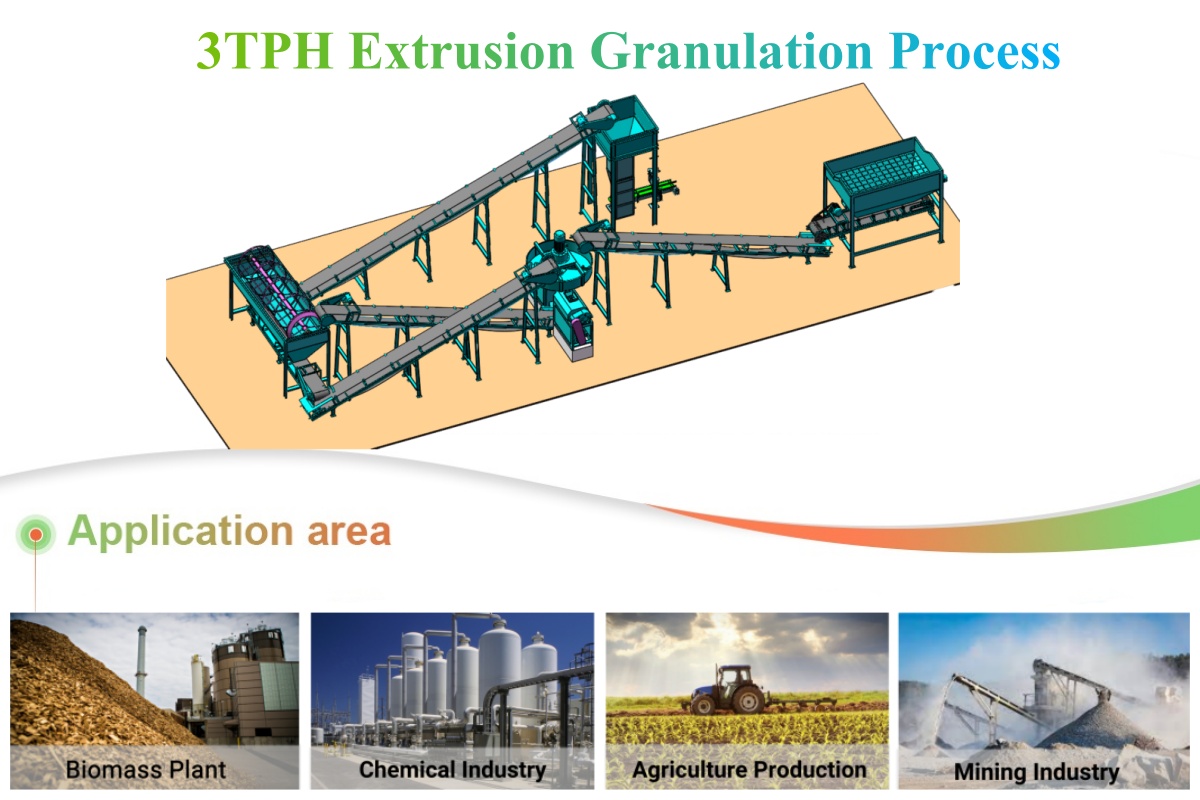

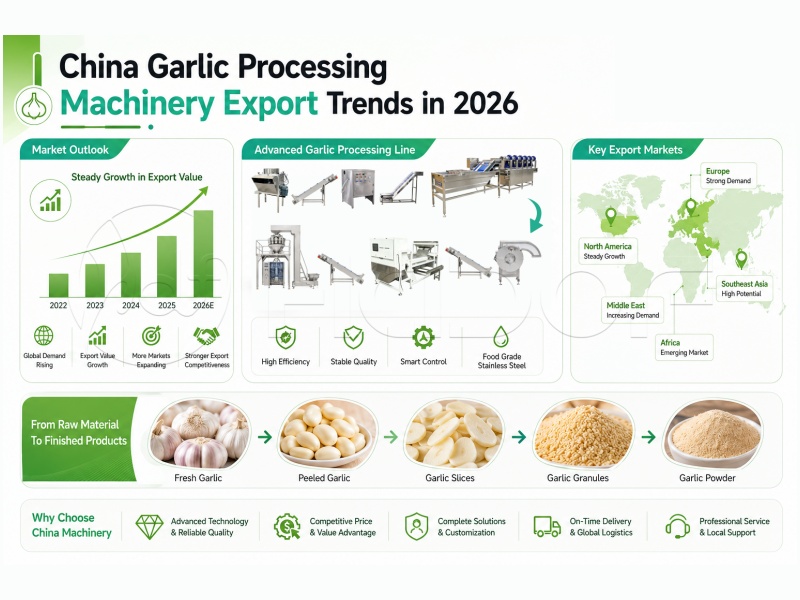
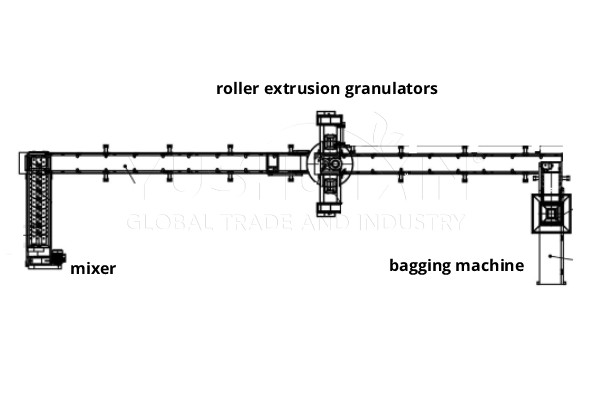
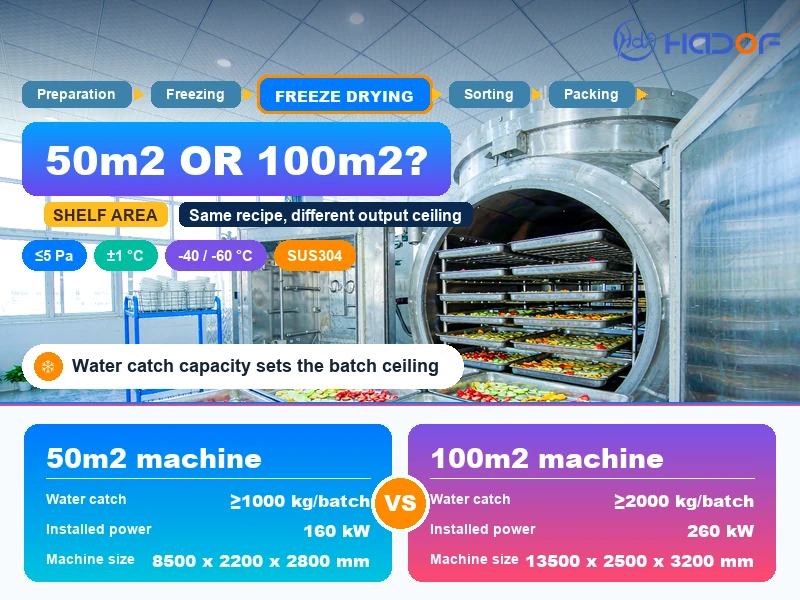
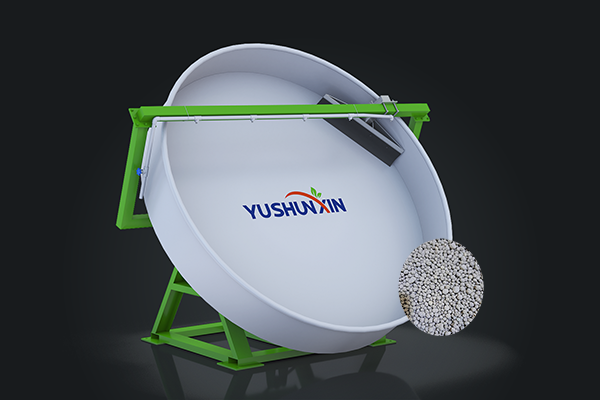

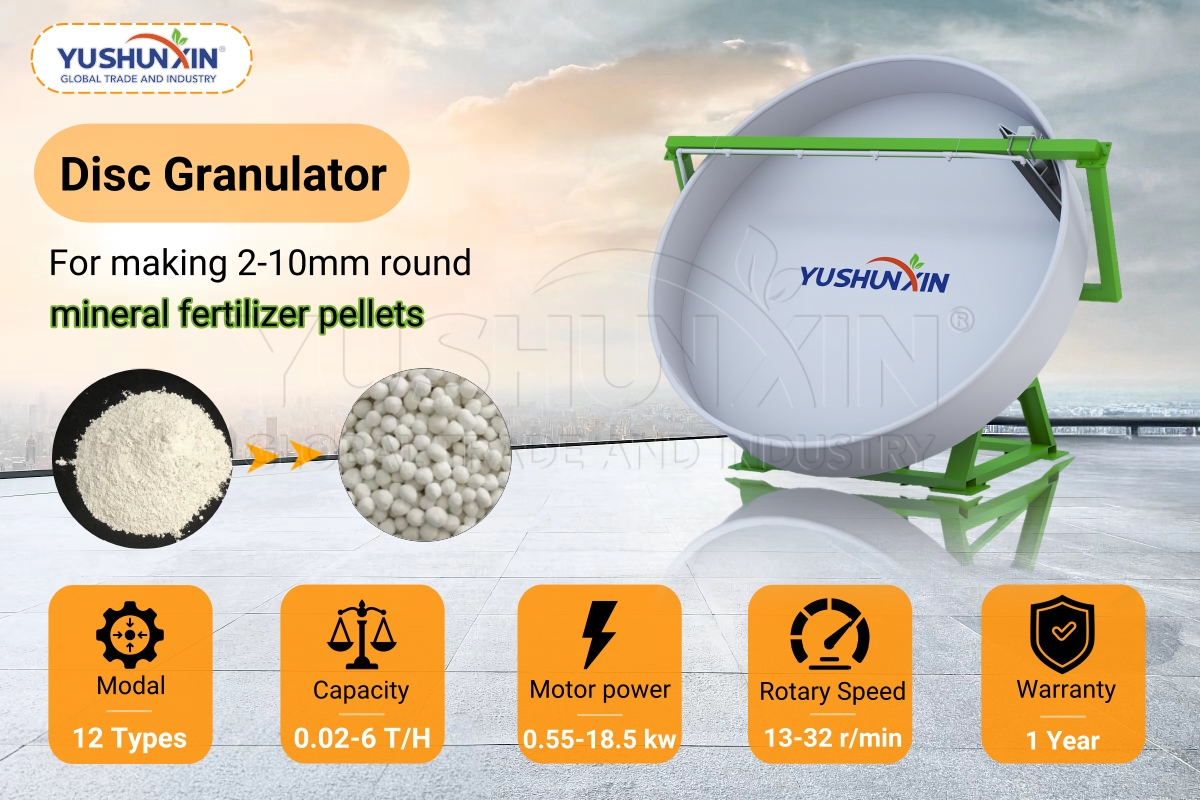
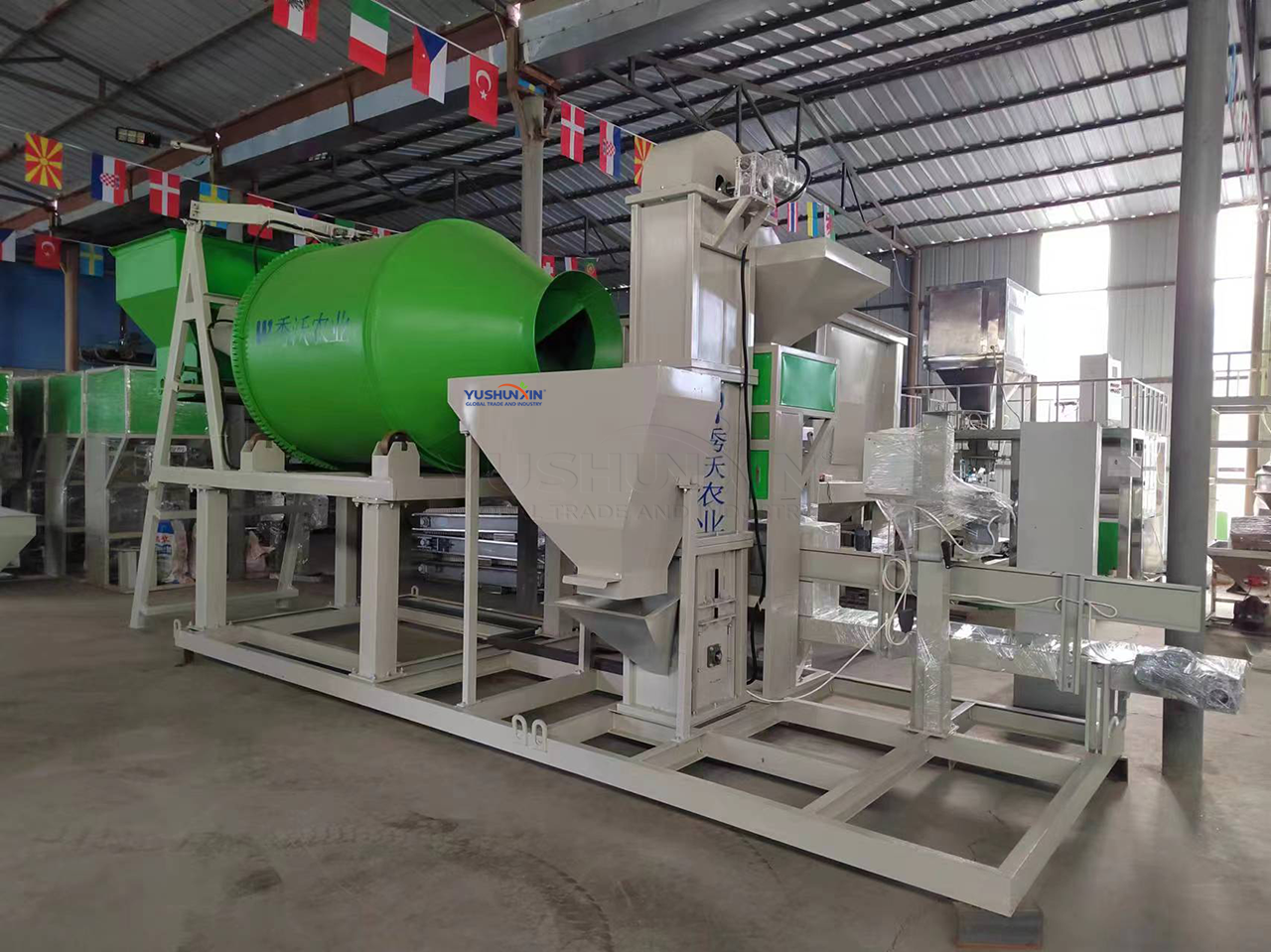
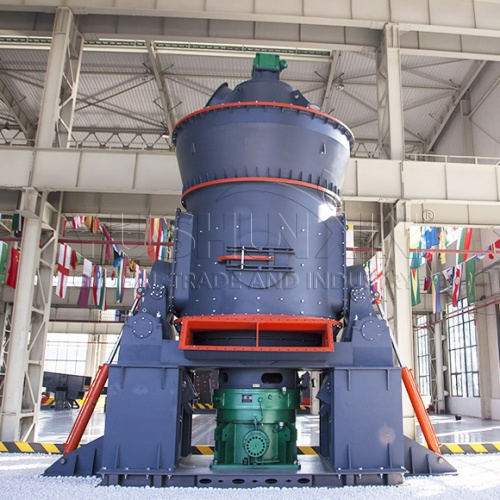

.jpg)