
A fresh-cut vegetable factory that trims, inspects, and sorts leafy greens or mixed produce needs a worktable that fits the operators and the waste flow. The ergonomic manual cutting and sorting table for vegetable processing places the cutting, the inspection, and the waste collection in one station. This article explains the layout choices that improve the finished product quality in a food production line.
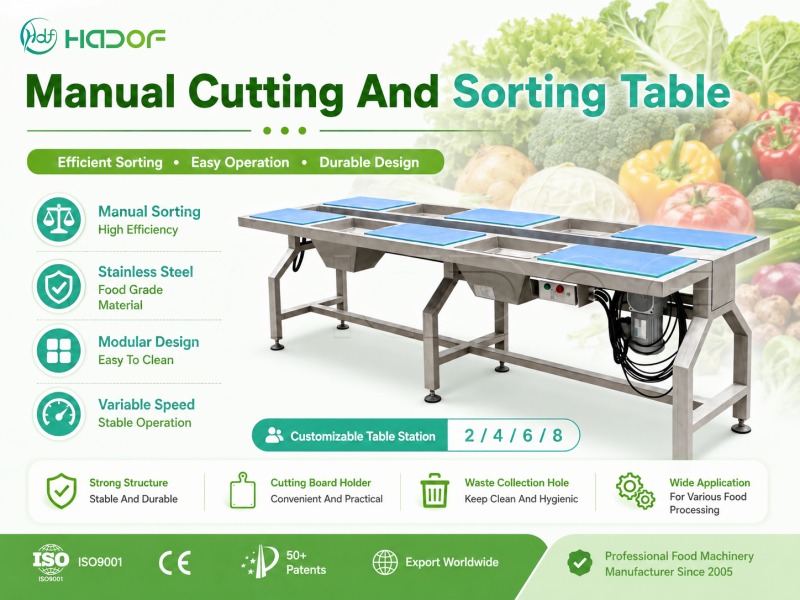
How Should a Factory Arrange the Workstations on a Manual Vegetable Sorting Table?
Each operator needs a cutting board, a waste opening, and a clear view of the product, so the table layout follows the batch flow. A buyer lists the number of workers, the product type, and the target throughput before choosing the station count. A table with six or eight positions lets the line move steadily without crowding. This arrangement reduces the rework and keeps the food processing system clean.
Which Product Types Benefit From a Stainless Manual Cutting Table in a Food Processing Plant?
Leafy greens, root vegetable pieces, and trimmed fruit all pass across the table for inspection and defect removal. The stainless manual cutting table with waste collection for factories resists moisture and allows a quick wash between batches. A food plant that handles several product types uses one surface for the shared trimming work. This choice keeps the food manufacturing area hygienic and the finished pieces uniform.
How Does a Multi-Station Sorting Table Connect With the Cutting Machine and the Dryer?
The table receives product from the leafy vegetable cutting machine for a sorting line and passes the inspected pieces to washing or drying. A multi-station produce sorting table for finished quality gives each inspector a fixed position and a clear reach. A straight path keeps the operators from reaching across the flow and keeps the waste moving into the collection bins. This connection turns the table into a controlled inspection point rather than an isolated bench. A clear flow also reduces the chance of a piece sitting too long in the food processing room.
How Should a Factory Verify the Manual Sorting Table Before the Purchase?
Manual labour remains part of fresh-cut inspection because operators find the soft spots and the leaf damage that a machine can miss. You can review the vegetable sorting table manufacturer to confirm the frame, the food-grade surface, and the waste tray design. A trial with the plant’s own produce shows the reach, the lighting, and the cleanup time. This review turns the food equipment decision into a dependable quality step.
How Does Better Waste Collection Improve Finished Product Quality in Food Preparation?
The waste openings at each station pull the trimmings and the rejects out of the product path, so clean pieces do not pick up the moisture or the bruising. This separation lowers the foreign material and the spoilage that a cluttered table would cause. A buyer who counts the rework and the waste sees the table as a quality control rather than only a workspace. This detail protects the food preparation result from the first cut to the pack.
Conclusion
A factory optimizes a manual inspection sorting table when the stations, the flow, and the waste collection match the product and the operators. These choices keep the inspection fast and the finished pieces clean. If you have interests, you can learn more about https://www.hadofps.com/products/manual-cutting-and-sorting-table/