What Is the Future of Dry Granulation Technology in Limestone Fertilizer Production?

The manufacturing of lime-based fertilizers plays a central role in sustainable soil conditioning and nutrient management. As industries seek efficient solutions, dry granulation technology in limestone fertilizer production demonstrates significant potential. This technology not only ensures stable particle formation but also provides reliable results for industrial customers who prefer energy-saving and low-moisture preparation methods. By examining raw material suitability, process requirements, and equipment innovation, the future of limestone fertilizer granulating procedures becomes clearer.


What Raw Materials Can Suit Limestone Fertilizer Granulation?

Limestone, lime powder, and lime rock serve as the most common bases for fertilizer manufacturing. Each raw material shows distinct advantages when applied to different industrial needs. Finely milled limestone powder supports rapid granule binding during pellet making, which benefits companies that demand uniform particle size for efficient field application. On the other hand, coarser lime rock fragments support gradual nutrient release, which benefits industries focusing on long-term soil improvement. Hydrated lime provides high reactivity, which becomes valuable in chemical plants that require quick pH adjustment during fertilizer preparation.

Limestone Powder Granulator

Other raw material options such as gypsum, dolomite, and by-product mineral powders also integrate into fertilizer pelletizing procedures. For example, gypsum powder improves granule hardness during extrusion, while dolomite contributes both calcium and magnesium for multi-nutrient formulations. By selecting the correct combination, each producer ensures specialized benefits for different industrial sectors, including agriculture-related enterprises, soil remediation firms, and even construction material suppliers seeking stabilized lime-based granules.


How Do Granulation Procedures Shape the Future of Lime-Based Fertilizer Production?

The granulation process defines product quality, energy efficiency, and cost-effectiveness. Dry granulation, especially double roller extrusion, avoids the need for additional drying or large-scale heating. This procedure reduces operational energy costs and shortens the production cycle. Each particle that emerges from a compacting press shows high density, which guarantees improved transport stability and less dust formation.

Granule making with extrusion machines supports flexible formula adjustment. Producers can switch between limestone powder, dolomite, or mixed materials without complicated preparation changes. During ball making or pelletizing, the high-pressure compacting effect ensures consistent granule strength. Consequently, downstream industries gain advantages in packaging, storage, and bulk handling. In contrast, traditional wet granulating consumes larger amounts of water and drying energy, which increases expenses and environmental pressure. Therefore, dry granulation technology positions itself as a sustainable and forward-looking solution for limestone fertilizer production.


What Machine Features Improve Lime Fertilizer Pelletizing Procedures?

Modern lime fertilizer production lines combine several types of machinery to guarantee efficiency. A loader-type feeder ensures stable raw material supply, while a chain crusher reduces oversized lime rock into fine powder. A horizontal mixer creates balanced blending among limestone, gypsum, and other additives before extrusion. The double roller extrusion granulator acts as the core machine, pressing raw powders into compacted granules without external binders.

Rotary screening equipment then separates qualified pellets from undersized particles, while belt conveyors connect each procedure smoothly. An automatic packaging scale completes the process by ensuring precise bagging of finished products. These machines together create stable production procedures, with minimum labor demand and reduced energy consumption. For industries focusing on lime powder fertilizing particle preparation, such integrated machinery ensures efficient granulating performance and reliable product consistency.


Conclusion

Dry granulation technology provides clear benefits for lime-based fertilizer producers. Each raw material, whether limestone, lime powder, or dolomite, finds suitable transformation into high-quality fertilizer granules. The procedure reduces costs, saves energy, and ensures durable particles. Equipment innovation, including double roller extruders, screening systems, and automated packaging machinery, further strengthens process reliability.

The future of limestone fertilizer granulation lies in sustainable dry extrusion methods, which align with industrial demands for efficiency and environmental responsibility. As a professional fertilizer equipment manufacturer, Yushunxin continues to provide advanced dry granulation machinery and integrated lime fertilizer production solutions that support enterprises in achieving stable output and long-term competitiveness. You can visit: https://www.extruder-granulator.com/product/limestone-powder-granulation-machine/

Почему стоит выбрать барабанный гранулятор для производства гранул? — Идеальный выбор для эффективного производства гранулированных удобрений

В современном производстве удобрений этап гранулирования играет ключевую роль. Гранулированные удобрения удобны для транспортировки, хранения и внесения, а также обеспечивают равномерное высвобождение питательных веществ и повышение эффективности удобрений. Среди множества гранулирующих установок барабанный гранулятор занимает особое место благодаря своим уникальным преимуществам, становясь первым выбором для большинства производителей удобрений. Сегодня мы подробно рассмотрим основные причины, по которым стоит выбрать барабанный гранулятор для производства гранул.

Барабан-гранулятор
Барабан-гранулятор

Простая конструкция оборудования, легкость в эксплуатации и обслуживании

Барабанный гранулятор имеет относительно простую конструкцию, состоящую из барабана, привода, входного и выходного отверстий. Процесс эксплуатации интуитивно понятен и легок для освоения, а ежедневное обслуживание и ремонт не требуют больших усилий. Это существенно повышает эффективность работы производственной линии и снижает частоту поломок.

Высокая адаптивность и широкий спектр применения

Барабанный гранулятор подходит для различных видов сырья — органических, комплексных, смешанных, биологических удобрений и др. Независимо от того, является ли сырье порошкообразным, комковатым или имеет различную фракцию, можно гибко регулировать скорость вращения, угол наклона и подачу воды для оптимального гранулирования. Такая универсальность позволяет удовлетворить разнообразные производственные потребности.

Высокий коэффициент формирования гранул и стабильное качество

В процессе гранулирования внутри барабана за счет давления и трения между частицами материал постепенно формирует прочные гранулы. Барабанный гранулятор обеспечивает выход годных гранул более 70%, при этом они имеют однородный размер и округлую форму, что удобно для последующей упаковки, транспортировки и применения. Стабильное качество продукции способствует укреплению имиджа бренда.

Барабанный-гранулятор

Большая производительность и низкое энергопотребление

Барабанный гранулятор подходит для крупномасштабного непрерывного производства, может быть изготовлен в различных модификациях с разной производительностью (например, 5, 10, 15 тонн в час и выше), что отвечает требованиям средних и крупных предприятий. При этом энергозатраты относительно невысоки, а эксплуатационные расходы легко контролируются, что способствует снижению себестоимости и повышению эффективности предприятия.

Высокая степень автоматизации и простота интеграции в производственную линию

Современный барабанный гранулятор оснащается автоматической системой подачи воды и пара, а также интеллектуальной панелью управления, что делает эксплуатацию максимально автоматизированной. Оборудование легко интегрируется с установками для смешивания, сушки, охлаждения, просеивания и упаковки, формируя полную и эффективную производственную линию для гранулированных удобрений и значительно повышая производительность.

Ярко выраженные экологические преимущества

Барабанный гранулятор отличается хорошей герметичностью и при оснащении системами пыле- и газоочистки позволяет существенно снизить выбросы пыли и запахов в процессе производства, что соответствует современным экологическим стандартам.

Барабанный гранулятор благодаря простой конструкции, высокой адаптивности, высокому выходу готовых гранул, большой производительности, автоматизации и экологичности стал незаменимым оборудованием для производства гранулированных удобрений. Если вы планируете запуск или модернизацию линии по производству гранул, барабанный гранулятор несомненно станет вашим лучшим выбором.

Свяжитесь с нами, чтобы получить профессиональную консультацию по подбору гранулятора и проектированию производственной линии. Давайте вместе развивать эффективное сельское хозяйство и способствовать устойчивому развитию отрасли удобрений! Более подробную информацию можно найти на сайте:https://www.granulyator.com/product/barabannyy-granulyator/

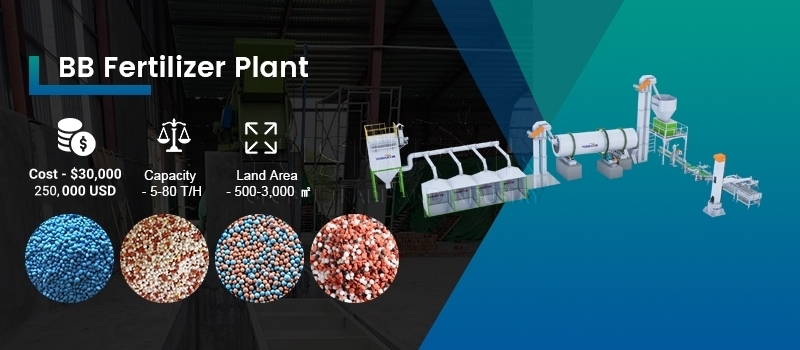
How Much Capital Is Needed for a BB Fertilizer Production Setup?

Setting up a BB fertilizer production plant requires careful consideration of raw material selection, machinery investment, and overall factory layout. Many investors want to understand the specific fertilizer manufacturing plant cost before building such a facility. Since bulk blend fertilizer production focuses mainly on the blending process, the machinery and equipment play a decisive role in determining both the budget and efficiency of the project. When you evaluate the capital needed, you must analyze raw material preparation, bulk blending fertilizer machine selection, and packaging equipment together with the scale of the fertilizer plant setup.


What Raw Materials Are Suitable for Bulk Blended Fertilizer Production?

The choice of raw materials directly affects both the fertilizer quality and the total investment cost. In bulk blend fertilizer production, the most common materials include urea, ammonium nitrate, ammonium sulfate, monoammonium phosphate, diammonium phosphate, potassium chloride, and potassium sulfate. Each of these basic fertilizers provides different nutrient contents such as nitrogen, phosphorus, and potassium. When you set up a BB fertilizer factory, you should also take into account the physical properties of raw materials, including granule size and moisture content, because uniform particle dimensions ensure smooth blending during the bulk blending process.

In addition, many fertilizer manufacturing plants prepare raw materials by using a crushing machine such as a vertical crusher or chain crusher to reduce oversized particles. Some factories also install an automatic batching machine or a static batching machine to weigh ingredients precisely according to a specific formula. These supporting machines may increase the initial quotation, but they guarantee accurate nutrient ratios and stable bulk blended fertilizer production.

BB Fertilizer Plant
BB Fertilizer Plant

How Do Equipment Choices Influence Bulk Blending Fertilizer Plant Cost?

The blending and mixing machinery represent the core investment in a BB fertilizer production plant setup. The fertilizer production line cost changes significantly depending on the model and capacity of the blender or mixer. For small-scale production, a BB fertilizer blender with a simple structure may be sufficient. However, for large-volume fertilizer manufacturing plants, a drum type bulk blending fertilizer mixer ensures higher efficiency and uniformity. Both models influence the overall budget, and equipment suppliers usually provide different price ranges depending on capacity.

Besides the mixing machine, additional equipment contributes to the fertilizer plant cost. A bucket elevator often transfers raw materials to higher positions during bulk blended fertilizer preparation, while a packing machine completes the process by sealing products into bags for sale. If investors want to expand into granule making, a double roller granulator offers a cost-effective solution because it transforms powder into compact particles without high energy consumption. While not mandatory for basic bulk blended fertilizer production, this machine can broaden the product range and improve market competitiveness.

Therefore, when evaluating the quotation for building a fertilizer factory, investors must balance between essential equipment for blending and optional machinery for added product value. Each decision reflects directly on the fertilizer manufacturing plant cost and the expected return on investment.


How Can Investors Plan an Affordable Budget for a BB Fertilizer Plant Setup?

Budget planning for a fertilizer factory requires combining raw material costs, machinery prices, and construction expenses. Since bulk blending fertilizer production relies less on complex granulation processes, the initial fertilizer plant cost usually remains lower compared with compound fertilizer plants. However, equipment quality, automation levels, and production scale directly change the quotation. A small-scale BB fertilizer production line may start with a limited budget, but a large-capacity fertilizer production plant requires higher capital due to advanced bulk blending machines and extended packaging systems.

Investors should also consider ongoing expenses such as electricity, labor, and maintenance. Although setting up a fertilizer manufacturing plant can require significant capital, choosing efficient equipment reduces long-term operating costs. A professional supplier can provide detailed advice on how to build a fertilizer plant with optimal investment. The right selection of machines ensures smooth production procedures, consistent quality, and stable market supply.


Conclusion

In summary, the capital required for a BB fertilizer factory depends on raw material preparation, bulk blending machinery, supporting equipment, and overall scale of production. Investors need to evaluate fertilizer manufacturing plant cost carefully and select equipment that matches their target capacity and budget. By understanding the key factors—raw materials, blender or mixer, batching system, and packing machine—any investor can estimate the quotation for establishing a fertilizer production plant more clearly.

To achieve long-term success, cooperation with a professional fertilizer equipment manufacturer becomes essential. A company such as Yushunxin provides reliable bulk blending fertilizer machines, efficient mixing systems, and complete solutions for fertilizer plant setup. Through professional consultation and high-quality machinery, investors can establish a cost-effective BB fertilizer production line and achieve sustainable development in the fertilizer industry. You can visit: https://www.fertilizerproductequipment.com/bb-fertilizer-plant-cost/

Полный разбор производственной линии по производству тофу-наполнителя для кошачьих туалетов на плоской матрице: эффективное и экологичное производство товаров для домашних животных

С ростом популярности здорового содержания домашних животных и экологичных идей наполнители для кошачьих туалетов из тофу, благодаря своим натуральным, биоразлагаемым и удобным для канализации свойствам, становятся все более популярными среди владельцев кошек. Знаете ли вы, что значительная часть такого наполнителя производится именно на производственных линиях с плоской матрицей? Сегодня мы приглашаем вас заглянуть на современное производство и раскрыть секреты эффективного и надежного изготовления этого продукта!

Частицы наполнителя для кошачьего туалета тофу

Что такое производственная линия по производству тофу-наполнителя на плоской матрице?

Линия по производству наполнителя на плоской матрице – это технология прессования сырья через плоскую матрицу для формирования гранул. В отличие от традиционной экструзии, оборудование с плоской матрицей отличается простой конструкцией, универсальностью и удобством обслуживания, что делает его одним из основных выборов современных заводов по производству тофу-наполнителя.

Как работает производственная линия?

Процесс производства наполнителя из тофу на линии с плоской матрицей обычно включает следующие этапы:

1. Предварительная обработка сырья
Соевые жмыхи, кукурузный крахмал, гороховое волокно и другие ингредиенты измельчаются и просеиваются для достижения однородной текстуры.

2. Смешивание
Ингредиенты в нужных пропорциях и с добавлением воды помещаются в смеситель для получения равномерной массы с хорошими комкующими и впитывающими свойствами.

3. Прессование на плоской матрице
Это ключевой этап. Смешанное сырье подается в гранулятор с плоской матрицей, где прижимными роликами проталкивается через отверстия, формируя цилиндрические или палочкообразные гранулы. На этом этапе определяется плотность, форма и однородность наполнителя.

4. Нарезка и формирование
Длинные гранулы разрезаются до стандартной длины и приводятся к единому размеру.

5. Сушка и охлаждение
Свежие гранулы содержат высокую влажность, поэтому их сушат и охлаждают для получения сухого готового продукта.

6. Просеивание и удаление пыли
Вибросито отделяет некондиционные частицы и пыль, что повышает мягкость и снижает пыление наполнителя.

7. Автоматическая упаковка
Готовый наполнитель фасуется и герметично упаковывается с помощью автоматической упаковочной машины для удобства хранения и транспортировки.

Тофу для кошачьего туалета

Преимущества производственной линии на плоской матрице

Качественная формовка
Гранулы получаются плотными, отлично комкуются и не пылятся.

Низкое энергопотребление, высокая производительность
Оборудование экономично и позволяет производить наполнитель в больших объемах.

Универсальность
Возможно быстро менять матрицы для выпуска разных форм и размеров гранул.

Простота эксплуатации и обслуживания
Конструкция оборудования позволяет легко очищать и заменять детали.

Экологичность
Производство не загрязняет окружающую среду, отходы минимальны, а сырье используется максимально эффективно.

Как выбрать качественную производственную линию

Материал оборудования: лучше всего использовать пищевую нержавеющую сталь, которая безопасна и долговечна.
Степень автоматизации: автоматизация этапов от подачи сырья до упаковки снижает трудозатраты и увеличивает эффективность.
Техническая поддержка: выбирайте поставщиков, предлагающих полный спектр сервисных услуг.
Мощность: подбирайте производительность оборудования под свои задачи и масштабы бизнеса.

Производственная линия по выпуску тофу-наполнителя с плоской матрицей – важная основа индустрии экологичных товаров для домашних животных. Она позволяет изготовлять высококачественный наполнитель, популярный у владельцев кошек, и способствует устойчивому развитию отрасли. Если вы планируете инвестировать в создание такого производства, современное оборудование с плоской матрицей – ваш ключ к успеху на рынке!

Остались вопросы или интересуют детали работы линии? Пишите в комментариях, обсудим вместе! Более подробную информацию можно найти на сайте: https://www.sxmashina.com/roizvodstvo-napolnitelya-dlya-koshachego-tualeta-iz-ostatkov-tofu/