Breaking Down the Real Cost of an Industrial Fertilizer Production Line

When businesses consider entering the fertilizer manufacturing sector, the industrial fertilizer production line cost becomes a decisive factor. Investors often underestimate the complexity behind the total budget — it’s not just about buying a few machines, but about integrating equipment, utilities, manpower, and maintenance into a seamless system. A modern production line must balance efficiency, reliability, and scalability to achieve sustainable profits.

Equipment: The Foundation of Production

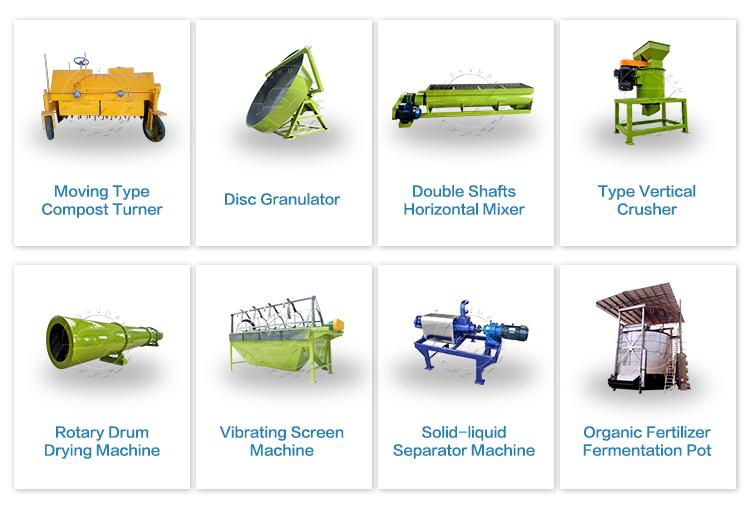
Equipment generally represents the largest portion of the investment. From mixers and granulators to dryers and packaging machines, the selection determines product quality and capacity. For example, an NPK fertilizer plant setup cost varies depending on automation level, production scale, and after-sales support. High-efficiency machines can reduce long-term expenses, but the initial purchase price will be higher. Buyers should compare models, evaluate energy consumption, and consider suppliers who offer full technical guidance to optimize production performance.

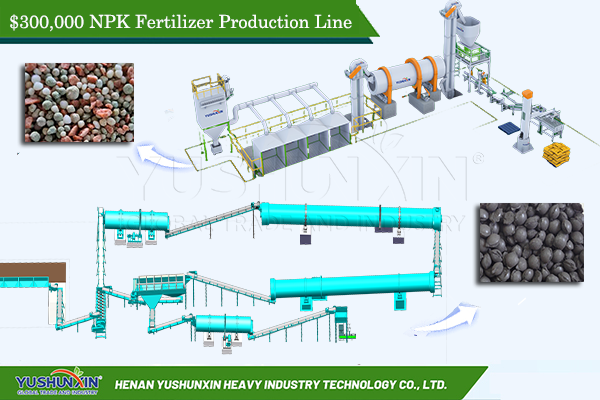
$300000 NPK Fertilizer making line

Energy Consumption and Operational Expenses

Energy use directly influences profitability. Powering dryers, mixers, and conveyors requires stable electricity or gas supply, and fluctuating energy prices can significantly affect total costs. Many factories invest in energy-saving systems and waste heat recovery to reduce operating expenses. For some investors, an organic fertilizer production line investment can be a strategic alternative because it often consumes less energy and utilizes locally available organic waste, lowering both cost and environmental impact.

Labor and Maintenance Costs

Even with automation, skilled workers are essential to ensure smooth operations. Labor costs include training, safety measures, and regular maintenance of critical equipment. Efficient management helps prevent unplanned downtime and product losses. When evaluating total expenses, companies should plan for spare parts and technical service to keep production lines running continuously.

The Role of Turnkey Solutions

For many entrepreneurs, starting from scratch can be overwhelming. Partnering with a turnkey fertilizer production line supplier simplifies the process, offering design, installation, and staff training in one package. Such suppliers can provide detailed cost forecasts and operational guidance, allowing investors to control budgets more effectively.  Get now

Estimating a Practical Budget

Every project is unique, but small to medium-scale facilities can often be established within a $300,000 solution for fertilizer making, depending on capacity and location. It’s essential to consider not only equipment prices but also logistics, utilities, and compliance with local environmental regulations. A transparent cost analysis helps ensure the investment delivers long-term value rather than short-term savings.

Conclusion

Breaking down the cost structure of a fertilizer production plant reveals that success depends on comprehensive planning. By balancing equipment quality, energy efficiency, and labor productivity, investors can achieve a competitive edge in the market. Whether you’re evaluating a chemical or organic setup, understanding these three pillars—equipment, energy, and labor—ensures your production line operates profitably and sustainably for years to come. If you need details, you can visit https://fertilizerequipmentmanufacturer.com/fertilizer-manufacturing-plant-cost/

Инвестиции в линию по производству удобрений, скидки на приобретение оборудования в конце года

В современном агропромышленном комплексе предприятия все чаще рассматривают инвестиции в линию по производству удобрений как стратегически важный шаг для развития бизнеса. В конце года оборудование для производства удобрений и сопутствующие машины традиционно становятся более доступными по цене благодаря сезонным скидкам. Для предприятий, которые стремятся повысить свою конкурентоспособность и увеличить производственные мощности, конец года представляет собой оптимальный момент для обновления технического парка. Выбор современных моделей грануляторов, сушильных барабанов, смесителей и упаковочных линий позволяет не только повысить эффективность производства, но и увеличить качество конечного продукта.

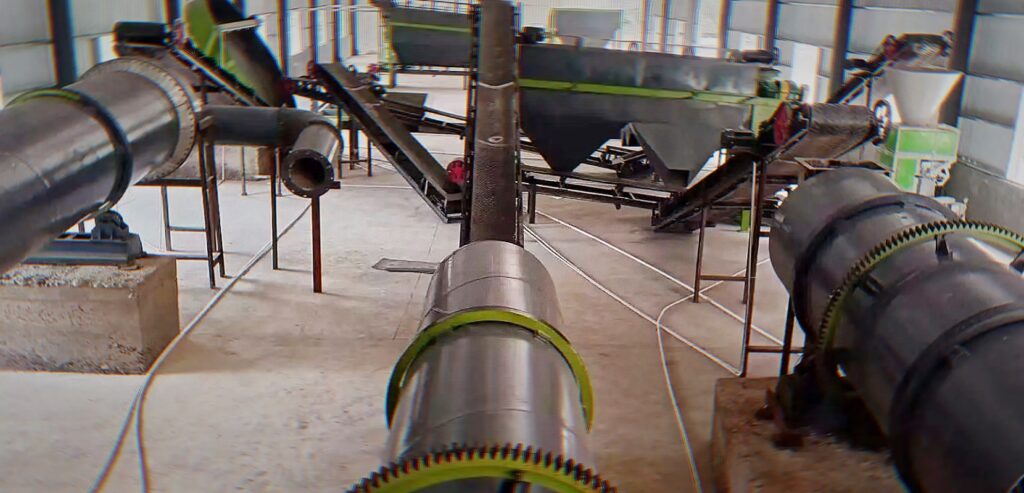
Cow dung granular fertilizer making process

Почему приобретение линии по производству удобрений с гранулятором и смесителем выгодно в сезон скидок на оборудование?

Многие эксперты отмечают, что покупка оборудования для производства гранулированных удобрений и комплексных производственных линий в период скидок позволяет значительно снизить капиталовложения. Гранулятор для органических удобрений, смеситель для сыпучих компонентов и упаковочная линия для готовой продукции — основные агрегаты, которые обеспечивают полный производственный цикл. Сезонные скидки на оборудование для производства удобрений дают возможность приобрести все необходимые машины по сниженной цене, что способствует быстрому возврату инвестиций. Кроме того, интеграция современного автоматизированного оборудования помогает значительно снизить издержки на обслуживание и ремонт в будущем, что положительно сказывается на экономических показателях предприятия.

Какие преимущества дает внедрение автоматизированной линии по производству гранулированных удобрений для предприятия?

Внедрение автоматизированной линии по производству гранулированных удобрений обеспечивает непрерывность технологических процессов и минимизацию человеческого фактора. Современные грануляторы, сушильные барабаны и системы автоматической подачи сырья позволяют существенно повысить производительность завода. Благодаря использованию таких решений, предприятия сокращают время производственного цикла, а также обеспечивают стабильное качество продукции. Дополнительно, интеграция современных систем контроля и управления помогает предотвращать производственные сбои и снижать потери сырья. Это особенно важно для производства органических и минеральных удобрений, где необходимы высокоточные настройки технологических параметров.

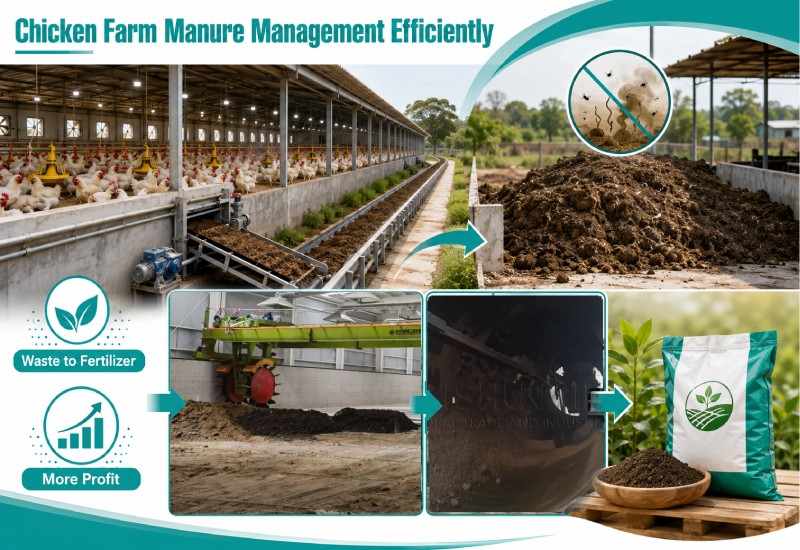
Use Animal Manure as Biofertilizer

Как выбор линии по производству удобрений с сушильным барабаном и упаковочной машиной влияет на эффективность бизнеса?

Правильный выбор линии по производству удобрений с сушильным барабаном и упаковочной машиной позволяет предприятиям повысить рентабельность производства. Сушильный барабан обеспечивает удаление лишней влаги из гранул, что способствует увеличению срока хранения и улучшению транспортабельности готовой продукции. Упаковочная линия значительно ускоряет процесс фасовки, снижая трудозатраты и повышая скорость отгрузки. Комплексное оснащение производства современными машинами повышает общий уровень автоматизации и снижает вероятность простоев. Это делает инвестиции в оборудование для производства удобрений экономически обоснованным выбором даже для небольших и средних предприятий.

Какие долгосрочные выгоды может получить предприятие от инвестиций в оборудование для производства удобрений?

Долгосрочные выгоды от инвестиций в оборудование для производства удобрений выражаются в устойчивом росте производительности и конкурентоспособности предприятия. Современное оборудование позволяет выпускать продукцию с минимальными затратами сырья и энергоресурсов, что снижает себестоимость и увеличивает прибыль. Высокая степень автоматизации производственных линий способствует быстрой адаптации к изменениям спроса на рынке и расширению ассортимента выпускаемых удобрений. Надежные грануляторы, смесители и упаковочные машины обеспечивают бесперебойную работу производства и минимизируют риски, связанные с поломками и простоями.

Инвестиции в линию по производству удобрений и использование сезонных скидок на оборудование позволяют предприятиям агропромышленного сектора повысить производственную эффективность, снизить издержки и укрепить свои позиции на рынке. Для получения дополнительной информации:https://www.liniyaudobreniy.com/liniya/


Fertilizer Plant Machinery Costs: What to Expect in 2025

As global agriculture continues to shift toward sustainability and efficiency, 2025 is shaping up to be a key year for fertilizer manufacturing investments. Whether you are planning to produce organic, compound (NPK), or bio-based fertilizers, understanding the machinery costs for setting up a fertilizer processing plant in 2025 is critical for budgeting and long-term success.

Key Machinery in Fertilizer Plants & 2025 Cost Outlook

In 2025, fertilizer equipment pricing is influenced by inflation, raw material costs, automation trends, and environmental regulations. Here’s an estimated cost breakdown for essential machinery:

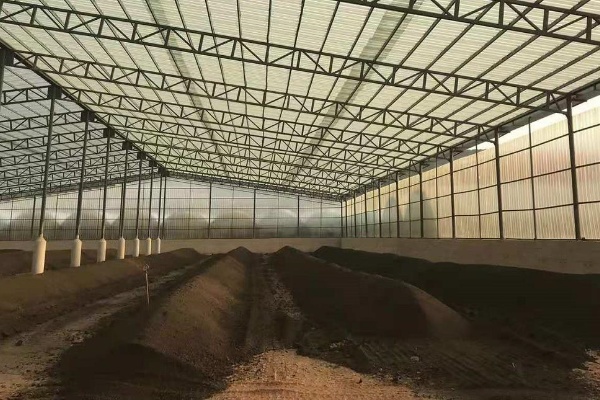
Composting Systems: Includes windrow turners, groove compost turners, or fermentation tanks. Prices range from $6,000 to $60,000 depending on automation and capacity. In 2025, smart composting systems with temperature, moisture, and aeration sensors are increasingly adopted for precision control.

Crushing, Mixing, and Batching Units: These machines process raw materials into a uniform blend. Expect to invest around $5,000 to $20,000. AI-driven batching systems may cost more but ensure consistency in nutrient ratios.

Granulation Equipment: Pan granulators, rotary drum granulators, or double roller granulators are widely used. With rising demand for round granules and uniform pellets, fertilizer granulator prices range from $8,000 to $70,000 in 2025 depending on output and tech integration.

Drying and Cooling Units:Required for moisture reduction and pellet stabilization. With energy efficiency upgrades and heat recovery features, expect $25,000 to $120,000 investment.

Screening & Packing Lines: High-speed, automatic packing systems are favored in 2025 for reducing labor. Cost: $6,000 to $35,000.

More details.

Trends Influencing 2025 Machinery Investment

1. Automation & Smart Technology: Automation is no longer optional. In 2025, many machines come integrated with IoT, real-time monitoring, and remote controls, increasing efficiency but also the upfront cost.

2. Sustainability Compliance: Environmental standards are stricter in 2025. Machines with built-in dust control systems or energy-saving designs are in higher demand.

3. Modular Design: Investors favor modular production lines that allow for scalable growth without full plant redesign.

If you are intersted in them, you can visit https://fertilizerequipmentmanufacturer.com/fertilizer-manufacturing-plant-cost/

Conclusion

In 2025, setting up a small to mid-sized fertilizer plant typically requires $60,000 to $300,000 in machinery investment. The costs are higher than previous years due to advanced tech and sustainability requirements, but the return is stronger through efficiency, compliance, and product quality. Investing in the right fertilizer equipment in 2025 is not just a cost—it’s a competitive edge.

The Cost-Benefit Analysis of Upgrading Fertilizer Equipment: Why It Matters

In modern agricultural practices, the importance of efficient fertilizer production cannot be overstated. Upgrading fertilizer equipment involves a careful cost-benefit analysis, focusing on the technicalities of granule production rather than just agricultural output. This article delves into the essentials of this decision, offering insights into suitable raw materials, advanced machinery features, and the overall impact on production efficiency.

Which Raw Materials Are Ideal for Organic or Compound Fertilizer Production?

Understanding the choice of raw materials forms the backbone of effective fertilizer production. Organic fertilizers often utilize materials such as animal manure, compost, and crop residues. These materials provide essential nutrients and enhance soil fertility naturally. Compound fertilizers, on the other hand, require specific combinations of raw materials, including urea, ammonium phosphate, and potassium chloride, to create a balanced nutrient profile.

The selection of appropriate raw materials directly influences the efficiency and quality of the granulation process. For instance, the moisture content and particle size of the raw materials significantly affect the granulating or pelletizing outcomes. Therefore, ensuring the compatibility of raw materials with granulation machinery is crucial for optimizing fertilizer plant costs.

What Advanced Features Should Modern Fertilizer Machinery Possess?

Modern fertilizer machinery plays a pivotal role in transforming raw materials into granules or pellets. These machines encompass features that enhance production efficiency and product quality. Essential characteristics include precise control over granulation parameters, such as moisture levels and temperature, to produce consistent granule sizes.

Another vital aspect is the machinery’s adaptability to different raw materials, ensuring versatility in fertilizer manufacturing. Advanced granulators and pelletizers offer enhanced durability, reducing maintenance costs and downtime. Additionally, energy-efficient designs contribute to lowering the overall npk fertilizer plant cost, making the upgrade economically viable.

The integration of automation technology in fertilizer machines streamlines the production process, reducing labor costs and minimizing human error. By investing in state-of-the-art machinery, manufacturers can improve productivity, thus lowering fertilizer plant setup costs in the long run.

Линия по производству гранул сульфата аммония с вращающимся барабаном

How Does Upgrading Equipment Impact Fertilizer Manufacturing Plant Costs?

The decision to upgrade fertilizer equipment significantly affects the financial dynamics of a production facility. While the initial investment may appear substantial, the long-term benefits often outweigh the expenditure. Upgraded machines typically offer higher output rates, reducing the overall fertilizer manufacturing plant cost per unit.

Moreover, efficient machinery minimizes raw material wastage, optimizing the use of available resources. Enhanced production efficiency also leads to a decrease in energy consumption, further lowering the fertilizer factory cost. By shortening production cycles and improving granule quality, upgraded equipment ensures that the organic fertilizer production plant cost remains competitive in the market.

Conclusion

In the competitive landscape of fertilizer manufacturing, staying ahead requires embracing technological advancements. A professional fertilizer equipment manufacturer, such as Yushunxin, offers innovative solutions tailored to specific production needs. By conducting a thorough cost-benefit analysis, manufacturers can make informed decisions, ensuring sustainable growth and profitability.  You can visit: https://www.fertilizerproductequipment.com/fertilizer-manufacturing-plant-cost/

NPK fertilizer production line cost

The production of NPK fertilizer, a blend of nitrogen (N), phosphorus (P), and potassium (K), is a complex process that involves a combination of chemical reactions and mechanical processes. The cost of setting up and operating an NPK fertilizer production line can vary widely based on a variety of factors. From the choice of production technology to the scale of operation, each aspect plays a significant role in determining the overall financial investment required. In this discussion, we will explore the various components that contribute to the cost of establishing an NPK fertilizer production line.

Initial Investment and Setup Costs

Land and Infrastructure

The first requirement for setting up an NPK production line is procuring a suitable site. The cost of land varies by location and size, and the expense of constructing the necessary buildings and infrastructure adds to the initial investment. This also includes utility hookups such as electricity, water, and gas, which are essential for the operation of the machinery.

Machinery and Equipment

A significant portion of the initial investment goes into purchasing the required machinery and equipment. An NPK production line typically includes mixers, granulators, dryers, coolers, screening machines, coating machines, and packing machines. The cost of this machinery can be quite substantial, depending on the complexity and automation level of the production line.

Licensing and Compliance

Obtaining the proper licenses and ensuring compliance with environmental and safety regulations can incur substantial costs. This might include environmental impact assessments, permits for emissions, and safety certifications for equipment and operations.

Operational Expenses

Raw Material Costs

The raw materials used in NPK fertilizer production plant, namely the nitrogenous, phosphatic, and potassic compounds, represent a recurrent expenditure. The price of these materials fluctuates based on market demand and supply, affecting the operational costs.

Labor Costs

Skilled and unskilled labor is required to operate and maintain the production line. Labor costs are influenced by the local economy, the level of automation in the production line, and the size of the operation.

Energy Consumption

The production of NPK fertilizer is energy-intensive, with significant costs associated with electricity and fuel used in the production process. The efficiency of the equipment and the local cost of energy sources play a pivotal role in ongoing operational expenses.

Maintenance and Repairs

Regular maintenance is crucial to keep the machinery running smoothly, which involves costs for spare parts and labor. Unexpected repairs can also contribute to operational costs, emphasizing the need for a well-maintained production line to minimize downtime and repair expenses.

Variable Costs and Considerations

Production Scale

The scale of production greatly influences the overall cost. A larger compound npk production line requires a higher initial investment but can lead to economies of scale, potentially reducing the per-unit cost of NPK fertilizer.

Technology and Automation

Investing in advanced technology and automation can increase initial costs but may lead to long-term savings through more efficient production, reduced labor costs, and enhanced product quality.

Quality Control and Product Development

Ensuring product quality through rigorous testing can be an additional cost element. Investment in research and development to formulate specialized NPK blends to meet specific crop needs can also factor into the overall cost structure.

Long-term Financial Planning

Depreciation and Amortization

The cost of the equipment and infrastructure is not just a one-time expense but is spread out over the lifespan of the assets through depreciation and amortization. This accounting practice needs to be factored into the overall financial planning of the NPK fertilizer production line.

Financing and Interest Rates

If capital investments are financed through loans, interest rates will affect the total cost of the project. Favorable financing terms can alleviate the financial burden and improve the feasibility of the production line.

Return on Investment

Ultimately, the cost of an NPK fertilizer production line must be weighed against the expected return on investment (ROI). The profitability of the operation depends on the efficiency of the production process, the quality of the final product, and the market demand for NPK fertilizers.

Conclusion: Balancing Costs with Efficiency

Creating an NPK fertilizer production line is a significant financial undertaking that requires careful planning and consideration of various cost factors. From the initial investment in land and equipment to the ongoing expenses for raw materials, energy, and labor, each element must be meticulously analyzed. By optimizing the balance between costs and operational efficiency, producers can establish a profitable NPK fertilizer production line that meets the agricultural demands of the market. Proper financial forecasting and strategic investment in technology and automation can help in managing costs and maximizing returns over the long term.

How to Build Your Fertilizer Plant?

Are you ready to enter the fertilizer business? Here are some essential steps to guide you through the process of building your fertilizer plant.

Fertilizer Plant Setup

Step 1: Understand the Market Demand

The first step in starting your fertilizer plant is a thorough understanding of market demand. What types of fertilizers are in demand? Is there a niche for organic or compound fertilizers? Conducting market research helps you identify your target audience and tailor your production to meet specific needs.

Step 2: Obtain Permits and Regulatory Approvals

Familiarize yourself with the local regulatory requirements and obtain the necessary permits and approvals for constructing and operating a fertilizer plant. This may include environmental impact assessments, building permits, and compliance with health and safety regulations. Engage with regulatory authorities and ensure that your plant will meet all legal obligations.

Step 3: Choose the Right Location

Selecting the right location for your fertilizer plant is crucial. Consider proximity to raw materials, transportation infrastructure, and accessibility to your target market. A well-chosen location can reduce production costs and enhance overall operational efficiency.

Land Rents for Fertilizer Plant Manufacturing

Step 4: Design the Plant Layout

Work with experienced engineers and architects to design an efficient and functional layout for your fertilizer plant. You can find a fertilizer machinery manufacturer in advance to acquire the fertilizer processing solutions, techniques or fertilizer production line layouts. You should consider factors such as raw material storage, production units, packaging facilities, waste management systems, and administrative areas. Strive for an optimized workflow that prioritizes safety, energy efficiency, and scalability.

Step 5: Source and Procure Equipment

Identify reliable suppliers and manufacturers of fertilizer production equipment. Research and select equipment that aligns with your production requirements, quality standards, and budget. Common equipment includes mixers, granulators, dryers, conveyors, packaging machines, and environmental control systems. Ensure that the equipment meets industry specifications and safety regulations.

Fertilizer Production Equipment

Step 6: Construct the Infrastructure

Equip your fertilizer plant with appropriate infrastructure and safety systems to ensure smooth and secure operations. This includes preparing the site, constructing buildings, setting up utility connections (such as water, electricity, and gas), electrical systems, HVAC (heating, ventilation, and air conditioning) systems, fire detection and suppression systems, and wastewater treatment facilities. Engage with reputable contractors and closely monitor construction progress to ensure adherence to timelines and specifications.

Step 7: Test and Commission the Plant

Before commencing full-scale production, conduct thorough testing and commissioning of your fertilizer plant. Verify that all equipment and systems are functioning correctly and that they meet the desired operational standards. This involves conducting trial runs, quality control tests, and ensuring compliance with regulatory requirements.

Step 8: Train and Onboard Staff

As your fertilizer plant nears completion, focus on training and onboarding your workforce. Provide comprehensive training programs to familiarize employees with the plant’s operations, safety protocols, and quality control procedures. Encourage a culture of continuous learning and improvement to optimize productivity and operational efficiency.

Conclusion

Building your own fertilizer plant is a complex endeavor that requires meticulous planning, technical expertise, and compliance with regulatory standards. With a dedicated team, adequate resources, and a clear vision, you can successfully build and operate a fertilizer plant. You can visit this page for more details: https://www.fertilizerproductequipment.com/fertilizer-manufacturing-plant-cost/