How Can a Factory Optimize a Manual Inspection Sorting Table for Vegetable Processing to Improve Finished Product Quality?

A fresh-cut vegetable factory that trims, inspects, and sorts leafy greens or mixed produce needs a worktable that fits the operators and the waste flow. The ergonomic manual cutting and sorting table for vegetable processing places the cutting, the inspection, and the waste collection in one station. This article explains the layout choices that improve the finished product quality in a food production line.
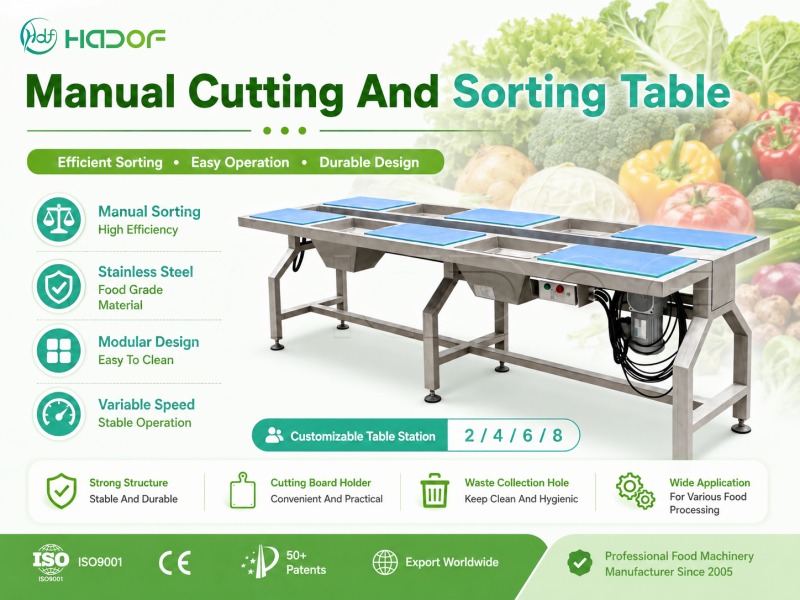
manual inspection sorting table for vegetable processing

How Should a Factory Arrange the Workstations on a Manual Vegetable Sorting Table?

Each operator needs a cutting board, a waste opening, and a clear view of the product, so the table layout follows the batch flow. A buyer lists the number of workers, the product type, and the target throughput before choosing the station count. A table with six or eight positions lets the line move steadily without crowding. This arrangement reduces the rework and keeps the food processing system clean.

Which Product Types Benefit From a Stainless Manual Cutting Table in a Food Processing Plant?

Leafy greens, root vegetable pieces, and trimmed fruit all pass across the table for inspection and defect removal. The stainless manual cutting table with waste collection for factories resists moisture and allows a quick wash between batches. A food plant that handles several product types uses one surface for the shared trimming work. This choice keeps the food manufacturing area hygienic and the finished pieces uniform.

How Does a Multi-Station Sorting Table Connect With the Cutting Machine and the Dryer?

The table receives product from the leafy vegetable cutting machine for a sorting line and passes the inspected pieces to washing or drying. A multi-station produce sorting table for finished quality gives each inspector a fixed position and a clear reach. A straight path keeps the operators from reaching across the flow and keeps the waste moving into the collection bins. This connection turns the table into a controlled inspection point rather than an isolated bench. A clear flow also reduces the chance of a piece sitting too long in the food processing room.

How Should a Factory Verify the Manual Sorting Table Before the Purchase?

Manual labour remains part of fresh-cut inspection because operators find the soft spots and the leaf damage that a machine can miss. You can review the vegetable sorting table manufacturer to confirm the frame, the food-grade surface, and the waste tray design. A trial with the plant’s own produce shows the reach, the lighting, and the cleanup time. This review turns the food equipment decision into a dependable quality step.

How Does Better Waste Collection Improve Finished Product Quality in Food Preparation?

The waste openings at each station pull the trimmings and the rejects out of the product path, so clean pieces do not pick up the moisture or the bruising. This separation lowers the foreign material and the spoilage that a cluttered table would cause. A buyer who counts the rework and the waste sees the table as a quality control rather than only a workspace. This detail protects the food preparation result from the first cut to the pack.

Conclusion

A factory optimizes a manual inspection sorting table when the stations, the flow, and the waste collection match the product and the operators. These choices keep the inspection fast and the finished pieces clean. If you have interests, you can learn more about https://www.hadofps.com/products/manual-cutting-and-sorting-table/

How Does a Seasoning Systems for Iqf Frozen Food Support Safety and Quality Control in Processing?

A frozen snack factory, a fried food plant, or an IQF processor that seasons product before freezing needs a system that coats evenly and stays hygienic. The seasoning systems for iqf frozen food apply oil spray and powder dosing in one controlled step, and that control supports both safety and quality. This article explains how the seasoning system protects the food processing result.

seasoning systems for iqf frozen food

How Does Seasoning Protect IQF Product Quality?

An even seasoning keeps the flavor consistent and the frozen pieces separate, because a wet or clumped coating freezes into blocks. The octagonal and drum seasoning machine for frozen snacks tumbles the product while it applies the powder or oil, so each piece gets the same coat. This uniformity is the food manufacturing quality that a manual mix cannot repeat.

How Do Oil Spray and Powder Dosing Keep Coating Even?

The oil spray prepares the surface, and the powder dosing applies the seasoning in a controlled amount, so the coating stays thin and even. The automatic seasoning system with oil spray and powder dosing adjusts the drum speed and the dose to the product, which reduces the over-seasoning and the waste. This control keeps the food preparation consistent across the shift.

How Does the Seasoning Machine Connect With Freezing?

A seasoning machine works best when the seasoned product moves directly to freezing, because a warm hold lets the coating settle and clump. The machine connects with an IQF quick freezer for a seasoned frozen food line, a cooling conveyor, and a packing station. A smooth handoff keeps the food processing system moving and the pieces separate.

How Does the System Support Food Safety?

The seasoning machine uses a hygienic stainless structure and a washable drum, so residue does not build up on the contact surface. A clean machine keeps the oil and powder from carrying contamination into the next batch. This hygiene is the food safety step that the seasoning stage must provide. A plant that cleans on schedule protects the product and the brand.

How Should a Buyer Verify the System?

Food seasoning rewards a trial with the plant’s own product, because the powder and oil ratio changes the coat. You can review the seasoning equipment manufacturer before a purchase, and that review shows the dosing and service support. A measured run turns the food machinery decision into a dependable quality result.

How Does the Seasoning System Reduce Waste?

The controlled oil spray and powder dosing apply only the amount the recipe needs, so the system reduces the over-seasoning and the dust that a manual mix spreads. The drum also tumbles the product gently, which lowers the breakage that lowers the yield. This waste reduction is a food manufacturing saving that a plant can measure. A buyer who checks the dosing accuracy sees the seasoning system as a quality and cost control together.

Conclusion

A seasoning system for IQF frozen food supports safety and quality by applying oil spray and powder dosing evenly and by connecting directly to freezing. These controls keep the food production line consistent and hygienic. If you have interests, you can learn more about https://www.friedfoodsolutions.com/seasoning-equipment/