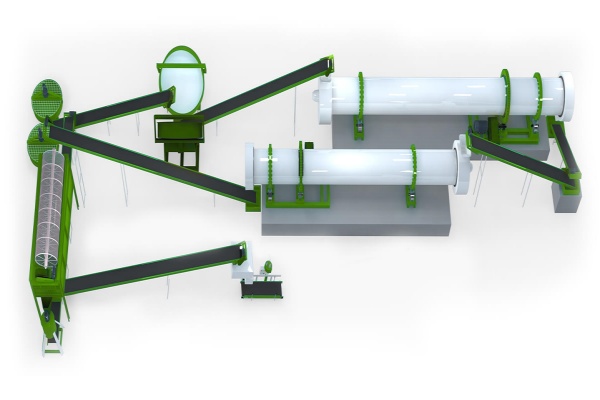
Plant owners and project investors often evaluate rotary drum dryer machine system before they plan a fertilizer processing plant. biochar, biomass ash, charcoal powder, lignite move through carbonization furnace, biochar crusher, rotary dryer in a complete fertilizer granulation line. When you select this equipment, you review capacity, material condition, and plant layout. This evaluation helps you control investment and keep production stable.
rotary drum dryer machine
How does a rotary drum dryer machine line support biochar processing?
A rotary drum dryer machine line supports biochar processing by connecting the main machine with feeding, mixing, and screening. You can prepare biochar, biomass ash, charcoal powder, lignite before the machine starts. A carbonization furnace and a biochar crusher help control material flow, while a rotary dryer protects product quality. This layout keeps the fertilizer processing plant stable and reduces manual transfer. You can also compare this process with standard fertilizer manufacturing system principles when you design the line. This preparation improves the fertilizer equipment and keeps the fertilizer machinery balanced. This setup also simplifies maintenance and reduces unexpected stops.
Why does a carbon-based fertilizer production solution 1 suit continuous fertilizer production?
A carbon-based fertilizer production solution 1 suits continuous fertilizer production because it handles biochar, biomass ash, charcoal powder, lignite in a steady flow. You can arrange the equipment so the material moves from intake to packing without long stops. The carbonization furnace feeds the next stage at a stable rate, and the biochar crusher forms the product into a uniform shape. This coordination reduces bottlenecks and keeps the fertilizer granulation line efficient. You can also add a rotary dryer to return off-size material for rework, which lowers waste and improves product consistency. The steady output supports daily packing and dispatch targets.
Which carbon-based fertilizer processing technology factors should you review before selection?
carbon-based fertilizer processing technology helps you choose the right equipment for biochar, biomass ash, charcoal powder, lignite. You can review moisture, particle size, capacity, and plant space before you order. A clear process flow reduces transfer points and protects the fertilizer machinery. This comparison also helps you balance fertilizer equipment with long-term operating cost. You can then match the selected machine to the fertilizer manufacturing system and keep the fertilizer processing plant running smoothly. This review helps you avoid buying oversized or undersized fertilizer machinery.
How can producers compare biochar standards for this fertilizer manufacturing process?
You can compare the general process described under biochar when you set the product standard and material specification. This reference helps you understand why moisture and particle size matter for biochar, biomass ash, charcoal powder, lignite. You can also adjust the carbonization furnace and the biochar crusher according to the target output. This control supports the fertilizer granulation line and keeps the fertilizer processing plant consistent during peak production. This preparation also supports repeat product quality across production batches.
To summarize, how do you size a rotary drum dryer machine for biochar fertilizer depends on material condition, equipment scope, and production capacity. You can match each machine to the required output and product form. A reliable biochar fertilizer equipment manufacturer can supply the complete fertilizer manufacturing system. Yushunxin provides this fertilizer production equipment. If you have interests, you can learn more about https://www.charbasedfertilizermachine.com/product/rotary-drum-dryer-machine
Plant owners and project investors often evaluate biochar machine price in india before they plan a fertilizer processing plant. biochar, biomass ash, charcoal powder, lignite move through carbonization furnace, biochar crusher, rotary dryer in a complete fertilizer granulation line. When you select this equipment, you review capacity, material condition, and plant layout. This evaluation helps you control investment and keep production stable.
biochar machine price in india
How does a biochar machine price in india system support biochar processing?
A biochar machine price in india system supports biochar processing by connecting the main machine with feeding, mixing, and screening. You can prepare biochar, biomass ash, charcoal powder, lignite before the machine starts. A carbonization furnace and a biochar crusher help control material flow, while a rotary dryer protects product quality. This layout keeps the fertilizer processing plant stable and reduces manual transfer. You can also compare this process with standard fertilizer manufacturing system principles when you design the line. This preparation improves the fertilizer equipment and keeps the fertilizer machinery balanced. This setup also simplifies maintenance and reduces unexpected stops.
Why does a biochar machine price in india line suit continuous fertilizer production?
A biochar machine price in india line suits continuous fertilizer production because it handles biochar, biomass ash, charcoal powder, lignite in a steady flow. You can arrange the equipment so the material moves from intake to packing without long stops. The carbonization furnace feeds the next stage at a stable rate, and the biochar crusher forms the product into a uniform shape. This coordination reduces bottlenecks and keeps the fertilizer granulation line efficient. You can also add a rotary dryer to return off-size material for rework, which lowers waste and improves product consistency. The steady output supports daily packing and dispatch targets.
Which carbon-based fertilizer processing technology factors should you review before selection?
carbon-based fertilizer processing technology helps you choose the right equipment for biochar, biomass ash, charcoal powder, lignite. You can review moisture, particle size, capacity, and plant space before you order. A clear process flow reduces transfer points and protects the fertilizer machinery. This comparison also helps you balance fertilizer equipment with long-term operating cost. You can then match the selected machine to the fertilizer manufacturing system and keep the fertilizer processing plant running smoothly. This review helps you avoid buying oversized or undersized fertilizer machinery.
How can producers compare biochar standards for this fertilizer manufacturing process?
You can compare the general process described under biochar when you set the product standard and material specification. This reference helps you understand why moisture and particle size matter for biochar, biomass ash, charcoal powder, lignite. You can also adjust the carbonization furnace and the biochar crusher according to the target output. This control supports the fertilizer granulation line and keeps the fertilizer processing plant consistent during peak production. This preparation also supports repeat product quality across production batches.
Biochar fertilizer producers often combine chicken manure with carbon material to make a stable soil amendment. A chicken manure biochar line requires dewatering, carbon mixing, aerobic fermentation, crushing, granulation, drying, and packing. You can use biochar, biomass ash, charcoal powder, and lignite as the carbon source. When you plan a chicken manure biochar fertilizer line, you match the fermentation capacity to the granulator and the packing unit.
chicken manure biochar
Which chicken manure biochar system supports stable composting?
A chicken manure biochar system supports stable composting with a compost turner or a fermentation tank. You can mix chicken manure with biochar to reduce odor and improve aeration, then turn the pile regularly to add oxygen. This step stabilizes the organic matter before the material enters the crusher. It keeps the fertilizer manufacturing process clean and prepares a uniform feedstock for granulation.
How does a chicken manure biochar line move from compost to granules?
A chicken manure biochar line moves compost through a biochar crusher, a mixer, a granulator, and a screening machine. Carbon-based fertilizer processing technology then connects the granulation stage with a rotary dryer and a packing scale. This sequence turns the fermented material into uniform carbon-based fertilizer granules that are easy to store and transport.
Which carbon sources and equipment improve chicken manure biochar quality?
Biochar, biomass ash, charcoal powder, and lignite improve chicken manure biochar quality by adding stable carbon and improving aeration. You can use a carbonization furnace to produce biochar from dry biomass, then grind it in a biochar crusher before mixing with chicken manure. A rotary dryer removes excess moisture from the finished granules. You can compare the general process described under biochar when you set the pyrolysis and mixing conditions.
Which screening and packing units complete the chicken manure biochar fertilizer line?
A screening machine and an automatic packing scale complete the chicken manure biochar fertilizer line. You can remove oversized granules and return them for re-crushing, then fill bags with consistent weight. This equipment combination protects the fertilizer equipment and keeps the fertilizer processing plant ready for distribution.
Which chicken manure biochar line design reduces odor and improves granulation?
A sealed fermentation tank and a closed conveyor reduce odor and improve granulation in a chicken manure biochar line. You can mix chicken manure with biochar before fermentation and keep the material covered during turning. A crusher then prepares uniform particles for the granulator, and a rotary dryer stabilizes the pellets. This design makes the fertilizer manufacturing system cleaner and helps the carbon-based fertilizer equipment run consistently.
To summarize, chicken manure biochar fertilizer production requires carbon mixing, fermentation, crushing, granulation, drying, and packing equipment. These measures also make the line easier to operate and maintain. A steady carbon blend supports repeat export orders. You can match each machine to the manure volume and the desired granule size. A biochar fertilizer equipment manufacturer can help you configure the complete carbon-based fertilizer line. Yushunxin provides this chicken manure and biochar fertilizer equipment. If you have interests, you can learn more about https://www.charbasedfertilizermachine.com/product/chicken-dung-and-biochar-as-fertilizer
Biochar fertilizer producers often install a biochar crusher that reduces charcoal powder, biomass ash, and lignite to a uniform size. Crushing dry carbon material creates dust, so the machine needs a sealed chamber and a discharge point that controls particle spread. When you control dust from a biochar crusher, you protect workers and keep the fertilizer processing plant clean.
biochar crusher
Which biochar crusher system controls dust during size reduction?
A biochar crusher system controls dust during size reduction with a sealed crushing chamber and a controlled outlet. You can feed biochar or charcoal powder through a hopper that limits air escape and discharge the crushed material directly into a conveyor or bin. This arrangement reduces airborne particles and keeps the fertilizer manufacturing process safe. It also protects the downstream fertilizer equipment from dust buildup.
How does a biochar crusher line prepare carbon material for granulation without excess dust?
A biochar crusher line prepares carbon material for granulation without excess dust when the crusher connects to a closed conveying system. You can move the crushed biochar to a mixer and granulator through a sealed conveyor. Carbon-based fertilizer processing technology helps you place the crusher between the carbonization furnace and the mixer, so the material path stays short and clean.
Which moisture and feed conditions reduce biochar crusher dust?
Correct moisture and steady feed conditions reduce biochar crusher dust. Very dry biochar becomes dusty, while a small amount of moisture can help particles settle. You can compare the general process described under biochar when you set the crushing conditions. A rotary dryer can adjust the material moisture before crushing, and a buffer hopper keeps the feed rate stable.
Which auxiliary equipment helps keep a biochar crushing area clean?
A dust collector, a sealed conveyor, and a discharge hood help keep a biochar crushing area clean. You can place the collector near the crusher outlet and connect the conveyor to the next processing stage. This equipment combination reduces manual sweeping and protects the fertilizer manufacturing system from dust accumulation. It also makes the carbon-based fertilizer production area safer for workers.
Which biochar crusher design features reduce dust and maintenance?
A sealed housing, a controlled discharge, and replaceable wear parts reduce dust and maintenance in a biochar crusher. You can choose a machine with a top feed and bottom discharge so material flows by gravity and leaves less residue. A dust collection port on the outlet captures fine particles before they spread. These features help your team clean the fertilizer equipment quickly and keep the carbon-based fertilizer production area safe.
To summarize, a biochar crusher controls dust with a sealed chamber, closed conveying, proper moisture, and a dust collector. These measures also make the crushing stage easier to operate and maintain. You can combine the crusher with a carbonization furnace, mixer, and granulator in one fertilizer manufacturing system. A biochar fertilizer equipment manufacturer can help you configure the crushing and dust control line. Yushunxin provides this biochar crushing equipment. If you have interests, you can learn more about https://www.charbasedfertilizermachine.com/product/carbon-fertilizer-grinder-machine-for-sale
Biochar fertilizer producers add a new type vertical crusher when carbon-based raw materials contain lumps or coarse particles before granulation. Biochar, biomass ash, charcoal powder, and lignite must reach a uniform size for stable mixing and pressing. In a carbon-based fertilizer manufacturing system, this vertical machine breaks oversized pieces without a screening bar. When you select a new type vertical crusher, you evaluate capacity, material moisture, and maintenance access.
new type vertical crusher
When does a biochar fertilizer line need a new type vertical crusher system?
Your biochar fertilizer line needs a new type vertical crusher system when raw biochar or charcoal powder arrives with hard lumps and uneven particle size. You can place the crusher after carbonization and before the mixer or granulator, so the downstream fertilizer manufacturing process stays stable. The vertical design allows material to enter from the top and discharge from the bottom, which reduces dust spread. This layout helps your fertilizer processing plant maintain clean air and protects workers during carbon-based fertilizer handling.
How does a new type vertical crusher line prepare biochar and biomass ash for granulation?
A new type vertical crusher line prepares biochar and biomass ash by reducing particle size before batching and granulation. You can set the machine to handle wet carbon-based materials and adjust the crushing chamber for lignite or charcoal powder. The crushed material then moves to a mixer and a granulator in the fertilizer granulation line. Carbon-based fertilizer processing technology links this crushing step with fermentation, drying, and packaging, so the whole fertilizer manufacturing system runs with fewer blockages.
Which carbon-based fertilizer production technology factors should you review before crusher selection?
Before you choose a crusher, review capacity, power, feed moisture, and particle output as carbon-based fertilizer production technology factors. Biochar production creates porous material, and the general process described under biochar helps you understand why stable sizing matters. You may also compare a carbonization furnace, a biochar crusher, and a rotary dryer in the same fertilizer processing plant. This equipment combination supports a continuous fertilizer production quotation and reduces the number of manual transfer points.
Which new type vertical crusher capacity fits a carbon-based fertilizer manufacturing system?
You can match a new type vertical crusher capacity to the hourly output of your carbon-based fertilizer manufacturing system. A small model suits a pilot line that handles biochar and biomass ash in limited batches, while a larger model supports continuous crushing for charcoal powder and lignite. The machine should sit between the carbonization furnace and the mixer so the downstream granulation step receives evenly sized material. This placement reduces bridging in bins and protects the granulator from oversized lumps. When you align the crusher capacity with the rest of the fertilizer equipment, you keep the whole carbon-based fertilizer processing flow balanced.
To summarize, a new type vertical crusher improves carbon-based fertilizer manufacturing when raw lumps threaten granule quality. You can place the machine before mixing and granulation to keep the fertilizer production line stable. A biochar fertilizer equipment manufacturer can help you configure the crusher with a carbonization furnace and dryer. Yushunxin provides such crushing systems for biochar fertilizer plants. If you have interests, you can learn more about https://www.charbasedfertilizermachine.com/product/new-type-vertical-crusher
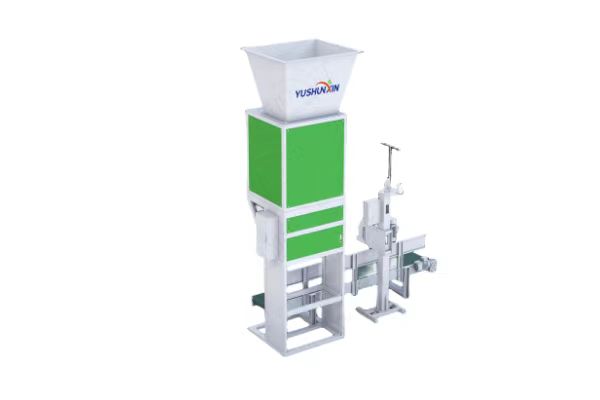
Accurate weighing and stable bag closure keep a carbon-based fertilizer line efficient and presentable. The biochar fertilizer packaging equipment for sale handles the final stage of the fertilizer manufacturing process, where granules or powder move into 25 kg and 50 kg bags. You can evaluate hopper type, weighing method, capacity, and supporting machines to select equipment that matches the daily bagging volume.
Caption: biochar fertilizer packaging equipment for sale – carbon-based fertilizer production
Which biochar fertilizer packaging equipment for sale fits 25 kg and 50 kg bagging lines?
A single-hopper packaging scale suits powder fertilizer and a moderate output. A double-hopper packaging scale suits granular fertilizer and provides a larger output because two hoppers operate in sequence. A tonnage scale serves bulk loading when the plant fills large bags or containers. You should choose the hopper type by the material form, the bag weight, and the required hourly output. This selection keeps the packaging stage aligned with the rest of the fertilizer production line.
How does the packaging machine work in a carbon-based fertilizer manufacturing system?
The operator starts the machine, and the conveyor moves the charcoal-based fertilizer to the weighing position. The weighing mechanism fills the bag, the sealing device closes the bag mouth, and the conveyor moves the finished bag forward. This automatic cycle repeats without manual lifting. In a carbon-based fertilizer manufacturing system, the packaging unit therefore reduces labor, improves weighing accuracy, and keeps bag weight consistent across a full production shift.
What biochar fertilizer packaging equipment capacity should a fertilizer processing plant plan?
Capacity should match the output of the granulator and the drying line rather than the packaging unit alone. A single-hopper scale provides steady weighing for powder, while a double-hopper scale covers a higher granular output. You should also leave room for peak production periods and for future line expansion. When the biochar fertilizer packaging equipment capacity matches upstream output, the fertilizer processing plant avoids piling material before the bagging station.
Which fertilizer machinery supports accurate weighing before bagging?
A crusher prepares uniform particle size after composting, and a screening machine removes oversized material before the bagging step. A carbon fertilizer grinder machine reduces lumps in biochar and charcoal powder so the packaging scale weighs a consistent product. Conveyors connect the screening, weighing, and sealing stations into one flow. Together these fertilizer machinery units keep the fertilizer production technology stable from granulation to the sealed bag.
How should a production team compare biochar fertilizer packaging equipment price?
The price depends on hopper count, automation, weighing range, and sealing method. A single-hopper unit costs less and suits powder, while a double-hopper unit costs more and delivers higher granular output. A tonnage scale adds cost but supports bulk packing. You should compare the biochar fertilizer packaging equipment price against accuracy, labor saving, and daily throughput instead of the purchase amount alone. You can review the About Us page for the manufacturer background.
Biochar retains its soil value when the final bag is filled accurately and sealed tightly. This packaging principle follows the material characteristics described for biochar. For a reference in bagging equipment, Yushunxin provides a range of packaging scales for different production volumes. If you have interests, you can learn more about https://www.charbasedfertilizermachine.com/product/biochar-fertilizer-packaging-equipment-for-sale
Carbon-based fertilizer production from chicken manure always depends on stable, controllable and efficient pelletizing equipment. The whole chicken manure carbon fertilizer production process includes composting, carbonization, crushing, mixing and granulation, and each stage influences the final pellet quality. However, pelletizing equipment occupies a key position because pellet making directly decides particle shape, granule strength and application performance. Therefore, every producer benefits from a clear understanding of the role of pelletizers and the way they connect with other carbon fertilizer machinery.
In carbon fertilizer manufacturing lines, chicken manure and other bird dung materials form the main organic source, while carbon powder or biochar adds carbon-rich structure. If the production process controls moisture, fineness and powder distribution well before granulation, the pelletizer can form uniform pellets and particles with reliable strength. Consequently, pelletizing equipment becomes the central link between powder preparation and finished carbon-based fertilizer pellets.
What raw materials support efficient chicken manure carbon-based fertilizer granulation?
Chicken manure carbon-based fertilizer production always starts with suitable raw material combinations. Chicken and other bird manure bring nitrogen, phosphorus and potassium, while carbonized materials provide stable carbon. In many factories, operators use chicken dung, bedding materials such as rice husk or sawdust, and crop straw as basic feedstock. After composting, these materials enter the carbonization equipment or furnace, which converts organic waste into char-based powder with higher carbon content.
Producers frequently blend chicken manure compost with biochar powder, lignite powder or other carbon powder to form a balanced carbon fertilizer mix. Every preparation step aims to create a uniform, powdery material with moderate moisture, because a powder mixture with stable particle size always supports smooth granulating. A carbon fertilizer grinder machine for sale, usually reduces large chunks of carbonized chicken manure into fine powder. The grinding process improves contact between powdered chicken manure and carbon-based additives, so the final granulation process produces homogeneous pellets. As a result, well-prepared powder materials significantly reduce pellet breakage and improve carbon fertilizer pellet strength.
Organic Fertilizer Raw Materials
How does the chicken manure processing procedure influence pelletizing performance?
The chicken manure carbon fertilizer production procedure includes several stages, and each stage influences pelletizing performance. First, a compost machine or compost turner treats fresh chicken manure and bird dung, because raw manure contains high moisture and unstable organic matter. During composting, micro-organisms reduce moisture, break down organic compounds and create a safer, more uniform material. After composting, the carbonization process in a furnace converts part of the organic matter into char-based material, which strengthens the carbon-based fertilizer structure.
The resulting char and compost then go through a crushing process. A carbon fertilizer grinder machine reduces agglomerates and transforms semi-carbonized chicken manure into fine powder or powdery particles. This powder preparation ensures that the subsequent mixing process can distribute carbon powder, chicken manure powder and any mineral additives evenly. When the production line controls moisture content, powder fineness and ingredient ratio accurately, pelletizing equipment receives a consistent feed. A stable feed allows the granulator or pelletizer to create uniform granules, pellets and balls without excessive fines or over-sized particles. Consequently, the whole processing procedure from chicken dung composting to powder preparation supports efficient carbon fertilizer pellet production.
Why do different pelletizing machines matter in carbon fertilizer production?
Different pelletizing machines in a carbon fertilizer manufacturing line deliver different pellet shapes, particle sizes and mechanical strengths. For example, a disc granulator uses a rotating pan to agglomerate powdery chicken manure carbon fertilizer into round granules. This type of granulator suits relatively light powder materials and offers easy adjustment of granule size. A drum granulator, on the other hand, handles larger output, because its rotating cylinder continuously rolls and granulates char-based powder and chicken manure powder into pellets during long residence times.
A double roller extrusion granulator presses powder into compact pellets through mechanical extrusion. Producers often select this pelletizer when they require relatively low moisture usage and high particle strength. A flat die granulator for char-based fertilizer produces cylindrical pellets and suits small to medium carbon fertilizer production lines that use chicken manure powder and carbon powder blends. Every pelletizing machine type connects differently with upstream crushing and drying equipment, so each producer chooses the granulation method that best matches powder characteristics, plant capacity and final pellet specifications. Therefore, the correct pelletizer selection directly impacts the efficiency and consistency of chicken manure carbon-based fertilizer production.
How does pelletizing equipment improve carbon-based fertilizer quality and handling?
Pelletizing equipment improves carbon-based fertilizer quality by transforming loose powder into stable pellets, granules and particles. Powdered chicken manure and biochar powder often cause dust problems, uneven nutrient application and storage difficulties. When pelletizing machinery forms dense pellets, the carbon fertilizer becomes easier to transport, store and spread. Granulation reduces dust emissions, so working conditions in the production plant and during field application remain cleaner.
At the same time, pelletizing equipment allows precise control over particle size and bulk density. With suitable parameter settings, the granulator creates pellets that flow smoothly through drying machines, coolers and packing machines. Uniform particle size also improves fertilizer application because spreaders distribute pellets more evenly than raw powder. Furthermore, stronger carbon fertilizer pellets resist breakage, so producers experience less fine powder loss in bags and during loading. By stabilizing chicken manure carbon fertilizer in granule form, pelletizing machinery strengthens product branding, because clients associate consistent pellet appearance with higher quality and more reliable performance.
How do carbon fertilizer machines cooperate to support stable pellet production?
A complete chicken manure carbon-based fertilizer production line always relies on cooperation among different machines. First, compost machines stabilize chicken manure and bird dung. Next, carbonization equipment transforms part of the compost into carbon-rich material. Then, crushing machines or carbon fertilizer grinder machines create powder and powdery particles with controlled fineness. Mixing equipment then blends chicken manure powder, carbon powder and other additives into a uniform feedstock for granulating.
Pelletizing equipment such as disc granulators, flat die granulators, drum granulators or double roller extrusion granulators converts the prepared powder into pellets. After granulation, drying machines reduce moisture content, and cooling systems stabilize pellet temperature. Finally, packing machines weigh and bag the finished carbon-based fertilizer pellets for sale. The coordination among these machines ensures that powdered materials enter the pelletizer in a controlled condition, and finished pellets leave the production line with consistent quality. Consequently, integrated carbon fertilizer machinery supports reliable chicken manure pellet making and long-term sustainable production.
Conclusion
Pelletizing equipment occupies a central position in chicken manure carbon-based fertilizer production, because granulation directly affects pellet strength, particle uniformity and handling properties. Every stage, from composting and carbonization to crushing and powder preparation, ultimately serves the pelletizing process. Producers who select appropriate pelletizers and match them with suitable carbonization, grinding, drying and packing machinery usually achieve more efficient chicken manure processing and more competitive carbon fertilizer products. For producers who plan to build or upgrade a chicken manure carbon fertilizer production line, a professional fertilizer equipment manufacturer—Yushunxin—offers specialized machines and technical support for stable and efficient pellet production. You can visit: https://www.charbasedfertilizermachine.com/product/chicken-dung-and-biochar-as-fertilizer/
In the modern fertilizer industry, increasing the carbon content in fertilizers has become a crucial objective for producers seeking to enhance the value and efficiency of their products. The process of producing carbon-based fertilizer by granulating chicken manure represents a significant advancement in organic fertilizer production technology. How does the granulation of bird manure enhance the carbon content and overall quality of fertilizers? The answer lies in the careful selection of raw materials, precise processing procedures, and the application of specialized equipment throughout the manufacturing process.
What Raw Materials Can Be Used for Carbon-Based Fertilizer Production from Chicken Manure?
The production of carbon-based fertilizers typically begins with the selection of suitable raw materials. Chicken dung serves as the primary organic input due to its rich nutrient profile and high organic matter content. However, producers generally combine bird manure with other carbon-rich materials to increase the carbon content in the final fertilizer product. Commonly used carbonaceous additives include powdered biochar, straw powder, sawdust, and other plant residues. These materials not only supplement the carbon level but also help to absorb moisture and balance the nutrient ratio during the chicken manure granulation process. For example, biochar powder can act as both a carbon source and a structural enhancer, improving the texture and stability of the fertilizer pellets.
Combining chicken manure with additional carbon-based materials in the form of powder or small particles ensures the carbon fertilizer produced contains a balanced composition. The compatibility of bird manure with various organic and residual materials allows producers to optimize the formulation for higher carbon content, better granule formation, and improved product performance. The careful selection and preparation of raw materials set the foundation for a successful chicken manure pellet making process.
Organic Fertilizer Raw Materials
How Does the Chicken Manure Granulation Process Increase Carbon Content?
The central procedure in the preparation of carbon-based fertilizer from chicken manure is the granulation process. After initial composting, crushing, and carbonization steps, producers transform powdered chicken dung and carbonaceous additives into uniform fertilizer pellets or granules. Granulating equipment such as disc granulators, rotary drum granulators, or double roller extrusion granulators plays a pivotal role in this process. During granulation, the blended chicken manure powder and biochar are forced into spherical or cylindrical particles, which minimizes nutrient loss and locks the carbon within each granule.
The granulating procedure improves not only the homogeneity of the product but also the stability of the carbon content in the fertilizer. Unlike loose powdery fertilizer, well-formed chicken manure granules exhibit reduced dust and better resistance to decomposition, allowing the carbon to remain available in soil for a longer period. Furthermore, the use of advanced pelletizer machinery enables precise control over moisture, temperature, and particle size, which are all factors influencing the final carbon percentage in the fertilizer. Overall, the powder-to-granule transformation provides producers with a superior carbon-based fertilizer product.
Which Machines Are Essential for Chicken Manure Carbon Fertilizer Granule Production?
Manufacturers of carbon-based fertilizer from chicken manure utilize a series of machines to ensure consistent quality and high efficiency. The preparation process generally includes the use of a carbonization furnace to convert organic residues into biochar powder. Subsequently, a crushing machine, such as a carbon fertilizer grinder, processes raw chicken dung and carbon materials into fine powder, ready for granulation. The granulator, which may be a flat die granulator or a rotary drum granulator, then forms the blended materials into durable pellets or granules.
Additional equipment, such as composting machines for preliminary fermentation and drying machines for moisture reduction, further enhance the stability and shelf life of the pelletized fertilizer. Packing machinery completes the process, ensuring the carbon-based chicken manure fertilizer is ready for storage and transport. By integrating these specialized machines, producers can streamline the chicken manure granulation process and deliver a product with high carbon content and optimal physical properties.
Conclusion
In summary, granulating chicken manure with supporting carbonaceous materials leads to the production of high-carbon fertilizer granules with improved quality and stability. The choice of raw materials, precision in the granulation process, and the application of advanced machinery all contribute to optimizing the carbon content in the final product. For those seeking professional solutions and reliable equipment in the field, Yushunxin stands as a reputable fertilizer equipment manufacturer, providing state-of-the-art machines for efficient chicken manure carbon fertilizer granule production. By embracing these innovations, fertilizer producers gain a competitive edge in the growing market for sustainable, high-carbon fertilizers. You can visit: https://www.charbasedfertilizermachine.com/product/chicken-dung-and-biochar-as-fertilizer/
Carbon-based fertilizer produced from bird manure, particularly chicken dung, has gained significant attention in agricultural practices. This innovative approach not only recycles waste but also enriches soil fertility. Understanding the suitable raw materials, the processing procedures, and the essential machinery involved is crucial for efficient production. This article explores the advantages of utilizing carbon-based fertilizer derived from chicken manure and the key factors in its manufacturing process.
What Raw Materials Are Suitable for Carbon-Based Fertilizer Production from Chicken Manure?
Chicken manure serves as an excellent raw material for carbon-based fertilizer production due to its rich nutrient content. In addition to chicken dung, other bird manure such as duck and goose droppings can be utilized effectively. These materials, when combined with agricultural residues like straw, sawdust, and rice husks, enhance the carbon content of the fertilizer. The inclusion of these powdered organic substances ensures a balanced nutrient profile. Selecting the right raw materials contributes significantly to the quality of the carbon-based fertilizer, promoting healthier plant growth.
Organic Fertilizer Raw Materials
How Does the Chicken Manure Processing Procedure Enhance Fertilizer Quality?
The processing procedure of chicken manure is pivotal in transforming it into high-quality carbon-based fertilizer. Initially, composting the bird manure reduces harmful pathogens and foul odors. This composting process can be optimized using specialized compost machines. Following composting, the manure undergoes carbonization in a furnace, resulting in a carbon-rich, powdery substance. Crushing machines, such as a carbon fertilizer grinder machine, further refine the material into fine powder. This powder is then ready for granulation, which improves the fertilizer’s physical properties. A meticulous processing procedure ensures that the final product is effective and safe for agricultural use.
What Equipment Is Essential for Producing Carbon-Based Fertilizer from Bird Dung?
Producing carbon-based fertilizer from bird manure requires specific machinery to ensure efficiency and product quality. Essential equipment includes carbonization furnaces for converting composted manure into biochar. Crushing machines play a crucial role in grinding the carbonized material into a fine powdery form. Granulating equipment, such as disc granulators or new type organic fertilizer granulators, is vital for pelletizing the powdered material. These granulators form the powder into granules or pellets, making the fertilizer easier to handle and apply. Additional machinery like drying machines and packing machines complete the production line. Investing in the right equipment streamlines the manufacturing process and enhances the quality of the final carbon-based fertilizer.
Continuous Charcoal Line
What Are the Advantages of Granulating Carbon-Based Fertilizer from Chicken Manure?
Granulating carbon-based fertilizer made from chicken manure offers several benefits that enhance its usability and effectiveness. Granules or pellets are easier to handle, reducing dust and improving application precision. The granulation process ensures uniform particle size, promoting consistent nutrient distribution in the soil. Granulated fertilizers also have better storage and transport properties compared to powdered forms. Moreover, pelletized fertilizers often provide a controlled release of nutrients, improving plant uptake efficiency. Utilizing granulating machines like pelletizers or flat die granulators maximizes these advantages, making the fertilizer more beneficial for crop production.
Conclusion
Utilizing carbon-based fertilizer made from bird manure, especially chicken dung, presents numerous benefits for sustainable agriculture. By selecting suitable raw materials and employing an efficient processing procedure with the appropriate machinery, producers can create high-quality fertilizers that enhance soil health and crop yields. For those seeking advanced equipment to facilitate this production, Yushunxin stands as a professional fertilizer equipment manufacturer offering a range of machinery tailored to carbon-based fertilizer production needs. You can visit: https://www.charbasedfertilizermachine.com/product/chicken-dung-and-biochar-as-fertilizer/