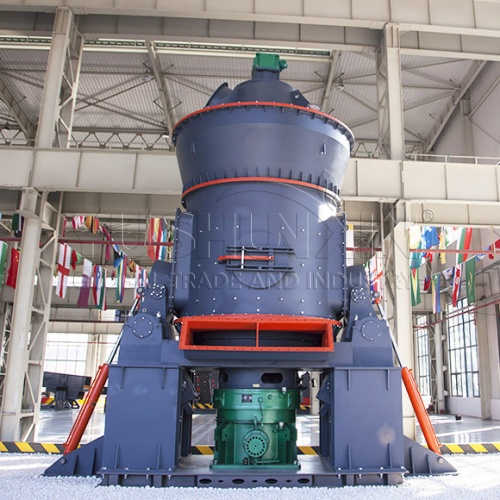
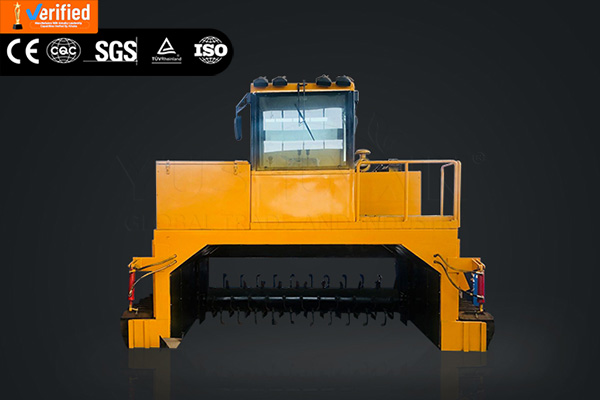
How Do Industrial Clay Soil Granules Machines Control Dust?

Plant owners and project investors often evaluate industrial clay soil granules machine before they plan a fertilizer processing plant. phosphate rock, limestone, dolomite, potassium feldspar move through ball mill, pan granulator, rotary dryer in a complete fertilizer granulation line. When you select this equipment, you review capacity, material condition, and plant layout. This evaluation helps you control investment and keep production stable.
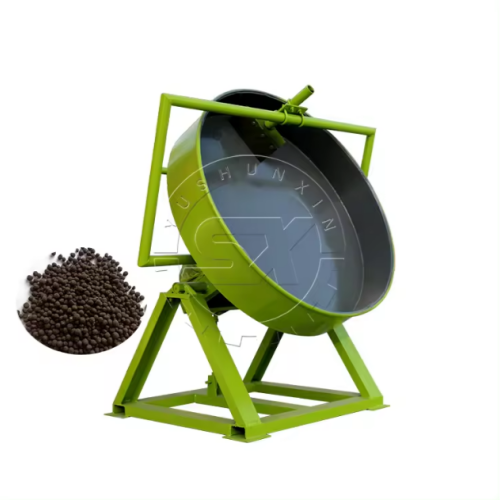
industrial clay soil granules machine

industrial clay soil granules machine

How does a industrial clay soil granules machine system support phosphate rock processing?

A industrial clay soil granules machine system supports phosphate rock processing by connecting the main machine with feeding, mixing, and screening. You can prepare phosphate rock, limestone, dolomite, potassium feldspar before the machine starts. A ball mill and a pan granulator help control material flow, while a rotary dryer protects product quality. This layout keeps the fertilizer processing plant stable and reduces manual transfer. You can also compare this process with standard fertilizer manufacturing system principles when you design the line. This preparation improves the fertilizer equipment and keeps the fertilizer machinery balanced. This setup also simplifies maintenance and reduces unexpected stops.

Why does a industrial clay soil granules machine line suit continuous fertilizer production?

A industrial clay soil granules machine line suits continuous fertilizer production because it handles phosphate rock, limestone, dolomite, potassium feldspar in a steady flow. You can arrange the equipment so the material moves from intake to packing without long stops. The ball mill feeds the next stage at a stable rate, and the pan granulator forms the product into a uniform shape. This coordination reduces bottlenecks and keeps the fertilizer granulation line efficient. You can also add a rotary dryer to return off-size material for rework, which lowers waste and improves product consistency. The steady output supports daily packing and dispatch targets.

Which mineral fertilizer granulation technology factors should you review before selection?

mineral fertilizer granulation technology helps you choose the right equipment for phosphate rock, limestone, dolomite, potassium feldspar. You can review moisture, particle size, capacity, and plant space before you order. A clear process flow reduces transfer points and protects the fertilizer machinery. This comparison also helps you balance fertilizer equipment with long-term operating cost. You can then match the selected machine to the fertilizer manufacturing system and keep the fertilizer processing plant running smoothly. This review helps you avoid buying oversized or undersized fertilizer machinery.

How can producers compare mineral fertilizer standards for this fertilizer manufacturing process?

You can compare the general process described under mineral fertilizer when you set the product standard and material specification. This reference helps you understand why moisture and particle size matter for phosphate rock, limestone, dolomite, potassium feldspar. You can also adjust the ball mill and the pan granulator according to the target output. This control supports the fertilizer granulation line and keeps the fertilizer processing plant consistent during peak production. This preparation also supports repeat product quality across production batches.

To summarize, how do industrial clay soil granules machines control dust depends on material condition, equipment scope, and production capacity. You can match each machine to the required output and product form. A reliable mineral fertilizer equipment manufacturer can supply the complete fertilizer manufacturing system. Yushunxin provides this fertilizer production equipment. If you have interests, you can learn more about https://www.mineralfertilizerproductionsolutions.com/product/clay-soil-granules-machine

How Much Does an Automatic Fertilizer Bagging Machine Cost?

Plant owners and project investors often evaluate fertilizer bagging machine cost before they plan a fertilizer processing plant. urea, diammonium phosphate, potassium chloride, ammonium sulfate move through batching system, rotary drum granulator, screening machine in a complete fertilizer production line. When you select this equipment, you review capacity, material condition, and plant layout. This evaluation helps you control investment and keep production stable.

fertilizer bagging machine cost

fertilizer bagging machine cost

How does a fertilizer bagging machine cost system support urea processing?

A fertilizer bagging machine cost system supports urea processing by connecting the main machine with feeding, mixing, and screening. You can prepare urea, diammonium phosphate, potassium chloride, ammonium sulfate before the machine starts. A batching system and a rotary drum granulator help control material flow, while a screening machine protects product quality. This layout keeps the fertilizer processing plant stable and reduces manual transfer. You can also compare this process with standard fertilizer manufacturing system principles when you design the line. This preparation improves the fertilizer equipment and keeps the fertilizer machinery balanced. This setup also simplifies maintenance and reduces unexpected stops.

Why does a fertilizer bagging machine cost line suit continuous fertilizer production?

A fertilizer bagging machine cost line suits continuous fertilizer production because it handles urea, diammonium phosphate, potassium chloride, ammonium sulfate in a steady flow. You can arrange the equipment so the material moves from intake to packing without long stops. The batching system feeds the next stage at a stable rate, and the rotary drum granulator forms the product into a uniform shape. This coordination reduces bottlenecks and keeps the fertilizer production line efficient. You can also add a screening machine to return off-size material for rework, which lowers waste and improves product consistency. The steady output supports daily packing and dispatch targets.

Which compound fertilizer processing technology factors should you review before selection?

compound fertilizer processing technology helps you choose the right equipment for urea, diammonium phosphate, potassium chloride, ammonium sulfate. You can review moisture, particle size, capacity, and plant space before you order. A clear process flow reduces transfer points and protects the fertilizer machinery. This comparison also helps you balance fertilizer equipment with long-term operating cost. You can then match the selected machine to the fertilizer manufacturing system and keep the fertilizer processing plant running smoothly. This review helps you avoid buying oversized or undersized fertilizer machinery.

How can producers compare fertilizer standards for this fertilizer manufacturing process?

You can compare the general process described under fertilizer when you set the product standard and material specification. This reference helps you understand why moisture and particle size matter for urea, diammonium phosphate, potassium chloride, ammonium sulfate. You can also adjust the batching system and the rotary drum granulator according to the target output. This control supports the fertilizer production line and keeps the fertilizer processing plant consistent during peak production. This preparation also supports repeat product quality across production batches.

To summarize, how much does an automatic fertilizer bagging machine cost depends on material condition, equipment scope, and production capacity. You can match each machine to the required output and product form. A reliable fertilizer equipment manufacturer can supply the complete fertilizer manufacturing system. Yushunxin provides this fertilizer production equipment. If you have interests, you can learn more about https://www.fertilizerproductequipment.com/fertilizer-bagging-machine

Which Biochar Fertilizer Fermentation Tank Capacity Fits a Commercial Composting Plant?

Plant owners and project investors often evaluate biochar fertilizer fermentation tank capacity before they plan a fertilizer processing plant. biochar, biomass ash, charcoal powder, lignite move through carbonization furnace, biochar crusher, rotary dryer in a complete fertilizer granulation line. When you select this equipment, you review capacity, material condition, and plant layout. This evaluation helps you control investment and keep production stable.

biochar fertilizer fermentation tank capacity

biochar fertilizer fermentation tank capacity

How does a biochar fertilizer fermentation tank capacity system support biochar processing?

A biochar fertilizer fermentation tank capacity system supports biochar processing by connecting the main machine with feeding, mixing, and screening. You can prepare biochar, biomass ash, charcoal powder, lignite before the machine starts. A carbonization furnace and a biochar crusher help control material flow, while a rotary dryer protects product quality. This layout keeps the fertilizer processing plant stable and reduces manual transfer. You can also compare this process with standard fertilizer manufacturing system principles when you design the line. This preparation improves the fertilizer equipment and keeps the fertilizer machinery balanced. This setup also simplifies maintenance and reduces unexpected stops.

Why does a biochar fertilizer fermentation tank capacity line suit continuous fertilizer production?

A biochar fertilizer fermentation tank capacity line suits continuous fertilizer production because it handles biochar, biomass ash, charcoal powder, lignite in a steady flow. You can arrange the equipment so the material moves from intake to packing without long stops. The carbonization furnace feeds the next stage at a stable rate, and the biochar crusher forms the product into a uniform shape. This coordination reduces bottlenecks and keeps the fertilizer granulation line efficient. You can also add a rotary dryer to return off-size material for rework, which lowers waste and improves product consistency. The steady output supports daily packing and dispatch targets.

Which carbon-based fertilizer processing technology factors should you review before selection?

carbon-based fertilizer processing technology helps you choose the right equipment for biochar, biomass ash, charcoal powder, lignite. You can review moisture, particle size, capacity, and plant space before you order. A clear process flow reduces transfer points and protects the fertilizer machinery. This comparison also helps you balance fertilizer equipment with long-term operating cost. You can then match the selected machine to the fertilizer manufacturing system and keep the fertilizer processing plant running smoothly. This review helps you avoid buying oversized or undersized fertilizer machinery.

How can producers compare biochar standards for this fertilizer manufacturing process?

You can compare the general process described under biochar when you set the product standard and material specification. This reference helps you understand why moisture and particle size matter for biochar, biomass ash, charcoal powder, lignite. You can also adjust the carbonization furnace and the biochar crusher according to the target output. This control supports the fertilizer granulation line and keeps the fertilizer processing plant consistent during peak production. This preparation also supports repeat product quality across production batches.

To summarize, which biochar fertilizer fermentation tank capacity fits a commercial composting plant depends on material condition, equipment scope, and production capacity. You can match each machine to the required output and product form. A reliable biochar fertilizer equipment manufacturer can supply the complete fertilizer manufacturing system. Yushunxin provides this fertilizer production equipment. If you have interests, you can learn more about https://www.charbasedfertilizermachine.com/product/biochar-fertilizer-fermentation-pot

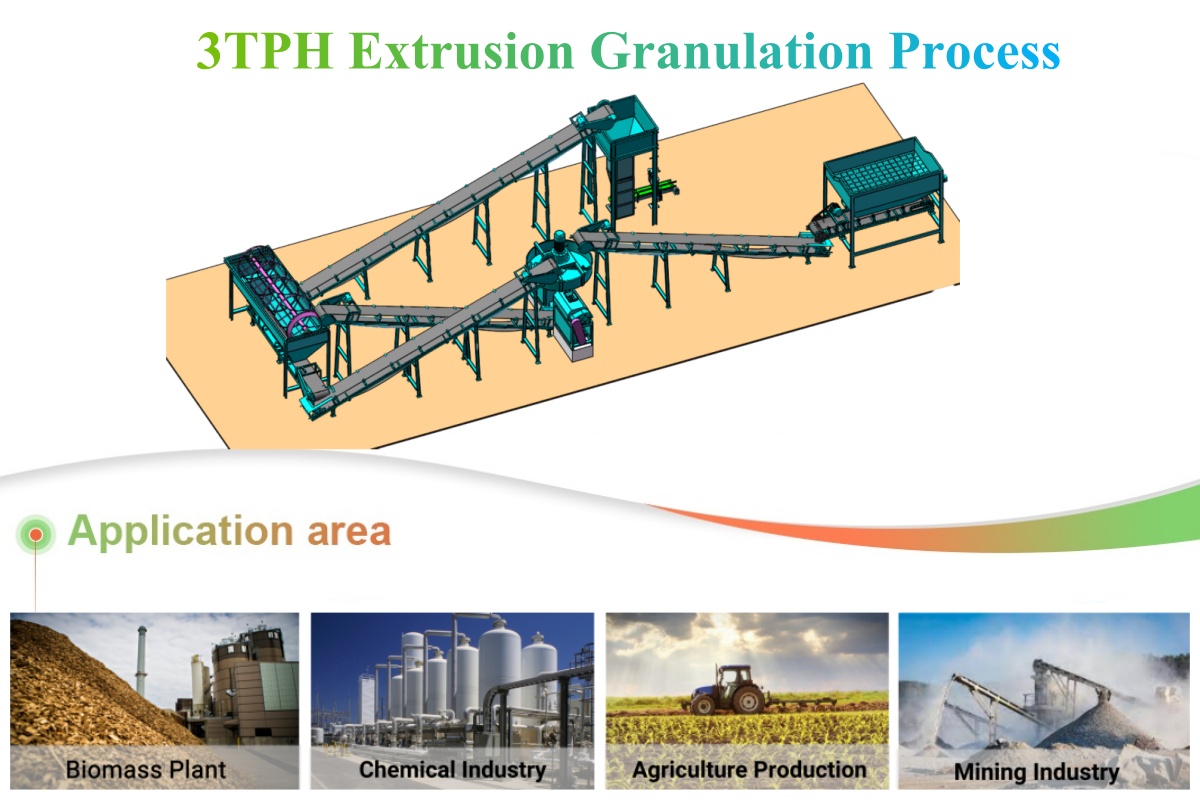
How Do You Optimize Power Use in a 3 T/H Extrusion Granulation Process?

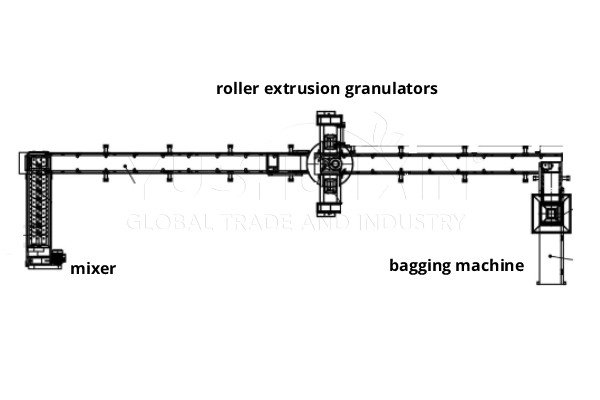
Plant owners and project investors often evaluate 3 t/h extrusion granulation process equipment before they plan a fertilizer processing plant. chicken manure, crop straw, humic acid, sewage sludge move through double-roll extruder, crusher, rotary dryer in a complete fertilizer extrusion line. When you select this equipment, you review capacity, material condition, and plant layout. This evaluation helps you control investment and keep production stable.

3 t/h extrusion granulation process equipment

3 t/h extrusion granulation process equipment

How does a 3 t/h extrusion granulation process equipment system support chicken manure processing?

A 3 t/h extrusion granulation process equipment system supports chicken manure processing by connecting the main machine with feeding, mixing, and screening. You can prepare chicken manure, crop straw, humic acid, sewage sludge before the machine starts. A double-roll extruder and a crusher help control material flow, while a rotary dryer protects product quality. This layout keeps the fertilizer processing plant stable and reduces manual transfer. You can also compare this process with standard fertilizer manufacturing system principles when you design the line. This preparation improves the fertilizer machinery and keeps the fertilizer equipment balanced. This setup also simplifies maintenance and reduces unexpected stops.

Why does a 3 t/h extrusion granulation process equipment line suit continuous fertilizer production?

A 3 t/h extrusion granulation process equipment line suits continuous fertilizer production because it handles chicken manure, crop straw, humic acid, sewage sludge in a steady flow. You can arrange the equipment so the material moves from intake to packing without long stops. The double-roll extruder feeds the next stage at a stable rate, and the crusher forms the product into a uniform shape. This coordination reduces bottlenecks and keeps the fertilizer extrusion line efficient. You can also add a rotary dryer to return off-size material for rework, which lowers waste and improves product consistency. The steady output supports daily packing and dispatch targets.

Which organic fertilizer extrusion technology factors should you review before selection?

organic fertilizer extrusion technology helps you choose the right equipment for chicken manure, crop straw, humic acid, sewage sludge. You can review moisture, particle size, capacity, and plant space before you order. A clear process flow reduces transfer points and protects the fertilizer equipment. This comparison also helps you balance fertilizer machinery with long-term operating cost. You can then match the selected machine to the fertilizer manufacturing system and keep the fertilizer processing plant running smoothly. This review helps you avoid buying oversized or undersized fertilizer machinery.

How can producers compare organic fertilizer standards for this fertilizer manufacturing process?

You can compare the general process described under organic fertilizer when you set the product standard and material specification. This reference helps you understand why moisture and particle size matter for chicken manure, crop straw, humic acid, sewage sludge. You can also adjust the double-roll extruder and the crusher according to the target output. This control supports the fertilizer extrusion line and keeps the fertilizer processing plant consistent during peak production. This preparation also supports repeat product quality across production batches.

To summarize, how do you optimize power use in a 3 t/h extrusion granulation process depends on material condition, equipment scope, and production capacity. You can match each machine to the required output and product form. A reliable fertilizer machinery manufacturer can supply the complete fertilizer manufacturing system. Yushunxin provides this fertilizer production equipment. If you have interests, you can learn more about https://www.extruder-granulator.com/3-t-h-extrusion-granulation-process

Freeze-Dried Seafood: Preserving Shrimp, Fish and Scallops at Scale

How freeze-dried seafood is produced at industrial scale — the process, the equipment, quality control, and the market advantages of shrimp, fish, and scallops.

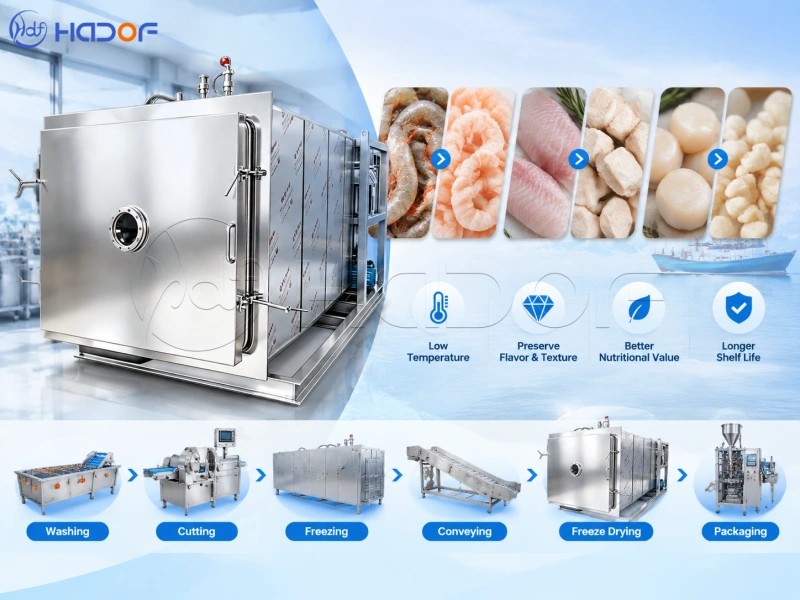
Seafood is one of the most perishable food categories in the world. Shrimp, fish, and scallops lose quality quickly, and their high value makes every day of shelf life count. Freeze drying solves that problem by removing water at low temperature, so the seafood keeps its shape, protein, and flavor while becoming light, shelf-stable, and easy to ship. For processors, a dedicated freeze-dried seafood line turns a perishable raw material into a premium product for soups, ready meals, pet food, and export markets.

Why Freeze-Dry Seafood

Freeze-dried seafood keeps its original structure instead of shrinking or hardening. Because the process runs at low temperature, heat-sensitive proteins and flavors are preserved, and the product rehydrates quickly when water is added back. It is also extremely light, which cuts shipping and storage costs, and it stores for years without refrigeration. For shrimp, fish, and scallops, that combination of quality and convenience supports premium pricing in both retail and foodservice.

Industrial Seafood Freeze Dryer for Shrimp, Fish and Scallops

Industrial Seafood Freeze Dryer for Shrimp, Fish and Scallops

The Production Process

A commercial seafood line follows a clear sequence:

  1. Receiving and inspection — fresh seafood is checked for freshness, size, and defects.
  2. Cleaning and preparation — product is washed, peeled, deveined, or portioned as required.
  3. Blanching or pretreatment — a controlled heat step can improve color and stability before freezing.
  4. Freezing — the product is frozen quickly so small ice crystals form and texture is protected.
  5. Vacuum freeze drying — ice sublimates directly to vapor at low pressure, preserving structure and nutrients.
  6. Sorting and packaging — dried product is inspected and packed in moisture- and oxygen-barrier packaging.

Each step matters. Poor preparation or slow freezing shows up later as tough texture or uneven drying, so the line must be designed as a system rather than a collection of machines.

Equipment for a Freeze-Dried Seafood Line

The core of the line is the freeze dryer itself. An industrial seafood freeze dryer is designed around the product’s freezing behavior, batch weight, and target moisture. Around it, the line needs washing and preparation equipment, a pre-freezer or tunnel freezer, and a packing machine. If you process several seafood types, the dryer and trays should be flexible enough to handle different piece sizes and cycles.

Capacity is usually specified by batch weight or shelf area. Small and medium producers often start with a batch size in the tens to low hundreds of kilograms, while larger plants use multiple dryers or a continuous configuration. The right choice depends on your raw-material supply, your target output, and how long each product needs in the chamber.

Freeze Drying vs. IQF Freezing

IQF freezing is excellent for keeping seafood frozen, but it still requires a cold chain from plant to customer. Freeze drying goes further: it removes the water, so the product can be stored and shipped at ambient temperature. For premium ingredients and long-distance export, that difference is significant. Our guide to freeze drying vs. IQF freezing explains the trade-offs in more detail.

Sizing a Freeze-Dried Seafood Line

Sizing starts with your raw-material supply. How much fresh shrimp, fish, or scallops can you bring in each day, and how consistent is that supply across the season? The dryer’s batch weight and shelf area should match that supply, not the other way around. A line that is too small leaves product waiting and hurts freshness; a line that is too large runs at low load and wastes energy. Many processors start with one dryer sized to a comfortable daily batch and plan the building, pre-freezing, and packing areas so a second dryer can be added later. That approach keeps the initial investment manageable while leaving room to grow.

Quality Control

Quality control starts with the raw material. Seafood should be fresh, properly chilled, and consistent in size. Blanching times and temperatures must be controlled so the product keeps its color without overcooking. Freezing must be fast enough to protect texture, and the freeze-drying process must be monitored for pressure, shelf temperature, and moisture. Finished product is tested for moisture content, rehydration, color, and microbial safety before packing.

Packaging and Shelf Life

Freeze-dried seafood is hygroscopic, so packaging is critical. Moisture- and oxygen-barrier bags, cans, or pouches protect the product from humidity and oxidation. Nitrogen flushing can further extend shelf life. Correct packaging keeps the product crisp and stable for years, while poor packaging quickly leads to softening and flavor loss.

Market Applications

Freeze-dried shrimp, fish, and scallops appear in instant soups, ready meals, seasoning blends, pet food, and premium snack products. Exporters value the light weight and ambient storage, while foodservice buyers value the fast rehydration and consistent quality. Because the product keeps its original shape, it also works well in premium retail packs where appearance matters.

Common Mistakes to Avoid

The most common mistake is using seafood that is already losing freshness; freeze drying preserves quality but cannot improve it. The second is freezing too slowly, which produces large ice crystals and damages texture. The third is overloading trays, which blocks vapor flow and creates uneven batches. The fourth is under-sizing the condenser, so the cycle slows down and energy use rises. Finally, skipping a proper packaging barrier undoes the benefit of freeze drying within weeks.

Conclusion

Freeze-dried seafood is a high-value product for processors who want to turn perishable shrimp, fish, and scallops into stable, export-ready ingredients. The process is straightforward, but the equipment and process control must be matched to the product. HADOF Food Processing Manufacture designs complete production lines for freeze-dried seafood, from preparation and freezing to the freeze dryer and packaging. Tell us your product and target output, and we will help you plan the right system.

How Do You Choose the Right China Fd Garlic Export for a Medium-Scale Plant?

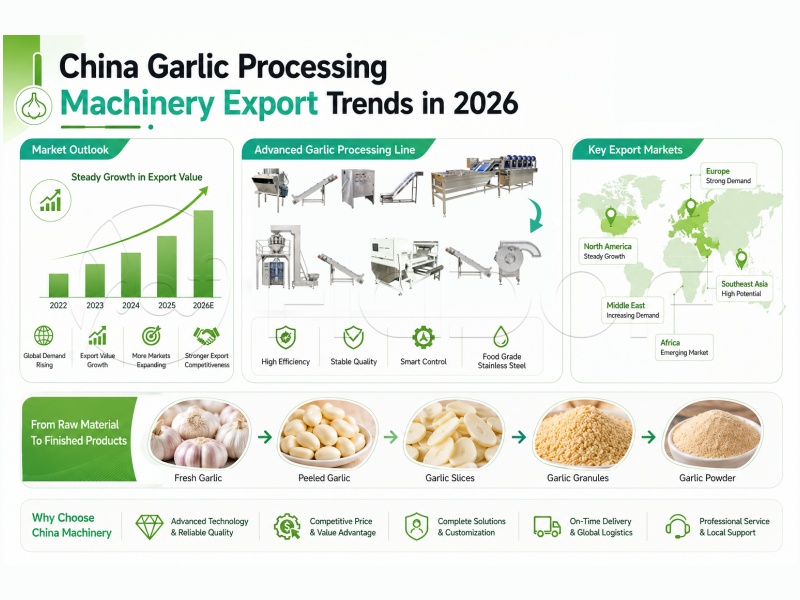
A garlic powder maker, a dehydrated garlic producer, or a medium-scale plant that imports machinery from China needs a choice that matches the export market and the product. The china fd garlic export for a medium-scale plant covers peeling, slicing, drying, and packing equipment, and the choice follows the market demand. This article explains how a buyer selects the food machinery for a garlic export plant.

china fd garlic export

Which Export Markets Drive Garlic Equipment Demand?

Demand spreads across Southeast Asia, South America, Europe, Africa, and North America, and each region buys for a different product and standard. The china garlic processing machinery export for food buyers grows as Indonesia, Thailand, Vietnam, India, and Egypt expand garlic processing. A buyer who knows its target market matches the equipment to the local labor and the compliance rule.

How Does Dehydrated Garlic Demand Shape the Choice?

The dehydrated garlic market grows strongly, so a medium plant often needs peeling, slicing, and drying equipment that feeds a powder or flake line. The china garlic equipment suppliers for dehydrated garlic offer the washing and drying stages that support this product. A buyer who follows this demand picks food machinery that serves a growing category.

How Does the Choice Connect With a Garlic Line?

The export equipment should join into a complete line that peels, washes, dries, and packs the garlic, because a piecemeal purchase leaves gaps. The choice connects with a fresh garlic processing line for a chinese export plant, and each stage feeds the next. A smooth connection keeps the food processing system efficient.

How Should a Buyer Check Compliance?

European and North American markets require CE certification and food-grade stainless steel, so a buyer verifies the documents and the material before the order. A missing certificate can block the export clearance. This compliance check is the food safety step that the equipment must pass.

How Should a Buyer Verify the Supplier?

Dehydrated garlic export rewards a supplier that offers service and spare parts, because the line runs through the harvest season. You can review the china garlic machinery exporter before a purchase, and that review shows the export experience. A measured trial turns the food machinery decision into a dependable choice.

How Does Automation Improve the Export Line?

The export equipment increasingly adds automation and integrated line control, so a medium plant gets a complete peeling, slicing, and drying flow instead of separate machines. This automation reduces the operator count and makes the output repeatable for a strict export buyer. A plant that asks for an integrated quotation gains a food manufacturing system. This control is the reason the china garlic machinery export shifts toward automated lines.

Conclusion

A medium-scale plant chooses the right China FD garlic export by matching the equipment to the export market, the dehydrated garlic demand, and the compliance rule, then joining it into a complete line. These choices keep the food production investment aligned. A well planned line therefore stays productive across the full shift. If you have interests, you can learn more about https://www.hadofps.com/news/china-garlic-processing-machinery-export-trends-in-2026/

Planning Automation Priorities for a $300,000 Powder Granulating Project

A USD 300,000 budget gives you a starting point, but its scope matters before you compare equipment. Your 300000 dollar powder granulating project automation plan can begin with the tasks operators repeat each shift. Then compare controls, material handling, and packing against your actual production requirements.

Define what the budget covers

Start your powder granulation project equipment budget allocation with a written supply boundary. Separate process equipment from buildings, foundations, freight, taxes, electrical installation, commissioning, and working capital.

Ask suppliers to identify inclusions and exclusions beside each quotation item. Treat USD 300,000 as your planning scenario, not a universal installed price. Also keep a contingency allowance visible instead of assigning every dollar to machinery.

$30000 powder pellet making solution

Prioritise repeatable feeding and batching

Review your powder pelletizing line automation priorities around weighing, recipe selection, and steady material transfer. These steps give you specific functions to discuss beyond a general “fully automatic” description.

For each ingredient, provide bulk density, moisture, particle size, and handling observations. Ask how operators verify dosing, calibrate weighing devices, and respond when a feeder stops. Include manual recovery and safe access in the controls discussion.

Match packing to your dispatch routine

Consider automatic granule packing options alongside bag weight, bag material, and daily dispatch targets. Ask which tasks still involve an operator, including bag placement, closing, and pallet handling.

Compare proposals at the same bag format. A demonstration with your granules can help assess feeding, weighing, and closure. Discuss automation as a defined sequence of tasks, with clear operator responsibilities.

Before choosing additional controls, ask your team which manual tasks cause interruptions or recording errors. Compare the proposed upgrade with training, maintenance, and spare-part requirements. This keeps the discussion tied to a measurable operating problem instead of an automation label.

Leave practical room for later upgrades

Your dry powder granulating project phased investment can separate initial equipment from optional future additions. Discuss reserved floor space, conveyor interfaces, control connections, and electrical capacity before finalising the layout.

First confirm whether dry compaction suits representative raw materials through trials. A low purchase price does not establish material suitability. Ask which later changes require downtime, new foundations, or replacement controls, then include those constraints in your expansion plan.

Compare quotations using one operating brief

Bring your decisions together in a powder granulation plant quotation scope review. State your formulation, accepted granule specification, saleable hourly output, operating schedule, and available utilities.

Request an equipment list and a controls description showing operator tasks at each stage. Agree how a commissioning trial will assess output and product quality. Compare annual production estimates using explicit operating hours and downtime assumptions.

YUSHUNXIN outlines a dry powder processing route covering preparation, batching, mixing, granulation, screening, and packing. Click here for more details.

For a configuration discussion, share your budget boundary and materials at https://www.granulationproject.com/product/300000-cost-powder-granulating-project/

Freeze-Dried Fruit Chips: Choosing Between 50㎡ and 100㎡ of Shelf Area

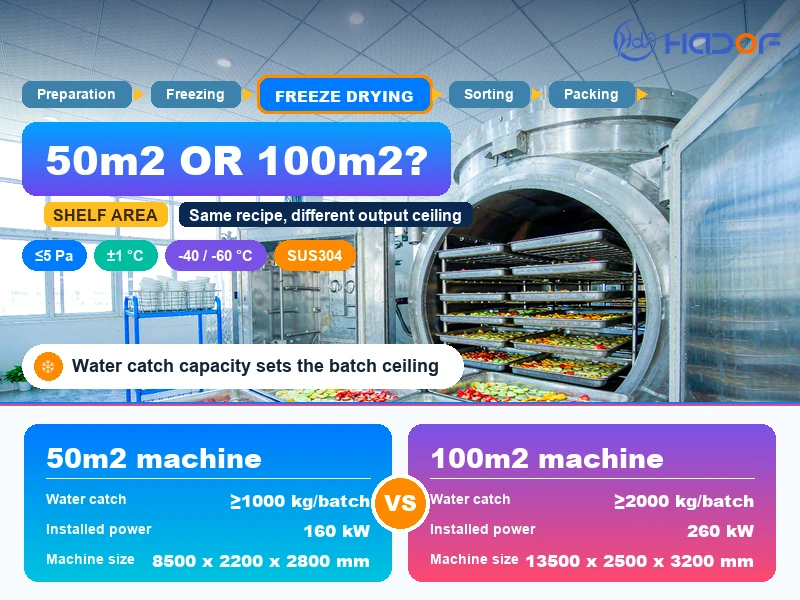
Freeze-dried fruit chips sell on crunch, color, and clean labels, so the drying method decides the premium. However, shelf area decides how much of that premium one plant can ship each month. A 50㎡ food freeze drying machine and a 100㎡ unit share one recipe. Yet each size serves a different output target. Therefore, this choice usually comes down to volume, floor space, and cash flow.

50m2 vs 100m2 freeze dried fruit chips shelf area

What Sets Freeze-Dried Fruit Chips Apart?

Strawberry, banana, mango, and apple chips keep their color, because drying runs cold. Because ice turns straight into vapor, cells keep their shape and crunch. Sugar stays inside the fruit, so no syrup coat hides the natural taste. Freeze-dried fruit chips also rehydrate fast in yogurt, cereal, and drinks. In practice, that versatility supports premium pricing across several markets.

How Does Shelf Area Change Daily Output?

Water catch capacity sets the ceiling on wet fruit per cycle. A 50㎡ chamber removes at least 1000 kg of water per batch, so mid-size orders fit one cycle. Meanwhile, a 100㎡ chamber removes at least 2000 kg, which doubles that ceiling. Fresh fruit carries 80% water or more, so water capacity matters more than tray count. Then a plant matches batch size to the largest order it receives each week.

Which Size Fits a Growing Fruit Chip Line?

A 50㎡ food freeze drying machine for fruit chips suits a plant that ships smaller orders. Because the frame measures about 8500 × 2200 × 2800 mm, it fits a modest building without major civil work. Then one conveyor line feeds washing, cutting, freezing, drying, and packing in sequence. Also, installed power of 160 kW keeps the electrical room modest. Therefore, a smaller plant reaches full output with less upfront spending.

When Does a 100㎡ Machine Make More Sense?

Higher order volume pushes the same recipe toward a 100㎡ chamber. That unit removes at least 2000 kg of water per batch, so daily output nearly doubles. Its frame runs about 13500 × 2500 × 3200 mm, so plan clear height and truck access early. Installed power reaches 260 kW, so the electrical supply needs an upgrade. Meanwhile, labor stays similar, so cost per kilogram falls as batches grow. As a result, one 100㎡ line often beats two smaller chambers on running cost.

What Parameters Differ Between the Two Sizes?

Parameter 50㎡ machine 100㎡ machine
Shelf area 50 m² (17+1 layers, 70 mm spacing) 100 m² (17+1 layers, 70 mm spacing)
Water catch capacity ≥1000 kg/batch ≥2000 kg/batch
Ultimate vacuum ≤5 Pa ≤5 Pa
Shelf temperature uniformity ±1 °C ±1 °C
Condenser temperature -40 °C or -60 °C -40 °C or -60 °C
Installed power 160 kW 260 kW
Machine dimensions 8500 × 2200 × 2800 mm 13500 × 2500 × 3200 mm
Chamber material SUS304 stainless steel SUS304 stainless steel
Power supply 380 V, 3 phase, 50 Hz 380 V, 3 phase, 50 Hz

Both sizes share the same shelf spacing, so recipes transfer between them without new trials. Higher shelf area also spreads fruit thinner, so pieces dry at a similar rate. Also, spray defrost keeps cleaning time short on busy days. And the same 5 Pa ultimate vacuum protects aroma in both chambers.

How Do Sorting and Packing Protect Fruit Chips?

Fruit chips bruise easily, so sorting happens before packing. A fruit freeze dryer machine line usually adds manual sorting platforms right after drying. Then operators remove broken pieces and any fruit with uneven color. Next, a food packing machine fills and seals each pouch under nitrogen. Because moisture returns fast through a weak seal, barrier checks matter at this stage. Therefore, sorting and packing protect the premium that drying created.

Build the Freeze-Dried Fruit Chip Line as One System

Shelf area, sorting, and packing decide the final margin, so plan all three together. Hadof builds fruit chip lines around your raw material, output, and plant area. For a customized solution, visit the Hadof freeze dryer homepage at https://www.freezehadof.com/.

Сульфат аммония как удобрение: преимущества и нормы внесения

Производство удобрений объединяет выбор сырья, технологического оборудования и организации линии гранулирования. Производитель удобрений оценивает производственную задачу, сравнивает оборудование для производства удобрений и определяет состав технологической линии. Материалы страницы «Линия гранулирования сульфата аммония | автоматизация» помогают рассмотреть тему «Сульфат аммония как удобрение: преимущества и нормы внесения» с точки зрения завода, который планирует стабильный выпуск продукции. Сульфат аммония как удобрение: преимущества и нормы внесения позволяет заказчику производственной линии сопоставить комплектацию, мощность и технологические решения до начала проекта.

Сульфат аммония как удобрение: преимущества и нормы внесения — производственное оборудование
Оборудование для производства удобрений в составе технологической линии

Как выбрать оборудование для сульфат аммония как удобрение: преимущества и нормы внесения?

Предприятие сравнивает оборудование для производства удобрений, потому что гранулятор, смеситель, сушилка и дробилка должны работать в одной технологической линии. Производитель NPK учитывает производительность, влажность сырья и требуемый размер гранул. Инвестор оценивает затраты на производство удобрений и срок запуска завода по производству удобрений. Технологическая линия для производства удобрений подбирается по мощности, составу сырья и конечной формуле продукции. Материал страницы «Линия гранулирования сульфата аммония | автоматизация» показывает, какие параметры важны при выборе основного оборудования. оборудование для сульфат аммония как удобрение: преимущества и нормы внесения позволяет сопоставить модель с технологической задачей. Связанная страница «Решения по сырью Archives – Решения по производству удобрений!» уточняет, как отдельные машины интегрируются в общую систему переработки удобрений. Заказчик производственной линии сравнивает барабанную, дисковую и валковую грануляцию для конкретного сырья.

Какие технические параметры учитывает производитель удобрений?

Завод анализирует технологический процесс производства удобрений, поэтому учитывает производительность, потребляемую мощность, влажность и размер частиц. Производитель удобрений проверяет, какие параметры подтверждены для линии производства удобрений, и не переносит характеристики одной модели на другую. Инвестор проекта удобрений оценивает капитальные расходы, бюджет проекта и стоимость запуска. Производственная компания определяет, как оборудование для обработки удобрений влияет на качество готового продукта. Данные страницы «Линия гранулирования сульфата аммония | автоматизация» используются как основа для сравнения комплектации. подробная информация о производственной линии даёт дополнительные сведения о возможных вариантах конфигурации. Управление производством удобрений становится точнее, когда каждый технологический узел соответствует характеристикам сырья и целевой мощности.

Как связанное оборудование влияет на технологическую линию?

Связанное оборудование для производства удобрений дополняет основную линию гранулирования. Производитель удобрений добавляет дробилку, смеситель, сушилку или грохот в зависимости от сырья и конечной формулы. Технология производства удобрений требует согласованной работы нескольких машин, поэтому завод проверяет производительность каждого узла. связанное оборудование для производства удобрений рассматривается в контексте линии гранулирования. Страница «Решения по сырью Archives – Решения по производству удобрений!» помогает понять, как связанное оборудование включается в производственную линию. Предприятие сравнивает варианты конфигурации линии и рассчитывает резерв мощности. Инвестор проекта учитывает, что правильный подбор вспомогательного оборудования снижает простои и повышает стабильность производства комплексных удобрений.

Как производитель линий формирует комплектацию завода?

Производитель линий для производства удобрений формирует комплектацию завода на основе производственной задачи. Завод по переработке удобрений оценивает сырьё, мощность и доступную площадь. производитель линий для производства удобрений представляет направления оборудования и технологических решений. Страница «Оборудование для производства удобрений Shunxin» даёт общее представление о направлениях оборудования и технологических решениях. Производственная компания сравнивает линии для органических и минеральных удобрений, а также системы гранулирования NPK. Инвестор учитывает, что комплекс оборудования должен быть согласован по производительности, управлению и обслуживанию. Такой подход помогает заказчику производственной линии перейти от отдельного станка к полноценному заводу по производству удобрений.

Какие сведения подтверждают выбор технологии?

Дополнительные справочные сведения о сырье и процессе помогают производителю удобрений проверить технологию гранулирования. Завод анализирует физические свойства материала, условия сушки и требования к конечному продукту. Инвестор проекта сравнивает разные технологии производства удобрений и учитывает особенности исходного сырья. сульфат аммония — в производстве удобрений даёт справочное описание материала или процесса. Производственная компания использует справочные данные для подготовки технического задания на линию. Такие сведения дополняют описание оборудования и позволяют точнее определить параметры производства удобрений, управления линией и контроля качества готовой продукции.

Если тема актуальна для производственного проекта, производитель удобрений может уточнить комплектацию линии у Yushunxin, а дополнительная информация доступна здесь: https://www.granulyator.com/product/liniya-granulirovaniya-sulfata-ammoniya/

How Does a Seasoning Systems for Iqf Frozen Food Support Safety and Quality Control in Processing?

A frozen snack factory, a fried food plant, or an IQF processor that seasons product before freezing needs a system that coats evenly and stays hygienic. The seasoning systems for iqf frozen food apply oil spray and powder dosing in one controlled step, and that control supports both safety and quality. This article explains how the seasoning system protects the food processing result.

seasoning systems for iqf frozen food

How Does Seasoning Protect IQF Product Quality?

An even seasoning keeps the flavor consistent and the frozen pieces separate, because a wet or clumped coating freezes into blocks. The octagonal and drum seasoning machine for frozen snacks tumbles the product while it applies the powder or oil, so each piece gets the same coat. This uniformity is the food manufacturing quality that a manual mix cannot repeat.

How Do Oil Spray and Powder Dosing Keep Coating Even?

The oil spray prepares the surface, and the powder dosing applies the seasoning in a controlled amount, so the coating stays thin and even. The automatic seasoning system with oil spray and powder dosing adjusts the drum speed and the dose to the product, which reduces the over-seasoning and the waste. This control keeps the food preparation consistent across the shift.

How Does the Seasoning Machine Connect With Freezing?

A seasoning machine works best when the seasoned product moves directly to freezing, because a warm hold lets the coating settle and clump. The machine connects with an IQF quick freezer for a seasoned frozen food line, a cooling conveyor, and a packing station. A smooth handoff keeps the food processing system moving and the pieces separate.

How Does the System Support Food Safety?

The seasoning machine uses a hygienic stainless structure and a washable drum, so residue does not build up on the contact surface. A clean machine keeps the oil and powder from carrying contamination into the next batch. This hygiene is the food safety step that the seasoning stage must provide. A plant that cleans on schedule protects the product and the brand.

How Should a Buyer Verify the System?

Food seasoning rewards a trial with the plant’s own product, because the powder and oil ratio changes the coat. You can review the seasoning equipment manufacturer before a purchase, and that review shows the dosing and service support. A measured run turns the food machinery decision into a dependable quality result.

How Does the Seasoning System Reduce Waste?

The controlled oil spray and powder dosing apply only the amount the recipe needs, so the system reduces the over-seasoning and the dust that a manual mix spreads. The drum also tumbles the product gently, which lowers the breakage that lowers the yield. This waste reduction is a food manufacturing saving that a plant can measure. A buyer who checks the dosing accuracy sees the seasoning system as a quality and cost control together.

Conclusion

A seasoning system for IQF frozen food supports safety and quality by applying oil spray and powder dosing evenly and by connecting directly to freezing. These controls keep the food production line consistent and hygienic. If you have interests, you can learn more about https://www.friedfoodsolutions.com/seasoning-equipment/

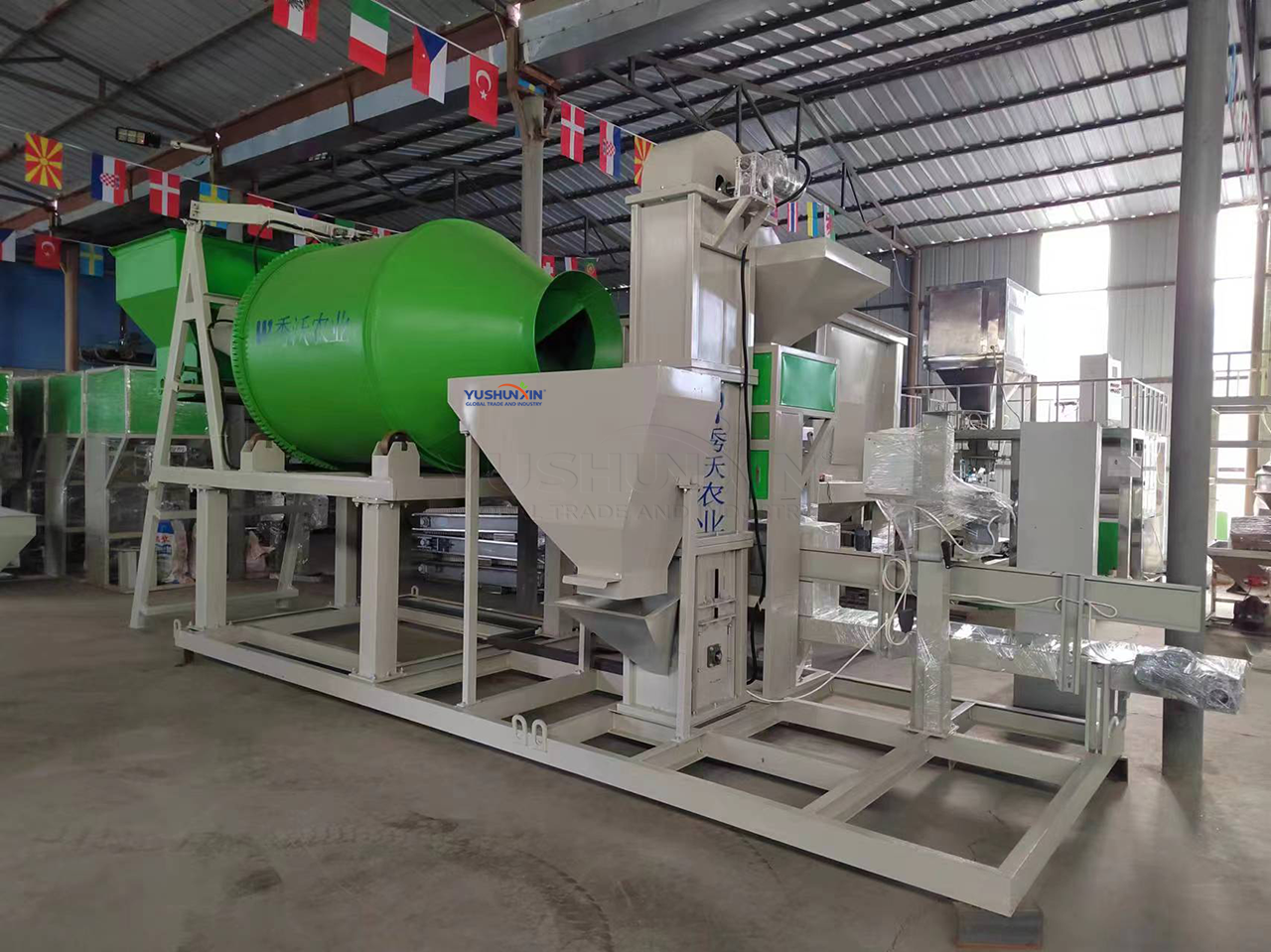
How Much Does a Liquid Organic Fertilizer Production Line Cost for Commercial Scale?

Plant owners and project investors often evaluate liquid organic fertilizer plant cost before they plan a fertilizer processing plant. urea, diammonium phosphate, potassium chloride, ammonium sulfate move through batching system, rotary drum granulator, screening machine in a complete fertilizer production line. When you select this equipment, you review capacity, material condition, and plant layout. This evaluation helps you control investment and keep production stable.

liquid organic fertilizer plant cost

liquid organic fertilizer plant cost

How does a liquid organic fertilizer plant cost system support urea processing?

A liquid organic fertilizer plant cost system supports urea processing by connecting the main machine with feeding, mixing, and screening. You can prepare urea, diammonium phosphate, potassium chloride, ammonium sulfate before the machine starts. A batching system and a rotary drum granulator help control material flow, while a screening machine protects product quality. This layout keeps the fertilizer processing plant stable and reduces manual transfer. You can also compare this process with standard fertilizer manufacturing system principles when you design the line. This preparation improves the fertilizer equipment and keeps the fertilizer machinery balanced. This setup also simplifies maintenance and reduces unexpected stops.

Why does a liquid organic fertilizer plant cost line suit continuous fertilizer production?

A liquid organic fertilizer plant cost line suits continuous fertilizer production because it handles urea, diammonium phosphate, potassium chloride, ammonium sulfate in a steady flow. You can arrange the equipment so the material moves from intake to packing without long stops. The batching system feeds the next stage at a stable rate, and the rotary drum granulator forms the product into a uniform shape. This coordination reduces bottlenecks and keeps the fertilizer production line efficient. You can also add a screening machine to return off-size material for rework, which lowers waste and improves product consistency. The steady output supports daily packing and dispatch targets.

Which compound fertilizer processing technology factors should you review before selection?

compound fertilizer processing technology helps you choose the right equipment for urea, diammonium phosphate, potassium chloride, ammonium sulfate. You can review moisture, particle size, capacity, and plant space before you order. A clear process flow reduces transfer points and protects the fertilizer machinery. This comparison also helps you balance fertilizer equipment with long-term operating cost. You can then match the selected machine to the fertilizer manufacturing system and keep the fertilizer processing plant running smoothly. This review helps you avoid buying oversized or undersized fertilizer machinery.

How can producers compare fertilizer standards for this fertilizer manufacturing process?

You can compare the general process described under fertilizer when you set the product standard and material specification. This reference helps you understand why moisture and particle size matter for urea, diammonium phosphate, potassium chloride, ammonium sulfate. You can also adjust the batching system and the rotary drum granulator according to the target output. This control supports the fertilizer production line and keeps the fertilizer processing plant consistent during peak production. This preparation also supports repeat product quality across production batches.

To summarize, how much does a liquid organic fertilizer production line cost for commercial scale depends on material condition, equipment scope, and production capacity. You can match each machine to the required output and product form. A reliable fertilizer equipment manufacturer can supply the complete fertilizer manufacturing system. Yushunxin provides this fertilizer production equipment. If you have interests, you can learn more about https://www.fertilizerproductequipment.com/liquid-organic-fertilizer-manufacturing-process

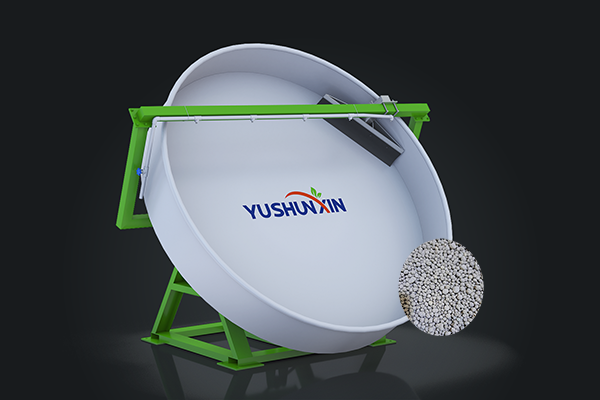
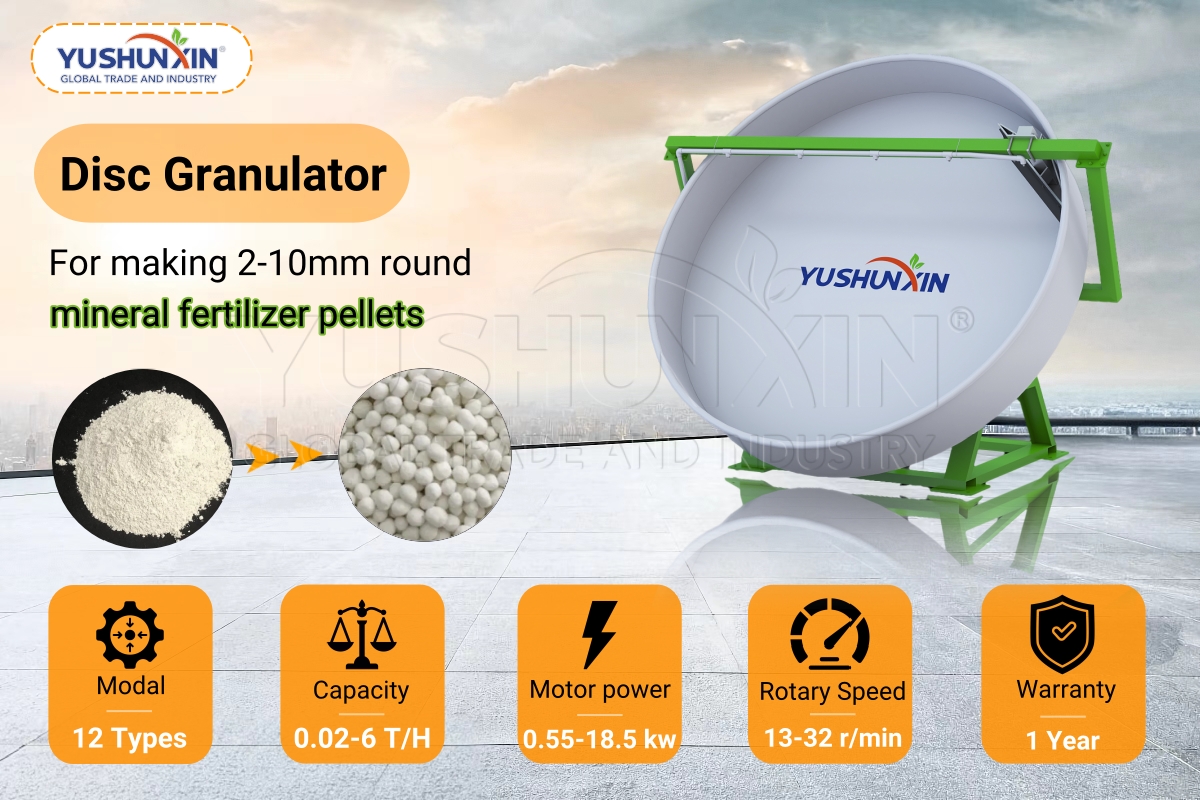
How Much Does a Disc Granulator Machine Manufacturer Charge for a Custom Line?

Plant owners and project investors often evaluate disc granulator machine manufacturer before they plan a fertilizer processing plant. phosphate rock, limestone, dolomite, potassium feldspar move through ball mill, pan granulator, rotary dryer in a complete fertilizer granulation line. When you select this equipment, you review capacity, material condition, and plant layout. This evaluation helps you control investment and keep production stable.

disc granulator machine manufacturer

disc granulator machine manufacturer

How does a disc granulator machine manufacturer system support phosphate rock processing?

A disc granulator machine manufacturer system supports phosphate rock processing by connecting the main machine with feeding, mixing, and screening. You can prepare phosphate rock, limestone, dolomite, potassium feldspar before the machine starts. A ball mill and a pan granulator help control material flow, while a rotary dryer protects product quality. This layout keeps the fertilizer processing plant stable and reduces manual transfer. You can also compare this process with standard fertilizer manufacturing system principles when you design the line. This preparation improves the fertilizer equipment and keeps the fertilizer machinery balanced. This setup also simplifies maintenance and reduces unexpected stops.

Why does a disc granulator machine manufacturer line suit continuous fertilizer production?

A disc granulator machine manufacturer line suits continuous fertilizer production because it handles phosphate rock, limestone, dolomite, potassium feldspar in a steady flow. You can arrange the equipment so the material moves from intake to packing without long stops. The ball mill feeds the next stage at a stable rate, and the pan granulator forms the product into a uniform shape. This coordination reduces bottlenecks and keeps the fertilizer granulation line efficient. You can also add a rotary dryer to return off-size material for rework, which lowers waste and improves product consistency. The steady output supports daily packing and dispatch targets.

Which mineral fertilizer granulation technology factors should you review before selection?

mineral fertilizer granulation technology helps you choose the right equipment for phosphate rock, limestone, dolomite, potassium feldspar. You can review moisture, particle size, capacity, and plant space before you order. A clear process flow reduces transfer points and protects the fertilizer machinery. This comparison also helps you balance fertilizer equipment with long-term operating cost. You can then match the selected machine to the fertilizer manufacturing system and keep the fertilizer processing plant running smoothly. This review helps you avoid buying oversized or undersized fertilizer machinery.

How can producers compare mineral fertilizer standards for this fertilizer manufacturing process?

You can compare the general process described under mineral fertilizer when you set the product standard and material specification. This reference helps you understand why moisture and particle size matter for phosphate rock, limestone, dolomite, potassium feldspar. You can also adjust the ball mill and the pan granulator according to the target output. This control supports the fertilizer granulation line and keeps the fertilizer processing plant consistent during peak production. This preparation also supports repeat product quality across production batches.

To summarize, how much does a disc granulator machine manufacturer charge for a custom line depends on material condition, equipment scope, and production capacity. You can match each machine to the required output and product form. A reliable mineral fertilizer equipment manufacturer can supply the complete fertilizer manufacturing system. Yushunxin provides this fertilizer production equipment. If you have interests, you can learn more about https://www.mineralfertilizerproductionsolutions.com/product/disc-granulator-machine

Как выбрать производительность линии смешивания BB удобрений?

Производство удобрений объединяет выбор сырья, технологического оборудования и организации линии гранулирования. Производитель удобрений оценивает производственную задачу, сравнивает оборудование для производства удобрений и определяет состав технологической линии. Материалы страницы «ББ смеситель удобрений | производительность 1-20 т/ч» помогают рассмотреть тему «Как выбрать производительность линии смешивания BB удобрений» с точки зрения завода, который планирует стабильный выпуск продукции. Как выбрать производительность линии смешивания BB удобрений позволяет заказчику производственной линии сопоставить комплектацию, мощность и технологические решения до начала проекта.

Как выбрать производительность линии смешивания BB удобрений? — производственное оборудование
Оборудование для производства удобрений в составе технологической линии

Как выбрать оборудование для как выбрать производительность линии смешивания BB удобрений?

Предприятие сравнивает оборудование для производства удобрений, потому что гранулятор, смеситель, сушилка и дробилка должны работать в одной технологической линии. Производитель NPK учитывает производительность, влажность сырья и требуемый размер гранул. Инвестор оценивает затраты на производство удобрений и срок запуска завода по производству удобрений. Технологическая линия для производства удобрений подбирается по мощности, составу сырья и конечной формуле продукции. Материал страницы «ББ смеситель удобрений | производительность 1-20 т/ч» показывает, какие параметры важны при выборе основного оборудования. оборудование для как выбрать производительность линии смешивания bb удобрений позволяет сопоставить модель с технологической задачей. Связанная страница «Производственная линия SHUNXIN | сделанный на заказ» уточняет, как отдельные машины интегрируются в общую систему переработки удобрений. Заказчик производственной линии сравнивает барабанную, дисковую и валковую грануляцию для конкретного сырья.

Какие технические параметры учитывает производитель удобрений?

Завод анализирует технологический процесс производства удобрений, поэтому учитывает производительность, потребляемую мощность, влажность и размер частиц. Производитель удобрений проверяет, какие параметры подтверждены для линии производства удобрений, и не переносит характеристики одной модели на другую. Инвестор проекта удобрений оценивает капитальные расходы, бюджет проекта и стоимость запуска. Производственная компания определяет, как оборудование для обработки удобрений влияет на качество готового продукта. Данные страницы «ББ смеситель удобрений | производительность 1-20 т/ч» используются как основа для сравнения комплектации. подробная информация о производственной линии даёт дополнительные сведения о возможных вариантах конфигурации. Управление производством удобрений становится точнее, когда каждый технологический узел соответствует характеристикам сырья и целевой мощности.

Как связанное оборудование влияет на технологическую линию?

Связанное оборудование для производства удобрений дополняет основную линию гранулирования. Производитель удобрений добавляет дробилку, смеситель, сушилку или грохот в зависимости от сырья и конечной формулы. Технология производства удобрений требует согласованной работы нескольких машин, поэтому завод проверяет производительность каждого узла. связанное оборудование для производства удобрений рассматривается в контексте линии гранулирования. Страница «Производственная линия SHUNXIN | сделанный на заказ» помогает понять, как связанное оборудование включается в производственную линию. Предприятие сравнивает варианты конфигурации линии и рассчитывает резерв мощности. Инвестор проекта учитывает, что правильный подбор вспомогательного оборудования снижает простои и повышает стабильность производства комплексных удобрений.

Как производитель линий формирует комплектацию завода?

Производитель линий для производства удобрений формирует комплектацию завода на основе производственной задачи. Завод по переработке удобрений оценивает сырьё, мощность и доступную площадь. производитель линий для производства удобрений представляет направления оборудования и технологических решений. Страница «Shunxin | Производитель оборудования для удобрений | 20+лет» даёт общее представление о направлениях оборудования и технологических решениях. Производственная компания сравнивает линии для органических и минеральных удобрений, а также системы гранулирования NPK. Инвестор учитывает, что комплекс оборудования должен быть согласован по производительности, управлению и обслуживанию. Такой подход помогает заказчику производственной линии перейти от отдельного станка к полноценному заводу по производству удобрений.

Какие сведения подтверждают выбор технологии?

Дополнительные справочные сведения о сырье и процессе помогают производителю удобрений проверить технологию гранулирования. Завод анализирует физические свойства материала, условия сушки и требования к конечному продукту. Инвестор проекта сравнивает разные технологии производства удобрений и учитывает особенности исходного сырья. удобрения даёт справочное описание материала или процесса. Производственная компания использует справочные данные для подготовки технического задания на линию. Такие сведения дополняют описание оборудования и позволяют точнее определить параметры производства удобрений, управления линией и контроля качества готовой продукции.

Если тема актуальна для производственного проекта, производитель удобрений может уточнить комплектацию линии у Yushunxin, а дополнительная информация доступна здесь: https://www.sxmashina.com/bb-smesitel-udobreniy/

How Do You Reduce Wear in an Iron Ore Crusher Machine?

Plant owners and project investors often evaluate iron ore crusher machine before they plan a fertilizer processing plant. phosphate rock, limestone, dolomite, potassium feldspar move through ball mill, pan granulator, rotary dryer in a complete fertilizer granulation line. When you select this equipment, you review capacity, material condition, and plant layout. This evaluation helps you control investment and keep production stable.

iron ore crusher machine

iron ore crusher machine

How does a iron ore crusher machine system support phosphate rock processing?

A iron ore crusher machine system supports phosphate rock processing by connecting the main machine with feeding, mixing, and screening. You can prepare phosphate rock, limestone, dolomite, potassium feldspar before the machine starts. A ball mill and a pan granulator help control material flow, while a rotary dryer protects product quality. This layout keeps the fertilizer processing plant stable and reduces manual transfer. You can also compare this process with standard fertilizer manufacturing system principles when you design the line. This preparation improves the fertilizer equipment and keeps the fertilizer machinery balanced. This setup also simplifies maintenance and reduces unexpected stops.

Why does a iron ore crusher machine line suit continuous fertilizer production?

A iron ore crusher machine line suits continuous fertilizer production because it handles phosphate rock, limestone, dolomite, potassium feldspar in a steady flow. You can arrange the equipment so the material moves from intake to packing without long stops. The ball mill feeds the next stage at a stable rate, and the pan granulator forms the product into a uniform shape. This coordination reduces bottlenecks and keeps the fertilizer granulation line efficient. You can also add a rotary dryer to return off-size material for rework, which lowers waste and improves product consistency. The steady output supports daily packing and dispatch targets.

Which mineral fertilizer granulation technology factors should you review before selection?

mineral fertilizer granulation technology helps you choose the right equipment for phosphate rock, limestone, dolomite, potassium feldspar. You can review moisture, particle size, capacity, and plant space before you order. A clear process flow reduces transfer points and protects the fertilizer machinery. This comparison also helps you balance fertilizer equipment with long-term operating cost. You can then match the selected machine to the fertilizer manufacturing system and keep the fertilizer processing plant running smoothly. This review helps you avoid buying oversized or undersized fertilizer machinery.

How can producers compare mineral fertilizer standards for this fertilizer manufacturing process?

You can compare the general process described under mineral fertilizer when you set the product standard and material specification. This reference helps you understand why moisture and particle size matter for phosphate rock, limestone, dolomite, potassium feldspar. You can also adjust the ball mill and the pan granulator according to the target output. This control supports the fertilizer granulation line and keeps the fertilizer processing plant consistent during peak production. This preparation also supports repeat product quality across production batches.

To summarize, how do you reduce wear in an iron ore crusher machine depends on material condition, equipment scope, and production capacity. You can match each machine to the required output and product form. A reliable mineral fertilizer equipment manufacturer can supply the complete fertilizer manufacturing system. Yushunxin provides this fertilizer production equipment. If you have interests, you can learn more about https://www.mineralfertilizerproductionsolutions.com/product/ore-fertilizer-crusher-machine

How Do You Size a Rotary Drum Dryer Machine for Biochar Fertilizer?

Plant owners and project investors often evaluate rotary drum dryer machine system before they plan a fertilizer processing plant. biochar, biomass ash, charcoal powder, lignite move through carbonization furnace, biochar crusher, rotary dryer in a complete fertilizer granulation line. When you select this equipment, you review capacity, material condition, and plant layout. This evaluation helps you control investment and keep production stable.

rotary drum dryer machine

rotary drum dryer machine

How does a rotary drum dryer machine line support biochar processing?

A rotary drum dryer machine line supports biochar processing by connecting the main machine with feeding, mixing, and screening. You can prepare biochar, biomass ash, charcoal powder, lignite before the machine starts. A carbonization furnace and a biochar crusher help control material flow, while a rotary dryer protects product quality. This layout keeps the fertilizer processing plant stable and reduces manual transfer. You can also compare this process with standard fertilizer manufacturing system principles when you design the line. This preparation improves the fertilizer equipment and keeps the fertilizer machinery balanced. This setup also simplifies maintenance and reduces unexpected stops.

Why does a carbon-based fertilizer production solution 1 suit continuous fertilizer production?

A carbon-based fertilizer production solution 1 suits continuous fertilizer production because it handles biochar, biomass ash, charcoal powder, lignite in a steady flow. You can arrange the equipment so the material moves from intake to packing without long stops. The carbonization furnace feeds the next stage at a stable rate, and the biochar crusher forms the product into a uniform shape. This coordination reduces bottlenecks and keeps the fertilizer granulation line efficient. You can also add a rotary dryer to return off-size material for rework, which lowers waste and improves product consistency. The steady output supports daily packing and dispatch targets.

Which carbon-based fertilizer processing technology factors should you review before selection?

carbon-based fertilizer processing technology helps you choose the right equipment for biochar, biomass ash, charcoal powder, lignite. You can review moisture, particle size, capacity, and plant space before you order. A clear process flow reduces transfer points and protects the fertilizer machinery. This comparison also helps you balance fertilizer equipment with long-term operating cost. You can then match the selected machine to the fertilizer manufacturing system and keep the fertilizer processing plant running smoothly. This review helps you avoid buying oversized or undersized fertilizer machinery.

How can producers compare biochar standards for this fertilizer manufacturing process?

You can compare the general process described under biochar when you set the product standard and material specification. This reference helps you understand why moisture and particle size matter for biochar, biomass ash, charcoal powder, lignite. You can also adjust the carbonization furnace and the biochar crusher according to the target output. This control supports the fertilizer granulation line and keeps the fertilizer processing plant consistent during peak production. This preparation also supports repeat product quality across production batches.

To summarize, how do you size a rotary drum dryer machine for biochar fertilizer depends on material condition, equipment scope, and production capacity. You can match each machine to the required output and product form. A reliable biochar fertilizer equipment manufacturer can supply the complete fertilizer manufacturing system. Yushunxin provides this fertilizer production equipment. If you have interests, you can learn more about https://www.charbasedfertilizermachine.com/product/rotary-drum-dryer-machine

How Much Does a Limestone Powder Granulation Machine Setup Cost?

Plant owners and project investors often evaluate limestone powder granulation machine cost before they plan a fertilizer processing plant. chicken manure, crop straw, humic acid, sewage sludge move through double-roll extruder, crusher, rotary dryer in a complete fertilizer extrusion line. When you select this equipment, you review capacity, material condition, and plant layout. This evaluation helps you control investment and keep production stable.

limestone powder granulation machine cost

limestone powder granulation machine cost

How does a limestone powder granulation machine cost system support chicken manure processing?

A limestone powder granulation machine cost system supports chicken manure processing by connecting the main machine with feeding, mixing, and screening. You can prepare chicken manure, crop straw, humic acid, sewage sludge before the machine starts. A double-roll extruder and a crusher help control material flow, while a rotary dryer protects product quality. This layout keeps the fertilizer processing plant stable and reduces manual transfer. You can also compare this process with standard fertilizer manufacturing system principles when you design the line. This preparation improves the fertilizer machinery and keeps the fertilizer equipment balanced. This setup also simplifies maintenance and reduces unexpected stops.

Why does a limestone powder granulation machine cost line suit continuous fertilizer production?

A limestone powder granulation machine cost line suits continuous fertilizer production because it handles chicken manure, crop straw, humic acid, sewage sludge in a steady flow. You can arrange the equipment so the material moves from intake to packing without long stops. The double-roll extruder feeds the next stage at a stable rate, and the crusher forms the product into a uniform shape. This coordination reduces bottlenecks and keeps the fertilizer extrusion line efficient. You can also add a rotary dryer to return off-size material for rework, which lowers waste and improves product consistency. The steady output supports daily packing and dispatch targets.

Which organic fertilizer extrusion technology factors should you review before selection?

organic fertilizer extrusion technology helps you choose the right equipment for chicken manure, crop straw, humic acid, sewage sludge. You can review moisture, particle size, capacity, and plant space before you order. A clear process flow reduces transfer points and protects the fertilizer equipment. This comparison also helps you balance fertilizer machinery with long-term operating cost. You can then match the selected machine to the fertilizer manufacturing system and keep the fertilizer processing plant running smoothly. This review helps you avoid buying oversized or undersized fertilizer machinery.

How can producers compare organic fertilizer standards for this fertilizer manufacturing process?

You can compare the general process described under organic fertilizer when you set the product standard and material specification. This reference helps you understand why moisture and particle size matter for chicken manure, crop straw, humic acid, sewage sludge. You can also adjust the double-roll extruder and the crusher according to the target output. This control supports the fertilizer extrusion line and keeps the fertilizer processing plant consistent during peak production. This preparation also supports repeat product quality across production batches.

To summarize, how much does a limestone powder granulation machine setup cost depends on material condition, equipment scope, and production capacity. You can match each machine to the required output and product form. A reliable fertilizer machinery manufacturer can supply the complete fertilizer manufacturing system. Yushunxin provides this fertilizer production equipment. If you have interests, you can learn more about https://www.extruder-granulator.com/product/limestone-powder-granulation-machine

Гусеничный или самоходный ворошитель: какой вариант выбрать?

Производство удобрений объединяет выбор сырья, технологического оборудования и организации линии гранулирования. Производитель удобрений оценивает производственную задачу, сравнивает оборудование для производства удобрений и определяет состав технологической линии. Материалы страницы «Гусеничный ворошитель компоста — для больших буртов» помогают рассмотреть тему «Гусеничный или самоходный ворошитель: какой вариант выбрать» с точки зрения завода, который планирует стабильный выпуск продукции. Гусеничный или самоходный ворошитель: какой вариант выбрать позволяет заказчику производственной линии сопоставить комплектацию, мощность и технологические решения до начала проекта.

Гусеничный или самоходный ворошитель: какой вариант выбрать? — производственное оборудование
Оборудование для производства удобрений в составе технологической линии

Как выбрать оборудование для гусеничный или самоходный ворошитель: какой вариант выбрать?

Предприятие сравнивает оборудование для производства удобрений, потому что гранулятор, смеситель, сушилка и дробилка должны работать в одной технологической линии. Производитель NPK учитывает производительность, влажность сырья и требуемый размер гранул. Инвестор оценивает затраты на производство удобрений и срок запуска завода по производству удобрений. Технологическая линия для производства удобрений подбирается по мощности, составу сырья и конечной формуле продукции. Материал страницы «Гусеничный ворошитель компоста — для больших буртов» показывает, какие параметры важны при выборе основного оборудования. оборудование для гусеничный или самоходный ворошитель: какой вариант выбрать позволяет сопоставить модель с технологической задачей. Связанная страница «Оборудование для производства удобрений — подбор и поставка» уточняет, как отдельные машины интегрируются в общую систему переработки удобрений. Заказчик производственной линии сравнивает барабанную, дисковую и валковую грануляцию для конкретного сырья.

Какие технические параметры учитывает производитель удобрений?

Завод анализирует технологический процесс производства удобрений, поэтому учитывает производительность, потребляемую мощность, влажность и размер частиц. Производитель удобрений проверяет, какие параметры подтверждены для линии производства удобрений, и не переносит характеристики одной модели на другую. Инвестор проекта удобрений оценивает капитальные расходы, бюджет проекта и стоимость запуска. Производственная компания определяет, как оборудование для обработки удобрений влияет на качество готового продукта. Данные страницы «Гусеничный ворошитель компоста — для больших буртов» используются как основа для сравнения комплектации. подробная информация о производственной линии даёт дополнительные сведения о возможных вариантах конфигурации. Управление производством удобрений становится точнее, когда каждый технологический узел соответствует характеристикам сырья и целевой мощности.

Как связанное оборудование влияет на технологическую линию?

Связанное оборудование для производства удобрений дополняет основную линию гранулирования. Производитель удобрений добавляет дробилку, смеситель, сушилку или грохот в зависимости от сырья и конечной формулы. Технология производства удобрений требует согласованной работы нескольких машин, поэтому завод проверяет производительность каждого узла. связанное оборудование для производства удобрений рассматривается в контексте линии гранулирования. Страница «Оборудование для производства удобрений — подбор и поставка» помогает понять, как связанное оборудование включается в производственную линию. Предприятие сравнивает варианты конфигурации линии и рассчитывает резерв мощности. Инвестор проекта учитывает, что правильный подбор вспомогательного оборудования снижает простои и повышает стабильность производства комплексных удобрений.

Как производитель линий формирует комплектацию завода?

Производитель линий для производства удобрений формирует комплектацию завода на основе производственной задачи. Завод по переработке удобрений оценивает сырьё, мощность и доступную площадь. производитель линий для производства удобрений представляет направления оборудования и технологических решений. Страница «Линии и оборудование для производства удобрений — Shunxin» даёт общее представление о направлениях оборудования и технологических решениях. Производственная компания сравнивает линии для органических и минеральных удобрений, а также системы гранулирования NPK. Инвестор учитывает, что комплекс оборудования должен быть согласован по производительности, управлению и обслуживанию. Такой подход помогает заказчику производственной линии перейти от отдельного станка к полноценному заводу по производству удобрений.

Какие сведения подтверждают выбор технологии?

Дополнительные справочные сведения о сырье и процессе помогают производителю удобрений проверить технологию гранулирования. Завод анализирует физические свойства материала, условия сушки и требования к конечному продукту. Инвестор проекта сравнивает разные технологии производства удобрений и учитывает особенности исходного сырья. удобрения даёт справочное описание материала или процесса. Производственная компания использует справочные данные для подготовки технического задания на линию. Такие сведения дополняют описание оборудования и позволяют точнее определить параметры производства удобрений, управления линией и контроля качества готовой продукции.

Если тема актуальна для производственного проекта, производитель удобрений может уточнить комплектацию линии у Yushunxin, а дополнительная информация доступна здесь: https://www.liniyaudobreniy.com/gusenichnye-voroshiteli-kompost/

Как выбрать гусеничный ворошитель компоста для переработки навоза?

Производство удобрений объединяет выбор сырья, технологического оборудования и организации линии гранулирования. Производитель удобрений оценивает производственную задачу, сравнивает оборудование для производства удобрений и определяет состав технологической линии. Материалы страницы «Гусеничный ворошитель компоста — для больших буртов» помогают рассмотреть тему «Как выбрать гусеничный ворошитель компоста для переработки навоза» с точки зрения завода, который планирует стабильный выпуск продукции. Как выбрать гусеничный ворошитель компоста для переработки навоза позволяет заказчику производственной линии сопоставить комплектацию, мощность и технологические решения до начала проекта.

Как выбрать гусеничный ворошитель компоста для переработки навоза? — производственное оборудование
Оборудование для производства удобрений в составе технологической линии

Как выбрать оборудование для как выбрать гусеничный ворошитель компоста для переработки навоза?

Предприятие сравнивает оборудование для производства удобрений, потому что гранулятор, смеситель, сушилка и дробилка должны работать в одной технологической линии. Производитель NPK учитывает производительность, влажность сырья и требуемый размер гранул. Инвестор оценивает затраты на производство удобрений и срок запуска завода по производству удобрений. Технологическая линия для производства удобрений подбирается по мощности, составу сырья и конечной формуле продукции. Материал страницы «Гусеничный ворошитель компоста — для больших буртов» показывает, какие параметры важны при выборе основного оборудования. оборудование для как выбрать гусеничный ворошитель компоста для переработки навоза позволяет сопоставить модель с технологической задачей. Связанная страница «Оборудование для производства удобрений — подбор и поставка» уточняет, как отдельные машины интегрируются в общую систему переработки удобрений. Заказчик производственной линии сравнивает барабанную, дисковую и валковую грануляцию для конкретного сырья.

Какие технические параметры учитывает производитель удобрений?

Завод анализирует технологический процесс производства удобрений, поэтому учитывает производительность, потребляемую мощность, влажность и размер частиц. Производитель удобрений проверяет, какие параметры подтверждены для линии производства удобрений, и не переносит характеристики одной модели на другую. Инвестор проекта удобрений оценивает капитальные расходы, бюджет проекта и стоимость запуска. Производственная компания определяет, как оборудование для обработки удобрений влияет на качество готового продукта. Данные страницы «Гусеничный ворошитель компоста — для больших буртов» используются как основа для сравнения комплектации. подробная информация о производственной линии даёт дополнительные сведения о возможных вариантах конфигурации. Управление производством удобрений становится точнее, когда каждый технологический узел соответствует характеристикам сырья и целевой мощности.

Как связанное оборудование влияет на технологическую линию?

Связанное оборудование для производства удобрений дополняет основную линию гранулирования. Производитель удобрений добавляет дробилку, смеситель, сушилку или грохот в зависимости от сырья и конечной формулы. Технология производства удобрений требует согласованной работы нескольких машин, поэтому завод проверяет производительность каждого узла. связанное оборудование для производства удобрений рассматривается в контексте линии гранулирования. Страница «Оборудование для производства удобрений — подбор и поставка» помогает понять, как связанное оборудование включается в производственную линию. Предприятие сравнивает варианты конфигурации линии и рассчитывает резерв мощности. Инвестор проекта учитывает, что правильный подбор вспомогательного оборудования снижает простои и повышает стабильность производства комплексных удобрений.

Как производитель линий формирует комплектацию завода?

Производитель линий для производства удобрений формирует комплектацию завода на основе производственной задачи. Завод по переработке удобрений оценивает сырьё, мощность и доступную площадь. производитель линий для производства удобрений представляет направления оборудования и технологических решений. Страница «Линии и оборудование для производства удобрений — Shunxin» даёт общее представление о направлениях оборудования и технологических решениях. Производственная компания сравнивает линии для органических и минеральных удобрений, а также системы гранулирования NPK. Инвестор учитывает, что комплекс оборудования должен быть согласован по производительности, управлению и обслуживанию. Такой подход помогает заказчику производственной линии перейти от отдельного станка к полноценному заводу по производству удобрений.

Какие сведения подтверждают выбор технологии?

Дополнительные справочные сведения о сырье и процессе помогают производителю удобрений проверить технологию гранулирования. Завод анализирует физические свойства материала, условия сушки и требования к конечному продукту. Инвестор проекта сравнивает разные технологии производства удобрений и учитывает особенности исходного сырья. органические удобрения даёт справочное описание материала или процесса. Производственная компания использует справочные данные для подготовки технического задания на линию. Такие сведения дополняют описание оборудования и позволяют точнее определить параметры производства удобрений, управления линией и контроля качества готовой продукции.

Если тема актуальна для производственного проекта, производитель удобрений может уточнить комплектацию линии у Yushunxin, а дополнительная информация доступна здесь: https://www.liniyaudobreniy.com/gusenichnye-voroshiteli-kompost/

Which Blending System Fits a Bulk Blending NPK Fertilizer Plant?

Plant owners and project investors often evaluate bulk blending npk fertilizer before they plan a fertilizer processing plant. phosphate rock, limestone, dolomite, potassium feldspar move through ball mill, pan granulator, rotary dryer in a complete fertilizer granulation line. When you select this equipment, you review capacity, material condition, and plant layout. This evaluation helps you control investment and keep production stable.

bulk blending npk fertilizer

bulk blending npk fertilizer

How does a bulk blending npk fertilizer system support phosphate rock processing?

A bulk blending npk fertilizer system supports phosphate rock processing by connecting the main machine with feeding, mixing, and screening. You can prepare phosphate rock, limestone, dolomite, potassium feldspar before the machine starts. A ball mill and a pan granulator help control material flow, while a rotary dryer protects product quality. This layout keeps the fertilizer processing plant stable and reduces manual transfer. You can also compare this process with standard fertilizer manufacturing system principles when you design the line. This preparation improves the fertilizer equipment and keeps the fertilizer machinery balanced. This setup also simplifies maintenance and reduces unexpected stops.

Why does a bulk blending npk fertilizer line suit continuous fertilizer production?

A bulk blending npk fertilizer line suits continuous fertilizer production because it handles phosphate rock, limestone, dolomite, potassium feldspar in a steady flow. You can arrange the equipment so the material moves from intake to packing without long stops. The ball mill feeds the next stage at a stable rate, and the pan granulator forms the product into a uniform shape. This coordination reduces bottlenecks and keeps the fertilizer granulation line efficient. You can also add a rotary dryer to return off-size material for rework, which lowers waste and improves product consistency. The steady output supports daily packing and dispatch targets.

Which mineral fertilizer granulation technology factors should you review before selection?

mineral fertilizer granulation technology helps you choose the right equipment for phosphate rock, limestone, dolomite, potassium feldspar. You can review moisture, particle size, capacity, and plant space before you order. A clear process flow reduces transfer points and protects the fertilizer machinery. This comparison also helps you balance fertilizer equipment with long-term operating cost. You can then match the selected machine to the fertilizer manufacturing system and keep the fertilizer processing plant running smoothly. This review helps you avoid buying oversized or undersized fertilizer machinery.

How can producers compare mineral fertilizer standards for this fertilizer manufacturing process?

You can compare the general process described under mineral fertilizer when you set the product standard and material specification. This reference helps you understand why moisture and particle size matter for phosphate rock, limestone, dolomite, potassium feldspar. You can also adjust the ball mill and the pan granulator according to the target output. This control supports the fertilizer granulation line and keeps the fertilizer processing plant consistent during peak production. This preparation also supports repeat product quality across production batches.

To summarize, which blending system fits a bulk blending npk fertilizer plant depends on material condition, equipment scope, and production capacity. You can match each machine to the required output and product form. A reliable mineral fertilizer equipment manufacturer can supply the complete fertilizer manufacturing system. Yushunxin provides this fertilizer production equipment. If you have interests, you can learn more about https://www.mineralfertilizerproductionsolutions.com/product/bulk-fertilizer-blending-plant