
Energy is usually the largest operating cost of an industrial freeze dryer. Refrigeration, vacuum pumps, and shelf heating all run for long cycles, and a line that is not optimized can waste a significant share of that energy. The good news is that most energy savings come from a few practical measures — sizing, recipes, insulation, maintenance, and scheduling — rather than expensive upgrades. This guide explains where the energy goes and how to reduce it.
Where the Energy Goes
A freeze dryer uses energy in three main areas: refrigeration to freeze the product and keep the condenser cold, vacuum pumps to hold low pressure, and heating to drive sublimation. Control systems and fans add a smaller share. Refrigeration and vacuum usually dominate, especially on long cycles. Understanding this split helps you focus on the measures that matter most.
Size the Dryer Correctly
An oversized dryer running at low load is one of the most common sources of wasted energy. The machine still runs its compressors, pumps, and controls even when the chamber is partly empty, so cost per kilogram rises. Size the dryer to your real output, and review freeze dryer capacity against your actual production plan. If demand grows, it is often better to add a second unit than to run one large dryer half-empty.
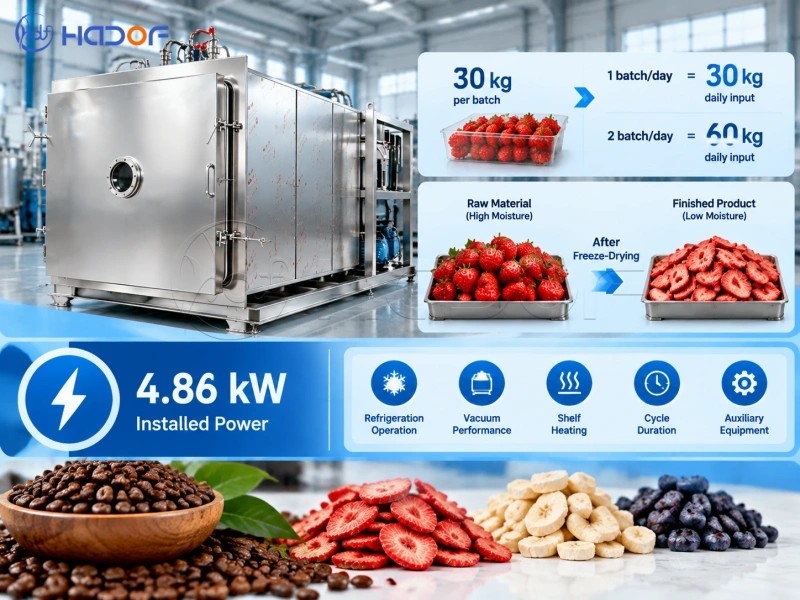
Calculate Daily Output and Energy Consumption
Optimize the Cycle and Recipe
Every product has a drying curve. Running a conservative cycle “just in case” lengthens the process and wastes energy. Use trial batches to find the shortest cycle that still meets the moisture and quality specification, and update recipes as you learn. The freeze-drying process should be logged so you can compare cycles and identify where time and energy are being spent.
Improve Insulation and Seals
Heat leaks and vacuum leaks both cost energy. Check door seals regularly, and replace them when they no longer seal properly. Insulate the chamber, piping, and cold surfaces where possible. A small leak may not stop the machine, but it forces the refrigeration and vacuum systems to work harder throughout the cycle. Routine inspection is one of the cheapest energy measures available.
Maintain Vacuum and Refrigeration
Maintenance has a direct effect on energy use. Dirty condensers, worn vacuum pump oil, and clogged filters all reduce efficiency. Follow the manufacturer’s maintenance schedule, clean heat exchangers, and check refrigerant charge. A well-maintained industrial freeze dryer uses less energy and produces more consistent batches.
Load Trays Efficiently
Trays that are overloaded or unevenly loaded block vapor flow and lengthen the cycle. Spread product evenly, respect the recommended load per tray, and avoid stacking pieces that touch. Efficient loading shortens cycles and improves uniformity, which reduces both energy use and rejected product.
Schedule Batches Continuously
Starting and stopping the dryer frequently wastes energy on pull-down and warm-up. Plan batches so the dryer runs continuously during production periods, with recipes grouped by similar cycle length. A simple production schedule that keeps the chamber busy is often more effective than any single equipment upgrade.
Monitor and Measure Energy Use
You cannot reduce what you do not measure. A simple energy log — recording power draw, cycle time, and batch weight — shows which products and recipes use the most energy per kilogram. Many modern dryers provide this data through their control system; older machines can use a clamp meter or a dedicated energy meter. Review the data monthly and compare it with production records. Sudden increases often signal a maintenance issue, while gradual increases may indicate a need to update recipes or loading practice.
Heat Recovery and Smart Controls
Freeze dryers reject a large amount of heat through the refrigeration system. In some factories, that heat can be recovered for space heating or preheating water, reducing overall energy use. Smart controls can also help: automatic pressure and temperature ramps, recipe management, and alarms for abnormal cycles reduce the chance of a dryer running inefficiently for hours. These features are worth considering when specifying a new machine, and some can be retrofitted to existing equipment.
Quick Wins versus Long-Term Projects
It helps to separate energy measures by effort. Quick wins — better door seals, cleaner condensers, even tray loading, and tighter recipes — cost little and can show results within weeks. Longer projects — replacing a vacuum pump, upgrading controls, or adding heat recovery — need more planning and capital. Starting with the quick wins builds momentum and often funds the larger improvements through the savings they generate.
Consider Efficient Components
When specifying a new dryer, look at compressor efficiency, vacuum pump type, insulation, and control capability. A more efficient machine may cost more up front but pay back over years of operation. For existing machines, replacing worn components with efficient equivalents during planned maintenance can improve performance without a full rebuild.
Common Mistakes
The first mistake is focusing only on purchase price and ignoring energy use. The second is running a dryer at low load because the capacity was oversized. The third is skipping maintenance until efficiency drops noticeably. The fourth is using a longer recipe than necessary. Each of these quietly raises the cost per kilogram over time.
Conclusion
Reducing energy costs in an industrial freeze dryer is mostly about discipline: the right size, the right recipe, good insulation and seals, regular maintenance, efficient loading, and continuous scheduling. Together these measures can cut energy use without sacrificing quality. HADOF Food Processing Manufacture designs freeze dryers and complete production lines with efficiency in mind and supports customers with sizing and maintenance guidance. Tell us your product and target output, and we will help you optimize the line.