How Do Different Pomace Types Require Distinct Drying Methods in Fertilizer Production?

Modern organic fertilizer production frequently relies on fruit pomace, vegetable pomace, and other high‑moisture organic waste. However, each type of pomace shows different physical properties, so each material needs a specific fertilizer drying process and moisture reduction design. Therefore, fertilizer manufacturers benefit from a clear understanding of pomace dewatering, pomace drying, and pomace granulation requirements before selecting equipment such as a rotary drum dryer or pelletizer.


1. How Do Different Pomace Raw Materials Influence Organic Fertilizer Production Requirements?

Many industries generate pomace and similar residues, and each sector creates raw materials with different structures and moisture contents. For example, the fruit juice industry produces apple pomace, citrus pomace, grape pomace, and berry pomace, and these residues usually hold more than 70–80% moisture. The wine and brewery sector produces grape pomace, distiller’s grains, and brewery spent grains, and these by‑products frequently contain sticky fibers and residual sugars. The vegetable processing industry generates carrot pomace, tomato pomace, and leafy vegetable pomace, and this material often breaks down quickly, so fast composting and controlled pomace dehydration become very important.

Each industry therefore sees different fertilizer manufacture needs and benefits. Fruit pomace fertilizer production can convert seasonal waste into stable organic granules and pellets for horticulture, landscaping, and orchard soil improvement. Grape pomace fertilizer processing can help winery operators reduce waste disposal costs, while it also supports local vineyards with nutrient‑rich compost pellets. Vegetable pomace fertilizer making can provide a continuous outlet for daily processing waste and reduce landfill risks. As a result, pomace fertilizer production lines must consider material origin, initial moisture, fiber content, and oil or sugar content, because these factors strongly influence the choice of pomace dewatering machine, composting system, and final rotary drum dryer design.

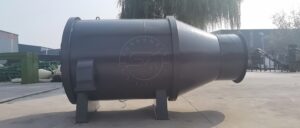
Pomace Dryer


2. What Types of Pomace Suit Organic Fertilizer Manufacture and Granulation Processes?

Many kinds of pomace can enter organic fertilizer granulation systems, but each material needs a tailored preparation process. Apple pomace and pear pomace generally suit aerobic composting and later granulation, because their fiber structure supports airflow and microbial activity. Citrus pomace and orange peel pomace require careful handling during compost preparation, since essential oils and acidity can slow down microorganisms, so operators often mix these residues with manure, crop straw, or biochar to stabilize the compost process. Grape pomace from wineries usually carries skins, seeds, and stems, so the fertilizer production line must include size reduction and uniform mixing before granulating or pellet making.

In addition, other organic residues can join pomace fertilizer manufacturing procedures to balance nutrients. Chicken manure, cow dung, and pig manure usually complement low‑nitrogen fruit pomace, and this mixture creates a better N‑P‑K ratio for organic fertilizer granule production. Food processing sludge, coffee grounds, and tea waste can also improve the compost matrix and increase granule strength during pelletizing. Consequently, a well‑designed pomace fertilizer production system evaluates the blend of raw materials, the target water reduction curve, and the final granule or pellet specification. This evaluation then guides the choice of compost turner, wet granulator, and ultimately the rotary drum dryer that finishes the pomace drying stage.


3. How Does a Multi‑Stage Water Reduction Process Optimize Pomace Fertilizer Drying?

High‑moisture pomace rarely moves directly from waste stream to finished fertilizer pellet. Instead, an efficient pomace fertilizer manufacturing line follows several stages of water reduction and moisture control. At the beginning, a mechanical dewatering machine, such as a screw press or belt press dewaterer, can reduce free water in the pomace from more than 90% to around 60–70%. This dewatering step lowers energy consumption in later thermal drying and stabilizes the material for storage and composting.

Next, a controlled composting phase allows microorganisms to convert raw pomace into mature organic fertilizer material. During compost preparation, the compost turner aerates the mass and supports biological heat generation. As the compost process continues, the material moisture often drops further to about 40–50%, which creates a better feedstock for wet granulation machinery. A wet granulator, pan granulator, or organic fertilizer pelletizer then combines the semi‑dry pomace compost with binders or additional powders to form spherical granules or cylindrical pellets. During this granulating stage, operators also adjust water content to achieve suitable plasticity, so the moisture sometimes rises slightly again.

Finally, a thermal drying phase becomes essential to bring moisture below about 10–15% for storage‑stable pomace fertilizer pellets. A rotary drum dryer provides a continuous drying process that handles granules, pellets, or loose compost particles. This drum type drying equipment controls residence time, temperature, and airflow so that the pomace‑based fertilizer particles lose excess water without cracking or burning. Through this combination of dewatering, composting, granulating, and drum drying, the overall pomace fertilizer production procedure steadily lowers moisture from more than 90% to less than 10%, and it also improves product stability, strength, and flowability.


4. Why Does Pomace Fertilizer Drying Often Favor Rotary Drum Dryer Technology?

Different pomace types demand different drying strategies, and rotary drum dryer technology usually adapts well to this variation. A rotary drum dryer for pomace fertilizer production accepts materials with moderate moisture and converts them into dry granules or pellets with controlled final water content. The rotating cylinder constantly lifts and cascades the pomace particles through hot air, so every fertilizer granule receives even heat transfer. As a result, the dryer can handle diverse fertilizer products, including fruit pomace granules, grape pomace pellets, and mixed manure‑pomace particles.

Rotary drum drying equipment also integrates smoothly into large‑scale pomace fertilizer manufacturing systems. For example, after a wet granulation machine or pelletizer shapes the pomace compost into particles, the rotary drum dryer forms the core of the moisture reduction process, while a rotary cooler and screening machine follow in the same line. Temperature control systems, adjustable drum slope, and variable drum speed allow operators to match drying intensity to each pomace blend. Sticky grape pomace fertilizer pellets, fibrous apple pomace granules, or fine tomato pomace particles all show different behaviors, and the rotary dryer design can adapt through internal lifting flights, residence time tuning, and exhaust gas management.

Because high‑moisture pomace drying directly influences energy use and product quality, many fertilizer factories pay close attention to the selection of reliable drying machinery, efficient dewatering equipment, and suitable granulation technology. A professional drying equipment manufacturer – Yushunxin – provides rotary drum dryers and related systems that support flexible pomace fertilizer production, stable water reduction performance, and consistent granule quality across different types of organic pomace materials. You can visit: https://www.fertilizerdryer.com/pomace-drying-machine/

How Does Drying Equipment Efficiency Affect the Profitability of Pomace Fertilizer Sales?

The profitability of pomace fertilizer production depends greatly on the efficiency of the drying equipment used during the water reduction stages. When organic waste materials such as fruit pomace, vegetable residues, brewery grains, or livestock manure contain excessive moisture, the fertilizer manufacturing process becomes slow, energy-intensive, and costly. Efficient drying not only stabilizes the material but also improves granulation quality and transportation economy. Therefore, enhanced drying efficiency directly influences the competitiveness of pomace-based fertilizer in agricultural and environmental markets.


1. What Types of Raw Materials Require Efficient Drying in Pomace Fertilizer Production?

Different organic industries produce high-moisture waste that can serve as valuable raw materials for organic fertilizer manufacturing. Fruit juice factories generate apple or grape pomace; vegetable processing lines discharge peel residues; breweries release spent grains; and livestock farms produce manure slurry. Each material has specific dewatering and dehydration needs.

For example, fruit pomace contains natural sugars and fibers that quickly ferment, which demands quick moisture reduction before composting or granulating. Spent grains have a denser texture, requiring uniform hot-air exposure during the drying process to prevent nutrient loss. Livestock manure needs both hygienic stabilization and odor control before it enters the pomace fertilizer production system. Efficient drying across all these materials ensures consistent particle size, reduces storage risks, and increases fertilizer nutrient concentration. Consequently, the drying performance determines whether pomace fertilizer producers achieve stable yields and higher sales profits.

Pomace Dryer


2. How Do Drying Stages and Related Equipment Influence Water Reduction Efficiency?

In pomace fertilizer manufacturing procedures, water removal usually follows four technical stages. The first stage uses a dewatering machine to separate free water mechanically. This step can lower the moisture content from above 90% to around 60%. The second stage introduces a composting machine that enables biological heat generation and partial dehydration during aerobic fermentation. The third stage applies a wet granulator or pelletizer to form semi-dry granules, further reducing moisture through the granulating motion and heat exchange.

The final and most decisive stage involves a rotary drum dryer, which performs continuous and controlled drying of pomace fertilizer granules. Its cylinder design allows uniform hot-air flow and complete moisture evaporation, bringing the content below 10%. Such high drying efficiency not only minimizes energy waste but also improves the physical strength of fertilizer pellets. The overall production process benefits from shorter cycle times, reduced operational costs, and improved granule quality. When a rotary drum drying system integrates intelligent temperature control and optimized air distribution, the pomace fertilizer plant achieves stable performance and predictable profitability.


3. Why Does Drying Equipment Efficiency Affect Sales Profitability in Pomace Fertilizer Business?

A fertilizer made from pomace and processed by efficient drying machinery gains multiple commercial advantages. Higher drying uniformity prevents microbial activity and enhances storage stability, allowing producers to sell pomace-based fertilizer in wider markets. Lower moisture content decreases transportation weight, cutting logistics expenses. Moreover, energy-efficient drying technology reduces fuel consumption, directly improving profit margins per ton of product.

When the drying procedure ensures constant granule quality, distributors experience fewer customer complaints and maintain long-term supply contracts. The market reputation of pomace fertilizer production companies improves, leading to brand loyalty and repeat orders. Therefore, every improvement in drying performance, whether from better system design or upgraded rotary drum dryer control, translates into measurable financial returns.


Conclusion

High-efficiency drying equipment stands at the core of profitable pomace fertilizer production. From raw material dewatering to final granule drying, each stage contributes to stable quality and reduced cost. Companies that invest in advanced rotary drum dryers, supported by precise temperature and airflow management, maintain stronger competitiveness in the organic fertilizer market. A professional drying equipment manufacturer—Yushunxin—offers integrated solutions that optimize every water reduction process, ensuring that pomace fertilizer producers maximize efficiency, product quality, and overall profitability. You can visit: https://www.fertilizerdryer.com/pomace-drying-machine/

Optimizing Fruit Pomace for Organic Fertilizer Production

Fruit pomace, a byproduct generated from juice, wine, and fruit processing industries, holds significant value as a raw material in organic fertilizer production. However, its extremely high moisture content—often exceeding 90%—poses unique challenges for storage, transport, and further processing. Various industries, from vineyards to juice manufacturers, seek efficient solutions to reduce pomace moisture and transform this organic waste into nutrient-rich fertilizer products. This blog explores specialized drying techniques and machinery, especially pomace dryers, that enable optimal water reduction and promote effective fertilizer granulation or pelletizing procedures.


What Types of High-Moisture Pomace Serve as Suitable Raw Materials for Organic Fertilizer Production?

Fruit pomace from apples, grapes, pears, citrus, pineapples, and pomegranates frequently serves as a primary source for organic fertilizer granulation. Each industry generates distinct pomace types with varying fiber, sugar, and nutrient compositions. For example, juice producers often work with apple or orange pomace, which contains fine particles and soluble nutrients ideal for composting and pellet making. Meanwhile, wineries produce grape pomace rich in skins, seeds, and residual juice, contributing to robust composting and granule formation. Food processing plants may generate mixed fruit pomace, which requires specialized drying technology to stabilize and prepare the material for organic fertilizer pelletizer machines. These industries benefit from moisture reduction procedures by enabling easier storage, lower transportation costs, and improved fertilizer production efficiency.

Pomace Dryer


How Do Water Reduction and Drying Techniques Improve Fertilizer Manufacturing from Fruit Pomace?

Effective fertilizer production from pomace demands a comprehensive water reduction process. The initial pomace, with moisture levels above 90%, can quickly spoil if not processed promptly. Dewatering machinery represents the first step, mechanically extracting free water to lower moisture to around 60-70%. Next, a high-efficiency pomace dryer becomes essential, further reducing the water content by applying controlled thermal energy. This drying equipment targets the bound moisture that basic dewatering cannot eliminate, ultimately decreasing the pomace’s moisture content below 20%—optimal for composting, granulating, or pelletizing. The proper use of a pomace dryer ensures uniform drying, limits nutrient losses, and prevents clumping during subsequent pellet making or granulation procedures. As a result, fertilizer manufacturers can produce stable, free-flowing organic fertilizer particles or pellets suitable for storage and distribution.


What Additional Machinery Supports the Pomace-to-Fertilizer Production System?

Alongside the critical role of pomace dryers, several complementary machines can enhance the overall fertilizer manufacturing process. Dehydrators, for instance, act as pre-treatment equipment, rapidly lowering initial moisture before drying. Composting machines introduce controlled aeration and agitation, accelerating organic matter breakdown and further moisture reduction. Granulators or pelletizers then transform the processed, dry pomace into uniform fertilizer granules, improving product quality and market value. Some advanced systems also use wet granulation or pelletizing machines, efficiently integrating the drying and granule formation stages. Throughout these procedures, optimized equipment selection and system design contribute to energy efficiency, consistent water reduction, and high-quality organic fertilizer pellet production.


Which Drying Equipment Features Support Efficient Pomace Fertilizer Granulation and Production?

Modern pomace drying systems incorporate several features tailored for fertilizer manufacturing. Robust rotary drum dryers, fluid bed dryers, and belt dryers allow for precise moisture control, adjustable temperature settings, and variable airflow rates. These machines can process large volumes of high-moisture pomace continuously, supporting uninterrupted fertilizer granulation or pelletizing activities. Reliable drying machinery includes anti-clogging mechanisms and specialized feeding systems to handle different pomace textures. By selecting the appropriate pomace dryer, fertilizer manufacturers ensure consistently low moisture levels, which streamlines downstream operations such as compost pellet making, granule formation, and finished fertilizer packaging.


Conclusion

Fruit pomace offers tremendous potential for organic fertilizer production, but effective water reduction remains the key to unlocking its value. Industries producing high-moisture organic waste require tailored drying procedures and advanced machinery to transform pomace into stable, high-quality fertilizer granules or pellets. By implementing comprehensive drying systems—including dewatering machines, professional pomace dryers, composting equipment, and granulators—producers can achieve optimal moisture reduction, nutrient retention, and efficient fertilizer manufacturing. When seeking reliable technology and equipment, customers benefit from partnering with a professional drying equipment manufacturer such as Yushunxin, whose expertise in pomace drying and water reduction solutions ensures success across all stages of organic fertilizer production. You can visit: https://www.fertilizerdryer.com/pomace-drying-machine/

Tips for Fertilizer Drum Dryer Setup

Proper installation of a fertilizer drum dryer is crucial for its efficient operation in the organic fertilizer production process. Whether you are setting up a new system or replacing an old dryer, this blog will help you through the essential steps to ensure a smooth and successful installation. Here are some tips for fertilizer drum dryer setup!

Step 1: Pre-Installation Preparation

Before you begin the installation process, it’s essential to perform some preliminary steps:

  1. Site Selection: You can choose a suitable location for the drum dryer, considering factors like airflow, access to utilities, and proximity to the rest of your production equipment.
  2. Foundation: You need to prepare a sturdy concrete foundation that can support the weight of the dryer and provide stability.
  3. Utilities: You must ensure access to the necessary utilities such as electricity, gas, or steam, depending on the type of dryer you have.

Step 2: Assemble the Drum Dryer

  1. Unpacking: You should carefully unpack all the components of the drum dryer, making sure that nothing is damaged during transportation.
  2. Assembly: You ought to follow the equipment manufacturer’s instructions to assemble the drum dryer components. This typically involves connecting the support structure, the drum, and the heating system.

Click here for more information!


Components of Drum Dryers
                                                                   Components of Drum Dryers

Step 3: Position the Drum Dryer

You place the assembled drum dryer on the prepared foundation, and make sure it’s level and securely anchored to the foundation to prevent any vibrations or instability during operation.

Step 4: Connect Utilities

  1. Electrical Connections: If your dryer requires electricity, you can find a local electrician to connect it to the power source.
  2. Gas or Steam Connections: If your dryer uses gas or steam for heating, you must find workers to connect the necessary pipelines to ensure a safe and reliable heat source.
Hot Air Blast
Hot Air Blast

Step 7: Run Test Drying

You can make trial operation by running the drum dryer with a small batch of material to ensure it dries evenly and efficiently, and make any necessary adjustments based on the test results.

Step 8: Routine Maintenance and Troubleshooting

  1. Maintenance Plan: You can develop a routine maintenance schedule for your drum dryer to keep it in optimal condition and prevent breakdowns.
  2. Troubleshooting: You should familiarize yourself with common issues and troubleshooting techniques for your dryer to address any problems promptly.

Conclusion

Installing a fertilizer drum dryer may seem like a complex task. But by following these steps and our guidelines, you can ensure a successful installation. A well-installed drum dryer is an essential component in organic fertilizer production, contributing to the efficiency of the drying process and the overall quality of your fertilizers. Please remember that safety and regular maintenance are key to long-term, trouble-free operation. Visit this website: https://www.fertilizerdryer.com/how-to-install-the-rotary-drum-dryer/ for more details!