What Are the Startup Costs for An Organic Fertilizer Production Plant?

Establishing an organic fertilizer production plant involves numerous considerations, particularly regarding startup costs. Understanding the necessary raw materials, equipment, and processes is crucial for any entrepreneur aiming to enter the fertilizer industry. This blog explores the various factors affecting the overall costs associated with setting up an organic fertilizer production facility.

What Raw Materials are Suitable for NPK/Compound Fertilizer Production?

Raw materials play an essential role in the production of NPK (Nitrogen, Phosphorus, and Potassium) and compound fertilizers. Commonly used materials include animal manure, compost, bone meal, and various plant residues. For instance, chicken manure serves as a high-nitrogen input, while bone meal provides phosphorus. Additionally, seaweed and fish emulsion contribute essential trace elements that promote plant growth.

Organic Fertilizer Raw Materials

Furthermore, integrating agricultural waste, such as crop residues and green manure, offers both sustainability and cost-effectiveness. Utilizing locally sourced materials minimizes transportation costs, thus contributing to a lower overall organic fertilizer production plant cost. By selecting appropriate raw materials, one can optimize both the quality of the final product and the efficiency of the production process.

What Equipment Features are Important for Fertilizer Production?

The choice of machinery significantly influences the efficiency and cost of an organic fertilizer production plant. Essential equipment includes crushing machines, granulators, and batching machines. For example, a disc granulator allows for effective granulation of organic materials, ensuring uniform particle size and enhancing the efficiency of nutrient release in the soil.

Additionally, a double roller extrusion granulator enables the production of high-density pellets, which are easier to handle and apply. Rotary drying machines are also crucial, as they help reduce moisture content, improving the shelf life of the final product. Investing in high-quality machinery may initially increase startup costs; however, it leads to long-term savings through enhanced production efficiency and reduced operational costs.
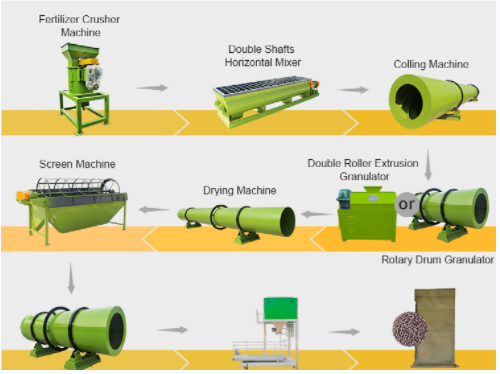
NPK Granulation Process

How Do Startup Costs Affect the Overall Production Process?

Startup costs for an organic fertilizer production plant encompass various elements, including equipment purchase, raw material acquisition, and facility setup. The fertilizer plant cost can vary significantly based on the scale of production and the complexity of the machinery used. Entrepreneurs must consider the fertilizer manufacturing plant cost within the context of their overall business plan.

For instance, a smaller operation may have lower initial costs but could face limitations in production capacity. Conversely, a larger facility with advanced equipment may require a higher investment but offers significant potential for profit through higher output. Careful financial planning is essential to ensure that the selected approach aligns with market demand and long-term sustainability.

What Additional Considerations are There for Setting Up a Fertilizer Production Line?

Beyond raw materials and equipment, entrepreneurs must also consider regulatory compliance, workforce training, and marketing strategies. Understanding local regulations regarding fertilizer production is crucial for avoiding potential legal issues. Moreover, the workforce plays a significant role in maintaining operational efficiency and product quality.

Marketing strategies should focus on demonstrating the benefits of organic fertilizers, appealing to eco-conscious consumers. Effective branding can enhance product visibility and foster consumer trust, promoting successful market penetration. While initial marketing efforts may add to startup costs, a well-planned approach can yield substantial returns in the long run.

Conclusion

In summary, setting up an organic fertilizer production plant involves various factors, including raw materials, machinery, and regulatory considerations. Understanding the startup costs is vital for making informed decisions that align with business objectives. By investing in quality equipment and selecting the appropriate raw materials, entrepreneurs can establish a successful fertilizer production line. For those seeking reliable machinery and expert guidance, a professional fertilizer equipment manufacturer like Yushunxin offers comprehensive solutions tailored to meet the unique needs of each producer. You can visit: https://www.fertilizerproductequipment.com/organic-fertilizer-production-plant-cost/

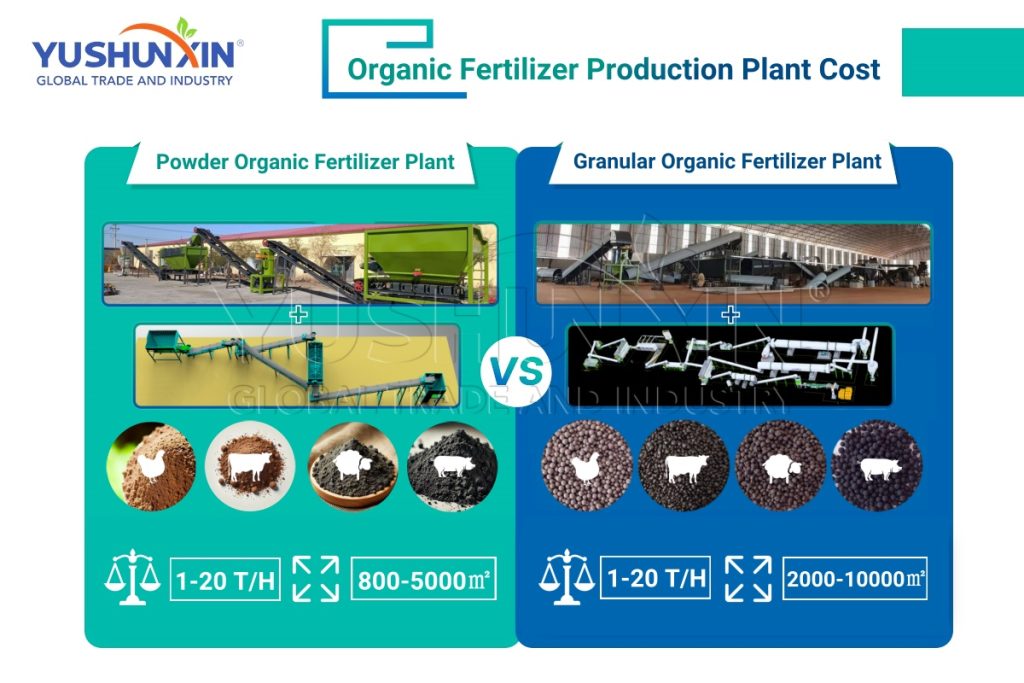
How Do Granules and Particles Influence Organic Fertilizer Manufacturing Costs?

The process of organic fertilizer production involves several key factors, with granules and particles playing a critical role in determining overall fertilizer plant cost. For investors and managers in the fertilizer industry, understanding the relationship between raw material selection, organic fertilizer granulation, and equipment configuration helps optimize the organic fertilizer factory setup cost and long-term profitability. A careful analysis of each stage in the organic fertilizer pellet making process supports cost-effective decisions within the organic fertilizer production plant.


Which Raw Materials Are Suitable for Organic Fertilizer Pellet Making and How Do They Affect Costs?

The selection of raw materials for organic fertilizer granule production directly impacts the efficiency of the entire organic fertilizer manufacturing procedure. Various organic materials, such as livestock manure (chicken, cow, pig), crop straw, industrial organic waste, municipal sludge, and food waste, serve as common resources in fertilizer pelletizing procedures. Each material has unique properties that influence not only the fermentation process but also the granulating characteristics and cost structure.

For example, livestock manure generally provides sufficient organic matter and nutrients but may require advanced composting and crushing machines to ensure uniform particle size before pelletizing. Crop straw, on the other hand, often needs additional shredding and mixing equipment to achieve the proper consistency for pellet formation. The moisture content and impurity level of municipal sludge or food waste can also increase the fertilizer manufacturing plant cost due to the need for enhanced dewatering and screening processes. Therefore, the physical and chemical characteristics of raw materials must align with the selected organic fertilizer granulation equipment to minimize energy consumption, equipment wear, and overall organic fertilizer production plant cost.

Organic Fertilizer Raw Materials

How Do Granulation Methods and Equipment Types Influence Organic Fertilizer Production Plant Cost?

The granulation procedure constitutes a central element in organic fertilizer pelletizing, and the choice of pelletizer equipment exerts a significant influence on overall fertilizer plant setup cost. Various organic fertilizer granulator machines exist to accommodate diverse production requirements. Some common options include the disc granulator, flat die granulator, double roller extrusion granulator, drum granulator, and new type organic fertilizer granulator. Each type of granulating machinery suits different raw material properties and yields distinct particle shapes, strengths, and sizes.

Disc granulators and drum granulators, for instance, typically handle larger capacities and create spherical fertilizer granules with consistent dimensions, which can reduce subsequent screening and drying costs. Flat die and double roller extrusion granulators are suitable for smaller-scale fertilizer production lines and produce cylindrical or pillow-shaped pellets, which might require less drying but more sophisticated packaging. Additional equipment such as compost turners (groove type or wheel type), rotary drying machines, and screening machines further affects investment and operating expenses. Selection of the optimal granulation and processing machinery ensures efficient pellet making, low energy usage, and reduced organic fertilizer factory cost.

granulator machine


What Are the Essential Steps in Organic Fertilizer Granule Manufacturing Procedures and How Do They Impact Factory Cost?

A typical organic fertilizer production process involves several interconnected stages: composting, crushing, batching, granulating, drying, screening, and packing. Each step requires specific machines and technical parameters that impact fertilizer plant setup cost. During the composting phase, equipment like groove type compost machines or fermentation pots accelerates organic matter decomposition and pathogen reduction. The crushing and batching stages prepare materials for consistent granulating by adjusting particle size and nutrient ratios, using crushers and batching machines.

Granulator machines play the most critical role in shaping granules or particles, directly influencing the quality and marketability of the final fertilizer pellets. Subsequent drying and screening ensure appropriate moisture levels and uniform pellet size, which further impact packaging efficiency and transportation costs. Automated packing machines enhance labor savings and operational efficiency within the fertilizer production plant. When these procedures are integrated and tailored to the unique properties of raw materials, the total organic fertilizer manufacturing plant cost becomes more predictable and manageable.


Conclusion

In summary, the size and quality of granules and particles directly influence the organic fertilizer production plant cost. The careful selection of raw materials, granulation methods, and machinery ensures that each step in the organic fertilizer pelletizing process is cost-efficient and productive. By systematically analyzing material characteristics and matching them with advanced granulator machines and related equipment, fertilizer manufacturers can control fertilizer plant setup cost and achieve sustainable growth. For businesses seeking professional solutions in organic fertilizer granulation, a reputable manufacturer such as Yushunxin provides tailored machinery and technical support to streamline fertilizer production and control overall investment costs. You can visit: https://www.fertilizerproductequipment.com/organic-fertilizer-production-plant-cost/
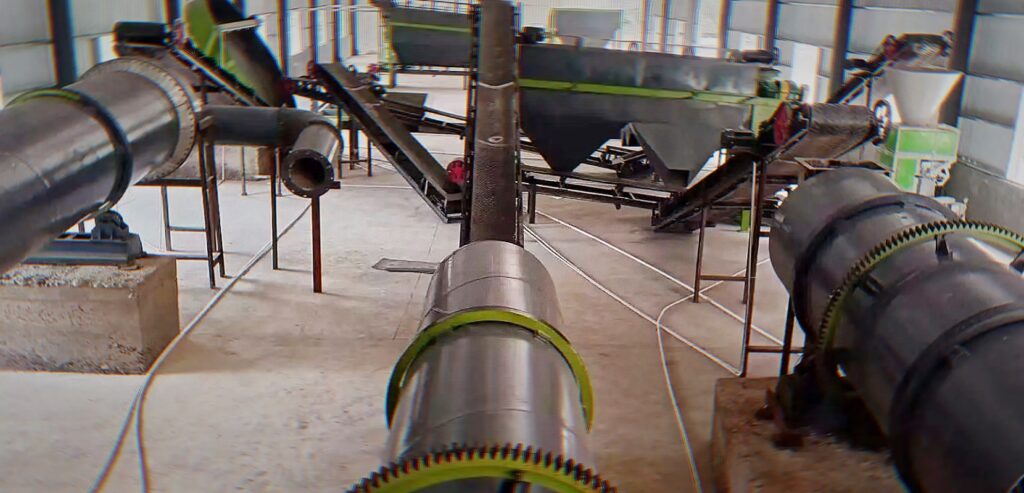
How Can Process Optimization Lower Organic Fertilizer Plant Setup Costs?

Establishing an organic fertilizer production plant requires careful consideration of setup costs and efficiency. Process optimization serves as a critical strategy for reducing organic fertilizer plant setup costs while maintaining product quality. Businesses seeking to enter the organic fertilizer granulation industry or expand capacity must analyze every production stage. Through refined process design and strategic equipment selection, operators can realize substantial savings and enhanced profitability.


What Types of Raw Materials Are Suitable for Organic Fertilizer Granulation Processes?

Selecting suitable raw materials for organic fertilizer production lines directly impacts granulation efficiency and overall plant costs. Animal manure, such as chicken, cow, or pig manure, remains one of the primary materials for organic fertilizer granule making. Other viable options include livestock waste, crop straw, kitchen waste, municipal sludge, and even agricultural by-products like distillers’ grains or mushroom residue. Each raw material presents different moisture levels, nutrient profiles, and physical characteristics, which influence the requirements for crushing, composting, and granulating machinery. Combining compatible materials allows the production procedure to achieve better fermentation, granulation, and drying results, which ultimately reduces organic fertilizer production plant costs by minimizing energy use and avoiding unnecessary material wastage.

Organic Fertilizer Raw Materials

How Do Efficient Machines and Production Lines Influence Organic Fertilizer Plant Setup Costs?

Modern organic fertilizer granulation equipment plays a significant role in optimizing plant setup costs. Operators should evaluate the most appropriate granulator for their raw material characteristics and desired pellet shapes, such as disc granulators, flat die pelletizers, double roller extrusion granulators, or drum granulating machines. Advanced machines enhance granule uniformity, improve pelletizing yield, and lower maintenance requirements. In addition to granulators, supporting machinery such as crushing machines, rotary drying equipment, and automatic screening systems streamline the process and minimize labor input. Process automation and modular design can further reduce fertilizer manufacturing plant costs by shortening installation time and enabling flexible scaling. Efficient equipment requires less floor space and energy, contributing to overall fertilizer factory cost reductions. Selecting the right production line configuration—tailored to your capacity, raw materials, and end-product specifications—will ensure sustainable cost control and operational stability.

Organic Fertilizer Plant Setup Scale


How Can Process Optimization Strategies Reduce Organic Fertilizer Production Plant Costs?

Process optimization focuses on integrating every stage of the organic fertilizer pellet making process for maximum economic benefit. By analyzing raw material properties, refining composting periods, and using efficient crushing, mixing, and granulating systems, operators can minimize energy and resource consumption. Strategic batching and feeding can reduce material loss and improve granulation efficiency, while moisture control throughout drying and cooling ensures high-quality organic fertilizer pellets or granules. Implementing advanced pellet screening and packing machines can eliminate reprocessing needs, cutting labor costs and waste. Continuous process monitoring supports fast adjustments and maintenance, which prevents downtime and costly repairs. In summary, an optimized organic fertilizer pellet production line balances quality, throughput, and cost, enabling businesses to achieve lower organic fertilizer plant setup costs and rapid return on investment.


Conclusion

In summary, successful organic fertilizer production relies on selecting suitable raw materials, choosing efficient granulation equipment, and applying comprehensive process optimization. Each decision in raw material blending, process design, and machine selection directly impacts organic fertilizer production plant costs. Businesses that invest in advanced granulating technology and customized production lines can gain a competitive advantage by reducing their fertilizer manufacturing plant costs. For those seeking reliable solutions and industry-leading expertise, partnering with a professional fertilizer equipment manufacturer such as Yushunxin offers access to innovative production line designs, tailored machinery, and expert guidance that ensures both high-quality organic fertilizer granule production and significant setup cost savings. You can visit:  https://www.fertilizerproductequipment.com/organic-fertilizer-production-plant-cost/
How Do Capital Costs Impact Your Organic Fertilizer Production Plant Setup?

When establishing an organic fertilizer production plant, capital costs significantly influence the overall setup and operational efficiency. Understanding how these costs affect various aspects of the project allows manufacturers to make informed decisions and optimize their investments.

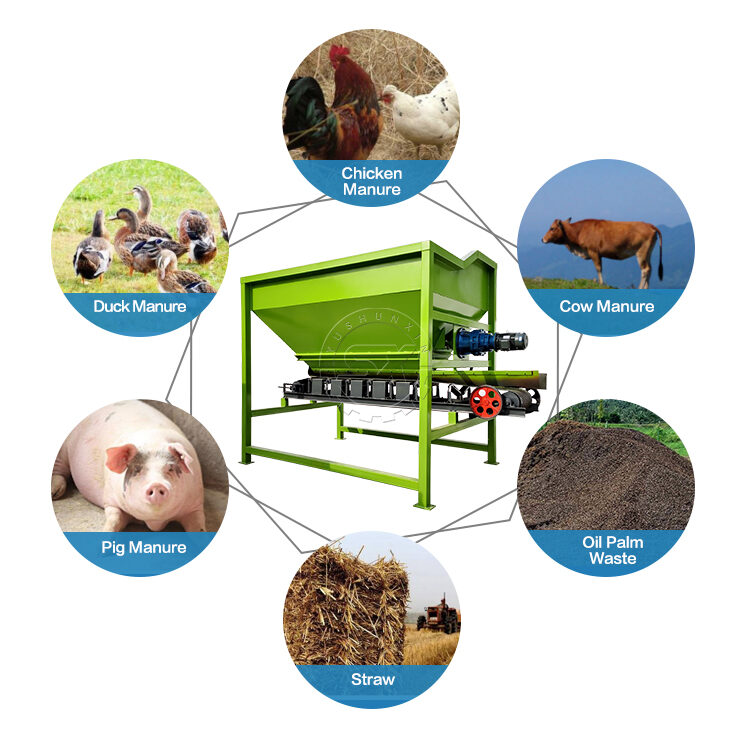
What Raw Materials Are Suitable for Organic Fertilizer Production?

The choice of raw materials is vital when considering the capital costs associated with an organic fertilizer production plant. Common raw materials include manure, compost, food waste, and plant residues. Each material not only provides essential nutrients but also varies in acquisition costs.

For instance, using livestock manure is a cost-effective option due to its widespread availability. Additionally, it enriches the soil with nitrogen, phosphorus, and potassium. Compost, created from organic waste, offers a balanced nutrient profile and improves soil structure. Food waste, sourced from local markets or restaurants, can significantly reduce manufacturing costs while supporting sustainable practices.

Selecting the right combination of raw materials influences both the capital investment and the end product’s quality. Manufacturers must analyze their procurement options to ensure they meet production goals efficiently while keeping costs manageable. By understanding the impact of raw material choices, investors can minimize their organic fertilizer plant costs while maximizing nutritional outputs.

Organic Fertilizer Raw Materials

How Do Equipment Features Affect Capital Costs in Organic Fertilizer Production?

The selection of machinery is another critical factor impacting capital costs. Key equipment for organic fertilizer production includes granulators, mixers, and dryers. Each machine plays a crucial role in the overall granulation process, directly affecting output quality and efficiency.

Granulators, for example, convert organic materials into uniform granules, enhancing the product’s handling and application properties. Features such as adjustable speed controls, different granulation methods (including pelletizing and ball making), and high throughput capabilities improve production efficiency. Investing in advanced granulation technology can lead to better-quality pellets while optimizing operational costs in the long run.

Mixers aid in the effective blending of various raw materials before granulation. This process ensures uniform nutrient distribution, contributing to the consistency of the final product. Dryers are essential for controlling moisture levels, which is critical for maintaining granule integrity and minimizing dust formation during production.

Understanding the features and functions of each piece of equipment helps manufacturers estimate their organic fertilizer plant setup costs accurately. While initial investments may appear significant, the long-term advantages of investing in high-quality machinery can result in substantial savings and improved product quality.

How Do Operational Costs Relate to Capital Investment in Organic Fertilizer Production?

Operational costs encompass a variety of expenses, including labor, maintenance, and energy consumption. These costs directly relate to the capital investment made in equipment and facilities. By investing in advanced technologies and efficient machinery, producers can significantly reduce ongoing operational costs.

Automation in organic fertilizer production minimizes labor requirements, leading to lower wage expenses. Moreover, well-designed production lines can enhance employee productivity, further reducing operational costs. Additionally, selecting energy-efficient machines decreases energy consumption, lowering utility bills over time.

Manufacturers should also consider maintenance costs when evaluating capital investments. High-quality machinery typically requires less maintenance, resulting in fewer disruptions and lower long-term costs. Therefore, understanding the relationship between initial capital costs and ongoing operational expenses is essential for effective financial planning in organic fertilizer production.

Conclusion

Capital costs play a pivotal role in establishing an organic fertilizer production plant. By carefully selecting raw materials, investing in suitable equipment, and accounting for operational costs, manufacturers can ensure a cost-effective setup that enhances productivity and product quality. A thoughtful approach to these elements not only maximizes the investment but also supports the development of sustainable and efficient production practices.

For organizations looking to optimize their organic fertilizer production processes, collaborating with experienced equipment providers can lead to significant improvements. Exploring partnerships with established manufacturers can uncover advanced solutions tailored to specific production needs, ultimately paving the way for successful organic fertilizer plant operations. You can visit: https://www.fertilizerproductequipment.com/fertilizer-manufacturing-plant-cost/

The Cost of Fertilizer Making Systems

When venturing into the agricultural sector, one of the key considerations for enhancing crop yield is the use of fertilizers. With the growing emphasis on sustainable agriculture, producing organic fertilizers has become a lucrative business opportunity. However, establishing a fertilizer making system comes with its own set of costs that potential investors need to understand. In this blog, we’ll explore the various factors that contribute to the cost of setting up a fertilizer production facility.

Initial Investment: The Seed of Your Fertilizer Plant

The first step in understanding fertilizer making ptoject costs is to look at the initial investment. This includes land acquisition, construction, purchasing machinery, and installing the necessary infrastructure. The size and scale of the operation play a pivotal role in determining these costs. A large-scale facility with high production capacity will naturally require a heftier investment than a small-scale, local operation.

Fertilizer Plant Setup

Equipment: The Heart of Production

The technology and equipment for fertilizer production can range from simple composting machine to complex, automated fertilizer manufacturing machinery group. High-end equipment may reduce labor costs and enhance efficiency but will increase initial expenses. Consider the balance between cost and productivity when choosing equipment, and don’t forget that maintenance and repair costs should also be factored into the long-term budget. Click here to learn more.

Raw Materials: The Nutrients of Your Business

Raw materials such as manure, compost, and other organic substances are the backbone of organic fertilizer production. Because they are source of nitrogen, phosphorus and potassium,etc, which are necessary for plants growth. The proximity to these materials can significantly influence costs. If you’re located near farms or other sources of organic waste, you’ll save on transportation. Moreover, the price and availability of these materials can fluctuate, affecting operational costs over time.

Raw materials of fertilizer making

Regulatory Compliance: Navigating the Legal Landscape

Adhering to regulations is non-negotiable. This includes acquiring the necessary permits and ensuring your facility meets environmental standards. Depending on the location, regulatory compliance can incur various fees and require investments in pollution control systems. Failing to comply with these regulations can lead to fines or operational shutdowns, so it’s crucial to factor them into the cost from the outset.

Infrastructure and Location: Laying Down the Roots

The cost of infrastructure and the selected location for the fertilizer plant are interlinked. Choosing a site with existing infrastructure can reduce initial costs but may come with higher land prices. On the other hand, developing infrastructure like roads and utility lines in a less developed area might be cheaper initially but could lead to higher ongoing costs.

Operational Expenses: Keeping the Wheels Turning

Once your plant is up and running, operational costs such as labor, utilities, maintenance, and marketing will dictate the day-to-day expenses. Energy-efficient systems and automation can reduce labor and utility costs, but these may result in higher upfront investment. Additionally, marketing your product effectively is crucial to sales and can vary widely in cost depending on the strategies you employ.

The Bottom Line

The cost of establishing a fertilizer making system is multifaceted. It requires careful planning, budgeting, and a clear understanding of both initial and ongoing expenses. While the upfront costs can be substantial, the right strategy can lead to a profitable and sustainable business that contributes positively to the agricultural industry. By carefully considering the factors we’ve discussed, entrepreneurs can develop a cost-effective approach to entering the fertilizer market. If you need more precise cost of a fertilizer plant setup, you can visit https://fertilizerequipmentmanufacturer.com/fertilizer-manufacturing-plant-cost/

How Much Does It Cost to Build A Fertilizer Factory?

Building a fertilizer factory is a significant investment that can lead to considerable profits for those in the agricultural industry. The cost can vary greatly depending on several key factors, including the type of fertilizer one intends to produce, the scale of the operation, and the degree of automation required. With a variety of budget options and scales, you need to choose a reliable manufacturer for comprehensive fertilizer production plans, catering to both organic fertilizer and compound fertilizer in powder or granulation form.

Organic Fertilizer Production Proposal

For those exploring the potential of starting an organic fertilizer production, Yushunxin presents a range of solutions that can transform locally sourced organic waste materials into high-quality fertilizer. These production lines are carefully designed to optimize material use, helping to convert animal manure, agricultural waste, and municipal sludge into valuable, eco-friendly products.

For entrepreneurs or businesses looking at a small to medium scale organic fertilizer plant setup, they can select a powder organic fertilizer production line. Costs can range from $30,000 to $100,000, making it a highly accessible entry point into the market.

Compound Fertilizer Plant Setup

For compound fertilizer production, Yushunxin’s plans are meticulously tailored to ensure precise formulations of NPK fertilizers. Their compound fertilizer lines are equipped with cutting-edge technology for batching, blending, granulating, drying, and packaging – all crucial steps that define the quality of the end product. A small-scale compound fertilizer granulation line could require an investment of $100,000, while a larger operation might need an investment upwards of $500,000, depending on the desired level of automation and production capacity. Certainly, you can choose BB fertilizer blending line for lower costs.

Click here for more details of fertilizer plant construction plans!

Why to Buy Fertilizer Production Equipment from Yushunxin?

1. Offering Cost-effective Production Proposal

When considering the costs of establishing a fertilizer factory, one should not overlook the additional expenses beyond equipment procurement. These can include the cost of raw materials, utilities, labor, and ongoing maintenance. However, Yushunxin prides itself on providing energy-efficient and durable machinery, which means operational costs are as low as possible without compromising on productivity and product quality.

2. Offering Considerate Service

Yushunxin stands out in the market by not just supplying equipment but also partnering with clients to ensure their success in the fertilizer production industry. Their team of experts is ready to assist clients in every stage, from the initial planning and design phases all the way to the installation and operation of the factory. They work closely with clients to identify the most cost-effective and efficient production plans tailored to their specific budget and goals.

Conclusion

In a nutshell, whether one is just starting or seeking to expand existing operations, Yushunxin provides scalable solutions to fit various budgets. With their expertise and high-quality equipment, clients can confidently step into the fertilizer industry, knowing they have a reliable partner dedicated to their success. Click this link for more information: https://www.fertilizerproductequipment.com/fertilizer-manufacturing-plant-cost/