
A snack factory, a coated food producer, or a frozen food plant that runs a frying line depends on the fryer to keep every batch safe and consistent. The continuous fryer for sale for a commercial frying line combines oil filtration, temperature control, and a double-layer belt, and those structures protect both food safety and quality control. This article explains how each system supports safe, repeatable food production and what a buyer should verify before purchase.
How Does Oil Filtration Protect Food Safety in a Continuous Fryer?
The oil circulation and filtration system removes food residues while the fryer runs, and that keeps burnt particles from building up in the oil tank. The industrial continuous fryer with oil filtration and PID temperature control reduces oil acid value growth, restores oil color, and can lower edible oil consumption by about 20 to 40 percent in suitable applications. Cleaner oil produces fewer off flavors and fewer burned specks, which a quality team reads as a safer, more consistent product. This filtration step therefore supports the food safety record of a fried snack or coated food line.
How Does PID Temperature Control Keep Frying Quality Consistent?
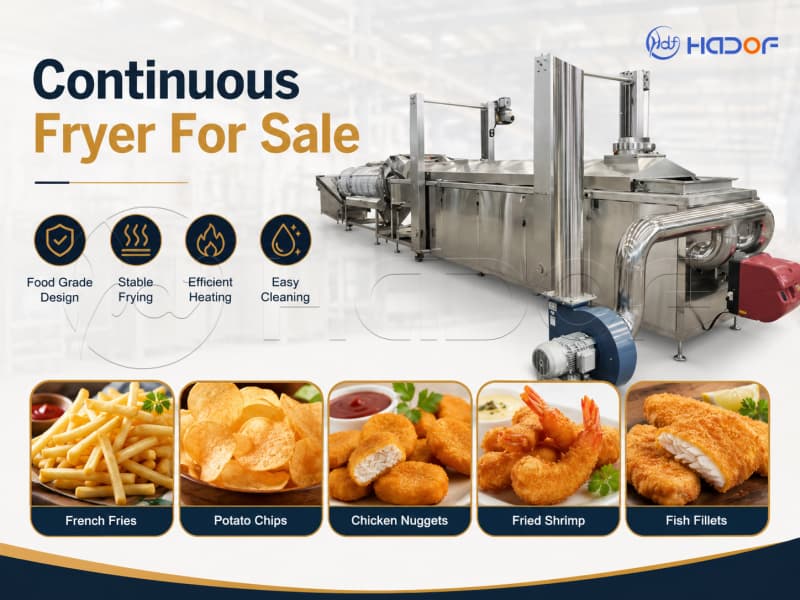
Stable oil temperature prevents undercooked centers and overbrowned surfaces, and a PID controller holds the set point far better than a manual burner. The continuous frying machine with a double-layer mesh belt system keeps products two to three centimeters below the oil surface while a sensor monitors temperature in real time, and the operator can set temperatures from 80 to 300 degrees Celsius. A frequency inverter adjusts belt speed to control frying time from one to five minutes. This control gives every batch the same heat, which is the core of quality control in food manufacturing.
How Does the Double-Layer Belt System Ensure Even Cooking?
The upper and lower mesh belts hold food inside the hot oil, so floating snacks, coated products, and irregular pieces stay submerged instead of riding the surface. The belt distance reaches about 80 to 90 millimeters and adjusts to product thickness, while the belt width can be 600, 800, 1,000, or 1,200 millimeters. A steady, submerged pass exposes every surface to the same oil temperature, which removes the cold spots that manual batch frying creates. This design therefore turns a continuous food production line into a repeatable quality process.
How Does Cleaning Design Support Hygiene and HACCP Compliance?
A fryer that is hard to clean becomes a food safety risk, so the machine includes a four-position lifting system that raises the hood and frame for access to the tank and belts. Operators can remove residues and reach the surfaces that touch the product, which supports the HACCP routine a plant already follows. After frying, product moves to a quick freezer for fried food products after frying or a cooling and packing stage. A cleanable fryer plus a controlled post-frying step keeps the whole food handling flow safer.
How Should a Plant Verify Quality Control Before a Food Machinery Purchase?
A buyer verifies the filtration, temperature control, and cleaning design before the order, because those features decide both safety and consistency. You can review the continuous frying equipment manufacturer before a purchase, and that review shows the service, spare parts, and engineering support behind the machine. A careful food investment separates a fryer that documents its controls from one that only lists capacity. That verification protects the food machinery budget across many seasons.
Conclusion
A continuous fryer supports food safety and quality control through oil filtration, PID temperature control, a double-layer belt, and a cleanable lifting design, and a buyer should verify each system before purchase. These structures keep fried products safe, even, and repeatable. If you have interests, you can learn more about https://www.friedfoodsolutions.com/continuous-fryer-for-sale/