
Commercial compost granules production solution need more than a single granulator. They need a complete process that turns fermented organic waste into uniform, stable, and marketable fertilizer granules. Different raw materials, moisture levels, production capacities, and investment plans will affect the final equipment configuration. For buyers, choosing the right solution can improve production efficiency, reduce waste, and create better fertilizer products for farms, distributors, and agricultural projects.
Below are three common production solutions for commercial organic fertilizer plants.
1. Small to Medium Compost Granulation Solution
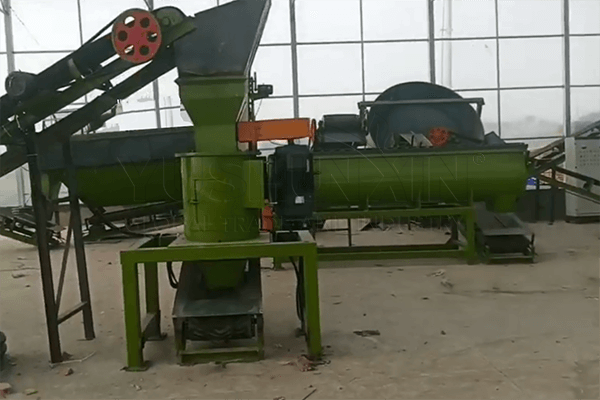
This solution is suitable for farms, cooperatives, and small fertilizer factories that want to process livestock manure, crop waste, or fermented organic materials into granules. The typical process includes composting, crushing, mixing, granulating, screening, drying, cooling, and packaging.
For many buyers, this type of line is easier to start because it requires less space and a lower budget. It can also be upgraded later when the market grows. If your raw material mainly comes from poultry farms, chicken manure compost granules manufacturing can be a practical direction. Chicken manure has high organic matter and nutrient value, but it must be fully fermented before granulation. Proper moisture control and material crushing are also important for stable granule formation.
2. Standard Commercial Organic Fertilizer Granulation Plant
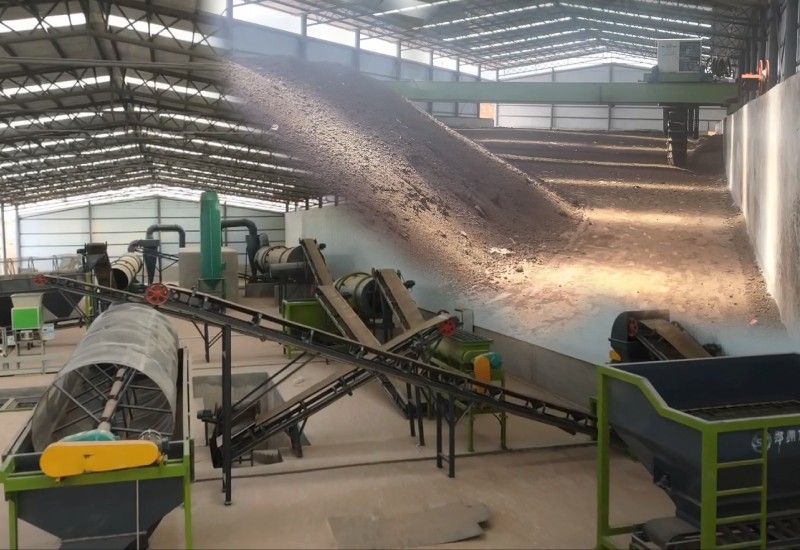
A standard commercial plant is designed for continuous production and better product consistency. It is suitable for companies that already have stable raw material sources and want to sell organic fertilizer granules in bags or bulk. Compared with a small line, this solution usually has a more complete equipment layout, including automatic batching, mixing, granulation, drying, cooling, screening, coating, and packing.
When planning organic fertilizer granulation plant investment, buyers should not only consider the price of the main machine. They also need to calculate composting area, workshop size, power supply, fuel consumption, dust removal, labor cost, installation, and maintenance. A well-designed plant can reduce material return, improve granule strength, and make daily operation easier. It is also more suitable for customers who want long-term commercial production instead of simple raw material disposal. Learn more.
3. Large Capacity Compost Fertilizer Production System
For large farms, fertilizer manufacturers, and waste treatment projects, a high-capacity system is often more suitable. This solution focuses on stable operation, automatic control, and large output. A 10 t/h compost fertilizer granulating system usually requires stronger material handling capacity, larger drying and cooling equipment, efficient screening, and reliable dust collection.
This type of system can process large amounts of fermented manure and organic waste every day. It is especially useful when the buyer has a long-term fertilizer sales plan or needs to handle waste from several farms. The design should consider raw material moisture, granule size, finished product standard, local energy cost, and future expansion. A complete composted manure granules production line can help convert animal waste into commercial fertilizer while reducing odor, storage pressure, and environmental problems.
Conclusion
Choosing the right compost granulation plan depends on your raw materials, production goal, budget, and factory conditions. Small lines are suitable for starting projects. Standard commercial plants are better for stable market sales. Large-capacity systems are designed for continuous industrial production. Before buying equipment, it is better to confirm raw material type, moisture, capacity, workshop size, power supply, and packaging requirements. With these details, the supplier can design a more suitable process and help you build a profitable organic fertilizer production project. If you are interested in the project, you can visit https://www.granulatedcompostsolutions.com/product/compost-granulating-machine/