
When producing liquid NPK fertilizer, one of the most important—and often overlooked—factors is temperature. The solubility of nitrogen, phosphorus, and potassium materials directly determines product stability, nutrient concentration, and overall manufacturing efficiency. Whether you operate a commercial liquid fertilizer production line or are new to water-soluble NPK fertilizer manufacturing, understanding how temperature influences solubility can significantly improve product quality.
1. Why Solubility Matters in Liquid NPK Fertilizer Production
In liquid fertilizer manufacturing, raw materials such as urea, ammonium nitrate, MAP, DAP, MKP, and potassium sulfate need to dissolve completely. Poor solubility causes:
-
crystal precipitation
-
clogged pumps and mixing tanks
-
unstable nutrient ratios
-
reduced shelf stability
That’s why manufacturers often emphasize “fully water-soluble NPK materials” or “high-solubility NPK ingredients” in liquid formulations.
2. Higher Temperature Improves Solubility—But With Limits
Most NPK materials dissolve more quickly and thoroughly at higher temperatures. For example:
-
Urea dissolves almost twice as fast in warm water compared to cold water.
-
MAP and DAP show increased solubility as the liquid temperature rises.
-
Potassium nitrate performs best at moderate to high temperatures, making it ideal for high-grade liquid fertilizers.
However, temperature has practical limits. Excessive heat can:
-
cause nutrient volatilization (especially nitrogen)
-
lead to chemical reactions inside the tank
-
damage microorganisms if producing bio-enhanced liquid fertilizers
-
increase energy consumption in large-scale manufacturing systems
Therefore, most liquid NPK fertilizer plants use controlled heating rather than high-temperature processing.
3. How Temperature Control Improves Manufacturing Efficiency
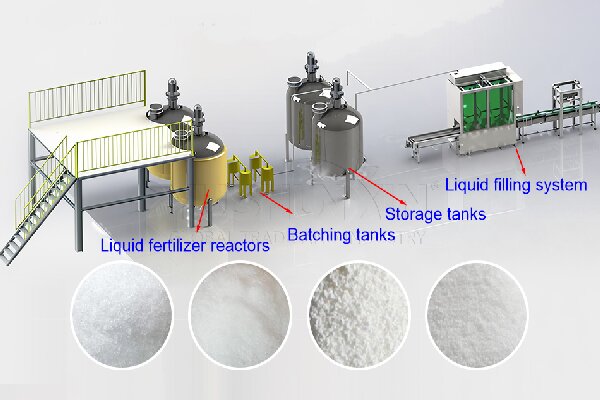
A well-designed liquid NPK mixing system adjusts water temperature to achieve optimal solubility. This ensures:
-
faster dissolution times
-
fewer insoluble residues
-
more stable NPK solutions
-
higher nutrient concentration in final products
Industrial mixers, dissolution tanks, and inline heating systems allow manufacturers to maintain consistent temperatures during the production process. Learn more!
4. Best Practices for Temperature Management in Liquid NPK Production
To ensure optimal solubility and consistent quality:
-
preheat water before adding phosphate materials
-
dissolve nitrogen sources (urea, ammonium nitrate) separately when needed
-
maintain constant mixing speed and agitation
-
avoid sudden cooling, which may cause crystallization
-
use filtration or sediment traps for high-purity products
These practices are widely used in modern liquid fertilizer plants, NPK liquid fertilizer manufacturing factories, and water-soluble fertilizer production lines.
5. Temperature-Smart Equipment for Better Solubility
Many manufacturers rely on specialized equipment to maintain ideal temperature conditions:
-
heated mixing tanks
-
stainless-steel dissolution reactors
-
temperature-controlled storage tanks
-
inline circulation heating systems
The right equipment can significantly enhance solubility, stabilize formulations, and increase production output. If you want to get more methods, welcome to visit:https://www.liquidfertilizerplants.com/products/npk-liquid-fertilizer-production-line/