
When you plan to convert livestock manure into commercial organic fertilizer, understanding the factors behind the investment can help you make a more suitable project decision. The total cost is influenced by your raw materials, production capacity, fertilizer type, equipment selection, and automation requirements.
A manure-based fertilizer project is not only a waste treatment solution but also an opportunity to transform agricultural waste into valuable fertilizer products. By evaluating your production goals first, you can develop a system that matches your business needs.
How Do Raw Materials Affect Your Fertilizer Plant Cost?
Different livestock manure materials have different characteristics. Cow manure, pig manure, and poultry waste may vary in moisture content, fiber structure, and processing requirements.
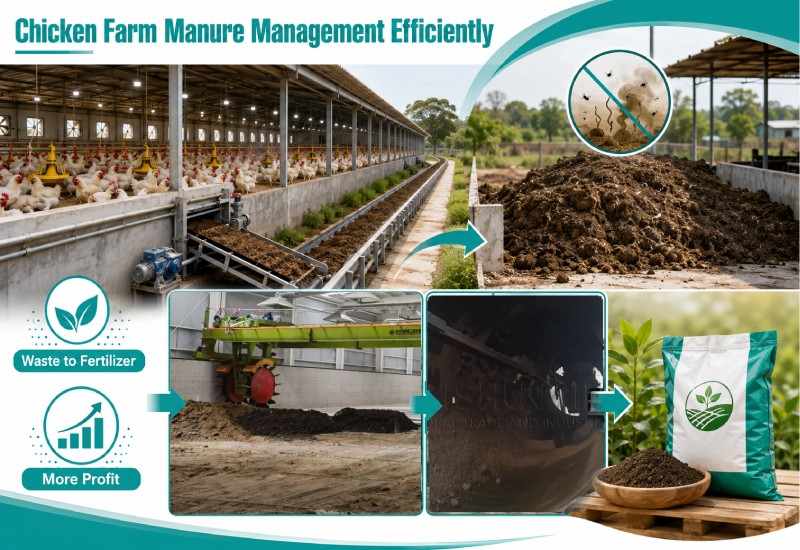
These differences influence the fermentation process, crushing equipment, granulation method, and final product configuration. For example, the chicken manure organic fertilizer production line cost can vary depending on whether you produce powder fertilizer or granular fertilizer products.
Understanding your raw material supply and daily processing volume helps you evaluate a more suitable production solution.
How Does Production Capacity Change Investment Requirements?
Production capacity directly affects equipment size and production system configuration. A small farm-based project may focus on simple processing, while a commercial fertilizer factory may require a more complete production system.
When evaluating the 20 tph organic fertilizer production plant cost, you can consider not only the main machines but also supporting systems, including fermentation, material handling, granulation, drying, screening, and packaging.
A larger capacity project may involve more equipment and infrastructure, while a smaller system can provide a more flexible starting point.
How Does Plant Layout Influence Project Cost?
The arrangement of equipment affects material movement, installation requirements, and future operation convenience.
A well-planned organic fertilizer production plant layout considers the connection between fermentation areas, processing equipment, storage sections, and packaging zones.
A reasonable layout can help you improve workflow efficiency and create better conditions for maintenance and future expansion.
How Does Equipment Selection Influence the Final Budget?
Different production goals require different equipment configurations. A powder fertilizer project may need fewer processing steps, while granular fertilizer production can include additional granulation, drying, cooling, and screening equipment.
The organic fertilizer manufacturing plant cost depends on the selected process, production scale, and automation level.
Working with an experienced organic fertilizer production plant manufacturer allows you to discuss raw materials, capacity targets, and product requirements before confirming the final configuration.
Click here for more details to explore more organic fertilizer production solutions.
Planning Your Livestock Manure Fertilizer Project
The investment for a livestock manure organic fertilizer production plant depends on many connected factors. Raw material conditions, production capacity, plant design, and equipment selection all influence the final project solution.
By reviewing these factors together, you can create a fertilizer production system that supports your current needs and future business development.
For more information about livestock manure organic fertilizer production plant cost and related solutions, you can visit https://www.shunxin.eu/organic-fertilizer-production-plant-cost/